Connect with us
Anglostratits

Tech

The brands creating the strongest creative outcomes are combining the power of AI with the power of community

Published

on

WARC
  • 88% or marketers say AI has increased creative output, but only 45% say it has improved creative quality
  • 86% believe real-time audience behavior and community signals are important to creative development
  • 67% rely on basic demographic data despite 59% agreeing that traditional demographic segmentation is no longer effective.
  • Only 17% of marketers always incorporate community insights beyond demographics into Gen AI workflows

New WARC x TikTok x LIONS Advisory research: The new creative advantage – How community signals are reshaping creative success in the age of AI. Introducing the S.C.A.L.E. framework for action

July 14, 2026 – Creativity has entered a new era. Generative AI is transforming how marketing ideas are developed, adapted, and scaled. But real advantage comes from creative that is most relevant, resonant, and connected to the people it is designed to reach.


The brands creating the strongest creative outcomes are increasingly combining the power of AI with the power of community. They’re using participation as intelligence, turning cultural signals into activation, and building creative systems that continuously learn from the audiences they serve. This creates an “intelligence loop” that gives brands a compounding creative advantage.


New research by WARC and LIONS Advisory, in partnership with TikTok, explores how community intelligence is reshaping creative success in the age of AI, and why the future advantage belongs to brands that can learn, adapt, and create alongside culture as it unfolds.


Lexi Wolf, Head of Thought Leadership, LIONS Advisory, says: “WARC’s Marketer’s Toolkit 2026 found that belief in the effectiveness of demographic segmentation is waning. Yet this study with TikTok found that demographics were still the number one input marketers used to brief AI. Meanwhile, participatory media environments are giving us something far richer: real-time signals from people who search, comment, share, remix, create and buy.


“The opportunity isn’t to make the existing system faster. It’s to build a better one: one that helps brands learn from people more continuously, respond with greater speed and relevance, and turn efficiency into effectiveness over time.”


Andy Yang, Global Head of Creative & Brand Ads, TikTok, says: “The brands winning today are not the ones using AI to generate the most content. They are the ones learning the fastest from the people they serve. We call it cultural intelligence, and it is fast becoming advertisers’ most durable competitive advantage.


“Yet the research for this report shows that most brands are briefing powerful AI creative tools with weak inputs: static demographics and legacy assumptions, resulting in creative that scales efficiently but fails to connect. The future belongs to brands that close the loop by creating alongside culture, not behind it.”


Methodology

The research includes findings from a survey of 400 marketers across the UK, US, Australia, and Brazil, conducted in May 2026. All respondents are directly involved in decisions about how marketing creative and content are produced. Additionally, a series of interviews with senior marketers and industry experts was carried out, combined with a review of WARC and TikTok’s global data, industry knowledge, and examples.


Key takeaways outlined in ‘The new creative advantage: How community signals are reshaping creative success in the age of AI’ study are:


In the age of AI, community insights are becoming even more valuable


Most marketers (90%) agree that AI has quickly become part of the creative toolkit. However, while 88% of marketers say Gen AI has increased creative volume, fewer than half (45%) say it has significantly improved quality.


Demographics remain the most common input when prompting AI, say 67% of marketers, despite 59% agreeing that traditional demographic segmentation is no longer effective, according to WARC’s Marketer’s Toolkit 2026 survey. Only 17% of marketers always incorporate community or audience insights into Gen AI workflows.


As scaling creative becomes easier, the advantage is shifting to brands that are best at learning from community insights and use AI to turn live human understanding into more relevant, resonant creative action. Most marketers (86%) say audience behavior and community signals will influence creative development more in the next three years.


Marcos Angelides Managing Director L’Oréal Lab & Head of AI Operations, Publicis Media, says: “Where the advantage comes is the data that you use to train those models, because AI is only as good as the data it’s trained on. You’ve got to have behavioral data. You’ve got to know what people actually do, not just what they say they do.”


The Intelligence Loop turns community signals into creative advantage


Most brands are chasing culture – only catching trends after they break. Participatory platforms surface shifts in behavior and cultural momentum while they are still emerging. Community participation continuously generates signals that help creative systems learn, adapt, and improve over time. This becomes an Intelligence Loop: a four-stage cycle in which community participation and AI creative reinforce each other over time:


1. Participation creates signals: Community engagement generates layered cultural and intent signals.

2. Signals reveal demand: Participation data surfaces leading indicators of emerging creative opportunity before it becomes explicit.

3. Demand shapes creative: Signals are routed into the AI briefing process, changing what the tool is working from.

4. Creative fuels participation: Resonant, community-informed work earns stronger engagement, generating fresh signals for the next cycle.


The real value of the Intelligence Loop is the strategic learning each cycle creates. Brands that feed those signals back into their next brief get sharper by creating improved briefs, more resonant creative, which in turn feed back into stronger product, brand and media decisions.


A framework for action: Introducing S.C.A.L.E.


The S.C.A.L.E. framework sets out five principles for using AI to accelerate the loop, from more precise briefs and creator partnerships to stronger governance, optimization and learning. Each step builds on the one before it.


S: Select: Align media and audience objectives first before briefing the AI, then use platform-native signals to shape what gets made.


C: Connect: Treat creators as intelligence sources, not distribution channels. AI-enabled creative systems can make this process more systematic, helping teams identify creators and creator content based on community fit, cultural relevance, and campaign goals, not just reach.


A: Anchor: Input strong, distinctive brand assets into AI to avoid the output looking like every other brand in the same category.


L: Lead: Brands should lead with internal governance by being transparent when using Gen AI, use clear guidelines, encoded before the brief, that make safety a structural feature rather than a last-minute check.


E: Evolve: Brands should treat every campaign as a live learning system and apply findings from one campaign to another. The brands building structural advantage with Gen AI treat measurement and creation as a single continuous process.


The new creative advantage: How community signals are reshaping creative success in the age of AI report is available to read in full here.

 

Events

Hong Kong hosts first LEAP East, drawing 35,000 global innovators

Published

on

LEAP East 2026

HONG KONG SAR – Media OutReach Newswire – 10 July 2026 – The inaugural LEAP East 2026 was held at the Hong Kong Convention and Exhibition Centre (8-10 July), gathering more than 35,000 technology professionals, policymakers and investors from 30 countries and regions. The three-day event, the first LEAP summit staged outside Saudi Arabia, featured over 340 speakers, 450 exhibitors and over 400 investors, covering cutting-edge fields such as artificial intelligence, deep tech, smart cities and new energy industries.

“This turnout speaks volumes about the global appeal of LEAP East and the strength of our shared vision,” said Paul Chan, Financial Secretary of the Hong Kong Special Administrative Region Government (HKSARG) at the opening ceremony of the event. “I am particularly delighted to note that this conference will continue to be held in Hong Kong in the coming three years.”

Other top government officials attending the opening ceremony included Professor Sun Dong, Secretary for Innovation, Technology and Industry of the HKSARG and Abdullah Alswaha, Minister of Communications and Information Technology of Saudi Arabia.

The event underscored the deepening partnership between Hong Kong and Saudi Arabia, and highlighted Hong Kong’s role as a unique gateway connecting the Chinese Mainland with the world.

“Hong Kong is perhaps the only city in the world that connects seamlessly to both the Chinese Mainland and the rest of the world at the same time,” Mr Chan said. “Working under the common law system, we have robust protection for intellectual property. As a free port, capital, goods, talent and data freely flow in and out of this city. Simple, low tax is a standing feature of our regime. And we are one of the safest, most stable cities anywhere in the world. These are the foundations on which businesses, talent and creativity thrive.”

Mr Chan invited Saudi and Gulf enterprises to use Hong Kong as an international fundraising and risk-management platform, and expressed the HKSAR’s commitment to further strengthening co-operation with Saudi Arabia in innovation, infrastructure, green technology, healthcare, advanced manufacturing and professional services.

“Innovation needs capital, and Hong Kong is where capital and ideas meet. This is the heart of our ‘Finance+’ strategy – using finance as a powerful enabler to drive the real economy,” Mr Chan said.

Professor Sun noted that the HKSARG’s efforts in promoting innovation and technology (I&T) are bearing fruit. He said the number of start-ups in Hong Kong has surged by 40% since 2021, reaching 5,200 in 2025. The Shenzhen-Hong Kong-Guangzhou innovation cluster was ranked first globally in the Global Innovation Index 2025 and Hong Kong ranked fourth globally in the World Digital Competitiveness Ranking 2025, and second globally in the World Competitiveness Yearbook 2026.

Hong Kong also topped the world in IPO (initial public offering) in 2025, with 119 listings raising some US$35 billion, including many world tech champions.

Professor Sun also met with Mr Alswaha to exchange views on I&T collaborations between Hong Kong and Saudi Arabia.

“This international gathering reflects the rising global I&T momentum, and Hong Kong is proud to serve as a ‘super connector’ and ‘super value-adder’ for international exchanges,” Professor Sun said.

Meanwhile, Mr Chan revealed that he plans to lead a Hong Kong delegation to Saudi Arabia later this year, bringing leading companies in infrastructure, green tech, healthcare and advanced manufacturing, plus professionals in the finance, investment and professional services sector, to explore concrete projects and further partnership.

Continue Reading

Business

Backbase Acquires Kasisto as African Banker Survey Names Legacy Information Technology (IT) the Top Barrier to Artificial Intelligence (AI) Adoption

Published

on

Backbase

The acquisition embeds banking-grade agentic AI into Backbase’s operating model, closing the gap between African banks and cloud-native fintech competitors

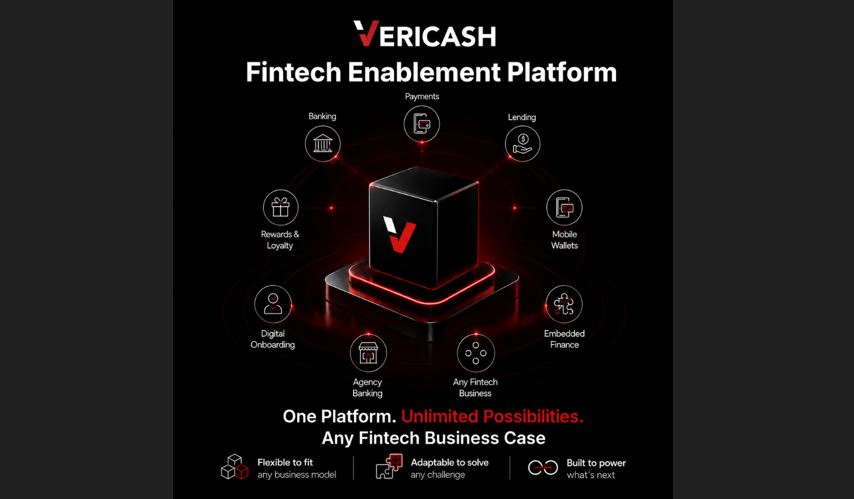
JOHANNESBURG, South Africa, July 7, 2026/APO Group/ –Backbase (www.Backbase.com) announced the acquisition of Kasisto, a pioneer in agentic AI for banking and financial services. Kasisto’s agentic platform, financial services intelligence, and New York-based team are now part of Backbase and the AI-native Banking OS.


The transaction integrates Kasisto’s financial intelligence models into the Backbase platform, building an architecture that helps financial institutions overcome legacy IT constraints that have stymied digital transformation across Africa.

This announcement follows a recent survey of 277 bank executives across Africa, conducted by Backbase with African Banker magazine (https://apo-opa.co/4f7b9KZ), which revealed legacy system integration as the primary obstacle to AI adoption. This bottleneck prevents established institutions from scaling digital offerings fast enough to compete with agile, cloud-native fintechs and mobile money operators.

Legacy maintenance costs billions globally, but the impact is especially acute in Africa, where banks face high operational costs and a growing mobile-first unbanked population.

This acquisition addresses a structural constraint specific to how African banking has grown

This acquisition addresses a structural constraint specific to how African banking has grown,” said Ayman Daoud, Vice-President of Africa regions at Backbase. “We see too many banks build AI in isolated pockets, like a chatbot in digital self-service or automation in the contact centre, without resolving the disconnect between those teams and back-office operations. By embedding Kasisto’s reasoning AI into the core operating model, we’re giving African banks one system that can answer a question and complete the work behind it within the governance and compliance regulators require.

Banking-grade agentic AI, embedded in the Banking OS.

Kasisto’s platform, KAI, is purpose-built for regulated financial environments, unlike general-purpose AI models. It uses specialised financial LLMs that understand context, apply institutional judgment, and operate strictly within banking governance and compliance frameworks. In the continent, the platform has already been successfully deployed by Absa and Nedbank, where, in the latter, it cut the number of live agent conversations by half within just a year of launch.

Combined with Backbase’s flagship Banking OS, Kasisto’s conversational and agentic AI turns customer intent into governed execution: verifying eligibility, applying policy, and triggering workflows to resolve requests without manual handoffs. The result is AI that not only fields queries but finishes them, with proactive, compliant outbound engagement before a customer need becomes an inbound service request.

“Agentic AI will define how banks compete over the next decade. Africa is a particularly well placed to leapfrog western banks with decades-old core systems. Backbase and Kasisto give those institutions purpose-built agentic intelligence from day one, rather than retrofitting it onto legacy infrastructure later.” said Lance Berks, CEO of Kasisto.

Backbase’s engagement layer and Kasisto’s transactional AI give African financial institutions a way to bypass traditional IT modernisation cycles that often take years and have high failure rates.

Distributed by APO Group on behalf of Backbase.


Continue Reading

Business

StarCharge Releases Industry White Papers: From Infrastructure to Network Systems, Microgrids Moving from Customization to Scaling Up Development

Published

on

StarCharge

CHANG ZHOU, CHINA – Media OutReach Newswire – 7 July 2026 – The global new energy vehicle market has seen rapid growth in recent years. With continued strong expectations for new energy vehicle exports, the global electric vehicle (EV) charging market is entering a new stage of rapid expansion. Recently, StarCharge, the global leading brand of EV Charging equipment and smart energy systems, held a major industry seminar in Hong Kong and released two new white papers at the event, exploring two major transformative trends in the industry that are worth paying attention to.

According to the ‘Technical White Paper’ by StarCharge, for years, EV charging infrastructure has mainly been seen as support for vehicle sales expansion: building more chargers, expanding coverage, and speeding up charging.

However, this role is starting to change.

As electrification scales up, charging networks are becoming a part of the energy system itself. They are no longer just places for vehicles to top up; they are evolving into smart energy nodes connecting vehicles, the grid, distributed energy, storage, and digital management.

This shift from charging infrastructure to charging network systems shows that the industry is moving from basic access to integrated value: from charging services to energy services, from standalone stations to PV-storage-charging systems, from equipment deployment to scenario-based infrastructure.

StarCharge believes that the future charging network ecosystem will go through four major turning points.

Four Key Points Reshaping the Ecosystem

1. Charging Networks Are Becoming Energy Infrastructure

Charging infrastructure is going beyond its original role as just a support for EVs. As EV adoption grows, charging networks are becoming strategic energy infrastructure: they connect mobility demand with the grid, distributed energy, storage, digital platforms, and future energy services.

2. Defining the Scenarios for the Network

The future charging network won’t be shaped by hardware alone. Policies determine whether infrastructure should be built, technology determines the speed of construction, but real-world scenarios determine what the charging network actually needs to look like.

Urban commuting, highway trips, ride-hailing, logistics fleets, county and rural coverage, holiday peak demand, heavy trucks, mining areas, ports, airports, and autonomous driving all create different charging needs. Therefore, a mature charging network can’t be ‘one-size-fits-all’; it has to be designed around different vehicle types, operating hours, power requirements, reliability needs, and grid conditions.

3. Digital platforms turn charging networks into operable assets

A large charging network only truly has value when it can be scaled, optimized, and managed. This is exactly the core role of cloud platforms. They turn millions of charging points, users, stations, transactions, and energy flows into a measurable, controllable, and continuously optimized operating system.

StarCharge’s platform capabilities cover site selection, pricing, marketing, station operations, smart maintenance, charging safety, station robots, AI-based smart charging, fleet management, energy optimization, and ESG reporting. In other words, digital platforms are the key to transforming charging infrastructure from a heavy-asset network into smart, operable, and scalable assets.

4. Charging stations are becoming grid-friendly energy resources

The next-generation charging infrastructure won’t be defined by any single technology. It will be built on a complete tech stack, combining high-power charging, liquid cooling, integrated PV-storage-charging, DC bus architecture, V2G, automated charging, and AI-driven operations. In other words, future charging stations shouldn’t just be passive electricity consumers that add stress to the grid. Through energy storage, renewable energy integration, V2G, smart scheduling, and AI-based energy optimization, charging stations can become grid-friendly energy resources.

This means that aside from charging vehicles, a charging station can absorb renewable energy, buffer peak loads, respond to demand-side signals, support peak shaving and valley filling, regulate frequency, and provide carbon-neutral ESG data for fleet operators. Its business model will also go beyond charging fees, creating new value through energy services, data services, carbon-related benefits, and grid interaction capabilities.

Microgrids Have Emerged at the Right Time

At the same time, with the continuous development of distributed energy and photovoltaic energy, microgrids have emerged at the right time. They are not just a product, but a local energy system built around real-world scenarios.

In the latest “White Paper” on scenario-based microgrid technology, StarCharge points out that microgrids are moving from customized engineering projects toward scalable, replicable energy systems.

According to StarCharge, a microgrid is not a single device, nor is it just an energy storage product. It’s a local energy system designed around the needs of a specific scenario, coordinating local generation, loads, storage, control, and operational strategies within a defined electrical boundary.

Moreover, depending on the scenario—such as data centers, individual charging stations, zero-carbon industrial parks, or green mines—the energy challenges are completely different. The right microgrid is defined by the scenario it serves.

The white paper also highlights four high-value paths: electricity-computing synergy, independent power supply, zero-carbon parks, and green mines. In areas with weak grids or limited grid access, microgrids ensure the operation of critical loads. In emerging load scenarios like data centers and industrial parks, microgrids support renewable energy integration, energy resilience, and cost optimization. In high-tech-demand scenarios like mines, microgrids become the foundation for ensuring production continuity, energy transition, and ESG competitiveness.

The three-stage evolution of microgrids

As power sources and loads become increasingly DC, microgrid architectures are evolving from AC-dominated systems to AC-DC hybrid systems, and eventually toward microgrids with a higher proportion of DC.

Microgrid 1.0 — dominated by AC architecture. It integrates renewable energy into the existing AC grid framework, but its control heavily relies on grid-following management and support from the external grid.

Microgrid 2.0 — the AC-DC hybrid stage. AC and DC buses coexist, allowing PV, storage, and DC loads to connect more directly. Bidirectional power hubs, solid-state transformers (SST), and energy routers become important bridges between AC and DC systems. This stage balances strong AC compatibility with higher DC efficiency and is expected to remain mainstream in the next 10-15 years.

Microgrid 3.0—it’s the era of DC microgrids. As solar PV, wind power, battery storage, data centers, LED lighting, and EV charging increasingly move toward DC, DC microgrids can reduce repeated AC-DC conversion losses, simplify control, and support millisecond-level responses.

This evolution is closely linked to the mission of microgrids: breaking through energy access bottlenecks, enabling sustainable development, connecting technology, industry, policy, market, and community needs, and unlocking the integrated value of local energy systems.

In the future, StarCharge will steadily expand into the growing global markets for new EVs and renewable energy, building on its smart energy systems that have been widely validated in the Chinese market.


Continue Reading

Trending