Connect with us
Anglostratits

Business

StarCharge Releases Industry White Papers: From Infrastructure to Network Systems, Microgrids Moving from Customization to Scaling Up Development

Published

on

StarCharge

CHANG ZHOU, CHINA – Media OutReach Newswire – 7 July 2026 – The global new energy vehicle market has seen rapid growth in recent years. With continued strong expectations for new energy vehicle exports, the global electric vehicle (EV) charging market is entering a new stage of rapid expansion. Recently, StarCharge, the global leading brand of EV Charging equipment and smart energy systems, held a major industry seminar in Hong Kong and released two new white papers at the event, exploring two major transformative trends in the industry that are worth paying attention to.

According to the ‘Technical White Paper’ by StarCharge, for years, EV charging infrastructure has mainly been seen as support for vehicle sales expansion: building more chargers, expanding coverage, and speeding up charging.

However, this role is starting to change.

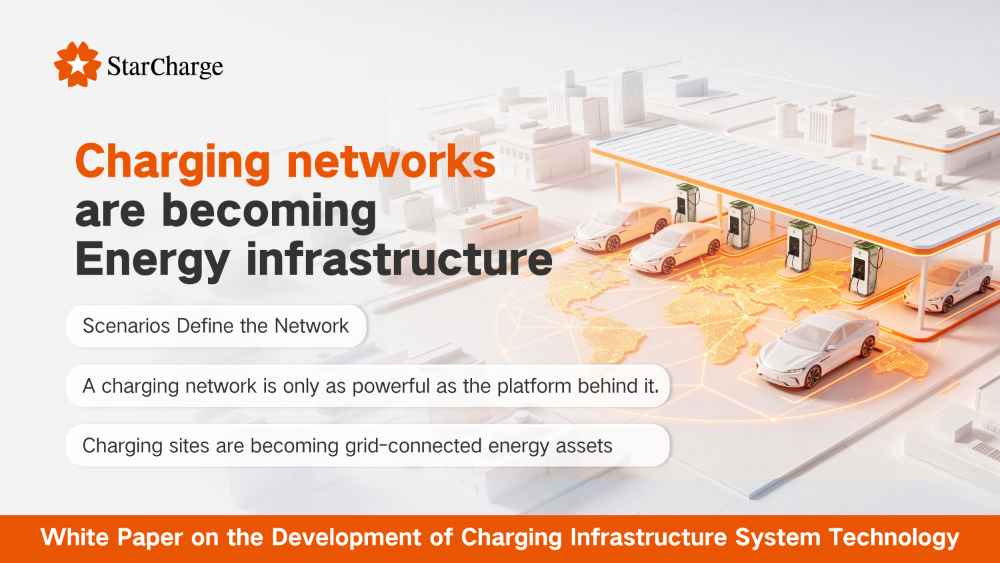
As electrification scales up, charging networks are becoming a part of the energy system itself. They are no longer just places for vehicles to top up; they are evolving into smart energy nodes connecting vehicles, the grid, distributed energy, storage, and digital management.

This shift from charging infrastructure to charging network systems shows that the industry is moving from basic access to integrated value: from charging services to energy services, from standalone stations to PV-storage-charging systems, from equipment deployment to scenario-based infrastructure.

StarCharge believes that the future charging network ecosystem will go through four major turning points.

Four Key Points Reshaping the Ecosystem

1. Charging Networks Are Becoming Energy Infrastructure

Charging infrastructure is going beyond its original role as just a support for EVs. As EV adoption grows, charging networks are becoming strategic energy infrastructure: they connect mobility demand with the grid, distributed energy, storage, digital platforms, and future energy services.

2. Defining the Scenarios for the Network

The future charging network won’t be shaped by hardware alone. Policies determine whether infrastructure should be built, technology determines the speed of construction, but real-world scenarios determine what the charging network actually needs to look like.

Urban commuting, highway trips, ride-hailing, logistics fleets, county and rural coverage, holiday peak demand, heavy trucks, mining areas, ports, airports, and autonomous driving all create different charging needs. Therefore, a mature charging network can’t be ‘one-size-fits-all’; it has to be designed around different vehicle types, operating hours, power requirements, reliability needs, and grid conditions.

3. Digital platforms turn charging networks into operable assets

A large charging network only truly has value when it can be scaled, optimized, and managed. This is exactly the core role of cloud platforms. They turn millions of charging points, users, stations, transactions, and energy flows into a measurable, controllable, and continuously optimized operating system.

StarCharge’s platform capabilities cover site selection, pricing, marketing, station operations, smart maintenance, charging safety, station robots, AI-based smart charging, fleet management, energy optimization, and ESG reporting. In other words, digital platforms are the key to transforming charging infrastructure from a heavy-asset network into smart, operable, and scalable assets.

4. Charging stations are becoming grid-friendly energy resources

The next-generation charging infrastructure won’t be defined by any single technology. It will be built on a complete tech stack, combining high-power charging, liquid cooling, integrated PV-storage-charging, DC bus architecture, V2G, automated charging, and AI-driven operations. In other words, future charging stations shouldn’t just be passive electricity consumers that add stress to the grid. Through energy storage, renewable energy integration, V2G, smart scheduling, and AI-based energy optimization, charging stations can become grid-friendly energy resources.

This means that aside from charging vehicles, a charging station can absorb renewable energy, buffer peak loads, respond to demand-side signals, support peak shaving and valley filling, regulate frequency, and provide carbon-neutral ESG data for fleet operators. Its business model will also go beyond charging fees, creating new value through energy services, data services, carbon-related benefits, and grid interaction capabilities.

Microgrids Have Emerged at the Right Time

At the same time, with the continuous development of distributed energy and photovoltaic energy, microgrids have emerged at the right time. They are not just a product, but a local energy system built around real-world scenarios.

In the latest “White Paper” on scenario-based microgrid technology, StarCharge points out that microgrids are moving from customized engineering projects toward scalable, replicable energy systems.

According to StarCharge, a microgrid is not a single device, nor is it just an energy storage product. It’s a local energy system designed around the needs of a specific scenario, coordinating local generation, loads, storage, control, and operational strategies within a defined electrical boundary.

Moreover, depending on the scenario—such as data centers, individual charging stations, zero-carbon industrial parks, or green mines—the energy challenges are completely different. The right microgrid is defined by the scenario it serves.

The white paper also highlights four high-value paths: electricity-computing synergy, independent power supply, zero-carbon parks, and green mines. In areas with weak grids or limited grid access, microgrids ensure the operation of critical loads. In emerging load scenarios like data centers and industrial parks, microgrids support renewable energy integration, energy resilience, and cost optimization. In high-tech-demand scenarios like mines, microgrids become the foundation for ensuring production continuity, energy transition, and ESG competitiveness.

The three-stage evolution of microgrids

As power sources and loads become increasingly DC, microgrid architectures are evolving from AC-dominated systems to AC-DC hybrid systems, and eventually toward microgrids with a higher proportion of DC.

Microgrid 1.0 — dominated by AC architecture. It integrates renewable energy into the existing AC grid framework, but its control heavily relies on grid-following management and support from the external grid.

Microgrid 2.0 — the AC-DC hybrid stage. AC and DC buses coexist, allowing PV, storage, and DC loads to connect more directly. Bidirectional power hubs, solid-state transformers (SST), and energy routers become important bridges between AC and DC systems. This stage balances strong AC compatibility with higher DC efficiency and is expected to remain mainstream in the next 10-15 years.

Microgrid 3.0—it’s the era of DC microgrids. As solar PV, wind power, battery storage, data centers, LED lighting, and EV charging increasingly move toward DC, DC microgrids can reduce repeated AC-DC conversion losses, simplify control, and support millisecond-level responses.

This evolution is closely linked to the mission of microgrids: breaking through energy access bottlenecks, enabling sustainable development, connecting technology, industry, policy, market, and community needs, and unlocking the integrated value of local energy systems.

In the future, StarCharge will steadily expand into the growing global markets for new EVs and renewable energy, building on its smart energy systems that have been widely validated in the Chinese market.

 

Energy

Nigeria Mining Week promises high-level engagement on critical minerals and industrialisation roadmap

Published

on

Nigeria

“New Critical Minerals Forum will focus on needs for global energy transition”

CAPE TOWN, South Africa, July 28, 2026/APO Group/ –Hot on the heels of Nigeria’s unveiling of a strategic roadmap designed to convert the country’s mineral wealth into investments in clean energy manufacturing and domestic value addition, the organisers of the Nigeria Mining Week conference and expo have revealed this year’s packed and topical programme.

Convening at the Abuja Continental Hotel in the Nigerian capital from 13 to 14 October, this longstanding mining gathering of note supports Nigeria’s ambition to become a regional refining and processing powerhouse. The theme of this year’s event is “Unlocking Investment and Growth through Partnerships.”

DOWNLOAD THE BROCHURE (https://apo-opa.co/4yPtbdV)

Unveiling strategic roadmaps

Says Samukelo Madlabane, Event Director – Mining Portfolio, VUKA Group: “The Nigerian government has sought to boost beneficiation and industrialisation in its mining sector by mandating local processing, opening large scale mineral plants and unveiling strategic roadmaps that link critical minerals to clean energy manufacturing. Recent initiatives focus on lithium, copper and bauxite, aiming to move beyond raw exports and build integrated value chains.”

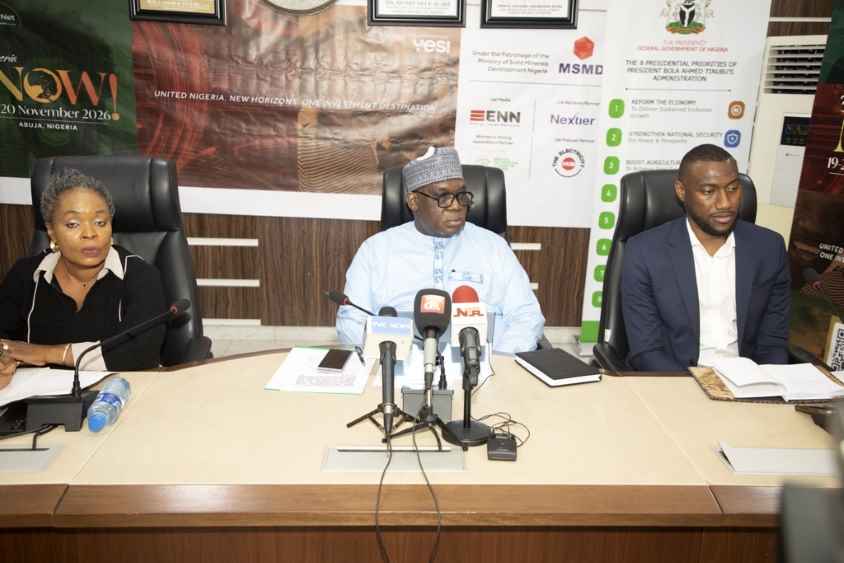
Earlier this month, the Council for Critical Minerals Development in the Global South presented a Critical Minerals Roadmap to the Minister of Solid Minerals Development, Dr Dele Alake, outlining strategies to harness Nigeria’s lithium, copper and bauxite resources in order to strengthen local industries, advance mineral beneficiation and draw investment into green manufacturing.

Madlabane adds: “Nigeria Mining Week is perfectly timed for this defining moment in this nation’s mining sector. Our new Critical Minerals Forum will focus on the minerals needed for the global energy transition, such as lithium, REEs, graphite, copper, and other battery or tech minerals, and how Nigeria must position itself to attract serious investment and unlock the country’s rapidly expanding opportunities.”

The Nigeria Mining Week programme highlights include:

Critical Minerals Forum: 13 October

  • Strategic Leadership in the Critical Minerals Race

This session will focus on positioning Nigeria with US and EU MSP initiatives and Asian cathode makers, ensuring bankable offtake term sheets, scaling REE projects responsibly, building infrastructure and traceability rules, and securing independent assurance to strengthen buyer confidence.

  • Building Reliable Pathways from Nigeria to Global Battery, Magnet & EV Markets

International buyers demand clear technical specifications, impurity thresholds and QA/QC standards before agreements with Nigerian projects. Success depends on structuring long term supply contracts, strengthening traceability and ESG documentation, and building credibility with partners across Asia, Europe, the US and the Gulf to secure sustainable supply chain integration.

Exploration & Geological Data:

Unlocking Nigeria’s Exploration Potential

This session explores how investment grade datasets, AI driven discovery and geoscience portals can unlock capital for Nigeria’s mining sector. Experts highlight data standards, licensing simplification and environmental safeguards to accelerate investor confidence and global competitiveness within 12 months.

Financing & Investment:

Financing Exploration & Junior Mining Companies

This session examines Nigeria’s data room requirements, capital structures and licensing reforms to attract investment. Experts highlight clean titles, ESG credibility, traceability and offtake signals as essential for DFIs, investors and global buyers to commit confidently within tight timelines.

Our new Critical Minerals Forum will focus on the minerals needed for the global energy transition, such as lithium, REEs, graphite, copper, and other battery or tech minerals

Industrialisation:

From Ore to Industry – Beneficiation & Refining

This session focuses on commissioning strategies for Nigeria’s lithium and gold projects, contracting for feed security, realistic OPEX benchmarks, and training partnerships. Experts outline pathways from first product to battery grade chemicals and value added metals supported by regulatory adjustments.

Gemstones:

Developing Nigeria’s Gemstone Value Chains

Exploring the formalisation of Nigeria’s artisanal gemstone mining through cooperatives, traceability and certification, experts will highlight international grading standards, models from Tanzania and Zambia, domestic gemstone clusters and incentives to attract global buyers, processors and jewellery manufacturers.

Policy, Regulation & Governance:

Building a Clear, Predictable and Competitive Policy Environment

Nigeria’s mining sector needs regulatory reforms to strengthen licensing predictability, improve contract stability, enhance transparency through NEITI and MCO, align beneficiation and ASM formalisation with global standards, and draw lessons from Zambia, Namibia, Botswana and Ghana to boost investor confidence.

ESG & Sustainability:

ESG that Wins Investments

This session will focus on how Nigeria must define evidence grade traceability for US and EU buyers, adopt global water and tailings practices, apply CDA designs from Ghana Botswana and Peru, meet gender inclusion KPIs within 12 months, and secure independent assurance to strengthen financing and offtake terms.

Infrastructure & Power Integration:

Power to Mines & Logistics for Industrialisation

This session will examine IPP and cogen models from India Australia and Brazil, lessons from the Lobito Corridor for Nigerian rail port power integration, ballast and aggregate standards, digital logistics tools to reduce losses, and PPP structures enabling long tenor corridor financing.

Side events and forums

Other well-known side events and forums that make a welcome return to Nigeria Mining Week and always add to the engaging atmosphere include:

  • The Gold Forum
  • The Steel & Industrial Minerals Forum
  • The Women in Extractive Industries Forum
  • The CEO Roundtable
  • The Deal Room
  • – Project Showcase & Private Capital Engagement

Industry support

Over the last 11 years, Nigeria Mining Week has become thé gathering place for many mining pioneers and suppliers, and many have become longstanding partners of the Abuja gathering. Titan Minerals Ltd is returning as the diamond plus sponsor; KMDC, Kursi, Lovol, Sinogrand, and XCMG have already signed up as diamond sponsors; and SMT Nigeria is back as a platinum sponsor.

The event will gather 3,000+ attendees, 75+ world class speakers and 150+ exhibitors and solution providers. Countries that are expected to have a strong presence with international pavilions are UK, EU, US, China, UAE, Canada, South Africa and India.

The Nigeria Mining Week conference and expo is organised by the Miners Association of Nigeria, in partnership with PwC, VUKA Group and Mining Review Africa, with the Nigerian Ministry of Mines and Steel Development as official host. NEITI is the event’s transparency partner.

DOWNLOAD THE BROCHURE (https://apo-opa.co/4yPtbdV)

Distributed by APO Group on behalf of VUKA Group.

Continue Reading

Business

Customer Experience Management (CEM) Africa 2026 Welcomes Three Influential Global Speakers

Published

on

CEM

Together, they represent three distinct but complementary perspectives on leadership, customer experience and business transformation

I am particularly keen to explore Cape Town’s seamless integration of global brands and unique local retailers, alongside its exceptional culinary scene and vibrant public spaces

CAPE TOWN, South Africa, July 28, 2026/APO Group/ –CEM Africa, Africa’s leading customer experience conference, has announced three internationally respected speakers who will take to the stage at CEM Africa 2026, taking place from 18 – 20 August 2026 in Cape Town.


Bringing together senior leaders from customer experience, marketing, digital transformation, retail, customer service and business strategy, CEM Africa continues to attract influential voices who challenge conventional thinking and share practical insights that organisations can apply to create stronger customer relationships and better business outcomes.

Joining this year’s programme are Martin Urrutia, Global Head of Retail Experience at The LEGO Group; Bruce Whitfield, one of South Africa’s most respected business journalists and best-selling authors; and Zahirah Variawa, Emmy-nominated television presenter, award-winning travel producer and destination marketing strategist.

Together, they represent three distinct but complementary perspectives on leadership, customer experience and business transformation.

Creating World-Class Customer Experiences

Making his South African debut at CEM Africa, Martin Urrutia brings extensive global expertise in retail experience design and customer engagement.

As the Global Head of Retail Experience at The LEGO Group, Martin leads the development of retail concepts and customer experiences that strengthen one of the world’s most recognised brands. His work demonstrates how thoughtful experience design, innovation and brand strategy can be translated into commercially successful customer experiences across global markets.

During his session, Martin will share practical insights into designing memorable retail experiences that strengthen customer relationships while delivering measurable business value.

Speaking ahead of his visit to Cape Town, Martin said:

“During my visit to Cape Town, I look forward to engaging with the city’s authentic experiences, local culture, and distinctive destinations, all of which continue to inform and inspire the retail and brand experiences I create. I am particularly keen to explore Cape Town’s seamless integration of global brands and unique local retailers, alongside its exceptional culinary scene and vibrant public spaces — environments that foster connection, discovery, and new perspectives.”

Leadership in an Age of Uncertainty

Bruce Whitfield has built a reputation as one of South Africa’s most trusted business commentators, interviewing some of the world’s leading executives, entrepreneurs and innovators throughout his career. Drawing on decades of experience covering business, leadership and economic change, Bruce will explore how leaders can make better decisions, embrace uncertainty and identify opportunity in rapidly changing environments.

His keynote will challenge delegates to rethink how resilience, adaptability and decisive leadership can become competitive advantages in today’s business landscape.

The Power of Storytelling to Shape Experiences

Joining the programme is Zahirah Variawa, whose career spans more than 16 years across Africa, the Middle East and international markets.

An Emmy-nominated television presenter, award-winning travel producer, content creator and destination marketing strategist, Zahirah has partnered with tourism boards, governments, airlines and luxury hospitality brands to shape how destinations are experienced and remembered. Beyond broadcasting, she advises governments and international organisations on destination marketing strategy, facilitates industry dialogue and champions tourism as a catalyst for economic growth across Africa.

At CEM Africa 2026, Zahirah will explore how storytelling, human connection and authentic experiences influence perception, build trust and create lasting emotional connections. Her session will demonstrate why the principles of destination branding and experience design are increasingly relevant to organisations seeking to differentiate themselves through customer experience.

A Platform for Africa’s Customer Experience Leaders

The announcement reinforces CEM Africa’s position as the continent’s premier gathering for senior customer experience professionals, bringing together business leaders to explore the ideas, strategies and innovations shaping the future of customer engagement.

From world-class retail innovation and leadership to the power of storytelling, delegates will gain practical insights from speakers whose experience extends well beyond traditional customer experience disciplines. Together, they demonstrate that exceptional customer experiences are shaped by design, strengthened by leadership and brought to life through authentic human connection.

CEM Africa 2026 takes place in Cape Town from 18–20 August 2026, bringing together senior decision-makers from financial services, retail, telecommunications, healthcare, technology, government and other leading industries for three days of learning, networking and business collaboration.

For more information and to register, visit the CEM Africa website.

CEM Africa.com (https://apo-opa.co/4wtCFtN)

View the event programme https://apo-opa.co/4wr3j6r

Ticket Options https://apo-opa.co/4bgs9gQ

Distributed by APO Group on behalf of VUKA Group.

Continue Reading

Energy

Gabon Opens the Next Chapter of Offshore Growth as Hydrocarbons Minister Clotaire Kondja Joins African Energy Week (AEW) 2026

Published

on

African Energy Chamber

Gabon Petroleum and Gas Minister Clotaire Kondja will speak at AEW 2026, highlighting offshore expansion, gas reforms and new investment opportunities across the country

CAPE TOWN, South Africa, July 27, 2026/APO Group/ –Clotaire Kondja, Gabon’s Minister of Petroleum and Gas, has been confirmed as a speaker at African Energy Week (AEW) 2026, bringing one of Central Africa’s foremost architects of upstream reform to the continent’s premier energy investment event. Since taking office in January 2026, Minister Kondja has accelerated efforts to attract international capital, unlock Gabon’s largely untapped offshore potential and commercialize its substantial natural gas resources.

Taking place in Cape Town from October 12‒16, AEW 2026 serves as the continent’s leading platform for energy investment, convening government leaders, operators, financiers and technology providers to drive deals across Africa’s oil, gas and energy sectors. With more than 2 billion barrels of proven oil reserves and significant untapped offshore acreage, Gabon continues to offer prolific investment opportunities that will be showcased to global investors in Cape Town.

Around 72% of the country’s deepwater acreage remains unexplored, and the government is actively opening new opportunities for investors. Speaking at the Invest in African Energy Forum in Paris in April, Minister Kondja confirmed that Gabon expected to finalize PSCs with ExxonMobil and bp, converting MoUs signed in October 2025 into active deepwater exploration licenses. The government’s modernized Hydrocarbons Code and enhanced fiscal framework are further strengthening the investment case, creating competitive conditions for companies pursuing frontier exploration, mature field redevelopment and long-term production growth.

Minister Clotaire Kondja is leading a new era of investment across Gabon’s oil and gas sector through competitive reforms, frontier exploration and strategic gas development

Upstream investors are targeting frontier offshore blocks and redevelopment of mature assets, while midstream opportunities include new pipelines, storage infrastructure and refinery upgrades. At the same time, the government’s gas modernization agenda is opening investment across LNG exports, gas-to-power projects and downstream industrial gas applications as Gabon positions itself as a regional petroleum and gas hub. The government has also eliminated signature bonuses for deepwater and ultra-deepwater blocks while launching a 2026 licensing campaign covering roughly 70% of the country’s available offshore acreage.

A new investor-friendly Gas Code is under development, complemented by plans for a 130‒150-km pipeline linking Gamba to Libreville by early 2028. The strategy is supported by Perenco’s $2 billion Cap Lopez LNG project, expected to begin operations in 2026 through an FLNG facility capable of producing 700,000 tons of LNG and 25,000 tons of LPG annually while significantly reducing gas flaring.

Investment activity is gathering pace across the sector. BW Energy, Panoro Energy and Gabon Oil Company approved the $300 million Bourdon offshore development in May 2026, targeting first oil in the first quarter of 2028 from approximately 25 million barrels of recoverable reserves. BW Energy and Panoro Energy are also progressing the MaBoMo Phase 2 development, expected to deliver first oil during the first half of 2027, while Assala Energy’s Magoga-A discovery confirmed 8m of net oil play in the Gamba Sandstone formation. Meanwhile, investment continues to accelerate across the midstream segment through planned gas gathering infrastructure, expanded storage capacity and refinery modernization, supporting the government’s ambition of building an integrated petroleum industry while capturing greater value from domestic gas production.

“Minister Clotaire Kondja is leading a new era of investment across Gabon’s oil and gas sector through competitive reforms, frontier exploration and strategic gas development. As Gabon opens new offshore opportunities and advances major infrastructure projects, his insights at AEW 2026 will be invaluable for investors looking to participate in one of Africa’s most dynamic energy markets,” says NJ Ayuk, Executive Chairman, African Energy Chamber.

Beyond showcasing Gabon’s investment agenda, Minister Kondja’s participation will contribute to broader discussions on how African producers can remain globally competitive amid shifting capital flows, evolving energy demand and growing pressure to deliver long-term energy security. His perspective will add to high-level dialogue between policymakers, operators and financiers focused on accelerating investment and strengthening Africa’s role in the global energy landscape.

Distributed by APO Group on behalf of African Energy Chamber.

Continue Reading

Trending