Connect with us

Business

StarCharge Releases Industry White Papers: From Infrastructure to Network Systems, Microgrids Moving from Customization to Scaling Up Development

Published

on

StarCharge

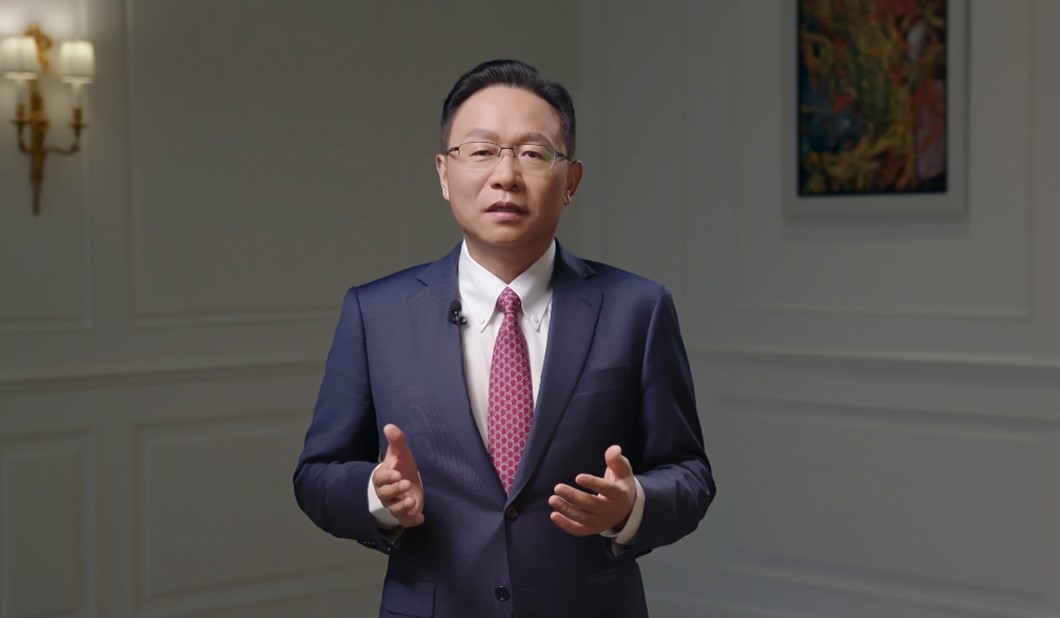
CHANG ZHOU, CHINA – Media OutReach Newswire – 7 July 2026 – The global new energy vehicle market has seen rapid growth in recent years. With continued strong expectations for new energy vehicle exports, the global electric vehicle (EV) charging market is entering a new stage of rapid expansion. Recently, StarCharge, the global leading brand of EV Charging equipment and smart energy systems, held a major industry seminar in Hong Kong and released two new white papers at the event, exploring two major transformative trends in the industry that are worth paying attention to.

According to the ‘Technical White Paper’ by StarCharge, for years, EV charging infrastructure has mainly been seen as support for vehicle sales expansion: building more chargers, expanding coverage, and speeding up charging.

However, this role is starting to change.

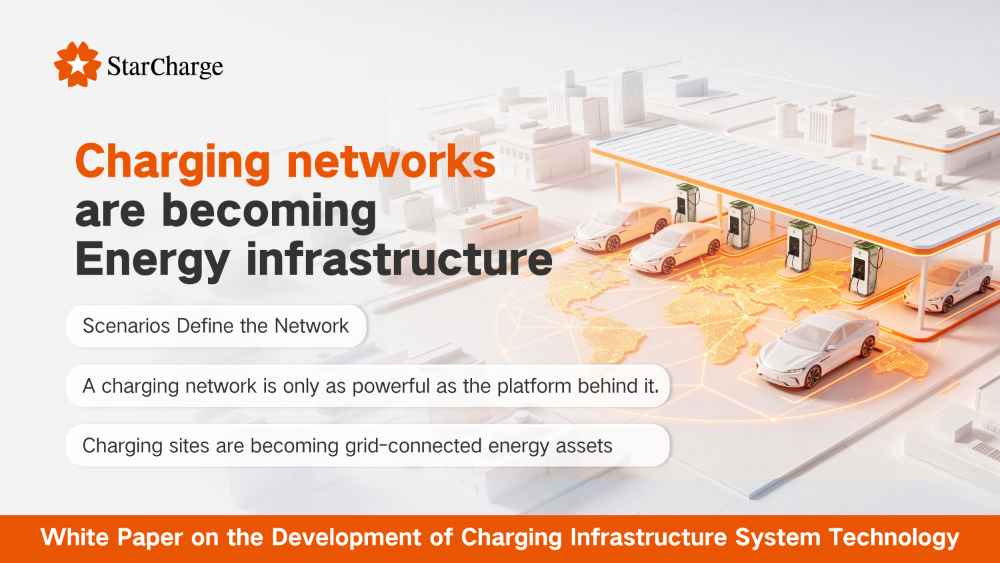
As electrification scales up, charging networks are becoming a part of the energy system itself. They are no longer just places for vehicles to top up; they are evolving into smart energy nodes connecting vehicles, the grid, distributed energy, storage, and digital management.

This shift from charging infrastructure to charging network systems shows that the industry is moving from basic access to integrated value: from charging services to energy services, from standalone stations to PV-storage-charging systems, from equipment deployment to scenario-based infrastructure.

StarCharge believes that the future charging network ecosystem will go through four major turning points.

Four Key Points Reshaping the Ecosystem

1. Charging Networks Are Becoming Energy Infrastructure

Charging infrastructure is going beyond its original role as just a support for EVs. As EV adoption grows, charging networks are becoming strategic energy infrastructure: they connect mobility demand with the grid, distributed energy, storage, digital platforms, and future energy services.

2. Defining the Scenarios for the Network

The future charging network won’t be shaped by hardware alone. Policies determine whether infrastructure should be built, technology determines the speed of construction, but real-world scenarios determine what the charging network actually needs to look like.

Urban commuting, highway trips, ride-hailing, logistics fleets, county and rural coverage, holiday peak demand, heavy trucks, mining areas, ports, airports, and autonomous driving all create different charging needs. Therefore, a mature charging network can’t be ‘one-size-fits-all’; it has to be designed around different vehicle types, operating hours, power requirements, reliability needs, and grid conditions.

3. Digital platforms turn charging networks into operable assets

A large charging network only truly has value when it can be scaled, optimized, and managed. This is exactly the core role of cloud platforms. They turn millions of charging points, users, stations, transactions, and energy flows into a measurable, controllable, and continuously optimized operating system.

StarCharge’s platform capabilities cover site selection, pricing, marketing, station operations, smart maintenance, charging safety, station robots, AI-based smart charging, fleet management, energy optimization, and ESG reporting. In other words, digital platforms are the key to transforming charging infrastructure from a heavy-asset network into smart, operable, and scalable assets.

4. Charging stations are becoming grid-friendly energy resources

The next-generation charging infrastructure won’t be defined by any single technology. It will be built on a complete tech stack, combining high-power charging, liquid cooling, integrated PV-storage-charging, DC bus architecture, V2G, automated charging, and AI-driven operations. In other words, future charging stations shouldn’t just be passive electricity consumers that add stress to the grid. Through energy storage, renewable energy integration, V2G, smart scheduling, and AI-based energy optimization, charging stations can become grid-friendly energy resources.

This means that aside from charging vehicles, a charging station can absorb renewable energy, buffer peak loads, respond to demand-side signals, support peak shaving and valley filling, regulate frequency, and provide carbon-neutral ESG data for fleet operators. Its business model will also go beyond charging fees, creating new value through energy services, data services, carbon-related benefits, and grid interaction capabilities.

Microgrids Have Emerged at the Right Time

At the same time, with the continuous development of distributed energy and photovoltaic energy, microgrids have emerged at the right time. They are not just a product, but a local energy system built around real-world scenarios.

In the latest “White Paper” on scenario-based microgrid technology, StarCharge points out that microgrids are moving from customized engineering projects toward scalable, replicable energy systems.

According to StarCharge, a microgrid is not a single device, nor is it just an energy storage product. It’s a local energy system designed around the needs of a specific scenario, coordinating local generation, loads, storage, control, and operational strategies within a defined electrical boundary.

Moreover, depending on the scenario—such as data centers, individual charging stations, zero-carbon industrial parks, or green mines—the energy challenges are completely different. The right microgrid is defined by the scenario it serves.

The white paper also highlights four high-value paths: electricity-computing synergy, independent power supply, zero-carbon parks, and green mines. In areas with weak grids or limited grid access, microgrids ensure the operation of critical loads. In emerging load scenarios like data centers and industrial parks, microgrids support renewable energy integration, energy resilience, and cost optimization. In high-tech-demand scenarios like mines, microgrids become the foundation for ensuring production continuity, energy transition, and ESG competitiveness.

The three-stage evolution of microgrids

As power sources and loads become increasingly DC, microgrid architectures are evolving from AC-dominated systems to AC-DC hybrid systems, and eventually toward microgrids with a higher proportion of DC.

Microgrid 1.0 — dominated by AC architecture. It integrates renewable energy into the existing AC grid framework, but its control heavily relies on grid-following management and support from the external grid.

Microgrid 2.0 — the AC-DC hybrid stage. AC and DC buses coexist, allowing PV, storage, and DC loads to connect more directly. Bidirectional power hubs, solid-state transformers (SST), and energy routers become important bridges between AC and DC systems. This stage balances strong AC compatibility with higher DC efficiency and is expected to remain mainstream in the next 10-15 years.

Microgrid 3.0—it’s the era of DC microgrids. As solar PV, wind power, battery storage, data centers, LED lighting, and EV charging increasingly move toward DC, DC microgrids can reduce repeated AC-DC conversion losses, simplify control, and support millisecond-level responses.

This evolution is closely linked to the mission of microgrids: breaking through energy access bottlenecks, enabling sustainable development, connecting technology, industry, policy, market, and community needs, and unlocking the integrated value of local energy systems.

In the future, StarCharge will steadily expand into the growing global markets for new EVs and renewable energy, building on its smart energy systems that have been widely validated in the Chinese market.


 

Business

Nigerian Operators Strengthen Africa-Wide Energy Collaboration at African Energy Week (AEW) 2026

Published

on

Operators focused on deepwater, offshore field development and gas infrastructure have joined AEW 2026 in Cape Town

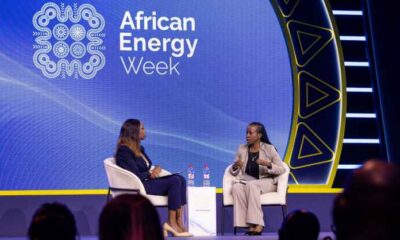
CAPE TOWN, South Africa, July 7, 2026/APO Group/ –Leading Nigerian oil and gas operators are set to play a major role at African Energy Week (AEW) 2026, bringing upstream expertise, project development experience and investment momentum to Cape Town as Africa seeks to accelerate regional energy collaboration. Their participation reflects a growing push by Nigerian producers to engage more closely with regional and international stakeholders on new field development, gas commercialization and long-term energy investment.


TotalEnergies’ Nigeria Managing Director and Country Chair Matthieu Bouyer will attend alongside former TotalEnergies Managing Director Adewale Fayemi. A strategic player in the country’s upstream market, TotalEnergies continues to operate key deepwater assets in Nigeria and is among the international majors that have maintained offshore investment even as onshore and shallow-water positions have shifted to indigenous firms.

First E&P – which produces approximately 57,000 barrels per day (bpd) – has emerged as an increasingly more prominent player in Nigeria’s oil and gas market. The company has built its portfolio through direct asset development and positioning across the Niger Delta, contributing to the broader expansion of indigenous upstream capacity.CEO and MD Ademola Adeyemi-Bero and Chief Strategy Officer George Toriola will represent First E&P at AEW 2026 as the company assesses opportunities beyond Nigeria’s borders.

Meanwhile, Emadeb E&P continues to increase its portfolio through strategic acquisitions and project advancements. The company achieved first oil at the Ibom Field in 2025, marking the first new shallow-water offshore development in Nigeria in more than 15 years. The company has invested more than $100 million and has further drilling campaigns planned. MD Oluwasegun Ogunsanya and COO Sheriff Adeeyo will both participate at AEW 2026.

SunTrust Atlantic Energies has produced more than 54 million barrels of crude from the Umusadege field in OML 56 since 2008, sustaining output of approximately 10,000 bpd. Founder and Chief Executive Ugo Okafor and Executive Director Rachel Akhuetie will attend AEW. The company’s sustained production from a single marginal field over nearly two decades demonstrates the long-term value available in Nigeria’s upstream portfolio when operators commit capital and operational continuity.

Lekoil will be represented by Company Secretary and General Manager of Legal Gloria Iroegbunam and Chief Technical Officer Sam Olotu. Through its Otakikpo asset, the company commissioned Nigeria’s first indigenous onshore crude export terminal in nearly five decades while expanding gas-to-power infrastructure and advancing commercialization of additional discoveries including OPL 310.

Energia MD and CEO Oladimeji Bashorun and Pan Ocean & Newcross CFO Seyi Oladapo have also joined the conference. Pan Ocean and the Newcross have expanded across producing assets, gas infrastructure and export logistics, and will contribute to discussions on project financing and the capital structures required to sustain Nigeria’s upstream growth. For its part, Energia continues to support Nigeria’s production goals through a growing portfolio of operated and partnered assets across the Niger Delta.

“These operators are drilling new wells, building export terminals and financing offshore developments that did not exist five years ago. Nigeria’s upstream sector is growing not only through asset transfers but through new investment and new production,” stated NJ Ayuk, Executive Chairman of the African Energy Chamber.

As African energy markets become increasingly interconnected, collaboration between leading operators will be critical to accelerating project development and unlocking new investment. Through their participation at AEW 2026, Nigerian operators are bringing valuable expertise, capital and project execution capabilities to the regional dialogue, reinforcing their role in shaping Africa’s next phase of upstream growth.

Distributed by APO Group on behalf of African Energy Chamber.

Continue Reading

Energy

Guyana to Host Launch of Caribbean Energy Week 2027 as Regional Energy Momentum Builds

Published

on

The official in-country launch of Caribbean Energy Week 2027 will take place next month in Georgetown, spotlighting emerging investment opportunities across the Caribbean’s oil, gas and LNG value chain

GEORGETOWN, Guyana, July 7, 2026/APO Group/ –The in-country launch of Caribbean Energy Week 2027 will take place on July 20, 2026 at the Guyana Marriott Hotel in Georgetown, bringing together government officials, investors, operators and industry stakeholders to highlight the strategic opportunities shaping the region’s energy future.


Held under the patronage of President Dr. Mohamed Irfaan Ali and with the endorsement of the Honorable Minister of Natural Resources, Vickram Bharrat, the launch will underscore Guyana’s central role in driving regional energy development and advancing the Caribbean’s position as an emerging global energy hub. The event will also be supported by the Guyana Office for Investment, reflecting the country’s continued focus on attracting international capital and strengthening its investment pipeline.

The launch event will provide an early platform to outline the priorities for Caribbean Energy Week 2027, including upstream expansion, LNG development, infrastructure build-out and regional energy integration. It will also highlight the growing importance of cross-border collaboration as Caribbean states work to unlock shared resources and improve coordination across oil and gas value chains.

Guyana continues to anchor regional growth, with offshore production from the ExxonMobil-operated Stabroek Block averaging close to one million barrels per day in 2026 and expected to increase further as new developments come online. The continued expansion of upstream capacity, alongside ongoing exploration activity and FPSO deployments, has reinforced the country’s position as the region’s leading oil producer and a key driver of investment momentum.

Across the wider Caribbean, Suriname is advancing its offshore development agenda, led by TotalEnergies’ GranMorgu project and a growing pipeline of exploration activity. In Trinidad and Tobago, efforts are focused on revitalizing mature gas production while expanding LNG and petrochemical capacity, with renewed attention on upstream partnerships and regional gas monetization opportunities.

Building on this foundation, Caribbean Energy Week 2027 is expected to further expand its reach and impact, offering a dedicated platform for project announcements, investment facilitation and strategic partnerships. As global demand for secure and diversified energy supply continues to grow, the Caribbean is increasingly positioned as a key emerging hub defined by scale, collaboration and long-term opportunity.

Distributed by APO Group on behalf of Energy Capital & Power.

Continue Reading

Business

MSGBC 2026 Technical Presentation to Examine Deepwater Delivery and Contracting Models

Published

on

The MSGBC basin is adopting the standardized engineering, phased development and integrated contracting that operators worldwide use to keep high-cost offshore projects financeable

DAKAR, Senegal, July 7, 2026/APO Group/ –The engineering and contracting models that delivered GTA and Sangomar are being measured against the basin’s next projects, where cost and schedule discipline will decide which developments advance.


The MSGBC basin is adopting the standardized engineering, phased development and integrated contracting that operators worldwide use to keep high-cost offshore projects financeable. With Greater Tortue Ahmeyim (GTA) and Sangomar now in production, the basin’s next wave of projects hinge on their ability to apply those models quickly and competitively.

These questions anchor the technical presentation “Deepwater Engineering & Offshore Project Delivery in the MSGBC Basin” at this year’s MSGBC Oil, Gas & Power 2026 conference and exhibition. The session aims to examine how subsea production systems, the deployment of FPSO and FLNG units, offshore drilling, marine logistics and contracting models combine to turn a discovery into bankable production.

As the MSGBC basin moves into its next phase of deepwater development, the ability to deliver projects efficiently, safely and competitively will be critical

In offshore infrastructure, concept selection follows the resource. The economics of each vessel choice are visible in the basin’s two producing assets. Sangomar relies on a standalone FPSO, a converted very large crude carrier supplied by MODEC and moored roughly 100 km offshore, with a first-phase cost of around $5 billion.

GTA processes gas on an FPSO before piping it to the Gimi FLNG vessel operated by Golar LNG under a 20-year contract, with a nameplate capacity of approximately 2.7 million tons per year. Oil developments reward the storage and offloading flexibility of an FPSO, while large-scale gas justifies the cost of dedicated liquefaction close to shore.

The subsea systems linking wells to their host facilities represent a significant portion of a deepwater project’s engineering risk and cost. Sangomar ties its wells to the FPSO through 101 km of rigid flowlines, with a 24-well drilling program completed by deepwater drillships during ramp-up, while GTA connects its ultra-deepwater wells across roughly 100 km to processing infrastructure. Phasing is the principal lever for containing that exposure, allowing operators to bring on early production before committing capital to later stages. Woodside is now assessing a Sangomar Phase 2 of around 33 additional wells tied back to the existing FPSO, an approach that reuses the host facility rather than financing a new one.

At Sangomar, the subsea production systems ­– umbilicals, risers and flowlines – were delivered by the Subsea Integration Alliance under a single engineering, procurement, construction and installation (EPCI) contract. This approach consolidated technical scopes that are traditionally tendered separately.

“As the MSGBC basin moves into its next phase of deepwater development, the ability to deliver projects efficiently, safely and competitively will be critical to unlocking new investment and production. Leveraging the MSGBC Oil, Gas & Power platform, we aim to showcase the technologies, partnerships and delivery strategies that are helping transform discoveries into commercially viable production,” says Sandra Jeque, Vice President, Energy Capital & Power.

Gas developments lean on long-term LNG sales agreements and domestic supply commitments to underpin financing, while oil developments rely on the phased reuse of existing infrastructure to protect returns. As such, the “Deepwater Engineering & Offshore Project Delivery in the MSGBC Basin” presentation at MSGBC Oil, Gas & Power 2026 will examine how these engineering, logistics and contracting decisions connect, and how operators can carry the delivery performance achieved in the region into its next investment cycle.

Distributed by APO Group on behalf of Energy Capital & Power.

Continue Reading

Trending

Exit mobile version