Connect with us

Health

Afreximbank President visits African Medical Centre of Excellence as the landmark health investment marks first year of transformative impact

Published

on

Afreximbank

In its first year of operation, AMCE has moved from vision to measurable impact, demonstrating how development finance can transform healthcare on the continent

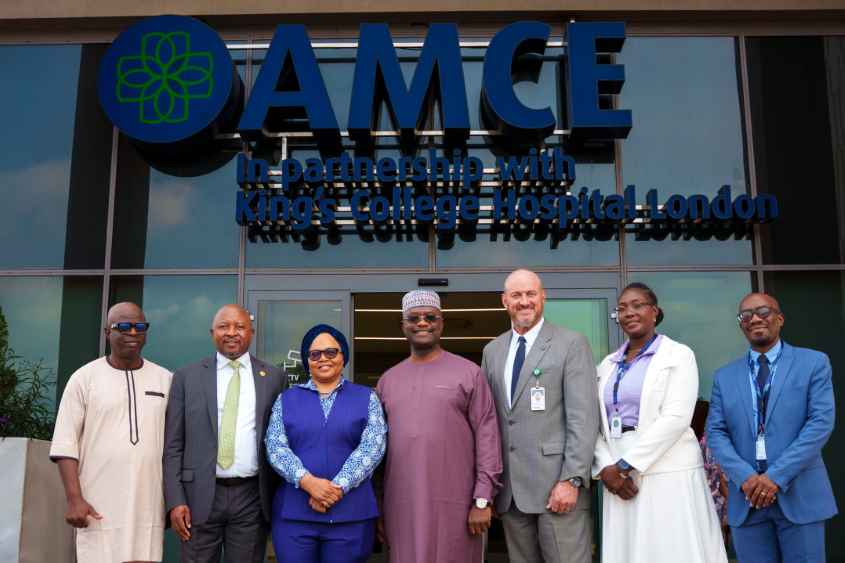
ABUJA, Nigeria, July 6, 2026/APO Group/ –As part of his working tour of Nigeria and the wider region, Dr George Elombi, President and Chairman of the Board of Directors of African Export-Import Bank (Afreximbank) (www.Afreximbank.com), visited the African Medical Centre of Excellence (AMCE) in Abuja, reaffirming Afreximbank’s commitment to supporting the realisation of Africa’s health care sovereignty.


Developed by Afreximbank in partnership with King’s College Hospital, London, AMCE was established to help transform specialist healthcare delivery in Africa, by strengthening clinical capacity, advancing research and education, creating a sustainable ecosystem for world-class care on the continent and in turn, reducing dependence on medical travel abroad.

In its first year of operation, AMCE has moved from vision to measurable impact, demonstrating how development finance can transform healthcare on the continent.

The Centre has registered over 5,000 patients from more than 20 countries across four continents, underscoring its growing role as a regional and global referral centre for advanced specialist healthcare.

Beyond the numbers are lives already being transformed. During its first year, AMCE has achieved several important clinical milestones. The Centre delivered West Africa’s first Stereotactic Body Radiation Therapy (SBRT) for lung cancer, treating an octogenarian with a localised lung tumour using a highly precise, non-invasive technique that previously required many patients to travel abroad. The Centre also completed its first complex Triple Coronary Artery Bypass Grafting (CABG), demonstrating that advanced cardiac care can now be delivered to global standards within Africa. AMCE also successfully completed two Stem cell transplants.

The success of this Centre reflects the depth of talent assembled here and the pan-African spirit that underpins its service

Its advanced laboratory has processed more than 40,000 diagnostic tests and investigations, completed 10 open-heart surgeries and 11 cardiac surgical procedures under the cardiac programme, administered 99 catheterisation laboratory procedures, and 173 anaesthesia-supported procedures in just a year.

Additionally, the Centre has commenced Nuclear medicine services, with Single Photon Emission Computed Tomography/Computed Tomography (SPECT/CT) imaging now available for bone scans, renograms, and perfusion scans, while Positron Emission Tomography/Computed Tomography (PET/CT) imaging is scheduled to commence later in the year.

Speaking during the visit, Dr. Elombi applauded the remarkable progress recorded by the Centre within its first year of operation, describing it as a compelling demonstration of African excellence, institutional resolve, and shared purpose. He stated: “The success of this Centre reflects the depth of talent assembled here and the pan-African spirit that underpins its service. The vision that inspired the conception and construction of this facility is the same conviction now being carried forward by the medical professionals delivering care to the continent. The AMCE provides health services and advances Africa’s health sovereignty while affirming our collective capacity to take responsibility for our own lives and future. The AMCE is a world-class quaternary healthcare facility delivering medical services of a standard that many would previously have sought beyond the continent. Nigerians, and citizens across Africa, must take full advantage of this facility—built by African institutions with the steadfast support of our governments.”

AMCE Chief Executive Officer, Brian Deaver, said Dr. Elombi’s visit marks an important milestone in the Centre’s journey and provides an opportunity to reflect on the impact AMCE has made in just one year.

“Our progress, from pioneering clinical achievements to earning growing trust across the region, demonstrates that Africa can build and sustain world-class centres of excellence. With Afreximbank’s continued vision and support, we remain committed to advancing patient care, research, education and innovation to strengthen health systems across the continent”.  Deaver noted.

Dr Elombi also toured key clinical departments, interacted with healthcare professionals and staff, and received updates on the Centre’s operational performance, clinical achievements and long-term expansion plans. He thanked the facilities’ employees for their commitment to building a new benchmark for specialist healthcare in Africa, noting that the Centre’s early achievements reflect the dedication, professionalism and shared vision of its workforce.

Today, AMCE employs more than 600 clinical and non-clinical professionals, representing 12 nationalities, and reflecting its growing reputation as a destination for highly skilled healthcare professionals. Earlier this year, the Centre also earned Great Place to Work® Certification, with 90 percent of employees affirming it is a great place to work.

Distributed by APO Group on behalf of Afreximbank.

Health

Water constraints become a defining economic and infrastructure risk

Published

on

The volume examines water security through operational, environmental and financial lenses

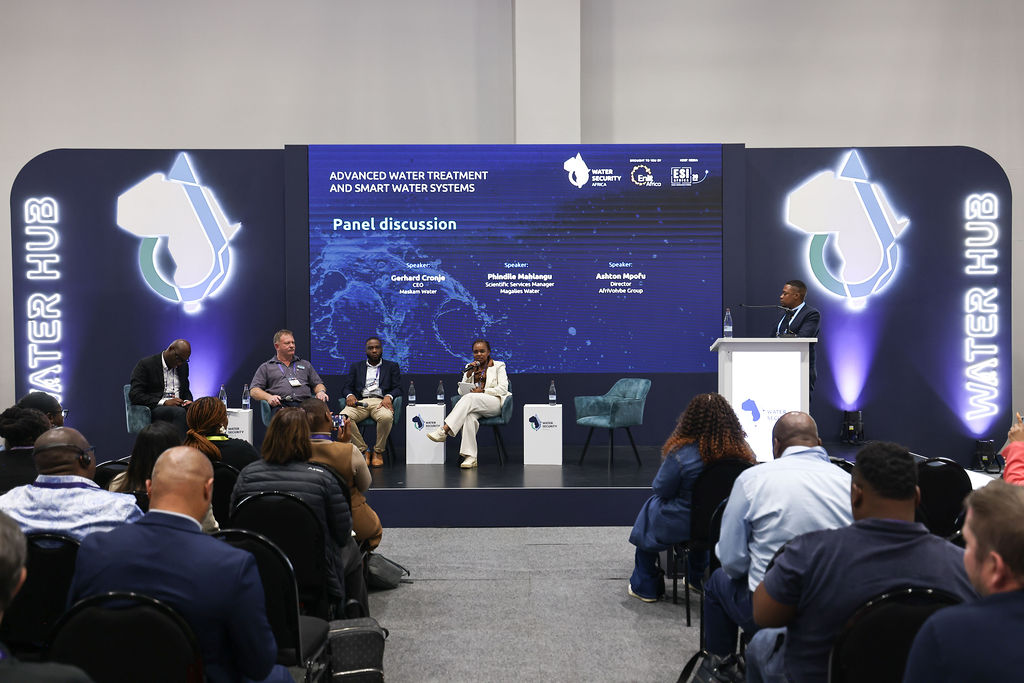
CAPE TOWN, South Africa, October 7, 2026/APO Group/ –Water resources, when left unchecked, are a constraint on economic growth, public health and social stability. For utilities, municipalities, industry and investors, the implications extend beyond resource availability to infrastructure performance, revenue, financing and long-term operational continuity.


These issues are examined in ESI Africa’s Water Security & Infrastructure Industry Insights Volume, published in partnership with Conlog and the STS Association. ESI Africa, a long-standing media brand within VUKA Group, brings together analysis of the pressures changing how water is managed, financed and valued.

Download the Water Security & Infrastructure Volume (https://apo-opa.co/4dr8xYs)

From water crisis to system risk

The volume examines water security through operational, environmental and financial lenses. Its content considers whether the hydrological chain is breaking, how intensive water users are exposed to risk and how demand from data centres is adding another dimension to competition for available resources.

It also addresses:

  • the connection between non-revenue water and blended finance,
  • the influence of tariff politics on water security, and
  • the role metering can play in improving how existing supplies are managed.

Together, these subjects point to a central industry concern. New supply and large infrastructure projects remain necessary, but stronger management of existing resources, networks and revenue is equally significant.

The volume’s argument is grounded in the principle that the smartest litre may be the one already available within the system.

Technology must support service outcomes

Smart infrastructure can improve visibility, measurement and operational decision-making, but technology must be linked to service delivery and climate resilience.

The ESI Africa webinar Smart infrastructure for climate resilient water service develops this theme by considering how infrastructure and digital capabilities can support more robust water services.

Watch Smart infrastructure for climate resilient water service (https://apo-opa.co/4jHVVjs)

Agro-industrial futures: Scaling alternative water solutions in agriculture examines alternative approaches for a sector in which water availability is closely linked to production and food security.

Watch Agro-industrial futures on-demand (https://apo-opa.co/4hK0F5r)

Water resilience for private sector business: The business case for water security considers why organisations need to treat water as an operational and commercial concern.

Watch the business case for water security (https://apo-opa.co/4j3VUGn)

Taking the discussion from analysis to implementation

Water Security Africa provides an in-person continuation of the discussion. The Johannesburg platform focuses on industrial water resilience, while Water Security Africa at Enlit Africa brings water and energy stakeholders together at the CTICC in Cape Town from 11 to 13 May 2027.

Explore Water Security Africa (https://apo-opa.co/4hQiDDv)

Projects will also play a central role in improving water security. The Project & Investment Network, in partnership with the African Infrastructure Elites: Projects and People annual print magazine, connects project owners with investors, financiers and solution providers around opportunities that require capital, partnerships and support to move towards implementation.

Submit a project to the Project & Investment Network (https://apo-opa.co/4e0ia0n)

Continuing the water security conversation

The next Water Security & Infrastructure Volume 2027 will continue examining the infrastructure, policy, technology and investment decisions affecting the sector.

The volume’s content is relevant to public and private stakeholders because water risk cuts across municipal services, agriculture, mining, manufacturing, data infrastructure, public health and wider economic development.

Future progress will depend on linking resource management with accountable operations, viable projects and the capital required to deliver them.

Join the Water Security & Infrastructure Volume 2027 waiting list (https://apo-opa.co/3TFdPcb)

Distributed by APO Group on behalf of VUKA Group.


Continue Reading

Business

Harvestfield Strengthens Nigeria’s Healthcare Manufacturing Capacity with Local Production of Next-Generation Mosquito Nets

Published

on

Operations at the company’s manufacturing facility in the Harvestfield Free Trade Zone, Ogun State, commenced on 13 September 2026, with the facility already supplying a World Bank-funded programme reaching 31 states

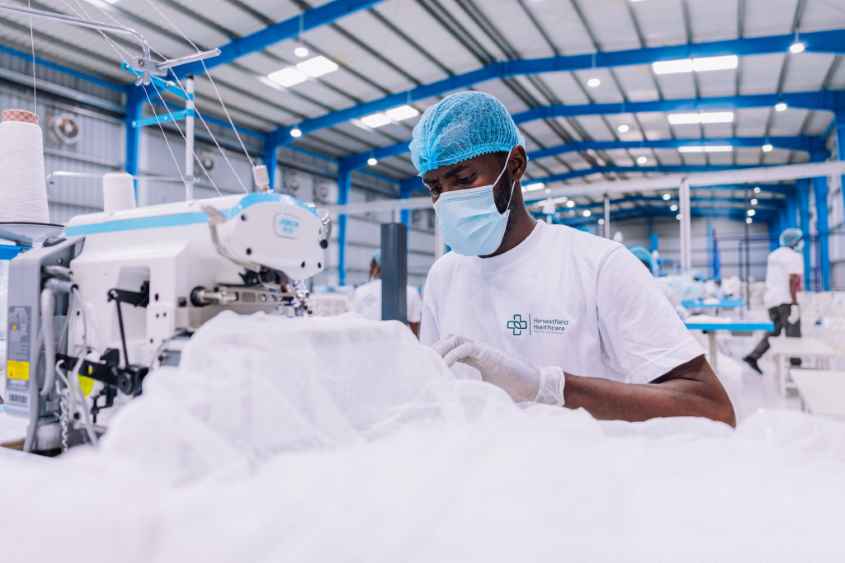
LAGOS, Nigeria, September 30, 2026/APO Group/ –Harvestfield Healthcare FZE (www.HarvestfieldHealthcare.com) has commenced commercial production of Synera DuoForte, a next-generation insecticide-treated nets in Nigeria, marking a new phase in the country’s capacity to manufacture a critical malaria prevention intervention locally.


Operations at the company’s manufacturing facility in the Harvestfield Free Trade Zone, Ogun State, commenced on 13 September 2026, with the facility already supplying a World Bank-funded programme reaching 31 states.

The facility is the first of its kind in Nigeria to be wholly Nigerian-owned and manufactures dual active ingredient long-lasting insecticidal nets of the pyrethroid-chlorfenapyr class. Harvestfield manufactures the nets under a manufacturing agreement with GDM Health Products, producing Synera DuoForte, a dual active ingredient long-lasting insecticidal net developed and owned by GDM.

Unlike conventional insecticide-treated nets that rely primarily on pyrethroids, these nets combine a pyrethroid with a second insecticide that works through a different mode of action.

The distinction is significant as mosquito populations across much of Nigeria have developed resistance to pyrethroid insecticides. While conventional nets can continue to provide a physical barrier, resistance can reduce their insecticidal effect. Dual active ingredient nets are designed to remain effective in areas where pyrethroid resistance has taken hold, and the World Health Organisation recommends this class of net for areas with established pyrethroid resistance.

Synera DuoForte is a WHO-prequalified product, developed and held under prequalification by GDM Health Products. The Harvestfield manufacturing site in Ogun State is also included as an approved manufacturing location under that prequalification, and the facility is separately certified by the National Agency for Food and Drug Administration and Control (NAFDAC) and ISO certified. These standards provide the foundation for manufacturing nets for national malaria programmes and other health interventions requiring internationally recognised quality systems.

Jon Bastow, a representative of GDM Health Products, said: “GDM is pleased to strategically partner with Harvestfield to bring Synera DuoForte to Nigeria, the country with the biggest global malaria burden, and support the prequalification of Harvestfield’s Ogun State manufacturing facility to make Synera DuoForte.”

Building the capacity to manufacture our own health products is central to Nigeria’s health security

Commenting on the development, the Coordinating Minister of Health and Social Welfare, Professor Muhammad Ali Pate, said:

“Building the capacity to manufacture our own health products is central to Nigeria’s health security. A Nigeria-based facility producing next-generation insecticide-treated nets to international standard, and already supplying programmes across thirty-one states, is the kind of capability the Renewed Hope agenda was created to build.”

For Harvestfield, the move into manufacturing builds on more than two decades of experience in Nigeria’s vector control sector. The Harvestfield group has operated in Nigerian vector control for 26 years, delivering more than 42 million insecticide-treated nets across all 36 states and serving as an exclusive national distribution partner for WHO-prequalified nets since 2018.

The transition from distribution to manufacturing also strengthens the domestic supply chain for insecticide-treated nets. Producing locally reduces dependence on overseas supply schedules and the 45 to 60-day ocean journey associated with imported nets, while creating greater capacity to respond as malaria control needs and insecticide resistance patterns evolve.

Commenting on the role of local manufacturing in strengthening Nigeria’s healthcare value chain, Dr Abdul Mukhtar, Presidential Initiative for Unlocking the Healthcare Value Chain (PVAC), said:

“PVAC exists to move Nigeria from importing its health products to making them. What matters is not only that a factory exists, but that it meets the standards international buyers accept and can supply at national scale. A facility based in Nigeria doing both is precisely the outcome this initiative was created to unlock.”

The investment also creates local manufacturing, technical, quality and regulatory capabilities that can support the production of other health products over time. For Harvestfield, the net manufacturing facility represents the first platform in a broader effort to build healthcare manufacturing capability in Nigeria.

This development is aligned with the Federal Government’s focus on strengthening domestic production of health products under the Renewed Hope agenda for health, the Presidential Initiative for Unlocking the Healthcare Value Chain (PVAC), and the Nigeria First procurement policy.

www.HarvestfieldHealthcare.com

Distributed by APO Group on behalf of Harvestfield Healthcare FZE.


Continue Reading

Health

Nigeria achieves historic milestone as Health Textiles Nigeria begins manufacture of Vestergaard’s PermaNet® Dual mosquito nets

Published

on

The facility is the first in Nigeria to manufacture dual-active ingredient insecticide-treated mosquito nets (ITNs)

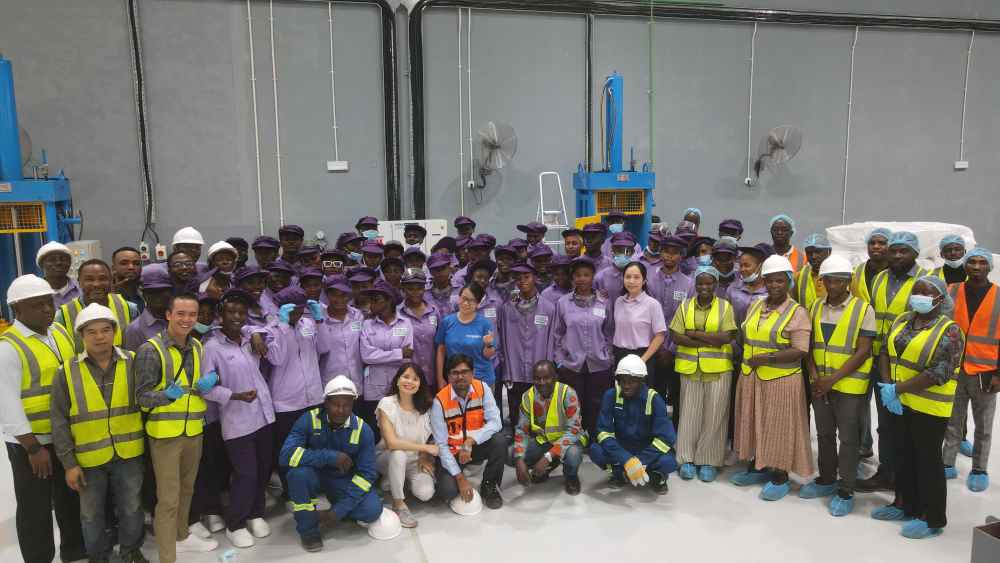
LAGOS, Nigeria, September 10, 2026/APO Group/ –Vestergaard Sàrl (www.Vestergaard.com) announced today that Health Textiles Nigeria FZE is now operational, marking a major milestone in the fight against malaria and establishing Nigeria as a leading hub for the production of next-generation mosquito nets in Africa. At scale, Health Textiles Nigeria will produce 10 million nets per year, employing more than 600 people in Nigeria.

The facility is the first in Nigeria to manufacture dual-active ingredient insecticide-treated mosquito nets (ITNs). It will produce PermaNet® Dual – Vestergaard’s most advanced net designed to combat insecticide resistance, which was prequalified by the World Health Organization (WHO) in 2023. Health Textiles Nigeria has been acknowledged by WHO as a Vestergaard production site.


As operations scale up, Health Textiles Nigeria represents a significant step forward in expanding access to one of the most effective tools available for malaria prevention. Support from the Government of Nigeria has been instrumental, symbolizing a shared commitment to strengthening malaria prevention through local initiatives.


Dr Muhammad Ali Pate, Coordinating Minister of Health and Social Welfare in Nigeria, said: “The commencement of local production of next-generation insecticide-treated nets is an important milestone for Nigeria’s health system and our fight against malaria. It also reflects our broader commitment to strengthening health security by building domestic capacity to manufacture the essential health products Nigerians need. Through partnerships that bring together global expertise, Nigerian talent and local production, we are building a more resilient healthcare value chain while creating skilled jobs and positioning Nigeria as a competitive manufacturing hub for Africa.”


This progress comes at a pivotal time in the global fight against malaria. Since 2000, ITNs including PermaNet Dual have been responsible for averting 1.13 billion cases (https://apo-opa.co/4ir1imJ). Yet malaria remains a significant  global health threat, particularly for women and young children, with an estimated 282 million cases and 610,000 deaths (https://apo-opa.co/4cAniHX) recorded by WHO globally in 2024. Africa remains hardest hit by malaria, and Nigeria accounts for a quarter of the world’s cases.


Health Textiles Nigeria (https://apo-opa.co/4xXcrjV) responds to this urgent need by expanding local capacity and expertise to produce life-saving malaria prevention tools, fulfilling the vision set out in a Memorandum of Understanding (MOU) signed in 2024 between Vestergaard and the Presidential Initiative for Unlocking the Healthcare Value Chain (PVAC). The agreement, which focuses on strengthening local production capacity, establishes Nigeria as West Africa’s first manufacturing hub for dual active-ingredient mosquito nets.


Today we welcome the start of a new chapter in Africa’s fight against malaria

Dr Abdu Mukhtar, National Coordinator of PVAC, said: “This milestone demonstrates what is possible when investment, technology transfer and government policy are deliberately aligned to build local manufacturing capability. When PVAC and Vestergaard signed the MOU in 2024, the objective was not simply to attract investment, but to translate partnership into productive capacity in Nigeria. Seeing Nigerian professionals trained, production underway and a pathway established to manufacture at scale is exactly the kind of outcome we want to replicate across the healthcare value chain.”


Health Textiles Nigeria is wholly owned by Vestergaard, a global leader in malaria prevention that has supplied approximately one-third of all insecticide-treated nets publicly procured worldwide since 2000. The company brings decades of manufacturing expertise, rigorous quality assurance systems and a proven track record in developing and scaling innovative vector-control technologies that have helped protect millions of people from malaria.


Amar Ali, CEO of Vestergaard, said: “Today we welcome the start of a new chapter in Africa’s fight against malaria, and we thank Minister Pate for his leadership and the unwavering support of the Nigerian government. By combining Nigerian talent with world-class manufacturing and Vestergaard’s deep expertise in innovative malaria prevention tools, Health Textiles Nigeria will deliver the highest standards of quality, compliance and performance. We believe this facility can become a benchmark for malaria prevention manufacturing in Africa and help ensure that life-saving mosquito nets are produced closer to the communities that need them most.”


Health Textiles Nigeria is placing quality, training and compliance at the heart of its operations. The company has already recruited around 80 employees, with rigorous training covering manufacturing excellence, product quality, health and safety, and regulatory compliance ongoing. As production expands, the facility is expected to create additional employment opportunities while developing a highly skilled workforce capable of supporting world-class health-product manufacturing.


The facility builds on Vestergaard’s decades of commitment to innovation, quality, and delivering practical solutions for malaria prevention. Every aspect of production is designed to meet the company’s stringent global standards, ensuring that PermaNet Dual manufactured in Nigeria delivers the performance, reliability and quality that health programmes around the world depend on.


As countries across Africa increasingly prioritize local manufacturing of essential health products, Health Textiles Nigeria demonstrates how international expertise and local capability can combine to strengthen supply chains, create skilled jobs and improve access to critical health interventions.


With production now underway, the first commercial orders are expected to be fulfilled in the coming months.

Distributed by APO Group on behalf of Vestergaard Sàrl.


Continue Reading

Trending

Exit mobile version