Connect with us

Health

Water constraints become a defining economic and infrastructure risk

Published

on

health

The volume examines water security through operational, environmental and financial lenses

CAPE TOWN, South Africa, October 7, 2026/APO Group/ –Water resources, when left unchecked, are a constraint on economic growth, public health and social stability. For utilities, municipalities, industry and investors, the implications extend beyond resource availability to infrastructure performance, revenue, financing and long-term operational continuity.


These issues are examined in ESI Africa’s Water Security & Infrastructure Industry Insights Volume, published in partnership with Conlog and the STS Association. ESI Africa, a long-standing media brand within VUKA Group, brings together analysis of the pressures changing how water is managed, financed and valued.

Download the Water Security & Infrastructure Volume (https://apo-opa.co/4dr8xYs)

From water crisis to system risk

The volume examines water security through operational, environmental and financial lenses. Its content considers whether the hydrological chain is breaking, how intensive water users are exposed to risk and how demand from data centres is adding another dimension to competition for available resources.

It also addresses:

  • the connection between non-revenue water and blended finance,
  • the influence of tariff politics on water security, and
  • the role metering can play in improving how existing supplies are managed.

Together, these subjects point to a central industry concern. New supply and large infrastructure projects remain necessary, but stronger management of existing resources, networks and revenue is equally significant.

The volume’s argument is grounded in the principle that the smartest litre may be the one already available within the system.

Technology must support service outcomes

Smart infrastructure can improve visibility, measurement and operational decision-making, but technology must be linked to service delivery and climate resilience.

The ESI Africa webinar Smart infrastructure for climate resilient water service develops this theme by considering how infrastructure and digital capabilities can support more robust water services.

Watch Smart infrastructure for climate resilient water service (https://apo-opa.co/4jHVVjs)

Agro-industrial futures: Scaling alternative water solutions in agriculture examines alternative approaches for a sector in which water availability is closely linked to production and food security.

Watch Agro-industrial futures on-demand (https://apo-opa.co/4hK0F5r)

Water resilience for private sector business: The business case for water security considers why organisations need to treat water as an operational and commercial concern.

Watch the business case for water security (https://apo-opa.co/4j3VUGn)

Taking the discussion from analysis to implementation

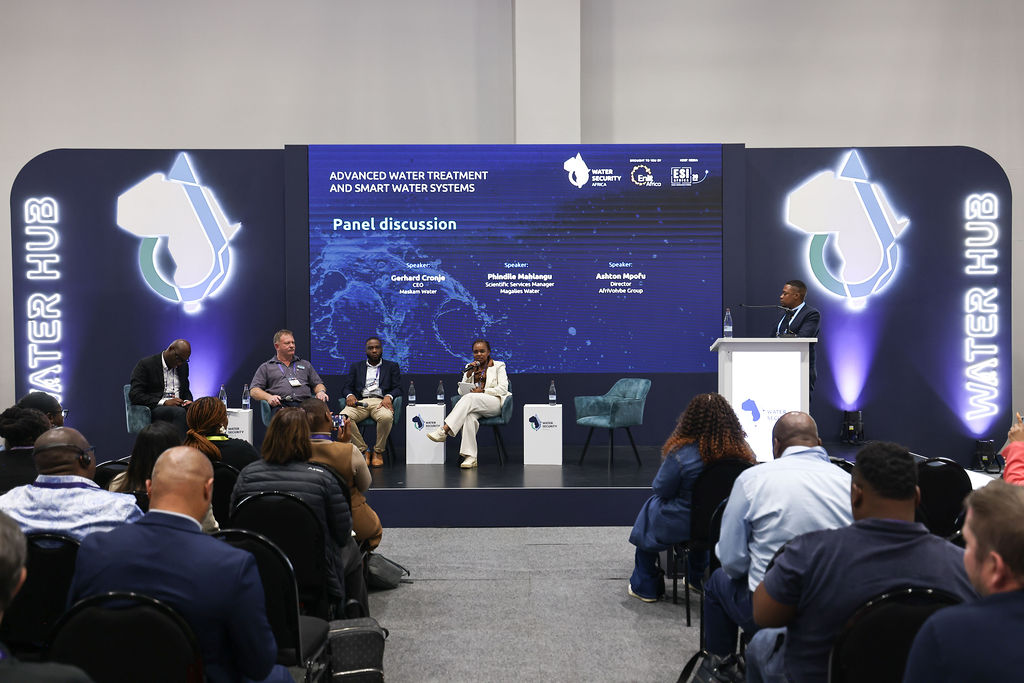
Water Security Africa provides an in-person continuation of the discussion. The Johannesburg platform focuses on industrial water resilience, while Water Security Africa at Enlit Africa brings water and energy stakeholders together at the CTICC in Cape Town from 11 to 13 May 2027.

Explore Water Security Africa (https://apo-opa.co/4hQiDDv)

Projects will also play a central role in improving water security. The Project & Investment Network, in partnership with the African Infrastructure Elites: Projects and People annual print magazine, connects project owners with investors, financiers and solution providers around opportunities that require capital, partnerships and support to move towards implementation.

Submit a project to the Project & Investment Network (https://apo-opa.co/4e0ia0n)

Continuing the water security conversation

The next Water Security & Infrastructure Volume 2027 will continue examining the infrastructure, policy, technology and investment decisions affecting the sector.

The volume’s content is relevant to public and private stakeholders because water risk cuts across municipal services, agriculture, mining, manufacturing, data infrastructure, public health and wider economic development.

Future progress will depend on linking resource management with accountable operations, viable projects and the capital required to deliver them.

Join the Water Security & Infrastructure Volume 2027 waiting list (https://apo-opa.co/3TFdPcb)

Distributed by APO Group on behalf of VUKA Group.


Business

Harvestfield Strengthens Nigeria’s Healthcare Manufacturing Capacity with Local Production of Next-Generation Mosquito Nets

Published

on

Operations at the company’s manufacturing facility in the Harvestfield Free Trade Zone, Ogun State, commenced on 13 September 2026, with the facility already supplying a World Bank-funded programme reaching 31 states

LAGOS, Nigeria, September 30, 2026/APO Group/ –Harvestfield Healthcare FZE (www.HarvestfieldHealthcare.com) has commenced commercial production of Synera DuoForte, a next-generation insecticide-treated nets in Nigeria, marking a new phase in the country’s capacity to manufacture a critical malaria prevention intervention locally.


Operations at the company’s manufacturing facility in the Harvestfield Free Trade Zone, Ogun State, commenced on 13 September 2026, with the facility already supplying a World Bank-funded programme reaching 31 states.

The facility is the first of its kind in Nigeria to be wholly Nigerian-owned and manufactures dual active ingredient long-lasting insecticidal nets of the pyrethroid-chlorfenapyr class. Harvestfield manufactures the nets under a manufacturing agreement with GDM Health Products, producing Synera DuoForte, a dual active ingredient long-lasting insecticidal net developed and owned by GDM.

Unlike conventional insecticide-treated nets that rely primarily on pyrethroids, these nets combine a pyrethroid with a second insecticide that works through a different mode of action.

The distinction is significant as mosquito populations across much of Nigeria have developed resistance to pyrethroid insecticides. While conventional nets can continue to provide a physical barrier, resistance can reduce their insecticidal effect. Dual active ingredient nets are designed to remain effective in areas where pyrethroid resistance has taken hold, and the World Health Organisation recommends this class of net for areas with established pyrethroid resistance.

Synera DuoForte is a WHO-prequalified product, developed and held under prequalification by GDM Health Products. The Harvestfield manufacturing site in Ogun State is also included as an approved manufacturing location under that prequalification, and the facility is separately certified by the National Agency for Food and Drug Administration and Control (NAFDAC) and ISO certified. These standards provide the foundation for manufacturing nets for national malaria programmes and other health interventions requiring internationally recognised quality systems.

Jon Bastow, a representative of GDM Health Products, said: “GDM is pleased to strategically partner with Harvestfield to bring Synera DuoForte to Nigeria, the country with the biggest global malaria burden, and support the prequalification of Harvestfield’s Ogun State manufacturing facility to make Synera DuoForte.”

Building the capacity to manufacture our own health products is central to Nigeria’s health security

Commenting on the development, the Coordinating Minister of Health and Social Welfare, Professor Muhammad Ali Pate, said:

“Building the capacity to manufacture our own health products is central to Nigeria’s health security. A Nigeria-based facility producing next-generation insecticide-treated nets to international standard, and already supplying programmes across thirty-one states, is the kind of capability the Renewed Hope agenda was created to build.”

For Harvestfield, the move into manufacturing builds on more than two decades of experience in Nigeria’s vector control sector. The Harvestfield group has operated in Nigerian vector control for 26 years, delivering more than 42 million insecticide-treated nets across all 36 states and serving as an exclusive national distribution partner for WHO-prequalified nets since 2018.

The transition from distribution to manufacturing also strengthens the domestic supply chain for insecticide-treated nets. Producing locally reduces dependence on overseas supply schedules and the 45 to 60-day ocean journey associated with imported nets, while creating greater capacity to respond as malaria control needs and insecticide resistance patterns evolve.

Commenting on the role of local manufacturing in strengthening Nigeria’s healthcare value chain, Dr Abdul Mukhtar, Presidential Initiative for Unlocking the Healthcare Value Chain (PVAC), said:

“PVAC exists to move Nigeria from importing its health products to making them. What matters is not only that a factory exists, but that it meets the standards international buyers accept and can supply at national scale. A facility based in Nigeria doing both is precisely the outcome this initiative was created to unlock.”

The investment also creates local manufacturing, technical, quality and regulatory capabilities that can support the production of other health products over time. For Harvestfield, the net manufacturing facility represents the first platform in a broader effort to build healthcare manufacturing capability in Nigeria.

This development is aligned with the Federal Government’s focus on strengthening domestic production of health products under the Renewed Hope agenda for health, the Presidential Initiative for Unlocking the Healthcare Value Chain (PVAC), and the Nigeria First procurement policy.

www.HarvestfieldHealthcare.com

Distributed by APO Group on behalf of Harvestfield Healthcare FZE.


Continue Reading

Health

Nigeria achieves historic milestone as Health Textiles Nigeria begins manufacture of Vestergaard’s PermaNet® Dual mosquito nets

Published

on

The facility is the first in Nigeria to manufacture dual-active ingredient insecticide-treated mosquito nets (ITNs)

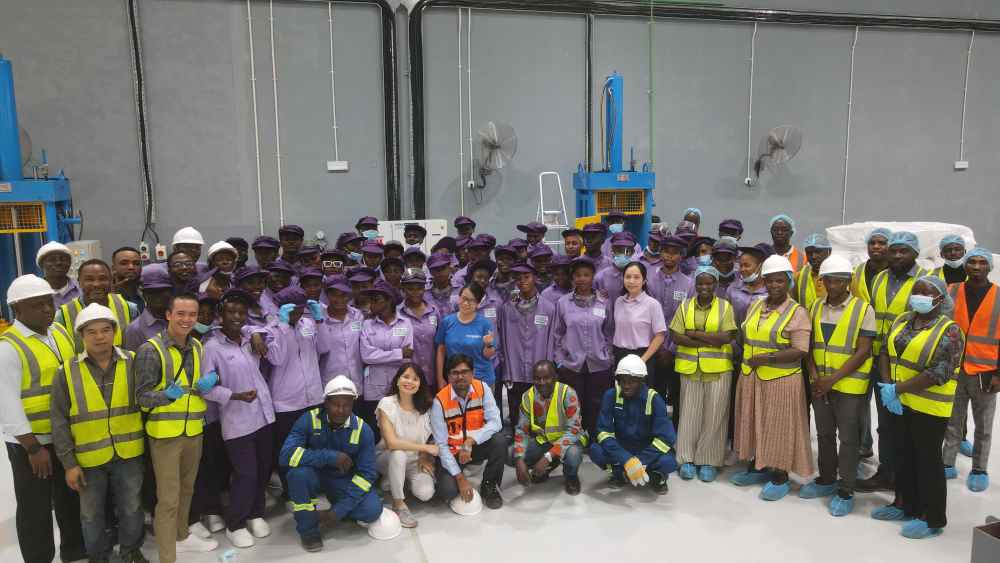
LAGOS, Nigeria, September 10, 2026/APO Group/ –Vestergaard Sàrl (www.Vestergaard.com) announced today that Health Textiles Nigeria FZE is now operational, marking a major milestone in the fight against malaria and establishing Nigeria as a leading hub for the production of next-generation mosquito nets in Africa. At scale, Health Textiles Nigeria will produce 10 million nets per year, employing more than 600 people in Nigeria.

The facility is the first in Nigeria to manufacture dual-active ingredient insecticide-treated mosquito nets (ITNs). It will produce PermaNet® Dual – Vestergaard’s most advanced net designed to combat insecticide resistance, which was prequalified by the World Health Organization (WHO) in 2023. Health Textiles Nigeria has been acknowledged by WHO as a Vestergaard production site.


As operations scale up, Health Textiles Nigeria represents a significant step forward in expanding access to one of the most effective tools available for malaria prevention. Support from the Government of Nigeria has been instrumental, symbolizing a shared commitment to strengthening malaria prevention through local initiatives.


Dr Muhammad Ali Pate, Coordinating Minister of Health and Social Welfare in Nigeria, said: “The commencement of local production of next-generation insecticide-treated nets is an important milestone for Nigeria’s health system and our fight against malaria. It also reflects our broader commitment to strengthening health security by building domestic capacity to manufacture the essential health products Nigerians need. Through partnerships that bring together global expertise, Nigerian talent and local production, we are building a more resilient healthcare value chain while creating skilled jobs and positioning Nigeria as a competitive manufacturing hub for Africa.”


This progress comes at a pivotal time in the global fight against malaria. Since 2000, ITNs including PermaNet Dual have been responsible for averting 1.13 billion cases (https://apo-opa.co/4ir1imJ). Yet malaria remains a significant  global health threat, particularly for women and young children, with an estimated 282 million cases and 610,000 deaths (https://apo-opa.co/4cAniHX) recorded by WHO globally in 2024. Africa remains hardest hit by malaria, and Nigeria accounts for a quarter of the world’s cases.


Health Textiles Nigeria (https://apo-opa.co/4xXcrjV) responds to this urgent need by expanding local capacity and expertise to produce life-saving malaria prevention tools, fulfilling the vision set out in a Memorandum of Understanding (MOU) signed in 2024 between Vestergaard and the Presidential Initiative for Unlocking the Healthcare Value Chain (PVAC). The agreement, which focuses on strengthening local production capacity, establishes Nigeria as West Africa’s first manufacturing hub for dual active-ingredient mosquito nets.


Today we welcome the start of a new chapter in Africa’s fight against malaria

Dr Abdu Mukhtar, National Coordinator of PVAC, said: “This milestone demonstrates what is possible when investment, technology transfer and government policy are deliberately aligned to build local manufacturing capability. When PVAC and Vestergaard signed the MOU in 2024, the objective was not simply to attract investment, but to translate partnership into productive capacity in Nigeria. Seeing Nigerian professionals trained, production underway and a pathway established to manufacture at scale is exactly the kind of outcome we want to replicate across the healthcare value chain.”


Health Textiles Nigeria is wholly owned by Vestergaard, a global leader in malaria prevention that has supplied approximately one-third of all insecticide-treated nets publicly procured worldwide since 2000. The company brings decades of manufacturing expertise, rigorous quality assurance systems and a proven track record in developing and scaling innovative vector-control technologies that have helped protect millions of people from malaria.


Amar Ali, CEO of Vestergaard, said: “Today we welcome the start of a new chapter in Africa’s fight against malaria, and we thank Minister Pate for his leadership and the unwavering support of the Nigerian government. By combining Nigerian talent with world-class manufacturing and Vestergaard’s deep expertise in innovative malaria prevention tools, Health Textiles Nigeria will deliver the highest standards of quality, compliance and performance. We believe this facility can become a benchmark for malaria prevention manufacturing in Africa and help ensure that life-saving mosquito nets are produced closer to the communities that need them most.”


Health Textiles Nigeria is placing quality, training and compliance at the heart of its operations. The company has already recruited around 80 employees, with rigorous training covering manufacturing excellence, product quality, health and safety, and regulatory compliance ongoing. As production expands, the facility is expected to create additional employment opportunities while developing a highly skilled workforce capable of supporting world-class health-product manufacturing.


The facility builds on Vestergaard’s decades of commitment to innovation, quality, and delivering practical solutions for malaria prevention. Every aspect of production is designed to meet the company’s stringent global standards, ensuring that PermaNet Dual manufactured in Nigeria delivers the performance, reliability and quality that health programmes around the world depend on.


As countries across Africa increasingly prioritize local manufacturing of essential health products, Health Textiles Nigeria demonstrates how international expertise and local capability can combine to strengthen supply chains, create skilled jobs and improve access to critical health interventions.


With production now underway, the first commercial orders are expected to be fulfilled in the coming months.

Distributed by APO Group on behalf of Vestergaard Sàrl.


Continue Reading

Health

African Bundibugyo ebolavirus vaccine candidate to be advanced to clinical trials

Published

on

CEPI backs Minapharm’s Bundibugyo ebolavirus vaccine candidate, based on ProBioGen’s proprietary MVA-CR19 platform

CAIRO, Egypt, August 27, 2026/APO Group/ –Leading African biopharmaceutical company Minapharm Group (www.Minapharm.com), headquartered in Egypt with subsidiaries in Berlin, will receive up to US$16.5 million from the Coalition for Epidemic Preparedness Innovations (CEPI) to advance the development of a Bundibugyo ebolavirus vaccine candidate, strengthening efforts to develop vaccines to combat the fastest-growing and second-largest Ebola outbreak on record affecting the Democratic Republic of the Congo (DRC).


Minapharm’s Bundibugyo vaccine is designed by ProBioGen, a Berlin-based specialist within Minapharm Group, based on their proprietary modified vaccinia Ankara (MVA) vaccine platform, MVA-CR19. A similar technology underpins a licensed vaccine against smallpox and mpox, and has elicited long-term immunity in a vaccine targeting the related Zaire ebolavirus (https://apo-opa.co/4xrvZwE).

CEPI’s funding will advance the Bundibugyo vaccine candidate through preclinical development and into an early-stage clinical trial to assess the immunogenicity and safety of the vaccine candidate. The study in humans, known as a Phase 1 trial, is expected to take place in Africa.

Minapharm’s investigational vaccine becomes the fifth Bundibugyo-specific virus vaccine candidate supported by CEPI in response to the escalating epidemic. It joins a portfolio of promising CEPI-backed candidates* built on different vaccine technologies to maximise the likelihood of developing a safe and effective shot that could help bring this devastating crisis under control.

It is the only Bundibugyo vaccine candidate CEPI is funding that is designed to induce both B- and T-cell responses for comprehensive and long-lasting immunity.

“CEPI’s funding to Minapharm harnesses the growing strength of African-led innovation to help confront this increasingly severe outbreak and prepare for future threats”, said Dr Richard Hatchett, CEO of CEPI.  “In just three months, cases of Bundibugyo have spread rapidly across the DRC, making this the largest and deadliest outbreak the country has ever faced. We are proud to support Minapharm’s Bundibugyo vaccine candidate: it will round out CEPI’s portfolio, give the world another shot on goal, and advance Minapharm’s proprietary MVA platform, which if successful can serve as the basis for future African-manufactured filovirus vaccines. The faster we can advance a pipeline of promising candidates, the better our chances of saving lives and bringing this epidemic under control.”

CEPI’s goal is to bring at least two Bundibugyo vaccines to Emergency Use Authorisation and WHO Prequalification to respond to this outbreak, while also building readiness for future Bundibugyo epidemics.

CEPI’s funding to Minapharm harnesses the growing strength of African-led innovation to help confront this increasingly severe outbreak and prepare for future threats

Dr. Wafik Bardissi, Group Chairman and CEO of Minapharm and Chairman of ProBioGen, said: “For more than 25 years, Minapharm has built proven biologics capabilities in Egypt and, together with ProBioGen, established a cross-continental group model combining scientific innovation, proprietary technologies and advanced biomanufacturing.”

Dr. Bardissi added: “This programme demonstrates the strength of our capabilities across the full biologics continuum, from design and development through to manufacturing, in response to an urgent public-health threat. With CEPI’s support, we are turning scientific ingenuity into health sovereignty, drawing on the breadth of our technologies and know-how to advance a vaccine response for Africa.”

“ProBioGen’s MVA-CR19 platform was developed to enable rapid generation of recombinant MVA vaccine candidates and scalable manufacturing,” said Dr Volker Sandig, Chief Scientific Officer of ProBioGen. “We are proud to bring this platform and our CMC expertise to a Minapharm-led programme supported by CEPI, helping advance a Bundibugyo ebolavirus vaccine candidate towards clinical evaluation in response to an urgent public-health need.”

Dr Jean Kaseya, Director General, Africa CDC, said, “Bundibugyo virus is now driving the largest Ebola outbreak DRC has ever faced. A vaccine candidate advanced by an African company is exactly the kind of capability our continent needs – not just for this outbreak, but so that Africa can develop and manufacture the tools it needs to protect its own people. We welcome CEPI’s support for Minapharm’s work as a concrete step toward that health sovereignty.”

To develop the Bundibugyo-specific vaccine candidate, ProBioGen —a wholly-owned subsidiary of Minapharm based in Germany—will generate the recombinant MVA drug substance under Good Manufacturing Practice (GMP) guidelines. The drug substance is the active component of a vaccine which includes viral proteins that could train the immune system to recognise and fight a specific pathogen – in this case, Bundibugyo ebolavirus.  The drug substance will then be shipped to Minapharm’s facility in Cairo, Egypt, to create the drug product – the finished vaccine mixture which combines the drug substance with other vaccine ingredients and packaging ready for testing. In parallel, Minapharm plans to transfer drug substance manufacturing to its biotechnology facilities in Cairo, enabling fully local drug substance and drug product manufacturing.

The project leverages more than 25 years of Minapharm’s proven track record and experience in the development, end-to-end manufacturing and commercialisation of complex biologics in Africa.

If the Phase 1 trial of the vaccine candidate is successful, CEPI anticipates working with Minapharm and ProBioGen to support late-stage trials to generate efficacy data for emergency use authorisation and licensure. CEPI, Minapharm and ProBioGen are committed to enabling rapid, affordable supply of the vaccine to affected countries and to the populations that need them should it prove safe and effective.

A positive outcome from this project could also lay the foundation for the future expansion of Minapharm’s vaccine manufacturing capabilities, potentially with support from CEPI and other partners.

To date, CEPI’s Bundibugyo virus vaccine development programme receives funds from the European Commission through its 2026 grant under Horizon Europe to CEPI, the U.S. Department of State and CEPI’s existing core funding.


Distributed by APO Group on behalf of Minapharm Pharmaceuticals.


Continue Reading

Trending

Exit mobile version