Connect with us

Tech

Huawei Pioneers a New Computing Architecture for the AI Era: Making One Million Processors Work as One Computer

Published

on

Huawei

SHANGHAI, CHINA – Media OutReach Newswire – 30 September 2026 – During HUAWEI CONNECT on September 17, 2026, Eric Xu (Huawei’s Rotating Chairman) and Dr. Liao Heng (Chief Scientist of HiSilicon) had a Q&A session with journalists of media outlets to discuss Huawei’s Peerium Computing Architecture for the AI era as well as UnifiedBus (UB).

At last year’s HUAWEI CONNECT, Eric Xu gave a keynote speech and released Ascend chips and their roadmap (including the 950, 960, 970, and SuperPoDs and SuperClusters). He also announced the open release of the UnifiedBus protocol.


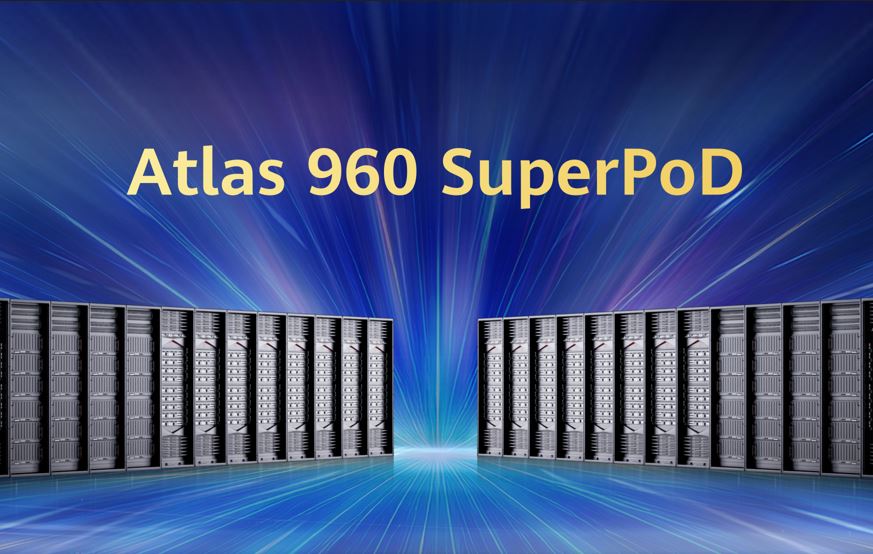
At this year’s HUAWEI CONNECT, Huawei announced the Ascend 950 and the Atlas 950 SuperPoD. While the industry is talking about SuperPoDs or supernodes, the ways of making these products differ hugely. The key of SuperPoDs is about allowing several thousand or even tens of thousands of processors to work as one computer.

Today, Huawei announced a SuperPoD based on the Ascend 950 chip. The SuperPoD is powered by a new computing architecture that Huawei has pioneered. This architecture now can make one million processors work as one computer. This architecture is called Peerium, and it can achieve strong scaling to the million-processor level through nested parallelism, unified memory addressing, and peer-to-peer interconnect. It extends the parallelism paradigm of Turing with the introduction of Nested BSP (Nested Bulk Synchronous Parallel).

This architecture also extends the von Neumann single-machine architecture and overruns the master-slave design paradigm that has prevailed for decades. Given that the available technologies in the industry could not support this architecture, Huawei invented a key interconnect technology – UnifiedBus. Ultimately, one million processors can truly work as one larger computer.

UnifiedBus is a high-speed bus that uses an open protocol to scale without a limit to connect CPUs, NPUs, memory, SSDs, interface cards, and switches. With UnifiedBus, peer-to-peer interconnect is achieved across compute, storage, and networking. This fundamentally overruns the traditional master-slave architecture.

The Atlas 950 SuperPoD is a product built upon the Peerium Computing Architecture. A SuperCluster with 256,000 computing cards is currently being deployed and tested.

Q: Dr. Liao, your paper mentioned a SuperPoD that’s made up of 256,000 cards. Is that the upper limit of your technology? Can you tell us more about market demand for your products?

Liao Heng: 256,000 or roughly 200k, this number is not an arbitrary number.

First of all, the purpose of these large clusters is for training. It has a hardware infrastructure that can support the training of foundation models, which today are already in the 5T parameter range.

Over the next two years, there will be roughly 6 or 7 frontier AI labs in China, and all will aim at training foundation language models of sizes ranging from 10 to 40 trillion parameters. These numbers kind of match up to the memory capacity and the size of the SuperPoD. So you need such a scale of infrastructure to train these models.

The second thing is that in China, most data centers have a national plan on this power grid. So 200,000 is a relatively conservative number, given the design of the power delivery system in a single autonomous zone and single data center campus.

As I said, everybody must be quite familiar with the AI model race that’s happening across the globe. And in China, there are at least 3 or 4 tier-1 players that are already well recognized and have achieved tier-1 status.

Q: What are your plans to encourage Chinese model providers to use Ascend chips for training?

Eric Xu: For the Ascend 950, we first launched the 950PR to the market. It’s primarily used for AI inference, and currently the total volume of supply available in the market is not very big. The SuperPoDs based upon the Ascend 950DT are mainly used for AI training. Right now, they are under testing, and their large-scale supply will start at the end of this year or early next year. We are having extensive dialogues and discussions with AI model providers. The testing result of using the Ascend 950DT for training is pretty good. I believe that starting from next year, a lot of AI model training will be based upon SuperPoDs that use the Ascend 950DT. I think at the end of the day, it’s not about how hard we are going to push model providers, but about how much supply capacity we will have. We can only supply based on how much that’s produced. And we hope the value chain will expand its capacity faster to increase supply.

Q: What is Huawei’s take on recent calls by leading AI model providers in the US to slow down AI development?

Eric Xu: We need to look at the level and cadence of AI development in China and the US. AI models in China are largely open-source models and their progress is relatively transparent. If we look at the mainstream model providers in the US, they have more computing power, so maybe only they themselves know where they are in terms of the level of sophistication of their models. The market feeling about AI risks might be weaker in China than in the US. Model providers in China need to speed up their pace to reach a level where they could also feel the risks from AI development. And then, maybe they will feel the same as the leading US model providers. But I always believe that we need to strike a balance between driving AI development and managing AI risks. At the very least, the bottom line is we need to ensure AI for good, not AI for evil.

Q: Does Huawei have plans to bring the Atlas 950 SuperPoD to other markets outside China? If yes, which markets are you going to target? Can you share with us data about your market share in China? What is your take on China’s push for chip self-sufficiency?

Eric Xu: Since we don’t have enough capacity to even satisfy the demand in China, we don’t have plans to expand to the international market in a fully-fledged way. But indeed, there are several countries that have very strong demand. We are doing some testing, and we are providing some supply to those countries, but the volume is quite limited.

Right now, it’s pretty hard to collect data about the market share of NVIDIA in China. But based on the data we have collected, Ascend has surpassed NVIDIA.

China’s push for chip self-sufficiency is an inevitable path forward. China is a country of 1.4 billion people and it’s an industrial powerhouse, so the way people work and live is closely tied to chips. Chinese people have a keen sense of urgency, and will not accept a future in which others decide whether or not we can have access to certain products. Even though our chips may be less advanced, at least their supply is assured, so that you don’t have to worry about chip supply day in and day out. I think that’s certainly the path forward. For the Chinese government, for the domestic industry, and for Huawei, the path forward is undoubtedly to push for full self-sufficiency in terms of chips and the entire semiconductor value chain. We also believe this will become a reality sooner or later.

To read the full Q&A session: https://www.apmultimedianewsroom.com/multimedia-newsroom/huawei-pioneers-a-new-computing-architecture-for-the-ai-era-making-one-million-processors-work-as-one-computer-2 


Tech

CALL-E Lets AI Agents in ChatGPT, Muse and OpenClaw Make Real Phone Calls on Their Users’ Behalf

Published

on

Built by AI Rudder, CALL-E asks the user before every call and reports back with proof of what was agreed.
SAN FRANCISCO, US – Media OutReach Newswire – 13 November 2026 – AI Rudder, the Singapore-headquartered company behind more than 80 billion AI calls, has launched CALL-E, which lets AI agents make real phone calls on their users’ behalf. CALL-E works inside ChatGPT, in personal AI agents such as Muse, OpenClaw and Hermes Agent, and in AI coding tools such as Claude Code, Codex and Cursor.


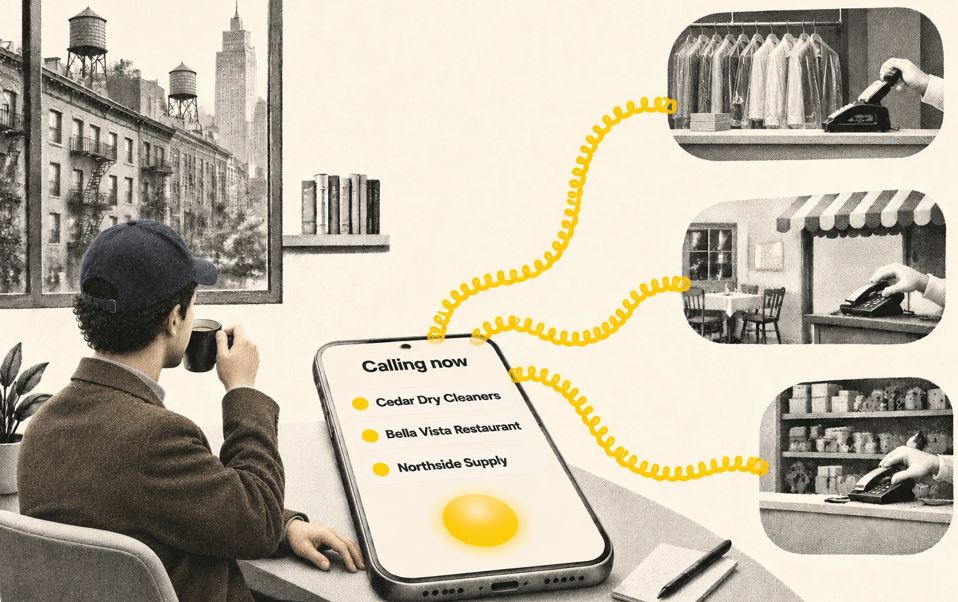
Personal AI agents are growing fast. Meta’s Muse passed five million US downloads in its first three weeks, and Grok Bot, from Elon Musk’s SpaceX, reached 400,000 weekly users in its first month. Both are piloting phone calls, and users now try to hand their AI agent the calls they used to make themselves: moving a dinner booking, chasing the dry cleaner.

CALL-E is built for those calls. A personal AI agent hands it the errand, and CALL-E makes the call and reports back with proof.

“The smartest AI model in the world can still fail a phone call. All it takes is one ‘mm-hmm’,” said Teng Ren, CEO of AI Rudder.

“Say your AI agent calls a restaurant to move your booking to a specific time. The restaurant host says ‘mm-hmm’ to agree, and your agent stops mid-sentence, as if she’d asked a question. Then she says, ‘Tuesday at… let me check,’ and your agent cuts in with ‘Great, Tuesday it is,’ to a time she did not give. These behaviours are unnatural to a human, so she knows she’s talking to AI and hangs up.

“An AI agent earns the right to speak for us when it reads every ‘yes’, every pause and every interruption the way a person on the phone would, and answers the way that person would.”

Approval Before Every Call
A call can’t be unsent. CALL-E builds an approval step into the product: each call goes ahead only after the user approves that exact plan, so a call nobody approved never rings.

Built for Real Phone Conversations
Phone calls are messier than chat. People pause halfway through an order number, talk over the agent, or cut in mid-sentence. AI Rudder’s engineers handle this in the code around the AI model, which decides what the model hears and what it remembers saying.

On the TurnBench Interruption leaderboard, Helm Swift, the AI Rudder model that tells CALL-E when a caller is cutting in, has the joint-lowest false-positive rate of any qualifying model, so it rarely stops talking just because a caller says “yeah” (TurnBench, October 2026).

Proof After Every Call
An agent can report “Booked for 7pm” and still have misheard the time. So after each call, CALL-E reports what was agreed, how confident it is that it met the goal, and the exact lines from the call that back it up, so the user can check it.

Every Call Says Who Is Calling
By default, a CALL-E call introduces itself as CALL-E, a voice agent. The user can change what it says, and a pre-check stops a call from posing as the FBI or 911.

Regulators are moving the same way. In its 2024 Declaratory Ruling (FCC 24-17), the FCC clarified that AI-generated voices fall within the definition of artificial or prerecorded voices under the Telephone Consumer Protection Act, making such calls subject to applicable regulatory requirements, including consent and caller identification obligations. Separately, Article 50 of the EU AI Act requires that people be told they are talking to an AI.

Security and Compliance
An agent that calls for you carries your phone number and the details of your errand, so the line it uses has to keep both safe. CALL-E runs on the same technology as AI Rudder’s enterprise solutions, which are built to meet SOC 2 Type 2 and ISO 27001, alongside GDPR and PDPA requirements. Every call keeps a record from plan to result, with the approval and the evidence attached, so a disputed call can be traced.

Availability
CALL-E is available at https://www.heycall-e.com/, where new users start with 100 free credits.

About CALL-E
CALL-E lets an AI agent make real phone calls for the person it works for: it plans the call, waits for the user’s approval, makes the call and reports back with proof of what was said. CALL-E is built by Singapore-headquartered AI Rudder, which is backed by investors including Tiger Global and Peak XV Partners.


Continue Reading

Tech

Huawei Launches LUTERRA® S2, Redefining the Future of Residential Energy Systems with Three Ultimate Innovations

Published

on

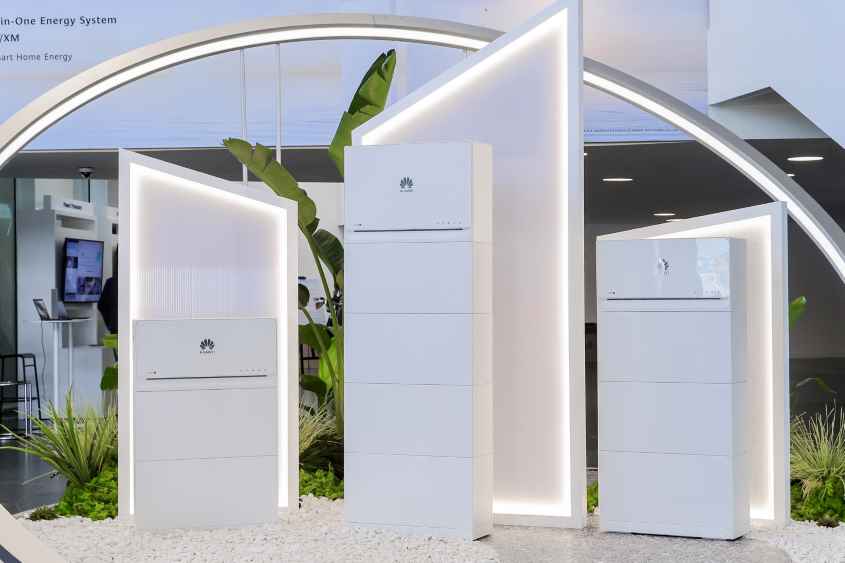
PALMA, SPAIN – Media OutReach Newswire – 11 November 2026 – Huawei announced the launch of HUAWEI LUTERRA S2, an all-in-one residential energy system that integrates a hybrid inverter, storage, and AI-powered energy management in one stackable unit. Designed for easy deployment, LUTERRA S2 can be installed and commissioned in minutes. Available in single-phase (3-10 kW) and three-phase (5- 20 kW) configurations, LUTERRA S2 is the industry’s first all-in-one residential energy system built on Huawei’s proprietary full-SiC (silicon carbide) architecture, delivering exceptional efficiency, power density, and reliability.


“We are thrilled to introduce HUAWEI LUTERRA S2, our next-generation all-in-one residential energy system,” said Steve Zhang, President of Huawei Distributed PV & BESS Business. “By combining full-SiC architecture, AI-driven energy management, and industry-leading safety, LUTERRA S2 is designed to be smaller, lighter, quieter, safer, smarter and more powerful than ever before.”

As solar, storage, EV charging, and home energy management continue to converge, homeowners are looking for solutions that go beyond power and capacity to deliver greater intelligence, efficiency, and safety.

To meet these evolving needs, Huawei introduces HUAWEI LUTERRA S2, a breakthrough residential energy system built on three defining pillars: Ultimate Experience, Ultimate Intelligence, and Ultimate Safety.

Ultimate Experience: From Core Technology to Everyday Experience

LUTERRA S2 combines high power density and compact design, delivering 20 kW-class power in a streamlined form factor. Powered by Huawei’s proprietary full-SiC architecture and ANPC topology, it achieves up to 99% efficiency. Built-in energy optimizers enable up to 5.0 MWh/kWh of lifetime usable energy and a design lifespan of more than 15 years.

Beyond technical performance, LUTERRA S2 is designed to integrate naturally into modern homes. Its art-inspired design, Red Dot Award-winning hardware, App 3.0, and intelligent breathing light create a seamless blend of technology and lifestyle.

The industry’s first 20 kW-class all-natural cooling design eliminates the need for external fans and maintains operating noise below 29 dB.

Ultimate Intelligence: From Automation to Active Decision-Making

Through the AI Energy Management 2.0 platform, LUTERRA S2 brings intelligence to energy planning, operation, and value optimization.

By integrating weather forecasts, electricity prices, household loads, and energy status, the platform intelligently coordinates photovoltaic systems, energy storage, EV charging, heat pumps, and virtual power plants (VPPs). This coordination maximizes the value of every kilowatt-hour generated, stored, and consumed.

For homeowners, the AI Assistant turns complex energy management into simple, conversational interactions, enabling users to make informed energy decisions with ease. For installers, AI 3D modeling simplifies planning and design by identifying roof structures and installation environments. AI-powered diagnostics and remote support further enhance operation and maintenance efficiency.

Ultimate Safety: From Cell-Level Protection to End-to-End Safety

Safety is built into every layer of LUTERRA S2, from battery cells to system-level operations.

Each battery cell incorporates an independent protective isolation structure, supported by Huawei-developed safety components and localized non-propagation design to help contain thermal risks. An intelligent smoke-duct design enables directional pressure relief, smoke evacuation, and cooling, while continuous AC and DC terminal temperature detecting provides proactive detection and protection of critical connections.

LUTERRA S2 has been validated against relevant EU Battery Regulation requirements and complies with key international standards, including IEC 63027 AFCI. It has also undergone TÜV Rheinland safety testing, including a cell thermal runaway test, a 20-minute fire test at 1,000°C, and a 20% hydrogen explosion test, as well as UL 9540A validation.LUTERRA S2 has received the highest-level Safety Mark certification from TÜV Rheinland, backed by the industry’s first cell-level thermal insulation design, safety venting design, and full-link terminal over-temperature protection.

Leading the Future of Residential Energy Systems

More than an energy storage system, LUTERRA S2 connects intelligent technology, enhanced quality of life, and sustainable living. Huawei is setting a new benchmark for next-generation residential energy and accelerating the transition toward a smarter, more sustainable future.

Technical highlights:

Inverter
Up to 3 inverters in parallel, 60kW (20*3) max
Battery
Up to 48 packs in parallel, 336kWh (4*4*3*7) max
Efficiency
Maximum efficiency of 99%
Backup
Switchover under 10 ms; up to 20 kW off-grid load
Cooling and noise
Fanless natural cooling; below 29 dB
Operating range
–25°C to +60°C; IP66; up to C5-M corrosion protection
Connectivity
EEBUS, SG-Ready, OCPP, Modbus-TCP
Safety validation
TÜV Rheinland testing; UL 9540A; AFCI to IEC 63027

More information is available at https://solar.huawei.com/en/products/luterra-s2-xl-xm/


Continue Reading

Business

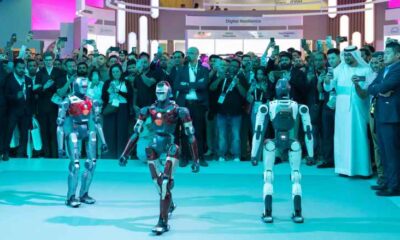
GITEX World RobotiX 2026 brings humanoid debuts and next-gen embodied Artificial Intelligence (AI) to Dubai

Published

on

New launch showcase at GITEX GLOBAL advances the Physical AI phenomenon as global humanoid robot shipments surpass 22,000 in H1 2026

DUBAI, United Arab Emirates, November 10, 2026/APO Group/ –From interactive humanoids and intelligent machines undertaking industrial tasks to multilingual robot assistants and wearable exoskeletons, the latest advances in the Physical AI phenomenon will take centre stage at the world’s largest tech and AI event next month in Dubai.


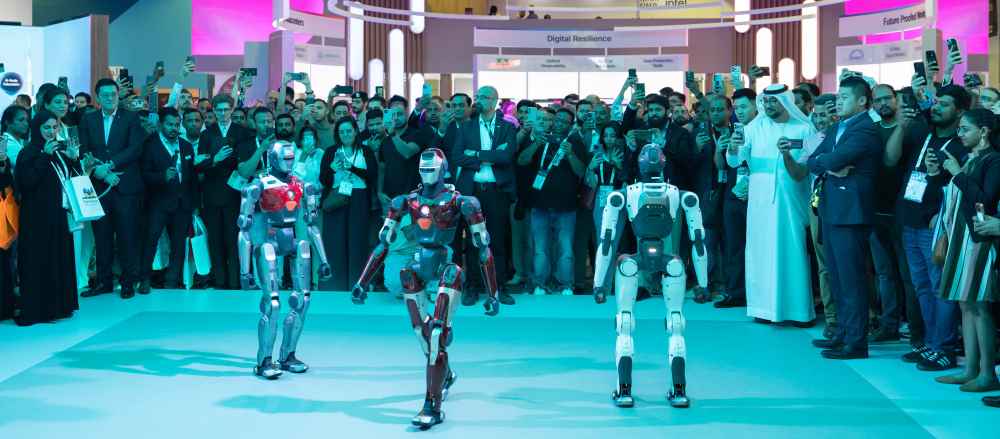
GITEX World RobotiX, a new launch event at GITEX GLOBAL, will converge the world’s robotics pioneers and leaders in embodied AI from 8-11 December at Dubai Exhibition Centre, Expo City Dubai, to show how machines that perceive, reason and act in the physical world are transforming manufacturing, logistics, healthcare, hospitality and smart infrastructure. GITEX GLOBAL 2026 will kick off with the GITEX Summit on 7 December at Dubai World Trade Centre, ahead of the exhibition at Expo City Dubai.


The showcase arrives as robot demand surges; more than 22,000 humanoid robots were shipped globally in the first half of 2026, a 300 percent year-on-year increase (https://apo-opa.co/4kHlnGe), according to Counterpoint Research, with shipments expected to exceed 50,000 units by year-end. Dubai is also advancing its robotics ambitions through its Robotics and Automation Program, targeting the deployment of 200,000 robots over 10 years to 2032 (https://apo-opa.co/4j7b5y2).


Unitree, one of the world’s largest humanoid makers with 31 percent (https://apo-opa.co/4sNVwhW) global market share, spearheads participation this year, alongside other headliners including UBTECH, whose humanoids are deployed in car factories and being tested by Airbus; AiMOGA, Chery Auto’s embodied AI robotics brand; DEEP Robotics, a global leader in quadrupeds; and the UAE’s Micropolis Robotics, which provides autonomous patrol robots for Dubai Police.


Robots take on real-world tasks


UAE-based Mangobot, a robotics solutions provider specialising in deploying and integrating intelligent machines, will present a robotic workforce featuring autonomous general-purpose robots, patrol robots, multilingual robot receptionists and live robotic performances. Visitors can also experience wearable exoskeleton technology firsthand. “It’s less ‘come look at robots’ and more ‘come see what working alongside robots actually feels like,’” said Mazen El-Kurdi, CTO of Mangobot.


Making its Middle East debut, MOS 2, developed by Chinese embodied intelligence innovator Lumos Robotics, is a wheeled ‘AI Worker’ with dual arms capable of handling payloads of up to 50 kg and operating for more than eight hours.


According to Lumos Robotics, its first-generation MOS robots completed over 1,000 hours of continuous, failure-free operation at Mitsubishi Electric’s Changshu factory, undertaking material handling, quality inspection and screwdriving tasks. The company will also showcase NIX S3, which will deliver a live dance performance demonstrating its 21 degrees of freedom, high-torque joints, agility and dynamic motion capabilities.


Cecile Wei, PR Director, Lumos Robotics, said: “Our demonstrations are designed to show the philosophy behind our products: robots need to do more than move. They need to perform useful tasks reliably in real environments.”


UAE-based Lootah Robotics, a robotics solutions and systems integration company, will showcase humanoid, quadruped, service, cleaning and telepresence robots from manufacturers including Unitree, AGIBOT, Pudu Robotics, UBTECH and EngineAI.


“We are not simply supplying individual robots; we are building an integrated robotics ecosystem,” said Hazem Ghazal, General Manager of Lootah Robotics. “Our stand will showcase how organisations can select different robots for different requirements while maintaining centralised visibility and control.”


The next frontier of embodied AI and human-robot interaction


Advances in embodied AI – where AI models are brought into a physical body or hardware system – are creating opportunities for robots to interact more naturally with people across consumer services, education, entertainment and domestic environments.

We are not simply supplying individual robots; we are building an integrated robotics ecosystem


China’s Light Origins, which develops humanoid robots and intelligent robotic systems, will make the first public appearance of its ‘bunny-shaped’ robot, with live demos of household scenarios offering visitors hands-on interaction. “We believe our bunny-shaped robot is ready to enter consumers’ homes,” said Tingxiang Fan, Co-founder and CTO, Light Origins.


Meanwhile, Raydiculous, a bionic robotics innovator from the Chengdu Humanoid Robot Innovation Centre, will make its Middle East debut with two innovations. Its TP01 humanoid, designed for commercial interaction and public services, can communicate in English and Arabic and perform synchronised movements. Alongside it, DINOBOT, described by Raydiculous as the world’s first intelligent bipedal walking bionic dinosaur, will demonstrate realistic movement and interactive capabilities.


Sandy Liu, Overseas Sales Manager, Chengdu Humanoid Robot Innovation Centre, said: “With its integrated capabilities of walking, interaction, performance, and education, our solutions turn Physical AI into a visible and usable business tool.”


Supporting future robotics talent, UAE-based technology and robotics education company Besomi will introduce six humanoid and mobile robots known as the ‘Besomi Rangers’. Unitree, Seeed Studio, Arduino and Qualcomm will be joining Besomi on the stand. The showcase will feature the latest humanoid robot from Unitree, a global leader in humanoid robotics. A live Robotics & AI Lab will allow visitors to explore how robots are engineered, programmed and trained, with hands-on engineering training using the latest Arduino VENTUNO platform, developed in collaboration with Qualcomm.


“We want young engineers and innovators to ask, ‘How does this work?’

and then go build the next generation of robotics technologies right here in the UAE. Showcasing the latest Unitree humanoid robot gives visitors a look at the forefront of robotics. Our hands-on training with Arduino and Qualcomm gives engineers practical experience to turn their own ideas into working robotics and AI applications. We are also pleased to welcome Seeed Studio to our stand as part of this focus on building engineering capabilities,” said Mohammad Hani, CEO, Besomi Robotics & AI.


Building the intelligence behind autonomous machines


JWIPC, a Chinese developer of AI computing hardware and industrial computing solutions, will launch robotic controllers built on NVIDIA’s Thor module, which the company says delivers up to 2,070 TFLOPS of FP4 computing performance. Designed for humanoids, robotic arms and autonomous mobile robots, the controllers enable AI processing and real-time decision-making.


“The NVIDIA Thor module provides a high-compute edge brain for embodied intelligence, running multi-modal models locally to integrate sensor fusion, task planning, and millisecond motion control,” said Nick Zhang, Regional Sales Manager, JWIPC.


Meanwhile, Physical AI software developer Songying Technology will demonstrate ORCA OS and ORCA Lab, integrating simulation, synthetic data generation, AI training, validation and deployment into a connected robotics development environment. Taiwan-based embedded computing specialist Vecow will unveil advanced, rugged Edge AI and robotics platforms powered by NVIDIA, Intel, AMD, Qualcomm, and NXP, while officially introducing its dedicated UAE team to accelerate mission-critical regional deployments


The 46th edition of GITEX GLOBAL, organised by inD, opens with The GITEX Summit at Dubai World Trade Centre (DWTC) on 7 December, before the four-day GITEX GLOBAL Expo begins at Dubai Exhibition Centre alongside Expand North Star, its startup and investor event.


The dual-blockbuster showcase converges 6,000-plus enterprise and startup exhibitors with tens of thousands of government leaders, C-suite executives, investors and buyers from 180 countries, reaffirming Dubai’s status as an epicentre of tech collaboration.


More information is available at www.Gitex.com and (https://apo-opa.co/4iyQ67d)

*Sources: https://apo-opa.co/4kHlnGe

https://apo-opa.co/4j7b5y2

Distributed by APO Group on behalf of GITEX Global.


Continue Reading

Trending

Exit mobile version