Connect with us

Tech

Huawei Chronicles 30 Years of Wireless Innovation in a Documentary for the First Time

Published

on

Huawei

Key Message:
Huawei has officially launched Signals of Change, a four-part documentary series that, for the first time, offers global audiences a comprehensive look at the company’s major technological innovations in wireless communications over more than three decades.
The documentary highlights Huawei’s landmark innovations, including Distributed Base Stations, SingleRAN, Massive MIMO, Polar Code, MetaAAU, and “0 Bit 0 Watt”.
Through real-world scenarios such as high-speed rail connectivity, network coverage in extreme environments, and connectivity at major sporting events, the documentary hears from global telecom operators, industry analysts, and other stakeholders to showcase the global impact and value of Huawei’s wireless innovations.


SHENZHEN, CHINA – Media OutReach Newswire – 6 November 2026 – Huawei today officially launched Signals of Change, a new documentary series that, for the first time, charts the company’s major technological innovations in wireless communications over more than three decades. Produced by Huawei in collaboration with CNN International’s brand studio Create, the series will be broadcast worldwide.

Huawei’s wireless business began in 1994, but it was in the early 2000s that it began to break into international markets. Huawei developed its distributed base station innovation, marking a historic breakthrough into the European wireless communications market. From its early struggles to gain a foothold to its determined progress in recent years, Huawei has consistently sought to overcome obstacles through innovation and meet challenges with resilience, continuing to advance amid technological transformation and intense market competition.

Through real-world scenarios such as high-speed rail connectivity, network coverage in extreme environments, and connectivity at major sporting events, the documentary hears from representatives of leading global telecom operators, industry analysts, Huawei executives, and R&D experts. It revisits landmark innovations including Distributed Base Stations, SingleRAN, Massive MIMO, and “0 Bit 0 Watt”, tracing Huawei’s journey from an industry newcomer to a leader in technological innovation and industry development.

From Distributed Base Stations to SingleRAN: Driving Mobile Network Deployment Through Architectural Innovation

On a high-speed train traveling at nearly 350 kilometers per hour, a surgeon can download hundreds of CT scan images over a mobile network to provide timely remote medical consultations. At altitudes exceeding 6,000 meters in the Mount Everest region, scientific researchers can stay connected with colleagues thousands of miles away through real-time video links, enabling remote scientific collaboration. From high-speed railways to the roof of the world, the first two episodes of the documentary explore how mobile communications technology continues to overcome the limitations of speed and geography. To trace the architectural innovations behind these advances, the story takes us back more than two decades to the early days of 3G network deployment in Europe.

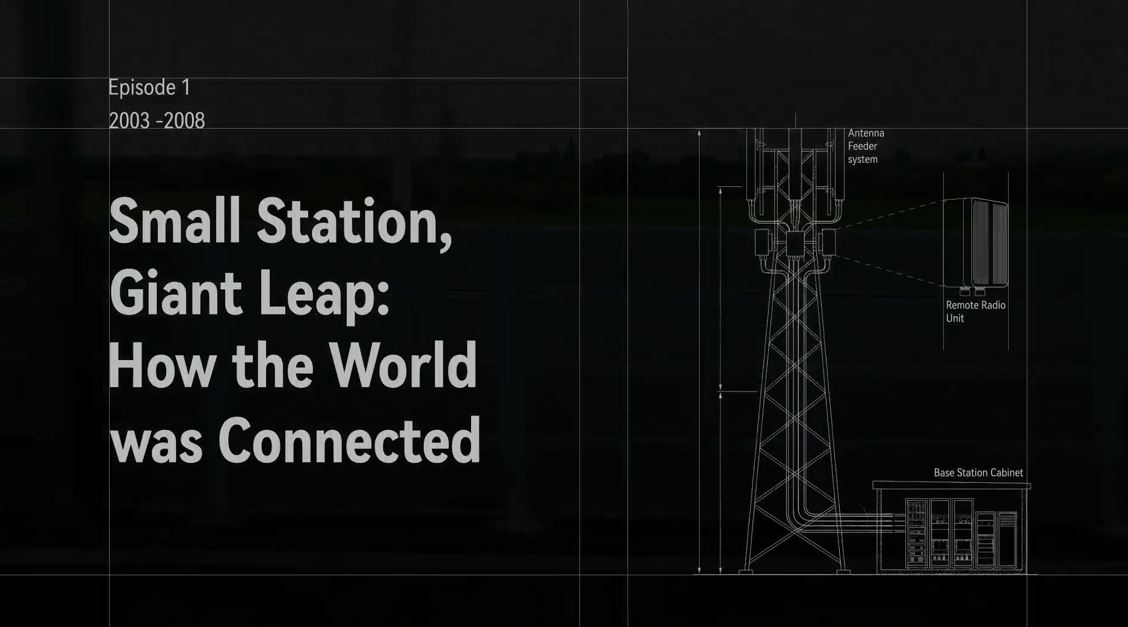
In the early 2000s, European telecom operators faced significant challenges in deploying 3G networks, including difficulties in acquiring sites, lengthy deployment cycles, and high costs. In 2004, Huawei engineers visited customer sites to gain firsthand insights into these challenges and pioneered a distributed base station architecture comprising a compact Baseband Unit (BBU) and Remote Radio Units (RRUs). This innovation enabled operators to deploy network equipment more flexibly while significantly reducing network construction costs. Huawei’s distributed base stations were first deployed in the Netherlands in 2005, followed by large-scale commercial deployment in Spain in 2006. Over time, the distributed base station became a mainstream architecture for mobile network deployment worldwide.

As the coexistence of 2G, 3G, and other mobile networks created growing challenges of duplicated infrastructure, Huawei made further breakthroughs in key technologies, including GSM multi-carrier digital predistortion (DPD), and introduced its SingleRAN solution. By integrating multiple radio access technologies on a unified hardware platform, SingleRAN enabled operators to deploy different network standards together and smoothly evolve their networks across successive generations of mobile technology. In 2008, a German telecom operator became the first in Germany to deploy Huawei’s multi-mode base station solution, marking the beginning of SingleRAN’s commercial adoption in Europe. Since then, SingleRAN has been widely deployed around the world, driving the evolution of mobile networks toward multi-band, multi-mode integration while helping operators significantly reduce network deployment and operating costs.

From Massive MIMO to Polar Code Implementation: Turning Cutting-Edge Research into Real-World Applications

At the Nanjing Olympic Sports Center, 62,356 football fans gathered for the Su Super League final. Spectators shared highlights in real time on their smartphones, with photos, videos, and live-streaming data flowing rapidly across mobile networks. This high-density connectivity, featured in Episode 3, reflects the explosive growth in data demand in the mobile internet era. How to accommodate ever-increasing data traffic using limited spectrum resources has long been a major technical challenge for the mobile communications industry.

Huawei has continuously invested in Massive MIMO (Multiple-Input Multiple-Output) research, leveraging innovations such as large-scale antenna arrays to bring this cutting-edge technology from theoretical research to commercial deployment. In 2015, Huawei worked with an operator partner in Shanghai to successfully validate Massive MIMO in a commercial network environment. Today, Massive MIMO has become one of the key technologies underpinning 5G networks, laying a solid technological foundation for the world’s transition to the 5G era.

Meanwhile, Huawei has continued to explore innovations in fundamental research. In 2008, Turkish scientist Erdal Arıkan introduced the theory of Polar Codes, opening up a new direction in channel coding technology. Building on this theoretical breakthrough, Huawei invested in Polar Code encoding and decoding algorithms and system-level validation. In 2016, through the efforts of Huawei and global industry partners, Polar Codes were selected by 3GPP as the coding scheme for 5G enhanced Mobile Broadband (eMBB) control channels, becoming an important part of the international 5G standard.

From MetaAAU to “0 Bit 0 Watt”: Delivering Superior Network Performance with Ultra-Low Energy Consumption

Episode 4 shifts the focus to the green transformation of wireless networks. As demand for mobile connectivity continues to grow, reducing network energy consumption while meeting rising performance requirements has become a shared challenge for telecom operators worldwide.

In 2021, Huawei launched MetaAAU, its next-generation Massive MIMO product. Through innovations including ultra-large-scale antenna arrays, MetaAAU pushed beyond the performance limitations of conventional antenna architectures. By enhancing network coverage while reducing energy consumption by approximately 30%, MetaAAU has helped operators achieve both higher network performance and greater energy efficiency.

In 2021, Huawei and its European customers jointly introduced the “0 Bit 0 Watt” concept. Through coordinated innovations in hardware, materials, software, and intelligent network management, the solution enables wireless equipment to enter ultra-deep sleep modes during periods of low traffic and wake up on demand, reducing network energy consumption while maintaining user experience. In 2024, the solution received the GSMA GLOMO Award for “Best Mobile Technology Breakthrough”, offering a new technological pathway for telecom operators worldwide to advance their green transformation.

A Journey of Relentless Innovation: Driven by Customer Needs and Scientific Advancement

From transforming base station architectures to enabling multi-standard network integration, from breakthroughs in key algorithms to contributing to global standards, and from continuous product evolution to achieving ultra-low energy consumption, Huawei’s journey of wireless innovation over more than three decades has been guided by a consistent commitment: addressing customer needs to drive innovation and scientific exploration to push technological boundaries. These efforts have continuously advanced global network capabilities, creating new possibilities for the digital economy and a more connected society.

Looking ahead, Huawei will remain committed to its dual-driver approach to innovation, continue to increase investment in fundamental research and development, respect and protect intellectual property rights, and embrace openness and mutually beneficial collaboration. Working alongside partners worldwide, Huawei aims to advance mobile communications technology and contribute to a thriving global industry ecosystem.

Where to Watch:

Watch the documentary via media’s YouTube link, or follow Huawei’s official social media channels to discover the full story of the Signals of Change documentary series.

Q1: Why has Huawei chosen to release this documentary series on wireless innovation now?

A: Huawei aims to offer global audiences a comprehensive look at its major technological innovations over more than three decades. Through authentic stories, technological breakthroughs, and industry achievements, the documentary showcases Huawei’s capabilities in original innovation and raises awareness of its contributions.

The global mobile communications industry is entering a pivotal stage in the development of next-generation networks. Through this documentary, Huawei hopes to highlight its long-standing commitment to innovation driven by both customer needs and scientific advancement, sustained investment in fundamental research, and collaborative innovation with global partners. Huawei will continue to carry these principles forward as it explores new technologies and contributes to the development of next-generation mobile networks.

Q2: How do the technological innovations featured in the documentary relate to people’s everyday lives?

A: The mobile connectivity we take for granted today is built on decades of continuous technological innovation. From distributed base stations that made mobile network deployment more flexible and cost-effective, to SingleRAN, which enabled the integration and smooth evolution of different generations of mobile networks, and Massive MIMO, which dramatically increased network capacity, each breakthrough has expanded the possibilities of mobile communications. More recently, innovations such as MetaAAU and “0 Bit 0 Watt” have helped operators achieve both improved network performance and greater energy efficiency.

Whether staying connected on a high-speed train, sharing memorable moments in a stadium filled with tens of thousands of fans, or accessing reliable mobile services in remote areas, these everyday experiences depend on the combined capabilities of multiple generations of communications technology. The documentary aims to show audiences that the seamless connectivity we expect is the result of generations of technological progress—and that these innovations will continue to shape our digital lives in the years ahead.


Tech

Beyond the exhibition floor: How robots, AI and networks are moving into the real world

Published

on

TONGXIANG, CHINA – Media OutReach Newswire – 6 November 2026 – A robot makes coffee. Others dance, patrol exhibition halls or trade mock blows in choreographed demonstrations. Scenes like these were on full display at this year’s World Internet Conference Wuzhen Summit, which concluded on Nov 5 in the canal town of Wuzhen in eastern China.

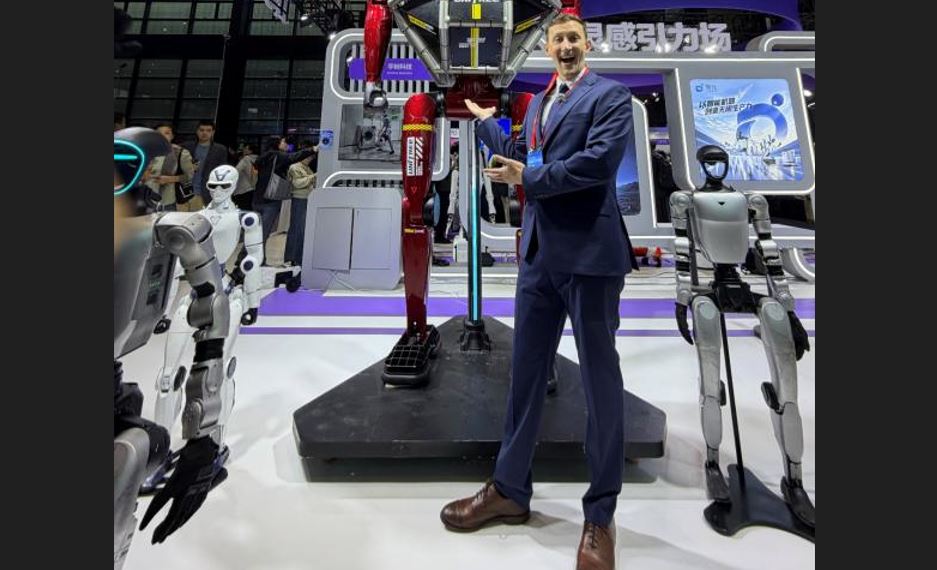
Companies including Unitree Robotics, AgiBot and UBTECH used the “Light of Internet” Expo to show how far robots have come — and how close they may be to becoming part of everyday life.


But the expo was not only about spectacle. Many of the machines on display were being developed for tasks beyond the exhibition hall.

Evan Kail, an American content creator visiting the expo, paused in front of Unitree Robotics’ GD01, a robot designed for emergency-response scenarios.

Kail said the machine captured the pace of China’s progress in robotics. A few years ago, he said, Unitree robots were widely known for dancing in televised gala performances. Now, machines such as the GD01 pointed to more practical roles, including disaster response and search-and-rescue operations.

“The leaps of technology in China are very impressive,” Kail said. “As climate change gets worse and worse, robots like this can make a difference if they are used to save lives.”

The shift from eye-catching demonstrations to practical deployment was a recurring theme across the expo. But for robots to work reliably in crowded streets, disaster zones or industrial sites, the machine itself is only part of the equation. It also needs a network capable of carrying huge amounts of data, responding almost instantly and supporting AI decisions close to where they are needed.

At China Mobile’s booth, a display highlighted one example: traffic-management robots deployed in Hangzhou, the eastern Chinese city that hosted the 2023 Asian Games.

Earlier this year, during a peak holiday travel period, Hangzhou deployed 15 robots at major intersections in tourist areas and downtown districts. Part of the Hangzhou Police Smart Mobility program, they can answer questions, guide pedestrians and vehicles, and warn people about traffic violations.

The deployment illustrates how connectivity is becoming central to the usefulness of intelligent machines. The current system uses 5G and 5G-Advanced connections and typically supports one camera on each robot. Future versions are expected to carry as many as six cameras and operate more independently within defined areas.

That will require latency below 10 milliseconds, uplink speeds above 100 Mbps and positioning accurate to within centimeters — demands that are helping shape the development of 6G.

The next generation of mobile technology is still years from commercial deployment. But its ambitions extend beyond faster download speeds. Industry plans for 6G include combining communications with sensing, edge computing and satellite connectivity.

“With 6G, networks will effectively gain radar-like eyes — the ability to sense and understand their surroundings — while AI will give them a brain,” said Liang Zeshuai, a network optimization engineer at China Mobile Zhejiang.

In this vision, a base station would do more than transmit data. Equipped with radar-like sensing capabilities, it could detect a nearby drone, identify obstacles around a blind corner or provide an autonomous machine with a more detailed understanding of its surroundings. Edge computing, meanwhile, would allow AI tasks to be processed closer to the user, rather than sending every request to a distant data center.

That could matter especially in the kinds of situations Kail had in mind: complex and dangerous environments where time, connectivity and situational awareness can make a difference.

Satellite connectivity could provide another layer of resilience when typhoons, earthquakes or other disasters damage ground-based infrastructure. China Mobile has launched a direct-to-handset service using the Tiantong and BeiDou satellite systems.

For now, 5G-Advanced — a network that goes beyond 5G in speed and performance — has already been widely rolled out across China. In Wuzhen, a 5G-Advanced “super uplink” network with upload speeds of up to 1,000 Mbps covered the conference venue for the first time. Robot dogs used the network to patrol the area, transmitting 4K video and location data in real time.

The same combination of connectivity, computing and AI is moving into industries where the gains may be less visible than a dancing robot, but potentially more consequential.

China Mobile and Sinopharm, China’s state-owned pharmaceutical and healthcare conglomerate, for example, have developed an AI-enabled cold-chain logistics platform that has reduced delivery costs by 65% and cut delivery times by 70%. The system is designed to help manage the transport of temperature-sensitive products, where delays or poor monitoring can lead to waste.

At Ningbo-Zhoushan Port, China Mobile has built what it describes as the world’s largest 5G private network for port operations. Such networks can support real-time coordination among cranes, vehicles, cameras and control systems across a vast, fast-moving industrial site.

The company is also applying AI and connected systems to public safety and emergency management, including flood-control planning and drone inspections of buildings. The aim is not only to respond faster after an emergency, but to identify risks before they become crises.

At Wuzhen, the robots remained the most visible attraction. They made coffee, danced for visitors and posed for cameras. Yet the more consequential story was happening behind them — in the networks, computing systems and satellite links that could determine how quickly AI moves from a trade-show novelty into a tool for cities, industries and, potentially, lifesaving work.


Continue Reading

Business

Canon Middle East strengthens channel partnerships in Egypt through Frame the Future

Published

on

Two-day Cairo programme connects partners, creative communities and imaging innovation across photography, video and printing

CAIRO, Egypt, November 3, 2026/APO Group/ –Canon Middle East (www.Canon-ME.com) today outlined its priorities for strengthening collaboration with established channel partners and responding to evolving customer needs in Egypt at a press conference marking the introduction of Frame the Future. Taking place in Cairo on 3–4 November, the two-day programme brings together distributors, channel partners ,retailers, system integrators and imaging specialists for strategic dialogue, product experiences and practical knowledge sharing.


Frame the Future is a continuing regional platform for Canon Middle East’s channel engagement, bringing together Canon’s imaging and printing heritage, emerging creative applications and the local expertise of its partners. Beginning in Egypt, the platform is intended to support closer collaboration and help partners connect customers with relevant technologies and experiences across Middle East markets. It builds on Canon’s longstanding relationships in Egypt.

Egypt presents important opportunities for the future of consumer imaging, supported by a vibrant creative community and partners who understand their customers

“Egypt presents important opportunities for the future of consumer imaging, supported by a vibrant creative community and partners who understand their customers. As people move increasingly between photography, video and printed expression, our priority is to help partners respond with relevant technology, stronger product knowledge and experiences that show what is possible. Frame the Future creates a platform to listen, collaborate and shape the next chapter of customer engagement together,” said Binoj Nair, Business Unit Director – B2C, Canon Middle East

The photography and video programme on the evening of 3 November will feature hands-on experiences with Canon’s imaging line-up. In a vibrant, colour-rich creative zone, Mohammed Alaa, CEO of Cairo Photography Club (CPC), will lead a live demonstration of the video capabilities of the Canon EOS R6 V, drawing on his experience of using the camera to create content. The EOS R8 Mark II will also be on display, alongside other products in the imaging portfolio. The programme is designed to give channel partners practical insight into the ways creators are using imaging technology today.

On 4 November, Frame the Future will turn its focus to Canon’s home and office printing portfolio, reinforcing Egypt’s strategic importance as a key market for printing solutions and channel partnerships. A central focus will be on deepening engagement with system integrators and value-added resellers, demonstrating how Canon’s printing technologies, integrated solutions and applications deliver value beyond the device itself. Through hands-on experience, solution-led discussions and knowledge sharing, the programme will highlight opportunities for partners to address evolving customer requirements, expand their solution offerings and drive sustainable business growth.

The programme reflects Canon Middle East’s focus on the Customer of Tomorrow: people whose creative and everyday needs continue to evolve, who move across different formats and who value accessible expertise alongside technology. It also reflects Canon’s corporate philosophy of Kyosei — living and working together for the common good  through collaboration with the partners and communities that support Egypt’s imaging market.

Distributed by APO Group on behalf of Canon Middle East.


Continue Reading

Events

GBA Science Forum 2026 Held Across Guangdong, Hong Kong, and Macao: Driving Collaborative Innovation to Build a Global Sci-Tech Hub

Published

on

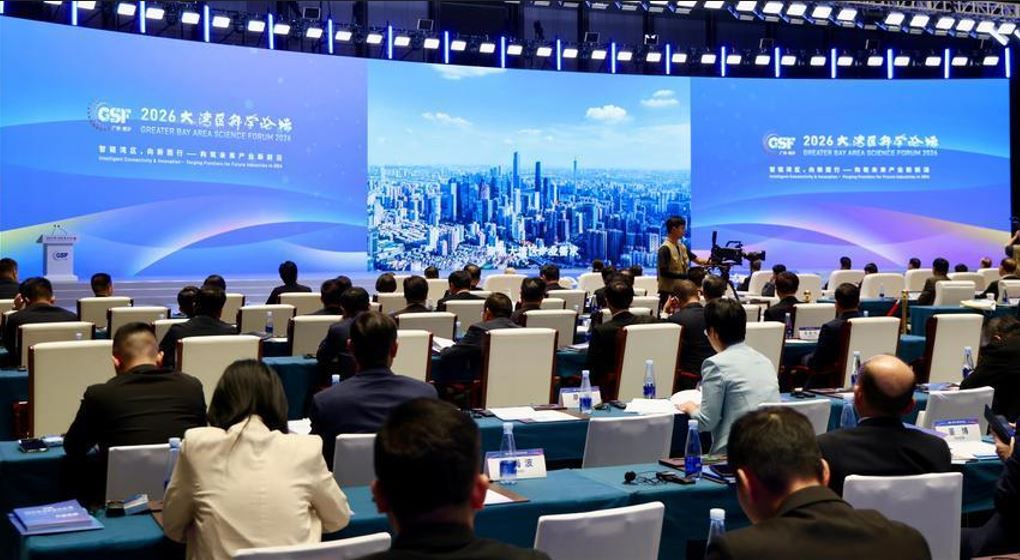
GUANGZHOU, CHINA – Media OutReach Newswire – 3 November 2026 – Co-hosted across Guangdong, Hong Kong, and Macao from October 31 to November 2, the 2026 Greater Bay Area (GBA) Science Forum took place with a strong focus on future industries and cutting-edge technologies. Jointly guided by the Ministry of Science and Technology and the Chinese Academy of Sciences (CAS), this year’s event highlights national strategic leadership to accelerate the implementation of key policies and technological breakthroughs in the region.


The forum features an opening ceremony, a main forum, 15 specialized sub-forums, and 10 signature events. While the opening ceremony and main forum were held on November 1 in Nansha, Guangzhou, parallel sessions are rolling out across Hong Kong, Shenzhen, Huizhou, Dongguan, and Yangjiang, demonstrating a deeply integrated and synergistic approach to the event across multiple cities.

The opening ceremony witnessed the release of new support measures for the GBA International Sci-Tech Innovation Center, jointly introduced by relevant state ministries and central authorities. A key highlight is the commitment to fortifying the region’s original innovation capacity by supporting the development of a world-class cluster of major sci-tech infrastructures in the GBA. Furthermore, two national key R&D projects under the 15th Five-Year Plan, spearheaded by Guangdong Province, were officially launched: the “Advanced Biotherapeutic Technologies Project” and the “GBA International Sci-Tech Innovation Center Project.”

The ceremony also featured the signing of the Guangdong-Hong Kong-Macao Collaborative Innovation Joint Funding Program, as well as major sci-tech cooperation agreements between CAS and Guangdong Province, marking another solid step in translating national strategic visions into concrete actions.

Since its inception in December 2021, the GBA Science Forum has been successfully held for five editions. It has evolved into a premier high-level exchange platform and a vital showcase for the matchmaking and achievements of the GBA International Sci-Tech Innovation Center.

This year’s forum brought together four Nobel laureates, alongside distinguished academicians from home and abroad, young scientists, and leading tech entrepreneurs.

Together, they shared their latest research findings and visionary insights on critical topics, including cutting-edge scientific breakthroughs, future technological trends, and the deep integration of scientific and industrial innovation.

In recent years, the GBA International Sci-Tech Innovation Center has demonstrated robust innovation momentum and cultivated a thriving developmental environment. This vitality was globally recognized in September 2026, when the World Intellectual Property Organization (WIPO) published its Global Innovation Index 2026 Top 100 Science and Technology Clusters, with the “Shenzhen-Hong Kong-Guangzhou” cluster securing the number one spot globally once again.


Continue Reading

Trending

Exit mobile version