Connect with us

Business

Standard Bank, Mozambique Oil and Gas Chamber Position Micro, Small and Medium-Sized Enterprises (MSMEs) at the Center of Major Energy Projects

Published

on

African Energy Chamber

As multi-billion-dollar LNG projects advance toward FID and commissioning, Standard Bank and the Mozambique Oil and Gas Chamber are positioning local SMEs at the forefront of project development

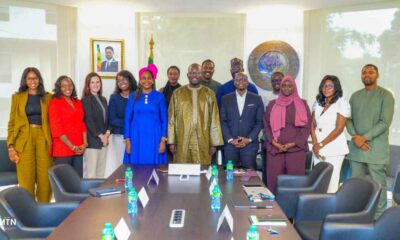
JOHANNESBURG, South Africa, November 5, 2026/APO Group/ –Standard Bank and the Mozambique Oil and Gas Chamber have signed a memorandum of understanding (MoU) to support the development and integration of micro, small and medium-sized enterprises (MSME) across the country’s energy value chain. Combining business capacity building, access to finance and connections with major operators, the partnership aims to help Mozambican companies compete for contracts as multi-billion-dollar projects advance toward commissioning.


Representing the voice of the African energy sector, the African Energy Chamber (AEC) recognizes the partnership as a vital step toward strengthening local participation across the energy sector. Signed in Maputo this week, the MoU addresses one of the biggest challenges faced by the industry: ensuring that domestic companies have the financial resources, technical capabilities and commercial connections needed to benefit from large-scale investments. By bringing financial institutions and leading operators together, the initiative offers a practical model for translating Mozambique’s growing energy investment pipeline into sustainable opportunities for local businesses.

“Mozambique is attracting billions of dollars into LNG development, but the true measure of success will be how much of that investment reaches local companies, creates jobs and builds lasting industrial capacity. Standard Bank and the Mozambique Oil and Gas Chamber are demonstrating exactly the kind of partnership Africa needs to turn major energy investments into opportunities for African businesses,” states NJ Ayuk, Executive Chairman of the AEC.

A Mozambican entrepreneur should not lose a contract simply because they cannot access working capital or meet procurement requirements without support

The partnership comes as Mozambique advances a series of major LNG projects toward commissioning. TotalEnergies’ Mozambique LNG project, designed to produce 13.1 million tons per annum (mtpa), is targeting first production by 2029. Development is progressing, with more than 4,000 workers currently mobilized at the Afungi site. ExxonMobil is also advancing the Rovuma LNG project toward a 2028-start. The company recently selected an engineering and procurement contractor for the planned 18.6-mtpa project.

Meanwhile, at African Energy Week 2026, Eni announced that it would begin drilling at the $7.2 billion Coral Norte FLNG project in early November. With a planned capacity of 3.6 mtpa, the project will double Mozambique’s LNG output to approximately 7 mtpa. Eni currently produces from the Coral Sul project, which came online in 2022. These projects are not only cementing the country’s position as a global LNG exporter, but are creating a substantial pipeline of opportunities for local MSMEs.

Stepping into this picture, the recent partnership between Standard Bank and the Mozambique Oil and Gas Chamber positions local companies at the forefront of these projects. According to Florival Mucave, President of the Mozambique Oil and Gas Chamber, the partners “aim to ensure that, as business opportunities emerge in connection with the supply chains of LNG projects, Mozambican companies not only know about these opportunities but are also increasingly prepared.”

Financing is at the core of the MoU. Mucave cited a MozUp 2024 study which showed that out of 104 suppliers surveyed, only 27% had bank loans, while 84% relied on informal financing avenues that covered about half of their business needs. The partnership addresses this challenge by connecting companies directly to financiers, while providing broader support across training and business preparation.

“A Mozambican entrepreneur should not lose a contract simply because they cannot access working capital or meet procurement requirements without support. We commend Standard Bank and the Mozambique Oil and Gas Chamber for moving beyond commitments to local content and putting practical solutions in place to help domestic businesses compete and grow,” Ayuk added.

Distributed by APO Group on behalf of African Energy Chamber.


Business

Coca-Cola system invests USD 1.22 million to strengthen water security in Namibia

Published

on

The initiative represents a nearly USD 25 million investment focused on helping address critical water-related challenges across 20 African countries by 2030

WINDHOEK, Namibia, November 5, 2026/APO Group/ –As Namibia continues to face recurring droughts and growing water demand, the country’s water resources are under increasing pressure. Windhoek is situated in one of the most water-stressed regions in sub-Saharan Africa, where low and unpredictable rainfall, combined with high evaporation rates, continues to challenge water availability and long-term water security.[1]


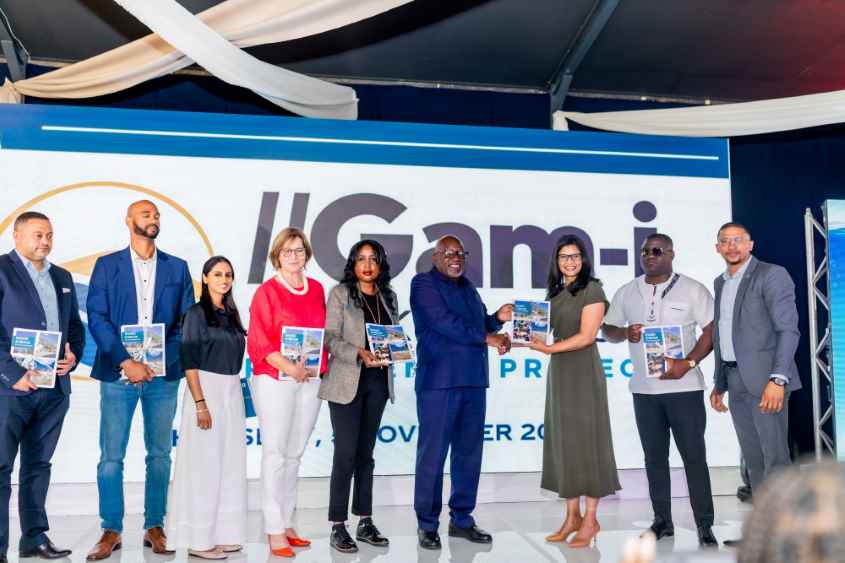
To help address these shared water challenges, the Coca-Cola system is investing USD 1.22 million in the //Gam-i Swakop Basin Resilience Project, designed to help strengthen water security and support ecosystem restoration in the Swakop River Basin, a vital water source for the city of Windhoek and surrounding communities.

The //Gam-i Swakop Basin Resilience Project aims to support improved water availability and help strengthen the resilience of the Swakop River Basin through nature-based solutions that support sustainable water resource management across the catchment area.

Implemented in collaboration with the Global Water Challenge (GWC) and World Wildlife Fund (WWF) Namibia, the project includes the construction of two sand storage dams, restoration of 235 hectares of land through the clearing of invasive alien plants, and the planting of 750 trees in river buffer zones and environmentally degraded areas within Windhoek’s informal settlements. In addition, two boreholes will be drilled to support groundwater recharge in the Windhoek aquifer, and a water resilience action plan has been developed.

Through the Africa Water Stewardship Initiative, the system aims to help protect important watersheds and to improve access to water and sanitation in local communities

This work forms part of the Coca-Cola system’s Africa Water Stewardship Initiative, launched in 2024. The initiative represents a nearly USD 25 million investment focused on helping address critical water-related challenges across 20 African countries by 2030.

“Because water challenges are local, our approach to water security is focused on local action and collaboration,” said Alfred Olajide, Vice President of East and Central Africa Operations at Coca‑Cola. “The Coca‑Cola system remains focused on helping to promote water stewardship, increasing water use efficiency, and treating and returning safe water to communities.”

Henry Friedrich, General Manager of Coca-Cola Namibia Bottling Company (CCNBC) added: “As part of the Coca-Cola Beverages Africa group, we have a responsibility to assist those who face water scarcity and to help protect local water resources where we operate, especially in places with the biggest challenges. Through the Africa Water Stewardship Initiative, the system aims to help protect important watersheds and to improve access to water and sanitation in local communities.”

WWF Namibia Country Director, Dr Juliane Zeidler, said: “Water is one of Namibia’s most precious and increasingly vulnerable resources. This project is an opportunity to demonstrate how investing in healthy ecosystems can deliver tangible benefits for people, while also helping communities become more resilient to future climate pressures. We hope the lessons and partnerships developed through this initiative can inform similar approaches elsewhere in the country.”

“Collaboration is essential to addressing shared water challenges effectively. Coca-Cola and its authorised bottlers continue to work with governments, businesses, and civil society organisations to design and implement strategic interventions,” concluded Olajide.


Distributed by APO Group on behalf of Coca-Cola Beverages Africa.


Continue Reading

Business

‘Power, Protect, Purchase’: Africa Made It unveils blueprint to capture USD 34B in GDP and accelerate African industrial sovereignty

Published

on

Africa Practice research shows that Africa exports up to 98% of its raw cotton overseas and captures only 2% of its total value while incurring a USD 35 billion annual trade deficit
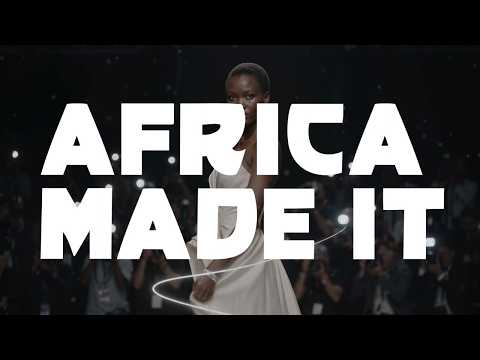
African culture, design, and storytelling influence global fashion, music, and media like never before

LAGOS, Nigeria, November 5, 2026/APO Group/ –Africa Made It (https://AfricaMadeIt.co/), the continental movement driving Africa’s industrial sovereignty, today officially launched its campaign, “Power, Protect and Purchase,” at the CANEX weekend in Lagos, Nigeria. Aimed at unlocking USD 34 billion in annual GDP contribution through a structural transition from unprocessed raw cotton exports to end-to-end local garment processing, the initiative seeks to turn Africa’s vast natural wealth into sovereign, self-sustaining economic power.


Africa Made It is driven by a consortium of leading pan-African organisations, advocacy groups, and media organisations who are positioning Africa as a global investment hub. Its flagship campaign, spotlighting the fibre-to-fashion value chain, presents a clear roadmap for continental industrialisation: securing competitive energy power for local industrial mills, enacting policy measures to protect emerging domestic manufacturers from unfair foreign imports, and rallying African consumers to purchase locally manufactured apparel. Together, these three pillars ensure that value created from African resources remains on African soil.


Africa Practice research shows that Africa exports up to 98% of its raw cotton overseas and captures only 2% of its total value while incurring a USD 35 billion annual trade deficit.  Building the continent’s domestic processing capacity in spinning, weaving, and sewing locally produced cotton will sustain nearly two million permanent industrial jobs and inject approximately USD 33 billion directly into domestic household incomes every year, in addition to a recurring contribution of USD 34 billion to the continent’s GDP.


While these figures reveal the immense macro-economic potential of the value chain, the true heart of this transformation lies in its human impact. Industrial wages and local lint purchases leading to increased capital circulation in rural communities can drive community micro-economic vitality and contribute to rural poverty reduction. Additionally, formal employment opportunities can expand drastically for women, as they currently make up between 70-90% of garment factory workers on the continent.


Realising this vision and changing the lives of millions of people requires a deliberate combination of targeted investments, supportive trade policies, and consumer mobilisation. A USD 1.8 billion capital allocation toward critical structural enablers for garment transformation is the foundation for bridging Africa’s missing middle in the fibre-to-fashion value chain.


Marie Wilke, editor-in-chief of the Africa Made It magazine, said, “African culture, design, and storytelling influence global fashion, music, and media like never before. Yet, without domestic manufacturing infrastructure, Africa’s creative authority yields very little economic return. Linking raw cotton harvest directly to local processing ensures that the intellectual property, commercial margins, and industrial jobs remain on the continent. It is time to wear our power.”


To learn more about the potential of Africa’s fibre to fashion value chain, watch the campaign video (https://apo-opa.co/4BKAIvY) or read the Africa Made it (https://apo-opa.co/4zvA5VF)magazine (https://apo-opa.co/4zvA5VF). Access the campaign website and resources in English (https://apo-opa.co/4zvA5VF) and French (https://apo-opa.co/4zrK8e2).

Distributed by APO Group on behalf of Africa Made It.


Continue Reading

Energy

International Energy Forum (IEF) Chief to Bring Global Energy Perspective to Libya Energy & Economic Summit (LEES) 2027

Published

on

Secretary General of the International Energy Forum (IEF) Jassim Alshirawi is set to bring international energy policy expertise to discussions on Libya’s multi-billion-dollar investment pipeline and production expansion strategy

TRIPOLI, Libya, November 5, 2026/APO Group/ –International Energy Forum (IEF) Secretary General Jassim Alshirawi will participate as a speaker at the Libya Energy & Economic Summit (LEES) 2027, taking place in Tripoli on January 23–25. His participation will bring international energy policy expertise to discussions on Libya’s production ambitions, infrastructure development and integration into global energy markets.


Libya is pursuing a $36 billion energy investment program to expand production, develop infrastructure and attract international capital. The country aims to increase oil output to two million barrels per day by 2030–31, creating investment opportunities across upstream operations, gas development and downstream infrastructure. Delivering these ambitions will require financing, technical expertise and sustained cooperation between domestic institutions and international energy companies.

Alshirawi’s experience in international energy cooperation offers relevant perspectives as Libya works to strengthen its position in global markets. The IEF brings together energy-producing and consuming countries to facilitate dialogue on market stability, security of supply and investment. These priorities intersect with Libya’s efforts to mobilize capital, develop its hydrocarbon resources and establish the infrastructure required to support long-term production growth.

Appointed the IEF’s sixth Secretary General, Alshirawi assumed office on January 1, 2025, following his election on June 25, 2024. He brings more than 40 years of experience across the public and private energy sectors, including senior executive positions at Bahrain Petroleum Company and Bahrain’s Ministry of Oil, alongside advisory responsibilities to Bahrain’s oil and gas minister.

His professional background also includes contributions to Bahrain’s renewable energy and energy efficiency planning. Before becoming Secretary General, Alshirawi served seven years on the IEF Executive Board and nine years in its International Support Group, building extensive experience in institutional cooperation and international energy policy.

Libya became the IEF’s 72nd member country in January 2023, strengthening its participation in international energy dialogue and the Joint Organisations Data Initiative. Membership provides a platform for engagement on energy data transparency and market developments, supporting Libya’s efforts to deepen international cooperation as it pursues investment and production targets.

LEES 2027 will bring government representatives, national oil companies, international operators, investors and financial institutions to Tripoli to examine commercial opportunities across Libya’s energy sector. Alshirawi’s participation will contribute an international policy perspective to discussions on financing, infrastructure integration and the partnerships required to advance the country’s energy development objectives.

For more information about LEES 2027, visit www.LibyaSummit.com. To sponsor or participate as a delegate, contact sales@energycapitalpower.com.

Distributed by APO Group on behalf of Energy Capital & Power.


Continue Reading

Trending

Exit mobile version