Connect with us

Tech

Huawei Highlights Continuous Innovation, Securing Competitive Edge Through Technological Breakthroughs

Published

on

Competitive Edge

SHENZHEN, CHINA – Media OutReach Newswire – 3 October 2026 – Huawei hosted an international media roundtable today featuring Richard Yu, Executive Director, Chairman of the Investment Review Board, and Chairman of the Board of Directors of the Consumer BG. Yu shared comprehensive insights into Huawei’s consumer business and HarmonyOS ecosystem.

Richard Yu joined Huawei in 1993, working on early developments like the first-generation program-controlled switch and participating in the establishment of Huawei’s wireless communications business, which started with GSM. Over the past decade, Yu has led Huawei’s consumer business with the vision to deliver a seamless AI life experience to all consumers across five key scenarios: HIMA-powered Smart Travel, HarmonyOS Office, Smart Home, Fitness & Health, and Entertainment, which he said is also the long-term strategy for Huawei’s consumer business over the next 10 years.


 Between 2007 and 2025, Huawei invested more than CNY1.8 trillion into R&D shifting from roughly 10% of annual revenue in early years to over 20% recently. Huawei has continued to increase investment into the core technologies of the ICT domain and basic research, which has translated into robust core capabilities, extensive intellectual property, and a vast patent portfolio, and helped with achieving a series of breakthroughs in technological innovation.

The Mate 90 series smartphones Huawei just launched come with the latest Kirin 9050 Pro chip. The overall device performance is 31% higher than the previous generation. The Balong modem, image sensor processor (ISP), mobile security processor (MSP), Lingxi CPU, Maleoon GPU, and the NPU that adopts Huawei’s Da Vinci architecture for AI processing are all designed by Huawei. They offer higher energy efficiency and deliver much-improved overall system-level performance.

Even though Yu admitted that Huawei has limited access to advanced semiconductor processes, Huawei recently made a new breakthrough in the semiconductor domain – the LogicFolding technology under the Tau Scaling Law. Unveiled by He Tingbo, head of Huawei’s Semiconductor Business Department this May, this technology vertically stacks the logic layers of chips and restructures the circuit layout through inter-layer high-density interconnect to shorten critical paths and reduce latency. This technology was adopted on Kirin 9050 Pro chip, which shows very strong AI processing power. The Mate 90 series powered by this chip can run a 30B MoE on-device AI model.

In the AI domain, Yu talked about the Ascend compute foundation that Huawei provides, by remarking Huawei’s large models called openPangu, AI capabilities for intelligent driving, and HarmonyOS Celia, which is similar to Gemini in the Google Android ecosystem. Huawei is also using AI to improve the O&M of communications network equipment. By combining AI computing power with domestic open-source large models, Huawei’s vision is to help enterprises and industries around the world to become more productive and bringing more convenience to everyone.

In the past years, Huawei has launched a broad series of products and solutions, including smartphones, PCs, tablets, wearables, TWS audio products, Smart TVs, home routers, smart home control solutions, as well as intelligent electric vehicles together with partners. Underlying these products and solutions are Huawei’s chip hardware platform and HarmonyOS – another OS ecosystem after iOS from Apple and Android from Google that Huawei developed to support all the smart devices and smart hardware across all scenarios.

Development of HarmonyOS began in 2019. Before that, Huawei was a major contributor to the Android community as well as the entire Android ecosystem. Now, more than 90 million devices, including smartphones, PCs, and tablets, currently run on HarmonyOS 6 and HarmonyOS 7. This figure is expected to hit the 100 million mark by the end of this year. The number of apps and services in the HarmonyOS ecosystem has already exceeded 450,000. Its global registered developer count has reached 11 million, and Huawei now has over 23,000 app innovation partners. Expressing his special thanks to all partners and developers for their trust and support, Yu also pointed out that Huawei is considering gradually bringing HarmonyOS to the global market in the future.

Globalization is another topic of the conversation. Yu mentioned that Huawei had very good collaboration with many companies from the US, Europe, Japan, South Korea, and Taiwan, delivering huge business value and benefits to those partners. When it comes to the difficulties that Huawei overcame since 2019, Yu said that relying on homegrown technologies and capabilities, Huawei gradually designed its own operating system and developed basic tools and software by themselves, putting a domestic supply chain in place. In 2023, Huawei started to manufacture the chips used by smartphones domestically again. With these chips and HarmonyOS, and by relying on China’s domestic supply chain, materials, and process nodes, Huawei has basically gotten rid of the dependence on US technologies.

While Huawei’s global market share was once No. 1, nowadays it only sells several million units of smartphones outside China every year. However, Yu revealed that Huawei is trying to return to the overseas market step by step.

Taking wearables as an example, Huawei is No. 1 in terms of the market share both in China and globally. Other innovative products such as TWS earphones, are also growing fast and have reached No. 1 in many countries. While Huawei’s tablet and PC business was greatly affected after it was denied access to Windows and Intel x86 chips, the HarmonyOS-based tablets are now performing strongly. Another example would be CPE, which is a mobile router that provides connectivity to the unconnected in remote and rural areas. These products are also very well received across many regions outside China, helping more people connect to the rest of the world and live better lives.

Question: Both the Huawei XT 2 and the two most advanced models of the Mate 90 series use a LogicFolding chip. Will LogicFolding chips be used for more phones in the future? We understand that Huawei’s chip production capacity is still limited. Huawei has launched SuperPoDs, and AI infrastructure is a huge business. They are both very important in China. How do you secure a larger share of the chip supply internally?

Richard Yu: We started introducing the chip that adopts the LogicFolding technology powered by the Tau Scaling Law to the Mate XT 2 tri-fold phone. To answer your question, yes, more of our phones will definitely use these LogicFolding chips in the future.

Currently, the production capacity for advanced semiconductors in China still cannot meet the rapidly growing demand. Huawei’s Ascend chips for the AI domain also use such capacity. But we have developed a requirement plan, which also covers the chip requirements of smartphones.

The sharp price increase for memory components over the past two years has somewhat limited the smartphone sales volume. Even though the production capacity remains tight right now, generally it is sufficient to meet our market shipment needs.

We hope that production capacity will ramp up in China’s semiconductor industry so that we can manufacture more advanced products for consumers in the Chinese market as well as the overseas market in the future.


Business

Amini Releases Soma, an Open Artificial Intelligence (AI) Model to Take Nations from Analogue to AI-Ready

Published

on

Built by an African company from work that began in Barbados, Soma-1X Lite outperforms frontier models on a leading public document benchmark, at ten percent of their cost

BRIDGETOWN, Barbados, November 25, 2026/APO Group/ –Amini (https://www.Amini.ai/) today released Soma-1X Lite, a compact, open-weight AI model that converts paper records into structured, machine-readable data. Small enough to run on a single GPU within a government’s sovereign infrastructure, Soma shows that countries of the Global South can build world-class AI for their own context, on their own terms. The model is available today on Hugging Face (https://apo-opa.co/4fPHTcI)


The biggest leapfrog opportunity of the AI age

Across the Global South, most knowledge remains offline. It sits on paper: cabinet papers, land registries, civil registries, geological surveys, and handwritten ledgers in languages no AI benchmark was designed to test. Because AI learns from what it can read, those countries are largely absent from the systems now shaping the global economy.

Amini sees in that gap an opportunity. Countries that have never fully digitised do not need to move from analogue to digital and then, a decade later, from digital to AI. They can go straight from analogue to AI-ready. That takes tools that handle difficult documents at national scale and run on infrastructure a country controls. Soma was designed around those requirements:

  1. Small and sovereign. Two billion parameters, running on a single GPU, so inference runs entirely within an institution’s own infrastructure and data never leaves its jurisdiction.
  2. Globally competitive. A score of 84.7 on olmOCR-Bench (https://apo-opa.co/3UWoRui), ahead of Gemini 3.8 Flash, GPT-5.5, and Claude Sonnet  5.
  3. Affordable at national scale. About 15,000 pages an hour, at an estimated $0.22 per 1,000 pages in GPU compute.
  4. ​Fluent in a diverse set of local low-resourced languages. The lowest average error rate of five open models evaluated across ten African languages, including Swahili, Yoruba, Hausa and Wolof.

“Constraint has always been our superpower,” said Kate Kallot, founder and CEO of Amini. “We did not ask how big we could build. We asked how small we could build and still stand among the best in the world.”

“This is the biggest leapfrog opportunity of the AI age, and the biggest opportunity for inclusion,” Kallot added. “Inclusion is not a seat at a table someone else built. It is our languages, our stories, our culture and our knowledge systems, read correctly and kept at home.”

Shaped by the history of Barbados

Soma’s story began in Barbados. Through R.O.A.D. (Reclaiming Our Atlantic Destiny) (https://Road.bb/), the Government of Barbados is preserving and digitising one of the world’s most extensive archives documenting the history of Atlantic slave societies: millions of pages, many handwritten, fragile and centuries old. Working on these records, alongside cabinet papers and other government archives, shaped how Soma was built. Faded ink, handwritten annotations, complex tables and damaged pages became the problems the model was trained and tested to solve.

Constraint has always been our superpower

Over the past year, Soma has processed millions of government records in private, sovereign environments. The work has since extended to Botswana, where Amini is digitizing geological maps and mineral resource records still on paper, with the Central African Republic to follow.

“These records are not simply collections of names, dates and events; they hold the traces of human lives. Some people are named, and others appear only in fragments in the official record. Making these materials searchable is important, but it is part of the deeper work of restoring memory, dignity and humanity, enabling Barbadians and the wider diaspora to find themselves in the record, reconnect families and communities, and reclaim histories thought to be long lost. Our partnership with Amini demonstrates what becomes possible when technology is designed in service of the archive, and with people first.”  Chereda Grannum, Programme Manager, ROAD

Sovereignty through cooperation

Soma is released with open weights, so any government, archive, university or developer can run it privately and build on it. It builds on open-source research, and Amini is returning its work to that community.

Its origins span regions: an African company, the archives of a Caribbean nation, the geological records of Botswana and ten African languages. Amini sees this as a model for how Global South countries can reduce dependence on a handful of frontier providers: by pooling knowledge, sharing models and solving common challenges together.

“The Global South has as much to teach AI as it has to gain from it. We chose Amini because they share that conviction. Together, we’ve turned Cabinet papers and centuries of Barbadian history into intelligence our citizens and public servants use every day. Soma-1X Lite shows we can build world-class AI on our own terms. And when we build for the Global South, we build for most of humanity.” –  Senator the Hon. Jonathan Reid, Minister of Innovation, Industry, Science and Technology of Barbados

Availability

Soma-1X Lite is available now on Hugging Face (https://apo-opa.co/3Xv7otD). Full benchmark results and methodology are published on Amini’s technical blog (https://apo-opa.co/4CCuVcm).

In Swahili, soma means “read”.

What’s next?

Amini is releasing Soma-1X Lite’s model weights, inference instructions, and evaluation code, enabling researchers and developers to reproduce its results, build upon the model, and adapt it to their own needs.

The next release will extend Soma to more underrepresented languages and scripts, historical and handwritten archives, and complex records such as maps, forms and registries. Through continued research, and real world feedback from its government  deployments, Amini aims to make document intelligence more capable, accessible, and relevant to institutions worldwide.

Distributed by APO Group on behalf of Amini.


Continue Reading

Business

Mukuru enables PayPal-to-wallet withdrawals in Botswana

Published

on

This solution is designed for freelancers, entrepreneurs and others participating in the digital economy, providing a simple and secure way to manage their money locally

GABORONE, Botswana, November 24, 2026/APO Group/ –Leading financial services platform Mukuru (www.Mukuru.com) has partnered with PayPal, a global leader in digital payments, enabling eligible customers in Botswana to transfer funds from their PayPal accounts directly into their Mukuru Wallets.


This integration provides customers who receive international payments through PayPal with a faster and more convenient way to access and use their money in Botswana. By linking their accounts, customers can view their PayPal balance, withdraw payments into their Mukuru Wallet, and track their transactions through the Mukuru platform.

This solution is designed for freelancers, entrepreneurs and others participating in the digital economy, providing a simple and secure way to manage their money locally.

Many of our customers earn income from international clients or receive proceeds from abroad, and we want to simplify how they access and use that money

Thembani Moyo, Country Manager of Mukuru Botswana, said the partnership meets a growing demand for more accessible digital financial services.

“Many of our customers earn income from international clients or receive proceeds from abroad, and we want to simplify how they access and use that money. By enabling withdrawals from PayPal directly into a Mukuru Wallet, we’re giving local customers a more efficient way to retrieve their payments through a service they already know and trust,” said Moyo.

Moyo added, “Customers can go a step further by linking their Mukuru Wallet to a Mukuru Card, giving them the flexibility to pay for goods and services wherever the card is accepted. From receiving international payments via PayPal to spending those receipts on everyday needs, we’re making digital money more accessible and useful in customers’ daily lives. This partnership is another important step in expanding the digital financial services available to our customers.”

Botswana has made strong progress on financial inclusion. The 2024 FinScope Consumer Survey found that 94% of adults use formal or informal financial products, up from 84% in 2020. Mobile money has been a major driver. Even so, about four in ten adults still do not have a bank account.

“Being able to receive payments internationally is only part of the equation. Users also need an efficient way to access those funds locally. Through our work with partners like Mukuru, eligible customers in Botswana can withdraw payments from their PayPal accounts directly to their Mukuru wallet, giving them greater flexibility in how they manage their finances,” said Amir Valliani, Vice President, Global Markets, PayPal.

Mukuru will support the launch with customer education to help eligible users link their PayPal and Mukuru Wallet accounts and make the most of the service.

Distributed by APO Group on behalf of Mukuru.


Continue Reading

Business

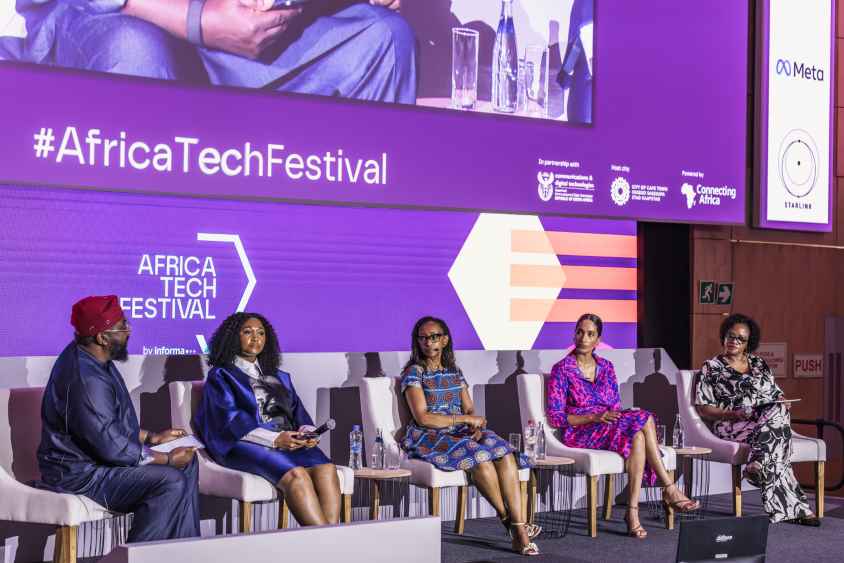
Trust, talent and accountability define final day of Africa Tech Festival 2026

Published

on

Africa Tech Festival, the continent’s longest-running and most influential technology gathering, concluded its 29th edition at the Cape Town International Convention Centre, welcoming more than 15,000 delegates over the three days

CAPE TOWN, South Africa, November 20, 2026/APO Group/ –AI is opening up opportunities for African businesses to improve performance, develop new revenue streams and equip young people for a changing workplace. This was a central theme as Africa Tech Festival (www.AfricaTechFestival.com) 2026 concluded in Cape Town yesterday, with industry leaders sharing how digitalisation is changing the way companies operate, create jobs and broaden access to digital services.


Providing an enterprise perspective, Frederik Zietsman, Group CEO of Takealot, opened the final day’s headline programme in conversation with Tomiwa Aladekomo, CEO of Big Cabal Media. Their discussion explored the realities of building a profitable e-commerce business in South Africa, including the importance of customer trust and investment in the infrastructure needed to reach consumers. “It starts and ends with trust. Because if you don’t have trust, then ultimately, you fail,” said Zietsman. He described how Takealot has invested in its own delivery infrastructure and developed a network of approximately 20,000 personal shoppers to help consumers in underserved communities access online retail.

Turning to Africa’s role in the AI economy, Hardy Pemhiwa, President and Group CEO of Cassava Technologies, discussed how to make innovation more accessible and help local ideas reach wider markets. “I really would love to see an Africa where innovation is not limited by traditional education,” he said, noting that AI could help overcome language barriers that have historically prevented promising ideas from being commercialised. Martin Manniche, CEO of AXON Networks, considered the role of automation and cloud-native technologies in modernising telecommunications infrastructure to support sophisticated digital services.

As technology changes how businesses operate, it is also changing the skills employers need and the opportunities available to young people. Charles Murito, Regional Director, Government Affairs and Public Policy, Sub-Saharan Africa at Google; Tiara Pathon, AI Skills Director at Microsoft; and Ziyad Cassim, Group CEO of UVU Africa, examined the implications for Africa’s workforce. Murito asked how young people can move from being job seekers to value creators, advocating entrepreneurship and new sources of employment. Pathon challenged conventional approaches to training, saying that “organisations like ours need to stop treating learners as beneficiaries of learning, and see them as participants and creators.” Cassim warned that “the biggest risk we’re seeing right now is young people losing that first opportunity to work,” calling on employers to give young talent opportunities to gain practical experience.

Africa Tech Festival provides a platform for these different perspectives to come together, forging connections and partnerships that will help drive the industry forward

However, the growing use of AI also raises questions about accountability when technology fails. Lawrence Matemba, Chief Policy Analyst and Deputy Director-General in the South African Presidency, and Geoff Okao, Chief Digital Officer and Deputy Director, Digital Impact at UNICEF, examined who should be held accountable when automated decisions cause harm. Matemba argued that organisations providing services must accept responsibility for failures, emphasising that citizens must remain central to the design and delivery of those services. Okao cautioned that “a risk register does not by default protect the person who’s harmed”, calling for safeguards that consider the people affected, not just the risks facing organisations.

Access to finance was another area of discussion, with SME funding among dozens of topics explored across the festival’s nine content stages. On the fintech stage, executives from Makko Brothers Credit Limited, Nomba, Edge Growth and Absa Corporate and Investment Bank examined alternative lending models, transaction-based credit assessments and ways to improve access to working capital.

Africa Tech Festival, the continent’s longest-running and most influential technology gathering, concluded its 29th edition at the Cape Town International Convention Centre, welcoming more than 15,000 delegates over the three days.

“This week we’ve heard from government leaders, technology companies, investors and entrepreneurs on issues ranging from digital sovereignty and infrastructure investment to AI governance, business growth and skills development. Africa Tech Festival provides a platform for these different perspectives to come together, forging connections and partnerships that will help drive the industry forward,” said David Monaghan, Vice President, Africa Tech Festival.

Africa Tech Festival returns to Cape Town from 16–18 November 2027 for its landmark 30th edition, celebrating three decades at the heart of Africa’s technology industry.

Pre-register for 2027: https://apo-opa.co/3XkVGBI

Distributed by APO Group on behalf of Africa Tech Festival.


Continue Reading

Trending

Exit mobile version