Connect with us
Anglostratits

Business

Société Nationale des Hydrocarbures (SNH) Joins African Energy Week (AEW) 2026 as Platinum Partner as Cameroon Expands Its Energy Value Chain

Published

on

African Energy Chamber

Cameroon’s national hydrocarbons company will use its Platinum Partnership at AEW 2026 to highlight investment across refining, gas development, regional energy cooperation and the wider transformation of the country’s petroleum sector

CAPE TOWN, South Africa, September 25, 2026/APO Group/ –Société Nationale des Hydrocarbures (SNH) will join African Energy Week (AEW) 2026 as a Platinum Partner, placing Cameroon’s national hydrocarbons company at the heart of discussions on how African producers can expand investment, strengthen energy security and build greater value around domestic resources.


Taking place October 12–16 in Cape Town, AEW 2026 will bring together governments, national oil companies, investors and industry leaders from across the continent. For SNH, the partnership comes as Cameroon advances projects extending well beyond conventional upstream activity, from new refining infrastructure and gas development to cross-border energy cooperation.

A major focus is the CSTAR refinery and tank farm project in Kribi, which SNH describes as a strategic component of the transformation of Cameroon’s petroleum sector. The planned refinery will have a capacity of 30,000 barrels per day and is being developed near the Kribi Deep Sea Port. Following board meetings in Dubai in May, SNH said the CSTAR entities reviewed operational and financial priorities and adopted resolutions aimed at implementing the planned infrastructure at the Mboro site, with the company positioning the development as part of efforts to strengthen Cameroon’s petroleum infrastructure and energy sovereignty.


Gas development is another area where SNH is pursuing opportunities with regional implications. In February, Cameroon and Equatorial Guinea signed a unitization agreement covering the Yoyo-Yolanda transboundary gas field, following years of negotiations. SNH and Equatorial Guinea’s GEPETROL signed the agreement alongside Chevron, which is involved in the project. SNH has described the field as holding an estimated 2.5 trillion cubic feet of gas, with the development concept including two export pipelines and separate processing facilities at Bipaga in Cameroon and Punta Europa in Equatorial Guinea.

SNH represents the kind of African national energy institution that is increasingly important to the continent’s next investment cycle


The agreement illustrates the regional dimension of Cameroon’s hydrocarbons strategy, while also highlighting SNH’s role as the state’s implementing arm in energy-sector development. The company’s mandate covers the promotion of the national petroleum and gas domain, negotiation and monitoring of petroleum and gas contracts, commercialization of the state’s hydrocarbons and development of gas projects for power generation, domestic use and exports.


At the same time, Cameroon is seeking to reinvigorate its upstream sector. SNH launched a new promotion cycle for nine free blocks in August 2025, spanning the Douala-Kribi-Campo and Rio del Rey basins, with the company reporting in June 2026 that the results of the call for expressions of interest had been published.


“SNH represents the kind of African national energy institution that is increasingly important to the continent’s next investment cycle,” said NJ Ayuk, Executive Chairman of the African Energy Chamber. “Its role extends from resource promotion and commercialization to major infrastructure and regional gas projects, creating multiple entry points for investors, technology providers and financial partners. As a Platinum Partner, SNH will bring Cameroon’s broader energy ambitions directly to the companies and institutions shaping Africa’s energy future.”


With its participation at AEW 2026, SNH will have an opportunity to engage investors across the full hydrocarbons value chain – from exploration and production to refining, gas monetization, logistics and regional cooperation – while positioning Cameroon as a market for projects that can translate its existing resource base into greater domestic and regional value.

Distributed by APO Group on behalf of African Energy Chamber.


Business

Afreximbank’s Creative Africa Nexus (CANEX) Creations Backs Global Release of FESTAC ‘77-Inspired Political Thriller

Published

on

Afreximbank

The investment will support the film’s completion, marketing and distribution, helping move the African-owned screen project from production to audiences in Africa and internationally

LAGOS, Nigeria, November 27, 2026/APO Group/ –CANEX Creations Inc., a subsidiary of Afreximbank’s (www.Afreximbank.com) Fund for Export Development in Africa (FEDA) established to invest in, develop and commercialise African intellectual property, has signed an agreement with Adonis Production Limited supporting the completion and global release of 77: The FESTAC Conspiracy, Adonis Production Limited’s FESTAC-inspired political thriller.


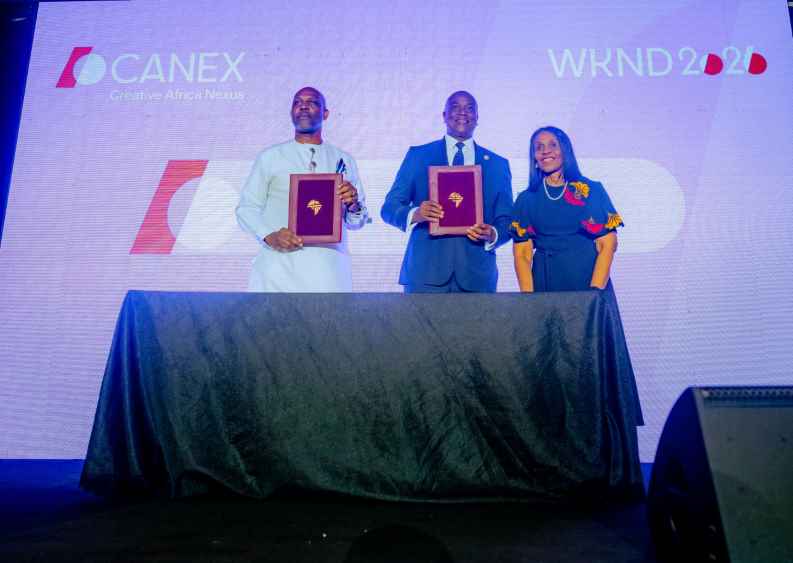
According to the agreement, signed during the CANEX WKND 2026 in Lagos, Nigeria on 6 November, the investment will support the film’s completion, marketing and distribution, helping move the African-owned screen project from production to audiences in Africa and internationally.

77: The FESTAC Conspiracy is a Nigerian historical drama and political thriller inspired by the events surrounding FESTAC ’77. It is a sequel to the acclaimed historical drama, 76, which was distributed on Netflix and received 14 nominations at the 2017 Africa Magic Viewers’ Choice Awards.

We are delighted to partner with CANEX Creations Inc. at this important stage of the film’s journey

The project reunites director Izu Ojukwu with returning cast members Ramsey Nouah, Rita Dominic and Ibinabo Fiberesima, and continues the journey of Joseph Dewa against the backdrop of FESTAC ‘77, one of the most significant pan-African cultural gatherings of the twentieth century.

Signing the investment agreement on behalf of CANEX Creations Inc. was Osahon Akpata, the Chief Executive Officer, while Prince Tonye Princewill, Executive Producer of the movie, signed for Adonis Production Limited.

Commenting on the significance of the investment, Osahon Akpata, Chief Executive Officer of CANEX Creations Inc., said:

“This project has the potential to contribute significantly to the visibility of African cinema and to demonstrate the commercial potential of African screen content. Our investment, therefore, reflects Afreximbank’s commitment, through CANEX Creations Inc., to supporting commercially credible African stories with the financing and market access needed to reach audiences. 77: The FESTAC Conspiracy revisits an important moment in our continent’s cultural history through African creative talent. Our support for the film’s completion, marketing and distribution helps strengthen the pathway from production to market.”

Highlighting that the agreement provides for dedicated resources for marketing and distribution, often critical constraints for African film projects, and promotes African ownership and international visibility of stories rooted in the continent’s history and cultural experience, Mr. Akpata said that CANEX Creations Inc. plays an important role in supporting the commercialization of African creative intellectual property.

Representing Adonis Production at the signing ceremony, Prince Tonye Princewill, Chairman of Adonis Production and Executive Producer of 77: The FESTAC Conspiracy, said, “FESTAC ’77 remains one of the most ambitious cultural moments in African history, and 77: The FESTAC Conspiracy uses that remarkable setting as the backdrop for an original political thriller that speaks to creativity, power and identity. We are delighted to partner with CANEX Creations Inc. at this important stage of the film’s journey. Their investment in the release campaign reflects a shared commitment to ensuring that bold African stories can reach wider audiences and compete successfully on the global stage.”

Distributed by APO Group on behalf of Afreximbank.


Continue Reading

Business

Intra-African trade reaches $213.8bn while only 15% of the continent’s trade stays within Africa, Starks’ report finds

Published

on

Starks Associates

Banks’ share of African trade has fallen from 40% to 23%, and a shortage of foreign currency is the constraint they cite most often

ADDIS ABABA, Ethiopia, November 26, 2026/APO Group/ —

  • Instant payments across Africa have more than tripled to 64.6 billion transactions a year, while gaps in currency, identity and data keep that growth largely within national borders


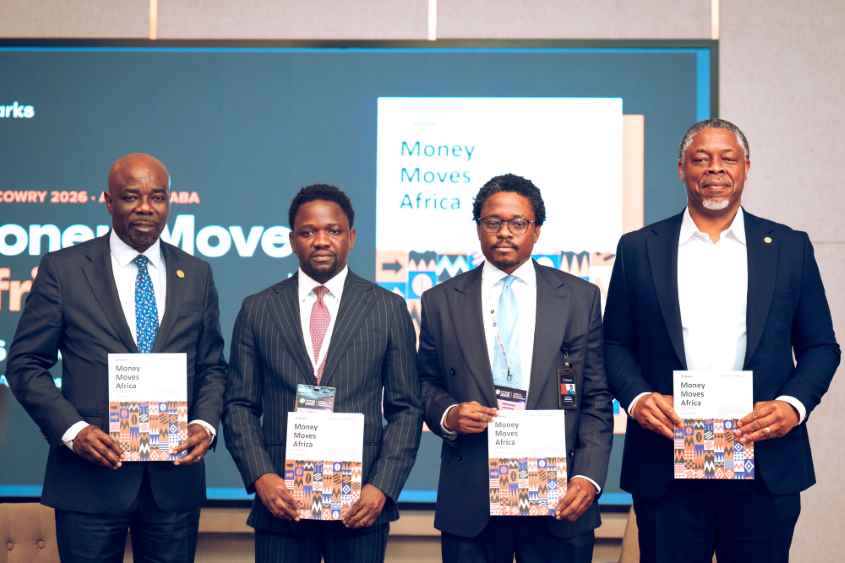
Starks Associates (www.StarksAssociate.com) today released How Money Moves Across Africa at PAPSS COWRY 2026, a report on how payments between African countries work and what holds them back. Drawing on Afreximbank (www.Afreximbank.com) data, the report finds that trade between African countries reached $213.8 billion in 2025 and still accounts for only about 14.6% of the continent’s total trade.

Instant payment systems within African countries handled 64.6 billion transactions worth $1.98 trillion in 2024, more than three times the 2020 volume, according to AfricaNenda (www.AfricaNenda.org). Payments across borders have not kept pace. A business in Lagos paying a supplier in Accra needs cedis in the right amount, a rate its bank can execute and a bank that can verify the counterparty, and the report finds shortfalls at each step.

Of the banks surveyed by the African Development Bank (www.AfDB.org), 36% cited limited foreign currency liquidity as their main constraint on trade finance, and banks’ share of African trade fell from 40% between 2011 and 2019 to 23% between 2020 and 2024. Where no direct market exists between two African currencies, banks route payments through the US dollar, which means two conversions and two spreads.

We have published our desk prices so that treasurers, banks and regulators can work from the same numbers

Identity checks add further friction. Nigeria had only 541 active Legal Entity Identifiers (www.GLEIF.org) in September 2025, which leaves banks to verify most corporate counterparties from scratch for each cross-border payment.

Starks Associates supplies the foreign currency and settlement liquidity that, according to the report, decides whether a cross-border payment goes through, converting African currencies directly into one another without a dollar leg. It is a liquidity partner to PAPSS (www.PAPSS.com).

With no public price series for business payments of this size, the report includes indicative quotes from the Starks desk. A naira to cedi payment costs 0.80% at $10,000 and 0.64% at $250,000. Naira to Kenyan shilling payments cost 0.72% and 0.58%, and Mozambican metical to Botswana pula payments 0.49% and 0.40%.

“Moving money across Africa has always needed three things: a currency people accept, someone they trust to honour it, and a safe route for it to travel,” said Oreoluwa Adeyemo, Co-CEO of Starks Associates. “The route is far stronger than it was five years ago. Our role is to make sure the currency is available when a business needs it, so that a supplier in Accra or Nairobi is paid in its own currency.”

Adewole Adedeji, Co-CEO of Starks Associates, said: “We have published our desk prices so that treasurers, banks and regulators can work from the same numbers. A business paying a supplier in another African country should know what that payment will cost before it sends it, and we would welcome other providers sharing their prices too.”

The report calls on banks to quote rates they can execute, on corporate treasurers to compare providers on the amount the supplier receives, on regulators to make access to foreign currency for trade predictable, on payment system operators to publish indicative costs, and on development finance institutions to provide guarantees and local-currency liquidity lines.

Starks plans to act on several of the report’s findings in 2027. The company intends to extend its liquidity to more African payment corridors, expand its Private Credit product for businesses that trade across borders, and work more closely with central banks, payment system operators, banks and development finance institutions on the gaps the report identifies. Its aim is to make trade between African countries as straightforward as trade within them.

PAPSS COWRY 2026 takes place in Addis Ababa on 26 and 27 November, co-hosted by PAPSS and the National Bank of Ethiopia (www.NBE.gov.et), which joined the system in October. Starks, a sponsor of the summit, joins its main-stage panel on foreign exchange, treasury and settlement on Friday 27 November. The full report, How Money Moves Across Africa, is available to download at https://apo-opa.co/4AZt0Nq.

Distributed by APO Group on behalf of Starks Associates.


Continue Reading

Energy

South Sudan to Launch Five-Block Licensing Round to Boost Crude Output

Published

on

South Sudan

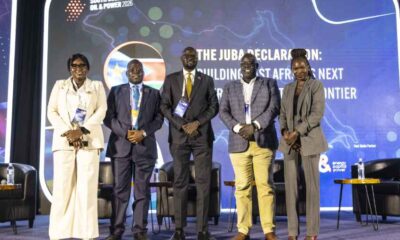
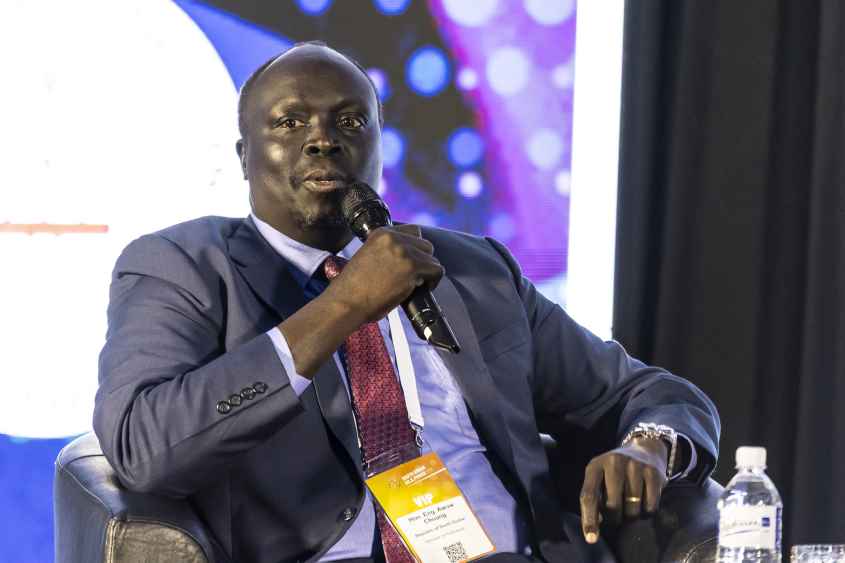
Hon. Eng. Awow Daniel Chuang, Caretaker Minister of Petroleum, announced plans to launch a licensing round during the opening of South Sudan Oil & Power 2026 in Juba

JUBA, South Sudan, November 26, 2026/APO Group/ –South Sudan plans to launch a new licensing round featuring five blocks as the country seeks to accelerate exploration, unlock greenfield potential and increase crude production, Hon. Eng. Awow Daniel Chuang, Caretaker Minister of Petroleum, announced during the opening of South Sudan Oil & Power 2026.


We are planning to have the first licensing round and, after two to three years, have another with five additional blocks and the last with more blocks

The upcoming round is part of a broader push to commercialize the country’s 14 available greenfield blocks and increase national crude output from just under 170,000 barrels per day (bpd) to 200,000 bpd within the next two to three years. According to the minister, preliminary technical studies on the initial five blocks were completed in 2020, but plans to launch the round were delayed by the COVID-19 pandemic.

“We are planning to have the first licensing round and, after two to three years, have another with five additional blocks and the last with more blocks,” stated Caretaker Minister Chuang.

Alongside new exploration, South Sudan is prioritizing the optimization of existing producing fields and brownfield assets to improve recovery rates, supporting the country’s longer-term ambitions of reaching 400,000 bpd. Technology will play a central role in this strategy.

“Moving to 400,000 bpd is an ambition but it is doable. We need to challenge ourselves to use the right technologies to enhance the recovery of oil,” Caretaker Minister Chuang said. He added that only 10-15% of the country’s acreage has been explored, highlighting a strategic opportunity for upstream companies.

Distributed by APO Group on behalf of Energy Capital & Power.


Continue Reading

Trending