Connect with us
Anglostratits

Energy

Technip Energies Expands Role in West Africa’s Energy Push at MSGBC 2026 as Silver Sponsor

Published

on

Etu Energias

Technip Energies will showcase its regional project portfolio and technical expertise while supporting Senegal’s energy development priorities at MSGBC Oil, Gas & Power 2026

Technip Energies has joined the upcoming MSGBC Oil, Gas & Power 2026 conference and exhibition as a Silver Sponsor, reinforcing its involvement in West Africa’s expanding gas and industrial infrastructure markets. The company’s participation comes as partners advance plans to expand the Greater Tortue Ahmeyim (GTA) development and convert regional gas resources into domestic energy supply.


GTA partners are evaluating a second development phase that could increase combined production capacity beyond 5 million tons per annum. The proposed expansion centers on a gravity-based structure incorporating modular liquefaction facilities, building on existing offshore infrastructure. Phase 2 planning forms part of a broader effort to extend the project’s export capacity while supporting domestic gas markets in Mauritania and Senegal.


In Senegal, Technip Energies is also involved in the modernization of the Société Africaine de Raffinage refinery under the ACATBS project. The upgrade aims to expand domestic fuel-processing capacity, strengthen supply security and reduce reliance on imported refined products. The project also incorporates local content requirements, creating opportunities for Senegalese engineering professionals through employment and technical training.


The company’s regional portfolio extends into Guinea-Conakry, where it has secured a front-end engineering design contract for an alumina refinery. The proposed facility will process locally sourced bauxite into alumina, supporting the development of domestic mineral-processing capacity and creating links between the mining and industrial sectors.


Technip Energies has also played a central role in delivering GTA’s first development phase. The company engineered the project’s FPSO vessel, which processes up to 500 million standard cubic feet of gas per day before transferring treated gas to the nearshore floating LNG facility. The project loaded its first commercial LNG cargo in April 2025, establishing Mauritania and Senegal as gas exporters.


At MSGBC Oil, Gas & Power 2026, Technip Energies will deliver a technical presentation, presented by Dominique Gadelle, Vice President for Front-End, Markets and Solutions. The company will further sponsor a National Spotlight on Senegal, a dedicated session examining onshore investment promotion, offshore production expansion and gas-to-power development as the country advances its energy strategy.


Organized by Energy Capital & Power, MSGBC Oil, Gas & Power 2026 takes place December 1–3 at the Centre International de Conférences Abdou Diouf in Dakar, Senegal, under the theme “Powering Investment. Delivering Prosperity: Executing the Region’s Energy Strategy.” The event brings together governments, investors and industry stakeholders to advance regional energy projects and infrastructure development. To register, visit www.MSGBCOilGasAndPower.com.

Distributed by APO Group on behalf of Energy Capital & Power.


Energy

South Sudan to Launch Five-Block Licensing Round to Boost Crude Output

Published

on

South Sudan

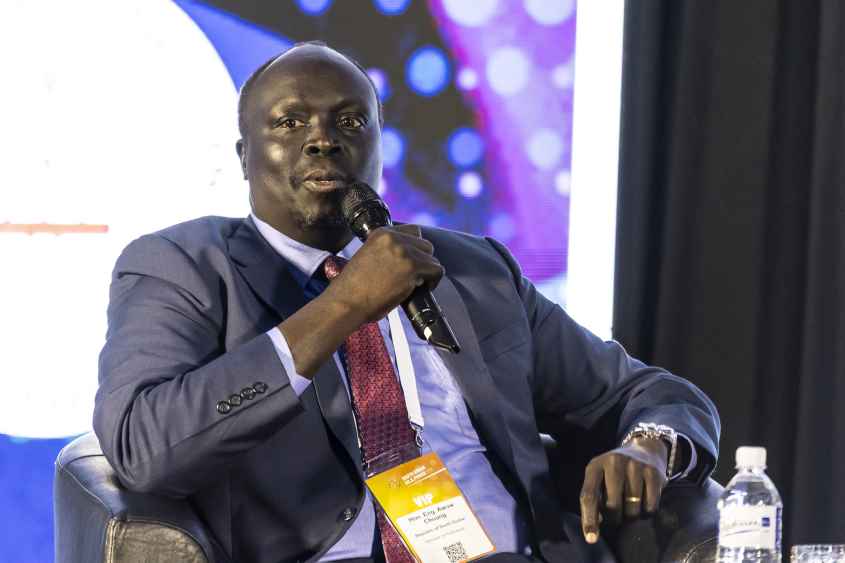
Hon. Eng. Awow Daniel Chuang, Caretaker Minister of Petroleum, announced plans to launch a licensing round during the opening of South Sudan Oil & Power 2026 in Juba

JUBA, South Sudan, November 26, 2026/APO Group/ –South Sudan plans to launch a new licensing round featuring five blocks as the country seeks to accelerate exploration, unlock greenfield potential and increase crude production, Hon. Eng. Awow Daniel Chuang, Caretaker Minister of Petroleum, announced during the opening of South Sudan Oil & Power 2026.


We are planning to have the first licensing round and, after two to three years, have another with five additional blocks and the last with more blocks

The upcoming round is part of a broader push to commercialize the country’s 14 available greenfield blocks and increase national crude output from just under 170,000 barrels per day (bpd) to 200,000 bpd within the next two to three years. According to the minister, preliminary technical studies on the initial five blocks were completed in 2020, but plans to launch the round were delayed by the COVID-19 pandemic.

“We are planning to have the first licensing round and, after two to three years, have another with five additional blocks and the last with more blocks,” stated Caretaker Minister Chuang.

Alongside new exploration, South Sudan is prioritizing the optimization of existing producing fields and brownfield assets to improve recovery rates, supporting the country’s longer-term ambitions of reaching 400,000 bpd. Technology will play a central role in this strategy.

“Moving to 400,000 bpd is an ambition but it is doable. We need to challenge ourselves to use the right technologies to enhance the recovery of oil,” Caretaker Minister Chuang said. He added that only 10-15% of the country’s acreage has been explored, highlighting a strategic opportunity for upstream companies.

Distributed by APO Group on behalf of Energy Capital & Power.


Continue Reading

Energy

South Sudan to Revise Block B2 Terms as Operators Call for Committed Investors

Published

on

SSOP 2026

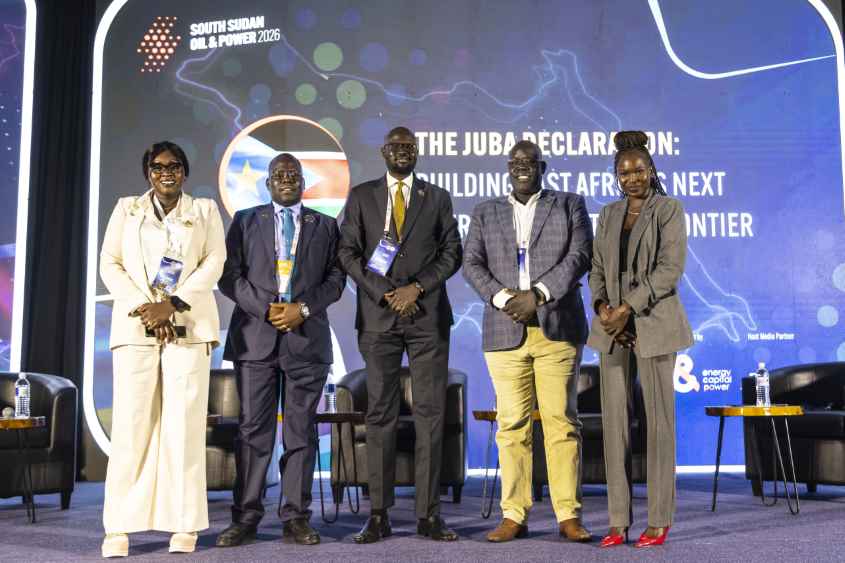
The closing session of SSOP 2026 drew together two days of production targets, project commitments and investor protections into one message for global capital

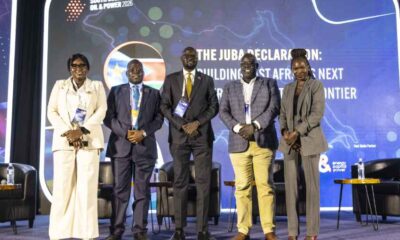
South Sudan will revise the exploration and production sharing agreement (EPSA) for frontier Block B2 and expects the South African National Petroleum Company (SANPC) to begin drilling or assessment immediately afterward, Eng. Lual Chol Dak, Director General of the Petroleum Authority, said on Wednesday at the closing session of South Sudan Oil & Power (SSOP) 2026 in Juba.


The session brought together the public and private-sector commitments made over the two days of the conference. It also laid out the contract terms, regulatory structure and financial conditions the government is offering to establish South Sudan as a secure destination for long-term capital. “I want you to be the first investor to encourage the others,” Dak told SANPC’s delegation.

The commitments presented at the close were made throughout SSOP 2026. Dar Petroleum Operating Company (DPOC) accepted a Ministry of Petroleum target of 120,000 barrels per day (bpd) by August 2027, while Sudd Petroleum Operating Company plans to reach 20,000 bpd in 2027. Greater Pioneer Operating Company reported three hydrocarbon discoveries in 2026, and Nilepet’s engineering subsidiary set out a three-year plan to build the capability to design and construct a refinery. Taken together, the commitments support the government’s goal of lifting national output beyond 200,000 bpd within two to three years.

We need real committed investors that can come and negotiate with us

Dak set out the protections the government is offering in return. Under the Petroleum Act 2012, policy sits with the Ministry of Petroleum, commercial participation with Nilepet and technical regulation with the Petroleum Authority. EPSAs run 25 to 37 years, subject to extension. Every upstream phase requires an environmental and social impact assessment. The ministry has pipeline, depot, refinery and central laboratory projects ready for negotiation. “We need real committed investors that can come and negotiate with us,” he said.

Dr. Jacob Dut Chol, Manager for Audit at DPOC, said the joint operating companies have internal audit and compliance systems in place, and the ministry reviews procurement awards and work program budgets.

“The JOCs are open for investment,” he said, adding that he expects a new joint operating company to emerge in the coming months.

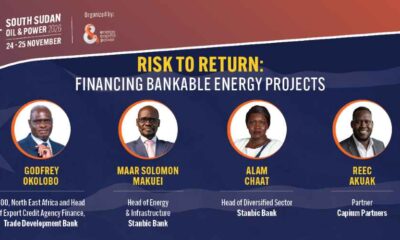
Alam Chaat Paul, Head of the Diversified Sector at Stanbic Bank, said regional financial integration and simpler rules for moving money in and out of South Sudan would make investment decisions easier. Henry Kissinger Silvio, Acting Director General for Planning, Training and Research at the Ministry of Petroleum, said South Sudan’s regulatory frameworks must stay competitive with those of Kenya, Uganda and Ethiopia.

The ministry plans to offer five of the country’s 14 open blocks in an initial licensing round, with five more two to three years later. Investors entering the round will be able to weigh the revised Block B2 terms and the production commitments made at SSOP 2026 before they bid.

Distributed by APO Group on behalf of Energy Capital & Power.


Continue Reading

Business

What Will It Take to Finance Congo’s Next Generation of Oil and Gas Projects?

Published

on

Congo

Congo must diversify its financing sources as sovereign debt constraints reshape the funding landscape for new energy projects

BRAZZAVILLE, Republic of the Congo, November 26, 2026/APO Group/ –The International Monetary Fund’s (IMF) October 2026 mission reported significant progress toward a new Extended Credit Facility for the Republic of Congo, while the World Bank’s November economic update placed public debt at 97.4% of GDP at the end of 2025. With the sovereign balance sheet constrained, the next wave of upstream, LNG, infrastructure and downstream projects will depend on how operators engage with development banks, traders and regional capital.


The Congo Energy & Investment Forum (CEIF) 2027, June 1-3 in Brazzaville, is where those conversations will take place as the industry convenes to explore financing mechanisms, mobilize capital and advance the country’s next generation of energy projects.

Where the Capital is Coming From

Operators continue to carry much of the financing burden. Perenco plans to invest more than $2 billion over five years, while TotalEnergies committed over $500 million to Moho Nord in 2025. This operator-led model enables international oil companies to fund development through their balance sheets and production cash flows, in line with internal portfolio priorities. It is particularly effective for brownfield redevelopment, infill drilling and tie-backs, where existing infrastructure can reduce capital intensity and shorten the path to cash generation.

Congo’s expanding LNG industry also presents opportunities to diversify financing sources. With Eni’s Congo LNG development reaching a combined liquefaction capacity of three million tons per year in February 2026, the country has an established LNG export industry on which to build. Long-term offtake agreements, prepayment arrangements and equity partnerships with commodity traders could provide alternative sources of capital for future gas developments, while giving commercial partners access to LNG supplies and export revenues.

Traders are already emerging as equity partners. Vitol agreed to acquire a 25% participating interest in Congo LNG from Eni, which holds 65%, as part of a broader $1.65 billion transaction covering Eni’s assets in Ivory Coast and Congo. The arrangement gives Vitol exposure to LNG production and export cash flows.

Development banks are filling financing gaps across upstream and energy infrastructure projects. In 2023, Afreximbank signed a $300 million reserve-based lending facility with Trident OGX Congo to fund a seven-year development program at the Mengo-Kundji-Bindi II fields. Meanwhile, the World Bank-backed Electricity Services Improvement Project provides $100 million to strengthen electricity transmission and distribution, including the deployment of smart meters and revenue-protection measures.

The Africa Energy Bank – established by Afreximbank and the African Petroleum Producers Organization with $5 billion in authorized capital – could provide an additional financing channel for exploration, production, transportation, processing, refining and distribution projects. The bank was launched in October 2026, with initial project financing expected to commence in 2027.

Attracting More Financiers

Three steps stand out for Congo as it seeks to expand its financing base. First, securing a new IMF program and improving debt sustainability could help strengthen investor confidence. A joint World Bank-IMF analysis classifies Congo as being in debt distress, although its debt is assessed as sustainable, subject to significant risks. To ease short-term liquidity pressures, Congo issued a series of Eurobonds between November 2025 and February 2026. Elevated sovereign risk can raise borrowing costs across the economy and make lenders cautious about financing state-linked projects.

Second, Congo could scale up structured finance to mobilize private capital. Reserve-based lending can support operators with independently assessed reserves, reliable production histories and clearly defined repayment sources, while project finance can support LNG facilities, terminals, pipelines and storage assets backed by contracted revenues. Afreximbank’s $300 million facility for Trident OGX Congo demonstrates how structured financing can support production growth when reserves, development plans and repayment sources are clearly defined.

Finally, Congo should strengthen fiscal and contractual certainty. Clear petroleum contracts, predictable taxes, transparent local-content rules and timely approvals reduce lenders’ risk premium. In August 2026, Congo’s Council of Ministers approved draft amendments establishing a fixed $90-per-barrel threshold under the high-price mechanisms of four petroleum contracts held by Dingheng and Oriental Energy. The proposed changes are intended to provide greater contractual predictability, enabling operators to model project economics and plan long-term investments.

Congo has the ingredients to finance its next generation of projects: committed operators, growing LNG cash flows, development finance and an expanding pool of African institutional capital. CEIF 2027 offers a direct gateway to financing opportunities across Congo’s expanding energy sector.

Distributed by APO Group on behalf of Energy Capital & Power.


Continue Reading

Trending