Connect with us
Anglostratits

Business

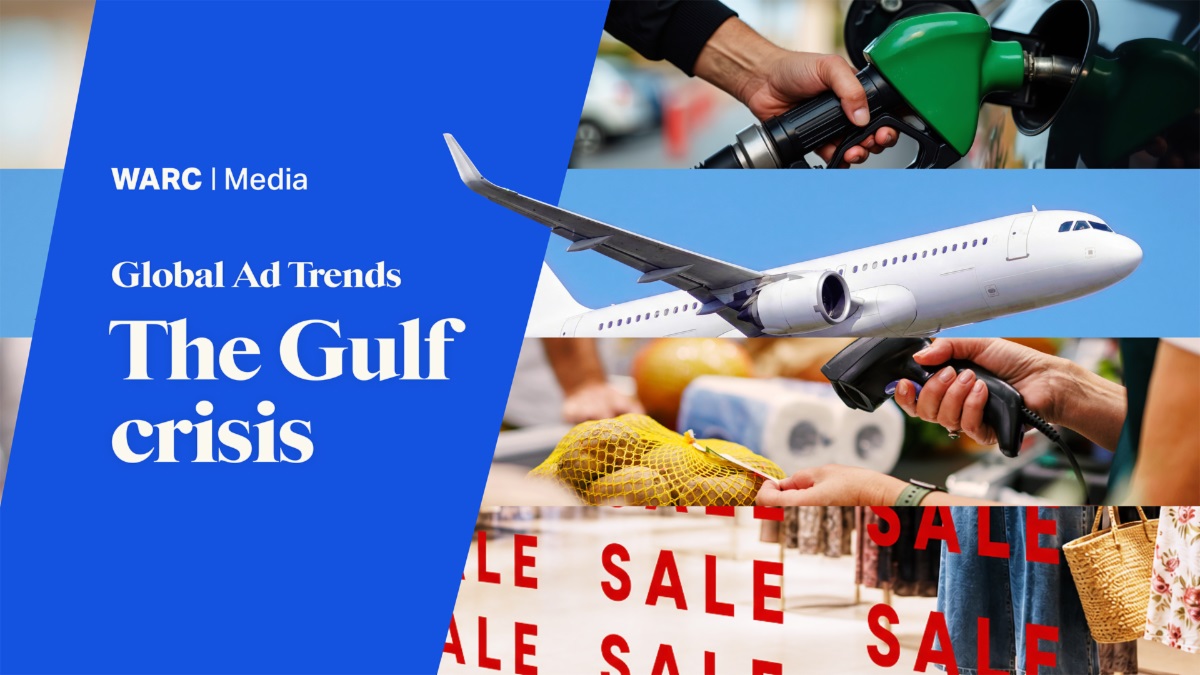
New outlook shows Gulf Crisis still threatens $94bn of incremental ad investment worldwide over next 18 months
Published

on

Gulf Crisis
  • Global ad growth uprated to +11.5% this year – to $1.39trn – but ongoing volatility could remove as much as 3.2 percentage points (pp) – or $39.6bn – from growth in 2026
  • Automotive, food, and travel & transport sectors among most susceptible to high oil prices and a prolonged disruption to shipping in Strait of Hormuz
  • There is an uneven impact on brand- and performance-led media spend, with TV suffering sharp falls as social and search remain largely unaffected
  • Ad market growth is expected to ease to 8.2% next year – to a total of $1.50trn – but a prolonged Gulf crisis could remove a further $54.1bn from growth prospects in 2027

WARC Media Global Ad Spend Forecast Q2 2026 update: Implications of the Gulf energy crisis

11 June 2026 – A new study from WARC, the experts in marketing effectiveness, has found that a prolonged conflict in the Gulf region could threaten $39.6bn of global advertising growth this year, and $93.7bn over the next 18 months.

James McDonald, Director of Data, Intelligence & Forecasting, WARC, and author of the research, says: “As the Gulf Crisis stretches into its fourth month, global markets are now in damage limitation mode as the blockade of the Strait of Hormuz acts like a tax on consumers, lifting prices and squeezing real spending power.

“If the conflict drags on – or further intensifies – these risks shift toward stagflation, with sectors such as travel, automotive, and food acutely exposed to higher production costs and weaker demand. The net effect is a grueling squeeze on margins that could put as much as $94bn of anticipated ad market growth at risk over the coming 18 months.”

WARC Media’s latest global projections are based on data aggregated from 100 markets worldwide and leverage a proprietary neural network which projects advertising investment trends based on over two million data points. The projections account for three scenarios of increasing severity to model the potential impacts of the ongoing Gulf Crisis.


The fallout from the conflict is being felt differently across regions

WARC’s baseline scenario is for 11.5% ad market growth in 2026, but if the Crisis were to become more severe, the growth rate could fall to +8.3%
Southeast Asia (+6.9%) and Latin America (+12.8%) are on course for healthy growth this year, but are most exposed to an increase in severity
The Gulf ad market could fall into recession (-0.2%) this year, as would the French ad market (-1.0%), in the most severe scenario
The US (+9.5%) is well insulated and benefits from the World Cup and Midterms; even in a severe scenario the ad market would lose just $10bn in growthThe baseline projection is for global ad market growth of 11.5% to $1.39trn this year, an upgrade from the 10.6% rise predicted in March owing to a strong first half for online platforms. The supply-side pressures caused by the Gulf Crisis, however, are expected to be felt by consumers and brands alike from the second half of the year.

Data shows that Southeast Asia will be among the hardest hit by the conflict, due to vulnerabilities in energy imports and trade flows. WARC’s baseline projects +6.9% ad spend growth for the region to $24.8bn in 2026; a moderate scenario, however, pulls that to +6.3%, and a severe scenario delivers +3.6% – a 3.3pp swing from best to worst outcome.

​China’s exposure is also distinct: imported energy and shipping costs compress industrial margins and export competitiveness. A baseline ad spend growth forecast of +7.9% (to $223.1bn) for 2026 falls to +5.3% in the severe scenario (-2.6pp), equivalent to $5.3bn in lost growth for the Chinese ad market should the situation deteriorate.

While the US isn’t immune to pressures from the situation in the Gulf, its relative insulation shows ​a clear contrast to the pressures war in the Middle East is placing on other markets. Even under the severe scenario, ​US ad spend growth is +7.2% in 2026, down 2.3pp from a baseline of +9.5% (to $452.6bn) and equivalent to a shortfall of $9.8bn.​

Conversely, the Latin American ad market is on the precipice. Led by Brazil and Mexico, Latin America posts the strongest baseline ad spend growth of any region in the forecast: +12.8% to $27.8bn in 2026. The severe scenario clips that to just +3.4%; a 9.4pp downgrade and the largest single swing in the data.

The markets in the Gulf Cooperation Council (GCC) – namely Saudi Arabia, United Arab Emirates, Kuwait, Oman, Qatar, and Bahrain – are already seeing weakened demand, particularly from global advertisers. Under the severe scenario, GCC ad spend tips into outright contraction at -0.2% in 2026, a swing of -11.9pp against the baseline expectation of +11.7% to $5.7bn.

Ad spend across the Eurozone, where major economies are already stagnating, is set to rise 5.6% to $109.0bn this year. This could, however, ease to just 1.8% growth if the severe scenario is realized. The UK (+6.3%), Germany (+6.7%) and France (+2.7%) are all expected to see ad market growth this year, but the severe scenario removes 3.1 percentage points on average, pushing France into recession should the worst case materialise.

Travel, automotive and food sectors among most susceptible to a prolonged disruption

Travel & Transport ad spend already forecast to decline (-3.5%) this year
Automotive ad spend is largely flat in Western Europe, though is still expected to be up globally (+6.7%) in 2026
Growth in the food sector remains steady this year (+10.3%), but the impacts of present supply chain disruption are expected to be felt more in 2027

Travel is the worst-hit major category and the only one already thought to be contracting at the global level, with ad spend forecast to be down -3.5% to $34.4bn in 2026. Airlines active in the Middle East are already reviewing budget allocations. The sector is expected to record a projected recovery of +13.0% in 2027, however.

The double squeeze of rising inputs on the manufacturer side and consumer credit sensitivity suppressing demand is clearly visible in the automotive sector. Germany – one of the world’s largest car manufacturers – is forecast to see automotive ad spend grow by just +1.9% in the 2026. If the Gulf Crisis were to become more severe, this would fall to a 4.2% contraction this year, a 6.0pp swing from a baseline that was already fragile.

While the food market looks steady – ad spend is projected to grow 10.3% to $99.8bn this year – the sector can be heavily impacted by a complex supply chain: fertiliser, grain, fuel, and packaging costs are rising before consumers feel it.

The full impacts on the food sector are expected to land in H2 2026 and into 2027, when the severe forecast scenario trails the baseline by 1.2pp, wider than the 2026 gap. Europe’s major markets are impacted significantly: UK food ad spend grows +4.9% in the baseline and contracts -0.2% in the severe scenario: a 5.0pp swing that tips the category negative.


There is an uneven impact on brand- and performance-led media spend

Linear TV’s decline likely to accelerate as the situation worsens, with advertisers favouring short-term, performance channels over brand-building
Social media growth remains strong, but cost pressures on small and medium-sized companies leave social platforms somewhat exposed
Paid search – including generative AI – remains stable in all scenarios

In the baseline scenario, the linear TV ad market is forecast to fall ​2.7% in 2026, and by the same margin again in 2027. TV’s total share of global ad investment – 12.7% in the baseline across linear and video on-demand combined – slips to 12.5% in the severe scenario. While the 2026 FIFA World Cup provides a cyclical boost in the baseline that partially offsets the decline. However, a severe scenario erodes that buffer.​

The headline numbers are robust for social media: 20.0% growth in the baseline forecast this year, falling back to 17.9% in the severe scenario ​(a 2.1pp gap). The severe scenario therefore costs social platforms $7.8bn, just 11% of incremental ad revenue this year. However, underneath these numbers may lie some vulnerability. Social’s advertiser base is heavily concentrated in SMEs. If smaller businesses are suffering because household spend is declining, then marketing budgets may be at risk. Paid search – including generative AI – provides the most stable picture. In the severe scenario, it still grows +11.0% in 2026 – only 3.3pp below a baseline of +14.3%.

Even under the most disruptive conditions modelled, search, social and retail media will retain two-thirds of global ad spend.​ The channels absorbing the losses are those already under pressure. Linear TV falls 7.3% this year in the severe scenario (compared to a 3.7% fall in the baseline forecast); publishing contracts ​8.5% (compared to a 0.8% baseline dip), and cinema drops 4.0% in the most severe case, versus a baseline forecast of 6.3% growth this year.

Cinema, alongside publishing, is the least resilient channel in the dataset. Cinema advertising is tied directly to leisure discretionary spending and theatrical attendance, both of which weaken sharply when consumer confidence falls and energy-linked transport costs rise.


WARC Media subscribers can read the full report available from Monday 15 June. A WARC podcast on the findings outlined in the report will be available from 18 June.

Business

Aggreko Strengthens Commitment to Nigeria with Appointment of New General Manager

Published

on

Aggreko

Greatorex assumed leadership of Aggreko’s Nigeria operations in early June, bringing more than three decades of international experience across the energy, utilities, oil and gas, petrochemical and industrial sectors

LAGOS, Nigeria, July 22, 2026/APO Group/ –Aggreko (https://www.Aggreko.com/en-za), a global leader in energy solutions, has reaffirmed its commitment to Nigeria with the appointment of Nigel Greatorex as General Manager for Nigeria, marking an important milestone in the company’s renewed focus on one of Africa’s most strategically significant energy markets.


Greatorex assumed leadership of Aggreko’s Nigeria operations in early June, bringing more than three decades of international experience across the energy, utilities, oil and gas, petrochemical and industrial sectors. His appointment comes as Aggreko accelerates its growth ambitions in Nigeria, strengthening its local presence and expanding its ability to support customers with reliable, flexible and sustainable energy solutions.

Nigeria remains one of Africa’s largest and most dynamic economies, with growing demand for dependable power across industries ranging from oil and gas and manufacturing to mining, infrastructure and commercial operations. As businesses increasingly seek resilient energy solutions that can support both operational continuity and sustainability objectives, Aggreko is positioning itself to play an even greater role in enabling economic growth and industrial development across the country.

Extensive global and African energy experience

Greatorex joins Aggreko from ABB, where he most recently served as Global Industry Business Manager for Carbon Capture and Storage. In that role, he led global strategy and growth initiatives focused on energy transition technologies and decarbonisation. He also brings extensive experience operating across Africa, including Nigeria, giving him a strong understanding of the unique opportunities and challenges facing businesses in the region.

Nigel’s appointment reflects our commitment to investing in leadership and strengthening our presence in the country

Throughout his career, Greatorex has held numerous senior leadership positions, successfully leading business transformations, driving operational excellence and expanding market presence in complex and highly competitive environments.

Investing in local leadership

Commenting on the appointment, Edith Kikonyogo, Managing Director of Aggreko Africa said: “Nigeria is a key part of our growth strategy across Africa. Nigel’s appointment reflects our commitment to investing in leadership and strengthening our presence in the country. His extensive industry experience, proven leadership capabilities and deep understanding of the African energy landscape make him ideally positioned to lead the next phase of our growth in Nigeria.”

Greatorex said he was excited to join Aggreko at a pivotal moment for both the company and the Nigerian market. “Nigeria presents tremendous opportunities for innovation, growth and partnership. I am delighted to be joining Aggreko as the company strengthens its commitment to the country and its customers. Aggreko has a strong reputation for delivering critical energy solutions that help businesses overcome challenges and unlock new opportunities. I look forward to working with our customers, partners and team to build on that legacy and support Nigeria’s continued development.”

A long-term commitment to Nigeria

The appointment underscores Aggreko’s confidence in Nigeria’s long-term economic potential and its commitment to helping organisations navigate evolving energy requirements through flexible, efficient and sustainable power solutions.

As the company continues to expand its footprint in the country, Aggreko remains focused on delivering the expertise, technology and local support needed to help businesses thrive in an increasingly complex energy environment.

Distributed by APO Group on behalf of Aggreko plc.


Continue Reading

Business

SPIRO publishes its first Sustainability Report and confirms strong economic, social and climate impact

Published

on

SPIRO

The publication provides a comprehensive overview of the environmental, social and economic impact of its operations

DUBAI, United Arab Emirates, July 21, 2026/APO Group/ —

  • Spiro’s inaugural Sustainability Report provides the first comprehensive overview of the environmental, social and economic impact of Spiro’s operations.
  • The company also unveils ambitious objectives and targets net-zero Scope 1 and 2 emissions by 2040 and up to 0.7 million tonnes of CO₂ emissions avoided from product use annually by 2030.

SPIRO (www.Spironet.com), Africa’s leading electric mobility company, today published its inaugural Sustainability Report. The publication provides a comprehensive overview of the environmental, social and economic impact of its operations and aims at establishing a baseline, to track future progress on its path to scale clean transport infrastructure and affordable mobility solutions.

Download Report: https://apo-opa.co/4wPw7VP


Having grown up in India, I have witnessed firsthand the impact of vehicle emissions on public health and urban environments. At SPIRO, our responsibility as founders is not only to scale innovation, but to ensure that the systems we build endure economically, socially, and environmentally for generations to come”, said Gagan Gupta, Founder of SPIRO and Chairman of Equitane.


“This report reflects how far SPIRO has come—not only in terms of growth, but in our ability to measure and improve our impact. As we expand across Africa, sustainability will remain a core business driver, shaping how we invest, manufacture, innovate and partner for the long term”, highlighted Anant Badjatya, Group Chief Executive Officer, SPIRO.


This report reflects how far SPIRO has come—not only in terms of growth, but in our ability to measure and improve our impact

“By establishing our first comprehensive ESG baseline, including Scope 1, 2 and 3 emissions, we are creating the foundations needed to track progress, set measurable targets and strengthen transparency as SPIRO continues to scale across Africa. Sustainability is not a standalone initiative—it is integrated into how we operate, innovate and create long-term value”, said Imtinen Hamlaoui, Head of ESG and Sustainability.


Among key highlights :


  • As part of its sustainability roadmap, SPIRO completed its first end-to-end greenhouse gas inventory, covering Scope 1, Scope 2 and Scope 3 emissions across its operations and value chain.


  • Among others, operational efficiency measures taken last year delivered an estimated 15–25% reduction in energy use at assembly facilities, reinforcing SPIRO’s commitment to continuously improving energy efficiency and reducing the environmental footprint of its operations.


  • The report outlines SPIRO’s long-term sustainability roadmap, including its ambition to achieve net-zero Scope 1 and Scope 2 emissions by 2040. As the company expands, its electric mobility ecosystem is projected to help avoid approximately 700,000 tonnes of CO₂ emissions annually by 2030. To further strengthen energy resilience and reduce grid dependency, SPIRO is evaluating the deployment of 80–125 KVA on-site solar solutions across selected battery-swapping stations, while smart energy management initiatives implemented at its assembly facilities have already delivered an estimated 15–25% reduction in energy consumption.


  • The report highlights SPIRO’s growing investment in people and local capabilities. Through the Spiro Academy, the company trained more than 4,000 individuals across Africa in 2025 in areas including EV maintenance, battery management and technical operations. Initiatives such as Africa’s first women electric motorcycle assembly line further reinforce SPIRO’s commitment to skills development, workforce inclusion and local industrial growth.


  • Beyond environmental performance, the report underlines the growing economic benefits of electric mobility. Commercial riders using SPIRO motorcycles reduce operating costs by 70–80% compared with petrol-powered alternatives, while benefiting from lower maintenance costs and reduced exposure to fuel price volatility.


Download (https://apo-opa.co/4ptV32MSPIRO First Sustainability Report

Distributed by APO Group on behalf of Spiro.


Continue Reading

Business

eWAKA Co-Founder and Chief Executive Officer (CEO) Selected as a 2026 Cartier Women’s Initiative Fellow

Published

on

eWAKA

eWAKA Joins the Cartier Women’s Initiative to Accelerate Africa’s Transition to Clean Mobility

NAIROBI, Kenya, July 21, 2026/APO Group/ –eWAKA (www.eWAKA.tech) today announced the company’s Co-founder and CEO, Céleste Tchetgen Vogel, has been selected as a 2026 Cartier Women’s Initiative Fellow. Vogel was recognized for her work to electrify Africa’s last mile, giving riders clean vehicles they can own and a better way to earn. Chosen from applicants around the world, Vogel represents the Anglophone and Lusophone Africa category of the 2026 Cartier Women’s Initiative Awards, which celebrate women entrepreneurs using business as a force for positive change.


eWAKA is an early-stage company with a clear ambition: to make Africa’s last mile clean, affordable, and within reach of the people who move it. Today it provides electric motorcycles and cargo bikes, financing that lets riders own their vehicles affordably, and charging and battery-swap to keep them moving. It coordinates deliveries and fleet operations through its own software. It aims to grow this into a managed electric delivery network, where businesses get reliable, lower-cost delivery and riders earn a steady living. Operating in Kenya and Rwanda, eWAKA is actively expanding into Burundi and the Democratic Republic of Congo, demonstrating its confidence in regional growth and impact.


eWAKA at a Glance


  • Nearly 1,500 active riders in Kenya and Rwanda
  • More than one million deliveries completed, up by over 80,000 on the prior year
  • More than 550 vendors onboarded onto the company’s merchant ordering platform
  • Approximately Ksh 25 million (about US$190,000 or CHF 150,000) earned by riders, up more than Ksh 6 million on the prior year
  • More than 1,500 jobs were created, with over 85% of riders aged 18 to 30
  • More than 3000 metric tons of CO₂ emissions avoided through clean mobility operations
  • Woman-founded and woman-led, with women working as riders, vendors, and agents across the network


We are delighted to welcome Céleste Tchetgen Vogel to the Cartier Women’s Initiative community

By bringing electric vehicles, financing, and software together in a single operation, eWAKA is building a model it can carry from one city to the next, so that each new market means more riders earning, more businesses served, and cleaner air to breathe. The company’s early backers include the Swiss State Secretariat for Economic Affairs (SECO), through its Start-up Fund, alongside impact investors and development finance partners.


eWAKA Co-founder and CEO Céleste Tchetgen Vogel said, “Mobility should open doors, not close them. When a rider can own a clean vehicle and earn a living with it, a whole family moves forward, and the city breathes a little easier. That is the future eWAKA is building, one electric mile at a time. To be welcomed into the Cartier Women’s Initiative, in its twentieth year, tells us the path is real, and gives us the resolve to walk it much further.”


eWAKA is building Africa’s next-generation electric mobility platform, operating in Kenya and Rwanda and expanding into Burundi and the Democratic Republic of Congo. Originally from Cameroon, Vogel is an African entrepreneur who co-founded eWAKA in 2021 after a career in senior legal and executive roles at Credit Suisse, ABB, and Swiss Re. She holds a degree in economics and international relations from Ohio Wesleyan University and a law degree from Northwestern University’s Pritzker School of Law, both in the United States. She was named among the Most Influential Women in Mobility in 2024 and to the Meaningful Business 100 in 2025. eWAKA works with ETH Zurich as a technical partner on battery and fleet data.


Cartier Women’s Initiative Director Kiyo Taga-Witkin commented, “We are delighted to welcome Céleste Tchetgen Vogel to the Cartier Women’s Initiative community. Through eWAKA, she exemplifies how entrepreneurship can drive meaningful, positive change. We look forward to supporting her journey and celebrating the impact she is creating.”


The Cartier Women’s Initiative is an international entrepreneurship program established in 2006 to support women impact entrepreneurs who are building a more inclusive society for generations to come. Since its inception, the program has been dedicated to identifying and accompanying women whose businesses address the world’s most pressing social and environmental challenges. Through a comprehensive approach combining financial support, access to a global network, and tailored leadership development, the Cartier Women’s Initiative enables fellows to scale their businesses while strengthening their capacity to lead and create lasting impact.


Over the years, the initiative has grown into a vibrant international community of more than 520 community members, united by a shared ambition to drive meaningful change within their respective ecosystems. At its core, the Cartier Women’s Initiative is guided by a set of enduring convictions: the belief that women are powerful agents of transformation, that talent is universal, while opportunities are not, that continuous learning is essential to progress, and that sustainable impact is rooted in a deep commitment to the communities it serves.

Distributed by APO Group on behalf of eWAKA.


Continue Reading

Trending