Connect with us
Anglostratits

Energy

Venezuela Takes Its Africa Energy Partnership to Cape Town for African Energy Week (AEW) 2026

Published

on

African Energy Chamber

Hydrocarbons officials and university leadership head to Cape Town to deepen trade and training ties

CAPE TOWN, South Africa, October 10, 2026/APO Group/ –Venezuela will send an official government delegation to African Energy Week (AEW) 2026 in Cape Town, bringing senior figures from its Ministry of People’s Power for Hydrocarbons and its national university for oil and gas education to the continent’s premier energy event. The delegation includes Ricardo Gómez, Vice Minister of Commercial Policy; Celia Bejarano, Rector of the Universidad Venezolana de los Hidrocarburos (UVH); and Carlos Espinoza, a professional advisor in the Ministry’s petroleum division. The delegation’s participation marks the latest step in an Africa-Venezuela energy partnership that has gathered momentum throughout 2026.


In February, the African Energy Chamber (AEC) took a group of African energy leaders to Caracas. While there, it signed a Memorandum of Understanding (MoU) with the Ministry and state oil company Petróleos de Venezuela, S.A. (PDVSA). The agreement commits both sides to work together on upstream development and modernizing refineries. It also opens the door to shipping liquefied petroleum gas and bitumen to Africa and broadening technical training. Venezuela is an honorary member of the African Petroleum Producers Organization (APPO). It later sent Vice Minister Arturo Gil to Cape Town to build on the agreement.

AEW 2026 is built around dealmaking, with sessions spanning the full energy value chain and a clear focus on moving capital into projects. Senior Venezuelan representation in Cape Town gives African national oil companies and investors direct access to the officials driving Venezuela’s hydrocarbons revival and fosters workforce cooperation with the continent.

When we went to Caracas in February, we said the relationship had to go both ways

Ricardo Gómez heads the Vice Ministry of Commercial Policy, the office within the Ministry responsible for coordinating and advancing the sale of Venezuela’s hydrocarbons. His portfolio aligns closely with the MoU’s trade provisions, which identified liquefied petroleum gas and bitumen as potential exports to Africa. Venezuela’s resource base gives the trade relationship considerable depth, with the country holding some 300 billion barrels of oil reserves and large volumes of natural gas.

Celia Bejarano leads UVH, Venezuela’s public university for hydrocarbons education, headquartered in Los Teques. The university has become a cornerstone of the Africa-Venezuela partnership. During an AEC working visit to Caracas, the Chamber and UVH worked through how African engineers could train at the university. The AEC has since committed to sending 10 to 15 participants from across Africa through dedicated technical programs at UVH, drawing on Venezuela’s decades of producing heavy crude onshore and developing offshore fields.

“When we went to Caracas in February, we said the relationship had to go both ways. Now Venezuela is coming to Cape Town, and I want our companies to make the most of it, whether that means trade in gas and bitumen or getting more of our young engineers trained at the university,” said NJ Ayuk, Executive Chairman of the AEC.

The Caracas MoU also set up a joint working group tasked with pinpointing investment prospects and lining up projects for African and Venezuelan companies. AEW 2026 gives the partnership’s African counterparts a platform to engage the delegation in person as the work moves forward.

African Energy Week 2026 takes place October 12-16 at the Cape Town International Convention Center. To register as a delegate, visit  https://apo-opa.co/4zr7ekJ.


Distributed by APO Group on behalf of African Energy Chamber.


Business

Gas Exporting Countries Forum (GECF) Leadership Roundtable Brings Gas Producer Coordination to Paris

Published

on

Etu Energias

As African gas producers navigate rising domestic demand, global LNG competition and a renewed push for investment, the GECF Leadership Roundtable at the Invest in African Energy 2027 Forum will examine how greater coordination can support project development, market access and long-term gas monetization

PARIS, France, November 3, 2026/APO Group/ –Africa’s gas industry is entering a period in which cooperation between producing countries could become increasingly important. Demand is rising, LNG markets are being reshaped by geopolitical disruptions and new supply, while major gas developments across the continent continue to compete for capital.


Against this backdrop, the GECF Leadership Roundtable at the Invest in African Energy (IAE) Forum 2027 in Paris will bring the perspectives of gas-producing countries into a discussion focused on the commercial and strategic priorities shaping the sector.

The session comes as Africa continues to expand its role in global LNG markets. The GECF forecasts LNG exports from the continent to reach about 110 billion cubic meters (bcm), or 80 million tons per annum (mtpa), by 2030, rising to 215 bcm, or 160 mtpa, by 2050. The outlook spans producers including Algeria, Angola, Egypt, Equatorial Guinea, Mozambique, Mauritania, Senegal and Nigeria, while GECF projections point to growing LNG trade with Asia and within African markets.

Recent developments have reinforced the strategic value of that supply base. Tanzania’s long-delayed $42 billion LNG project has gained renewed attention as disruptions to Middle Eastern gas supplies have increased the value of diversified LNG sources, while ExxonMobil is advancing preparations for Mozambique’s Rovuma LNG project after years of delay.

For African producers, however, expanding exports is only one part of the equation. Domestic gas demand is rising at the same time that governments are seeking to use gas to improve electricity supply, support industrial development and create new revenue streams. That creates a need to balance export projects with domestic offtake, pipeline infrastructure, gas processing and gas-to-power development.

Coordination between producing countries can help address some of these challenges. Sharing experience on fiscal frameworks, project development, infrastructure and market access can help governments compete for investment while strengthening the case for regional gas infrastructure and cross-border trade.

The global market is also becoming more competitive. Reuters reported this month that gas and LNG infrastructure investment is expanding across multiple regions, with Asia accounting for the largest share of planned LNG import capacity. At the same time, disruptions to Middle Eastern supply have reinforced concerns around security of supply and increased the strategic importance of alternative producers. That creates an opening for African gas producers, but converting that opportunity into projects will require capital, infrastructure and credible long-term markets.

The GECF Leadership Roundtable at IAE 2027, taking place in Paris from May 11-13, will provide a senior-level setting to examine those issues alongside the investors and project developers needed to advance them. The wider forum is designed to connect African energy markets with global capital, with a focus on projects spanning gas, LNG, infrastructure and power.

For African gas producers, the question is how effectively its resources can be developed, connected to markets and converted into reliable energy and industrial growth. The Paris roundtable will put producer coordination at the center of that investment conversation.

Distributed by APO Group on behalf of Energy Capital & Power.


Continue Reading

Business

Joint Statement: Afreximbank and African Petroleum Producers’ Organisation (APPO) formally establish Africa Energy Bank

Published

on

Afreximbank

The creation of the Africa Energy Bank reaffirms African governments’ determination to secure their own energy future

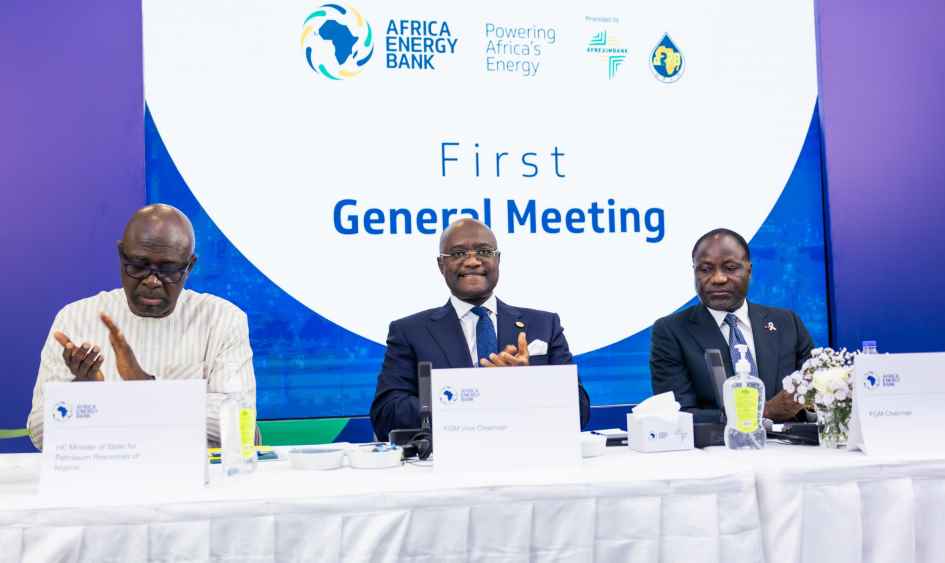
ABUJA, Nigeria, October 31, 2026/APO Group/ –African Export-Import Bank (Afreximbank) (www.Afreximbank.com) and the African Petroleum Producers’ Organisation (APPO) have formally announced the establishment of the Africa Energy Bank (AEB). The announcement was made during the AEB’s inaugural general meeting held in Abuja, Nigeria, on 31 October 2026.


The creation of the Africa Energy Bank reaffirms African governments’ determination to secure their own energy future. This move is in recognition that significant investments in energy generation and transmission was required to accelerating industrial growth and to leveraging the tremendous opportunities from the emerging technologies, particularly artificial intelligence (AI).

The Bank is being established at a time when the continent’s energy investment needs are estimated at US$200 billion. Traditional providers of short- and long-term financing to Africa’s energy sector are withdrawing funding from fossil fuels, even as oil and gas remain vital to the continent’s energy systems. The Africa Energy Bank aims to bridge this financing gap while supporting a just energy transition for African countries.

With an authorised capital of US$5 billion, the AEB will support projects across the energy value chain, including exploration and production, transportation, processing, refining, and distribution. These investments are intended to strengthen productive capacity, reduce reliance on imported petroleum products, and promote intra-African trade in energy goods. The Bank’s mandate also includes promoting robust African participation in the continent’s energy sector to ensure that Africa’s energy future is shaped by Africans.

The AEB will operate as an independent, supranational pan-African financial institution. It will seek to attract investments from governments, national oil companies, financial institutions, and private investors to support energy development across the continent.

Resolutions passed at the first general assembly included the appointment of the Bank’s inaugural President, Mr Helmy Ghazi, and the formation of its first Board of Directors, comprising members from the public and private sectors as well as leading policy institutions from across the continent.

Distributed by APO Group on behalf of Afreximbank.


Continue Reading

Business

5 Investment Opportunities Putting Congo Energy & Investment Forum (CEIF) 2027 on the Map for Central Africa

Published

on

CEIF 2027 connects investors with Congo’s energy projects and local partners, while providing entry points for commercial opportunities across Central Africa

BRAZZAVILLE, Republic of the Congo, November 2, 2026/APO Group/ –The Republic of Congo’s expanding oil and gas developments are creating new opportunities for investment, engineering contracts and commercial partnerships across the energy value chain. With offshore discoveries, mature-field redevelopment and three million tons per year of LNG capacity, the country is entering a new phase of energy development that requires capital, technology and international partnerships.


The Congo Energy & Investment Forum (CEIF) 2027, taking place June 1-3 in Brazzaville, will serve as the official platform connecting Central African energy decision-makers, operators, investors and service companies. Organized by Energy Capital & Power in collaboration with the Ministry of Hydrocarbons, the forum will bring together public- and private-sector stakeholders to advance investment discussions, facilitate partnerships and connect companies with emerging opportunities across the region.

Connect With Central Africa’s Energy Decision-Makers

CEIF 2027 will provide a platform to engage directly with Congolese authorities, regulators, national energy companies and policymakers shaping the region’s energy investment landscape. Taking place in partnership with the Ministry of Hydrocarbons, the event offers a bridge between the country’s policymakers and public- and private-sector companies. Conversations with decision-makers can help investors understand national development priorities, gain insight into the regulatory environment and identify opportunities for market entry or expansion.

Capitalize on Congo’s Upstream Investment and Production Ambitions

As Congo targets production growth toward 500,000 barrels per day, operators are pursuing new exploration and mature-field redevelopment to increase output. TotalEnergies’ 2026 Moho G discovery could unlock an estimated 100 million barrels of recoverable resources alongside the existing Moho F development, illustrating the potential to connect new discoveries to established offshore infrastructure. Meanwhile, Perenco and Trident Energy are pursuing development and redevelopment opportunities across mature assets, including well reactivation and infrastructure upgrades.

These activities could create opportunities for drilling contractors, engineering firms and production technology providers. CEIF 2027 offers a platform to explore project requirements and investment opportunities across Congo’s upstream sector.

Unlock Opportunities Across LNG, Gas and Power Infrastructure

With LNG exports established and liquefaction capacity reaching three million tons per year in 2026, Congo is looking towards its next phase of gas development. This will depend on sustaining feedgas supplies, connecting additional resources and expanding infrastructure.

Beyond LNG, Congo’s plans to expand electricity generation and improve transmission and distribution infrastructure present opportunities for power developers, equipment suppliers and investors. These priorities create potential opportunities for upstream operators, engineering companies, technology providers and investors interested in gas processing, power generation and distribution. CEIF provides a platform to advance these priorities.

Showcase Solutions and Build Commercial Partnerships at the Exhibition

The CEIF 2027 exhibition will provide a platform for companies to showcase their technologies, equipment and services directly to energy operators, policymakers, investors and potential clients across Central Africa.

Exhibitors will have opportunities to demonstrate solutions, engage with local service providers and identify potential partnerships across drilling, engineering, infrastructure and energy technology. For companies seeking to enter or expand in the region, the exhibition offers a direct route to building commercial relationships, exploring procurement opportunities and positioning their services for upcoming projects.

Access New Projects and Financing Opportunities

Turning project opportunities into investments requires clarity on development priorities, infrastructure requirements and financing structures. CEIF’s discussions will give participants an opportunity to assess the projects shaping Congo’s energy sector and engage with potential commercial and institutional counterparts.

Investors, lenders and project developers can use these exchanges to identify areas where financing, technical expertise or new investment structures may help advance projects across oil and gas, power generation and downstream industries.

Organized by Energy Capital & Power in collaboration with the Ministry of Hydrocarbons, CEIF 2027 will enable candid dialogue, facilitating new investments and deals in the country’s energy sector. For more information, visit www.congoenergyinvestment.com.

Distributed by APO Group on behalf of Energy Capital & Power.


Continue Reading

Trending