Connect with us
Anglostratits

Tech

Huawei Highlights Continuous Innovation, Securing Competitive Edge Through Technological Breakthroughs

Published

on

Competitive Edge

SHENZHEN, CHINA – Media OutReach Newswire – 3 October 2026 – Huawei hosted an international media roundtable today featuring Richard Yu, Executive Director, Chairman of the Investment Review Board, and Chairman of the Board of Directors of the Consumer BG. Yu shared comprehensive insights into Huawei’s consumer business and HarmonyOS ecosystem.

Richard Yu joined Huawei in 1993, working on early developments like the first-generation program-controlled switch and participating in the establishment of Huawei’s wireless communications business, which started with GSM. Over the past decade, Yu has led Huawei’s consumer business with the vision to deliver a seamless AI life experience to all consumers across five key scenarios: HIMA-powered Smart Travel, HarmonyOS Office, Smart Home, Fitness & Health, and Entertainment, which he said is also the long-term strategy for Huawei’s consumer business over the next 10 years.


 Between 2007 and 2025, Huawei invested more than CNY1.8 trillion into R&D shifting from roughly 10% of annual revenue in early years to over 20% recently. Huawei has continued to increase investment into the core technologies of the ICT domain and basic research, which has translated into robust core capabilities, extensive intellectual property, and a vast patent portfolio, and helped with achieving a series of breakthroughs in technological innovation.

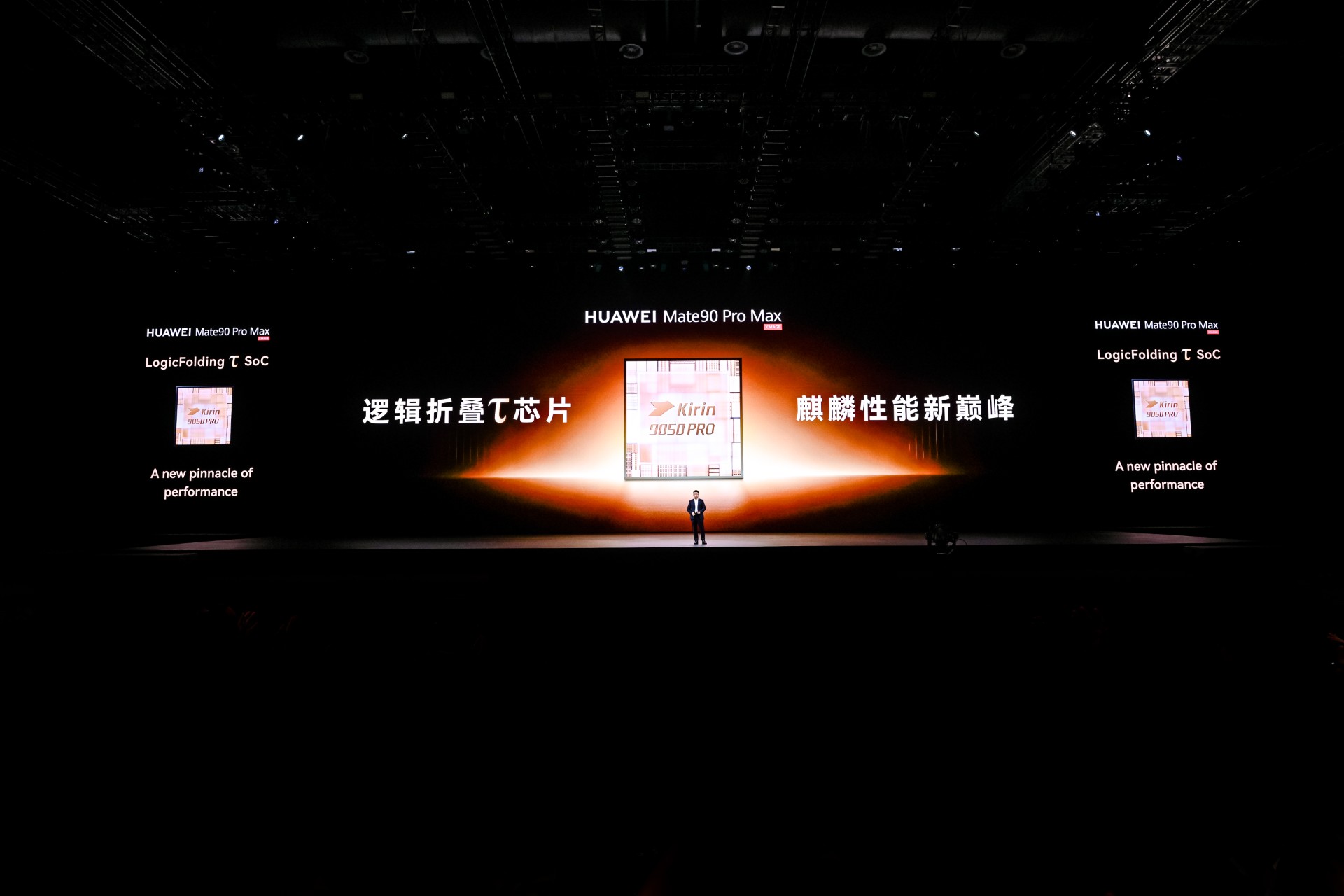
The Mate 90 series smartphones Huawei just launched come with the latest Kirin 9050 Pro chip. The overall device performance is 31% higher than the previous generation. The Balong modem, image sensor processor (ISP), mobile security processor (MSP), Lingxi CPU, Maleoon GPU, and the NPU that adopts Huawei’s Da Vinci architecture for AI processing are all designed by Huawei. They offer higher energy efficiency and deliver much-improved overall system-level performance.

Even though Yu admitted that Huawei has limited access to advanced semiconductor processes, Huawei recently made a new breakthrough in the semiconductor domain – the LogicFolding technology under the Tau Scaling Law. Unveiled by He Tingbo, head of Huawei’s Semiconductor Business Department this May, this technology vertically stacks the logic layers of chips and restructures the circuit layout through inter-layer high-density interconnect to shorten critical paths and reduce latency. This technology was adopted on Kirin 9050 Pro chip, which shows very strong AI processing power. The Mate 90 series powered by this chip can run a 30B MoE on-device AI model.

In the AI domain, Yu talked about the Ascend compute foundation that Huawei provides, by remarking Huawei’s large models called openPangu, AI capabilities for intelligent driving, and HarmonyOS Celia, which is similar to Gemini in the Google Android ecosystem. Huawei is also using AI to improve the O&M of communications network equipment. By combining AI computing power with domestic open-source large models, Huawei’s vision is to help enterprises and industries around the world to become more productive and bringing more convenience to everyone.

In the past years, Huawei has launched a broad series of products and solutions, including smartphones, PCs, tablets, wearables, TWS audio products, Smart TVs, home routers, smart home control solutions, as well as intelligent electric vehicles together with partners. Underlying these products and solutions are Huawei’s chip hardware platform and HarmonyOS – another OS ecosystem after iOS from Apple and Android from Google that Huawei developed to support all the smart devices and smart hardware across all scenarios.

Development of HarmonyOS began in 2019. Before that, Huawei was a major contributor to the Android community as well as the entire Android ecosystem. Now, more than 90 million devices, including smartphones, PCs, and tablets, currently run on HarmonyOS 6 and HarmonyOS 7. This figure is expected to hit the 100 million mark by the end of this year. The number of apps and services in the HarmonyOS ecosystem has already exceeded 450,000. Its global registered developer count has reached 11 million, and Huawei now has over 23,000 app innovation partners. Expressing his special thanks to all partners and developers for their trust and support, Yu also pointed out that Huawei is considering gradually bringing HarmonyOS to the global market in the future.

Globalization is another topic of the conversation. Yu mentioned that Huawei had very good collaboration with many companies from the US, Europe, Japan, South Korea, and Taiwan, delivering huge business value and benefits to those partners. When it comes to the difficulties that Huawei overcame since 2019, Yu said that relying on homegrown technologies and capabilities, Huawei gradually designed its own operating system and developed basic tools and software by themselves, putting a domestic supply chain in place. In 2023, Huawei started to manufacture the chips used by smartphones domestically again. With these chips and HarmonyOS, and by relying on China’s domestic supply chain, materials, and process nodes, Huawei has basically gotten rid of the dependence on US technologies.

While Huawei’s global market share was once No. 1, nowadays it only sells several million units of smartphones outside China every year. However, Yu revealed that Huawei is trying to return to the overseas market step by step.

Taking wearables as an example, Huawei is No. 1 in terms of the market share both in China and globally. Other innovative products such as TWS earphones, are also growing fast and have reached No. 1 in many countries. While Huawei’s tablet and PC business was greatly affected after it was denied access to Windows and Intel x86 chips, the HarmonyOS-based tablets are now performing strongly. Another example would be CPE, which is a mobile router that provides connectivity to the unconnected in remote and rural areas. These products are also very well received across many regions outside China, helping more people connect to the rest of the world and live better lives.

Question: Both the Huawei XT 2 and the two most advanced models of the Mate 90 series use a LogicFolding chip. Will LogicFolding chips be used for more phones in the future? We understand that Huawei’s chip production capacity is still limited. Huawei has launched SuperPoDs, and AI infrastructure is a huge business. They are both very important in China. How do you secure a larger share of the chip supply internally?

Richard Yu: We started introducing the chip that adopts the LogicFolding technology powered by the Tau Scaling Law to the Mate XT 2 tri-fold phone. To answer your question, yes, more of our phones will definitely use these LogicFolding chips in the future.

Currently, the production capacity for advanced semiconductors in China still cannot meet the rapidly growing demand. Huawei’s Ascend chips for the AI domain also use such capacity. But we have developed a requirement plan, which also covers the chip requirements of smartphones.

The sharp price increase for memory components over the past two years has somewhat limited the smartphone sales volume. Even though the production capacity remains tight right now, generally it is sufficient to meet our market shipment needs.

We hope that production capacity will ramp up in China’s semiconductor industry so that we can manufacture more advanced products for consumers in the Chinese market as well as the overseas market in the future.



Business

Huawei Wireless Unveils Innovation Breakthroughs to Pioneer New Communications Networks

Published

on

Huawei

The innovation breakthroughs for pioneering new communications networks include RetinaMIMO, new materials, and OSCAR solution among other root technologies. By tackling coverage, energy consumption, and capacity challenges, the breakthroughs drive ubiquitous experience, simplified and green networks, and superior spectral efficiency. The breakthroughs have unlocked a wealth of new capabilities, including the world’s first commercial U6 GHz device VitaAAU, GigaGreen Plus series, and UBBPi series.
Huawei promotes A2A-T standards and drives commercial open-source OpenAN through extensive partnerships to build an open telecom agent ecosystem.


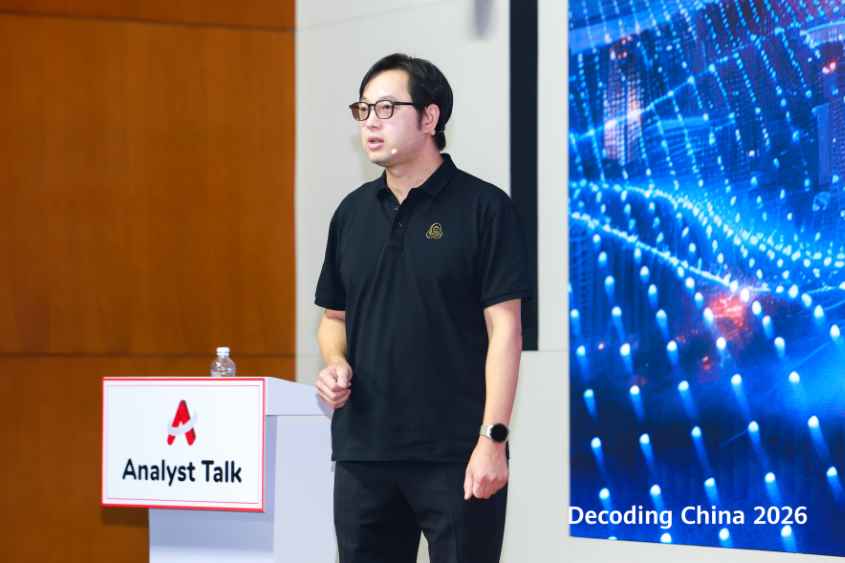
SHANGHAI, CHINA – Media OutReach Newswire – 29 October 2026 – At Huawei Decoding China 2026, Fang Xiang, Corporate Vice President and President of Wireless Network Solution of Huawei, unveiled a series of innovation breakthroughs to pioneer new communications networks. The innovation breakthroughs mark major leaps in root technologies focused on ubiquitous experience, simplified and green networks, and superior spectral efficiency. With the breakthroughs, Huawei has launched the world’s first commercial U6 GHz device VitaAAU, GigaGreen Plus series, and UBBPi series. Additionally featuring the new progress in open ecosystem for telecom agents, the breakthroughs will lay a solid foundation for new communications networks.

With booming intelligent devices and services, new devices, traffic, and applications are taking shape in the mobile industry. The new devices are expanding network connectivity from people to things and agents, increasing the number of connections by 100 times. Device-cloud synergy for intelligent services calls for stronger uplink capabilities to support training and inference, shifting network focus from downlink dominance to both uplink and downlink. With new applications, come a diversity of new interaction modes, calling for higher standards in experience and driving networks to support ubiquitous steady ultra-low latency with a high reliability.

As the world steps into an intelligent era, the value of connectivity is not only about quantity—it’s more about quality. This has been inspiring Huawei to convert cutting-edge breakthroughs into the commercial practices of new communications networks by focusing on root technologies for ubiquitous experience, simplified and green networks, and superior spectral efficiency.

Pioneering ubiquitous experience

RetinaMIMO is a new pioneering technology designed to solve the challenge of concurrent ultra-high bandwidth and ubiquitous coverage. It features the industry’s first Retina scanning system that allows RF link topologies to be reconstructed to eliminate coverage collapse in the vertical direction. It also adopts a reconstructed antenna array architecture to address the diminishing marginal gains as array elements (AEs) increase.

Based on RetinaMIMO, Huawei has launched the world’s first commercial U6 GHz device VitaAAU. Compared with similar products with 1024 AEs, VitaAAU widens coverage by about 30%, enabling U6 GHz to match C-band in both horizontal and vertical directions. This enables operators to deliver U6 GHz coverage for new communications networks on their C-band sites, minimizing overall TCO. To date, VitaAAU has seen commercial adoption in the UAE and other markets, with peak downlink speeds exceeding 10 Gbps, making ubiquitous premium experience a reality.

Pioneering simplified, green networks

Huawei’s pioneering EP power amplifier (PA) architecture capitalizes on new materials and technologies to solve the problem of energy efficiency decline on higher frequency bands, maximizing energy conversion efficiency. The industry’s first-ever multimode dielectric filters allow antennas to have small dimensions and low power consumption on multi-channel networks with high frequency bands. Powered by new materials, technologies, and architectures, VitaAAU antenna is reduced to 1.5 m in diameter while supporting “0 Bit 0 Watt 0 Loss”, delivering superior energy saving efficiency. These innovations enable Huawei’s GigaGreen Plus series products to achieve significant reductions in dimensions, weight, and power consumption, better positioned to power simplified and green networks.

Pioneering superior spectral efficiency

Multi-band, multi-cell, and multi-user interference is a major restrictive factor of capacity. The time scaling of the Tau (τ) law is introduced to base stations for the first time to realize optimal dynamic resource scheduling across all domains based on the OSCAR solution. With low-latency bus and high-speed interconnect technology, a high-speed architecture is built to enable the real-time exchange of massive data. Thanks to software and hardware synergy, new UBBPi series products improve average user experience by 1.3 times while reducing power consumption by approximately 40%, further improving spectral and energy efficiency.

Pioneering open-source autonomous networks

Autonomous networks have emerged as an inevitable choice to deal with the growing AI services and increasing network complexity. RANSpirit is another industry first from Huawei, implementing single-domain network autonomy based on the telecom foundation model and digital twins. To date, RANSpirit is serving more than 1.2 million cells across 25 networks around the world, providing assistance to more than 2,000 engineers.

Extensive agent collaboration relies on an open, win-win ecosystem. This galvanizes Huawei to join industry partners to develop ecosystem standards, communities, and industry alliances. In terms of standards, Huawei adapts to the TM Forum, building a cross-agent foundation on the A2A-T standard and framework agreed upon by the industry. In terms of communities, Huawei jointly promotes neutral open-source communities and donates open-source agent components to the Linux Foundation, driving global collaboration and innovation. With regard to industry alliances, Huawei has taken the initiative to pool ecosystem strengths to accelerate business implementation based on the GSMA industry platform.

Fang concluded with the reiteration of Huawei’s unswerving pursuit of dual-drive innovation to promote new breakthroughs in mobile networks and work with partners from around the world to deepen the OpenAN ecosystem, advancing new communications networks through technological innovation and open collaboration.

FAQs

Q1: Why is it challenging to balance ultra-high bandwidth and ubiquitous coverage?

Ultra-high bandwidth depends on higher frequency bands. As we know, a higher frequency leads to a greater propagation loss of electromagnetic waves and a weaker ability for them to penetrate obstacles, because high-frequency signals attenuate fast and have short coverage distances, while ubiquitous coverage requires signals to travel a long distance in complex environments. Inherently, the two priorities pull in sharply opposite directions.


Continue Reading

Business

Cassava Technologies becomes an authorised reseller of Claude on Amazon Bedrock

Published

on

The agreement allows Cassava to give organisations across Africa another route to access these capabilities, helping them adopt AI technology more easily as they prepare for future growth

LONDON, United Kingdom, October 27, 2026/APO Group/ –Cassava Technologies (www.CassavaTechnologies.com), a global technology leader, has become authorised to resell access to Anthropic’s Claude models through Amazon Bedrock.

Claude is Anthropic’s state-of-the-art large language model, offering features like advanced reasoning, vision analysis, code generation, and multilingual processing. The agreement allows Cassava to give organisations across Africa another route to access these capabilities, helping them adopt AI technology more easily as they prepare for future growth.


Our goal is simple, advanced AI within reach of every business, government, researcher, entrepreneur and university across the emerging markets globally

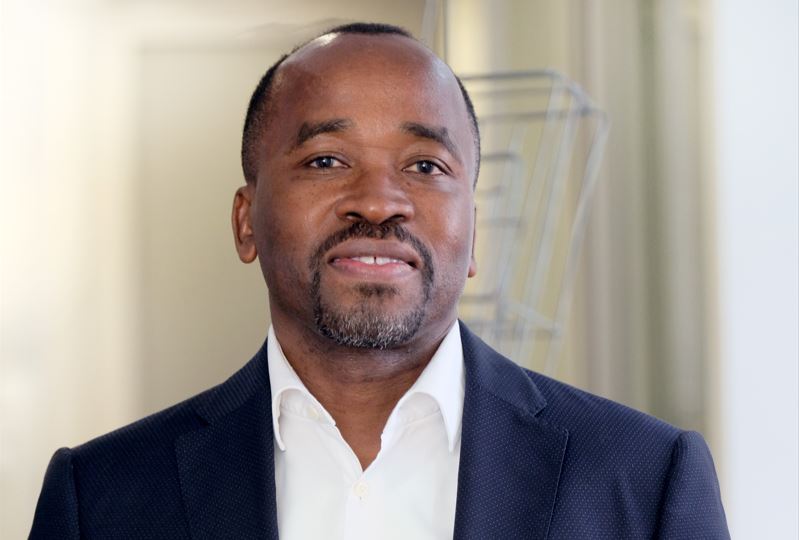
“What matters to our customers is being able to use AI in their business, and that starts with access to the best models. Bringing Anthropic’s Claude to them through Amazon Bedrock delivers on this need, which is supported by the infrastructure, partnerships and services African businesses need to adopt them responsibly and take a greater part in the digital economy. Our goal is simple, advanced AI within reach of every business, government, researcher, entrepreneur and university across the emerging markets globally,” said Hardy Pemhiwa, President and Group CEO of Cassava Technologies.


Through Amazon Bedrock, organisations can access Anthropic’s Claude models and incorporate them into their own applications and services. Cassava’s authorised reseller status gives African customers a way to access Claude through a local partner focused on serving businesses across the continent.


Through its digital ecosystem, which encompasses connectivity, cloud, cyber security and AI solutions, along with a continent-wide data centre footprint, Cassava is investing in the infrastructure and solutions needed to support the wider adoption of artificial intelligence across Africa.

Distributed by APO Group on behalf of Cassava Technologies.


Continue Reading

Business

Idris Elba’s Akuna Group launches free Artificial Intelligence (AI) filmmaking programme for creators in five African countries, in collaboration with Google

Published

on

Over fifty weeks, selected creators will move from a twelve-week academy into mentoring, pitching and production; Selected funded teams will make their films, which will be showcased in October 2027

Creators need a route from the classroom to the screen, and this programme carries them all the way, from their first application to a finished, funded film

FREETOWN, Sierra Leone, October 26, 2026/APO Group/ —An AI filmmaking programme for African creators opens today in Ghana, Kenya, Nigeria, Sierra Leone and South Africa. Applications are live at (https://AkunaLearning.com).

Akuna Learning, from The Akuna Group, chaired by Sir Idris Elba, today opened applications for From Script to Screen with AI, a free programme that equips eligible African creators to tell stories on screen leveraging artificial intelligence. Delivered in collaboration with Google and supported by US$1 million funding from Google.org, with curriculum developed by Curious Refuge, the programme is open to aspiring filmmakers in Ghana, Kenya, Nigeria, Sierra Leone and South Africa.


Applications are open now at (https://AkunaLearning.com) and close on 15 November 2026. The programme is free to apply and, for those selected, free to attend.

Over fifty weeks, selected creators will move from a twelve-week academy into mentoring, pitching and production. Selected funded teams will make their films, which will be showcased in October 2027. Creators will maintain control of their work, with no claim of ownership rights by the programme or partners running it.

From foundation to funded film

Every participant will complete a foundational course in AI filmmaking; then participants will be able to choose to specialise in one of five creative pathways:

  • Fiction: narrative filmmaking and scripted storytelling, from short film to series.
  • Documentary: real-world stories and factual filmmaking.
  • Animation: animated storytelling, motion design and visual world-building.
  • Advertising: branded storytelling, commercial content and creative campaigns.
  • Screenwriting: script development, dialogue and structure, writing from page to screen.

The programme is structured in five stages:

  1. Applications & Selection (October 2026 to January 2027). One open call across all five countries, closing on 15 November 2026, with review panels in each country and a final panel looking across all five.
  2. Learn & Get Certified (February to April 2027). Twelve weeks of online training with Curious Refuge, with weekly Akuna facilitation, in-person meet-ups in every country and certification at the end.
  3. Get Mentoring (April to June 2027). Graduates put forward their own one-page ideas. Shortlisted idea owners build teams, which then spend four weeks with mentors and subject experts.
  4. Pitch Your Film (June to July 2027). Mentor-endorsed teams pitch to panels drawn from Akuna, Google and the wider industry. Selected projects are funded.
  5. Produce Your Film (July to October 2027). Funded teams make their films with creative and technical support, then take them to festivals and showcases. The programme is for aspiring and emerging visual storytellers: filmmakers, screenwriters, animators, advertisers, digital content creators, photographers, designers, editors and visual artists. Applicants do not need AI experience, a film school qualification or a set number of years in the industry.


Sir Idris Elba, Chairman of The Akuna Group, said: “For me, this is about learning. This is about access to courses that help educate creators across the continent to tell their stories. Through Akuna Learning, we’re partnering with Google and Curious Refuge on ‘From Script to Screen with AI’, a remarkable training and mentorship programme teaching African filmmakers to use AI tools. Selected projects will receive production funding, and creators will retain control of their work. I’m looking forward to seeing the stories they choose, and how the education leads to employment and self-momentum, but helps shape the narrative of Africa.”

Khaled Gad, Chief Executive Officer of The Akuna Group, said: “Training on its own does not build an industry. Creators need a route from the classroom to the screen, and this programme carries them all the way, from their first application to a finished, funded film. It opens on the same day and runs to the same standard in all five countries. You do not need a film school background or any experience with AI to apply. You need finished work that shows what you can do, and your application in by 15 November.”

How to apply

Applications are submitted online at (https://AkunaLearning.com) between 26 October and 15 November 2026. Applicants must:

  • physically reside in Ghana, Kenya, Nigeria, Sierra Leone or South Africa;
  • be 18 or older on the date of application;
  • have access to a laptop, reliable internet and consistent power for the duration of the programme;
  • be able to commit fully to the twelve-week academy from February to April 2027, and to the later stages if they progress.

Applicants should include existing creative work, however modest, that shows their talent and commitment. Women are strongly encouraged to apply.

Distributed by APO Group on behalf of The Akuna Group.


Continue Reading

Trending