Connect with us
Anglostratits

Tech

Cracking the Interoperability Code of African Continental Free Trade Area (AfCFTA)’s Digital Trade Era (By Ludovic Thanay)

Published

on

The potential is huge: UNCTAD estimates that tackling non-tariff barriers could generate about $20 billion a year for African economies, more than five times the $3.6 billion expected from eliminating tariffs

DUBAI, United Arab Emirates, October 8, 2026/APO Group/ —By Ludovic Thanay, Senior Vice President of Sales, Webb Fontaine (WebbFontaine.com/)

Somewhere in Africa, a truck waits at a border while a declaration already in the system is retyped. The customs system behind it knows the cargo, the consignee and the duty paid. The system 50 meters away, across the line, does not know of it. What one knows about a consignment rarely follows it to the next. The real database still travels in a folder on the dashboard.


This is Africa in 2026. In February 2025, the African Union adopted eight annexes to the AfCFTA Protocol on Digital Trade, covering cross-border data transfers, digital identities, digital payments and emerging technologies. Customs cooperation already has a legal footing in the AfCFTA’s Protocol on Trade in Goods, whose annexes on customs cooperation and mutual administrative assistance and on trade facilitation bind State Parties to work together at the border. Much of this still has to be ratified and written into national law. The rules are largely drafted. The wires are not.

The gap sits between the rulebook and the wire. Protocols are negotiated in conference rooms, but clearance happens at border posts with systems that were never designed to talk to each other. Closing this gap is the real test of the digital trade era.

It’s easy to blame technology, but interoperability fails more for lack of legal frameworks than technical tools: agreements to recognise and accept each other’s data, mutual recognition of Authorised Economic Operator status, and data protection adequacy. Rules of origin show how wide the gap between agreement and application can be. In February 2026 the AU Assembly adopted the last outstanding rules, for automotive products, clothing and textiles, completing the AfCFTA’s origin rules on paper. A rule helps a trader only once it sits in national tariff schedules, customs systems and certificate checks, and across much of the continent that work is still under way. Technology follows the legal mandate; once it exists, tech determines if the rulebook delivers cleared containers or just communiqués.

Each country has its own procedures, data standards and systems, built at different times to different specifications. The company I represent built several, giving me direct insight into the issue: a system optimised for one administration’s revenue and compliance needs rarely works for its neighbour. Traders crossing several borders pay the price in duplicate declarations and delays.

The potential is huge: UNCTAD estimates that tackling non-tariff barriers could generate about $20 billion a year for African economies, more than five times the $3.6 billion expected from eliminating tariffs.

Why single windows stop at the border

Many countries have built national single windows, achieving real domestic gains. But without an outbound layer to pass declaration data to the next customs administration, the process breaks down at the border, reverting to manual checks.

A second limit receives less attention. A Single Window is not a customs window. Much of the delay sits with agencies that are outside Customs: standards bodies, food and drug regulators, phytosanitary inspection, and port health. And this is significant. The World Customs Organization (WCO) Time Release Study shows where delays occur; every interoperability programme should start and end with a TRS.

The bilateral trap

It would be wrong to suggest Africa has not solved cross-border data exchange. It has, bilaterally, and repeatedly. The ECOWAS SIGMAT transit system was operating in nine member states by May 2025, when the Benin-Nigeria interconnection launched at Sèmè-Kraké. On 11 September 2026, the same two administrations went further. Their Customs Declaration Exchange System pilot, linking Benin’s Customs Webb with Nigeria’s B’Odogwu, lets officers in the destination country see a declaration lodged in the departure country, along with manifests, transit data and risk alerts. Each country keeps its own duty calculation, risk assessment and release. That is federation in practice, on the Abidjan-Lagos corridor that Nigerian Customs says carries about 70 per cent of West Africa’s transit trade. The East African Community’s Single Customs Territory shares declaration data and cargo tracking along the Northern and Central Corridors. COMESA’s transit guarantee moves goods under a single bond across multiple states. These are working systems, built by African institutions.

The problem is scale. Sèmè-Kraké took years of work to connect one pair of administrations. Fifty-four signatories generate 1,431 possible bilateral links, each separately negotiated, mapped and maintained, and re-tested whenever either side upgrades. Continental success requires one shared data definition, implemented once per country; one integration each, not one per pair.

It’s easy to blame technology, but interoperability fails more for lack of legal frameworks than technical tools

A common language, and what technology can do for it

The WCO Data Model provides the vocabulary, code lists and message structures almost every African administration aims for. The difficulty is that national implementations diverge. Fields are added for local requirements, legacy structures go undocumented, and the knowledge is often lost. Mapping national systems to the Data Model is laborious and must be redone with every upgrade.

This is where machine learning helps: discovering candidate mappings between undocumented legacy systems and the Data Model, inferring field meanings, and keeping those mappings current as systems change. Today, this work is manual and slow, and the highest cost in interoperability programmes.

But AI should not rewrite declarations in flight. Declarations are legally binding and must be transformed in ways that are deterministic, versioned, logged and auditable. Use machine learning to build and maintain mappings, but let published, deterministic mappings execute them. Anything else asks a revenue authority to accept an unauditable component inside its assessment chain. The same discipline applies to exceptions, because mismatched records and disputed classifications are where the operational burdens lie.

Federation, and who owns it

Africa should not centralise its Customs data. Federation is the right architecture. Each country keeps its systems and data, connects through agreed standards and secure interfaces, and shares only what’s needed for each transaction. The reasons are legal as well as political. Customs data is fiscal data, subject to statutory secrecy and regulations in most jurisdictions.

Federation, however, is an architecture, not a governance model, and this is where the debate is thinnest. Someone needs the mandate to define “only what is necessary.” The AfCFTA Secretariat, with the WCO and the Regional Economic Communities (RECs), is the obvious home for a continental exchange standard and the dispute mechanism behind it.

Until empowered, every implementation is a bilateral negotiation with added technical complexity. Security must also be addressed as each new interconnection widens the attack surface of critical revenue infrastructure.

What to do next

The cautionary example is TradeLens. Backed by Maersk and IBM, blockchain-enabled and presented as an open, neutral industry platform, it closed in 2023. The technology worked, but participation never reached critical mass. Interoperability offers little value to the first mover: country A gains nothing until B, C and D connect. So, four priorities require an owner, a date and a measure:

1. Designate the standard. The AfCFTA Secretariat, WCO and RECs should publish a single continental profile of the WCO Data Model as the mandatory exchange format, with a conformance test. Until one profile is named, every country and vendor builds to a different target.

2. Build the legal gateway. A model bilateral data-exchange agreement and framework for mutual recognition of AEO status would remove the largest source of delay in these projects, which is legal rather than technical.

3. Fund and measure two corridors. Baseline two live corridors with a Time Release Study, connect them to the continental profile, and publish the results. A target such as data reused across the border in 60 per cent of consignments, and release time down by a third, is what attracts financing from the AfCFTA Adjustment Fund and the development banks. Pair it with PAPSS, so settlement matches the speed of the paperwork.

4. Bring the traders in, including the smallest. Broadband, power and current hardware at border posts are the prerequisites and must be costed as multi-year infrastructure. Much intra-African trade is informal, often by women small traders. Without simplified regimes and a low-value threshold, interoperability  will serve large shippers and formalise nobody.

The technology exists. Most standards are set, and the working examples are African. What’s missing is a named owner for the standard, cross-border legal instruments and proper funding for two corridors. That’s the code to crack. It is a governance problem in a technical disguise, and why Africa’s goods still move faster than their data.

​

Distributed by APO Group on behalf of Webb Fontaine.


Business

Cassava Technologies and Mauritius Telecom sign Memorandum of Understanding (MoU) on Artificial Intelligence (AI) services and education in Africa

Published

on

Africa

The partnership combines this computing scale, Cassava’s AI platforms and regional reach with MT’s own AI products, local language capabilities and operating experience

CAPE TOWN, South Africa, November 18, 2026/APO Group/ –Cassava Technologies (https://www.CassavaTechnologies.com/), a global technology company of African heritage, and Mauritius Telecom (MT) have signed a memorandum of understanding (MoU) at Africa Tech Festival to develop a strategic partnership focused on strengthening compute and model access for MT’s AI services and exploring opportunities for myt Learn, MT’s AI-powered education platform, in South Africa and other African markets.


Cassava’s NVIDIA-powered AI Factory in Cape Town is Africa’s most powerful supercomputer. The partnership combines this computing scale, Cassava’s AI platforms and regional reach with MT’s own AI products, local language capabilities and operating experience.

This partnership brings together products we have developed and Cassava’s infrastructure and reach to take that work further

“Realising AI’s promise in Africa requires more than potential; it takes infrastructure, technology, and proven expertise. By pairing Mauritius Telecom’s AI products and operating experience with Cassava’s AI infrastructure and reach, we aim to bring locally relevant AI services and education solutions to more African markets,” said Ziaad Suleman, SVP Cassava Technologies for South Africa and Botswana.

“We are building AI capability in Mauritius that can also serve other African markets. With myt Learn, we are already putting that capability to work in our schools, supporting both students and teachers. This partnership brings together products we have developed and Cassava’s infrastructure and reach to take that work further. Our ambition is to make trusted AI useful and accessible, while ensuring that those responsible for its use retain meaningful control,” said Veemal Gungadin, CEO of Mauritius Telecom.

The companies will explore access to Cassava’s AI Factory as an additional source of on-demand computing capacity for MT’s AI offerings, alongside access to AI models through CAIMEx, Cassava’s AI platform. Cassava capacity and model access would be used only for workloads where customers permit it. These options would complement MT’s existing myt AI Cloud platform and infrastructure in Mauritius, and could support its expansion into other African markets.

In education, the partners will jointly assess opportunities for myt Learn, starting with South Africa’s public and private education sectors, with potential expansion into other Cassava markets. Created by MT and rolling out in Mauritian schools for selected grades, myt Learn provides curriculum-aligned guided lessons, a multilingual AI tutor and personalised revision. Teachers have access to performance insights and AI tools for marking, test creation and lesson preparation. The platform can be adapted to local curricula and teaching needs.

Together, the companies aim to show how telecommunications operators can bring locally relevant AI services to customers and take African-developed products into new markets.

Distributed by APO Group on behalf of Cassava Technologies.


Continue Reading

Events

A decade of changing cameras and personal perspectives at the 2026 XMAGE Awards in Paris

Published

on

Huawei

PARIS, FRANCE – Media OutReach Newswire – 17 November 2026 – Ali Al Arbash’s “Light & Shadow Across France” is among the works featured in “A Heartwarming World,” an exhibition that opened Nov. 11 at the Grand Palais alongside the 2026 Huawei XMAGE Awards. Presented in collaboration with Paris Photo, it explores relationships between people, nature and their surroundings and includes a decade-long mobile photography retrospective.

Huawei said the competition received 820,000 entries, with judges selecting 100 works and naming three grand prize winners: Ali Al Arbash, Chinese photographer Wanyouyinli, and DGMai.


Speaking at the awards ceremony, Alex Huang, CMO of Huawei Consumer Business Group, highlighted the competition’s milestone. “Over the past decade, we have grown alongside global creators, building an open, diverse, and heartwarming global community where people and stories connect through images”.

Awards final jury Liu Heung Shing singled out Ali Al Arbash’s knowledge of Paris and his use of light. The photograph of the girl amid bubbles and families, Liu noted, showed the trained eye needed to catch a passing moment.

The exhibition’s retrospective pairs photographs with camera components from the past decade. Liu pointed to the freedom of carrying less equipment, noting a phone-and-lens setup reduces the need for multiple cameras. But the photographer still needs an idea: “Technology enables the user to be more creative if you have the vision”.

For Wanyouyinli, experience has changed what he wants to photograph. “As I’ve grown older and gained more life experience, I’ve shifted my focus toward humanistic and documentary-style photography.”

In his winning work, “Gaze Across Time and Space,” ancient stone figures stand beneath a thin contrail. Wanyouyinli described waiting for the object crossing the sky to reach the right position before taking the picture, bringing the traces of two different eras into one black-and-white frame. Looking ahead, he wants to make photographs rooted in daily life that resonate with audiences.

“I hope that by engaging with my work, viewers are prompted to reflect and perhaps form their own associations,” Wanyouyinli said.

As camera technology continues to evolve, those associations, much like the everyday moments captured by this year’s winners, will give the next generation entirely new ways to capture and share their world.


Continue Reading

Events

Africa Tech Festival 2026 announces additional high-profile speakers as global business leaders head to Cape Town

Published

on

Bringing together senior decision-makers from across the technology, telecommunications, financial services and investment sectors, this year’s speaker line-up reflects the increasingly interconnected nature of Africa’s digital economy

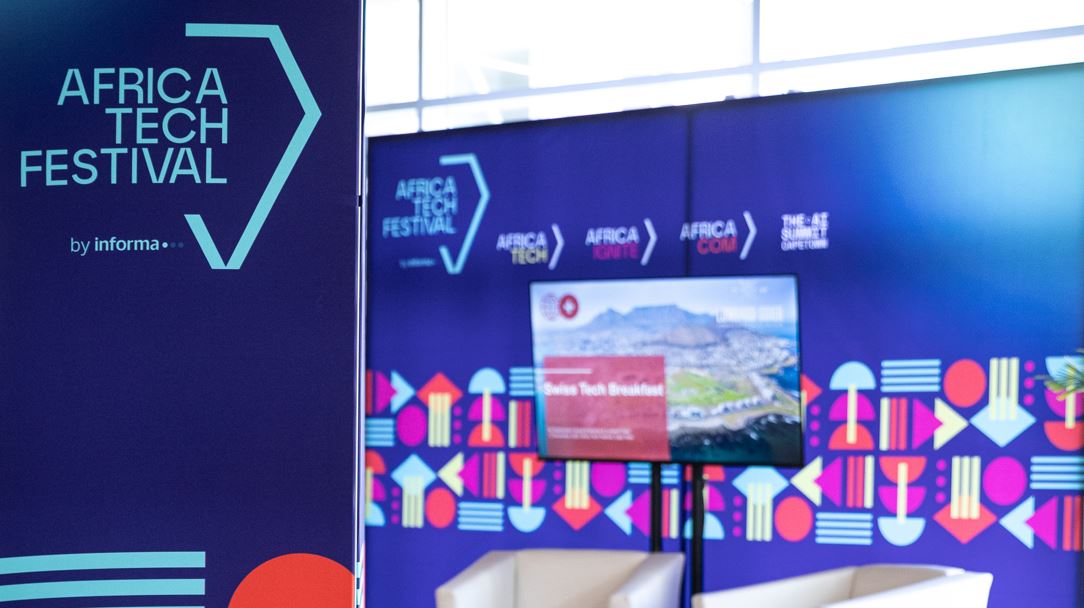
CAPE TOWN, South Africa, November 16, 2026/APO Group/ –Africa Tech Festival (https://AfricaTechFestival.com/), the continent’s longest-running and most influential technology event, has announced an additional line-up of high-profile speakers for its 2026 edition, bringing together senior executives from some of the world’s leading technology, telecommunications, investment and financial services organisations. The latest additions include leaders from Naspers and Prosus, Cassava Technologies, MTN Group, Vodacom, Orange Middle East and Africa, OpenAI, Amazon and Meta.


Bringing together senior decision-makers from across the technology, telecommunications, financial services and investment sectors, this year’s speaker line-up reflects the increasingly interconnected nature of Africa’s digital economy. New additions to the agenda include:

  • Phuthi Mahanyele-Dabengwa, Group Executive Director, Naspers and Prosus
  • Hardy Pemhiwa, President and Group CEO, Cassava Technologies
  • Ben Cheick Haidara, Deputy CEO and Chief Operating Officer, Orange Middle East and Africa
  • Pushkar Gokhale, Chief Digital and Information Officer, MTN South Africa
  • Mohamed Sami, Group CIO, Vodacom
  • Veemal Gungadin, Chief Executive Officer, Mauritius Telecom
  • Emmanuel Lubanzadio, Africa Lead, OpenAI
  • Kuseni Dlamini, Chairman, Aspen Pharma and Alexforbes Group
  • Robert Koen, Managing Director, Sub-Saharan Africa, Amazon
  • Sitoyo Lopokoiyit, Chief Executive: Personal and Private Banking (Pan Africa), Absa Group
  • Kojo Boakye, Vice President, Public Policy, Africa, Middle East and Türkiye, Meta

“From expanding connectivity and building the infrastructure needed to support AI, to unlocking investment and creating opportunities for African entrepreneurs, the conversations taking place this year have real implications for businesses, governments and communities across the continent. Africa Tech Festival provides an opportunity to engage directly with the leaders driving these developments, exchange ideas and build partnerships that can deliver meaningful results. We encourage everyone who wants to play a role in Africa’s digital growth to join us in Cape Town,” said Kadi Diallo, Head of Content at Informa.

We encourage everyone who wants to play a role in Africa’s digital growth to join us in Cape Town

Beyond the conference sessions, Africa Tech Festival offers delegates opportunities to connect with senior executives, policymakers, investors, innovators and technology providers through exhibitions, networking and industry discussions.

The 2026 festival takes place from 17 to 19 November at the Cape Town International Convention Centre.

Now in its 29th edition, Africa Tech Festival continues to provide a platform for the leaders and innovators shaping the continent’s technology landscape. This year’s programme covers six themes: Telecoms and Connectivity; Data Centres; Artificial Intelligence; Cybersecurity; Startups and Digital Transformation. Through discussions spanning the expansion of digital infrastructure, the opportunities presented by AI, the future of connectivity and the importance of investment and cyber resilience, the festival will examine the developments and challenges influencing Africa’s digital growth.

With the countdown to Africa Tech Festival 2026 underway, delegates are encouraged to secure their place and be part of the conversation, connections and opportunities shaping Africa’s digital future.

Register to attend Africa Tech Festival 2026

General registration: https://apo-opa.co/3OvRBqv

For more information, as well as exhibitor and sponsor applications, visit https://AfricaTechFestival.com/

Distributed by APO Group on behalf of Africa Tech Festival.


Continue Reading

Trending