Connect with us

Tech

The brands creating the strongest creative outcomes are combining the power of AI with the power of community


Published

on

WARC
  • 88% or marketers say AI has increased creative output, but only 45% say it has improved creative quality
  • 86% believe real-time audience behavior and community signals are important to creative development
  • 67% rely on basic demographic data despite 59% agreeing that traditional demographic segmentation is no longer effective.
  • Only 17% of marketers always incorporate community insights beyond demographics into Gen AI workflows

New WARC x TikTok x LIONS Advisory research: The new creative advantage – How community signals are reshaping creative success in the age of AI. Introducing the S.C.A.L.E. framework for action

July 14, 2026 – Creativity has entered a new era. Generative AI is transforming how marketing ideas are developed, adapted, and scaled. But real advantage comes from creative that is most relevant, resonant, and connected to the people it is designed to reach.


The brands creating the strongest creative outcomes are increasingly combining the power of AI with the power of community. They’re using participation as intelligence, turning cultural signals into activation, and building creative systems that continuously learn from the audiences they serve. This creates an “intelligence loop” that gives brands a compounding creative advantage.


New research by WARC and LIONS Advisory, in partnership with TikTok, explores how community intelligence is reshaping creative success in the age of AI, and why the future advantage belongs to brands that can learn, adapt, and create alongside culture as it unfolds.


Lexi Wolf, Head of Thought Leadership, LIONS Advisory, says: “WARC’s Marketer’s Toolkit 2026 found that belief in the effectiveness of demographic segmentation is waning. Yet this study with TikTok found that demographics were still the number one input marketers used to brief AI. Meanwhile, participatory media environments are giving us something far richer: real-time signals from people who search, comment, share, remix, create and buy.


“The opportunity isn’t to make the existing system faster. It’s to build a better one: one that helps brands learn from people more continuously, respond with greater speed and relevance, and turn efficiency into effectiveness over time.”


Andy Yang, Global Head of Creative & Brand Ads, TikTok, says: “The brands winning today are not the ones using AI to generate the most content. They are the ones learning the fastest from the people they serve. We call it cultural intelligence, and it is fast becoming advertisers’ most durable competitive advantage.


“Yet the research for this report shows that most brands are briefing powerful AI creative tools with weak inputs: static demographics and legacy assumptions, resulting in creative that scales efficiently but fails to connect. The future belongs to brands that close the loop by creating alongside culture, not behind it.”


Methodology

The research includes findings from a survey of 400 marketers across the UK, US, Australia, and Brazil, conducted in May 2026. All respondents are directly involved in decisions about how marketing creative and content are produced. Additionally, a series of interviews with senior marketers and industry experts was carried out, combined with a review of WARC and TikTok’s global data, industry knowledge, and examples.


Key takeaways outlined in ‘The new creative advantage: How community signals are reshaping creative success in the age of AI’ study are:


In the age of AI, community insights are becoming even more valuable


Most marketers (90%) agree that AI has quickly become part of the creative toolkit. However, while 88% of marketers say Gen AI has increased creative volume, fewer than half (45%) say it has significantly improved quality.


Demographics remain the most common input when prompting AI, say 67% of marketers, despite 59% agreeing that traditional demographic segmentation is no longer effective, according to WARC’s Marketer’s Toolkit 2026 survey. Only 17% of marketers always incorporate community or audience insights into Gen AI workflows.


As scaling creative becomes easier, the advantage is shifting to brands that are best at learning from community insights and use AI to turn live human understanding into more relevant, resonant creative action. Most marketers (86%) say audience behavior and community signals will influence creative development more in the next three years.


Marcos Angelides Managing Director L’Oréal Lab & Head of AI Operations, Publicis Media, says: “Where the advantage comes is the data that you use to train those models, because AI is only as good as the data it’s trained on. You’ve got to have behavioral data. You’ve got to know what people actually do, not just what they say they do.”


The Intelligence Loop turns community signals into creative advantage


Most brands are chasing culture – only catching trends after they break. Participatory platforms surface shifts in behavior and cultural momentum while they are still emerging. Community participation continuously generates signals that help creative systems learn, adapt, and improve over time. This becomes an Intelligence Loop: a four-stage cycle in which community participation and AI creative reinforce each other over time:


1. Participation creates signals: Community engagement generates layered cultural and intent signals.

2. Signals reveal demand: Participation data surfaces leading indicators of emerging creative opportunity before it becomes explicit.

3. Demand shapes creative: Signals are routed into the AI briefing process, changing what the tool is working from.

4. Creative fuels participation: Resonant, community-informed work earns stronger engagement, generating fresh signals for the next cycle.


The real value of the Intelligence Loop is the strategic learning each cycle creates. Brands that feed those signals back into their next brief get sharper by creating improved briefs, more resonant creative, which in turn feed back into stronger product, brand and media decisions.


A framework for action: Introducing S.C.A.L.E.


The S.C.A.L.E. framework sets out five principles for using AI to accelerate the loop, from more precise briefs and creator partnerships to stronger governance, optimization and learning. Each step builds on the one before it.


S: Select: Align media and audience objectives first before briefing the AI, then use platform-native signals to shape what gets made.


C: Connect: Treat creators as intelligence sources, not distribution channels. AI-enabled creative systems can make this process more systematic, helping teams identify creators and creator content based on community fit, cultural relevance, and campaign goals, not just reach.


A: Anchor: Input strong, distinctive brand assets into AI to avoid the output looking like every other brand in the same category.


L: Lead: Brands should lead with internal governance by being transparent when using Gen AI, use clear guidelines, encoded before the brief, that make safety a structural feature rather than a last-minute check.


E: Evolve: Brands should treat every campaign as a live learning system and apply findings from one campaign to another. The brands building structural advantage with Gen AI treat measurement and creation as a single continuous process.


The new creative advantage: How community signals are reshaping creative success in the age of AI report is available to read in full here.
 

Business

CIT VERICASH Recognized as Best Digital Financial Services Platform of 2026 by Global Business Outlook

Published

on

The recognition marks the latest in a series of industry acknowledgements for the company, which in 2025 was awarded Best Digital Transformation Platform, Fintech Strategic Partner of the Year, and Best Financial Services Platform Africa

LAGOS, Nigeria, August 24, 2026/APO Group/ –CIT VERICASH (https://www.CITVericash.com/), the fintech enablement platform serving banks and financial institutions across Africa, has been awarded Best Digital Financial Services Platform 2026 by Global Business Outlook, the UK-based international business publication known for its annual awards recognizing transformative performance across global financial markets.

The recognition marks the latest in a series of industry acknowledgements for the company, which in 2025 was awarded Best Digital Transformation Platform, Fintech Strategic Partner of the Year, and Best Financial Services Platform Africa. For CIT VERICASH, the Global Business Outlook award extends the company’s growing international profile at a moment when digital financial services adoption across sub-Saharan Africa is accelerating at institutional scale.

Those numbers are difficult to dispute. A single deployment of the VERICASH platform currently powers the digital banking operations of a pan-African banking group across 22 countries, processing over 500 transactions per second, handling more than 30 million digital services per day, and maintaining more than 7 million active subscribers. In the client’s first five years of full digital platform operations, the results compounded: 5x growth in digital subscribers, 10x growth in monthly transactions, and 30x growth in monthly financial transaction value, translating directly into higher fee income and lower servicing costs.

Building the Backbone of African Digital Finance

CIT VERICASH, a division of CIT GLOBAL, draws on the parent company’s 30-plus years of system integration and software expertise since its founding in Toronto in 1993, delivering award-winning technology to clients across more than 50 countries.

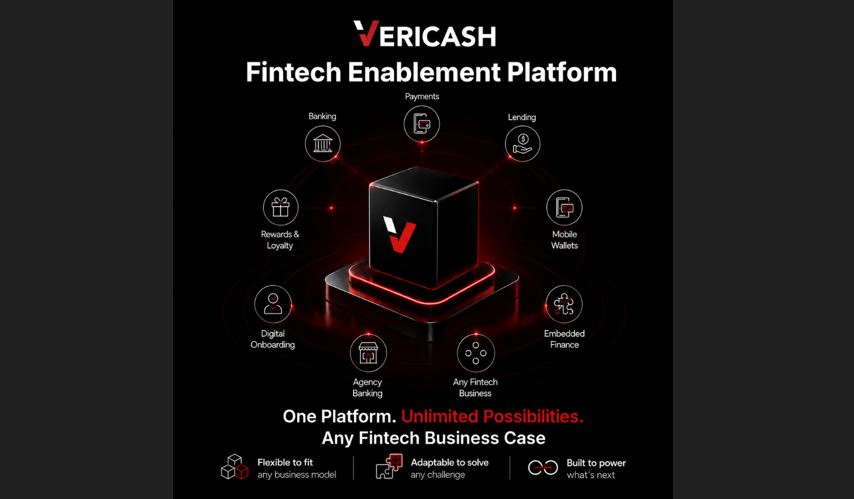
The cornerstone of the company’s performance is the VERICASH Fintech Enablement Platform, a centralized, integrated ecosystem designed to enable financial institutions to launch, operate, optimize, and continuously scale digital financial services through a single platform. Powered by an agile, low-code/no-code service builder, the platform allows commercial banks, digital banks, microfinance institutions, mobile money operators, and fintechs to rapidly deploy and evolve digital banking, agency banking, mobile wallets, payment ecosystems, lending, and other financial services while reducing complexity, accelerating time-to-market, and maximizing the value of existing infrastructure. Currently live in approximately 25 markets across Africa, the platform supports Tier 1 banks, digital banks, neobanks, and fintech operators with the technology, operational capabilities, and strategic enablement required to drive sustainable digital growth.

Global Business Outlook, in selecting CIT VERICASH for the 2026 award, pointed to the platform’s demonstrated ability to operate at institutional scale across fragmented regulatory environments, a challenge that continues to frustrate expansion-minded financial institutions across the continent.

Strategic Partnership That Goes beyond software delivery

To ensure sustainable, long-term client growth, CIT VERICASH anchors every deployment in a Strategic Partnership Model that extends far beyond traditional software delivery. Rather than acting as a technology vendor, CIT VERICASH operates as a long-term strategic partner, aligning technology, operational excellence, and business growth around shared success.

The partnership model combines a scalable fintech platform with dedicated Centres of Excellence, 24/7 operational monitoring, continuous platform optimization, development and customization capabilities, business intelligence and performance analytics, application quality support, and proactive fraud monitoring. Beyond technology operations, CIT VERICASH works alongside clients to evaluate business models, support licensing requirements, build operational teams, develop financial forecasts, and accelerate go-to-market execution for new digital service offerings.

Supported by a collaborative revenue-sharing model that aligns incentives between CIT VERICASH and its partners, this approach enables financial institutions to reduce technology risk, accelerate profitability, continuously evolve their digital capabilities, and unlock sustainable long-term growth.

This enterprise-grade approach has translated into critical long-term alliances. In East Africa, CIT VERICASH has formed a strategic alliance with Bluechip Technologies, combining the VERICASH platform with Bluechip’s localized market expertise to deliver agency banking, digital payments, and mobile wallets to banks, telcos, and fintechs. Further across the continent, a decade-long partnership with CWG PLC in West Africa that powers large-scale financial ecosystems.

A key differentiator shaping CIT VERICASH’s product direction is its approach to artificial intelligence. Rather than positioning machine learning as an optional layer, the company operates under a clear philosophy: “AI is not a feature. It is how the digital channel thinks, decides, and acts.” By embedding 360° AI-powered capabilities across retail, SME, and corporate banking, including personalized customer experiences, automated credit scoring, real-time transaction risk scoring, and proactive fraud prevention, the platform is built for the next generation of digital finance infrastructure, not the last.

A Pattern of Recognition

What distinguishes CIT VERICASH’s recent run of awards from standard industry noise is the consistency. Three industry recognitions in 2025, now followed by an international designation from Global Business Outlook in 2026, suggest a narrative that is beginning to cut through: a company that has spent years building infrastructure continues to be acknowledged because its clients are scaling profitable, inclusive digital services.

The timing is not incidental. Digital financial services adoption across sub-Saharan Africa accelerated sharply following the pandemic, and the institutions that emerged well-positioned were largely those that had invested in scalable ecosystems rather than attempting to build proprietary stacks. CIT VERICASH positioned itself on the right side of that structural shift.

Distributed by APO Group on behalf of CIT VERICASH.


Continue Reading

Business

Comsol enters wholesale 5G home broadband market with backing from new shareholders

Published

on

Comsol aims to blanket South Africa with around 2,000 base stations, representing one of the country’s largest standards-based and highest-capacity 5G networks

JOHANNESBURG, South Africa, August 20, 2026/APO Group/ —
  • New shareholder alignment funds the multibillion-rand buildout of a purpose-built 5G-Advanced fixed wireless access (FWA) network.
  • Wholesale model enables established ISPs, MVNOs, WISPs and new market entrants to access South Africa’s fastest-growing broadband category.
  • Network brings stable, high-speed home connectivity and greater consumer choice to a growing market across the nation, including underserved areas, starting in Gauteng.


Comsol (https://Comsol.co.za/), a South African fixed wireless connectivity and private network operator with a history spanning nearly three decades, is entering the home broadband market as a wholesale provider of 5G infrastructure. The move is backed by two new shareholders: Platform Investment Partners, which has made 10 founder-stage fibre investments across four geographies over the past decade, and Wimsey Capital, a privately held investment company.

The new shareholding follows the exit of Nedbank Private Equity, part of Nedbank CIB, from its investment in Comsol. Convergence Partners, a major shareholder and long-standing investor in the business, together with Solcon Capital, is investing additional growth capital. Founder and CEO Iain Stevenson (through Mactavish Investments) retains his stake and is also investing additional capital into the company. RMB arranged and provided an innovative and holistic funding solution that enabled the shareholder transaction and will support the business in its strategic capex roll-out plan.

The move gives South African internet service providers, mobile virtual network operators (MVNOs) and other potential partners access to a standalone 5G-Advanced* network purpose-built for fixed wireless access (FWA). Comsol owns and operates the network as an end-to-end wholesale product, while its partners control the customer relationship and go-to-market strategy, including branding, commercials and support.

One million households in Gauteng already covered

Comsol started building its network six months ago and already covers more than a million households in Gauteng. The company is targeting full coverage of Gauteng by March 2027. Expansion into the Western Cape, KwaZulu-Natal and major regional centres will follow in 2027 and 2028.

Comsol aims to blanket South Africa with around 2,000 base stations, representing one of the country’s largest standards-based and highest-capacity 5G networks. The network creates a new wholesale option for South African service providers, giving them more network capacity choice through new infrastructure, enhancing the competitive landscape to the benefit of the consumer.

“Comsol anticipates where the market is heading and builds ahead of demand,” said Stevenson. “This is why we were investing in licensed spectrum years before its strategic value was widely understood and building private 5G before the market had grasped what it would enable. We see 5G-Advanced for the home as a big growth opportunity.

“ICASA has allocated spectrum to network providers to expand broadband access and increase competition in the market. We believe the way to honour that mandate is to build wholesale infrastructure that extends high-speed broadband to new customer segments and creates a platform for more competition at the well-established service provider layer.”

Backed by investors with deep experience in telecom infrastructure

Comsol anticipates where the market is heading and builds ahead of demand

Shaun Clark, CEO of Platform Investment Partners, added: “We have spent years investing in the construction of open-access digital infrastructure in South Africa, and were founding investors in assets such as DFA, Conduct, Vumatel and N99. Our approach has always been to identify trends in technology adoption and invest behind them. We see fixed wireless as an important part of the connectivity market. Comsol is a natural fit with our portfolio of digital infrastructure businesses, which are all centred around a neutral host model.”

Richard Ladbrook, Director of Wimsey Capital, said: “We see a significant opportunity in 5G fixed wireless access to bring high-quality connectivity to more South African households. Comsol has a multi-decade track record of successfully building and delivering advanced wireless networks in diverse contexts. We are excited to back the business and partner with the world-class Comsol team as they build and scale this next phase of growth.”

Said Andile Ngcaba, executive chairman of Convergence Partners and chairman of the Comsol board: “Comsol is well positioned as the world transitions from 5G to 6G. The depth of its spectrum and nationwide network presence across all provinces creates a significant opportunity to serve South Africa’s enterprise, private and public sectors. Comsol’s platform is equally relevant to urban and rural markets, and to companies of all sizes.”

For Nedbank Private Equity this exit concludes a successful nine-year investment in Comsol. “We are proud to have supported the company’s growth, network rollout and value creation journey alongside management and our co-shareholders. The transaction positions Comsol strongly for its next phase of growth,” said Yougan Moodley of Nedbank Private Equity.

The commercial case for advanced home 5G

Comsol’s wholesale 5G-Advanced offering complements existing fibre networks, expanding consumer choice and the reach of home connectivity.  Approximately 15% of South African households are connected to fibre, largely concentrated in dense metro areas where trenching costs are justified. This leaves a significant market adjacent to suburban markets where 5G FWA can be deployed quickly and at a substantially lower cost. The 5G-Advanced FWA network deployed by Comsol provides high capacity to support home broadband at scale, enabling entire towns to be covered in weeks.

Regulatory and technology developments in recent years have further strengthened the commercial case for 5G-Advanced FWA home connectivity. Comsol received its C-band spectrum licence from ICASA in 2022, providing investors with the certainty to fund the network rollout. The allocated spectrum supports speed-tiered plans with competitive pricing for consumers. Meanwhile, declining 5G chipset and CPE costs have lowered the upfront cost for consumers and ISPs entering the 5G FWA market. As a new entrant into the 5G wholesale market, Comsol also benefits from a modern 5G-Advanced standalone core, unencumbered by legacy technologies.

These advantages of 5G FWA are expected to drive significant growth over the next five years. ICASA data shows FWA subscriptions growing by roughly 39% year on year in 2025.** BMIT predicts that 5G may account for up to 67% of all residential FWA connections by 2029, up from 35% in 2024.***

Built differently

Comsol’s network is one of only two production 5G standalone cores currently live in South Africa. The network offers a level of ultra-low latency and dedicated capacity control that hybrid 4G/5G deployments cannot match, along with roughly double the uplink performance of typical 5G mobile operator networks.

Comsol’s implementation of 5G-Advanced is IMT-conformant, taking advantage of standards-based technologies that deliver significantly greater capacity at a lower cost per bit. Comsol’s network is purpose-built to deliver high-capacity 5G home connectivity at scale.

Advantages for partners

Comsol operates as a wholesaler and does not compete with its consumer-facing partners. ISPs and other partners retain ownership of their go-to-market strategies, including product commercials, packaging, billing and branding. Comsol’s API-driven platform enables partners to bring a branded 5G-Advanced FWA offering to market in weeks, while retaining a high degree of control over their products and customer engagement.

Comsol has designed the network to enable ISPs to reach new customer segments with connectivity geared towards streaming, video calls and smart-home use that make up the bulk of home broadband needs. Its API-driven architecture gives partners the flexibility to build differentiated packages for different customer segments and implement or adapt products within hours, enabling them to respond quickly to changing market demand.

Distributed by APO Group on behalf of Comsol.


Continue Reading

Business

KoçSistem Leads Türkiye’s Information Technology (IT) System Integrator for the Eighth Consecutive Year as KoçDigital Wins Top Artificial Intelligence (AI) Award

Published

on

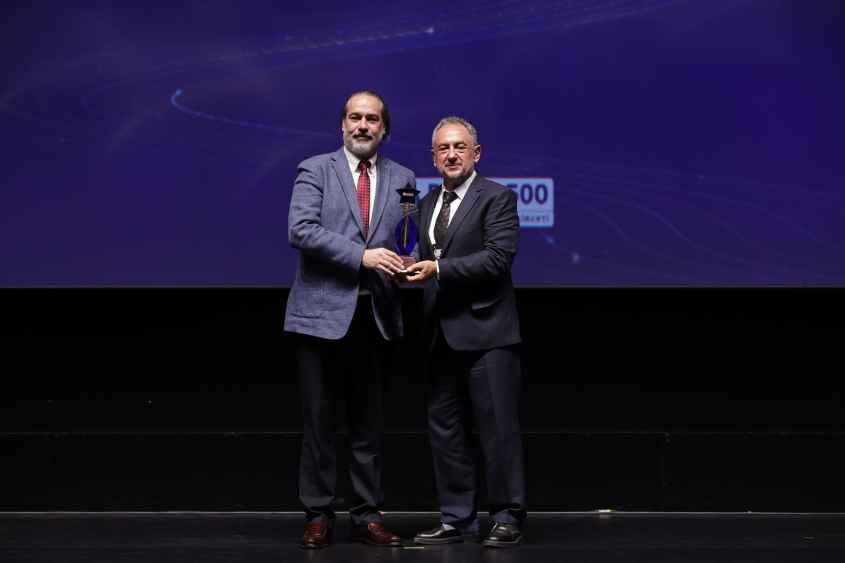
KoçSistem ranked first in ICT 500’s main system integrator category for an eighth consecutive year, while KoçSistem and KoçDigital recorded 10 category wins as KoçSistem expands its MENA operations through Dubai and Riyadh

ISTANBUL, Türkiye, August 9, 2026/APO Group/ –KoçSistem (www.KocSistem.com.tr), a Türkiye-based technology company, ranked first in the main Information Technology Systems Integrator and Business Partner category of the 27th ICT 500, the country’s most comprehensive ICT (information and communication technology) sector research.


The company announced that the eighth consecutive category lead, as well as 10 combined category wins for KoçSistem and KoçDigital, support its MENA growth through offices in Dubai and Riyadh.

“Securing this leadership for an eighth consecutive year in ICT 500 is a strong reference for our leadership position in Türkiye,” said Mehmet Ali Akarca, General Manager of KoçSistem. “It also supports our objective of growing in international markets. We are pleased to take the technology expertise and operational capabilities we developed over many years in Türkiye to the MENA region.”

Ten category wins across two companies

KoçSistem’s eight first-place results covered the main system integrator category and areas including consulting, cloud, hosting management, cybersecurity, managed services and data backup and storage hardware.

With over 80 years of experience, we aim to create long-term value for the region’s digital ecosystem

KoçDigital added two first-place results in data warehousing and business intelligence software, and artificial intelligence under the “Contribution to Türkiye’s Economy” category.

ICT 500 ranks Türkiyes largest ICT companies

ICT 500 is BThaber’s annual ranking of Türkiye’s 500 largest ICT companies by revenue, with additional tables covering operating categories. The latest edition assessed 2025 data and marked the study’s 27th year.

The research reported that the combined 2025 revenue of the 500 ranked companies reached TRY 1.6 trillion, up 40 per cent from 2024.

MENA growth through Dubai and Riyadh

KoçSistem opened offices in Dubai and Riyadh in 2024 and continues to develop its MENA business in AI, cloud, cybersecurity, data analytics and managed services.

The offices extend a regional initiative outlined at GITEX Dubai 2024, when KoçSistem described Dubai as a base for developing customer and partner relationships across the Gulf and wider MENA markets.

“With over 80 years of experience, we aim to create long-term value for the region’s digital ecosystem,” Akarca concluded.

Distributed by APO Group on behalf of KoçSistem.


Continue Reading

Trending

Exit mobile version