Connect with us
Anglostratits

Energy

Venezuela Energy Week 2026 to Define New Investment Pathways as Hydrocarbons and Power Sector Reforms Move into Implementation
Published

on

Etu Energias

Venezuela Energy Week will serve as a key platform for clarifying how international capital can re-enter the hydrocarbons and power sectors through evolving operational and financial structures

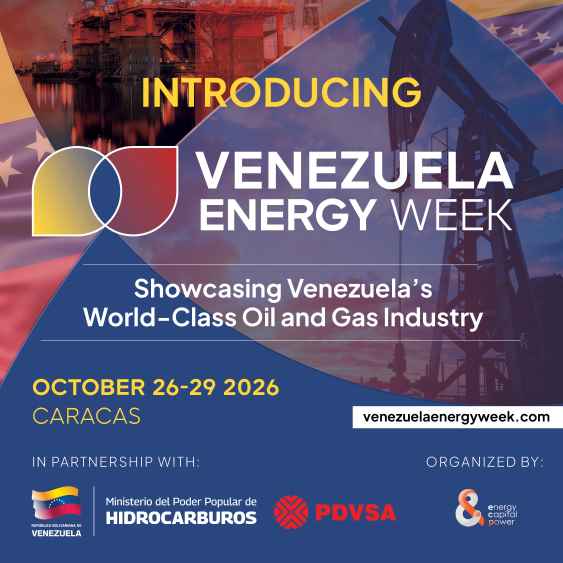
CARACAS, Venezuela, June 10, 2026/APO Group/ –Venezuela Energy Week (VEW) 2026 is set to become a focal point for how the country’s hydrocarbons reforms are translating from policy into practice, as government stakeholders, PDVSA and international operators work to define the practical routes for investment entry into the oil and gas sector. With reforms now moving into implementation, attention is shifting from regulatory design toward the mechanisms that will determine how participation is structured, financed and sustained.


Venezuela’s current framework is being operationalized through a limited set of established and negotiated channels, including participation in PDVSA joint ventures, crude-backed repayment structures and production-linked agreements tied to existing oilfields. International operators such as Chevron, for instance, remain active within existing joint venture structures, including Petropiar in the Orinoco Belt and Petroboscán in western Zulia, which continue to underpin production and export activity under PDVSA-led arrangements.

Alongside joint venture activity, crude-based repayment mechanisms are becoming an increasingly important financial pathway for foreign participation. These arrangements – including crude-for-debt structures and production-linked repayment agreements – allow international partners to recover value through physical oil cargoes or allocated output rather than conventional financial transfers.

Companies such as Repsol and Eni have operated within similar frameworks, where repayment structures effectively shape cash flow recovery, exposure management and the timing of capital return. However, these mechanisms continue to operate under constraints, including delayed settlements, non-standard payment schedules and ongoing uncertainty around contract enforcement, all of which continue to weigh on long-term reinvestment planning. VEW 2026 will help stakeholders assess how these frameworks can be refined to improve predictability, strengthen implementation and support more scalable and sustained investment participation.
Beyond hydrocarbons, Venezuela is beginning to open selective pathways in the power sector. Recent policy discussions and incremental reforms have pointed toward greater private participation in electricity generation, alongside early-stage efforts to improve operational efficiency across the grid and expand space for independent power producers. While still in a gradual phase of liberalization, these developments suggest an additional entry point for international and regional investors, particularly in generation, infrastructure rehabilitation and distributed energy solutions.

As reforms progress, VEW 2026 will serve as a key platform for aligning policy intent with operational realities, bringing together public and private stakeholders to assess how existing mechanisms are functioning in practice and where adjustments may be needed. Key issues such as payment timing, contractual enforcement and risk allocation remain central to the investment environment, shaping whether current frameworks can support scalable reinvestment or remain limited to sustaining baseline production. Beyond policy direction, the event will help clarify investment entry points and how capital can be deployed across both hydrocarbons and emerging power sector opportunities.

Distributed by APO Group on behalf of Energy Capital & Power.
Business

C&I Decision Clinic Invites South African Businesses to Put Energy Project Questions to Financiers and Municipal Experts

Published

on

The clinic invites businesses, developers and investors to bring these decisions to a panel drawn from development finance, commercial banking, local government and sustainability

JOHANNESBURG, South Africa, November 20, 2026/APO Group/ –What does a lender need to see before it will finance a commercial energy project? Who carries the risk under a power purchase agreement? And when should a business bring its municipality into discussions about wheeling electricity across the grid? These are among the questions the C&I Energy + Storage Summit (https://apo-opa.co/4AIW6QX) will address in its live C&I Decision Clinic – Ask the Experts webinar on Wednesday, 25 November 2026 at 14:00 SAST.


South Africa’s evolving electricity market is giving commercial and industrial (C&I) energy users more choices in how they procure power. For a business considering buying electricity from an independent generator; the purchase agreement, financing and grid connection are closely linked. A lender needs to understand the risks the buyer and developer have agreed to take on, while both parties need clarity on how the electricity will reach the site.

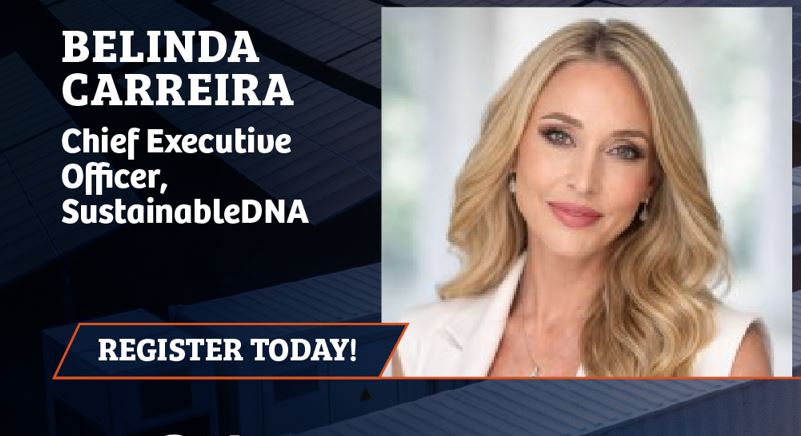
The clinic invites businesses, developers and investors to bring these decisions to a panel drawn from development finance, commercial banking, local government and sustainability. The panellists are Luyanda Matlala, Transaction Originator at the Development Bank of Southern Africa (DBSA), Belinda Carreira, Chief Executive Officer of SustainableDNA, Sameer Bagwandeen, Head of Energy & Infrastructure at Standard Bank, and Sello Mphaga, Divisional Head of City Sustainability at the City of Tshwane Metropolitan Municipality.

The discussion will examine what makes a project ready for financing, which commercial risks to address during power purchase agreement negotiations and how to approach municipalities about grid access and wheeling. The panel will also consider where public and private partners can work together to move projects forward and how climate policy affects businesses planning to reduce emissions.

Distributed by APO Group on behalf of VUKA Group.


Continue Reading

Business

Sierra Leone’s Petroleum Directorate Director General (DG) Joins Invest in African Energy (IAE) 2027 as Shell, Eni Evaluate Offshore Acreage

Published

on

Etu Energias

Sierra Leone has drawn two supermajors and a Nigerian independent within six months as frontier West Africa returns to exploration portfolios

PARIS, France, November 17, 2026/APO Group/ –Foday B. L. Mansaray, Director General of the Petroleum Directorate of Sierra Leone (PDSL), has been confirmed as a speaker at Invest in African Energy (IAE) 2027 in Paris. Sierra Leone has emerged as one of the frontier jurisdictions leading Africa’s renewed exploration cycle, and Mansaray’s participation brings one of West Africa’s most active upstream regulators to the forum as PDSL expands the pool of operators evaluating its acreage.


International oil companies are entering frontier basins like Sierra Leone’s through reconnaissance permits, which allow technical evaluation of existing data ahead of a licensing commitment. Eni secured a permit over five offshore blocks in the country in October 2025, and Shell followed at IAE 2026 with an agreement covering 19 blocks and approximately 20,594 km². African independents are also taking positions there, with Nigeria’s Marginal Energy committing more than $225 million to seismic and exploration drilling.

The objective is to ensure investors are not starting from zero

PDSL’s strategy is focused on lowering the risk profile for entry into the country’s offshore. The directorate has upgraded its subsurface data through the reprocessing of older 3D surveys and independent studies of the full basin, and has shortened the upstream approval process to approximately 30 to 40 days. “The objective is to ensure investors are not starting from zero,” Mansaray said at IAE 2026 in April.

IAE 2027 begins on May 11 with its inaugural Business-to-Government Day, a full day of programming built to place African governments and national oil companies directly before the investors, lenders and operators positioned to act on new opportunities. Licensing rounds and upstream farm-ins anchor the day’s agenda, giving regulators preparing new acreage a structured route to international capital.

Sierra Leone’s two agreements at IAE 2026 demonstrated the forum’s capacity to carry frontier licensing through to signature, and Mansaray’s confirmation places the country’s open acreage within the deal-origination program of IAE 2027.

Invest in African Energy (IAE) 2027 takes place May 11–13 in Paris. Organized by Energy Capital & Power, the event convenes African governments, international investors, DFIs, project developers and energy companies for three days of capital allocation, deal-making and government-to-business engagement. For more information, visit www.Invest-Africa-Energy.com. To sponsor or participate as a delegate, please contact sales@energycapitalpower.com.

Distributed by APO Group on behalf of Energy Capital & Power.


Continue Reading

Energy

Congo Energy & Investment Forum (CEIF) 2027 Opens Access to Energy Investment Opportunities Across CEMAC

Published

on

Etu Energias

With an established oil and gas industry, regional operator networks and APPO headquarters in Brazzaville, Congo is positioning CEIF 2027 as a platform to connect investors with regional energy opportunities

BRAZZAVILLE, Republic of the Congo, November 16, 2026/APO Group/ –Congo’s established hydrocarbons industry, regional infrastructure links and institutional presence give Brazzaville a strategic position from which to facilitate energy investment across the broader CEMAC region. One of Africa’s leading oil producers and the headquarters of the African Petroleum Producers’ Organization (APPO), the country is seeking to revive investment in mature fields, accelerate exploration while strengthening gas monetization. These ambitions are creating opportunities for regional trade, commercial partnerships and cross-border projects.


Building on these advantages, the Congo Energy & Investment Forum (CEIF) 2027, taking place June 1-3 in Brazzaville, will connect investors, operators and service providers with energy projects and commercial opportunities across CEMAC. The forum will provide a platform to engage regional decision-makers, establish partnerships and unlock investment across Central Africa’s energy sector.

Access Congo’s Established Oil and Gas Market

Congo’s crude oil production stood close to 300,000 barrels per day (bpd) in September 2026, with output expected to increase as companies operating in the country advance ambitious development programs.

Perenco has announced a $2 billion investment over five years, including the drilling of 100 wells, the deployment of a floating production vessel and a floating storage and offloading terminal, with the aim of reaching 100,000 bpd. TotalEnergies, meanwhile, plans to develop its Moho G discovery, estimated to hold 100 million barrels of resources, through a tie-back to existing offshore platforms.

On the gas front, Congo’s LNG export capacity reached three million tons per year in February 2026, following the launch of the second phase of Eni’s Congo LNG project. The country is also preparing to introduce a dedicated gas code aimed at strengthening the regulatory framework for investment in the sector. These developments create opportunities for investors, contractors and service providers, forming part of the investment pipeline at CEIF 2027.

Tap Into Regional Projects and Operator Networks

The regional opportunity extends beyond Congo’s domestic market. Gabon shares a border with Congo and follows a similar production trajectory, with output exceeding 207,000 bpd and Perenco advancing the $2 billion Cap Lopez FLNG project. Elsewhere in CEMAC, Equatorial Guinea, Cameroon and Chad offer opportunities across upstream development, gas monetization and energy infrastructure.

Geographic proximity and overlapping operator networks create opportunities for cross-border cooperation, knowledge transfer and the exchange of technical expertise. Several companies already operate across these markets: Perenco has activities in Congo, Gabon, Cameroon and Chad, while Trident Energy holds assets in Equatorial Guinea and Congo, including the Lianzi deepwater field, which spans the maritime border between Angola and Congo.

The region’s logistics infrastructure also creates opportunities for commercial integration. The Port of Pointe-Noire serves as a maritime gateway for the DRC’s mining sector and provides an important logistics corridor for landlocked Chad. For companies seeking to expand their Central African operations, CEIF 2027 will provide an opportunity to engage with established regional operators, identify local partners and explore projects across multiple CEMAC markets.

Engage Regional Energy Institutions and Decision-Makers

Founded in Lagos in 1987, APPO is headquartered in Brazzaville and brings together 18 member countries, giving Congo an institutional role within the continent’s hydrocarbons industry. The country’s influence within the organization was further reflected in 2025, when Congo’s Minister of Hydrocarbons presided over APPO. More recently, in July 2026, APPO signed a memorandum of understanding with the Gas Exporting Countries Forum at its headquarters in Brazzaville.

These institutional ties reinforce Congo’s position as a meeting point for regional energy stakeholders and provide a foundation for CEIF 2027’s role in facilitating investment partnerships across Central Africa. Taking place June 1–3 in Brazzaville, the forum will provide a platform for companies seeking to enter or expand across CEMAC to engage directly with industry stakeholders and explore opportunities in exploration, production, gas monetization and supporting infrastructure.

For more information and participation opportunities, visit www.CongoEnergyInvestment.com.

Distributed by APO Group on behalf of Energy Capital & Power.


Continue Reading

Trending