Connect with us
Anglostratits

Energy

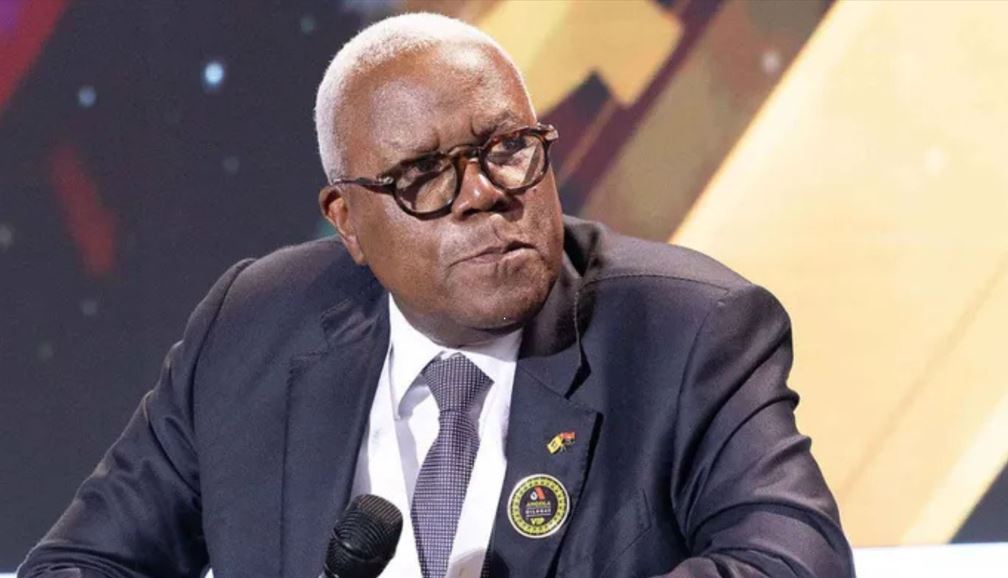
Sonangol’s Sebastião Gaspar Martins Joins Angola Oil & Gas (AOG) 2026 as Angola’s Hydrocarbon Strategy Takes Shape

Published

on

As Angola’s national oil company expands its position across upstream production, refining and infrastructure, Sonangol Chairman Sebastião Gaspar Martins will join AOG 2026 to discuss the company’s role in driving the country’s next phase of investment

LUANDA, Angola, August 11, 2026/APO Group/ –Sebastião Gaspar Martins, Chairman of the Board of Angola’s national oil company (NOC), Sonangol, will speak at the Angola Oil & Gas (AOG) 2026 Conference & Exhibition, taking place in Luanda on September 9-10, with a pre-conference day on September 8. Martins joins the conference as Sonangol advances a portfolio of strategic projects spanning deepwater production, refining and petroleum infrastructure, reinforcing the company’s central role in Angola’s efforts to sustain oil output while strengthening domestic fuel security.

Sonangol is expanding its upstream portfolio through partnerships with leading international operators. In June 2026, the company joined Azule Energy (operator), Equinor and national concessionaire ANPG in reaching a final investment decision on the $5.1 billion Greater PAJ development in Blocks 31 and 31/21. Angola’s first integrated development spanning two blocks, the project will develop an estimated 252 million barrels of reserves through a new FPSO capable of producing 95,000 barrels per day (bpd), with first oil targeted for 2029.

Alongside operator TotalEnergies and Petronas, Sonangol is also advancing the Kaminho project, the first deepwater development in the Kwanza Basin. The project will monetize resources from the Cameia and Golfinho fields through an FPSO with a production capacity of 70,000 bpd, with first oil planned for 2028. In Angola’s shallow waters, Sonangol is leading an infill drilling campaign at Blocks 3/05 and 3/05A. Drilling of the Pacassa SW well is underway, with the Impala-2 development well scheduled to spud shortly thereafter.

Onshore, Sonangol is advancing exploration activities across several blocks. The company operates Blocks KON 11, 12 and 15 in the Kwanza Basin and holds interests in acreage in the Lower Congo Basin. In June 2026, its exploration and production strategy received a significant boost through a $2.65 billion financing package arranged by a syndicate of international lenders.

Sonangol is also playing a leading role in Angola’s downstream expansion. The first phase of the Cabinda Refinery was inaugurated in September 2025, marking an important step toward reducing the country’s dependence on imported petroleum products. The refinery has a planned processing capacity of 60,000 bpd, with Sonangol holding a 10% stake. Attention is also turning to the Lobito Refinery, where the company is engaging international financiers to close a $4.8 billion funding gap. Once completed, the 200,000-bpd facility will be Angola’s largest refinery, with its first phase scheduled to come online in 2027.

Against this backdrop, Martins’ participation at AOG 2026 comes as Sonangol accelerates investment across the upstream and downstream value chain. His participation will provide delegates with insight into the company’s strategic priorities while highlighting opportunities for collaboration with international operators, investors and financiers supporting Angola’s next phase of energy development.

Distributed by APO Group on behalf of Energy Capital & Power.

Business

5 Investment Opportunities Putting Congo Energy & Investment Forum (CEIF) 2027 on the Map for Central Africa

Published

on

CEIF 2027 connects investors with Congo’s energy projects and local partners, while providing entry points for commercial opportunities across Central Africa

BRAZZAVILLE, Republic of the Congo, November 2, 2026/APO Group/ –The Republic of Congo’s expanding oil and gas developments are creating new opportunities for investment, engineering contracts and commercial partnerships across the energy value chain. With offshore discoveries, mature-field redevelopment and three million tons per year of LNG capacity, the country is entering a new phase of energy development that requires capital, technology and international partnerships.


The Congo Energy & Investment Forum (CEIF) 2027, taking place June 1-3 in Brazzaville, will serve as the official platform connecting Central African energy decision-makers, operators, investors and service companies. Organized by Energy Capital & Power in collaboration with the Ministry of Hydrocarbons, the forum will bring together public- and private-sector stakeholders to advance investment discussions, facilitate partnerships and connect companies with emerging opportunities across the region.

Connect With Central Africa’s Energy Decision-Makers

CEIF 2027 will provide a platform to engage directly with Congolese authorities, regulators, national energy companies and policymakers shaping the region’s energy investment landscape. Taking place in partnership with the Ministry of Hydrocarbons, the event offers a bridge between the country’s policymakers and public- and private-sector companies. Conversations with decision-makers can help investors understand national development priorities, gain insight into the regulatory environment and identify opportunities for market entry or expansion.

Capitalize on Congo’s Upstream Investment and Production Ambitions

As Congo targets production growth toward 500,000 barrels per day, operators are pursuing new exploration and mature-field redevelopment to increase output. TotalEnergies’ 2026 Moho G discovery could unlock an estimated 100 million barrels of recoverable resources alongside the existing Moho F development, illustrating the potential to connect new discoveries to established offshore infrastructure. Meanwhile, Perenco and Trident Energy are pursuing development and redevelopment opportunities across mature assets, including well reactivation and infrastructure upgrades.

These activities could create opportunities for drilling contractors, engineering firms and production technology providers. CEIF 2027 offers a platform to explore project requirements and investment opportunities across Congo’s upstream sector.

Unlock Opportunities Across LNG, Gas and Power Infrastructure

With LNG exports established and liquefaction capacity reaching three million tons per year in 2026, Congo is looking towards its next phase of gas development. This will depend on sustaining feedgas supplies, connecting additional resources and expanding infrastructure.

Beyond LNG, Congo’s plans to expand electricity generation and improve transmission and distribution infrastructure present opportunities for power developers, equipment suppliers and investors. These priorities create potential opportunities for upstream operators, engineering companies, technology providers and investors interested in gas processing, power generation and distribution. CEIF provides a platform to advance these priorities.

Showcase Solutions and Build Commercial Partnerships at the Exhibition

The CEIF 2027 exhibition will provide a platform for companies to showcase their technologies, equipment and services directly to energy operators, policymakers, investors and potential clients across Central Africa.

Exhibitors will have opportunities to demonstrate solutions, engage with local service providers and identify potential partnerships across drilling, engineering, infrastructure and energy technology. For companies seeking to enter or expand in the region, the exhibition offers a direct route to building commercial relationships, exploring procurement opportunities and positioning their services for upcoming projects.

Access New Projects and Financing Opportunities

Turning project opportunities into investments requires clarity on development priorities, infrastructure requirements and financing structures. CEIF’s discussions will give participants an opportunity to assess the projects shaping Congo’s energy sector and engage with potential commercial and institutional counterparts.

Investors, lenders and project developers can use these exchanges to identify areas where financing, technical expertise or new investment structures may help advance projects across oil and gas, power generation and downstream industries.

Organized by Energy Capital & Power in collaboration with the Ministry of Hydrocarbons, CEIF 2027 will enable candid dialogue, facilitating new investments and deals in the country’s energy sector. For more information, visit www.congoenergyinvestment.com.

Distributed by APO Group on behalf of Energy Capital & Power.


Continue Reading

Energy

Energy costs, storage value and industrial competitiveness led Day 2 of C&I Energy + Storage Summit

Published

on

Energy

Energy security, industrial competitiveness and infrastructure readiness emerged as closely connected priorities, with discussions highlighting what businesses need to turn investment plans into operational gains

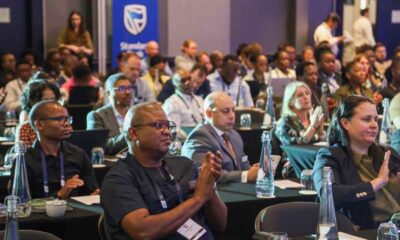
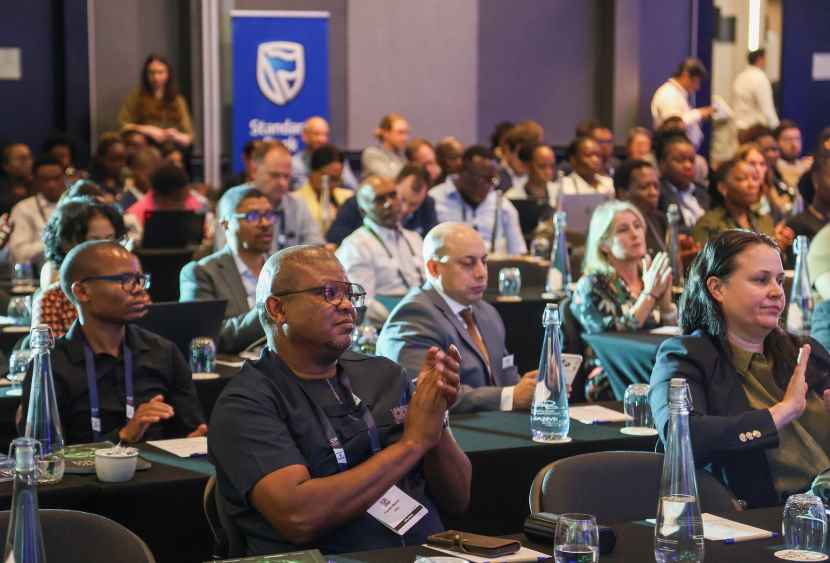
JOHANNESBURG, South Africa, November 2, 2026/APO Group/ –How can South African businesses turn energy investment into lower operating costs, stronger resilience and long-term competitiveness? This question drove the second day of VUKA Group’s (https://WeAreVUKA.com/) C&I Energy + Storage Summit in Johannesburg, with discussions examining the commercial value of storage, industrial energy strategies and the infrastructure needed to support Africa’s growing digital economy.


The programme brought together business leaders, energy specialists, financiers and public-sector representatives to address practical decisions facing commercial and industrial users, alongside the EIUG Conference, Water Security Africa and Data Centre Summit.

Energy security, industrial competitiveness and infrastructure readiness emerged as closely connected priorities, with discussions highlighting what businesses need to turn investment plans into operational gains.

Energy storage featured prominently, with panellists examining how tariff optimisation, peak shaving and renewable energy integration can strengthen its value beyond backup power. The investment case, however, needs to account for battery degradation, warranties and operational risk.

Addressing the attendees, Junaid Munshi, Group Executive: Distribution for Eskom told the audience: “For an industrial business, solar and storage can improve the energy cost position. But the opportunity extends beyond the customer’s electricity bill. Where network capacity is constrained, coordinated battery use may relieve pressure on the infrastructure serving that business and, where proven technically dependable, could defer or reduce grid investment. The asset behind your meter can therefore also become a resource beyond it.”

The asset behind your meter can therefore also become a resource beyond it

The EIUG session “Industrialisation under threat?” put changing electricity consumption under scrutiny, asking whether lower demand reflected efficiency gains or weakening industrial output. Tariffs, investment conditions and industrial growth remained central to the discussion, highlighting the need to assess energy trends against the health of the wider economy.

At the Data Centre Summit, Africa’s AI ambitions brought power availability and infrastructure readiness into focus. Discussions on grid access, wheeling and network investment highlighted the importance of planning digital growth alongside the electricity infrastructure needed to sustain it.

For businesses developing energy projects, public-private engagement sessions explored infrastructure co-investment, municipal coordination and workable wheeling agreements.

Water Security Africa reinforced the wider resource-security challenge through industrial resilience case studies, digital water technologies and lessons from case studies.

Across the discussions, the practical message was consistent: competitive businesses need more than access to technology and capital. They also need reliable infrastructure, workable commercial arrangements and coordinated delivery.

The afternoon programme translated these themes into business decisions. “The C&I energy playbook” drew together insights from across the summit, while the closing “decision clinic” addressed real project challenges, from choosing between onsite solar and wheeled power to sizing batteries and preparing projects for financing. Experts from DBSA, Standard Bank, SustainableDNA and the City of Tshwane contributed practical guidance.

Download the programme to review the full Day 2 agenda and participating speakers: https://apo-opa.co/4eEKq9a

Distributed by APO Group on behalf of VUKA Group.


Continue Reading

Business

Venezuela’s Revised Hydrocarbons Law Ties Investor Terms to Asset Type

Published

on

Etu Energias

New contract models and tiered fiscal rates give companies several routes into Venezuela, each matched to a different class of upstream asset

CARACAS, Venezuela, October 28, 2026/APO Group/ –Venezuela’s amended Organic Hydrocarbons Law has opened several distinct routes into the country’s oil and gas sector, each suited to a different type of asset and a different appetite for operational control. Heavy-oil acreage in the Orinoco Belt, mature onshore fields, offshore gas and refining are all available to international capital, and Venezuela Energy Week (VEW) 2027 will bring the companies weighing those options to Caracas to negotiate directly with PDVSA and the Ministry of Hydrocarbons.


The government made its pitch in Cape Town, South Africa last week, where Vice Minister of Commercial Policy Ricardo Gomez presented 303 billion barrels of proven oil reserves and 193 trillion cubic feet of natural gas at the Venezuela Global Investment Forum during African Energy Week (AEW) 2026. “The opportunities extend from upstream projects to downstream and refining,” he said, as PDVSA works toward its target of 105 definitive oil contracts by year-end.

Participation Contracts

The most direct route is the hydrocarbon productive participation contract (CPPH). Under it, a Venezuela-domiciled company operates a designated area at its own cost and risk for 25 years. With ministry approval, it can also market its share of production. Eni moved its Junín-5 heavy-oil field onto the model in September. The Italian company left its minority joint venture position to become exclusive operator of an asset holding 35 billion barrels of certified oil in place.

Joint Ventures

Companies preferring a partnership can enter a restructured joint venture with PDVSA. The state company keeps majority ownership, but can now hand operational management and marketing rights to its international partners. Mature fields are open through either structure, and their existing wells and infrastructure offer a quicker path to revenue. GeoPark took the contract route at the Bare field – a heavy-oil asset in the Orinoco Belt – under a 25-year agreement. It plans to reactivate up to 1,100 wells and lift output to around 90,000 barrels per day (bpd) by 2038.

Infrastructure Contracts

Venezuela is seeing a lot of interest as a result of aggressive fiscal and regulatory changes that are making the country more attractive

Direct ministerial contracts and strategic alliances cover oilfield services and infrastructure. Projects on offer include pipeline rehabilitation, export terminals and refinery upgrades. Domestic refineries currently process 350,000 bpd, and PDVSA aims to raise throughput to as much as 600,000 bpd in 2027.

Offshore Gas Follows Its Own Licensing Track

Offshore gas is awarded through a separate licensing process. bp, a Gold Sponsor of VEW 2027, operates the second phase of the cross-border Loran field. It holds the license in equal shares with Abu Dhabi’s XRG and Qatar’s UCC Oil and Gas Holding.

Tiered Fiscal Terms Support Investment Across the Value Chain

Each route to investment sits within a revised fiscal regime. Regulations published in July cap royalties at 30% and the integrated hydrocarbons tax at 15%, with combined rates of 20% for greenfield projects, 25% for extra-heavy oil, 30% for non-producing brownfields and 35% for producing brownfields. Qualifying offshore projects and developments incorporating upgrading or refining infrastructure may receive reductions of up to five percentage points.

“Venezuela is seeing a lot of interest as a result of aggressive fiscal and regulatory changes that are making the country more attractive,” Scott Gilbert, Non-Executive Chairman of Apertura Energy, told the AEW forum.

Companies entering through a CPPH will need a locally incorporated entity, and securing marketing authorization early gives operators greater control over revenue. U.S. companies also structure contracts around the conditions attached to Treasury general licenses, which govern how payments and contract law are handled in deals with PDVSA.

VEW 2027 will put those terms on the table in Caracas, with the Ministry of Hydrocarbons and PDVSA, both patrons of the event, meeting investors across two conference days and a day of site visits. By February, PDVSA’s year-end contracting drive is expected to have produced additional agreements, giving investors a clearer picture of how the revised contractual and fiscal frameworks are being applied in practice.

VEW 2027 takes place February 22–25 at the Simon Bolivar Convention Center in Caracas. Organized by Energy Capital & Power and taking place under the patronage of Acting President Delcy Rodríguez, PDVSA and the Ministry of Hydrocarbons, VEW is the country’s flagship oil and gas investment platform. To register or learn more about sponsorship and speaking opportunities, visit www.VenezuelaEnergyWeek.com.

Distributed by APO Group on behalf of Energy Capital & Power.


Continue Reading

Trending