Connect with us
Anglostratits

Energy

Guyana’s Local Content Push Gains Momentum Ahead of Caribbean Energy Week (CEW) 2027 Launch in Georgetown

Published

on

Etu Energias

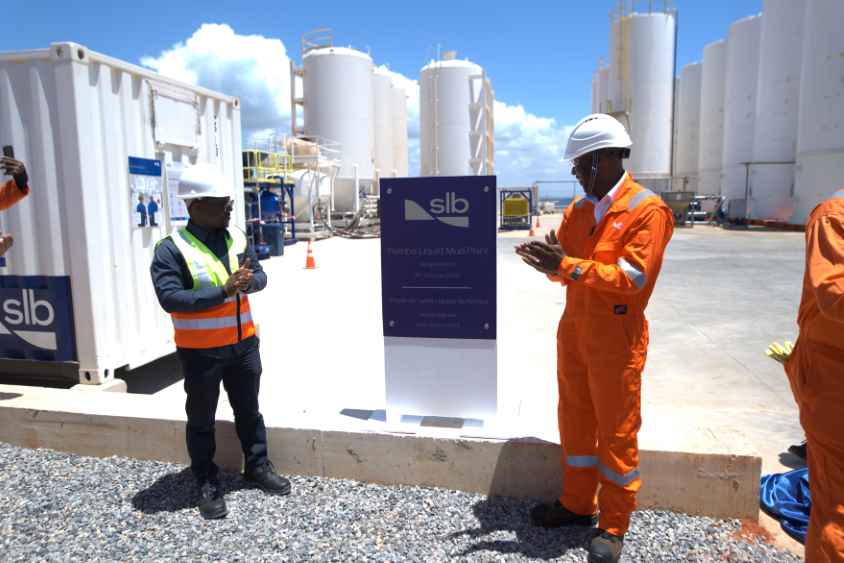
Momentum continues to build following the Government of Guyana’s approval of 2026 Local Content Plans for more than 40 operators, contractors and subcontractors, including ExxonMobil Guyana, CNOOC Petroleum Guyana, MODEC and SLB

GEORGETOWN, Guyana, August 11, 2026/APO Group/ —Guyana’s rapidly expanding oil and gas industry is entering a new phase, with local content emerging as a central pillar of long-term sector development. As the country advances toward production targets of 1.3 million barrels per day by 2027 and 1.7 million barrels per day by 2030, strengthening domestic supply chains, workforce capabilities and local procurement is becoming increasingly important to sustaining growth across the energy value chain.

These themes will take center stage at the Caribbean Energy Week (CEW) 2027 In-Country Launch, taking place in Georgetown on September 1, where government officials, operators, investors and service providers will examine how Guyana’s local content strategy is creating new commercial opportunities while supporting the country’s expanding offshore development pipeline.

Momentum continues to build following the Government of Guyana’s approval of 2026 Local Content Plans for more than 40 operators, contractors and subcontractors, including ExxonMobil Guyana, CNOOC Petroleum Guyana, MODEC and SLB. Approved under the country’s Local Content Act, the plans reinforce collaboration between government and industry to expand local procurement, employment and skills development as Guyana enters its next phase of upstream growth.

The approvals come as Guyana advances a new wave of offshore developments beyond the original Stabroek discoveries. Projects including Uaru, Whiptail, Hammerhead and Longtail are expected to underpin production growth through the end of the decade, creating sustained demand for local engineering, fabrication, logistics, marine services and technical expertise. By embedding Guyanese participation across these projects, the country’s local content framework is helping build the workforce and supplier base needed to support one of the world’s fastest-growing petroleum sectors.

The strategy is already delivering measurable results. According to the Ministry of Natural Resources, more than 1,200 Guyanese businesses now participate in the petroleum sector, while over 7,000 Guyanese have received industry training. Since the Local Content Act came into force in December 2021, more than $2 billion in procurement opportunities have been awarded to local companies. ExxonMobil Guyana also reports that 68% of its workforce is Guyanese, including approximately 1,800 offshore personnel, highlighting the growing role of local talent in supporting large-scale offshore operations.

Alongside supplier development, Guyana is investing heavily in workforce training. The opening of the Guyana Technical Training College in February 2026 marked another milestone in building internationally certified expertise in deepwater drilling, offshore operations and petroleum services. Meanwhile, continued investment in the University of Guyana and the Government Technical Institute is helping develop the engineers, technicians and skilled professionals required to support future growth across the energy sector.

These developments come as exploration activity expands beyond the Stabroek Block, with companies including Eco Atlantic, CGX Energy, Frontera Energy, Occidental, Ratio Guyana and Cataleya Energy advancing exploration programs that could further broaden Guyana’s upstream investment pipeline.

As the first official milestone on the road to CEW 2027, the Georgetown launch will bring together government leaders, operators, investors and service providers to highlight Guyana’s evolving energy landscape and build momentum toward the region’s premier energy gathering.

To register for the Caribbean Energy Week 2027 In-Country Launch in Georgetown on September 1, 2026, visit: https://apo-opa.co/4i0YaNR


Distributed by APO Group on behalf of Energy Capital & Power.

Business

South Africa’s Government-Business Partnership Opens New Mining Investment Opportunities Ahead of African Mining Week (AMW) 2026

Published

on

Etu Energias

African Mining Week 2026 will connect key decision-makers across South Africa’s mining sector with global investors to forge new and strengthen existing public-private investment partnerships

CAPE TOWN, South Africa, September 1, 2026/APO Group/ —South Africa is stepping up efforts to attract investment into its mining sector, with President Cyril Ramaphosa launching Phase 3 of the Government-Business Partnership, a public-private initiative designed to accelerate economic growth, investment and job creation. Mining has been identified as a key pillar of the new phase, alongside energy, transport and logistics, tourism, infrastructure and agriculture.


The initiative targets GDP growth of more than 3% and the creation of one million additional jobs by 2030, with the mining sector positioned to play a central role in achieving those objectives.


Within mining, Phase 3 targets R50 billion in capital expenditure by February 2028 and the rollout of South Africa’s national mining cadastre system by March 2027. The digital platform is expected to streamline mining-rights applications and help address administrative and project-implementation bottlenecks, supporting efforts to attract new investment and improve the sector’s contribution to economic growth.


Mining currently contributes approximately 6% of South Africa’s GDP and supports around 470,000 direct jobs, with each mining job supporting an estimated five to 10 dependents. The urgency of accelerating investment was underscored by President Ramaphosa, who said the country’s current growth rate remains insufficient to meaningfully expand employment, with 8.5 million people unemployed and roughly 300,000 new job-seekers entering the labor force each year.


Phase 3 forms part of a broader national ambition to mobilize R2 trillion over the next five years to unlock South Africa’s critical minerals potential. The country holds approximately 80% of the world’s platinum group metals and ranks as the world’s largest producer of chrome and manganese, creating significant opportunities for investors across exploration, mining, processing and related infrastructure. South Africa is also seeking to unlock an estimated R40 trillion in iron ore potential, further expanding the pipeline of opportunities for international and domestic capital.


Against this backdrop, African Mining Week (AMW) 2026 – the Most Influential Mining Conference in Africa – will bring together global investors, financiers, mining companies and government decision-makers in Cape Town from October 14–16. The event comes at a critical juncture as South Africa seeks to translate its vast mineral endowment into new investment, production, infrastructure and jobs while improving the regulatory environment needed to support long-term project development.


AMW 2026 will feature senior figures from across South Africa’s mining and investment ecosystem, including Deputy Minister of Planning, Monitoring and Evaluation Seiso Joel Mohai, Rand Refinery CEO Dean Subramanian, Transnet Freight Rail CEO Russell Baatjies, Gold Fields Executive Vice President: South Africa Benford Mokoatle, Minerals Council of South Africa CEO Mzila Mthenjane, Standard Bank Managing Principal and Coverage Head for Resources & Energy Shirley Webber, and Executive Head for Energy, Infrastructure and Mining, Business and Commercial Banking Deerosh Maharaj, among other industry leaders.


Through high-level discussions, project showcases and networking sessions, AMW 2026 will examine South Africa’s evolving regulatory environment, expanding project pipeline and investment opportunities across the mining value chain. The conference will provide a platform for investors and industry stakeholders to explore how public-private partnerships, domestic capital and international investment can accelerate the next phase of South Africa’s mining growth.


Distributed by APO Group on behalf of Energy Capital & Power.


Continue Reading

Energy

How Guyana’s Expanding Oil Sector Is Driving Historic Gross Domestic Product (GDP) Growth and Local Investment

Published

on

Etu Energias

Ahead of Caribbean Energy Week 2027, a launch event in Georgetown on September 1, 2026, will explore Guyana’s ambitious economic growth targets and the role of the oil and gas industry in driving GDP expansion

GEORGETOWN, Guyana, August 27, 2026/APO Group/ –Guyana’s projected 16.2% GDP growth in 2026, underpinned by an anticipated 17.9% rise in oil production and $2.79 billion in oil revenues, underscores how is the oil and gas sector is transforming the economy. 


Higher Oil Production Targets Drive Guyana’s Economic Expansion

With oil output expected to average 840,000 barrels per day (bpd) in 2026, with 309 crude cargoes forecast for export compared with 260 cargoes in 2025, the sector’s contribution to GDP is expected to remain bullish.

The government is targeting crude oil production of 1.3 million bpd by 2027 and 1.7 million bpd by 2030, creating the foundation for higher export earnings, stronger fiscal revenues and continued GDP expansion. Upcoming developments, including the $12.7 billion Uaru project, Whiptail, Hammerhead and Longtail, are expected to significantly increase production, and expand the sector’s contribution to an anticipated to reach GDP of between $50 billion and $69 billion by 2030.

Oil Investment Creates Opportunities Beyond Production

The sector’s contribution extends well beyond crude exports, with projects development accelerating the growth of a broader domestic economy as capital flows into construction, logistics, engineering, manufacturing, transport and financial services. The sector spent an estimated $3.6 billion with local businesses between 2019 – when first oil production was achieved – and 2025, reflecting the success of Guyana’s local content framework in ensuring that petroleum development generates tangible economic benefits for domestic companies and communities.

The petroleum sector has been the primary driver of Guyana’s exceptional economic performance. Oil production supported GDP growth of 63.3% in 2022, 33.8% in 2023, 43.6% in 2024 and 10.3% in 2025. According to the International Monetary Fund, offshore oil development has enabled Guyana’s economy to significantly outperform regional peers while accelerating its transition toward high-income economy status. The sector has also transformed the country’s fiscal position, with the Natural Resource Fund exceeding $3.1 billion by the end of 2024, including more than $1.1 billion deposited during 2024 alone, providing the government with unprecedented resources to finance national development priorities.

Oil Wealth Funds Infrastructure and Social Development

Oil revenues are also becoming a key source of financing for Guyana’s national development agenda. The government plans to utilize petroleum revenues to construct 40,000 homes over the next five years, while simultaneously investing in critical infrastructure, healthcare, education and transportation. In the energy sector alone, oil revenues are funding flagship initiatives such as the 300 MW Gas-to-Energy project, transmission network upgrades and clean cooking solutions, supporting energy mix diversification, improving electricity affordability and strengthening grid reliability.

As production continues to grow and new offshore projects enter development, oil and gas will play an increasingly important role in shaping Guyana’s economic future. Beyond generating export revenues and fiscal income, the sector is strengthening local industries, attracting international capital, supporting infrastructure development and creating opportunities across manufacturing, construction, finance and technology.

Caribbean Energy Week 2027 to Spotlight Guyana’s Growth Story

The role of oil and gas in driving GDP growth, investment and economic transformation will be a central focus at Caribbean Energy Week 2027, held under the theme “Unlocking the Caribbean Energy Corridor: Oil, Gas, LNG & Investment for a New Global Hub.” Bringing together governments and international partners, the conference will examine how Guyana and the wider Caribbean can maximize hydrocarbon revenues to unlock the next phase of regional economic growth.

Ahead of the conference, an in-country launch in Guyana on 1, September 2026 at the Guyana Marriott Hotel in Georgetown, will explore strategies driving the Caribbean’s emergence as one of the world’s fastest-growing energy markets. The event will bring together government officials, investors, operators and industry stakeholders for an early look at the opportunities, priorities and partnerships that will shape the region’s energy future. To register, please visit https://apo-opa.co/46phc9L.

Distributed by APO Group on behalf of Energy Capital & Power.


Continue Reading

Energy

Halliburton Repositions for Venezuela’s Upstream Revival at Venezuela Energy Week 2027

Published

on

Etu Energias

Halliburton will join Venezuela Energy Week as a Platinum Sponsor as international operators accelerate efforts to restore production, reactivate drilling capacity and rebuild the oilfield services ecosystem

CARACAS, Venezuela, August 27, 2026/APO Group/ –Halliburton has joined Venezuela Energy Week 2027 as a Platinum Sponsor, bringing one of the world’s leading oilfield services companies into a market where international operators are moving to restore production and expand upstream activity. Taking place February 22–25 in Caracas, Venezuela Energy Week comes as a new investment cycle is creating fresh demand for drilling, well services, reservoir evaluation and production technologies.


Halliburton has already begun repositioning its Venezuelan operations for the changing market. In April, Chairman, President and CEO Jeff Miller said the company was discussing commercial terms with customers and had visited its Venezuelan facilities, which he said were in better condition than expected. In July, Venezuela’s Supreme Court ordered the restart of Halliburton’s operations and the return of previously seized assets, removing a significant legal obstacle to the company’s reactivation. Halliburton has since posted new positions in Venezuela, including roles in Maturín covering logging and perforating maintenance and supply-chain procurement, as well as a technical sales position in Zulia.

The timing reflects growing demand for oilfield services as Venezuela moves to reactivate mature fields, expand drilling and bring new investment into production. Halliburton’s capabilities span the full well lifecycle, including drilling, formation evaluation, well construction, completion and production, with services such as well intervention, cementing and stimulation increasingly important as operators work to restore aging wells and infrastructure. As new investment moves from agreements into field activity, Halliburton is positioned to provide the technical expertise and equipment required to translate Venezuela’s resource potential into additional production.

The investment environment is also changing. Venezuela’s January 2026 reform of the Organic Hydrocarbons Law opened new avenues for private participation in primary hydrocarbons activities, including operating and production contracts under which private companies can assume technical, operational and financial management. Subsequent regulations issued in July established the framework for royalties and the integrated hydrocarbons tax, while oil companies have been working to migrate existing agreements into the new regime.

This evolving framework is creating an increasingly important role for international oilfield service companies capable of supplying technology, equipment and technical expertise at scale. Halliburton’s renewed engagement comes as Venezuela moves from regulatory reform and investment agreements toward the practical work of drilling wells, restoring production and expanding field capacity.

At Venezuela Energy Week 2027, Halliburton will bring its renewed Venezuelan presence into discussions on the practical requirements of production growth, from drilling and well construction to completion and intervention. Its Platinum Sponsorship will place the company at the center of conversations around how Venezuela can rebuild oilfield capacity and translate new investment into additional barrels.

Distributed by APO Group on behalf of Energy Capital & Power.


Continue Reading

Trending