Connect with us
Anglostratits

Business

Thailand Secures $43.6bn 1H 2026 Investment Surge as Big Tech Accelerates Southeast Asia AI Infrastructure Push

Published

on

Thailand

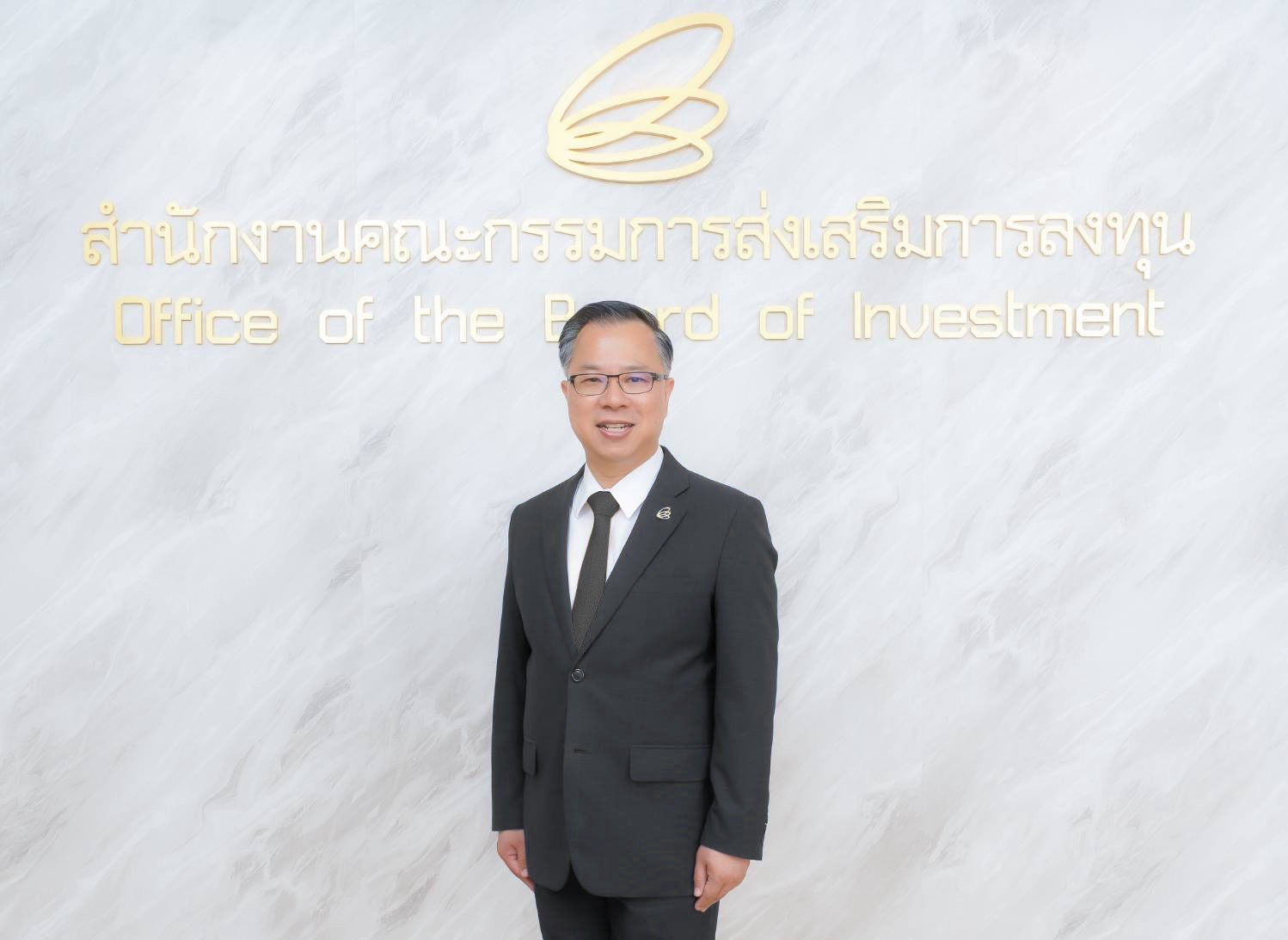
BANGKOK, THAILAND – Media OutReach Newswire – 23 July 2026 – Thailand’s foreign and domestic investment applications surged 37% year-on-year to hit $43.6 billion (approx. 1.47 trillion baht) across 1,299 projects in the first half of 2026, driven by a massive wave of capital flowing into digital infrastructure and artificial intelligence (AI) data centers.

The surge comes even as the global economy faces real headwinds — geopolitical tensions, energy price volatility, and the restructuring of global supply chains — with Thailand emerging as a preferred base for investment across Southeast Asia.
Leading the capital influx is the digital sector, which reached a commanding $33 billion (approx. 1.12 trillion baht) in investment applications.

“Thailand’s investment growth held steady even as the world economy faced real turbulence,” said Mr. Narit Therdsteerasukdi, Secretary General of the Thailand Board of Investment (BOI). “This reflects strong investor confidence in Thailand’s potential as a base for the industries of the future.”

This digital windfall was accompanied by robust capital commitments across other high-value industries. The electrical appliances and electronics sector drew $3.56 billion (approx. 120.2 billion baht) across 179 projects, while agriculture and food processing secured $1.82 billion (approx. 61.4 billion baht) across 131 projects. Additionally, logistics and high-value services attracted $1.19 billion (approx. 40.2 billion baht) across 170 projects, and the automotive sector drew $759.2 million (approx. 25.7 billion baht) across 122 projects.

Other notable sectors included mining, metals and materials at $603.5 million (approx. 20.4 billion baht) across 128 projects, chemicals and petrochemicals at $489.1 million (approx. 16.5 billion baht) across 110 projects, and machinery, automation and robotics at $387.4 million (approx. 13.1 billion baht) across 82 projects, signaling broad-based industrial modernization.

Foreign Direct Investment (FDI) applications drove the bulk of the growth, skyrocketing 80% year-on-year to $40.5 billion (approx. 1.37 trillion baht) across 877 projects.

Singapore emerged as the top source of FDI, filing applications worth $33.2 billion (approx. 1.12 trillion baht) across 158 projects. The United Kingdom followed as the second-largest investor at $1.40 billion (approx. 47.2 billion baht) across 11 projects, with China close behind at $1.35 billion (approx. 45.8 billion baht) across 321 projects, Taiwan at $1.12 billion (approx. 38.0 billion baht) across 47 projects, and Japan at $970.1 million (approx. 32.8 billion baht) across 123 projects.

These investments remain heavily concentrated in digital technology — including data centers, data hosting, and cloud services — followed by electronics and electrical appliances such as optical transceivers, printed circuit boards, hard disk drives, and data-center networking and cooling systems, along with humanoid robotics parts, automotive parts, food and beverage, and advanced materials. Geographically, Thailand’s industrialized Central region claimed the largest share of capital at $26.7 billion (approx. 903.8 billion baht) across 513 projects, followed by the Eastern region at $14.7 billion (approx. 495.7 billion baht). The Northeastern, Southern, Western, and Northern regions each drew smaller totals, but the North stood out with investment value up 93 percent year-on-year, led by energy and utilities, agriculture and food processing, and medical projects.

To support the massive power requirements of next-generation data centers, Thailand is seeing a parallel surge in renewable energy infrastructure. The energy and utilities sector recorded 221 projects worth $1.17 billion (approx. 39.5 billion baht) during the first half of the year, dominated by 198 clean energy initiatives—including solar, wind, biomass, and biogas power plants—valued at $779.7 million (approx. 26.4 billion baht).

Concurrently, manufacturers are investing in automation to remain competitive on the global stage. Under the BOI’s “Smart and Sustainable Industry” initiative, companies submitted 132 applications valued at $507.6 million (approx. 17.2 billion baht) to upgrade machinery, adopt digital technology, and integrate automation and robotics into production and services, raising productivity and moving Thai industry toward higher-value, sustainable manufacturing.

The projects approved by the BOI in the first half of 2026 will generate over 82,000 jobs for Thai workers and consume approximately $11.4 billion (approx. 386 billion baht) in domestic raw materials annually, accounting for 42 percent of the projects’ total raw material use, and is expected to boost the nation’s export capacity by more than $36.8 billion (approx. 1.24 trillion baht) per year.

The BOI approved investment promotion applications for 1,300 projects valued at $38.7 billion (approx. 1.31 trillion baht) in the first half of 2026.

“Investment value is not the only goal,” Mr. Narit said. “Real success means quality jobs, higher skills, and better income for Thai workers.” “It means real opportunities for Thai businesses inside the supply chain, and growth that reaches every region, not just a few. That is why we will keep pushing for actual investment to happen as quickly as possible through the Thailand FastPass mechanism, driving economic growth and letting Thai people share directly in the shift to the industries of the future.”

 

Business

Islamic Development Bank Institute (IsDBI) and Maghreb Bank for Investment and Foreign Trade (BMICE) Sign Grant Agreement to Support Establishing an Islamic Window

Published

on

IsDBI

The agreement, signed on 12 August 2026 in Jeddah, Saudi Arabia, provides a framework for IsDB Institute to extend technical assistance to BMICE in developing the institutional, regulatory, operational, and capacity-building requirements necessary for the establishment and effective functioning of the Islamic window

JEDDAH, Saudi Arabia, August 13, 2026/APO Group/ –The Islamic Development Bank Institute (IsDBI) (www.IsDBInstitute.org) and the Maghreb Bank for Investment and Foreign Trade (BMICE) have signed a grant agreement to support the establishment of an Islamic window within BMICE, marking an important step toward strengthening Islamic finance offerings and expanding access to Shariah-compliant financial services in the Maghreb region.

The agreement, signed on 12 August 2026 in Jeddah, Saudi Arabia, provides a framework for IsDB Institute to extend technical assistance to BMICE in developing the institutional, regulatory, operational, and capacity-building requirements necessary for the establishment and effective functioning of the Islamic window. The support will contribute to developing a sound and sustainable framework for Islamic finance operations within the Bank, in line with applicable regulatory requirements and internationally recognized Islamic finance principles and standards.

Through this cooperation, IsDB Institute will support BMICE in strengthening its institutional readiness and human capital, developing appropriate Islamic finance products and operational processes, and addressing the legal, regulatory, and Shariah considerations relevant to the establishment of the Islamic window. The initiative is also expected to contribute to enhancing BMICE’s ability to respond to the growing demand for Shariah-compliant financial solutions in the Maghreb region.

The partnership reflects the shared commitment of IsDB Institute and BMICE to advancing Islamic finance as a tool for financial inclusion, private-sector development, and sustainable economic growth. By introducing Islamic finance services within BMICE, the initiative has the potential to broaden financing opportunities for businesses, entrepreneurs, and other economic actors, while supporting the development of a stronger regional Islamic finance ecosystem across the Maghreb.

The signing of the agreement further strengthens the cooperation between IsDB Institute and BMICE and demonstrates the Institute’s commitment to supporting its Member Countries and regional financial institutions in developing effective and enabling Islamic finance frameworks.

Distributed by APO Group on behalf of Islamic Development Bank Group (IsDB Group)

Continue Reading

Energy

African Energy Week (AEW) 2026 reúne líderes do setor energético que impulsionam reformas em Barbados, Angola e Marrocos

Published

on

African Energy Chamber

Líderes do setor energético de Barbados, Angola e Marrocos participarão na AEW 2026 para debater reformas, oportunidades de investimento e estratégias que moldam o futuro crescimento do setor energético

CIDADE DO CABO, África do Sul, 13 de agosto 2026/APO Group/ –Três altos responsáveis governamentais e reguladores que estão a moldar o futuro dos setores energéticos de Barbados, Angola e Marrocos irão intervir na African Energy Week (AEW) 2026, que decorrerá na Cidade do Cabo, de 12 a 16 de outubro. A sua participação surge num momento em que cada um destes mercados está a avançar com reformas importantes destinadas a atrair investimento, expandir as infraestruturas energéticas e reforçar a segurança energética a longo prazo.


Reunindo ministros, entidades reguladoras, empresas petrolíferas nacionais e investidores globais, a AEW 2026 constitui a principal plataforma do continente para a definição de políticas energéticas e parcerias comerciais. Os debates abrangerão as áreas de upstream, licenciamento, estratégias de transição energética, desenvolvimento de infraestruturas e integração regional, com os líderes governamentais a desempenharem um papel central na definição do panorama de investimento nos mercados africanos e internacionais.

Kerrie D. Symmonds, Ministro da Energia, Desenvolvimento Empresarial e Comércio de Barbados e Ministro Sénior Coordenador do Setor Produtivo, participa na conferência num momento em que a nação caribenha prossegue uma estratégia energética de dupla vertente. Após a sua nomeação em fevereiro deste ano, Symmonds tem supervisionado políticas que apoiam a meta de Barbados de atingir 100% de eletricidade renovável até 2030, ao mesmo tempo que abre o setor offshore do país a novas explorações.

O investimento na energia assenta em instituições sólidas, políticas claras e quadros de investimento competitivos

Em junho, o governo lançou negociações diretas para 19 blocos em águas ultraprofundas, cobrindo mais de 62 000 km², criando oportunidades para exploradores internacionais a par do investimento contínuo no armazenamento em baterias e na modernização da rede elétrica. Na AEW 2026, a participação da Ministra Symmonds deverá destacar a estratégia de Barbados para alinhar a segurança energética com o crescimento económico e o investimento privado.

Posicionado para oferecer uma visão sobre um dos maiores programas de investimento a montante de África, Alcides Andrade, membro do Conselho Executivo da Agência Nacional de Petróleo, Gás e Biocombustíveis de Angola (ANPG), junta-se à AEW 2026 num momento em que a organização implementa uma estratégia de 60 mil milhões de dólares até 2030. A ANPG está também a apoiar grandes projetos, incluindo Agogo, Begonia, a Fase 3 do CLOV e os projetos de gás de Quiluma e Mabowueiro.

À medida que Angola trabalha para estabilizar a produção de petróleo e expandir a capacidade de refinação interna, Andrade estará em posição de debater as reformas regulatórias e as oportunidades de investimento que impulsionam a próxima fase de crescimento do país.

Entretanto, Salwa Didi, Diretora da Divisão de Avaliação Offshore do Gabinete Nacional de Hidrocarbonetos e Minas (ONHYM) de Marrocos, junta-se à AEW 2026 num momento em que a agência empreende a maior reforma institucional da sua história. A transformação do ONHYM numa sociedade anónima apoiada pelo Estado confere-lhe maior flexibilidade para angariar capital, criar filiais e atrair parceiros estratégicos. A reforma coincide com os progressos no Projeto de Gás de Tendrara, com os renovados esforços de exploração offshore e com o avanço contínuo do Gasoduto Nigéria-Marrocos, reforçando a ambição de Marrocos de se tornar um centro energético regional que ligue os recursos de gás africanos aos mercados europeus.

«O investimento na energia assenta em instituições sólidas, políticas claras e quadros de investimento competitivos», afirma NJ Ayuk, presidente executivo da Câmara Africana de Energia. «Barbados, Angola e Marrocos estão a demonstrar diferentes abordagens para libertar o seu potencial energético, e a AEW 2026 proporciona uma plataforma importante para que estes líderes interajam diretamente com investidores e com a indústria.»

A participação dos ministros Symmonds, Andrade e Didi reforça o papel da AEW 2026 como a principal plataforma do continente para o diálogo entre governos e o setor privado. Realizado ao longo de cinco dias no Centro Internacional de Conferências da Cidade do Cabo, o evento reúne decisores políticos com os investidores e promotores que impulsionam a próxima geração de projetos energéticos em África.

Distribuído pelo Grupo APO para African Energy Chamber.

Continue Reading

Events

Data Centre Summit Connects Africa’s Digital Growth with the Power Systems Needed to Sustain it

Published

on

Data Centre Summit

The programme will examine why data centres are emerging as a new industrial powerhouse and what coordinated action is required from operators, hyperscalers, utilities, independent power producers and investors to capture Africa’s share of global demand

JOHANNESBURG, South Africa, August 13, 2026/APO Group/ –The Data Centre Summit returns for its second edition on 29 October 2026, co-located with the C&I Energy + Storage Summit at The Maslow Hotel in Johannesburg.


Following its debut alongside Enlit Africa in Cape Town, the Summit responds to a clear industry need: a platform that connects the growth of artificial intelligence and digital infrastructure with the power, cooling, financing and sustainability challenges shaping data centre development across Africa.

The programme will examine why data centres are emerging as a new industrial powerhouse and what coordinated action is required from operators, hyperscalers, utilities, independent power producers and investors to capture Africa’s share of global demand.

Cooling will be a central focus, with sessions exploring the shift from air to liquid cooling as rack densities increase. Discussions will consider deployment at scale, high-performance infrastructure, water availability, waste-heat reuse and the pressure that freshwater scarcity places on cooling decisions.

A South Africa country spotlight will assess the wheeling landscape, grid congestion, regulatory developments and investor sentiment influencing near-term project delivery. The programme will also explore the operational realities of maintaining 24/7 power supply through renewable blending, co-location and evolving generation technologies.

A dedicated case study will unpack how Cape Town, the first African city to launch a formal data strategy, is balancing spatial planning, resource constraints and public transparency against the rapid site approvals demanded by hyperscale growth. This will be paired with a cross-sector conversation on how surging digital workloads are drawing municipal grid capacity and independent power producers into closer alignment, and what coordinated, energy-led siting means for the next wave of facilities coming online across the continent.

Parallel masterclasses will focus on implementation, practical data centre design for African conditions and the barriers limiting clean energy investment. These sessions will address project bankability, power availability, execution risk, grid instability, contractor capacity and blended-finance solutions, giving delegates concrete tools to move projects from concept to bankable reality.

Co-location with the C&I Energy + Storage Summit, created by VUKA Group, places data centre operators in direct conversation with the customers, energy providers, financiers and technical partners responsible for powering Africa’s digital backbone.

For more information and to download the Data Centres Summit Johannesburg programme, visit https://apo-opa.co/3TXHxJ5  

Distributed by APO Group on behalf of VUKA Group.

Continue Reading

Trending