Connect with us
Anglostratits

Tech

Huawei Launches the HUAWEI Mate 90 Series, Equipped with the Flagship Tau Chipset Across the Entire Series

Published

on

Huawei

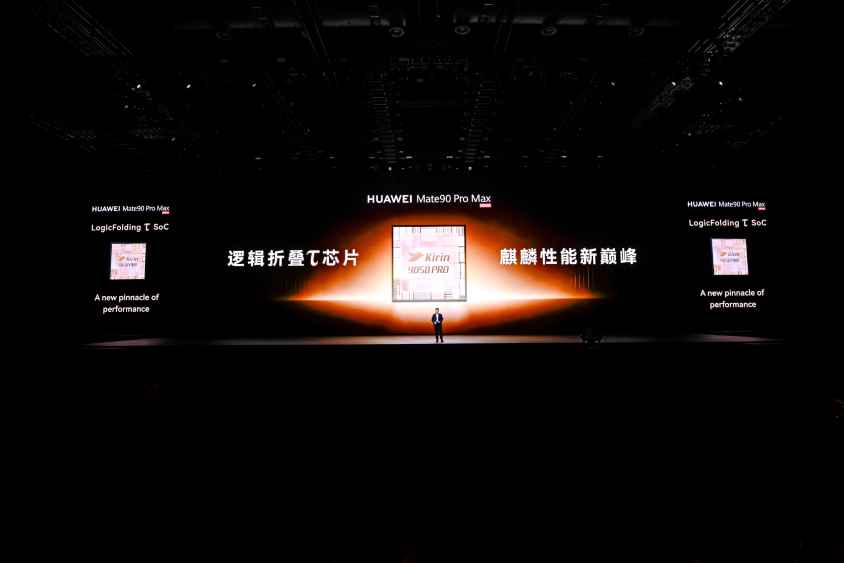
SHANGHAI, CHINA – Media OutReach Newswire – 1 October 2026 – Huawei today officially launched its next-generation flagship HUAWEI Mate 90 Series, featuring the powerful LogicFolding Tau Chip, the Kirin 9050 Pro. Packed with breakthrough innovations, including the XMAGE True-to-Color Portrait Camera, the Second-generation Linglong Display, full-body Kunlun Xuanwu architecture, and the HUAWEI XMAGE Z10 Modular Camera, the series sets a new benchmark for mobile technology.


 Richard Yu, Executive Director of Huawei, Director of the Investment Review Board, and Chairman of the Huawei Consumer BG, stated: “The HUAWEI Mate 90 Series is equipped with the flagship Tau chipset across the entire series. Through vertical integration of hardware, software, chips, and cloud, we have achieved a comprehensive evolution in design, performance, imaging, reliability, and smart user experience. Today, we step into a new era of brilliance.”

Between 2007 and the end of 2025, Huawei invested a total of CNY1.8 trillion into R&D. Today’s product breakthroughs are the direct result of long-term R&D investment and a foundation of core technology. Huawei is turning foundational advancements in Kirin, HarmonyOS, and beyond into tangible product experiences that consumers can truly feel.

Meticulously Crafted, Radiant at First Sight

The HUAWEI Mate 90 Series introduces a refined, seamless design, pairing a glossy mid-frame with a matte metal rear cover.

In terms of durability, the Mate 90 Pro and higher models are built on the full-body Kunlun Xuanwu architecture. The camera cover introduces the industry’s first Optical Kunlun Glass, delivering 20x better drop resistance, while the front display is protected by 3rd-gen Kunlun Glass, offering a 50% improvement in impact resistance. The Pro Max Premium Edition and RS ULTIMATE DESIGN go further with upgraded Xuanwu Kunlun Glass, cutting reflections by 70% and boosting scratch resistance by 16x. The entire lineup supports IP68 dust and water resistance up to 6 meters alongside IP69 resistance against high-temperature, high-pressure water jets.

Powered by LogicFolding Tau Chip: A Massive Leap in Performance

At the heart of the HUAWEI Mate 90 Pro Max is the LogicFolding Tau Chip, built on an innovative architecture that drastically compresses critical path latency to enable 5 million signal transmission bonds and an impressive 125 TB/s inter-die bandwidth. The Pro Max Premium Edition and RS ULTIMATE DESIGN are powered by the Kirin 9050 Pro chip, delivering a 31% increase in overall performance. Meanwhile, the Pro model’s Kirin 9035 chip brings a 20% performance boost, and the standard edition’s Kirin 9030 chip offers a 27% gain in performance.

Vertically integrated with HarmonyOS 7 across hardware, software, chips, and the cloud, the Kirin 9050 Pro CPU supports hyper-threading technology for effortless, ultra-smooth operations. Mobile gaming also reaches new heights with hardware-accelerated ray tracing, capable of rendering up to 55 million rays per second.

Second-Generation Linglong Display: A Screen That Truly Stands Out

The HUAWEI Mate 90 Pro introduces the second-generation Linglong Display, reaching an unprecedented peak brightness of 12,000 nits at 1% APL. Built on an enhanced Tandem OLED Architecture, panel lifespan is extended by 138%. The HUAWEI Mate 90 Pro Max and RS ULTIMATE DESIGN debut the Full-color Linglong Display. Leveraging its 12,000-nit ultra-high brightness and full BT.2020 end-to-end color management, over 60 mainstream apps can now upsample P3 content to vibrant, full-color BT.2020 quality. Eye care technology also receives a major upgrade, featuring industry-first ambient light detection and a 1-nit ultra-low brightness eye-comfort mode for a seamless, strain-free viewing experience.

Breakthrough Connectivity & Reliable Outdoor Utility

Connectivity gets a total overhaul. The industry-first Wi-Fi and cellular converged antenna architecture boosts signal gain by 2 dB. The entire lineup supports eSIM, with the Pro Max pioneering four-SIM, three-standby functionality. With multi-device communication sharing, photo and video upload speeds are boosted by up to 40% in congested environments like crowded concerts or remote outdoor areas.

XMAGE True-to-Color Portrait

The entire series comes equipped with True-to-Color Camera 3.0, featuring full-focal-length infrared optical coating for the first time, which advances overall color accuracy by 37% and skin-tone accuracy by 62%. The updated XMAGE True-to-Color Portrait engine introduces four versatile shooting modes: Portrait original, Soft light portrait, Dazzling fireworks, and Starburst, delivering striking, authentic portraits that speak directly to the heart.

The Pro Max features a powerful 18 EV ultra-HDR main camera, a large-sensor 200 MP RYYB telephoto camera, and CIPA 7.5-rated hardware image stabilization, guaranteeing crisp, steady shots even beyond 20x zoom. The lineup also introduces a dedicated live-streaming optimization mode, making it an ideal companion for content creators.

Additionally, the HUAWEI XMAGE Z10 Modular Camera features a 1-inch large sensor, 24–240 mm continuous optical zoom, and a maximum aperture of f/2.0 to f/4.5, providing pristine, studio-quality imagery across every focal length.

HarmonyOS AI: Smarter, Proactive, and Seamless

Powered by the 30B MoE full-modal on-device foundation model on the Pro Max and higher models, next-generation AI features come to life. Celia Memories seamlessly syncs and organizes content from over 50 mainstream apps, while the Celia navigation bar proactively suggests over 30 context-aware actions based on on-screen content. For everyday tasks, Celia Call 2.0 handles automated call answering, call summaries, and real-time translation, while the Celia Gallery Assistant enables intuitive voice- or text-driven photo editing and instant video generation. Furthermore, HarmonyOS Interconnect brings distance-free remote Huawei Share and allows one-tap sharing to multiple HarmonyOS devices simultaneously.

Committed to taking the harder but right path, Huawei provides users and developers with a powerful alternative in HarmonyOS. Today, HarmonyOS 6 and HarmonyOS 7 power over 90 million devices, including smartphones, PCs, and tablets, and are on track to pass the 100 million mark by the end of this year. At the same time, Huawei’s global registered developer community has grown to over 11 million.

ULTIMATE DESIGN: See the Extraordinary

The HUAWEI Mate 90 RS ULTIMATE DESIGN evolves the iconic Star Diamond camera module aesthetic and debuts Dynamic Lenticular Kunlun Glass, elevating high-durability materials into an expression of premium design. The rear cover showcases an all-new Ascending Texture available in Red, White, and Black. Under the hood, it packs the Kirin 9050 Pro chip, Full-color Linglong Display, Tiantong Satellite Communications, BeiDou Satellite Messaging, four-SIM three-standby, and the advanced True-to-Color Camera 3.0 with an 18 EV ultra-HDR main camera, delivering ultimate design, technology, imaging, and experience.

The series starts at CNY5,999 for the HUAWEI Mate 90, CNY6,999 for the HUAWEI Mate 90 Pro, CNY9,499 for the HUAWEI Mate 90 Pro Max, and CNY12,999 for the HUAWEI Mate 90 RS ULTIMATE DESIGN.


Business

GITEX World RobotiX 2026 brings humanoid debuts and next-gen embodied Artificial Intelligence (AI) to Dubai

Published

on

GITEX

New launch showcase at GITEX GLOBAL advances the Physical AI phenomenon as global humanoid robot shipments surpass 22,000 in H1 2026

DUBAI, United Arab Emirates, November 10, 2026/APO Group/ –From interactive humanoids and intelligent machines undertaking industrial tasks to multilingual robot assistants and wearable exoskeletons, the latest advances in the Physical AI phenomenon will take centre stage at the world’s largest tech and AI event next month in Dubai.


GITEX World RobotiX, a new launch event at GITEX GLOBAL, will converge the world’s robotics pioneers and leaders in embodied AI from 8-11 December at Dubai Exhibition Centre, Expo City Dubai, to show how machines that perceive, reason and act in the physical world are transforming manufacturing, logistics, healthcare, hospitality and smart infrastructure. GITEX GLOBAL 2026 will kick off with the GITEX Summit on 7 December at Dubai World Trade Centre, ahead of the exhibition at Expo City Dubai.


The showcase arrives as robot demand surges; more than 22,000 humanoid robots were shipped globally in the first half of 2026, a 300 percent year-on-year increase (https://apo-opa.co/4kHlnGe), according to Counterpoint Research, with shipments expected to exceed 50,000 units by year-end. Dubai is also advancing its robotics ambitions through its Robotics and Automation Program, targeting the deployment of 200,000 robots over 10 years to 2032 (https://apo-opa.co/4j7b5y2).


Unitree, one of the world’s largest humanoid makers with 31 percent (https://apo-opa.co/4sNVwhW) global market share, spearheads participation this year, alongside other headliners including UBTECH, whose humanoids are deployed in car factories and being tested by Airbus; AiMOGA, Chery Auto’s embodied AI robotics brand; DEEP Robotics, a global leader in quadrupeds; and the UAE’s Micropolis Robotics, which provides autonomous patrol robots for Dubai Police.


Robots take on real-world tasks


UAE-based Mangobot, a robotics solutions provider specialising in deploying and integrating intelligent machines, will present a robotic workforce featuring autonomous general-purpose robots, patrol robots, multilingual robot receptionists and live robotic performances. Visitors can also experience wearable exoskeleton technology firsthand. “It’s less ‘come look at robots’ and more ‘come see what working alongside robots actually feels like,’” said Mazen El-Kurdi, CTO of Mangobot.


Making its Middle East debut, MOS 2, developed by Chinese embodied intelligence innovator Lumos Robotics, is a wheeled ‘AI Worker’ with dual arms capable of handling payloads of up to 50 kg and operating for more than eight hours.


According to Lumos Robotics, its first-generation MOS robots completed over 1,000 hours of continuous, failure-free operation at Mitsubishi Electric’s Changshu factory, undertaking material handling, quality inspection and screwdriving tasks. The company will also showcase NIX S3, which will deliver a live dance performance demonstrating its 21 degrees of freedom, high-torque joints, agility and dynamic motion capabilities.


Cecile Wei, PR Director, Lumos Robotics, said: “Our demonstrations are designed to show the philosophy behind our products: robots need to do more than move. They need to perform useful tasks reliably in real environments.”


UAE-based Lootah Robotics, a robotics solutions and systems integration company, will showcase humanoid, quadruped, service, cleaning and telepresence robots from manufacturers including Unitree, AGIBOT, Pudu Robotics, UBTECH and EngineAI.


“We are not simply supplying individual robots; we are building an integrated robotics ecosystem,” said Hazem Ghazal, General Manager of Lootah Robotics. “Our stand will showcase how organisations can select different robots for different requirements while maintaining centralised visibility and control.”


The next frontier of embodied AI and human-robot interaction


Advances in embodied AI – where AI models are brought into a physical body or hardware system – are creating opportunities for robots to interact more naturally with people across consumer services, education, entertainment and domestic environments.

We are not simply supplying individual robots; we are building an integrated robotics ecosystem


China’s Light Origins, which develops humanoid robots and intelligent robotic systems, will make the first public appearance of its ‘bunny-shaped’ robot, with live demos of household scenarios offering visitors hands-on interaction. “We believe our bunny-shaped robot is ready to enter consumers’ homes,” said Tingxiang Fan, Co-founder and CTO, Light Origins.


Meanwhile, Raydiculous, a bionic robotics innovator from the Chengdu Humanoid Robot Innovation Centre, will make its Middle East debut with two innovations. Its TP01 humanoid, designed for commercial interaction and public services, can communicate in English and Arabic and perform synchronised movements. Alongside it, DINOBOT, described by Raydiculous as the world’s first intelligent bipedal walking bionic dinosaur, will demonstrate realistic movement and interactive capabilities.


Sandy Liu, Overseas Sales Manager, Chengdu Humanoid Robot Innovation Centre, said: “With its integrated capabilities of walking, interaction, performance, and education, our solutions turn Physical AI into a visible and usable business tool.”


Supporting future robotics talent, UAE-based technology and robotics education company Besomi will introduce six humanoid and mobile robots known as the ‘Besomi Rangers’. Unitree, Seeed Studio, Arduino and Qualcomm will be joining Besomi on the stand. The showcase will feature the latest humanoid robot from Unitree, a global leader in humanoid robotics. A live Robotics & AI Lab will allow visitors to explore how robots are engineered, programmed and trained, with hands-on engineering training using the latest Arduino VENTUNO platform, developed in collaboration with Qualcomm.


“We want young engineers and innovators to ask, ‘How does this work?’

and then go build the next generation of robotics technologies right here in the UAE. Showcasing the latest Unitree humanoid robot gives visitors a look at the forefront of robotics. Our hands-on training with Arduino and Qualcomm gives engineers practical experience to turn their own ideas into working robotics and AI applications. We are also pleased to welcome Seeed Studio to our stand as part of this focus on building engineering capabilities,” said Mohammad Hani, CEO, Besomi Robotics & AI.


Building the intelligence behind autonomous machines


JWIPC, a Chinese developer of AI computing hardware and industrial computing solutions, will launch robotic controllers built on NVIDIA’s Thor module, which the company says delivers up to 2,070 TFLOPS of FP4 computing performance. Designed for humanoids, robotic arms and autonomous mobile robots, the controllers enable AI processing and real-time decision-making.


“The NVIDIA Thor module provides a high-compute edge brain for embodied intelligence, running multi-modal models locally to integrate sensor fusion, task planning, and millisecond motion control,” said Nick Zhang, Regional Sales Manager, JWIPC.


Meanwhile, Physical AI software developer Songying Technology will demonstrate ORCA OS and ORCA Lab, integrating simulation, synthetic data generation, AI training, validation and deployment into a connected robotics development environment. Taiwan-based embedded computing specialist Vecow will unveil advanced, rugged Edge AI and robotics platforms powered by NVIDIA, Intel, AMD, Qualcomm, and NXP, while officially introducing its dedicated UAE team to accelerate mission-critical regional deployments


The 46th edition of GITEX GLOBAL, organised by inD, opens with The GITEX Summit at Dubai World Trade Centre (DWTC) on 7 December, before the four-day GITEX GLOBAL Expo begins at Dubai Exhibition Centre alongside Expand North Star, its startup and investor event.


The dual-blockbuster showcase converges 6,000-plus enterprise and startup exhibitors with tens of thousands of government leaders, C-suite executives, investors and buyers from 180 countries, reaffirming Dubai’s status as an epicentre of tech collaboration.


More information is available at www.Gitex.com and (https://apo-opa.co/4iyQ67d)

*Sources: https://apo-opa.co/4kHlnGe

https://apo-opa.co/4j7b5y2

Distributed by APO Group on behalf of GITEX Global.


Continue Reading

Business

2 million hacking tool detections in six months: Kaspersky reveals the most used lateral movement utilities

Published

on

For the period of 6 months, April to September 2026, the solution detected 2,171,513 hacking tool usage attempts

JOHANNESBURG, South Africa, November 9, 2026/APO Group/ –Recent statistics compiled from detection alerts within Kaspersky Anti Targeted Attack (KATA)* reveal the hacking tools most often used for lateral movement across enterprise infrastructures, highlighting the pressing need for reliable network security solutions to protect corporate environments.


Recent investigations into cyber-espionage groups show that attackers increasingly avoid detectable malware, choosing instead to blend into legitimate corporate network traffic (https://apo-opa.co/4BWK3AY). By weaponising dual-use tools and administrative utilities already present in the system, they move laterally across the domain undetected to harvest credentials and locate high-value assets. In this era of silent intrusion, Kaspersky shares insights into the most frequently used hacking tools to help organisations defend their networks.

For a decade, KATA, Kaspersky’s mature NDR solution, has been delivering comprehensive anti-APT protection. It features advanced threat detection, in-depth network traffic analysis, and centralised incident response to ensure full visibility across the entire network. Equipped with nearly 12,500 network detection rules in its database, KATA detects an average of 312,705 potential attacks daily.

For the period of 6 months, April to September 2026, the solution detected 2,171,513 hacking tool usage attempts. The following types of tools were detected most frequently:

This year, we are proudly celebrating the 10th anniversary of KATA

HackTool.Cobalt – 136,084 detections. While designed for security assessments, Cobalt Strike is also frequently used by malicious actors across various attack stages, including post-exploitation, lateral movement, and similar activities.

HackTool.NetExec – 129,560 detections. NetExec is used for automated network security assessments and discovering poorly secured network services. Its capabilities can also be exploited by attackers for reconnaissance and gaining system access.

HackTool.SQLMap – 107,697 detections. The SQLMap tool is used to automate the detection and exploitation of SQL injection vulnerabilities, which can allow unauthorised access to databases via web applications.

“Since advanced hacking tools may bypass endpoint defences, deploying Network Detection and Response (NDR) solution is critical to exposing silent anomalies and neutralising advanced attacks,” says Aren Torosyan, Product Manager at Kaspersky. “This year, we are proudly celebrating the 10th anniversary of KATA. Over this decade of innovation, backed by deep infrastructure expertise and rigorous research, KATA has established itself as a highly effective solution, helping clients worldwide protect their environments from even the most advanced, hidden threats across networks and endpoints. With the transition to the Open Single Management Platform planned for next year, advanced NDR capabilities will become even more comprehensive and accessible to security teams”.

To get full information about Kaspersky Anti Targeted Attack and request a demo, please visit the website (https://apo-opa.co/4BStEgE).

*Statistics are based on detection alerts from Kaspersky products, collected from users who consented to provide statistical data to Kaspersky Security Network. Some of the detections may be attributed to authorised security assessments.

Distributed by APO Group on behalf of Kaspersky.


Continue Reading

Business

PhotonPay Strengthens North American Regulatory Footprint with Canada’s RPAA Registration

Published

on

PhotonPay

The registration reinforces PhotonPay’s regulatory foundation for payment activities in Canada, with requirements covering operational risk management, incident response and the safeguarding of end-user funds.
HONG KONG SAR – Media OutReach Newswire – 10 November 2025 – PhotonPay today announced that its Canadian operating entity, Photon Dance CA Inc., is now registered with the Bank of Canada as a payment service provider (PSP) under Canada’s Retail Payment Activities Act (RPAA). The entity was previously registered with the Financial Transactions and Reports Analysis Centre of Canada (FINTRAC) as a Money Services Business (MSB). The RPAA registration further strengthens PhotonPay’s regulatory foundation in Canada and supports its continued development of local financial services across North America.


The RPAA establishes a federal framework for the registration and supervision of PSPs conducting specified retail payment activities in Canada. Administered by the Bank of Canada, it sets requirements for operational risk management, incident response and regulatory reporting. PSPs that hold end-user funds are also required to implement measures to safeguard those funds, strengthening oversight and accountability across Canada’s retail payments ecosystem.

The Canadian registration adds to PhotonPay’s broader regulatory presence across North America. In the United States, PhotonPay is registered as a Money Services Business with the Financial Crimes Enforcement Network (FinCEN) and holds money transmitter licenses across multiple U.S. states. Across the Americas, Europe and Asia, PhotonPay holds 35 payment licenses, regulatory authorizations and registrations, reflecting the regulatory breadth behind its operations across key financial markets.

For PhotonPay, building a global financial operating system requires more than connecting payment capabilities across markets. It also means developing the local regulatory and financial infrastructure needed to support those capabilities in each jurisdiction. As businesses expand internationally, their financial operations increasingly span different account structures, payment systems, currencies and regulatory environments. Bringing these functions together requires infrastructure that can address local market requirements while giving businesses a more unified way to manage their global finances.

This is the vision behind PhotonPay’s next-generation Financial OS. Through an integrated, API-first architecture, PhotonPay brings together multi-asset wallets, local collections, global payouts, foreign exchange, card issuing and embedded finance. By supporting both fiat currencies and stablecoins within its broader financial infrastructure, the platform connects traditional payment rails with emerging digital-asset capabilities, helping businesses manage increasingly complex financial operations across markets.

“Global financial infrastructure must be designed around the realities of the markets it serves. Regulatory frameworks, payment systems and the responsibilities involved in handling funds differ across jurisdictions, and these differences need to be accounted for at the infrastructure level,” said JP Pi, Global Chief Compliance Officer at PhotonPay. “Our approach is to build a Financial OS that brings together global capabilities while respecting the regulatory and operational requirements of each local market. The RPAA registration is another step in putting that approach into practice, as we continue developing infrastructure to support businesses operating across an increasingly interconnected financial landscape.”


Continue Reading

Trending