Connect with us
Anglostratits

Tech

From Expertise to Intelligence: NISCO Deploys World’s First Swarm-Intelligence Steel Model at Scale

Published

on

NISCO

300+ AI Applications Delivering Surges in Core Metrics and Annual Cost Reduction of Over CNY100 Million (Approx. US$15 Million)
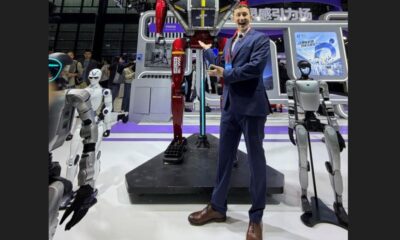
NANJING, CHINA – Media OutReach Newswire – 26 October 2026 – Nanjing Iron & Steel Co., Ltd. (NISCO) has worked with Huawei and ecosystem partners to commercially deploy the world’s first steel model powered by swarm intelligence—the YuanYe Steel Large Model (YuanYe)—across multiple scenarios at scale. This helps NISCO transition its core operations from relying on experience to being powered by data and intelligence collaboration.


As a traditional manufacturer navigating the challenges of transformation and cost efficiency, NISCO has built a robust digital and intelligent foundation by adopting industry-leading products including Ascend, Kunpeng, Huawei Cloud Stack, and Pangu models. By embedding AI into every core stage of production—ironmaking, steelmaking, rolling, and quality inspection—NISCO is forging green and high-end AI-powered super steel plants.

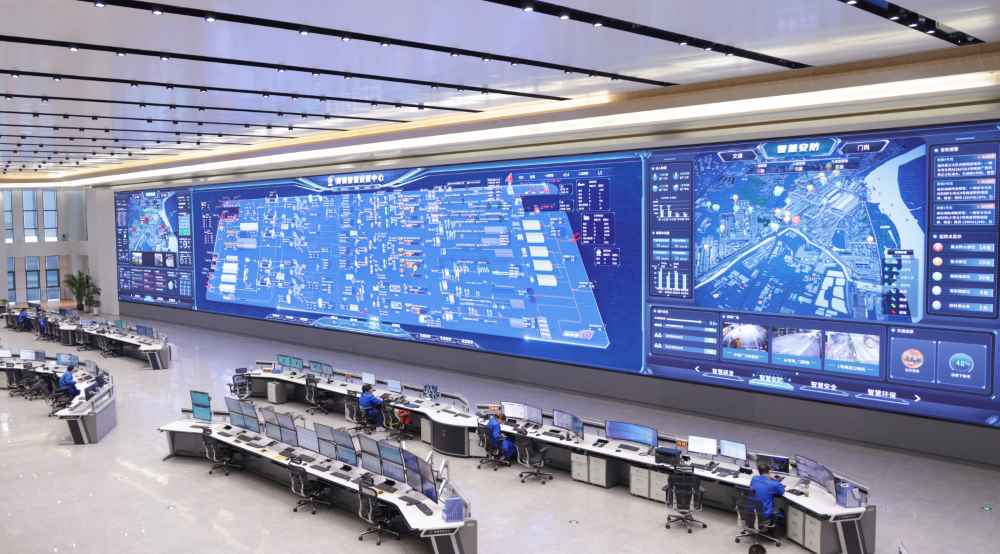
Unlike general-purpose monolithic models, YuanYe innovatively fuses multiple AI models with the steel industry’s metallurgical mechanism models to create a dual-drive, multi-model cluster architecture. This architecture features a “right brain” for probabilistic computing and a “left brain” for precise and scientific decision-making. Powered by massive amounts of sensing data aggregated from millions of operational technology (OT) data points across 26 business domains, NISCO has achieved real-time digital twin mapping within its intelligent operations center, laying solid data and scenario foundations for YuanYe. This enables the entire steelmaking process to become not only visible, but also capable of precise control and intelligent assessment. Now 100% of NISCO’s key equipment is connected and digitally controlled and its new product R&D cycles have been shortened by 50%, reducing annual costs by over CNY100 million (approx. US$15 million).

As the model continues to iterate, NISCO had launched 25 business agents by October 2026. These agents cover a wide range of scenarios, from visual quality inspection and process optimization to production scheduling and operations management, setting a new benchmark for digital and intelligent steel transformation.

Breakthroughs in four core scenarios: YuanYe redefines traditional operations for significant safety, efficiency, and quality gains
In the ironmaking stage, AI makes traditionally invisible blast furnaces transparent. YuanYe leverages blast furnaces’ internal sensor data and metallurgical mechanism analysis to perform real-time dynamic simulations of the ironmaking process. Assisted by furnace temperature prediction and health diagnosis models, furnace operators can predict temperatures and identify issues two hours in advance, with over 90% accuracy. This shifts furnace operations from reactive post-event remediation to proactive pre-control, increasing prime-grade molten iron yield by over 10% while significantly cutting unit energy consumption.
In the rolling stage, AI drives precise predictions and codifies expert experience to enhance the operational stability of steel rolling and secure leadership in product quality. To tackle the highly dynamic and complex operating conditions during the rolling process, YuanYe’s rolling-force prediction model achieves millisecond-level response, narrowing the thickness tolerance to ±0.2 mm and reducing the steel thickness deviation to 1.9% to reach a world-leading standard. The rolling-force hit rate has jumped from 88% to 98%, supporting a steady annual output of over 2.5 million tons of steel plates and increasing the overall yield rate by 0.5%. Enhanced dimensional precision and physical-chemical stability allow NISCO’s products to meet demanding steel specifications across diverse applications, ranging from mega stadiums and oil pipelines to 10,000-ton cruise ships and LNG storage tanks.
In quality inspection, the synergy between robots and AI models serves as a discerning “eagle eye”, doubling metallographic inspection efficiency. During metallographic inspection for finished steel, the integrated smart metallographic inspection system built on YuanYe has achieved full-process automation, covering sample grinding and polishing, image acquisition, and smart grading. Inspection accuracy has risen to over 95%, while per-sample inspection time has been shortened from 10 minutes down to 3–5 minutes. This 80% increase in overall inspection efficiency frees human operators to focus on anomaly analysis and high-level decision-making.
In the energy and environmental control stage, NISCO leverages the YuanYe architecture to develop the S-Link Intelligent Agent for Gas and Flue Gas Sulfur Control. Integrating 602 process parameters alongside multi-modal image and knowledge capabilities, the agent achieves a smart closed loop across source prediction, process optimization, and end-of-pipe compliance. By combining mechanism inversion with time-series forecasting, it issues precise sulfur-risk warnings one hour in advance, achieving a sulfur prediction accuracy of over 95%. Operational optimization algorithms then calculate the optimal gas blending scheme within seconds. Finally, game-theoretic models dynamically allocate emission quotas, slashing natural gas co-firing consumption by nearly 50%. This has reduced downtime caused by emission exceedance by over 25%, and delivered more than CNY600,000 (approx. US$90,000) in annual economic benefits—securing both environmental compliance and drastic cost reduction.
From automating labor to empowering people: Defining a new paradigm of inclusive AI

Li Jinyan, General Manager of the Digital and Intelligent Integrated Development Department and Director of the AI Research Institute at NISCO, said: “Digital and intelligent transformation is inherently human-centric. Its purpose is not to replace people, but to unleash human potential. Our goal is to lift employees out of the endless sea of data, empowering them to direct their creative energy toward work of higher value.” To date, NISCO has deployed over 300 AI models across its plants, alongside more than 1,000 low-code agents and lightweight applications built independently by frontline employees.

As Cheng Yongfu, Senior Industrial Solution Expert at Huawei’s Steel & Non-ferrous BU, noted: “The real value of industrial AI can only be realized when it expands from single-point applications to comprehensive integration with production, operations, and management, which can unlock sustained, scalable empowerment.”

Looking ahead, as model deployment expands and computing demands continue to grow, NISCO will team up with Huawei and other partners to explore the construction of dedicated data centers for smart steel plants. Centered on the AI-native three-tier architecture (AI-native OS, AI-native factory, and AI-native enterprise) and powered by the YuanYe model, NISCO is accelerating high-quality steel development, aiming to provide a replicable and scalable benchmark for the digital and intelligent transformation of the global steel and manufacturing industries.


Tech

CALL-E Lets AI Agents in ChatGPT, Muse and OpenClaw Make Real Phone Calls on Their Users’ Behalf

Published

on

CALL-E

Built by AI Rudder, CALL-E asks the user before every call and reports back with proof of what was agreed.
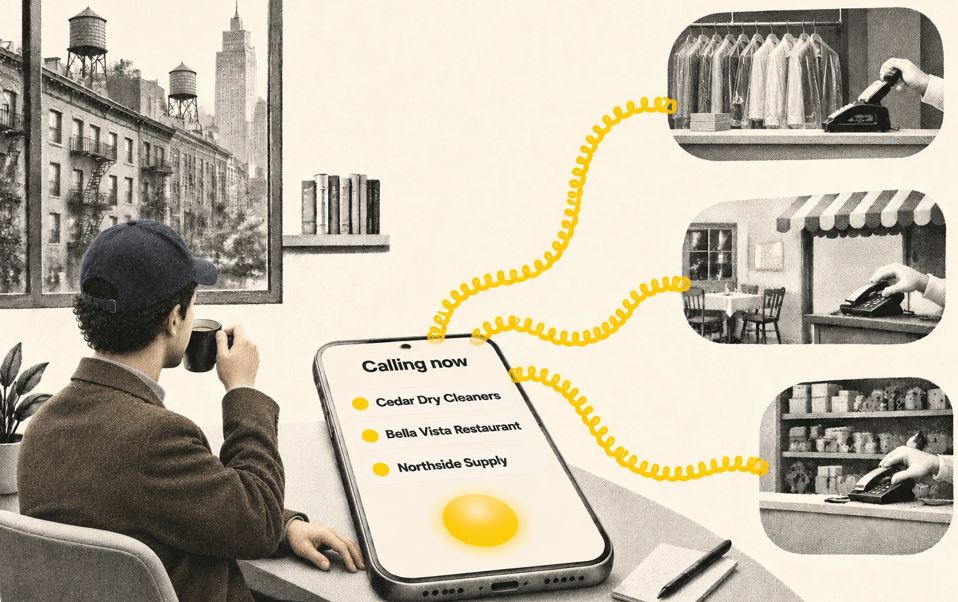
SAN FRANCISCO, US – Media OutReach Newswire – 13 November 2026 – AI Rudder, the Singapore-headquartered company behind more than 80 billion AI calls, has launched CALL-E, which lets AI agents make real phone calls on their users’ behalf. CALL-E works inside ChatGPT, in personal AI agents such as Muse, OpenClaw and Hermes Agent, and in AI coding tools such as Claude Code, Codex and Cursor.


Personal AI agents are growing fast. Meta’s Muse passed five million US downloads in its first three weeks, and Grok Bot, from Elon Musk’s SpaceX, reached 400,000 weekly users in its first month. Both are piloting phone calls, and users now try to hand their AI agent the calls they used to make themselves: moving a dinner booking, chasing the dry cleaner.

CALL-E is built for those calls. A personal AI agent hands it the errand, and CALL-E makes the call and reports back with proof.

“The smartest AI model in the world can still fail a phone call. All it takes is one ‘mm-hmm’,” said Teng Ren, CEO of AI Rudder.

“Say your AI agent calls a restaurant to move your booking to a specific time. The restaurant host says ‘mm-hmm’ to agree, and your agent stops mid-sentence, as if she’d asked a question. Then she says, ‘Tuesday at… let me check,’ and your agent cuts in with ‘Great, Tuesday it is,’ to a time she did not give. These behaviours are unnatural to a human, so she knows she’s talking to AI and hangs up.

“An AI agent earns the right to speak for us when it reads every ‘yes’, every pause and every interruption the way a person on the phone would, and answers the way that person would.”

Approval Before Every Call
A call can’t be unsent. CALL-E builds an approval step into the product: each call goes ahead only after the user approves that exact plan, so a call nobody approved never rings.

Built for Real Phone Conversations
Phone calls are messier than chat. People pause halfway through an order number, talk over the agent, or cut in mid-sentence. AI Rudder’s engineers handle this in the code around the AI model, which decides what the model hears and what it remembers saying.

On the TurnBench Interruption leaderboard, Helm Swift, the AI Rudder model that tells CALL-E when a caller is cutting in, has the joint-lowest false-positive rate of any qualifying model, so it rarely stops talking just because a caller says “yeah” (TurnBench, October 2026).

Proof After Every Call
An agent can report “Booked for 7pm” and still have misheard the time. So after each call, CALL-E reports what was agreed, how confident it is that it met the goal, and the exact lines from the call that back it up, so the user can check it.

Every Call Says Who Is Calling
By default, a CALL-E call introduces itself as CALL-E, a voice agent. The user can change what it says, and a pre-check stops a call from posing as the FBI or 911.

Regulators are moving the same way. In its 2024 Declaratory Ruling (FCC 24-17), the FCC clarified that AI-generated voices fall within the definition of artificial or prerecorded voices under the Telephone Consumer Protection Act, making such calls subject to applicable regulatory requirements, including consent and caller identification obligations. Separately, Article 50 of the EU AI Act requires that people be told they are talking to an AI.

Security and Compliance
An agent that calls for you carries your phone number and the details of your errand, so the line it uses has to keep both safe. CALL-E runs on the same technology as AI Rudder’s enterprise solutions, which are built to meet SOC 2 Type 2 and ISO 27001, alongside GDPR and PDPA requirements. Every call keeps a record from plan to result, with the approval and the evidence attached, so a disputed call can be traced.

Availability
CALL-E is available at https://www.heycall-e.com/, where new users start with 100 free credits.

About CALL-E
CALL-E lets an AI agent make real phone calls for the person it works for: it plans the call, waits for the user’s approval, makes the call and reports back with proof of what was said. CALL-E is built by Singapore-headquartered AI Rudder, which is backed by investors including Tiger Global and Peak XV Partners.


Continue Reading

Tech

Huawei Launches LUTERRA® S2, Redefining the Future of Residential Energy Systems with Three Ultimate Innovations

Published

on

Huawei

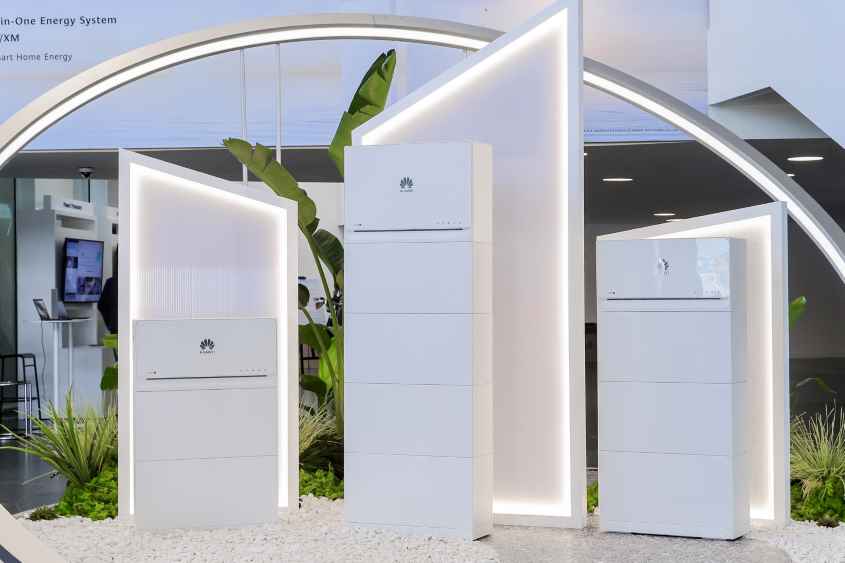
PALMA, SPAIN – Media OutReach Newswire – 11 November 2026 – Huawei announced the launch of HUAWEI LUTERRA S2, an all-in-one residential energy system that integrates a hybrid inverter, storage, and AI-powered energy management in one stackable unit. Designed for easy deployment, LUTERRA S2 can be installed and commissioned in minutes. Available in single-phase (3-10 kW) and three-phase (5- 20 kW) configurations, LUTERRA S2 is the industry’s first all-in-one residential energy system built on Huawei’s proprietary full-SiC (silicon carbide) architecture, delivering exceptional efficiency, power density, and reliability.


“We are thrilled to introduce HUAWEI LUTERRA S2, our next-generation all-in-one residential energy system,” said Steve Zhang, President of Huawei Distributed PV & BESS Business. “By combining full-SiC architecture, AI-driven energy management, and industry-leading safety, LUTERRA S2 is designed to be smaller, lighter, quieter, safer, smarter and more powerful than ever before.”

As solar, storage, EV charging, and home energy management continue to converge, homeowners are looking for solutions that go beyond power and capacity to deliver greater intelligence, efficiency, and safety.

To meet these evolving needs, Huawei introduces HUAWEI LUTERRA S2, a breakthrough residential energy system built on three defining pillars: Ultimate Experience, Ultimate Intelligence, and Ultimate Safety.

Ultimate Experience: From Core Technology to Everyday Experience

LUTERRA S2 combines high power density and compact design, delivering 20 kW-class power in a streamlined form factor. Powered by Huawei’s proprietary full-SiC architecture and ANPC topology, it achieves up to 99% efficiency. Built-in energy optimizers enable up to 5.0 MWh/kWh of lifetime usable energy and a design lifespan of more than 15 years.

Beyond technical performance, LUTERRA S2 is designed to integrate naturally into modern homes. Its art-inspired design, Red Dot Award-winning hardware, App 3.0, and intelligent breathing light create a seamless blend of technology and lifestyle.

The industry’s first 20 kW-class all-natural cooling design eliminates the need for external fans and maintains operating noise below 29 dB.

Ultimate Intelligence: From Automation to Active Decision-Making

Through the AI Energy Management 2.0 platform, LUTERRA S2 brings intelligence to energy planning, operation, and value optimization.

By integrating weather forecasts, electricity prices, household loads, and energy status, the platform intelligently coordinates photovoltaic systems, energy storage, EV charging, heat pumps, and virtual power plants (VPPs). This coordination maximizes the value of every kilowatt-hour generated, stored, and consumed.

For homeowners, the AI Assistant turns complex energy management into simple, conversational interactions, enabling users to make informed energy decisions with ease. For installers, AI 3D modeling simplifies planning and design by identifying roof structures and installation environments. AI-powered diagnostics and remote support further enhance operation and maintenance efficiency.

Ultimate Safety: From Cell-Level Protection to End-to-End Safety

Safety is built into every layer of LUTERRA S2, from battery cells to system-level operations.

Each battery cell incorporates an independent protective isolation structure, supported by Huawei-developed safety components and localized non-propagation design to help contain thermal risks. An intelligent smoke-duct design enables directional pressure relief, smoke evacuation, and cooling, while continuous AC and DC terminal temperature detecting provides proactive detection and protection of critical connections.

LUTERRA S2 has been validated against relevant EU Battery Regulation requirements and complies with key international standards, including IEC 63027 AFCI. It has also undergone TÜV Rheinland safety testing, including a cell thermal runaway test, a 20-minute fire test at 1,000°C, and a 20% hydrogen explosion test, as well as UL 9540A validation.LUTERRA S2 has received the highest-level Safety Mark certification from TÜV Rheinland, backed by the industry’s first cell-level thermal insulation design, safety venting design, and full-link terminal over-temperature protection.

Leading the Future of Residential Energy Systems

More than an energy storage system, LUTERRA S2 connects intelligent technology, enhanced quality of life, and sustainable living. Huawei is setting a new benchmark for next-generation residential energy and accelerating the transition toward a smarter, more sustainable future.

Technical highlights:

Inverter
Up to 3 inverters in parallel, 60kW (20*3) max
Battery
Up to 48 packs in parallel, 336kWh (4*4*3*7) max
Efficiency
Maximum efficiency of 99%
Backup
Switchover under 10 ms; up to 20 kW off-grid load
Cooling and noise
Fanless natural cooling; below 29 dB
Operating range
–25°C to +60°C; IP66; up to C5-M corrosion protection
Connectivity
EEBUS, SG-Ready, OCPP, Modbus-TCP
Safety validation
TÜV Rheinland testing; UL 9540A; AFCI to IEC 63027

More information is available at https://solar.huawei.com/en/products/luterra-s2-xl-xm/


Continue Reading

Business

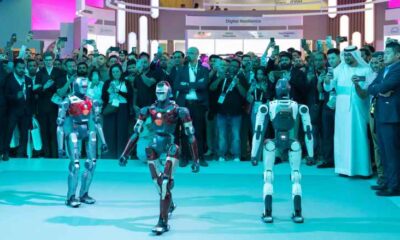
GITEX World RobotiX 2026 brings humanoid debuts and next-gen embodied Artificial Intelligence (AI) to Dubai

Published

on

GITEX

New launch showcase at GITEX GLOBAL advances the Physical AI phenomenon as global humanoid robot shipments surpass 22,000 in H1 2026

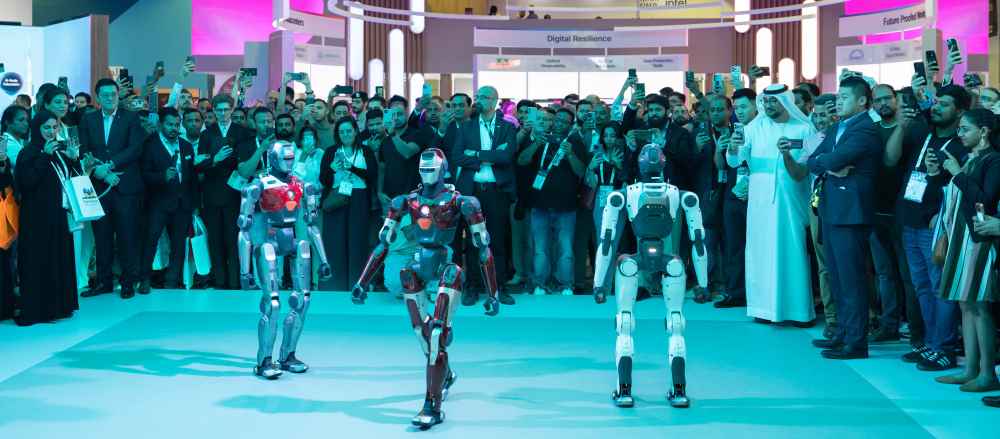
DUBAI, United Arab Emirates, November 10, 2026/APO Group/ –From interactive humanoids and intelligent machines undertaking industrial tasks to multilingual robot assistants and wearable exoskeletons, the latest advances in the Physical AI phenomenon will take centre stage at the world’s largest tech and AI event next month in Dubai.


GITEX World RobotiX, a new launch event at GITEX GLOBAL, will converge the world’s robotics pioneers and leaders in embodied AI from 8-11 December at Dubai Exhibition Centre, Expo City Dubai, to show how machines that perceive, reason and act in the physical world are transforming manufacturing, logistics, healthcare, hospitality and smart infrastructure. GITEX GLOBAL 2026 will kick off with the GITEX Summit on 7 December at Dubai World Trade Centre, ahead of the exhibition at Expo City Dubai.


The showcase arrives as robot demand surges; more than 22,000 humanoid robots were shipped globally in the first half of 2026, a 300 percent year-on-year increase (https://apo-opa.co/4kHlnGe), according to Counterpoint Research, with shipments expected to exceed 50,000 units by year-end. Dubai is also advancing its robotics ambitions through its Robotics and Automation Program, targeting the deployment of 200,000 robots over 10 years to 2032 (https://apo-opa.co/4j7b5y2).


Unitree, one of the world’s largest humanoid makers with 31 percent (https://apo-opa.co/4sNVwhW) global market share, spearheads participation this year, alongside other headliners including UBTECH, whose humanoids are deployed in car factories and being tested by Airbus; AiMOGA, Chery Auto’s embodied AI robotics brand; DEEP Robotics, a global leader in quadrupeds; and the UAE’s Micropolis Robotics, which provides autonomous patrol robots for Dubai Police.


Robots take on real-world tasks


UAE-based Mangobot, a robotics solutions provider specialising in deploying and integrating intelligent machines, will present a robotic workforce featuring autonomous general-purpose robots, patrol robots, multilingual robot receptionists and live robotic performances. Visitors can also experience wearable exoskeleton technology firsthand. “It’s less ‘come look at robots’ and more ‘come see what working alongside robots actually feels like,’” said Mazen El-Kurdi, CTO of Mangobot.


Making its Middle East debut, MOS 2, developed by Chinese embodied intelligence innovator Lumos Robotics, is a wheeled ‘AI Worker’ with dual arms capable of handling payloads of up to 50 kg and operating for more than eight hours.


According to Lumos Robotics, its first-generation MOS robots completed over 1,000 hours of continuous, failure-free operation at Mitsubishi Electric’s Changshu factory, undertaking material handling, quality inspection and screwdriving tasks. The company will also showcase NIX S3, which will deliver a live dance performance demonstrating its 21 degrees of freedom, high-torque joints, agility and dynamic motion capabilities.


Cecile Wei, PR Director, Lumos Robotics, said: “Our demonstrations are designed to show the philosophy behind our products: robots need to do more than move. They need to perform useful tasks reliably in real environments.”


UAE-based Lootah Robotics, a robotics solutions and systems integration company, will showcase humanoid, quadruped, service, cleaning and telepresence robots from manufacturers including Unitree, AGIBOT, Pudu Robotics, UBTECH and EngineAI.


“We are not simply supplying individual robots; we are building an integrated robotics ecosystem,” said Hazem Ghazal, General Manager of Lootah Robotics. “Our stand will showcase how organisations can select different robots for different requirements while maintaining centralised visibility and control.”


The next frontier of embodied AI and human-robot interaction


Advances in embodied AI – where AI models are brought into a physical body or hardware system – are creating opportunities for robots to interact more naturally with people across consumer services, education, entertainment and domestic environments.

We are not simply supplying individual robots; we are building an integrated robotics ecosystem


China’s Light Origins, which develops humanoid robots and intelligent robotic systems, will make the first public appearance of its ‘bunny-shaped’ robot, with live demos of household scenarios offering visitors hands-on interaction. “We believe our bunny-shaped robot is ready to enter consumers’ homes,” said Tingxiang Fan, Co-founder and CTO, Light Origins.


Meanwhile, Raydiculous, a bionic robotics innovator from the Chengdu Humanoid Robot Innovation Centre, will make its Middle East debut with two innovations. Its TP01 humanoid, designed for commercial interaction and public services, can communicate in English and Arabic and perform synchronised movements. Alongside it, DINOBOT, described by Raydiculous as the world’s first intelligent bipedal walking bionic dinosaur, will demonstrate realistic movement and interactive capabilities.


Sandy Liu, Overseas Sales Manager, Chengdu Humanoid Robot Innovation Centre, said: “With its integrated capabilities of walking, interaction, performance, and education, our solutions turn Physical AI into a visible and usable business tool.”


Supporting future robotics talent, UAE-based technology and robotics education company Besomi will introduce six humanoid and mobile robots known as the ‘Besomi Rangers’. Unitree, Seeed Studio, Arduino and Qualcomm will be joining Besomi on the stand. The showcase will feature the latest humanoid robot from Unitree, a global leader in humanoid robotics. A live Robotics & AI Lab will allow visitors to explore how robots are engineered, programmed and trained, with hands-on engineering training using the latest Arduino VENTUNO platform, developed in collaboration with Qualcomm.


“We want young engineers and innovators to ask, ‘How does this work?’

and then go build the next generation of robotics technologies right here in the UAE. Showcasing the latest Unitree humanoid robot gives visitors a look at the forefront of robotics. Our hands-on training with Arduino and Qualcomm gives engineers practical experience to turn their own ideas into working robotics and AI applications. We are also pleased to welcome Seeed Studio to our stand as part of this focus on building engineering capabilities,” said Mohammad Hani, CEO, Besomi Robotics & AI.


Building the intelligence behind autonomous machines


JWIPC, a Chinese developer of AI computing hardware and industrial computing solutions, will launch robotic controllers built on NVIDIA’s Thor module, which the company says delivers up to 2,070 TFLOPS of FP4 computing performance. Designed for humanoids, robotic arms and autonomous mobile robots, the controllers enable AI processing and real-time decision-making.


“The NVIDIA Thor module provides a high-compute edge brain for embodied intelligence, running multi-modal models locally to integrate sensor fusion, task planning, and millisecond motion control,” said Nick Zhang, Regional Sales Manager, JWIPC.


Meanwhile, Physical AI software developer Songying Technology will demonstrate ORCA OS and ORCA Lab, integrating simulation, synthetic data generation, AI training, validation and deployment into a connected robotics development environment. Taiwan-based embedded computing specialist Vecow will unveil advanced, rugged Edge AI and robotics platforms powered by NVIDIA, Intel, AMD, Qualcomm, and NXP, while officially introducing its dedicated UAE team to accelerate mission-critical regional deployments


The 46th edition of GITEX GLOBAL, organised by inD, opens with The GITEX Summit at Dubai World Trade Centre (DWTC) on 7 December, before the four-day GITEX GLOBAL Expo begins at Dubai Exhibition Centre alongside Expand North Star, its startup and investor event.


The dual-blockbuster showcase converges 6,000-plus enterprise and startup exhibitors with tens of thousands of government leaders, C-suite executives, investors and buyers from 180 countries, reaffirming Dubai’s status as an epicentre of tech collaboration.


More information is available at www.Gitex.com and (https://apo-opa.co/4iyQ67d)

*Sources: https://apo-opa.co/4kHlnGe

https://apo-opa.co/4j7b5y2

Distributed by APO Group on behalf of GITEX Global.


Continue Reading

Trending