Connect with us
Anglostratits

Business

Huawei and Qualcomm Announce Broad Patent License Agreement

Published

on

patent

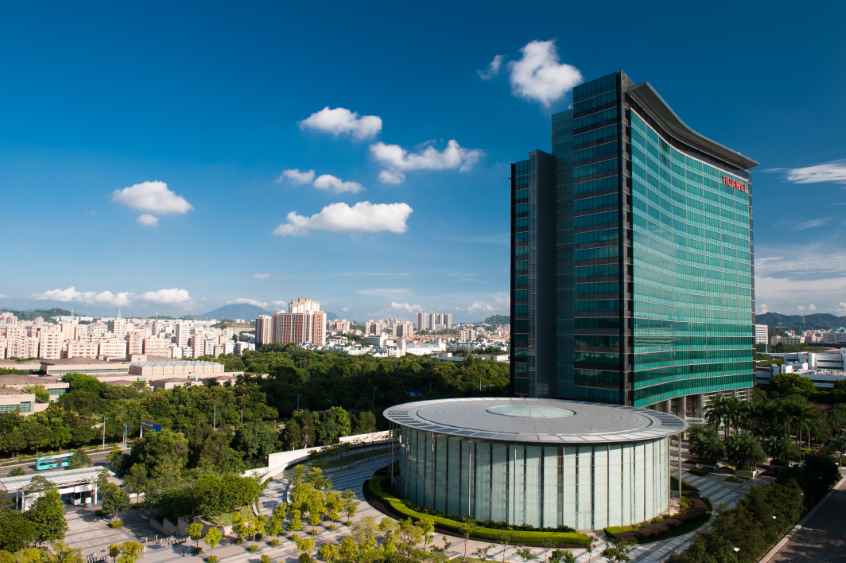
SHENZHEN, CHINA – Media OutReach Newswire – 5 October 2026 – Huawei and Qualcomm today announced a multi-year, broad patent license agreement that includes cross licenses to the companies’ patent portfolios across a range of technology fields, including 5G, compute, AI, and networking, together with Qualcomm’s purchase of certain Huawei U.S. patents in the areas of compute, AI, networking, and other technologies. This transaction will close following receipt of the necessary regulatory approvals. The agreement reflects the companies’ shared commitment to intellectual property rights and to licensing practices consistent with fair, reasonable and non-discriminatory (FRAND) principles.


 “Huawei’s decades of sustained investment in fundamental R&D have driven innovation and progress in mobile communications and other technology fields. Huawei’s broad contributions to the 4G/5G standards, such as the near-physical-limit signal transmission technology using polar codes, have established Huawei’s leadership in the mobile communications industry, and continuously transformed the way people communicate and live,” said Alan Fan, Huawei’s Chief Intellectual Property Officer. “This agreement not only demonstrates the value of Huawei’s innovations, but also recognizes Qualcomm’s foundational contributions to modern communication technologies.”

“Qualcomm has invested in foundational wireless technologies that have enabled successive generations of mobile innovation and earned broad recognition across the global wireless industry. This agreement reaffirms industry recognition of Qualcomm’s 5G technology leadership and the success of Qualcomm’s 5G SEP licensing program,” said John Han, Executive Vice President and General Manager of Qualcomm Technology Licensing. “This agreement likewise reflects Qualcomm’s recognition of Huawei’s continued innovation and intellectual property in 5G and other technology fields.”

About Qualcomm
Qualcomm is a global computing leader at the center of the AI era, enabling intelligence to scale from the most personal devices to large‑scale infrastructure. Building on more than four decades of innovation, we develop platforms and solutions that bring together advanced AI, high‑performance low power computing, and industry‑leading connectivity—powering products and services used around the world. At Qualcomm, we are engineering human progress.

Qualcomm Incorporated includes our licensing business, QTL, and the vast majority of our patent portfolio. Qualcomm Technologies, Inc., a subsidiary of Qualcomm Incorporated, operates, along with its subsidiaries, substantially all of our engineering and research and development functions and substantially all of our products and services businesses, including our QCT semiconductor business. Snapdragon and Qualcomm branded products are products of Qualcomm Technologies, Inc. and/or its subsidiaries. Qualcomm patents are licensed by Qualcomm Incorporated. Qualcomm, Snapdragon, Qualcomm Dragonwing and Qualcomm Dragonfly are trademarks or registered trademarks of Qualcomm Incorporated.


Business

Thailand’s LTR Visa Hits 12,000 Approvals in Four Years, Adding USD 1.28 Billion to the Economy

Published

on

Thailand

BANGKOK, THAILAND – Media OutReach Newswire – 5 October 2026 – The Long-Term Resident (LTR) visa has attracted 12,010 high-potential foreigners to Thailand in four years, generating approximately USD 1.28 billion (THB 43 billion) in economic value, according to the Board of Investment (BOI). The visa is a key mechanism for attracting executives and highly skilled personnel for future industries while increasing purchasing power and stimulating domestic spending and economic activity. A new online system now links services from four government agencies in an integrated process.


Introduced in September 2022 to attract high-potential foreigners to reside and conduct economic activities in Thailand, the LTR visa program has generated an average economic value of more than USD 107,000 (THB 3.6 million) per recipient, according to BOI data. The calculation covers visa fees, spending in Thailand by visa holders, direct investment, and tax revenue from highly skilled professionals.

Amid intensifying global competition for highly skilled personnel, the LTR visa is an important mechanism for bringing global talent into Thailand. This is particularly relevant as the country prepares for a new wave of investment in advanced-technology industries, including semiconductors and advanced electronics, digital technology and AI, humanoid robotics, aviation, and biotechnology.

“The LTR visa is a strategic pillar to attract global talent as Thailand absorbs a new wave of advanced technology investments,” said Narit Therdsteerasukdi, Secretary General of the Board of Investment. “Drawing top-tier executives and technical specialists from around the world is vital to strengthening our national competitiveness and securing technology transfers from international partners.”

Approved LTR visa recipients primarily come from leading economies. The United States accounts for the largest group, with more than 2,400 approvals, followed by Japan with more than 1,300 and the United Kingdom with more than 1,000. Japanese nationals comprise a notable share of the specialist bracket, aligning with Japan’s heavy footprint in Thailand’s automotive and precision-electronics supply networks.

The 12,010 approved LTR visa recipients fall into five categories: 1,779 Highly-Skilled Professionals; 1,043 Work-from-Thailand Professionals, who work from Thailand for overseas employers; 737 Wealthy Global Citizens; 4,561 Wealthy Pensioners; and 3,891 Dependents of recipients in the first four categories.

Among recipients in the Highly-Skilled Professionals and Work-from-Thailand Professionals categories, 54% hold executive-level positions and 36% are professionals in various fields; the remainder are at the technical level. Applicants in each category must meet specific criteria, such as requirements relating to assets, income, investment evidence, work experience, and health insurance, and undergo rigorous checks by the relevant agencies.

To handle rising application volumes and remove long-standing administrative bottlenecks, the BOI rolled out an integrated digital processing portal in September 2026. The platform centralizes review procedures across four primary state bodies: the Department of Consular Affairs, the Immigration Bureau, the Department of Employment, and the Revenue Department.

Complementing the portal, the Thailand Investment and Expat Services Center (TIESC), a one-stop service center, is located on floors 6-7 of the Parade Zone at One Bangkok. “The center is intended to strengthen Thailand’s competitiveness in continuously attracting high-potential talent from around the world,” said Mr. Narit.

In addition to attracting foreign talent through the LTR visa, BOI also facilitates visas and work permits for executives and personnel working in BOI-promoted businesses through the BOI Visa, and offers the Smart Visa for startups. BOI also supports the skills development of Thai personnel through the Skill Bridge measure, and helps Thai entrepreneurs adopt modern technology to enhance their competitiveness through the Business Transformation measure. These measures work hand in hand to attract international experts, develop Thai personnel, and upgrade Thai businesses, strengthening Thailand’s readiness for the transition to a new economy driven by technology and innovation.

Note: Currency conversions are based on the Bank of Thailand’s average selling rate of approximately 1 USD = 33.6 THB.

Thailand Board of Investment (BOI)
Established in 1966, the Office of the Board of Investment (BOI) has played an important role for more than 60 years in promoting value-creating investment by both foreign and Thai investors, strengthening competitiveness and supporting Thailand’s sustainable economic restructuring toward the new economy.


Continue Reading

Business

Islamic Corporation for the Development of the Private Sector (ICD) and Eastern Bank PLC (EBL) Close USD 10 Million Shariah-Compliant Term Finance Facility for Samuda Shipping Limited in Bangladesh

Published

on

Islamic Corporation

ICD has extended a USD 10 million, seven-year Shariah-compliant term finance facility to Samuda Shipping Limited (SSL), a concern of TK-Samuda Group, one of Bangladesh’s largest conglomerates

DHAKA, Bangladesh, October 5, 2026/APO Group/ —

  • Eastern Bank PLC (EBL) arranged the facility and serves as the Security Agent and Account Bank for the transaction.
  • The financing will fund the acquisition of MT Samuda, a 22,000 MT edible oil tanker, that will support crude palm oil imports for TK-Samuda Group’s edible oil refineries.
  • This marks ICD’s first transaction with TK-Samuda Group.

The Islamic Corporation for the Development of the private sector (ICD) (www.ICD-PS.org) and Samuda Shipping Limited (SSL) signed a USD 10 million Shariah-compliant term finance agreement in Dhaka, Bangladesh, to finance the acquisition of a vessel for the transportation of crude edible oil. Eastern Bank PLC arranged the facility and is acting as the Security Agent and Account Bank, bringing together ICD’s multilateral development finance expertise and EBL’s deep knowledge of the Bangladesh market to deliver a structured, Shariah-compliant solution for the private sector.


The closing ceremony, held under the title “Closing Ceremony for Financing a Vessel for TK-Samuda Group,” commemorated the formal conclusion of the transaction and brought together senior representatives from ICD, Eastern Bank PLC, and TK-Samuda Group. Samuda Shipping Limited is a concern of TK-Samuda Group, one of the largest conglomerates in Bangladesh, and this transaction represents ICD’s first engagement with the group. The seven-year financing structure reflects ICD’s commitment to supporting long-term, asset-backed private sector development in its member countries in a manner consistent with Shariah principles.


The financed vessel, named MT Samuda, is a 22,000 MT edible oil tanker that will enable TK-Samuda Group to import crude palm oil from international markets for processing at its domestic edible oil refineries. By strengthening the group’s supply chain infrastructure, the transaction is expected to contribute meaningfully to food security and agro-industrial capacity in Bangladesh. This transaction also builds on ICD’s existing relationship with Eastern Bank PLC to further cementing a productive and growing partnership between the two institutions in support of Bangladesh’s private sector.

Distributed by APO Group on behalf of Islamic Corporation for the Development of the Private Sector (ICD).


Continue Reading

Business

Culture Without an Office: How APO Group Holds One Team Together Across 17 Countries (By Loanette Boshoff)

Published

on

What connection, context, and trust look like in remote environments

JOHANNESBURG, South Africa, October 5, 2026/APO Group/ —By Loanette Boshoff, Chief People Officer at APO Group (www.APO-opa.com).

An office builds culture by default. People run into each other in the corridor. They hear about a colleague’s win over coffee. They notice when someone is having a hard week. Most of it happens without anyone planning it.


At APO Group, we build ours on purpose.

We are fully remote by choice. It’s how our people live in the markets they serve. Our teams are based in 17 countries across Africa, Europe, the Middle East, and Asia. Between them, they hold 52 nationalities and speak 33 languages. No single office could bring those people together.

That means we must be deliberate about what people need from each other to collaborate when they aren’t sharing the same physical space: connection, context, and trust.

Connection: making the work visible

Connection is the easiest to underestimate. One way of connecting is through our monthly town hall, where wins are celebrated, colleagues and their work are profiled, and departments can showcase their work. An operations manager in Kenya will hear what a strategist in Portugal has been working on, and why it matters to the business. In a remote organisation, you can work with someone for years and still know very little about their working day. Making that work visible helps people understand what happens elsewhere.

That internal connection has a direct impact on how clients experience us. A brief sent from Casablanca often needs an answer from someone in Cape Town the same afternoon. How fast that happens depends less on process than on whether those two people already understand each other’s work. Clients judge a distributed team on whether it behaves like one team.

Context: how the business is doing

Our teams are based in 17 countries across Africa, Europe, the Middle East, and Asia

Every employee works better when they can see how the business is doing. We share company performance and client wins at the same town hall, so people can place their own work inside it. Our quarterly magazine, Connect, carries that further into the detail: how different departments work, what tools they use, and what they’ve learnt.

Trust: feedback with a consequence

Trust is built through consistency about what we share and what we do with it. We discuss performance monthly, with results and behaviour both part of the conversation. Twice a year we ask colleagues what it’s like to work here, and act on what we hear, so feedback has a visible consequence. Our current employee Net Promoter Score is +54.

Recognising the culture

Teams need people the culture can be recognised in. Tracy Walakira, an Account Director, is also our Cultural Ambassador. Her role is to keep our culture, and values present in how we work, from welcoming new joiners during onboarding to helping colleagues stay connected across countries and teams.

Why our intranet is called Frank

For 12 years, François Mognard, known to everyone as Frank, ran finance and operations as APO Group grew from a start-up into a pan-African consultancy. He became the person people went to when they needed an answer about how something worked, why it worked that way, or who to speak to when it didn’t.

He made complicated things simple without cutting corners, adapted as the business changed, and listened before he spoke.

Frank has moved on to pursue new opportunities, but we named our intranet after him. People go there for answers, and it carries the name of the person who used to give them. It’s a small illustration of how culture can outlast any one person if you build it into how the organisation works.

Every colleague has a growth path we invest in through training and mentoring. Each new joiner starts in the same onboarding academy and meets our five values on day one. The aim is an environment where more people have the knowledge, support, and confidence to become the colleague others rely on.

Every organisation already has the colleagues others turn to when they need help, who share what they know, who notice when someone has been left out.

The question is whether you recognise them, and whether you’re creating the conditions for more to grow into that role.

Distributed by APO Group on behalf of APO Group Insights.


Continue Reading

Trending