Connect with us
Anglostratits

Business

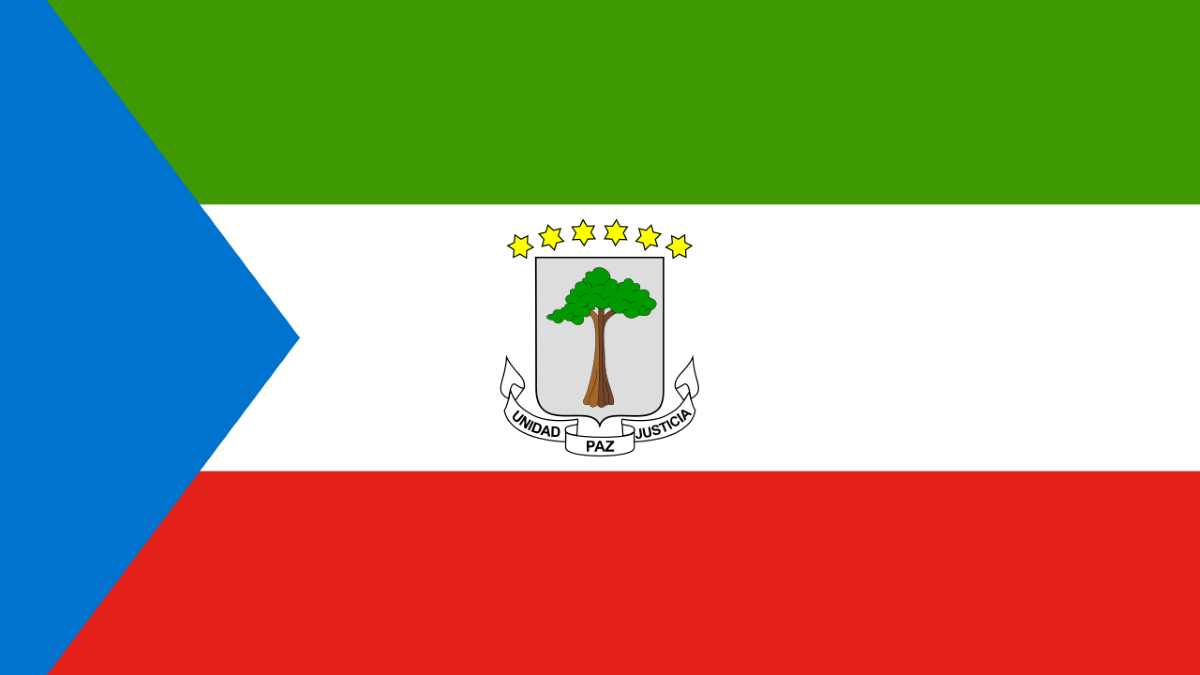
The vital necessity of stopping oil production decline in Equatorial Guinea (by Leoncio Amada NZE NLANG)

Published

on

Equatorial Guinea

The country’s economy had previously been based on agriculture (largely coffee and cocoa) and the export of wood, until the dawn of the oil era

CAPE TOWN, South Africa, June 5, 2024/APO Group/ — 

By Leoncio Amada NZE NLANG, Executive President of the African Energy Chamber at CEMAC (http://www.EnergyChamber.org) and President of Apex Industries SA.

The discovery of oil in Equatorial Guinea in the mid-1990s constituted an undoubted turning point in the country’s history. The country’s economy had previously been based on agriculture (largely coffee and cocoa) and the export of wood, until the dawn of the oil era.

The influx of multinationals (oil majors) in Equatorial Guinea’s energy sector was due to the attractiveness of the fiscal terms and the prospectivity that the country offered for foreign direct investment (FDI) compared to other countries in the region; so much so that the nation occupied the third place among Sub-Saharan African oil-producing countries in for many years, behind Nigeria and Angola.

In effect, the discovery of oil put an end to the economic primacy of the agricultural sector and promoted the activities of the oil industry, which very soon began to attract foreign investment, allowing the enrichment and financial autonomy of the country. Oil activities led to the implementation of other related industries, thus allowing the development of other economic sectors.

This was made possible through the country’s infrastructure investments and social projects, which in turn had a new, reliable source of finance. Prior to that, traditional products like coffee, cocoa, and wood made the Equatoguinean economy largely dependent on the economic aid it received from the great powers and international financial institutions (including the World Bank, International Monetary Fund, etc.). But the discovery and exploitation of national oil deposits allowed the country to free itself from foreign economic influence. As such, Equatorial Guinea was able to undertake a huge public infrastructure investment program that covered the entire national territory and oversaw the construction of roads, bridges, ports, airports, public housing, power plants, urban districts, hospitals, university campuses, and new cities, as well as the creation of new ministry buildings and town halls. At the same time, oil wealth led to a growth in public savings and investment, reaching the record figure of 3,784 million euros in 2009.

To delve into the details, 534 million euros were invested in social infrastructure, 1,322 million euros in civil infrastructure, 997 million euros in productive investment, and 930 million euros in investment for public administration. Social investment grew by 116% in 2009, compared to an overall growth of 78%.

At the same time, the country’s oil boom has generated other complementary industries, including the construction of a liquefied natural gas (LNG) plant, a methanol plant, a liquid petroleum gas (LPG) plant, among others. These developments have given Equatorial Guinea business opportunities across the economy and have played an important role in the diversification of economic activities, promoting investment in diverse sectors of society and giving the state control over the country’s affairs.

The current situation:

After years of frenetic activity in the energy sector, the country today faces a sharp drop in oil production, which has put it at the bottom of the production rankings of OPEC countries, as can be seen in the following chart:

The reasons for this decrease in production are manifold, but foremost among them is a lack of new discoveries. The last discovery made was in 2007 at the Aseng site. If constant exploratory activity is not maintained, new deposits will not be discovered, and production levels will become volatile.

Natural gas has performed relatively better, despite being a more mature industry than oil. The gas era began with the discovery of the Alba field in 1984, with production coming online in 1991, ahead of oil production. The field still accounts for approximately 45% of the country’s daily production and is a large supplier of feed gas for its LNG (EG LNG) plant, which has been operational since 2007.

The aging of the Alba field has reduced the country’s total production, which peaked in 2013. But the decline has been gentler compared to the precipitous decline in oil production. However, growing domestic demand for gas is further reducing the country’s export capacity.

Equatorial Guinea is in a transitional phase of formulating projects and transformative strategies aimed at diversifying its economy

Hoping to safeguard Equatorial Guinea’s gas exports and attract international interest, the government has set out a vision of establishing the country as a regional gas liquefaction hub, receiving gas from domestic fields, as well as from neighboring Cameroon and Nigeria, to process it and export it to international markets. Such a plan would extend the lifespan of our EG LNG facility, which has been in difficulty since gas supplies from the Alba field began to decline. The project is progressing at a slow pace due to obstacles like negotiations with neighboring countries on developing cross-border oil and gas fields, securing potential supplies, and building connecting pipelines.

In 2019, the country launched a licensing round to auction 27 oil and gas blocks. In the end, three blocks were awarded to small players. In 2023, the government adopted an “open door” policy, whereby any company could express interest and enter into direct negotiations with the government. In 2023, a block was awarded to Panoro Energy as a result of these negotiations.

An open-door strategy is generally adopted when the success of a bidding round is in doubt. Indeed, bidding rounds are the superior and most widely used strategy for allocating oil and gas licenses. However, their success depends on several factors, some of which go beyond a country’s borders, such as prevailing oil and gas prices, while others are related to the country’s potential. When prices are high and the country’s oil and gas sector has promising prospects, competition among bidders tends to be strong, resulting in a windfall for the government. A failed bidding round that does not attract enough interest can damage a government’s negotiating position. To avoid such an outcome, governments use direct negotiations.

With aging assets, technically challenging small fields, and high exploitation costs, Equatorial Guinea is among the producers that are particularly exposed to the pressures of the energy transition. The government’s priority should be to extend the lifespan of its hydrocarbon sector, which represents around 85% of its GDP and just over 75% of its tax revenue, by remaining open to offers from smaller players. Governments usually prefer to work with large industry players that have a presence on their home soil, given that smaller players lack adequate financial and technical resources. It also makes it easier to negotiate new agreements. However, a change in the structure of the industry is expected as producing oil fields become more mature. The government should adopt measures that will help it adapt to this new phase.

To improve the attractiveness of investing in the country, the government announced several tax incentives, effective from early 2024, including reducing the corporate income tax rate from 35% to 25%. These measures could help but are not enough to offset the limited potential needed to generate the kind of rewards big players typically require. In fact, we believe that the measures adopted are too timid and that more forceful actions should be implemented in the short term to save and reactivate the sector that constitutes the backbone of the country’s economy.

There are no miracles in the oil industry, the only alternative is to apply the “Drill baby Drill” theory, which means drilling and drilling more exploratory wells to maintain or increase production levels. For this, certain incentive actions are necessary:

  1. Resolve the problem of the New BEAC Change Regulation. This highly bureaucratic and suffocating process has become the biggest obstacle and brake on foreign direct investment in Equatorial Guinea’s oil sector.
  2. Tax incentives.
  1. Exemption from payment of tax on assignments and transfers of assets in the oil sector for companies in the exploration and development phases. This measure would revive the appetite of independent companies to invest in the Equatoguinean oil sector and would revive exploratory activity in the country, motivating agile companies dedicated to exploration, thus favoring the farm-in and farm-out processes.
  2. Tax holidays on the payment of corporation tax (IS) for a negotiable period for new deepwater gas field contracts.
  3. Tax holidays on the payment of corporation tax (IS) for a negotiable period for new contracts for gas fields in shallow waters.
  4. Tax holidays on the payment of corporation tax (IS) for a negotiable period for deepwater crude oil field contracts.
  5. Tax holidays on the payment of corporation tax (IS) for a negotiable period for crude oil field contracts in shallow waters.
  6. Tax credits for operating companies that train Guineans and whose management positions are occupied by nationals for contracted companies as follows:
  7. Exemption from the payment of customs and parafiscal duties on the import of equipment and machinery intended for oil operations in favor of local companies operating in the sector.
  8. Tax credits for operating companies that partner with local companies for the establishment of research and development (R&D) centers in Equatorial Guinea.
  9. Although the issue of transfers abroad is not a tax issue, we appeal to the Ministry of Finance and Budgets to take action on the matter because this issue has become one of the greatest obstacles to foreign investment into Equatorial Guinea.
  1. Regulatory and legal stability. Investors seek stability in the regulations and laws that govern the oil sector. Constant changes in regulations can increase uncertainty and deter investment.
  2. Ease of acquiring permits and regulations. Simplify the processes of obtaining permits and licenses, streamline bureaucratic procedures, and reduce the regulatory burden for companies in the oil sector.
  3. Training and education. Promote training and specialized training programs in the oil sector to guarantee the availability of qualified labor.
  4. Legal security. Ensure a stable and predictable legal environment to attract long-term investments in the oil sector.
  5. Incentives for innovation and technology. Stimulate the adoption of innovative technologies in the oil industry through financial incentives or R&D support programs.
  6. Promotion of sustainability. Promote sustainable practices in oil extraction and production.

The role of Gepetrol.

With the transfer of MEGI’s assets to Gepetrol SA, the company has the opportunity and potential to become one of the most vibrant national oil companies (NOCs) in Sub-Saharan Africa. Its association with PETROFAC as a technical partner for the operation of the ZAFIRO field will not only allow the company to acquire the experience and technical and operational capacity necessary to effectively and efficiently manage Block B, but also to be an active partner in the operation of other oil fields to represent the interests of the state.

Equatorial Guinea is in a transitional phase of formulating projects and transformative strategies aimed at diversifying its economy, the results of which have yet to be felt, but which will considerably reduce its high dependence on the oil sector.

The fact remains that more than 80% of the country’s GDP comes from the hydrocarbon sector and this scenario is not expected to change in the medium term. It is for this reason that we invite all actors in the sector to adopt whatever measures are necessary to save “the goose that lays the golden eggs.”

Distributed by APO Group on behalf of African Energy Chamber

Business

Enlit Africa seeks contributions that move the conversation from strategy to execution: ensuring a Future Fit Africa
Published

on

Africa

Share your expertise with Africa’s power, energy and water community, connect with decision makers from across the value chain and contribute to the conversations shaping the continent’s next generation of infrastructure and investment

CAPE TOWN, South Africa, September 25, 2026/APO Group/ –Speaker submissions are open for Enlit Africa, created by VUKA Group (www.WeAreVuka.com), as it returns to the CTICC, Cape Town from 11–13 May 2027.

Do you have a project, lesson, strategy or innovation that Africa’s energy sector should hear about?


We invite utilities, project owners, developers, IPPs, commercial and industrial energy users, municipalities, policymakers, regulators, financiers, researchers and industry practitioners to submit abstracts sharing practical experience, case studies, research, projects and lessons from across Africa’s changing energy and water sectors.

What are we looking for?

We particularly encourage non-vendor speakers to submit contributions across:

  1. Enlit Africa Main Stage – From Strategy to Execution
    Policy, market reform, investment, leadership and the decisions required to turn Africa’s energy ambitions into implementation.
  2. Generation
    New capacity, generation technologies, energy security, operating performance and Africa’s evolving energy mix.
  3. Transmission & Distribution
    Grid expansion, modernisation, open access, system operation, cross-border interconnection, digitalisation and infrastructure investment.
  4. Municipal Forum:Municipal management, with an emphasis on electricity and water – with a strong emphasis on service delivery.
  5. Power Hub:Technical advancements in power generation, transmission, distribution and more. Technical presentations encouraged.
  6. Water Hub:Technical insights into water management and solutions.
  7. Water Security Hub: Strategy, finance, management and technology application for water security.
  8. Project & Investment Hub: Project developments, country roundtables, project briefings, finance, and innovative financing models (including M300).
  9. Renewable Energy & Storage:Covering both technical and strategic applications of renewables and storage.

What makes a strong submission?

We want to hear about what is happening on the ground.

Tell us about:

  • A project being implemented or developed
  • A challenge your organisation has solved – or is still trying to solve
  • Lessons from implementation
  • New research or industry findings
  • Innovative financing or commercial models
  • Technologies being deployed in real operating environments
  • Policy or regulatory changes and what they mean in practice
  • Approaches that could be replicated elsewhere in Africa

Preference will be given to submissions that provide practical insights, measurable outcomes and lessons that the wider industry can apply.

Why present at Enlit Africa?

Africa does not need another conversation about what should happen. Help us explore how we make it happen and how we ensure Africa is future fit.

Share your expertise with Africa’s power, energy and water community, connect with decision makers from across the value chain and contribute to the conversations shaping the continent’s next generation of infrastructure and investment.

Submission details

Abstract length: 300–500 words
Submission deadline: 29 January 2027
Speaker feedback: 7 December 2026 – 5 February 2027

Visit the Enlit Africa website to submit your speaker abstract: https://apo-opa.co/4d2TTq2

Distributed by APO Group on behalf of VUKA Group.


Continue Reading

Business

CEM Africa Awards 2026 set to recognise Africa’s leading Customer Experience (CX) talent and innovation
Published

on

CEM Africa Awards

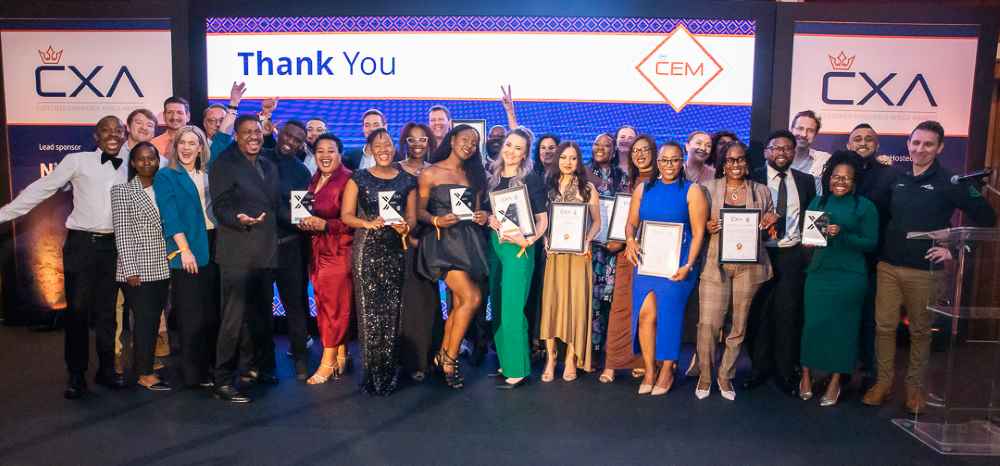
The 2025 awards attracted more than 80 entries and 31 finalists, culminating in eight award winners
The calibre of organisations and individuals recognised through the CEM Africa Awards demonstrates just how much extraordinary CX work is being done across the continent


JOHANNESBURG, South Africa, September 25, 2026/APO Group/ –Customer experience professionals, teams and organisations across Africa have just days remaining to enter the 2026 CEM Africa Awards, with free applications closing on 30 September 2026.


Taking place on 10 November 2026 at the NH Hotel in Sandton, Johannesburg, the Customer Experience Africa Awards form part of the CEM Africa platform and recognise the individuals, teams, technologies and initiatives raising the standard of customer experience across the continent.

For organisations considering whether to enter, the company they could be keeping provides a compelling indication of the calibre of the awards.

A growing roll call of African CX leaders

The 2025 awards attracted more than 80 entries and 31 finalists, culminating in eight award winners. Finalists represented organisations spanning financial services, technology, telecommunications, retail, insurance, public services and social impact.

Among them were Absa, Capitec Bank, Santam, Telesure Investment Holdings, Equity Bank, Takealot.com, NTT DATA, Frogfoot, Telviva, Harambee Youth Employment Accelerator, the University of Pretoria and South Africa’s Department of Social Development.

The 2025 winners included Serisha Iyer of Absa Corporate and Investment Banking, named Rising Star in CX; Alma Angela Olela of Jubilee Health Insurance, named CX Leader of the Year; and Franco Cotumaccio of Shadow Global, winner of Breaking Barriers in CX.

Corporate winners included Telesure Investment Holdings for Best Overall CX Solution, Krisp for Best Use of AI, Telviva for Best Enterprise Contact Centre Platform, Harambee Youth Employment Accelerator for Best Customer Experience Team of the Year and the University of Pretoria for Best Citizen Experience Initiative.

That follows a 2024 edition in which winners included NCBA Bank, MultiChoice, Digital Solutions Group, Absa Bank and Telviva, alongside individual CX leaders from across the continent.

More than a trophy

For entrants, recognition through the CEM Africa Awards puts their work in front of a wider African CX community and an independent judging panel drawn from across the industry.

The 2026 judging panel includes global CX specialist Ian Golding; Andrew (Dré) Enebeli, Head of CX & Engagement at Access Bank; Dr Oliver Museka, President and Founder of IRDM College Eswatini; Jonathan Daniels, Managing Director of CX Centric; Joven Pillay, Partner and Head of Customer Consulting at KPMG; and Qaalfa Dibeehi, Managing Partner at Human2Outcome.

This year’s awards recognise excellence across four broad pillars – People, Innovation, Transformation and Government – covering categories including CX Leader of the Year, Rising Star in CX, Breaking Barriers in CX, Best Overall CX Solution, Best Use of AI, Best Enterprise Contact Centre Platform, Best Customer Experience Team of the Year, Best Digital Transformation in Public Services and Best Citizen Experience Initiative.

“The calibre of organisations and individuals recognised through the CEM Africa Awards demonstrates just how much extraordinary CX work is being done across the continent. These awards give that work a platform. Whether it is a major transformation programme, an innovative use of technology or an individual changing how their organisation thinks about the customer, we want to make sure Africa’s best work is being seen and recognised.”

  • Briteny Price, Event Manager and CEM Africa Awards Director

Final opportunity to enter

Applications for the 2026 CEM Africa Awards are free and remain open until 30 September 2026. Finalists will be announced in October, ahead of the awards ceremony on 10 November at the NH Hotel, Sandton.

Organisations, teams and individuals working to improve customer and citizen experience across Africa are encouraged to submit their entries before the deadline.

Apply for the CEM Africa Awards 2026 by 30 September 2026

Submit your application (https://apo-opa.co/4hdcimx)

Explore the CEM Africa Awards

Visit the CEM Africa Awards website (https://apo-opa.co/4iNXzzM)

Distributed by APO Group on behalf of VUKA Group.


Continue Reading

Business

Emirates to bring the A350 to Nairobi, introducing next-generation cabin experiences

Published

on

Emirates

The introduction of the A350 also marks the first time Emirates’ highly acclaimed Premium Economy cabin will be available to customers flying to and from Kenya, complementing the airline’s enhanced Business and Economy offerings

  • From 25 October, Nairobi becomes the 32nd destination to be served by the Emirates A350
  • Latest-generation aircraft introduces Emirates’ acclaimed Premium Economy cabin to Kenya for the first time, along with enhanced Business and Economy Class cabins
  • Deployment reinforces Emirates’ continued investment in Kenya and commitment to delivering an exceptional customer experience across its Africa network


Emirates (www.Emirates.com), the world’s largest international airline, will soon serve Nairobi with its newest aircraft type, the Airbus A350 (https://apo-opa.co/47hy1nv). From 25 October 2026, the A350 will operate on EK717 and EK718, bringing Emirates’ latest-generation cabin experience to customers travelling between Dubai and Nairobi. The Emirates A350 is defined by spacious, bright cabins, enhanced technology, connectivity, and the airline’s signature hospitality across all three cabins.


The introduction of the A350 also marks the first time Emirates’ highly acclaimed Premium Economy cabin will be available to customers flying to and from Kenya, complementing the airline’s enhanced Business and Economy offerings.


Christophe Leloup, Emirates Country Manager in Kenya said, “The arrival of the A350 in Nairobi marks an exciting new chapter for Emirates in Kenya. We’re delighted to bring our latest aircraft and onboard experience to our customers in market, with more comfort, choice and thoughtful touches in every cabin. Combined with our growing flight schedule, the A350 gives customers travelling on the Dubai-Nairobi route something new to discover, while building on the experience they know and love from Emirates.”


What passengers can expect from the A350

The newest aircraft type to join Emirates’ all widebody fleet, the A350 accommodates 298 passengers in three spacious cabins – Business, Premium Economy and Economy. The bright and airy cabins have been thoughtfully designed to provide more space and comfort in every cabin, whilst cutting-edge technology and enhanced entertainment options elevate every journey.


Making its debut in Kenya, Emirates’ Premium Economy cabin offers elevated comfort, comparable to a Business Class experience on many airlines. The cabin is spacious with leather reclining seats that feature a generous pitch, adjustable headrests and more legroom. Customers can enjoy in-seat charging points, a wood-finished side cocktail table, a 13.3-inch TV screen, a generously sized pillow and blanket, complimentary amenity kits on select flights – including the Dubai-Nairobi route – and a globally exclusive sparkling wine, Chandon Vintage Brut 2017.

We’re delighted to bring our latest aircraft and onboard experience to our customers in market, with more comfort, choice and thoughtful touches in every cabin


Business Class is configured in a 1-2-1 layout ensuring every passenger has direct aisle access and a spacious, private environment for both work and relaxation. The fully lie-flat seat is wrapped in soft cream leather and features a personal minibar and wireless charging for comfort and convenience. At the back of the cabin is a snack display area allowing passengers to help themselves to refreshments throughout the flight.


Economy Class features an all new, airy colour palette of sky blue, bronze and cream, complemented by lighter-toned wood finishings. Each seat features the airline’s upgraded ice inflight entertainment system on a 13.3inch 4K adjustable touchscreen, while generous seat pitch and leather headrests provide support, comfort and extra legroom.


Continuing to raise the bar in Kenya

The deployment of the A350 follows a series of enhancements to the Emirates customer proposition in Kenya, including the introduction of the third daily flight between Dubai and Nairobi in July. With 21 flights per week, customers have greater flexibility and connections between Kenya and key markets across Europe and the US, via Dubai.


Nairobi is also home to Africa’s first Emirates World (https://apo-opa.co/4yeI34C) store, which opened in 2024, offering customers a more immersive way to discover Emirates’ products, while offering more convenience and personalised service.


Earlier this year, Emirates introduced further flexibility for customers in Kenya through a partnership with Cellulant, launching a split-payment solution (https://apo-opa.co/4xLYG6R) that allows travellers to combine multiple payment methods across 24-hour instalments when purchasing airfares.

Tickets can be booked now on Emirates.com, the Emirates App, or via both online and offline travel agents as well as Emirates World Store (https://apo-opa.co/46Kglkc) in Nairobi. Emirates continues to offer flexible booking policies for added peace of mind while travelling. Every ticket booked after 10th August 2026 comes with free unlimited dates changes to Dubai and one complimentary date change to anywhere else in the world, in addition to significantly reduced refund fees across all cabins and fare types, allowing passengers to adjust their travel plans with minimal penalties.

Distributed by APO Group on behalf of The Emirates Group.


Continue Reading

Trending