Connect with us
Anglostratits

Business

Hong Kong outlines strategies for deepening development of the Guangdong-Hong Kong-Macao Greater Bay Area and enhancing green transformation

Published

on

Hong Kong

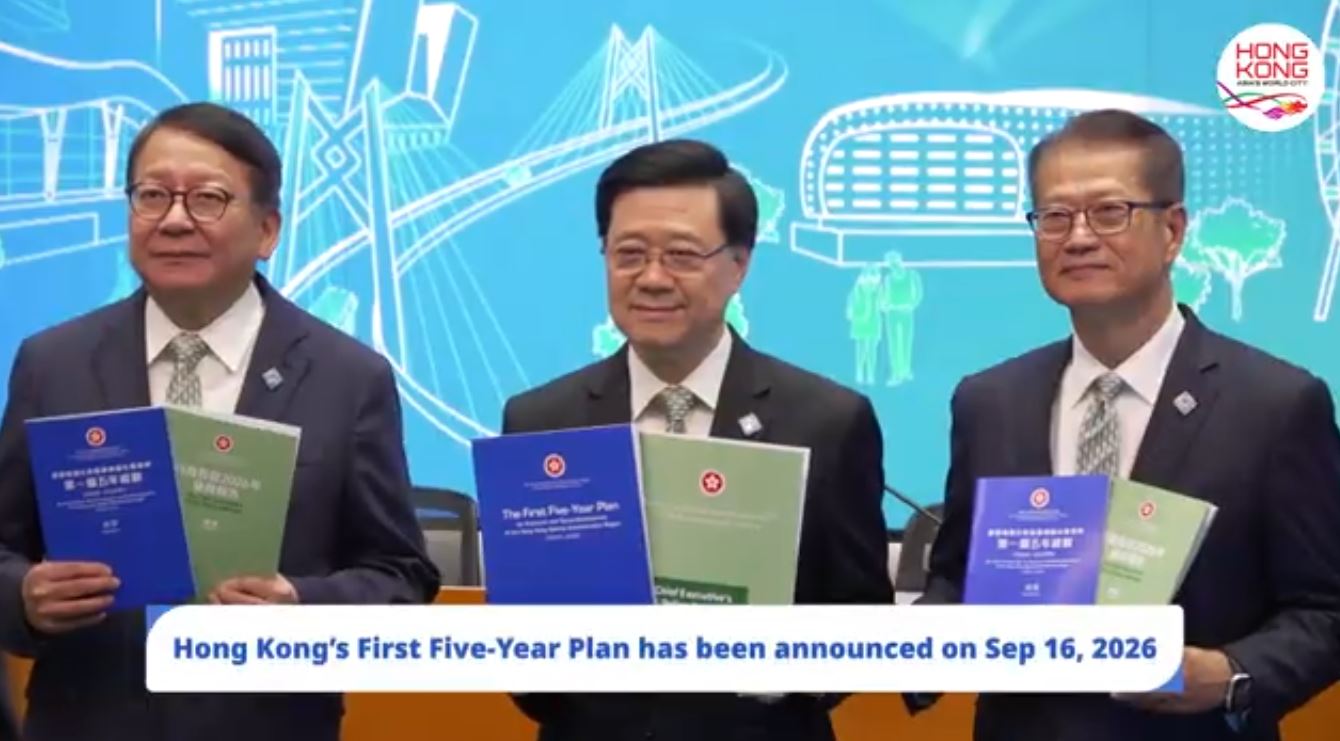
HONG KONG SAR – Media OutReach Newswire – 22 September 2026 – Hong Kong’s Chief Executive John Lee announced the First Five-Year Plan for Economic and Social Development of the Hong Kong Special Administrative Region (HKSAR) (2026-2030) and his fifth Policy Address on September 16, rolling out measures to further sharpen Hong Kong’s edge amid global competition, consolidate development of the Guangdong-Hong Kong-Macao Greater Bay Area (GBA) and promote green transformation.

Initiatives aim to support high-quality development of the GBA, align rules and mechanisms within the region, and promote cross-boundary collaboration.


“The HKSAR Government will continue its efforts in fostering synergistic development of the GBA,” said Mr Lee. “We will strengthen co‑operation in technological innovation, promote ‘hard connectivity’ in infrastructure, foster ‘soft connectivity’ by deepening the alignment of rules and mechanisms, and achieve ‘connectivity of hearts’ among residents of the three places.”

The HKSAR Government will continue to actively participate in the development of the various major co-operation platforms, including Qianhai of Shenzhen, Nansha of Guangzhou, Hengqin of Zhuhai and the Hetao Shenzhen-Hong Kong Co-operation Zone, to promote mutual benefits.

In terms of “hard connectivity” the HKSAR Government will support Nansha in its role as a high‑standard gateway for opening up, including encouraging the trade to participate in Nansha’s infrastructure development.

“To promote the co‑ordinated development of rail transit in Guangdong, Hong Kong and Macao, we are pressing ahead with the Northern Link Project and the Hong Kong‑Shenzhen Western Rail Link (Hung Shui Kiu‑Qianhai), with target commissioning in 2034 and 2035 respectively, to fully connect the rail transit networks of Hong Kong and Shenzhen,” Mr Lee said.

Regarding “soft connectivity”, Mr Lee said the HKSAR Government will set up a Task Force to explore ways to advance the alignment of rules and mechanisms within the GBA.

To achieve “Connectivity of Hearts” among residents across the GBA, Hong Kong will strengthen co-operation between its higher education institutions and those in other GBA cities by establishing cross‑disciplinary partnerships, facilitating scientific research, knowledge transfer, and commercialisation, with a view to promoting high‑level research.

Hong Kong’s Secretary for Constitutional and Mainland Affairs, Janice Tse, noted that the First Five-Year Plan clearly states that Hong Kong will participate in the development of the GBA into an international first‑class bay area and a world‑class city cluster with global influence.

“Hong Kong will forge closer alignment and synergy with the nine GBA cities in Guangdong Province and Macao, making full use of our respective advantages to jointly promote the high-quality development of the GBA,” Miss Tse said.

To foster financial development in the GBA, Hong Kong will continue to capitalise on institutional innovation, financial infrastructure upgrading and enhanced regulatory alignment to encourage the orderly flow of financial elements among GBA cities.

The Hong Kong Exchanges and Clearing Limited’s Core Climate, in collaboration with the Guangzhou Power Exchange Centre, is working towards the pilot trading of national renewable‑energy, green electricity certificates in Hong Kong in 2026.

“On connecting the Chinese Mainland and the world, the HKSAR Government will continue to support green technology development through the HK$400 million (aboutUS$51 million) Green Tech Fund, leveraging Hong Kong’s function as a springboard for green technology and assisting national green technologies and products in going global,” said Hong Kong’sSecretary for Environment and Ecology, Tse Chin-wan. “On the development of hydrogen energy, we have participated in drafting national hydrogen energy standards with a view to helping these standards align with international practice.”

To meet the country’s “dual carbon” targets and fulfil Hong Kong’s commitment to achieving carbon neutrality before 2050, the HKSAR Government steered the establishment of a production base for sustainable aviation fuel (SAF) in Dongguan, leveraging the leading position of Hong Kong enterprises in the international SAF industry.

“By combining technology strengths with industrial foundation, Hong Kong and Guangdong will jointly develop a globally influential green industry,” Mr Lee said.

The HKSAR Government will take forward the construction of an SAF blending facility in Hong Kong to build an end‑to‑end SAF value chain and reduce logistics costs to make SAF prices more competitive. The target is to achieve an SAF consumption ratio of 1% to 3% for flights departing from Hong Kong International Airport in 2030.

Hong Kong’s Five-Year Plan promotes the integrated development of culture, sports, and tourism, to develop the GBA into a cultured bay area.

Under the strategic framework of the Agreement on Strengthening of Sports Cooperation and Promotion of Integrated Development, Hong Kong will deepen co-operation, and strive to co‑organise important regional and international single‑sport events. It will also strengthen cultural exchanges, pass on Cantonese opera and the characteristics of Lingnan culture, and promote the sales and cross‑boundary exhibition of Hong Kong publications.



Business

African Energy Chamber’s NJ Ayuk Signs United States (U.S.) Deal to Author Book Detailing Nigeria’s Energy Resurgence

Published

on

African Energy Chamber
The African Energy Chamber’s Executive Chairman examines how Nigeria’s reforms and gas resources can anchor industrial growth in Africa’s top oil producer
JOHANNESBURG, South Africa, November 25, 2026/APO Group/ –NJ Ayuk, Executive Chairman of the African Energy Chamber (AEC) (https://EnergyChamber.org/), has entered into an agreement with a U.S. publishing house to author a book on the history, reform and future of Nigeria’s oil and gas industry, after six months of research and writing. Following his May 2026 study of Angola’s petroleum turnaround, Ayuk turns to Africa’s top oil producer, assessing how the responsible development of Nigeria’s hydrocarbon resources can strengthen energy security and drive industrialization across the country.


Tentatively titled Trillions at Play: Nigeria’s Energy Future and the Rise of Independents, the book will examine Nigeria’s potential to become Africa’s first trillion-dollar economy, the emergence of independent energy producers and the policy choices required to deliver a durable national turnaround.

It will also examine Nigeria’s energy sector and its broader economic transformation, delving into nearly seven decades of Nigeria’s petroleum industry beginning with the first commercial discovery at Oloibiri in 1956. It will examine the milestones and setbacks that shaped the industry, along with the reforms that have repositioned it for growth, and will draw lessons for other African producers.

At the heart of the book is the rise of Nigeria’s indigenous companies and the country’s strategic pivot toward gas. The 2021 Petroleum Industry Act has given the sector a new legal and fiscal footing, and Nigeria’s crude output has met its OPEC quota for six consecutive months. With gas reserves estimated at 215.19 trillion cubic feet, the largest in Africa, the country is positioning gas as the foundation of its industrial growth.

For six months I have been deeply immersed in this project, tracing the long arc of Nigeria’s oil and gas journey

This transformative shift can already be seen across the entire industry. Looking at the massive 650,000-barrel-per-day Dangote Refinery in Lekki, which is ramping up production and expanding even further. At the same time, local leaders like Seplat Energy, Renaissance Africa Energy, and Oando are closing major multi-billion-dollar onshore and shallow-water deals thanks to the new PIA regulatory framework. On top of that, key gas projects including the AKK pipeline and the ANOH Gas Processing Plant, together with NLNG Train 7 are finally turning Nigeria’s huge gas reserves into real domestic power, industrial growth, and export income.

“For six months I have been deeply immersed in this project, tracing the long arc of Nigeria’s oil and gas journey. The more I research, analyze and write, the more excited I become. We are witnessing a monumental turnaround story, a legal, regulatory and industrial renaissance. After publishing three best-sellers in the United States over the last ten years, I am convinced this will be my most significant work yet,” says Ayuk, adding “I want to thank the many Nigerians and industry experts who have allowed me to interview them over the last six months and shared invaluable data to inform my research as I take this project forward.”

Trillions at Play will connect Nigeria’s energy resources to the larger forces shaping its future from investment and industrial policy to national sovereignty, technological change and the lives of the people whose prosperity depends on energy. The book is intended to be both an authoritative account of Nigeria’s energy ambitions and a compelling story of a nation standing at a consequential economic crossroads.

What makes the publication unique is the way that it will draw on the narrative quality with vivid scene-setting, memorable character portraits and elegant, human-centered reportage. The result will both an authoritative account of Nigeria’s energy ambitions and a compelling story of a nation standing at a consequential economic crossroads.

“As Nigeria seeks to convert its natural-resource wealth into broad-based prosperity, Trillions at Play will ask a defining question: can the country move from the promise of energy abundance to the reality of economic independence?,” Ayuk notes.

The book will join Ayuk’s previous works, including Big Barrels: African Oil and Gas and the Quest for Prosperity (2017), Billions at Play: The Future of African Energy and Doing Deals (2019), A Just Transition: Making Energy Poverty History with an Energy Mix (2023) and Crude Oil: Power, Turnaround and Transformation in Angola (2026).

Distributed by APO Group on behalf of African Energy Chamber.


Continue Reading

Business

Kenya Targets 20,000 Barrels per Day (BPD) by December as Regional Producers Push for Energy Integration

Published

on

Kenya

As Kenya and Uganda advance toward commercial oil production, regional energy leaders at SSOP 2026 emphasized the role of cross-border infrastructure in unlocking Africa’s hydrocarbon potential

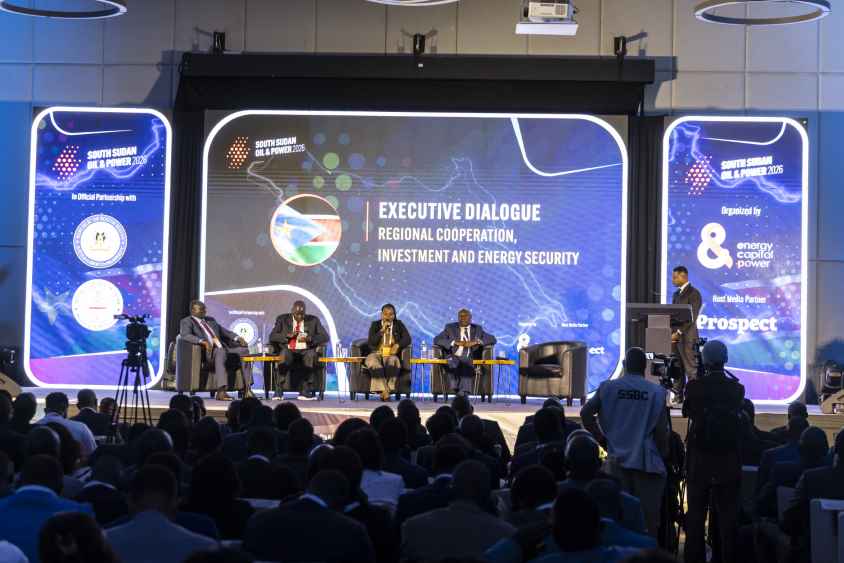
JUBA, South Sudan, November 25, 2026/APO Group/ –Kenya plans to commence commercial oil production at 20,000 barrels per day (bpd) before the end of December 2026, with plans to scale output to 50,000 bpd in 2027, Dr. Silvester Kasuku, Advisor to the President on Governance, Kenya, announced during a ministerial panel at South Sudan Oil & Power (SSOP) 2026 in Juba.


The session brought together energy leaders from Kenya, Uganda, Zimbabwe and South Sudan to examine strategies for accelerating first oil across African frontier markets while maximizing domestic and regional value addition.

“As we go to 2031, we target 120,000 bpd,” Dr. Kasuku stated, noting that the phased production rollout aims to commercialize the 13 discoveries Kenya has made to date.

Sharing updates on Uganda’s upstream and midstream progress, Hon. Okaasai Sidronius Opolot, the country’s Minister of State for Energy, stressed that achieving first oil must go hand-in-hand with local refining to retain economic value within the continent.

Regional connectivity is a key factor for success because one of the biggest challenges we are facing is a lack of connectivity

“First oil production is coming, and it is a reality,” Minister Opolot said. “We have two investments – the Kingfisher and Tilenga fields – and we have got the East African Crude Oil Pipeline advancing. We are deliberately saying: why would you export crude oil and then import petroleum? We have been given priority to refine at home.”

Highlighting Southern Africa’s frontier potential, Hon. Yeukai Simbanegavi, Deputy Minister of Energy and Power Development of Zimbabwe, underscored the importance of cross-border pipeline infrastructure to monetize gas and condensate discoveries. The country is currently advancing the development of the Cabora Bassa project, its first commercial gas project led by Invictus Energy.

“We were not sure that we would discover anything, but we have realized that there is substantial gas and condensate that we believe can help us as a country. Through all this, we need to ensure we create added value,” she said. “We want to have more gas pipelines, and we want to build through Mozambique, Zambia and South Africa and connect with them. We have MoUs in place to discuss how we can progress the pipelines.”

Echoing the call for deeper cross-border integration, Hon. Eng. Awow Daniel Chuang, Caretaker Minister of Petroleum of South Sudan, identified regional transport and logistics networks as decisive factors for attracting energy investment.

“Regional connectivity is a key factor for success because one of the biggest challenges we are facing is a lack of connectivity,” he stated. “Oil is about logistics and when we talk about investment, it has to make sense. Our connection with Uganda, Kenya and even with the DRC is key. The only country we are connected to currently is Uganda.”

To bridge this gap, South Sudan plans to expand the construction of permanent roads linking producing oilfields directly to regional demand centers to streamline the movement of goods and services.

Distributed by APO Group on behalf of Energy Capital & Power.


Continue Reading

Business

Ibom LNG Partners with Afreximbank to support US$1.5 billion LNG project in Akwa Ibom

Published

on

Afreximbank

Licensed 200 million Standard Cubic Feet per Day (MMscfd) project set to boost gas monetisation, create jobs and serve domestic and export markets

LAGOS, Nigeria, November 25, 2026/APO Group/ –Ibom LNG & Logistics Base Limited has signed a Financial Advisory Agreement with the African Export-Import Bank (Afreximbank) (www.Afreximbank.com) to support the mobilisation of US$1.5 billion for its proposed liquefied natural gas project in Eastern Obolo, Akwa Ibom State, Nigeria.


The engagement represents a significant milestone in the development of the project, which has secured a license to establish a facility designed to process 200 million standard cubic feet of gas per day within the Liberty Free Trade Zone.

Under the agreement, Afreximbank will provide financial advisory services to support the project’s financing process, establishing a framework for progressing funding arrangements alongside the technical, commercial and regulatory requirements necessary to achieve financial close.

Commenting on the development, Anietie Isonguyo, Esq, Company Secretary of Ibom LNG & Logistics Base Limited, said:

We are committed to translating Nigeria’s gas resources into lasting economic value for Akwa Ibom State, the Niger Delta and the country

“Our engagement with Afreximbank marks an important step in advancing the financing of the Ibom LNG project and reflects our commitment to attracting the financial and technical partnerships required to bring this investment to fruition. The project is expected to create direct and indirect employment opportunities for our host communities and the wider state, support indigenous businesses and expand gas supply for domestic and export markets.” He added: “We are committed to translating Nigeria’s gas resources into lasting economic value for Akwa Ibom State, the Niger Delta and the country.”

“Afreximbank is committed to supporting the development of Africa’s oil and gas value chain as a catalyst for industrialisation, job creation and intra-African trade. By providing financial advisory support to projects such as Ibom LNG, we aim to help mobilise African capital to transform Africa’s energy resources into value-added industries, exports and shared prosperity,” said Mr. Denys Denya, Senior Executive Vice President, Afreximbank.

The project aligns with the Federal Government of Nigeria’s gas monetisation policy and its commitment to converting the country’s abundant natural gas resources into investment, industrial development, employment and export earnings.

Designed to serve both domestic and international markets, the facility is expected to support LNG exports while providing gas for domestic energy and industrial applications. It is also expected to strengthen Akwa Ibom State’s position as a destination for gas-based investment.

For host communities and the wider state, the project offers prospects for employment during construction and operations, skills development and increased participation by indigenous businesses. Additional opportunities are anticipated across procurement, logistics, transportation, maintenance and other support services.

The combination of an establishment licence and a formal financial advisory engagement with Afreximbank demonstrates concrete progress in Ibom LNG’s project development programme and provides a stronger foundation for engagement with investors, contractors and other stakeholders.

As development activities advance, Ibom LNG aims to translate this progress into a major industrial investment that generates economic opportunities for Akwa Ibom State and the Niger Delta and contributes to Nigeria’s ambition to expand its gas economy.

Distributed by APO Group on behalf of Afreximbank.


Continue Reading

Trending