Connect with us
Anglostratits

Business

Africa Finance Corporation (AFC) Supports Successful Close of ₦729 Billion Series 2 Bonds to Advance Nigeria’s Power Sector Reforms

Published

on

Africa Finance Corporation

Working in partnership with CardinalStone Partners as co-Financial Advisers, the transaction reflects AFC’s deep local market expertise and its continued commitment to delivering complex, high-impact policy advice and financial solutions that catalyse sector-wide reform

ABUJA, Nigeria, September 23, 2026/APO Group/ –Africa Finance Corporation (AFC) (https://www.AfricaFC.org/), the continent’s leading infrastructure solutions provider, today announced its critical role as Co-Financial Adviser on the successful close of the ₦728.9 billion Series 2 power sector bond transaction by NBET Finance Company Plc, under the Federal Government of Nigeria’s Presidential Power Sector Financial Reforms Programme (PPSFRP). The programme is designed to resolve over a decade of legacy debt obligations within the Nigerian electricity supply industry.


This issuance follows the ₦501 billion inaugural Series 1 transaction completed in January 2026, where AFC played the same role of Co-Financial Adviser. The Series 2 close, which brings the cumulative issuance under the Programme to approximately ₦1.23 trillion, marks a significant milestone in the implementation of the ₦4 trillion Power Sector Multi-Instrument Issuance Programme..

The Presidential Power Sector Debt Reduction Committee (PPSDRC) oversees the Programme, with the Office of the Special Adviser to the President on Power provides technical leadership, implementing through the Nigerian Bulk Electricity Trading Plc (NBET)’s special purpose vehicle, NBET Finance Company Plc. Proceeds from the Series 2 issuance will continue to enable the process of settling verified, overdue receivables owed to Power Generation Companies (GenCos) for electricity supplied between February 2015 and March 2025, further extinguishing legacy claims and injecting liquidity into the electricity industry.

Closing the second issuance within eight months of the inaugural series shows the Programme is working as designed

Building on its critical role in Series 1, AFC provided comprehensive financial advisory services to the Federal Government of Nigeria on the Series 2 transaction, including support in negotiating and executing Settlement Agreements with additional GenCos, structuring of the Series 2 cash and non-cash tranches, and investor engagement ahead of the offer. Working in partnership with CardinalStone Partners as co-Financial Advisers, the transaction reflects AFC’s deep local market expertise and its continued commitment to delivering complex, high-impact policy advice and financial solutions that catalyse sector-wide reform.

Banji Fehintola, Executive Board Member and Head, Financial Services at Africa Finance Corporation, said, “Closing the second issuance within eight months of the inaugural series shows the Programme is working as designed- verified legacy obligations are being converted into transparent, investable instruments, and domestic investors are backing that approach. AFC is proud to continue supporting the Federal Government in delivering reforms that restore liquidity to the power sector and lay the foundation for new investment into Nigeria’s generation capacity.”

The Series 2 transaction comes on the back of the full and timely payment of the first coupon and principal instalment on the Series 1 Bonds in July 2026, demonstrating the Federal Government’s commitment to honouring its obligations under the Programme and reinforcing the credibility of the capital-markets approach to resolving legacy sector debt. The issuance, which was oversubscribed, attracted strong demand from pension fund administrators, banks, sovereign wealth funds and asset managers, further mobilising domestic long-term capital for critical electricity infrastructure in Nigeria.

When completed, the Programme will impact approximately 5,398MW of electricity generation capacity by Nigerian GenCos, effectively finalising settlement of payments for 290,644.84GWhr of electricity billed since February 2015 and providing a strong foundation for new investments into capacity enhancement and expansion by companies serving 12 million active registered customers across the country.

Mr. Akin Odeyemi, Managing Director/Chief Executive Officer, Nigerian Bulk Electricity Trading (NBET) Plc. said, “For too long, verified receivables have sat on GenCos’ balance sheets, limiting their ability to pay gas suppliers, maintain plants and invest in new capacity. With Series 2, we are turning more of those arrears into liquidity across the electricity value chain. We thank our investors, the participating GenCos, our advisers and the regulatory authorities whose support made this issuance possible.”

Nigeria’s Presidential Power Sector Financial Reforms Programme forms a fundamental aspect of the energy sector reforms by the government, alongside significant ongoing investments in consumer metering and transmission infrastructure, and a transition to bilateral electricity trading between wholesale counterparties based on market-reflective pricing. Together, these reforms are aimed at ensuring the evolution of a viable and sustainable electricity market in Nigeria to support long-term industrial growth and development.

Distributed by APO Group on behalf of Africa Finance Corporation (AFC).


Business

Afreximbank Announces Speakers for Africa’s Largest Compliance Forum

Published

on

Afreximbank

Bankers, compliance specialists and fintech leaders from more than 40 countries will explore how regulatory cooperation and technology can align compliance approaches, reduce barriers and advance intra-African and global trade

CAIRO, Egypt, November 3, 2026/APO Group/ –Afreximbank (www.Afreximbank.com) has announced speakers for its 2026 Compliance Forum, Africa’s largest compliance-focused gathering. Discussions will address regulatory fragmentation and barriers across Africa, improve access to correspondent banking services, and explore how technology can strengthen compliance and facilitate cross-border trade


Organised in partnership with the Botswana Investment and Trade Centre (BITC), the Forum will take place from 16 to 18 November 2026 at the Gaborone International Convention Centre in Botswana. Discussions will focus on strengthening regulatory cooperation, improving access to financial services and using technology to support effective compliance across African markets.

Confirmed speakers include Governor Lesego Caster Moseki, Bank of Botswana, Dr. Patrick Ndzana Olomo, Ag. Director, Economic Development, Integration and Trade, and Head of Economic Policy and Sustainable Development, African Union Commission (AUC), Luis Koberg, Founder and CEO of Klearium Group; Shane Ridel, CEO of Elucidate, Sophie Barre, Global Head of Risk and Compliance at Wave Mobile Money Group; Mr Mooketsi Ramanteba, Non-Bank Financial Institutions Regulatory Authority (NBFIRA), Nellie Nuyoni, Head of Private Sector, CBZ Holdings, Moira Mapundu, Head of Compliance, NMB Bank Limited and Boitumelo William of Continental Reinsurance. Compliance specialists from Dow Jones and Standard Chartered will also participate.

Mr Keletsositse Olebile, Chief Executive Officer of the Botswana Investment and Trade Centre, said: “Strong and predictable compliance systems build investor confidence, protect institutions, and create the conditions in which trade and enterprise can flourish.”

Under the theme “Better Compliance – Better Trade: Leveraging Compliance to Promote African Regulations that Advance Intra-African Economic and Trade Integration,” the Forum will examine how African markets can make their regulatory systems work more effectively together while preserving national sovereignty.

Idrissa Diop, Compliance Director at Afreximbank, said: “Our banks across Africa operate across very different legal systems, supervisory approaches and levels of digital maturity. Africa does not need uniformity at any cost. It needs interoperability that reduces friction while preserving regulatory sovereignty.

Our banks across Africa operate across very different legal systems, supervisory approaches and levels of digital maturity

“We invite regulators, compliance specialists, banks, fintechs, trade institutions and technology providers from across the continent to come to Gaborone ready to turn shared principles into practical cooperation, because better compliance can and should deliver better trade for Africa.”

The opening session, “Is Better Compliance Leading to Better Trade?”, will assess how regulatory cooperation can facilitate cross-border business. Other sessions will cover anti-money laundering and countering the financing of terrorism, sanctions, cybersecurity, consumer protection and the use of artificial intelligence in compliance.

Access to correspondent banking services will be a key focus. Luis Koberg, Founder and CEO of Klearium Group, said: “Many African banks continue to face barriers to accessing correspondent banking services. The reasons given often overlook a fundamental challenge: limited visibility across the payment chain. Improved transparency gives our industry the ability to accurately assess and manage risk, on a case-by-case basis with confidence.”

Delegates will also examine how fintech and risk-based onboarding can extend access to affordable financial services while meeting compliance requirements.

Sophie Barre, Global Head of Risk and Compliance at Wave Mobile Money Group, said: “Fintechs are rewriting the rules of financial inclusion and efficiency. By combining world-class technology with intelligent, risk-based onboarding, they can deliver affordable, simple and reliable services within a compliant ecosystem.”

The Compliance Forum will also feature an exhibition of AI-enabled anti-money laundering and counter-terrorist financing compliance systems. These demonstrations will let delegates engage with emerging technologies that can strengthen risk detection, monitoring, and reporting.

This Forum comes as artificial intelligence, automation, cybersecurity, third-party risk and diverging regulatory requirements place new demands on financial institutions. These developments reinforce the need for compliance approaches that reflect Africa’s regulatory, economic and institutional realities while drawing on global good practices.

ACF2026 will provide a platform for stakeholders to redefine compliance strategies for a changing financial environment and develop practical approaches that protect institutions while enabling more efficient movement of capital, goods and services across African borders.

For programme details and registration, visit ACF2026 (https://apo-opa.co/4iVtopG)

Distributed by APO Group on behalf of Afreximbank.


Continue Reading

Business

Gas Exporting Countries Forum (GECF) Leadership Roundtable Brings Gas Producer Coordination to Paris

Published

on

Etu Energias

As African gas producers navigate rising domestic demand, global LNG competition and a renewed push for investment, the GECF Leadership Roundtable at the Invest in African Energy 2027 Forum will examine how greater coordination can support project development, market access and long-term gas monetization

PARIS, France, November 3, 2026/APO Group/ –Africa’s gas industry is entering a period in which cooperation between producing countries could become increasingly important. Demand is rising, LNG markets are being reshaped by geopolitical disruptions and new supply, while major gas developments across the continent continue to compete for capital.


Against this backdrop, the GECF Leadership Roundtable at the Invest in African Energy (IAE) Forum 2027 in Paris will bring the perspectives of gas-producing countries into a discussion focused on the commercial and strategic priorities shaping the sector.

The session comes as Africa continues to expand its role in global LNG markets. The GECF forecasts LNG exports from the continent to reach about 110 billion cubic meters (bcm), or 80 million tons per annum (mtpa), by 2030, rising to 215 bcm, or 160 mtpa, by 2050. The outlook spans producers including Algeria, Angola, Egypt, Equatorial Guinea, Mozambique, Mauritania, Senegal and Nigeria, while GECF projections point to growing LNG trade with Asia and within African markets.

Recent developments have reinforced the strategic value of that supply base. Tanzania’s long-delayed $42 billion LNG project has gained renewed attention as disruptions to Middle Eastern gas supplies have increased the value of diversified LNG sources, while ExxonMobil is advancing preparations for Mozambique’s Rovuma LNG project after years of delay.

For African producers, however, expanding exports is only one part of the equation. Domestic gas demand is rising at the same time that governments are seeking to use gas to improve electricity supply, support industrial development and create new revenue streams. That creates a need to balance export projects with domestic offtake, pipeline infrastructure, gas processing and gas-to-power development.

Coordination between producing countries can help address some of these challenges. Sharing experience on fiscal frameworks, project development, infrastructure and market access can help governments compete for investment while strengthening the case for regional gas infrastructure and cross-border trade.

The global market is also becoming more competitive. Reuters reported this month that gas and LNG infrastructure investment is expanding across multiple regions, with Asia accounting for the largest share of planned LNG import capacity. At the same time, disruptions to Middle Eastern supply have reinforced concerns around security of supply and increased the strategic importance of alternative producers. That creates an opening for African gas producers, but converting that opportunity into projects will require capital, infrastructure and credible long-term markets.

The GECF Leadership Roundtable at IAE 2027, taking place in Paris from May 11-13, will provide a senior-level setting to examine those issues alongside the investors and project developers needed to advance them. The wider forum is designed to connect African energy markets with global capital, with a focus on projects spanning gas, LNG, infrastructure and power.

For African gas producers, the question is how effectively its resources can be developed, connected to markets and converted into reliable energy and industrial growth. The Paris roundtable will put producer coordination at the center of that investment conversation.

Distributed by APO Group on behalf of Energy Capital & Power.


Continue Reading

Business

Islamic Corporation for the Development of the Private Sector (ICD) and Open Bank Sign Expression of Intent for a Potential USD 10 Million Line of Financing in Uzbekistan

Published

on

Islamic Corporation

The EoI sets out the intent to establish a Shariah-compliant LoF facility of up to USD 10 million from ICD to Open Bank to be deployed for the onward financing of eligible private sector projects, including small and medium-sized enterprises (SMEs) and corporates operating in the Republic of Uzbekistan

JEDDAH, Saudi Arabia, November 1, 2026/APO Group/ –

  • ICD and JSC Open Bank (Uzbekistan) have signed an Expression of Intent for a potential Shariah-compliant Line of Financing facility of up to USD 10 million
  • The facility aims to channel funds to eligible private sector projects, including SMEs and corporates across Uzbekistan
  • The potential Line of Financing facility intends to support job creation and SME growth, contributing to broader economic development in Uzbekistan
  • Open Bank, a privately owned digital bank licensed by the Central Bank of Uzbekistan, will serve as the intermediary institution to channel the funds to private enterprises


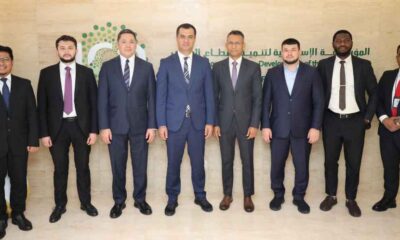
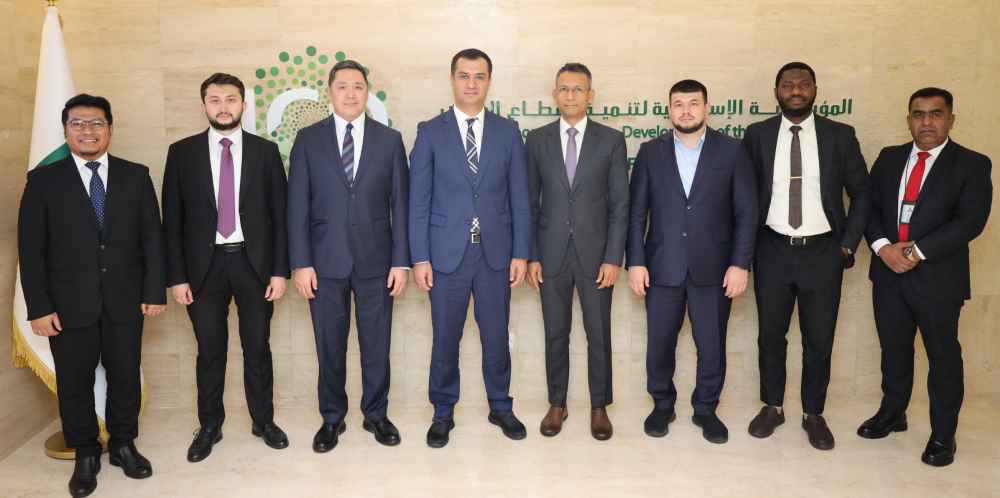
The Islamic Corporation for the Development of the Private Sector (ICD) (www.ICD-PS.org), the private sector arm of the Islamic Development Bank (IsDB) Group, and Joint Stock Company “Open Bank” (Open Bank) from Uzbekistan have signed an Expression of Intent (EoI) in Jeddah, Saudi Arabia, on 26 October 2026, for a potential Shariah-compliant Line of Financing (LoF) facility of up to USD 10 million, aimed at supporting eligible private sector projects in the Republic of Uzbekistan.

The EoI sets out the intent to establish a Shariah-compliant LoF facility of up to USD 10 million from ICD to Open Bank to be deployed for the onward financing of eligible private sector projects, including small and medium-sized enterprises (SMEs) and corporates operating in the Republic of Uzbekistan. The facility is designed to ensure that financing reaches productive segments of the economy in a manner consistent with Shariah principles and in line with the development objectives of ICD and Uzbekistan.

The intended facility reflects ICD’s commitment to expanding access to Shariah-compliant financial services in Central Asia. By working through Open Bank, a digitally oriented institution with a focus on retail and SME customers, the proposed LoF aims to direct resources toward businesses that can generate meaningful employment opportunities and contribute to sustainable economic growth in Uzbekistan. SME support of this nature plays an important role in strengthening the private sector and broadening economic participation across the country.

ICD’s development mandate centers on advancing private sector growth and improving livelihoods in its member countries through Shariah-compliant financing solutions. The intended LoF with Open Bank aims to contribute to job creation and SME support in Uzbekistan, outcomes that align with ICD’s broader objective of fostering inclusive and sustainable economic development across the IsDB Group’s member countries.

Distributed by APO Group on behalf of Islamic Corporation for the Development of the Private Sector (ICD).


Continue Reading

Trending