Connect with us

Business

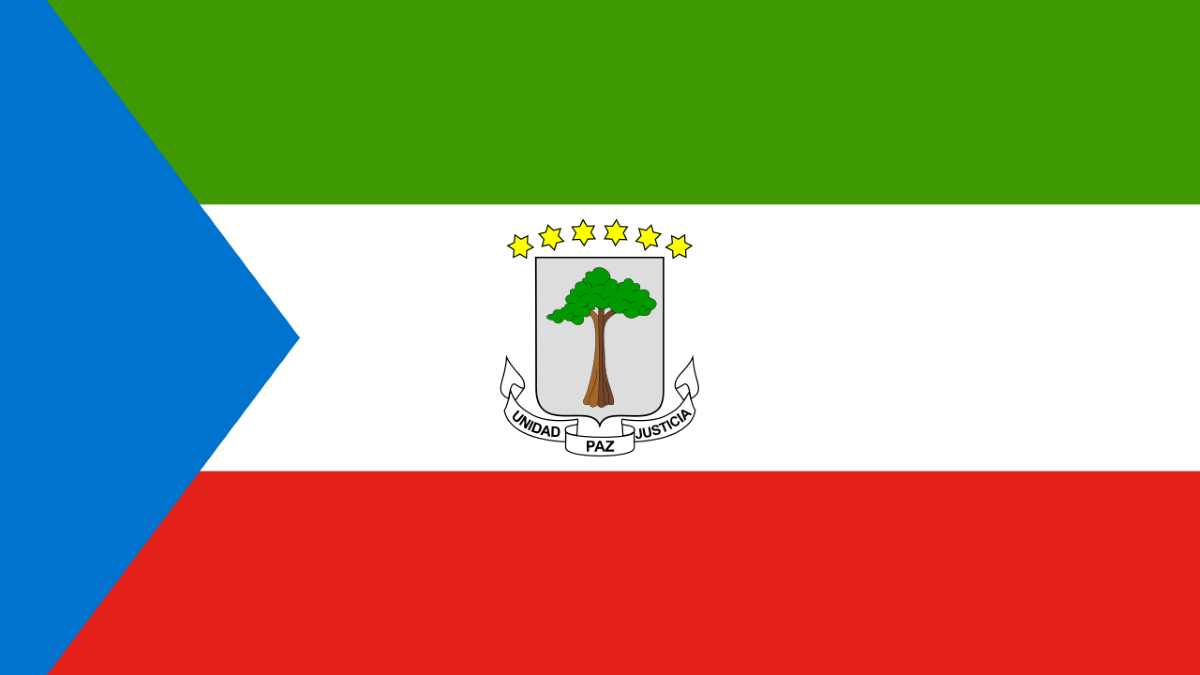
The vital necessity of stopping oil production decline in Equatorial Guinea (by Leoncio Amada NZE NLANG)

Published

on

Equatorial Guinea

The country’s economy had previously been based on agriculture (largely coffee and cocoa) and the export of wood, until the dawn of the oil era

CAPE TOWN, South Africa, June 5, 2024/APO Group/ — 

By Leoncio Amada NZE NLANG, Executive President of the African Energy Chamber at CEMAC (http://www.EnergyChamber.org) and President of Apex Industries SA.

The discovery of oil in Equatorial Guinea in the mid-1990s constituted an undoubted turning point in the country’s history. The country’s economy had previously been based on agriculture (largely coffee and cocoa) and the export of wood, until the dawn of the oil era.

The influx of multinationals (oil majors) in Equatorial Guinea’s energy sector was due to the attractiveness of the fiscal terms and the prospectivity that the country offered for foreign direct investment (FDI) compared to other countries in the region; so much so that the nation occupied the third place among Sub-Saharan African oil-producing countries in for many years, behind Nigeria and Angola.

In effect, the discovery of oil put an end to the economic primacy of the agricultural sector and promoted the activities of the oil industry, which very soon began to attract foreign investment, allowing the enrichment and financial autonomy of the country. Oil activities led to the implementation of other related industries, thus allowing the development of other economic sectors.

This was made possible through the country’s infrastructure investments and social projects, which in turn had a new, reliable source of finance. Prior to that, traditional products like coffee, cocoa, and wood made the Equatoguinean economy largely dependent on the economic aid it received from the great powers and international financial institutions (including the World Bank, International Monetary Fund, etc.). But the discovery and exploitation of national oil deposits allowed the country to free itself from foreign economic influence. As such, Equatorial Guinea was able to undertake a huge public infrastructure investment program that covered the entire national territory and oversaw the construction of roads, bridges, ports, airports, public housing, power plants, urban districts, hospitals, university campuses, and new cities, as well as the creation of new ministry buildings and town halls. At the same time, oil wealth led to a growth in public savings and investment, reaching the record figure of 3,784 million euros in 2009.

To delve into the details, 534 million euros were invested in social infrastructure, 1,322 million euros in civil infrastructure, 997 million euros in productive investment, and 930 million euros in investment for public administration. Social investment grew by 116% in 2009, compared to an overall growth of 78%.

At the same time, the country’s oil boom has generated other complementary industries, including the construction of a liquefied natural gas (LNG) plant, a methanol plant, a liquid petroleum gas (LPG) plant, among others. These developments have given Equatorial Guinea business opportunities across the economy and have played an important role in the diversification of economic activities, promoting investment in diverse sectors of society and giving the state control over the country’s affairs.

The current situation:

After years of frenetic activity in the energy sector, the country today faces a sharp drop in oil production, which has put it at the bottom of the production rankings of OPEC countries, as can be seen in the following chart:

The reasons for this decrease in production are manifold, but foremost among them is a lack of new discoveries. The last discovery made was in 2007 at the Aseng site. If constant exploratory activity is not maintained, new deposits will not be discovered, and production levels will become volatile.

Natural gas has performed relatively better, despite being a more mature industry than oil. The gas era began with the discovery of the Alba field in 1984, with production coming online in 1991, ahead of oil production. The field still accounts for approximately 45% of the country’s daily production and is a large supplier of feed gas for its LNG (EG LNG) plant, which has been operational since 2007.

The aging of the Alba field has reduced the country’s total production, which peaked in 2013. But the decline has been gentler compared to the precipitous decline in oil production. However, growing domestic demand for gas is further reducing the country’s export capacity.

Equatorial Guinea is in a transitional phase of formulating projects and transformative strategies aimed at diversifying its economy

Hoping to safeguard Equatorial Guinea’s gas exports and attract international interest, the government has set out a vision of establishing the country as a regional gas liquefaction hub, receiving gas from domestic fields, as well as from neighboring Cameroon and Nigeria, to process it and export it to international markets. Such a plan would extend the lifespan of our EG LNG facility, which has been in difficulty since gas supplies from the Alba field began to decline. The project is progressing at a slow pace due to obstacles like negotiations with neighboring countries on developing cross-border oil and gas fields, securing potential supplies, and building connecting pipelines.

In 2019, the country launched a licensing round to auction 27 oil and gas blocks. In the end, three blocks were awarded to small players. In 2023, the government adopted an “open door” policy, whereby any company could express interest and enter into direct negotiations with the government. In 2023, a block was awarded to Panoro Energy as a result of these negotiations.

An open-door strategy is generally adopted when the success of a bidding round is in doubt. Indeed, bidding rounds are the superior and most widely used strategy for allocating oil and gas licenses. However, their success depends on several factors, some of which go beyond a country’s borders, such as prevailing oil and gas prices, while others are related to the country’s potential. When prices are high and the country’s oil and gas sector has promising prospects, competition among bidders tends to be strong, resulting in a windfall for the government. A failed bidding round that does not attract enough interest can damage a government’s negotiating position. To avoid such an outcome, governments use direct negotiations.

With aging assets, technically challenging small fields, and high exploitation costs, Equatorial Guinea is among the producers that are particularly exposed to the pressures of the energy transition. The government’s priority should be to extend the lifespan of its hydrocarbon sector, which represents around 85% of its GDP and just over 75% of its tax revenue, by remaining open to offers from smaller players. Governments usually prefer to work with large industry players that have a presence on their home soil, given that smaller players lack adequate financial and technical resources. It also makes it easier to negotiate new agreements. However, a change in the structure of the industry is expected as producing oil fields become more mature. The government should adopt measures that will help it adapt to this new phase.

To improve the attractiveness of investing in the country, the government announced several tax incentives, effective from early 2024, including reducing the corporate income tax rate from 35% to 25%. These measures could help but are not enough to offset the limited potential needed to generate the kind of rewards big players typically require. In fact, we believe that the measures adopted are too timid and that more forceful actions should be implemented in the short term to save and reactivate the sector that constitutes the backbone of the country’s economy.

There are no miracles in the oil industry, the only alternative is to apply the “Drill baby Drill” theory, which means drilling and drilling more exploratory wells to maintain or increase production levels. For this, certain incentive actions are necessary:

  1. Resolve the problem of the New BEAC Change Regulation. This highly bureaucratic and suffocating process has become the biggest obstacle and brake on foreign direct investment in Equatorial Guinea’s oil sector.
  2. Tax incentives.
  1. Exemption from payment of tax on assignments and transfers of assets in the oil sector for companies in the exploration and development phases. This measure would revive the appetite of independent companies to invest in the Equatoguinean oil sector and would revive exploratory activity in the country, motivating agile companies dedicated to exploration, thus favoring the farm-in and farm-out processes.
  2. Tax holidays on the payment of corporation tax (IS) for a negotiable period for new deepwater gas field contracts.
  3. Tax holidays on the payment of corporation tax (IS) for a negotiable period for new contracts for gas fields in shallow waters.
  4. Tax holidays on the payment of corporation tax (IS) for a negotiable period for deepwater crude oil field contracts.
  5. Tax holidays on the payment of corporation tax (IS) for a negotiable period for crude oil field contracts in shallow waters.
  6. Tax credits for operating companies that train Guineans and whose management positions are occupied by nationals for contracted companies as follows:
  7. Exemption from the payment of customs and parafiscal duties on the import of equipment and machinery intended for oil operations in favor of local companies operating in the sector.
  8. Tax credits for operating companies that partner with local companies for the establishment of research and development (R&D) centers in Equatorial Guinea.
  9. Although the issue of transfers abroad is not a tax issue, we appeal to the Ministry of Finance and Budgets to take action on the matter because this issue has become one of the greatest obstacles to foreign investment into Equatorial Guinea.
  1. Regulatory and legal stability. Investors seek stability in the regulations and laws that govern the oil sector. Constant changes in regulations can increase uncertainty and deter investment.
  2. Ease of acquiring permits and regulations. Simplify the processes of obtaining permits and licenses, streamline bureaucratic procedures, and reduce the regulatory burden for companies in the oil sector.
  3. Training and education. Promote training and specialized training programs in the oil sector to guarantee the availability of qualified labor.
  4. Legal security. Ensure a stable and predictable legal environment to attract long-term investments in the oil sector.
  5. Incentives for innovation and technology. Stimulate the adoption of innovative technologies in the oil industry through financial incentives or R&D support programs.
  6. Promotion of sustainability. Promote sustainable practices in oil extraction and production.

The role of Gepetrol.

With the transfer of MEGI’s assets to Gepetrol SA, the company has the opportunity and potential to become one of the most vibrant national oil companies (NOCs) in Sub-Saharan Africa. Its association with PETROFAC as a technical partner for the operation of the ZAFIRO field will not only allow the company to acquire the experience and technical and operational capacity necessary to effectively and efficiently manage Block B, but also to be an active partner in the operation of other oil fields to represent the interests of the state.

Equatorial Guinea is in a transitional phase of formulating projects and transformative strategies aimed at diversifying its economy, the results of which have yet to be felt, but which will considerably reduce its high dependence on the oil sector.

The fact remains that more than 80% of the country’s GDP comes from the hydrocarbon sector and this scenario is not expected to change in the medium term. It is for this reason that we invite all actors in the sector to adopt whatever measures are necessary to save “the goose that lays the golden eggs.”

Distributed by APO Group on behalf of African Energy Chamber

Business

Sierra Leone’s PDSL to Host Strategic Investor Roundtable at Paris Energy Forum

Published

on

The Petroleum Directorate of Sierra Leone will lead a targeted roundtable at Invest in African Energy 2026, spotlighting upstream potential and cross-regional partnerships

PARIS, France, March 24, 2026/APO Group/ –The Petroleum Directorate of Sierra Leone (PDSL) is set to convene an investor roundtable at Invest in African Energy (IAE) Forum 2026 in Paris, underscoring growing interest in West and North African energy markets and the need for deeper capital engagement across exploration, renewable and offshore services. The session reflects a strategic effort by Sierra Leone to connect its emerging upstream prospects with established operators and project developers as the country moves to unlock the full potential of its emerging oil and gas industry.


Sierra Leone is increasingly positioning itself as a frontier oil and gas market with significant offshore potential, and part of the PDSL’s mandate is to catalyze investment interest in its offshore acreage through direct engagement with global capital. Recent data suggest the country holds estimated recoverable resources in the tens of billions of barrels, backed by discoveries and extensive multi‑client seismic datasets that prospective investors are evaluating. The PDSL is actively promoting licensing opportunities and drilling plans, emphasizing fiscal terms and exploration readiness to attract strategic partners.


A cornerstone of this strategy is the anticipated launch of the country’s sixth licensing round. Offering a rare early-entry opportunity into a largely untapped deepwater terrain with considerable upside, the upcoming bid round is backed by fresh 3D datasets which de-risk exploration and support new drilling campaigns. Just this month, GeoPartners announced that the final Pre-Stack Time Migration data for its recently acquired 3D multi-client seismic survey in the country was complete and is now available for licensing. The dataset provides a 3D window into the hydrocarbon potential of the underexplored northern Sierra Leone region.


Sierra Leone’s licensing drive comes as major operators advance exploration activities. In 2025, Eni signed a Reconnaissance Permit Agreement with the PDSL, securing rights to conduct reconnaissance and technical evaluation activities across offshore blocks G113, G129, G130, G131 and G132. The acreage covers 6,790 square kilometers within Sierra Leone’s territorial waters. Nigeria’s F.A. Oil Limited is pursuing drilling following its award of six offshore blocks through the country’s fifth licensing round in 2023. The company is currently seeking a farm-in partner to advance the project from exploration to production, offering a 40% stake in each of the G Blocks 53, 54, 55, 71, 72 and 73.


As these development unfold, the upcoming roundtable at IAE 2026 offers a unique opportunity for operators and policymakers to engage potential investors. The IAE 2026 Forum has become a strategic bridge between African upstream opportunities and global investors, with sessions like the PDSL roundtable designed to foster deeper dialogue and provide clarity on project pipelines and investment prerequisites. Discussions are expected to cover mechanisms for de‑risking exploration activity, optimizing fiscal and contractual frameworks and identifying synergies between hydrocarbon investment and renewable energy commitments.


For investors seeking differentiated exposure to African energy markets, the Sierra Leone roundtable represents both a focused exploration of frontier oil potential and a broader conversation about regional infrastructure, partnerships and the evolving demands of energy capital in the years ahead.


IAE 2026 (www.Invest-Africa-Energy.com) is an exclusive forum designed to connect African energy markets with global investors, serving as a key platform for deal-making in the lead-up to African Energy Week. Scheduled for April 22–23, 2026, in Paris, the event will provide delegates with two days of in-depth engagement with industry experts, project developers, investors and policymakers. For more information, visit www.Invest-Africa-Energy.com. To sponsor or register as a delegate, please contact sales@energycapitalpower.com


Distributed by APO Group on behalf of Energy Capital & Power.

Continue Reading

Energy

Cape Town Prepares for African Mining Week 2026 as Draft Program Reveals Continent’s Mineral Drive

Published

on

African Mining Week returns for its 2026 edition with an expanded three-day program, bringing together African mining leaders and global partners to shape the future of the continent’s mining sector

CAPE TOWN, South Africa, March 24, 2026/APO Group/ –Global economic trends – from record-breaking commodity prices to intensifying geopolitical competition for resources – are reshaping the strategic importance of Africa’s mineral wealth. As global countries race to secure supply chains for energy transition metals – which are expected to triple by 2030 – Africa is positioning its 30% share of the world’s critical minerals as a key pillar of economic growth. African governments are modernizing mining codes, developing industrial corridors and investing in mineral processing facilities to support local beneficiation, job creation, workforce development and regional mineral markets.


Against this backdrop, the upcoming African Mining Week (AMW) Conference & Exhibition – Africa’s premier gathering for mining stakeholders – has launched the draft program for its 2026 edition {https://apo-opa.co/3NneKLj}. Scheduled to take place October 14–16 in Cape Town, the event provides a platform where policymakers, global investors, project operators, technology providers, academia and mining service companies examine Africa’s mining opportunities, challenges and long-term strategic direction.

Under the theme ‘Mining the Future: Unearthing Africa’s Full Mineral Value’, the three-day, multi-track agenda reflects the growing urgency among African markets to strengthen value addition across the mining value chain.

Regional Cooperation and Policy Alignment in Focus

A key feature of the agenda is the Ministerial Forum, where African mining ministers will provide updates on regulatory reforms and policy alignment initiatives aimed at unlocking greater value from the continent’s mineral resources. Discussions will examine how harmonized regulatory frameworks and regional cooperation can accelerate investment flows and strengthen Africa’s position in global mineral supply chains.

The inclusion of regional policy integration reflects a growing continental push to leverage frameworks such as the African Continental Free Trade Area (AfCFTA) to enhance cross-border mineral cooperation and trade.

We are acting to enhance regional integration through frameworks such as the African Mining Vision and the Africa Mineral Strategy Group

“Africa’s integration is not only a political objective but a strategic economic vision,” stated Emmanuel Armah-Kofi Buah, Ghana’s Minister of Lands and Natural Resources, in remarks reported by Energy Capital & Power – organizers of AMW – in February 2026. “Our natural resources require coordinated policies. Isolated legal frameworks cannot fully unlock their value. Through integration and initiatives such as the ECOWAS [Economic Community of West African States] Mining Code and the African Mining Vision, we can build a stronger and more competitive mineral economy.”

Nigeria’s Minister of Solid Minerals Development, Henry Alake, echoed this emphasis on regional cooperation and beneficiation.

“We are acting to enhance regional integration through frameworks such as the African Mining Vision and the Africa Mineral Strategy Group,” he stated. “We must develop mineral corridors that connect resources, infrastructure and markets across the continent. Our goal is not to simply export raw materials, but to develop industrial hubs that create jobs and value across borders.”

Connecting Global Investors with African Opportunities

Strategic roundtables and Country Focus sessions form a key part of the AMW 2026 program, connecting African mining jurisdictions with international partners from the U.S, Europe, the Middle East and China. These sessions will provide African stakeholders with a platform to showcase exploration opportunities and project pipelines across the mining value chain.

Meanwhile, technical workshops and the exhibition floor at AMW 2026 will provide a platform for equipment manufacturers, technology providers and engineering firms to showcase innovations designed to enhance operational performance across mining operations.

By combining high-level policy dialogue with technical expertise and investment matchmaking, AMW 2026 positions itself as a critical marketplace where Africa’s mineral potential converges with global capital, technology and strategic partnerships – helping shape the next phase of growth for the continent’s mining sector.

AMW serves as a premier platform for exploring the full spectrum of mining opportunities across Africa. The event is held alongside the African Energy Week: Invest in African Energies 2026 conference from October 12-16 in Cape Town. Sponsors, exhibitors and delegates can learn more by contacting sales@energycapitalpower.com.

Distributed by APO Group on behalf of Energy Capital & Power.

Continue Reading

Business

Tony Elumelu Foundation Selects Seven North African Entrepreneurs in 2026 Cohort

Published

on

Seven North African entrepreneurs in technology, education, professional services and agriculture selected from 265,000 applications at historic Abuja ceremony

Hope is not just a feeling — it is a system we can build

ABUJA, Nigeria, March 24, 2026/APO Group/ —
  • 7 North African entrepreneurs selected from Morocco, Tunisia and Egypt
  • 51% of the 2026 cohort are women, all selected purely on merit, without any quota in place
  • 3,200 total entrepreneurs selected from 265,000+ applications across 54 African countries
  • USD 5,000 in non-refundable seed capital for each selected entrepreneur
  • Selection conducted independently by Ernst & Young


The Tony Elumelu Foundation (TEF) (www.TonyElumeluFoundation.org), the leading philanthropy empowering young African entrepreneurs, announced on Sunday, 22 March 2026 the 12th cohort of the TEF Entrepreneurship Programme at a ceremony held at the Transcorp Hilton, Abuja. The announcement was made by Founder Tony O. Elumelu, C.F.R.


Among the 3,200 entrepreneurs selected from 265,000 applications received from all 54 African countries: seven from North Africa. Three from Tunisia, two from Morocco, two from Egypt. Spanning technology, education, professional services and agribusiness, they represent a generation of North African founders building businesses that address the urgent needs of their communities. Their selection, which was conducted independently by Ernst & Young, places them among the most rigorously assessed young entrepreneurs on the continent.


This year’s cohort carries a historic signal: 51 percent of the 2026 entrepreneurs are women. They were selected purely on merit, without quota. Across hundreds of thousands of applications, women distinguished themselves through the strength of their ideas, the clarity of their business models and the ambition of their vision.


In 2026, the Foundation is empowering a total of 3,200 entrepreneurs across all its entrepreneurship programmes:


  • 1,751 entrepreneurs through Heirs Holdings Group: Heirs Energies, Transcorp Power, Transcorp Hotels, and United Capital;
  • 1,049 entrepreneurs in partnership with the European Commission, OACPS, BMZ and GIZ;
  • 100 entrepreneurs in partnership with Sèmè City Development Agency;
  • 100 entrepreneurs in partnership with DEG, the German Development Agency;
  • 100 entrepreneurs in partnership with the IKEA FoundationUNICEF’s Generation Unlimited and the Dutch Government; and
  • 100 entrepreneurs in partnership with UNDP and the Rwandan Ministry of Youth and Arts.


Each selected Tony Elumelu Entrepreneur will receive USD 5,000 in non-refundable seed capital, access to world-class business management training on TEFConnect, one-on-one mentorship, and entry into a powerful network of investors, partners and fellow entrepreneurs.


In his annual letter (https://apo-opa.co/4uOFepM), “A Story of Hope,” Tony O. Elumelu, C.F.R., Founder of the Tony Elumelu Foundation, shared a powerful message to the new cohort:


“For a long time, I believed luck was something that simply happened to you. Then I came to understand: luck can be engineered. Opportunity can be democratised. Hope is not just a feeling — it is a system we can build.” — Tony O. Elumelu, C.F.R., Founder, Tony Elumelu Foundation — 2026 Annual Letter


The Tony Elumelu Foundation has empowered over 2.5 million young Africans with access to business management training on TEFConnect (https://TEFConnect.com), and disbursed over USD 100 million in seed capital to more than 24,000 selected entrepreneurs.


Collectively, these entrepreneurs have generated USD 4.2 billion in revenue and created more than 1.5 million direct and indirect jobs. Through its support for African entrepreneurs, TEF has lifted 2.1 million Africans above the poverty line and positively impacted more than 4 million African households, with 46% of supported entrepreneurs being African women. Eighty percent of TEF-supported businesses survive and scale, against a global average of ten to twenty percent.


The announcement ceremony was broadcast live in English (https://apo-opa.co/3PWLiML), French (https://apo-opa.co/3PWLiML), Portuguese (https://apo-opa.co/4t4Y7Da) and Arabic (https://apo-opa.co/4bYHlQl).


Distributed by APO Group on behalf of The Tony Elumelu Foundation.


Continue Reading

Trending

Exit mobile version