Connect with us

Business

Polygon launches first full-scale Display & Video (DV) campaign in Nigeria, marking a new milestone for data-driven outdoor in Africa

Published

on

Polygon

The campaign is currently live across Lagos, with screens strategically positioned in high-traffic roadside environments

CAPE TOWN, South Africa, May 7, 2026/APO Group/ –Polygon (https://PDOOH.co.za), Africa’s largest aggregated programmatic digital out of home (pDOOH) publisher network, has announced the launch of its first full-scale Display & Video 360 (DV360) campaign in Nigeria; a milestone that highlights the growing maturity of pDOOH across the continent.


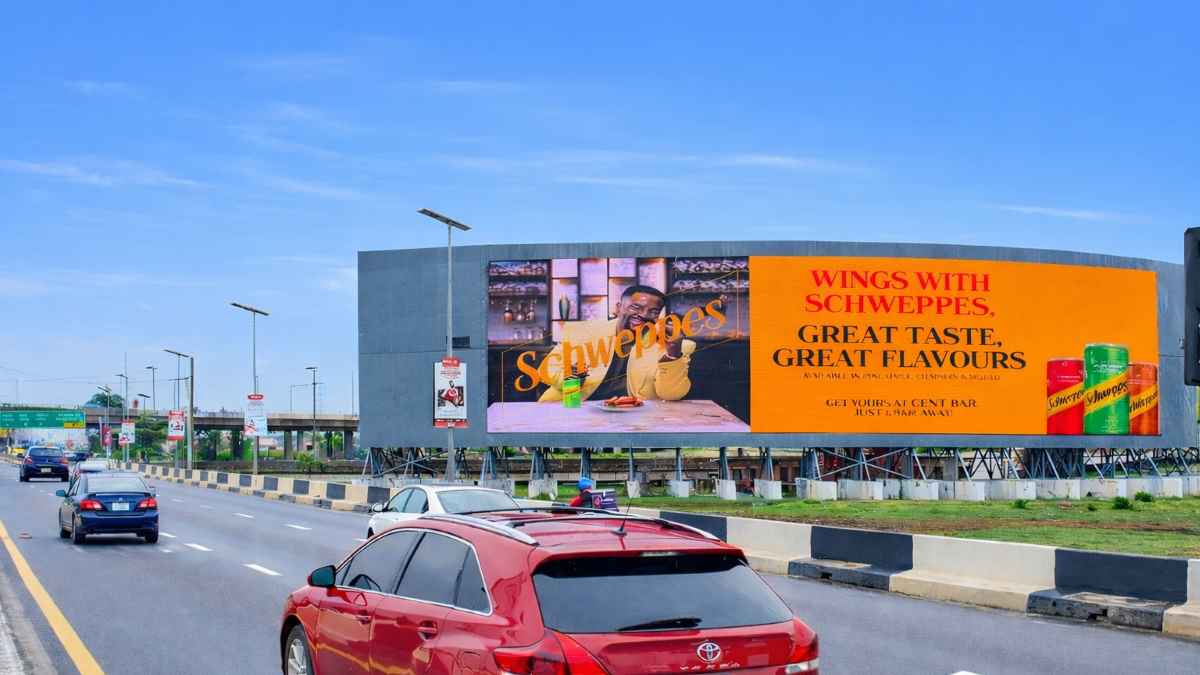
The campaign, executed in Lagos State for Schweppes, represents the first time a Google-based enterprise media buying platform has been used to deliver a pDOOH campaign at scale in Nigeria. It also marks Polygon’s first fully realised campaign in the market, following a series of earlier test runs.


At the centre of the campaign is a highly localised dynamic creative optimisation (DCO) approach, which sees the development of more than 500 unique creative executions, each tailored to the precise location of a billboard and its surrounding retail environment. Consumers are served context-specific messaging that directs them to nearby Schweppes stockists, with copy dynamically calling out store names and proximity – for example, “Get yours at Sessy and Folly Enterprises – just 140m away!”


Says Remi du Preez, Managing Director at Polygon: “This campaign is an exciting example of where the medium is heading in Africa, as we move beyond static messaging into something far more responsive and relevant.”


The campaign is currently live across Lagos, with screens strategically positioned in high-traffic roadside environments. Polygon’s infrastructure enabled the geofencing of retail locations within a defined radius of each screen, ensuring that messaging remained locally relevant and actionable. The campaign roll-out also saw the use of one of West Africa’s largest digital screens – a 600sqm large-format site – creating an even greater sense of presence for the brand.

Programmatic DOOH in Africa is now fully operational, scalable and delivering at a global standard


Beyond its immediate impact, Du Preez says the campaign serves as a broader proof point for the African market. “Programmatic DOOH in Africa is now fully operational, scalable and delivering at a global standard. What we’ve demonstrated here is that markets like Nigeria can support geo-targeted, data-driven, dynamic campaigns in the same way more mature markets do. The infrastructure works.”


He adds that unlocking new markets often depends on early adopters willing to test and learn, but that success tends to accelerate momentum quickly. “In every new market, you need a client that’s willing to lead. Once that first campaign proves itself, confidence follows – and we’re already seeing increased interest from advertisers looking to enter the Nigerian pDOOH space.”


Polygon currently has access to the majority of roadside DOOH inventory in Nigeria, spanning key urban centres including Lagos, Abuja, Port Harcourt, Ibadan and Kano,  positioning the network to scale future campaigns rapidly.


Du Preez says that this latest campaign forms part of Polygon’s broader strategy to build a unified DOOH ecosystem across Africa, offering advertisers a single point of entry into a fragmented but rapidly evolving media landscape.


“And now – by linking media exposure to real-world proximity and behaviour – we’re moving closer to bridging the gap between brand and performance in OOH, which is something advertisers have wanted for years,” concludes Du Preez.

Distributed by APO Group on behalf of Polygon.


Education

Canon and SOS Children’s Villages in Senegal Join Forces to Empower the Next Generation Through Miraisha

Published

on

Creative skills, mentorship, and hands-on workshops unlock new opportunities for vulnerable youth

DAKAR, Senegal, May 7, 2026/APO Group/ –Canon Central & North Africa (CCNA) (www.Canon-CNA.com), a global leader in imaging solutions, has forged a strategic partnership with SOS Children’s Villages in Senegal, a non-governmental organisation supporting vulnerable youth, to expand its flagship Miraisha skills development initiative. This collaboration underscores Canon’s commitment to sustainable youth empowerment and meaningful social impact, with Senegal identified as a key strategic focus market for 2026.


Expanding Canon’s African Footprint

Miraisha’s expansion in Senegal builds on Canon’s decade-long commitment to blending innovation with tangible community impact across Africa. Through this initiative, vulnerable youth and NGO staff gain access to hands-on training, mentorship, and real-world platforms that nurture creative expression and strengthen skills in photography, videography, and visual storytelling. Rashad Ghani, B2C Business Unit Director at Canon Central and North Africa, said, “Across Africa, young people are creative, resourceful, and driven to share their own stories. Our responsibility is to equip them with the tools, skills and confidence to transform that potential into sustainable livelihoods. Turn those talents into livelihoods Senegal is a key market for us, and this partnership reinforces our long-term commitment to advancing youth employability while empowering organisations to amplify their impact through compelling visual storytelling.”


Miraisha in Motion: Youth Creativity Meets Opportunity

Rooted in Canon’s philosophy of Kyosei, living and working together for the common good. The Miraisha initiative equips young people aged 18–35 with practical training in photography, videography, and digital storytelling. By combining technical expertise, mentorship, and real-world experience, the programme transforms creative potential into tangible career pathways and sustainable opportunities. This partnership serves as a natural extension of the mission of SOS Children’s Villages in Senegal. Since the mid-1970s, the NGO has supported children and youth with care, education, and community support across eight regions, emphasising the importance of developing employable and creative skills for resilience and independence.


Programme Highlights

This partnership empowers vulnerable youth by giving them more than just technical skills – it gives them confidence and a voice

Designed to deliver measurable long – term impact, the partnership provides targeted training and mentorship for youth and NGO staff. SOS communications teams will participate in an intensive three-day workshop focused on advocacy-driven photography and videography, strengthening their ability to communicate impact through powerful visuals. Youth workshops in Dakar and Kaolack will host 20–25 participants at each site, by the end of the training two chosen students will go on to receive a three-month mentorship with a dedicated Canon trainer to further enhance their skills.  To ensure sustainability, photography clubs across SOS Children’s Villages sites will be established to encourage peer learning, creative collaboration, and continuous skills development.

“This partnership empowers vulnerable youth by giving them more than just technical skills – it gives them confidence and a voice,” said Papa Daouda Diop, National Director of SOS Children’s Villages in Senegal. “Visual storytelling is crucial for our advocacy and fundraising, helping us share the realities our children face and the progress they make. Beyond stronger communications, these skills open new opportunities for employment and independence.”

Building on Proven Success Across Africa

The expansion of Miraisha in Senegal builds on a decade of transformative impact across Africa, where the programme has equipped thousands of young people in photography, videography, and digital storytelling. In Kenya, workshops at KCA University have enabled students to transition into freelance careers and creative entrepreneurship. In Nigeria, street photography sessions in Lagos enabled participants to build professional portfolios that led to paid assignments. In Morocco, collaboration with SOS Children’s Villages strengthened NGO communication channels while opening freelance opportunities for youth. These success stories demonstrate how Miraisha consistently translates creative skills into livelihoods and stronger community communications. Collectively, these success stories highlight Miraisha’s consistent ability to convert creative talent into sustainable livelihoods while strengthening how communities and organisations share their stories.


Senegal: A Strategic Focus Market

With over half its population under 25, Senegal faces both promise and challenge. Only 48.2% of youth participate in the labour market, compared to 69% of adults, reflecting persistent barriers to employment and limited access to practical training and skills in the creative industries. NGOs and community groups also require stronger communication tools to advocate and engage donors. Canon’s investment in Senegal directly responds to these interconnected needs, reinforcing the country’s strategic importance as a priority market for its social impact initiatives in 2026.


Looking Ahead

Canon’s partnership with SOS Children’s Villages Senegal underlines its ongoing investment in the country’s youth and creative industries. As Miraisha grows in West Africa, Canon aims to serve as a driver of community skills and empowerment. By enabling young people to tell their own stories through visual storytelling, the company is helping unlock pathways to economic opportunity while advancing meaningful social impact across the continent.

Distributed by APO Group on behalf of Canon Central and North Africa (CCNA).

Continue Reading

Business

AI-powered measurement enables faster, more responsive decisions but poses transparency and control risks

Published

on

WARC releases The Future of Measurement 2026, exploring emerging trends in media and creative measurement

7 May 2026 – As marketing measurement continues to evolve, WARC, the global authority on marketing effectiveness, has today released The Future of Measurement 2026, a report that explores the latest emerging trends in media and creative measurement. It focuses on three key areas: the shift to outcomes measurement; how AI is moving measurement upstream; and the rise of creative intelligence.

Paul Stringer, Managing Editor Research and Insights, WARC, says: “Marketing measurement is no longer just about understanding what happened, but enabling better decisions about what to do next. Traditional approaches – based on attribution, proxy metrics, and post-hoc reporting – are becoming less relevant. Rapid advances in AI are enabling a more dynamic, continuous optimisation of both media and creative. However, the foundational challenges of transparency, governance, and data quality need to be addressed.

“This report explores the key trends shaping this new era of marketing measurement highlighting the fundamental questions and decisions that marketers need to act on.”

Key trends set to shape the measurement landscape over the next 12 months are:

Outcomes measurement gathers pace

Media is increasingly bought against outcomes, driven by greater access to data, digital platforms, and ROI pressures. But the ability to measure and optimise against them is developing unevenly across the ecosystem.

Digital platforms are embedding real-time, outcome-based optimisation directly into their advertising systems, while legacy media are still evolving from an audience-based measurement towards proving their impact using experiments and advanced modelling techniques. The result is a two-speed measurement landscape converging on the same goal: incremental growth.

With no single system providing a complete picture, and a lack of trust and transparency in data and attribution, particularly within digital platforms, marketers are advised to make independent validations and take a cross-platform approach that combine multiple data sources and insights to support better marketing investment decisions.

AI moves measurement upstream

Artificial Intelligence (AI) is primarily being used in measurement to automate data collection, cleaning and normalisation before human interpretation. It can also significantly increase the frequency of testing and modelling for advertisers.

AI promises to move marketing measurement upstream, from a reporting output into ‘decision system’ that supports more dynamic planning and optimisation.

Marketers are rightfully excited about its potential. However, without rigorous, independent validation, AI-driven measurement risks becoming a black box for budget allocation, producing outputs that may appear credible but are not transparent or reliably grounded in true causal signals.

The rise of creative intelligence

Creative quality is a key driver of advertising effectiveness, yet it remains undervalued and undermeasured by marketers making it harder to justify investment. This is changing thanks to advances in AI and machine learning.

Marketers are building creative intelligence capabilities, an integrated system that allows them to measure and optimise creative at scale. This enables them to forecast asset performance ahead of launch, continuously optimise creative assets in real time for engagement and effectiveness, and measure the true impact of creative on commercial outcomes.

However, creative intelligence faces several barriers to adoption, such as poor data quality and a lack of resources. It also demands a closer integration across people, processes and technology – particularly creative and media.

Marketers are advised to unify disciplines and workflows so creative and media work as one operating system. Investing in platforms that support end-to-end creative activation, optimisation, and measurement will be essential. Piloting is expected to begin with social channels, where creative data is easily accessible and closely linked to performance.

The Future of Measurement 2026 report is available to WARC subscribers. A WARC podcast will be available from 12 May.

The insights for The Future of Measurement report are based on a combination of exclusive data from WARC and external research studies and reports. It is part of WARC Strategy’s Evolution of Marketing, series of in-depth forward-looking reports on the marketing discipline through evidence-based insights and emerging trends, technologies, and other drivers of change.


Continue Reading

Events

Enlit Africa 2026 keynote programme tackles Artificial Intelligence (AI) reality, grid constraints and the energy–water nexus

Published

on

Taking place on 19–21 May 2026 at the Cape Town International Convention Centre (CTICC), Enlit Africa convenes stakeholders from across the electricity value chain and the water ecosystem

CAPE TOWN, South Africa, May 7, 2026/APO Group/ –Enlit Africa 2026 returns to Cape Town with a focused opening sequence built for decision-makers who need practical clarity, not theory: an early-morning investment-led breakfast followed by two keynote anchors that tackle delivery realities in Africa’s power, energy and water systems.


Taking place on 19–21 May 2026 at the Cape Town International Convention Centre (CTICC), Enlit Africa convenes stakeholders from across the electricity value chain and the water ecosystem. The programme is anchored by the 2026 theme: Compounding impact: small changes, outsized outcomes – a deliberate focus on the operational decisions, governance shifts and financing mechanisms that translate intent into measurable system performance.

19 May: Project & Investment Network Business Breakfast (07:00–09:30)

The week starts with the Project & Investment Network Business Breakfast, featuring keynote commentary from Bruce Whitfield followed by a fireside chat between Bruce Whitfield and Goolam Ballim (Chief Economist and Head of Research, Standard Bank Group).

The breakfast is designed for participants focused on bankability, procurement confidence and the practical steps that move projects from intent to execution. It unpacks what financiers are actually pricing, what evidence strengthens confidence in delivery, which behaviours and signals measurably improve fundability and why Africa is more geopolitically relevant than ever before.

19 May: Keynote 1 – Africa in the AI Age (10:30–12:55)

The first keynote anchor, Africa in the AI Age, is hosted by Enkromelle Andrew (Master of Ceremonies) and opens with a welcome from Chanelle Hingston (Group Director, Power, Energy & Water, VUKA Group).

A ministerial address by the Honourable Dr. Kgosientsho Ramokgopa, Minister of Electricity and Energy is followed by a focus on digital power, storage and AI, with a keynote contribution from David Sun (Vice President and CEO of Electric Power Digitalisation Business, Huawei).

The keynote then moves into a panel discussion on the role of AI and digital technologies in Africa’s energy evolution, with panellists including Carol Koech (CEO, GEAPP). The morning concludes with an in-conversation session moderated by James Mackay (CEO, Energy Council of South Africa) with senior business leaders including Dan Marokane (Group Chief Executive, Eskom), and leaders in industry.

20 May: Keynote 2 – How coordinated energy and water planning could change African resilience (09:30–12:00)

The second keynote anchor turns to a reality shaping resilience across the continent: energy security and water security are increasingly inseparable but planning and funding remain fragmented.

Under the guidance of MC Enkromelle Andrew, the session includes a perspective on the water–energy nexus from Sabine Dall’Omo (CEO, Siemens South Africa which convenes a high-level panel on taking water–energy coordination beyond theory, with panellists including Darshana Myronidis (Global Group Director of Sustainability, Virgin Group), Deerosh Maharaj (Executive Head: Energy, Infrastructure & Mining, Standard Bank Business & Commercial Banking), Sabine Dall’Omo (CEO, Siemens South Africa), and JP van der Merwe (Chief Foreign Direct Investment Officer, Wesgro).

Across the Business Breakfast and both keynote anchors, Enlit Africa 2026 is designed to deliver high-signal discussions focused on delivery, governance and the actions that improve system outcomes at pace.

Enlit Africa, created by VUKA Group, will take place on 19–21 May 2026 at the CTICC in Cape Town, South Africa. The full programme and registration information are available at: www.Enlit-Africa.com

Distributed by APO Group on behalf of VUKA Group.

Continue Reading

Trending

Exit mobile version