Connect with us

Tech

Capture and control: Canon expands professional video ecosystem with ultra-telephoto Cinema zoom lens and Pan, Tilt, Zoom (PTZ) controller

Published

on

Canon

Together, these launches demonstrate Canon’s continued commitment to evolving production demands, from cinematic long-range storytelling to scalable IP-based multi-camera workflows

DUBAI, United Arab Emirates, April 29, 2026/APO Group/ –Canon (www.Canon-CNA.com) announces two additions to its professional cinema and AV lineups: the CN30×40 IAS J R1/P1 ultra-telephoto cinema zoom lens (https://apo-opa.co/4egKrku) with a new updated drive unit and the RC‑IP300 multi-camera PTZ controller (https://apo-opa.co/41YXW0L) . Designed for high-end filmmaking and live events, the new zoom will provide filmmakers with even more power and flexibility, while the new controller offers an entry-level route into multi-camera PTZ control. Both products strengthen Canon’s film and broadcast ecosystem with tools that deliver precise control and cinematic image quality.


The CN30×40 IAS J R1/P1 brings exceptional reach and optical performance to wildlife filmmakers and live productions. Featuring an ultra-telephoto 30x zoom range of 40-1200mm or 60-1800mm with extender, the lens provides native Super35mm coverage, and the renowned optical quality associated with Canon cinema lenses, enabling detailed 4K and 8K imagery – even from extreme distances. A new drive unit further enhances operability and functionality for professional applications, with features such as focus breathing correction, improved servo control, an info display and USB Type-C terminal for easy setup and maintenance.

With a 1.5x extender, the lens increases focal reach while enabling full-frame coverage, offering filmmakers additional creative flexibility. Despite its powerful range, it remains comparatively light for its class and is built with a rugged construction suited to demanding environments such as wildlife hides, stadium gantries and remote production locations. Advanced autofocus and subject-tracking capabilities, combined with Canon’s Focus Guide, help operators maintain precise and accurate focus in fast-moving scenes.


Canon is also introducing the RC‑IP300, a compact yet powerful PTZ controller built for modern multi-camera productions. Designed to enable single operators to manage complex camera setups, the controller controls up to 200 cameras, organises them into groups and stores up to 100 presets per camera for instant recall and repeatable shot framing.


The controller features a 3.5-inch touchscreen preview, IP video inputs and an intuitive layout of joystick, touchscreen and programmable controls that streamline operation in broadcast studios, lecture halls and corporate production environments. Support for Canon’s PTZ Auto Tracking application and integration with tools such as Stream Deck further enhances workflow efficiency and automation.


Together, these launches demonstrate Canon’s continued commitment to evolving production demands, from cinematic long-range storytelling to scalable IP-based multi-camera workflows. By combining advanced optics with intelligent control systems, Canon continues to develop its ever-expanding ecosystem of tools that enable creators and production teams to capture and control content with precision and creative freedom.


CN30×40 IAS J R1/P1 (https://apo-opa.co/4egKrku) – key highlights

  • Unrivalled 4K/8K optics with minimal flare and organic colour
  • Powerful 30x focal range 40-1200mm or 60-1800mm with extender
  • Native Super35mm, with 1.5x extender to increase reach and cover full frame sensors
  • Portable and built for the field, light for its class, providing exceptional coverage
  • RF or PL Mount data support with lens metadata capture for Zeiss eXtended dataTM and Cooke/iTM technology
  • Advanced Autofocus with support for Dual Pixel AF II
  • Auto Exposure Ramping Compensation to keep consistent brightness throughout the zoom range
  • New drive unit with focus breathing correction, improved servo, info display and USB-C


RC‑IP300 (https://apo-opa.co/41YXW0L) – key highlights

  • Compact and control‑room ready, fitting studios, classrooms, and mobile setups
  • Single‑operator control with intuitive joystick, touchscreen, and preset selections
  • Scale up to 200 cameras with centralised control of multi‑cam setups
  • Up to 100 presets per camera with instant, repeatable shots and moves
  • 3.5″ touchscreen preview with on‑board monitoring for quick checks and framing
  • IP video inputs for streamlined networking, fewer cables, and enhanced workflows

Supports Canon applications such as Auto Tracking and Auto Loop

Distributed by APO Group on behalf of Canon Central and North Africa (CCNA).

Business

Canon Middle East strengthens channel partnerships in Egypt through Frame the Future

Published

on

Two-day Cairo programme connects partners, creative communities and imaging innovation across photography, video and printing

CAIRO, Egypt, November 3, 2026/APO Group/ –Canon Middle East (www.Canon-ME.com) today outlined its priorities for strengthening collaboration with established channel partners and responding to evolving customer needs in Egypt at a press conference marking the introduction of Frame the Future. Taking place in Cairo on 3–4 November, the two-day programme brings together distributors, channel partners ,retailers, system integrators and imaging specialists for strategic dialogue, product experiences and practical knowledge sharing.


Frame the Future is a continuing regional platform for Canon Middle East’s channel engagement, bringing together Canon’s imaging and printing heritage, emerging creative applications and the local expertise of its partners. Beginning in Egypt, the platform is intended to support closer collaboration and help partners connect customers with relevant technologies and experiences across Middle East markets. It builds on Canon’s longstanding relationships in Egypt.

Egypt presents important opportunities for the future of consumer imaging, supported by a vibrant creative community and partners who understand their customers

“Egypt presents important opportunities for the future of consumer imaging, supported by a vibrant creative community and partners who understand their customers. As people move increasingly between photography, video and printed expression, our priority is to help partners respond with relevant technology, stronger product knowledge and experiences that show what is possible. Frame the Future creates a platform to listen, collaborate and shape the next chapter of customer engagement together,” said Binoj Nair, Business Unit Director – B2C, Canon Middle East

The photography and video programme on the evening of 3 November will feature hands-on experiences with Canon’s imaging line-up. In a vibrant, colour-rich creative zone, Mohammed Alaa, CEO of Cairo Photography Club (CPC), will lead a live demonstration of the video capabilities of the Canon EOS R6 V, drawing on his experience of using the camera to create content. The EOS R8 Mark II will also be on display, alongside other products in the imaging portfolio. The programme is designed to give channel partners practical insight into the ways creators are using imaging technology today.

On 4 November, Frame the Future will turn its focus to Canon’s home and office printing portfolio, reinforcing Egypt’s strategic importance as a key market for printing solutions and channel partnerships. A central focus will be on deepening engagement with system integrators and value-added resellers, demonstrating how Canon’s printing technologies, integrated solutions and applications deliver value beyond the device itself. Through hands-on experience, solution-led discussions and knowledge sharing, the programme will highlight opportunities for partners to address evolving customer requirements, expand their solution offerings and drive sustainable business growth.

The programme reflects Canon Middle East’s focus on the Customer of Tomorrow: people whose creative and everyday needs continue to evolve, who move across different formats and who value accessible expertise alongside technology. It also reflects Canon’s corporate philosophy of Kyosei — living and working together for the common good  through collaboration with the partners and communities that support Egypt’s imaging market.

Distributed by APO Group on behalf of Canon Middle East.


Continue Reading

Events

GBA Science Forum 2026 Held Across Guangdong, Hong Kong, and Macao: Driving Collaborative Innovation to Build a Global Sci-Tech Hub

Published

on

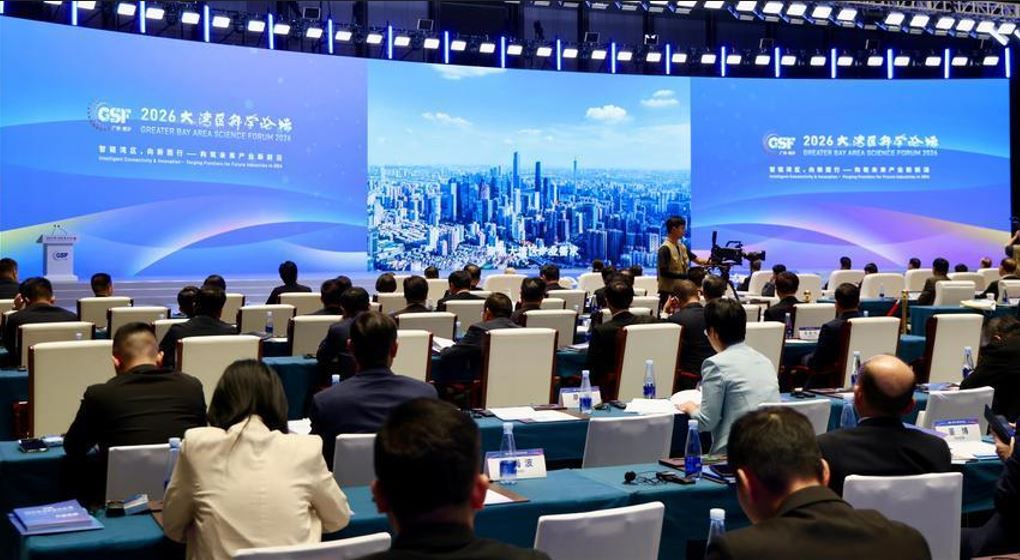
GUANGZHOU, CHINA – Media OutReach Newswire – 3 November 2026 – Co-hosted across Guangdong, Hong Kong, and Macao from October 31 to November 2, the 2026 Greater Bay Area (GBA) Science Forum took place with a strong focus on future industries and cutting-edge technologies. Jointly guided by the Ministry of Science and Technology and the Chinese Academy of Sciences (CAS), this year’s event highlights national strategic leadership to accelerate the implementation of key policies and technological breakthroughs in the region.


The forum features an opening ceremony, a main forum, 15 specialized sub-forums, and 10 signature events. While the opening ceremony and main forum were held on November 1 in Nansha, Guangzhou, parallel sessions are rolling out across Hong Kong, Shenzhen, Huizhou, Dongguan, and Yangjiang, demonstrating a deeply integrated and synergistic approach to the event across multiple cities.

The opening ceremony witnessed the release of new support measures for the GBA International Sci-Tech Innovation Center, jointly introduced by relevant state ministries and central authorities. A key highlight is the commitment to fortifying the region’s original innovation capacity by supporting the development of a world-class cluster of major sci-tech infrastructures in the GBA. Furthermore, two national key R&D projects under the 15th Five-Year Plan, spearheaded by Guangdong Province, were officially launched: the “Advanced Biotherapeutic Technologies Project” and the “GBA International Sci-Tech Innovation Center Project.”

The ceremony also featured the signing of the Guangdong-Hong Kong-Macao Collaborative Innovation Joint Funding Program, as well as major sci-tech cooperation agreements between CAS and Guangdong Province, marking another solid step in translating national strategic visions into concrete actions.

Since its inception in December 2021, the GBA Science Forum has been successfully held for five editions. It has evolved into a premier high-level exchange platform and a vital showcase for the matchmaking and achievements of the GBA International Sci-Tech Innovation Center.

This year’s forum brought together four Nobel laureates, alongside distinguished academicians from home and abroad, young scientists, and leading tech entrepreneurs.

Together, they shared their latest research findings and visionary insights on critical topics, including cutting-edge scientific breakthroughs, future technological trends, and the deep integration of scientific and industrial innovation.

In recent years, the GBA International Sci-Tech Innovation Center has demonstrated robust innovation momentum and cultivated a thriving developmental environment. This vitality was globally recognized in September 2026, when the World Intellectual Property Organization (WIPO) published its Global Innovation Index 2026 Top 100 Science and Technology Clusters, with the “Shenzhen-Hong Kong-Guangzhou” cluster securing the number one spot globally once again.


Continue Reading

Business

PhotonPay Raises $40M Series C to Scale Its Stablecoin-Centric Financial OS

Published

on

Led by Blockchain Capital, the funding will accelerate the expansion of PhotonPay’s stablecoin-centric Financial OS, connecting stablecoin liquidity with global fiat networks to unlock digital assets for everyday corporate operations and cross-border settlement.
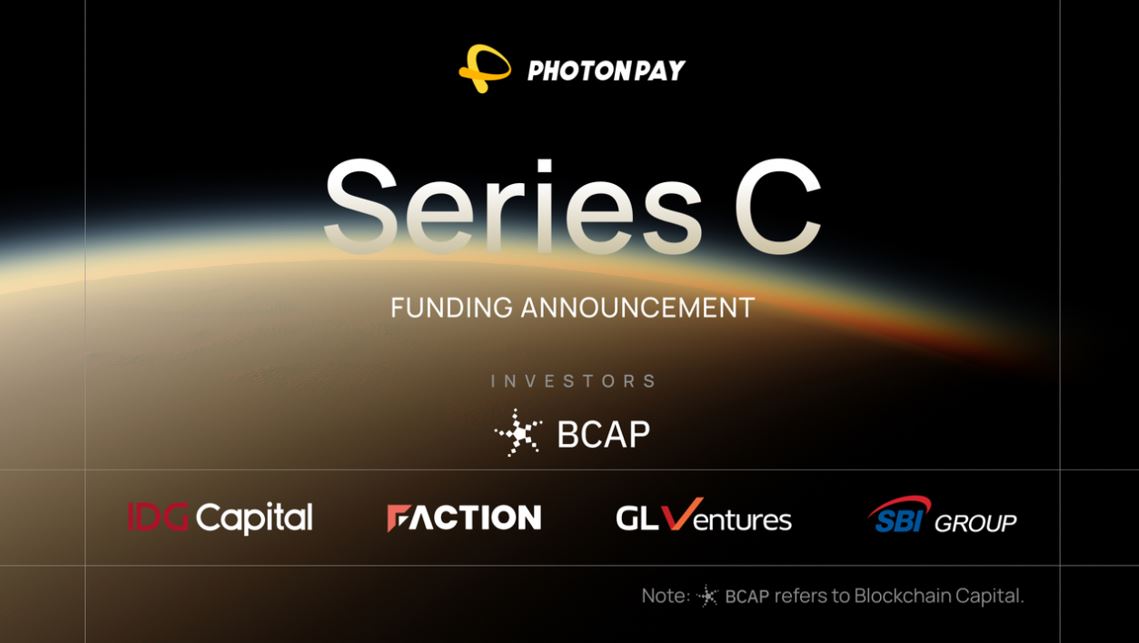
HONG KONG SAR – Media OutReach Newswire – 29 October 2026 – PhotonPay today announced the closing of a $40 million Series C funding round led by Blockchain Capital, with participation from new investor SBI Group and follow-on investments from existing investors IDG Capital, GL Ventures, and Lightspeed Faction. Blacksheep Technology acted as exclusive financial advisor to PhotonPay on the transaction.


The new capital will support the expansion of PhotonPay’s stablecoin-centric Financial Operating System (Financial OS), with investment focused on enhancing multi-asset wallet capabilities, expanding global card issuing, strengthening local clearing infrastructure in key markets, and developing an agent-ready financial execution layer.

As of August 2026, PhotonPay’s annualized transaction volume reached US$65 billion. The company has secured 34 payment and financial licenses and regulatory authorizations across the Americas, Europe and Asia, and serves over 200,000 business customers across more than 200 countries and territories.

As stablecoins move beyond crypto-native use cases into corporate treasury, settlement and commercial spending, PhotonPay sees the next phase of global finance not as a choice between stablecoins and fiat currencies, but as the convergence of both. Its Financial OS connects on-chain liquidity with the banking, clearing and card networks businesses rely on for everyday operations.

“Moving money across borders in seconds means little if it still takes days to put that capital to work,” said Lewison Chen, Founder and CEO of PhotonPay. “Stablecoins are accelerating global money movement, while local clearing and global card issuing connect that liquidity to local settlement and everyday business spending. Our Financial OS brings these capabilities together, making the underlying infrastructure far less visible to businesses, even as it becomes more essential than ever.”

“At the same time, business software is becoming increasingly autonomous,” Chen added. “AI is shifting financial workflows from people manually operating fragmented tools toward systems that understand business intent and coordinate execution across assets, accounts and financial rails. That creates the foundation for agentic commerce. Stablecoins change how money moves. AI changes how it gets put to work. But commerce is still what money is for.”

Moving Money Across Assets and Markets

PhotonPay’s Financial OS brings together multi-asset wallets, global money movement, foreign exchange, local clearing, and global card issuing through an integrated API-first architecture. This unified system gives businesses access to the financial capabilities they need to manage and deploy funds across markets.

Stablecoins sit at the core of this architecture. PhotonPay’s multi-asset wallet connects stablecoin liquidity with fiat balances, integrating asset conversion, foreign exchange, and local clearing into a single connected workflow. This enables businesses to move funds across supported on-chain and traditional financial networks, turning digital asset liquidity into purchasing power for local payments and everyday corporate spending.

Supporting this dual-rail infrastructure is PhotonPay’s established global financial network. Businesses can open local collection accounts in 17 key markets and receive funds in more than 60 currencies. On the payout side, the network supports over 100 payment routes across local clearing systems, bank transfers, and digital wallets, including payouts to 74 major local e-wallets. Approximately 97% of payout transactions reach recipients within hours or on the same day, with 68% arriving in real time.

Global card issuing extends these capabilities into programmable business spending. Through PhotonPay’s APIs, businesses and platforms can issue virtual and physical cards, configure granular spending controls, and embed card payments directly into their software and automated workflows. Over the past 12 months, PhotonPay issued 4.4 million cards, up 275% YoY.

Beyond its first-party payment solutions, PhotonPay makes its infrastructure available through embedded finance, enabling technology platforms to natively integrate global accounts, payments, and card issuing into their own products. The company now serves more than 100 enterprise and platform partners, extending the reach of its Financial OS into industry-specific workflows.

From Financial Intent to Agentic Commerce

As AI agents assume active operational roles, financial infrastructure must evolve beyond API access to enable programmable, policy-governed execution. It requires systems capable of translating high-level instructions into coordinated financial actions, with deterministic controls governing how those actions are executed.

In May 2026, PhotonPay and Mastercard completed a live agentic payment demonstration using a tokenized PhotonPay card, validating AI-initiated transactions across existing global card networks.

Building on this milestone, PhotonPay is developing standardized financial interfaces designed for developers and AI agents. With planned support for the Model Context Protocol (MCP), PhotonPay aims to make account information, balances, card functions, and payments accessible as composable financial primitives, allowing AI agents to securely retrieve context and initiate financial workflows within defined authorization boundaries.

To govern this agent-ready layer, PhotonPay is developing a policy-based execution framework designed to enforce programmable authorization rules, spending limits, and transaction-level controls. The framework is intended to enable AI agents to coordinate financial tasks across supported accounts and assets, while ensuring that execution remains subject to explicit, enforceable policies set by businesses.

PhotonPay is also advancing its AI-assisted risk review capabilities, designed to identify complex cases for human assessment. Together, these initiatives reflect a foundational principle of autonomous finance: AI may interpret intent and coordinate tasks, but financial execution must remain governed by verifiable authorization, deterministic controls, and auditable records.

“Connecting financial networks is only the beginning. The real breakthrough is abstracting that complexity behind a unified, programmable financial layer, so businesses and AI agents can move from intent to execution within clearly defined boundaries,” said Chen.

Simple on the Surface, Deep by Design

The promise of a Financial OS is simplicity: enabling businesses to manage assets, route money, and execute payments through a unified financial operating layer. Yet delivering that simplicity requires deep financial infrastructure beneath the surface.

While stablecoins accelerate borderless value transfer, turning that liquidity into local settlement, supplier payments, and corporate spending still depends on established banking relationships, domestic clearing rails, foreign exchange infrastructure, and global card networks. Each market brings its own regulatory and operational requirements.

For PhotonPay, building a Financial OS means abstracting these fragmented global networks into a programmable, interconnected financial system. The objective is not to eliminate financial complexity, but to manage it within the underlying infrastructure, so businesses can operate without having to navigate these systems themselves.

“AI can simplify how businesses interact with financial services, but it cannot replace the infrastructure required to deliver them,” said JP Pi, Chief Compliance Officer at PhotonPay. “Establishing local financial capabilities takes years of investment, institutional partnerships, and regulatory engagement. Software or AI models alone cannot replicate that depth. The simplicity businesses experience is the result of that heavy lifting, not a substitute for it.”

PhotonPay has engineered a financial foundation spanning both stablecoin and fiat rails, connecting multi-asset conversion with local clearing networks. Institutional partnerships with J.P. Morgan, Standard Chartered, and DBS, alongside connections to domestic payment systems such as Brazil’s Pix and Mexico’s SPEI, form the backbone of this network.

The new capital will enable PhotonPay to strengthen its local clearing and compliance infrastructure in existing markets while expanding into new jurisdictions, scaling the reach of its Financial OS across corporate spending, embedded finance, and agentic commerce.

“Businesses want one provider that can handle their payments across currencies and markets, whether they’re using bank transfers, stablecoins or cards. Lewison and his team have spent a decade building the banking relationships, licenses and local payment infrastructure to deliver that. We believe PhotonPay’s ability to bring these capabilities together gives it a strong advantage as businesses adopt stablecoins for everyday payments.” – BCAP,Yuanhan Li,Partner

“As stablecoins become increasingly integrated into global payment systems, bridging digital assets with traditional financial infrastructure will be essential to unlocking their real-world potential. PhotonPay’s established global payment network and its vision for a stablecoin-centric Financial OS align closely with SBI Group’s strategy to advance digital financial infrastructure and expand the practical adoption of digital assets. We look forward to supporting PhotonPay’s continued growth and exploring opportunities for strategic collaboration across the SBI Group ecosystem.” – Eiichiro So, CEO & Managing Director of SBI Ven Capital


Continue Reading

Trending

Exit mobile version