Connect with us

Business

Meta defies gravity, open web is moribund versus Q1 2026 benchmarks

Published

on

WARC
  • Google Search surges past expectations with ad growth 5.4 percentage points above forecast
  • Meta overperformed with ad revenue of $55.0bn against a projected $54.1bn – 2.3pp ahead of WARC’s forecast
  • Amazon’s advertising services revenue of $17.2bn was in line with first quarter expectations
  • YouTube’s $72m ad revenue shortfall reveals engagement-to-revenue conversion gap

WARC releases latest Earnings Debrief comparing Big Tech’s ad revenue performance against WARC Media’s quarterly global ad spend forecast data

01 May 2026 – The first quarter of 2026 delivered a useful reminder that not all online advertising growth is created equal. Meta outpaced WARC Media’s forecast, while Amazon held steady, and YouTube continued to struggle even as Alphabet’s wider advertising machine powered ahead.

This is according to analysis by WARC Media in its latest Earning Debrief, an advertising revenue performance analysis of Big Tech compared against WARC Media’s quarterly global ad spend forecast data, to provide a current round-up of their ad spend.

Benchmarking against WARC Media’s ad spend projections – derived from a proprietary neural network of over two million data points – Meta’s reported growth beat expectations by 2.3 percentage points (pp) during the opening quarter of 2026. Google Search outperformed by 5.4pp, and Amazon’s ad business came in broadly level (-0.4pp). YouTube, however, once again fell short of projections (-1.9pp), while Google’s Display Network recorded a sharper-than-expected decline (-1.6pp).

James McDonald, Director of Data, Intelligence & Forecasting at WARC, said “With this earnings cycle closely tracking our forecasts, WARC’s outlook for the year remains broadly unchanged for the major online platforms. The next phase of growth is likely to favour those that can turn AI from a fashionable noun into a measurable commercial advantage. As ever in advertising, rhetoric is plentiful; revenue is indelible.”

Meta defies gravity

Meta was an overperformer this quarter, with ad revenue of $55.0bn against a forecast of $54.1bn – 2.3pp ahead of WARC’s benchmark. Better targeting, more automated buying and faster optimisation appear to be helping Meta convert its AI infrastructure into measurable performance, rather than merely an expensive slide in an investor deck.

Management commentary reinforces this interpretation. CFO Susan Li reported that ranking improvements on Instagram drove a 10% lift in time spent with Reels in Q1, while Mark Zuckerberg pointed to strong trends across Meta’s apps and all-time high engagement around video content.

The results suggest Meta is increasingly effective at capturing user attention, selling it, monetising it, and commanding premium rates in the process.

Amazon’s full-funnel evolution

Amazon’s advertising services revenue of $17.2bn was effectively in line with first quarter expectations. The world’s largest advertiser is working to be “the best place for brands of all sizes to grow their businesses” and emphasised its full-funnel credentials during its earnings call.

Beyond the messaging, Amazon’s advertising business continues to benefit from the attibutes marketers most value: purchase intent, closed-loop measurement and inventory that sits tantilisingly close to the transaction.

The direction of travel, therefore, remains favourable for Amazon. Retail media continues to gain market share by offering advertisers the alluring prospect of linking spend to sales with minimal attribution complexity, while streaming inventory and AI-assisted creative tools broaden Amazon’s reach beyond the lower funnel. This bodes well for future earnings cycles.

Alphabet’s mixed quarter

Google was the standout performer during the quarter, with ad revenue up 19.1% to $60.4bn, a marked 5.4pp above the benchmark of +13.7%. Clearly traditional paid search remains resilient, and Alphabet is arguing with some confidence that AI is improving engagement rather than cannibalising it.

Indeed, CEO Sundar Pichai heralded that AI is “illuminating every aspect of the business” and that products such as AI Overviews and AI Mode are now bringing users back to search more often. While progress is evident, the quarter revealed uneven performance across Alphabet’s advertising portfolio, with AI-driven gains not distributed equally among all business units.

YouTube’s reported ad revenue of approximately $9.98bn came in around $72m below the forecast value of $10.05bn, suggesting that strong engagement is still not converting into revenue quite as elegantly as executives would prefer. Short-form video continues to attract attention at scale, but monetisation still appears to lag the consumption curve: this is now the second consecutive quarter in which YouTube has fallen short of WARC’s forecast expectations, though the gap was far wider last quarter.

Google’s Display Network continues to decline in step with a moribund open web. Here, ad revenue dipped 3.9% compared to a forecast fall of 2.3% – this suggests Alphabet’s AI ambitions may be creating trade-offs in certain areas potentially at the expense of others.

Final word

Given the combined scale of these three players – accounting for 58% of all ad investment globally excluding China – they provide a useful yardstick for the industry at large.

The pace of growth at Amazon by far exceeds the WARC Media forecast for Q1 2026 ad spend on retail media globally (+12.3%); ditto Meta in relation to WARC’s benchmark for social media in the quarter (+20.3%). And that without looking at forecasts for slower-growth channels like total TV (+1.2%), or the market as a whole (+11.1%).

Taken together, the quarter suggests that advertisers are continuing to reward platforms that combine scale, first-party data and increasingly competent automation.

Meta is showing what happens when AI improves both engagement and monetisation simultaneously, Amazon is extending retail media into something closer to a full-spectrum ad business, and Alphabet is proving that search remains formidable even as video and display raise less cheerful questions.


Business

Polygon launches first full-scale Display & Video (DV) campaign in Nigeria, marking a new milestone for data-driven outdoor in Africa

Published

on

The campaign is currently live across Lagos, with screens strategically positioned in high-traffic roadside environments

CAPE TOWN, South Africa, May 7, 2026/APO Group/ –Polygon (https://PDOOH.co.za), Africa’s largest aggregated programmatic digital out of home (pDOOH) publisher network, has announced the launch of its first full-scale Display & Video 360 (DV360) campaign in Nigeria; a milestone that highlights the growing maturity of pDOOH across the continent.


The campaign, executed in Lagos State for Schweppes, represents the first time a Google-based enterprise media buying platform has been used to deliver a pDOOH campaign at scale in Nigeria. It also marks Polygon’s first fully realised campaign in the market, following a series of earlier test runs.


At the centre of the campaign is a highly localised dynamic creative optimisation (DCO) approach, which sees the development of more than 500 unique creative executions, each tailored to the precise location of a billboard and its surrounding retail environment. Consumers are served context-specific messaging that directs them to nearby Schweppes stockists, with copy dynamically calling out store names and proximity – for example, “Get yours at Sessy and Folly Enterprises – just 140m away!”


Says Remi du Preez, Managing Director at Polygon: “This campaign is an exciting example of where the medium is heading in Africa, as we move beyond static messaging into something far more responsive and relevant.”


The campaign is currently live across Lagos, with screens strategically positioned in high-traffic roadside environments. Polygon’s infrastructure enabled the geofencing of retail locations within a defined radius of each screen, ensuring that messaging remained locally relevant and actionable. The campaign roll-out also saw the use of one of West Africa’s largest digital screens – a 600sqm large-format site – creating an even greater sense of presence for the brand.

Programmatic DOOH in Africa is now fully operational, scalable and delivering at a global standard


Beyond its immediate impact, Du Preez says the campaign serves as a broader proof point for the African market. “Programmatic DOOH in Africa is now fully operational, scalable and delivering at a global standard. What we’ve demonstrated here is that markets like Nigeria can support geo-targeted, data-driven, dynamic campaigns in the same way more mature markets do. The infrastructure works.”


He adds that unlocking new markets often depends on early adopters willing to test and learn, but that success tends to accelerate momentum quickly. “In every new market, you need a client that’s willing to lead. Once that first campaign proves itself, confidence follows – and we’re already seeing increased interest from advertisers looking to enter the Nigerian pDOOH space.”


Polygon currently has access to the majority of roadside DOOH inventory in Nigeria, spanning key urban centres including Lagos, Abuja, Port Harcourt, Ibadan and Kano,  positioning the network to scale future campaigns rapidly.


Du Preez says that this latest campaign forms part of Polygon’s broader strategy to build a unified DOOH ecosystem across Africa, offering advertisers a single point of entry into a fragmented but rapidly evolving media landscape.


“And now – by linking media exposure to real-world proximity and behaviour – we’re moving closer to bridging the gap between brand and performance in OOH, which is something advertisers have wanted for years,” concludes Du Preez.

Distributed by APO Group on behalf of Polygon.


Continue Reading

Events

Enlit Africa 2026 keynote programme tackles Artificial Intelligence (AI) reality, grid constraints and the energy–water nexus

Published

on

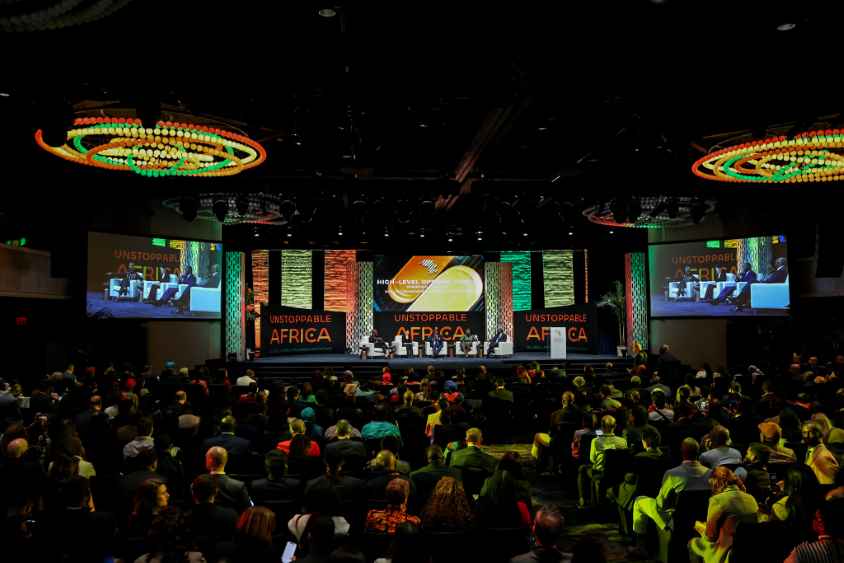
Taking place on 19–21 May 2026 at the Cape Town International Convention Centre (CTICC), Enlit Africa convenes stakeholders from across the electricity value chain and the water ecosystem

CAPE TOWN, South Africa, May 7, 2026/APO Group/ –Enlit Africa 2026 returns to Cape Town with a focused opening sequence built for decision-makers who need practical clarity, not theory: an early-morning investment-led breakfast followed by two keynote anchors that tackle delivery realities in Africa’s power, energy and water systems.


Taking place on 19–21 May 2026 at the Cape Town International Convention Centre (CTICC), Enlit Africa convenes stakeholders from across the electricity value chain and the water ecosystem. The programme is anchored by the 2026 theme: Compounding impact: small changes, outsized outcomes – a deliberate focus on the operational decisions, governance shifts and financing mechanisms that translate intent into measurable system performance.

19 May: Project & Investment Network Business Breakfast (07:00–09:30)

The week starts with the Project & Investment Network Business Breakfast, featuring keynote commentary from Bruce Whitfield followed by a fireside chat between Bruce Whitfield and Goolam Ballim (Chief Economist and Head of Research, Standard Bank Group).

The breakfast is designed for participants focused on bankability, procurement confidence and the practical steps that move projects from intent to execution. It unpacks what financiers are actually pricing, what evidence strengthens confidence in delivery, which behaviours and signals measurably improve fundability and why Africa is more geopolitically relevant than ever before.

19 May: Keynote 1 – Africa in the AI Age (10:30–12:55)

The first keynote anchor, Africa in the AI Age, is hosted by Enkromelle Andrew (Master of Ceremonies) and opens with a welcome from Chanelle Hingston (Group Director, Power, Energy & Water, VUKA Group).

A ministerial address by the Honourable Dr. Kgosientsho Ramokgopa, Minister of Electricity and Energy is followed by a focus on digital power, storage and AI, with a keynote contribution from David Sun (Vice President and CEO of Electric Power Digitalisation Business, Huawei).

The keynote then moves into a panel discussion on the role of AI and digital technologies in Africa’s energy evolution, with panellists including Carol Koech (CEO, GEAPP). The morning concludes with an in-conversation session moderated by James Mackay (CEO, Energy Council of South Africa) with senior business leaders including Dan Marokane (Group Chief Executive, Eskom), and leaders in industry.

20 May: Keynote 2 – How coordinated energy and water planning could change African resilience (09:30–12:00)

The second keynote anchor turns to a reality shaping resilience across the continent: energy security and water security are increasingly inseparable but planning and funding remain fragmented.

Under the guidance of MC Enkromelle Andrew, the session includes a perspective on the water–energy nexus from Sabine Dall’Omo (CEO, Siemens South Africa which convenes a high-level panel on taking water–energy coordination beyond theory, with panellists including Darshana Myronidis (Global Group Director of Sustainability, Virgin Group), Deerosh Maharaj (Executive Head: Energy, Infrastructure & Mining, Standard Bank Business & Commercial Banking), Sabine Dall’Omo (CEO, Siemens South Africa), and JP van der Merwe (Chief Foreign Direct Investment Officer, Wesgro).

Across the Business Breakfast and both keynote anchors, Enlit Africa 2026 is designed to deliver high-signal discussions focused on delivery, governance and the actions that improve system outcomes at pace.

Enlit Africa, created by VUKA Group, will take place on 19–21 May 2026 at the CTICC in Cape Town, South Africa. The full programme and registration information are available at: www.Enlit-Africa.com

Distributed by APO Group on behalf of VUKA Group.

Continue Reading

Business

Kenya’s first private-sector agri-focused securitisation reaches first close at KES 276 million

Published

on

Kaleidofin, IDH Farmfit Fund and Apollo Agriculture announce landmark local currency transaction to strengthen smallholder farmer finance in Kenya

NAIROBI, Kenya, May 6, 2026/APO Group/ –Fintech platform, Kaleidofin (www.Kaleidofin.com), has closed Kenya’s first private-sector local currency securitisation in the smallholder agriculture sector, in partnership with agri-finance company Apollo Agriculture and with investment from the IDH Farmfit Fund, a blended finance impact fund, marking a significant step in developing institutional capital markets for rural lending.


This first-of-its-kind securitisation in Kenya demonstrates how structured credit markets can channel institutional capital toward smallholder finance.

The milestone transaction involved the securitisation of smallholder farmer credit for inputs with a value of KES 370 million, mobilising KES 276 million (approximately USD 2.1 million) in financing through the sale of these receivables, originated by Apollo Agriculture and covering a portfolio of 23,839 smallholder farmers, 51% of whom are women and approximately 22% first-time borrowers. The issuance was supported by an investment grade rating of BBB- from Agusto, marking a significant milestone in demonstrating the credit quality and investability of this asset class.

Structured through Kaleidofin’s ki platform, a dedicated debt capital market infrastructure, the transaction enables the conversion of granular agricultural loans into investable assets for institutional investors in local currency. Unlike traditional models that rely on rigid standardisation, the platform supports customised structuring of portfolios and risk segmentation, powered by Kaleidofin’s proprietary ki score, an AI-driven risk intelligence layer built on loan transaction, bureau and alternative data.

The structure allows originators such as Apollo Agriculture to recycle capital efficiently while aligning financing to seasonal agricultural cycles, and provides investors with improved visibility into underlying asset risk, helping reduce information asymmetry in an otherwise opaque segment.

For Apollo Agriculture, the transaction releases immediate liquidity and improves capital efficiency, enabling continued expansion of financing to smallholder farmers without increasing balance sheet leverage. In practical terms, this means Apollo can extend more loans to smallholder farmers, helping them access the seeds, fertilisers and tools they need to grow more crops and improve their livelihoods. This is made possible by Apollo’s unique credit tech stack, which allows the company to build accurate, real-time credit profiles for farmers and underwrite customers typically excluded from formal finance. Apollo’s platform combines satellite imagery of farm plots, machine learning models trained on agricultural yield patterns, and mobile-based data collection to assess creditworthiness in real time — without requiring the collateral or credit history that traditional lenders demand.

Building investable opportunities in agriculture requires both capital and enabling infrastructure, and this partnership brings those elements together

“This transaction demonstrates how innovative financial structures can unlock capital for smallholder farmers at scale,” said Roel Messie, CEO of IDH Investment Management, manager of the IDH Farmfit Fund. “Building investable opportunities in agriculture requires both capital and enabling infrastructure, and this partnership brings those elements together.”

“We designed the Kaleidofin platform to function as scalable market infrastructure for traditionally excluded customer segments such as smallholder farmers, women entrepreneurs, clean energy and small business,” said Sucharita Mukherjee, Co-founder and CEO of Kaleidofin. “By enabling customised structuring and data-driven risk insights via ki score, we are building the foundations for institutional capital to flow into sectors such as smallholder agriculture in a sustainable way.”

The transaction is expected to serve as a blueprint for similar structures across emerging markets, demonstrating how technology-enabled infrastructure and blended finance can expand access to capital for underserved borrowers while creating investable opportunities for institutional investors.

“This is a meaningful step in building efficient, scalable funding for smallholder agriculture and validates our tech-enabled business model.” said Eli Pollak, CEO of Apollo Agriculture. “By converting receivables into working capital, we are able to lower our cost of funds and expand access to affordable, local currency financing for farmers.” Financing in local currency is critical for farmers, as it protects them from the foreign exchange volatility that can dramatically increase debt repayment burdens. A lower cost of funds means Apollo can offer more affordable loan terms, reducing the financial pressure on farmers and making it more likely they can repay, reinvest in their farms, and build long-term financial resilience.

The IDH Farmfit Fund acted as anchor investor in the transaction, which represents the first step in a broader multi-year securitisation programme expected to mobilise approximately KES 2.37 billion and reach more than 130,000 farmers over time.

The transaction was supported by a broader ecosystem of partners working to develop the enabling environment for structured finance in agriculture. UK-funded specialist development agency, FSD Africa provided support across legal and regulatory structuring, investor engagement, and market development, while the UK’s flagship public markets programme, MOBILIST, contributed to tax and structuring guidance.

“This transaction showcases how well-functioning market infrastructure can catalyse institutional capital for sectors traditionally considered high-risk, like smallholder agriculture. FSD Africa’s role has been to help build the foundations — from regulatory clarity to investor confidence — that make transactions like this viable and repeatable. We see this as a blueprint for how structured finance can unlock sustainable, large-scale funding for inclusive growth across Africa,” said Dr. Evans Osano, Chief Financial Markets Officer at FSD Africa.

“By supporting FSDA to demonstrate and enable innovation like this, we aim to make it more efficient to mobilize domestic sources of capital for women’s economic empowerment,” said Mark Wensley, Senior Program Officer at the Gates Foundation.

British International Investment (BII), the UK’s development finance institution and impact investor, provided technical assistance to its investee Apollo Agriculture through BII Plus. The foundational funding strengthens its reporting and technology capabilities, enabling access to a scalable, KES-denominated funding model that significantly reduces FX risk while achieving a more efficient and sustainable cost of capital for its growing loan portfolio.

Distributed by APO Group on behalf of Kaleidofin Private Limited.


Continue Reading

Trending

Exit mobile version