Connect with us

Business

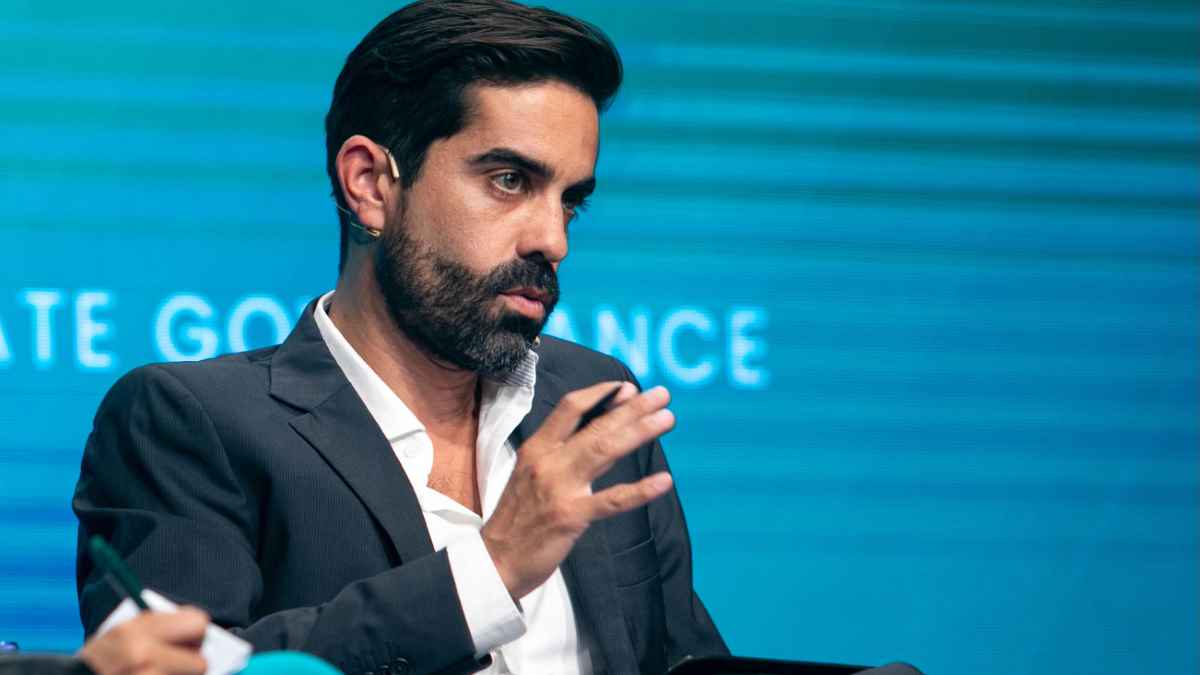
The Perception Tax: Africa’s Most Expensive Misconception (By João Gaspar Marques)

Published

on

tax

For companies with significant African exposure or ambitions, the perception tax is a structural drag on performance and profit

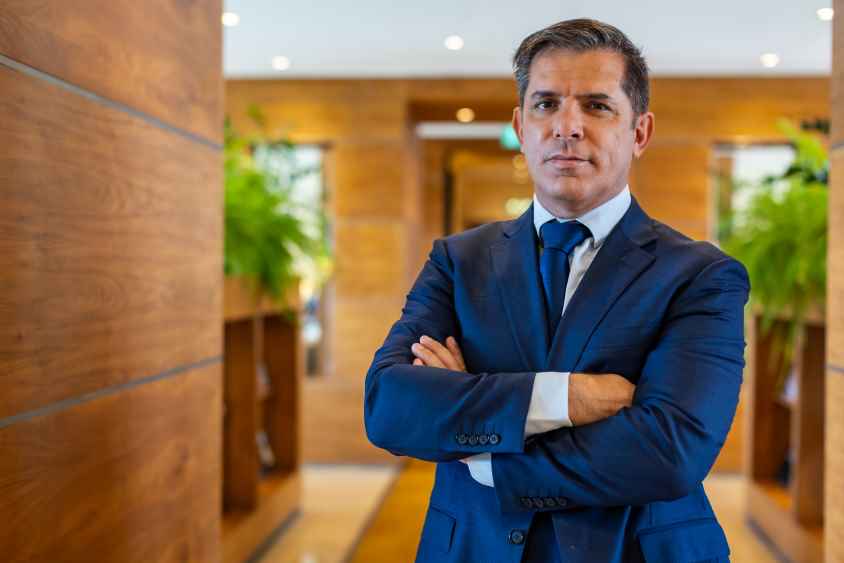
JOHANNESBURG, South Africa, March 23, 2026/APO Group/ —By João Gaspar Marques — Executive Director, Strategic Advisory, APO Group (https://APO-opa.com).

There is a cost that does not appear on any balance sheet and yet is one of the most consequential expenses a company operating in Africa will incur. I call it the Perception Tax: the financial and strategic penalty paid by organisations that price African markets on the basis of assumption rather than intelligence.

It is, in every meaningful sense, a tax on ignorance. And unlike most taxes, it is entirely avoidable.

The Mechanism

The perception tax operates through a simple but destructive logic. In the absence of credible, granular market intelligence, decision-makers default to the available narrative – and the available narrative on Africa is often wrong in its generalisations. It is a painfully outdated tragedy that the continent continues to be treated as a unified landscape of risk, rather than 54 distinct nations with their own regulatory frameworks, political cultures, growth trajectories, and investment dynamics. The macro obscures the micro, and the micro is where the opportunity lives.

Consider the geography of it. Investing in France is different from investing in Finland. The US is not Mexico. So why would Benin and Botswana, as far apart physically, politically, economically, and culturally as Belgium is from Belarus, be perceived under the same optics? Yet, again and again, that is precisely what we see in investment discussions from London to New York.

The consequences of this tax are very real. The cost of access to capital rises for projects that do not warrant a premium. Decisions are delayed while companies wait for clarity that a generalistic analysis cannot provide. First-mover advantage, objectively the most sought-after edge in developing economies, is being blindly surrendered to competitors with better intelligence and market understanding. For companies with significant African exposure or ambitions, the perception tax is a structural drag on performance and profit.

Reading the Numbers

In February 2025, the African Development Bank commissioned Moody’s Analytics to assess fourteen years of infrastructure investment performance across regions. Africa’s rate of loss stood at 1.7%, the lowest in the world. Latin America registered approximately 13%. Eastern Europe, 10%. By any objective measure, Africa is among the most reliable destinations for infrastructure investment on the planet.

Yet the cost of capital across African markets remains three to four times higher than in comparable regions. Investors are demanding a premium that the facts on the ground do not justify, and the assets they pass on are being acquired by those who read about the numbers rather than the headlines.

I call it the Perception Tax: the financial and strategic penalty paid by organisations that price African markets on the basis of assumption rather than intelligence

Tony Elumelu, whose investment portfolio spans power, financial services, and healthcare across four continents, puts it plainly: “There’s nowhere else we get the kind of returns on investments as what we make in Africa.” The competitive advantage belongs to those who see opportunity where others see risk.

What It Looks Like in Practice

A developer assessing a project in East Africa sees currency volatility, a complex political transition, and a regulatory environment difficult to understand at first. The standard response is to demand a higher return, shorten financing tenors, or cancel the decision entirely. Less competitive, slower, potentially deal-killing. A competitor with on-the-ground intelligence reads the same market differently. That country has maintained institutional continuity across successive governments. The local partner has a strong operational track record. Local financing partners are prepared to co-invest. The project proceeds on better terms, ahead of the market. The perception tax has been paid, by the first company, to the second.

This is not hypothetical. Helios Investment Partners, one of Africa’s most successful private equity funds, built a portfolio exceeding $3 billion by entering markets the global consensus had written off as too risky, reading them instead for what they actually were. Kenya illustrates what happens when this information gap closes. Five years of regulatory reform moved the country 52 positions up the World Bank Ease of Doing Business Index. Foreign investment followed, consistently and at scale. The risk did not disappear. It was understood.

This pattern repeats across the continent. Markets once characterised as high-risk by international capital are, on closer inspection, simply markets that had not yet been properly read. The investors who looked carefully enough to see the difference captured returns that reflected the advantage of having done so. Those who were hesitant arrived later, at higher valuations, paying the perception tax in full.

The Broader Implication

The perception tax compounds. Delayed investment means delayed market development, which reinforces the perception of unreadiness, which delays further investment. The gap between Africa’s perceived risk profile and its actual commercial fundamentals does not close on its own. It closes when enough informed capital enters a market to shift the consensus, which is precisely when the opportunity for asymmetric returns begins to narrow.

The African Continental Free Trade Area represents a $3.4 trillion market with a population approaching 1.5 billion people. The continent holds the critical minerals on which the global energy transition depends. The question is not whether capital will eventually flow toward these opportunities. It will. The question is who will have established a position before generalised knowledge eclipses profit opportunity.

A Different Approach

The companies that consistently outperform in Africa share a common characteristic: they treat market intelligence as a primary investment, not a nice-to-have. They distinguish between structural risk, which must be priced, and noise, which must be filtered. They understand that the information gap between perception and reality is not a permanent feature of African markets. It is a temporary condition which will reward those who close it first. Closing that gap is precisely why we designed APO Group’s advisory practice.

The perception tax is also the perception premium. The same asymmetry that penalises the ill-informed rewards the well-informed. For the investor or corporate decision-maker prepared to engage with local markets at the level of detail that strategic decisions require, Africa offers something increasingly rare in global markets: a genuine informational edge.

The opportunity was always there. The edge belongs to those who are bothered to look.

Distributed by APO Group on behalf of APO Group Insights.


Energy

Guinea-Conakry Energy Minister to Bring Frontier Oil & Power Opportunities to Invest in African Energy (IAE) 2026

Published

on

Aboubacar Camara, Minister of Health, Sanitation, Energy, Hydraulics and Hydrocarbons of Guinea-Conakry, will deliver a keynote at next month’s Invest in African Energy Forum in Paris

PARIS, France, March 13, 2026/APO Group/ –As exploration momentum builds across West Africa’s (Mauritania-Senegal-Gambia-Bissau-Conakry) MSGBC basin, Guinea-Conakry is seeking to position itself as the region’s next frontier for oil and gas development while accelerating investment in large-scale power infrastructure. At the upcoming Invest in African Energy Invest in African Energy (IAE) Forum in Paris, Aboubacar Camara, Minister of Health, Sanitation, Energy, Hydraulics and Hydrocarbons of Guinea-Conakry, will outline the country’s strategy to unlock upstream potential and expand electricity generation to support industrial growth.


Guinea’s hydrocarbon sector remains largely underexplored compared to its regional neighbors. To stimulate exploration activity, the government has been preparing a licensing round covering 22 onshore and offshore blocks designed to attract international operators. As of late 2025, authorities were finalizing the technical framework and fiscal terms while expanding access to geological data through a National Seismic Data Visualization Center, developed in partnership with SLB and TGS. The data platform is expected to provide prospective investors with improved visibility into Guinea’s offshore basins ahead of the planned bid round.


While Guinea has historically seen limited drilling activity, interest in the country’s offshore margin has grown in recent years as major discoveries in neighboring Senegal and Mauritania have reshaped perceptions of the MSGBC basin’s resource potential.


Alongside upstream ambitions, Guinea is advancing a series of large-scale power projects aimed at addressing electricity shortages and supporting its expanding mining sector. Hydropower remains the backbone of the country’s electricity system, with major projects developed along the Konkouré River significantly increasing generation capacity in recent years.


The 450 MW Souapiti Hydropower Plant and the earlier 240 MW Kaleta facility have significantly expanded national generation capacity in recent years, strengthening grid reliability while providing power to mining operations and urban centers. Additional large-scale projects are progressing across the pipeline, including the 300 MW Amaria hydropower project and the 294 MW Koukoutamba hydropower plant, which is being developed under the Senegal River Basin Development Authority to supply electricity across several West African countries.


Beyond hydropower, authorities are exploring opportunities to diversify the country’s energy mix through gas and renewable energy investments. One proposal involves the development of an LNG terminal at the Port of Kamsar to support both import and export operations while supplying a planned gas-fired power facility capable of generating up to 1,900 MW of electricity.


Solar energy is also gaining momentum as part of Guinea’s long-term strategy to strengthen grid reliability and reduce seasonal dependence on hydropower. Government plans call for the addition of up to 500 MW of solar generation capacity in the coming years, opening new opportunities for independent power producers and infrastructure investors.


At the same time, regional transmission initiatives are expanding Guinea’s integration within the West African Power Pool. Financing approved in 2025 for the Guinea–Mali electricity interconnection project aims to improve electricity supply in eastern Guinea while enabling cross-border power trade and strengthening regional grid stability.


The IAE 2026 Forum offers Guinea-Conakry an opportunity to present its evolving energy strategy to international investors. By highlighting frontier exploration acreage alongside major power infrastructure developments, the government aims to attract the partnerships needed to accelerate the next phase of the country’s energy sector development.


IAE 2026 (http://apo-opa.co/4urkt3f) is an exclusive forum designed to connect African energy markets with global investors, serving as a key platform for deal-making in the lead-up to African Energy Week. Scheduled for April 22–23, 2026, in Paris, the event will provide delegates with two days of in-depth engagement with industry experts, project developers, investors and policymakers. For more information, visit www.Invest-Africa-Energy.com. To sponsor or register as a delegate, please contact sales@energycapitalpower.com

Distributed by APO Group on behalf of Energy Capital & Power.

Continue Reading

Business

BROXO Introduces Brand Update Across Water Treatment Markets

Published

on

BROXO, one of Europe’s leading brands in high-quality water treatment salt, announces a comprehensive brand refresh, reaffirming its position as a trusted partner in water softening applications for nearly a century

AMERSFOORT, The Netherlands, March 13, 2026/APO Group/ –BROXO (www.BROXOSalt.com/) is part of Hengelo Salt Specialties and Mariager Salt Specialties, companies incorporated under Groupe Salins, headquartered in Clichy, France. With over 100 years of expertise, BROXO has built a strong reputation for delivering premium vacuum salt used in professional water treatment systems across Europe.


BROXO salt is produced from high-purity vacuum salt extracted from underground salt caverns in the Netherlands and Denmark. In the Netherlands, the salt is compacted into briquettes and tablets, as well as specialized grades for water softening applications. With a sodium chloride purity of 99.9% and extremely low calcium and magnesium content, BROXO is among the highest quality salts available on the market.

This refresh is about returning to our core strengths: quality, reliability, and consistency while modernizing how we present ourselves to the market

The salt plays a critical role in regenerating ion exchange resins in water softening systems, effectively removing calcium and magnesium from water. By preventing limescale formation, BROXO helps protect pipes, heating systems, dishwashers, and industrial installations. In industrial environments, effective water softening reduces energy consumption, minimizes maintenance requirements, and safeguards operational efficiency.

The brand refresh focuses on strengthening BROXO’s core identity, reinforcing the recognizable brand assets, colors, and visual language that customers have trusted for decades. The updated look reflects both BROXO’s heritage and its forward-looking approach to the global market.

“BROXO has been a leader in its segment for over 100 years. This refresh is about returning to our core strengths: quality, reliability, and consistency while modernizing how we present ourselves to the market,” says Nico Basson, Segment Marketing Manager Water & Retail Products. “We are building on a strong foundation and preparing the brand for continued growth.”

Today, BROXO continues to serve a wide range of customers, including restaurants, hotels, commercial facilities, and industrial operators that rely on high-performance water softening systems.

Distributed by APO Group on behalf of BROXO.

Continue Reading

Business

Chevron Taps Emmanuelle Garinet to Lead Exploration Across Sub-Saharan Africa and the America

Published

on

Chevron appoints exploration veteran Emmanuelle Garinet to lead discovery strategy across sub-Saharan Africa and the Americas, a move welcomed by the African Energy Chamber as positive for exploration investment

JOHANNESBURG, South Africa, March 13, 2026/APO Group/ –Energy supermajor Chevron has appointed Emmanuelle Garinet as Director of Exploration for the Americas and Sub-Saharan Africa, bringing one of the upstream industry’s most experience exploration geophysicists into a strategic leadership role overseeing discovery efforts across two of the world’s most important hydrocarbon regions.


The African Energy Chamber (AEC) – as the voice of the African energy industry – welcomes the appointment, with Garinet’s move to Chevron serving as a positive signal for Africa’s exploration sector. For the Chamber, placing an executive with decades of African exploration experience at the helm of a major international oil company’s discovery strategy could help unlock new investment across frontier basins, accelerate geological understanding and strengthen collaboration between operators and host governments.


Expanding Exploration Across Sub-Saharan Africa

Chevron’s African portfolio is entering a new phase of exploration-led growth as international energy companies continue to pursue new discoveries across frontier basins and established producing hubs.


Namibia has emerged as one of the most closely watched exploration regions in the world following a series of major deepwater discoveries in the Orange Basin. Chevron is currently evaluating prospects in the Walvis Basin, where the company plans to drill a new exploration well in PEL 82 between 2026 and 2027. The campaign follows earlier drilling in the Orange Basin, reflecting the company’s continued interest in Namibia’s rapidly evolving offshore petroleum system.


In West Africa, Chevron is expanding its deepwater presence in Nigeria after acquiring a 40% stake from TotalEnergies in offshore licenses PPL 2000 and PPL 2001. The company is expected to deploy a drilling rig in late 2026 targeting resources near the Agbami field as part of a broader deepwater growth strategy.


Angola remains a cornerstone of Chevron’s African portfolio where, in December 2025, the company achieved first oil at the South N’dola platform in Block 0, producing approximately 25,000 barrels of oil per day using existing infrastructure. Associated gas from the project is routed to the Angola LNG plant, supporting the country’s gas monetization strategy while reducing flaring.


For the AEC, these developments highlight the continued importance of exploration in unlocking new energy resources across the continent while supporting regional economic growth and energy security.


Americas Portfolio Provides Additional Growth

Emmanuelle Garinet brings decades of geological insight and international exploration leadership

Beyond Africa, Chevron maintains a large upstream portfolio across the Americas.


In the U.S. the company continues expanding production in the Permian Basin, where output is projected to reach around one million barrels of oil equivalent per day in 2026. Deepwater developments in the Gulf of Mexico also remains a key component of Chevron’s portfolio, contributing to long-term production growth.


In South America, Chevron’s position in Guyana’s prolific Stabroek Block – obtained through the company’s acquisition of Hess Corporation – places it within one of the world’s fastest-growing offshore petroleum provinces. Meanwhile, unconventional development in Argentina’s Vaca Muerta formation continues to support production growth in the region.


A Career Built on Global Exploration

Garinet’s career reflects more than three decades of experience in exploration geology, subsurface interpretation and international upstream leadership.


She began her career as a geophysicist, working on seismic analysis and subsurface evaluation before moving into management roles overseeing large exploration portfolios. Over time, she held senior leadership positions across multiple continents, including roles managing exploration programs in Nigeria, Gabon and South America.


Her tenure at TotalEnergies also spanned the transformation of the company from Elf Aquitaine to ToalFinaElf and ultimately TotalEnergies.


One of her most notable achievements was leading the exploration team behind the Venus discovery offshore Namibia – one of the largest deepwater oil finds in recent years and a project expected to move toward a final investment decision in 2026.


“Exploration leadership with deep technical expertise and real experience in Africa’s basins is critical as the continent seeks to unlock new resources and attract global investment,” says NJ Ayuk, Executive Chairman, AEC. “Emmanuelle Garinet brings decades of geological insight and international exploration leadership. Her appointment at Chevron sends a strong signal about the continued importance of African energy development.”


Garinet has also been a prominent advocate for African energy development and has frequently spoken at the annual African Energy Week conference in Cape Town, where she has highlighted the role of advanced seismic data, frontier exploration and efficient permitting systems in unlocking new opportunities across the continent.

Distributed by APO Group on behalf of African Energy Chamber.

Continue Reading

Trending

Exit mobile version