Connect with us
Anglostratits

Business

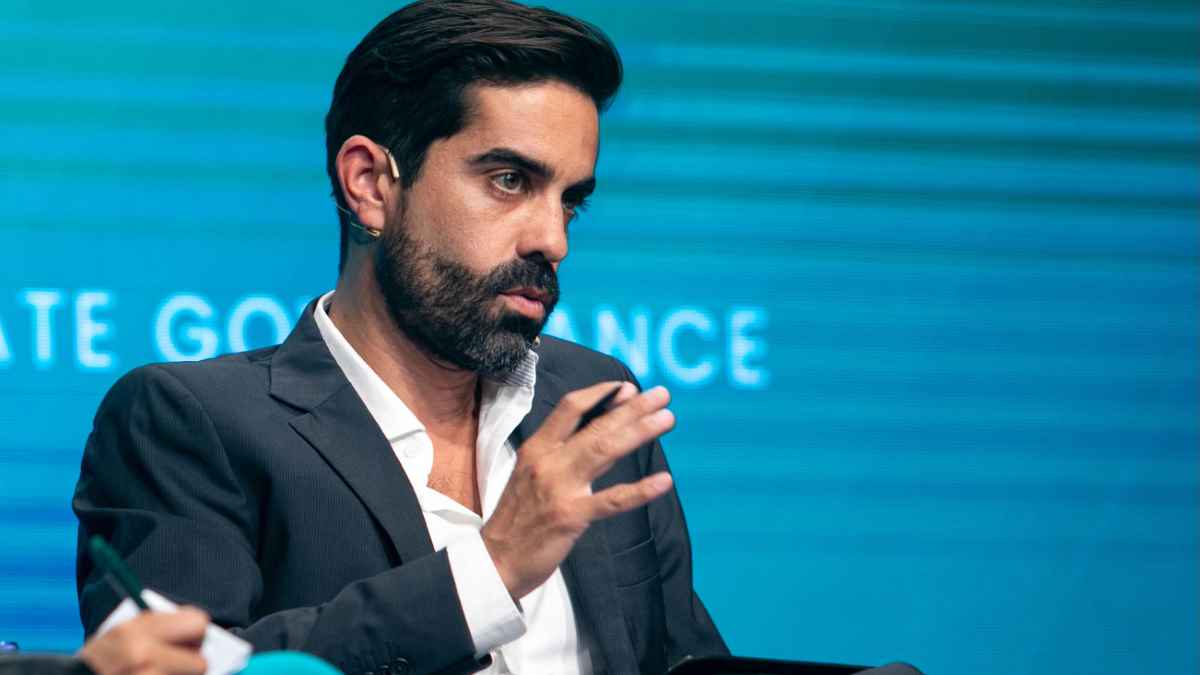
The Perception Tax: Africa’s Most Expensive Misconception (By João Gaspar Marques)

Published

on

tax

For companies with significant African exposure or ambitions, the perception tax is a structural drag on performance and profit

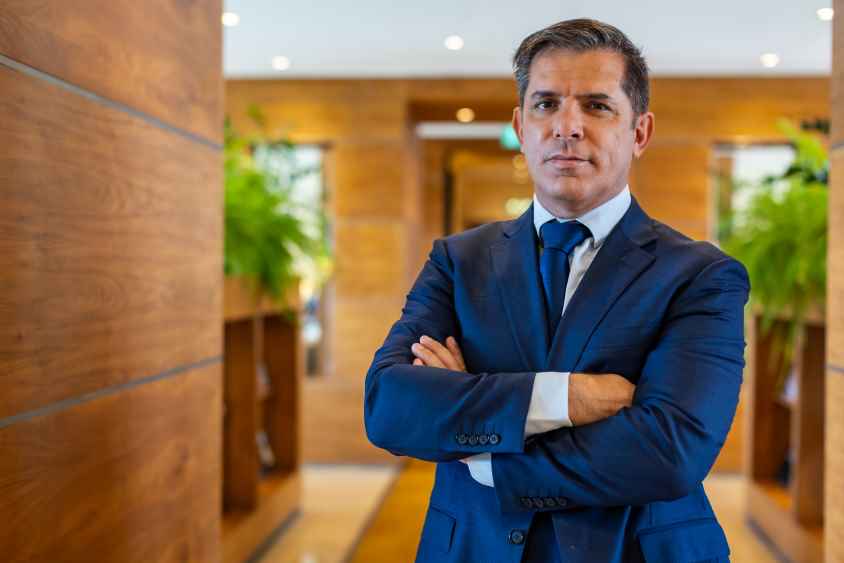
JOHANNESBURG, South Africa, March 23, 2026/APO Group/ —By João Gaspar Marques — Executive Director, Strategic Advisory, APO Group (https://APO-opa.com).

There is a cost that does not appear on any balance sheet and yet is one of the most consequential expenses a company operating in Africa will incur. I call it the Perception Tax: the financial and strategic penalty paid by organisations that price African markets on the basis of assumption rather than intelligence.

It is, in every meaningful sense, a tax on ignorance. And unlike most taxes, it is entirely avoidable.

The Mechanism

The perception tax operates through a simple but destructive logic. In the absence of credible, granular market intelligence, decision-makers default to the available narrative – and the available narrative on Africa is often wrong in its generalisations. It is a painfully outdated tragedy that the continent continues to be treated as a unified landscape of risk, rather than 54 distinct nations with their own regulatory frameworks, political cultures, growth trajectories, and investment dynamics. The macro obscures the micro, and the micro is where the opportunity lives.

Consider the geography of it. Investing in France is different from investing in Finland. The US is not Mexico. So why would Benin and Botswana, as far apart physically, politically, economically, and culturally as Belgium is from Belarus, be perceived under the same optics? Yet, again and again, that is precisely what we see in investment discussions from London to New York.

The consequences of this tax are very real. The cost of access to capital rises for projects that do not warrant a premium. Decisions are delayed while companies wait for clarity that a generalistic analysis cannot provide. First-mover advantage, objectively the most sought-after edge in developing economies, is being blindly surrendered to competitors with better intelligence and market understanding. For companies with significant African exposure or ambitions, the perception tax is a structural drag on performance and profit.

Reading the Numbers

In February 2025, the African Development Bank commissioned Moody’s Analytics to assess fourteen years of infrastructure investment performance across regions. Africa’s rate of loss stood at 1.7%, the lowest in the world. Latin America registered approximately 13%. Eastern Europe, 10%. By any objective measure, Africa is among the most reliable destinations for infrastructure investment on the planet.

Yet the cost of capital across African markets remains three to four times higher than in comparable regions. Investors are demanding a premium that the facts on the ground do not justify, and the assets they pass on are being acquired by those who read about the numbers rather than the headlines.

I call it the Perception Tax: the financial and strategic penalty paid by organisations that price African markets on the basis of assumption rather than intelligence

Tony Elumelu, whose investment portfolio spans power, financial services, and healthcare across four continents, puts it plainly: “There’s nowhere else we get the kind of returns on investments as what we make in Africa.” The competitive advantage belongs to those who see opportunity where others see risk.

What It Looks Like in Practice

A developer assessing a project in East Africa sees currency volatility, a complex political transition, and a regulatory environment difficult to understand at first. The standard response is to demand a higher return, shorten financing tenors, or cancel the decision entirely. Less competitive, slower, potentially deal-killing. A competitor with on-the-ground intelligence reads the same market differently. That country has maintained institutional continuity across successive governments. The local partner has a strong operational track record. Local financing partners are prepared to co-invest. The project proceeds on better terms, ahead of the market. The perception tax has been paid, by the first company, to the second.

This is not hypothetical. Helios Investment Partners, one of Africa’s most successful private equity funds, built a portfolio exceeding $3 billion by entering markets the global consensus had written off as too risky, reading them instead for what they actually were. Kenya illustrates what happens when this information gap closes. Five years of regulatory reform moved the country 52 positions up the World Bank Ease of Doing Business Index. Foreign investment followed, consistently and at scale. The risk did not disappear. It was understood.

This pattern repeats across the continent. Markets once characterised as high-risk by international capital are, on closer inspection, simply markets that had not yet been properly read. The investors who looked carefully enough to see the difference captured returns that reflected the advantage of having done so. Those who were hesitant arrived later, at higher valuations, paying the perception tax in full.

The Broader Implication

The perception tax compounds. Delayed investment means delayed market development, which reinforces the perception of unreadiness, which delays further investment. The gap between Africa’s perceived risk profile and its actual commercial fundamentals does not close on its own. It closes when enough informed capital enters a market to shift the consensus, which is precisely when the opportunity for asymmetric returns begins to narrow.

The African Continental Free Trade Area represents a $3.4 trillion market with a population approaching 1.5 billion people. The continent holds the critical minerals on which the global energy transition depends. The question is not whether capital will eventually flow toward these opportunities. It will. The question is who will have established a position before generalised knowledge eclipses profit opportunity.

A Different Approach

The companies that consistently outperform in Africa share a common characteristic: they treat market intelligence as a primary investment, not a nice-to-have. They distinguish between structural risk, which must be priced, and noise, which must be filtered. They understand that the information gap between perception and reality is not a permanent feature of African markets. It is a temporary condition which will reward those who close it first. Closing that gap is precisely why we designed APO Group’s advisory practice.

The perception tax is also the perception premium. The same asymmetry that penalises the ill-informed rewards the well-informed. For the investor or corporate decision-maker prepared to engage with local markets at the level of detail that strategic decisions require, Africa offers something increasingly rare in global markets: a genuine informational edge.

The opportunity was always there. The edge belongs to those who are bothered to look.

Distributed by APO Group on behalf of APO Group Insights.


Business

Liberia to Preview Next Oil & Gas Licensing Round Strategy at Houston Investor Day

Published

on

The Liberia Petroleum Regulatory Authority will host operators, investors and partners in Houston on August 19 to preview future licensing opportunities and showcase the exploration potential of its offshore basins

HOUSTON, United States of America, August 7, 2026/APO Group/ –The Liberia Petroleum Regulatory Authority (LPRA) will present its strategy for the country’s next offshore licensing round at Liberia Investor Day Houston on August 19, bringing together international exploration companies, investors, service providers and energy leaders to discuss the next phase of Liberia’s upstream development.

Hosted in partnership with Energy Capital & Power, the event will provide a platform for the LPRA, led by Director General Hon. Marilyn T. Logan, to outline Liberia’s regulatory framework, investment priorities and plans to attract new participation across the country’s offshore sector. Discussions will focus on upcoming licensing opportunities, exploration prospects and the subsurface data supporting future investment decisions.

Liberia’s offshore sector is entering a new phase of exploration activity, with renewed international participation and a growing pipeline of opportunities. Following the award and ratification of eight Production Sharing Contracts in 2025, Liberia has re-established itself as a frontier exploration destination, with international operators advancing work programs designed to further evaluate the country’s petroleum potential. TotalEnergies is progressing exploration activities that include offshore geochemical surveys, 3D seismic acquisition and seabed mapping, while Oranto Petroleum has also signed contracts to explore Liberia’s offshore.

At the Liberia Investor Day Houston, the LPRA will provide industry stakeholders with insight into the priorities shaping the next licensing round, including the anticipated process, qualification requirements, available acreage and access to technical data. The engagement will give prospective investors a clearer view of Liberia’s exploration landscape and the opportunities emerging across its offshore basins.

The event will also facilitate direct dialogue between LPRA and the global upstream community, connecting companies with policymakers and industry stakeholders involved in shaping Liberia’s next chapter of petroleum development.

As exploration companies continue to seek new frontier opportunities, Liberia Investor Day Houston will highlight the role of regulatory certainty, data availability and strategic partnerships in unlocking long-term investment across Liberia’s offshore sector.

Registration is now open for attendees. Companies interested in Liberia’s emerging offshore opportunities are invited to join LPRA, investors and upstream leaders in Houston for insights into the country’s licensing strategy and exploration outlook. For more information contact info@energycapitalpower.com.

Distributed by APO Group on behalf of Energy Capital & Power.


Continue Reading

Business

Beyond Stabroek: Guyana’s Offshore Basin Attracts New Wave of Exploration Investment

Published

on

Etu Energias

As ExxonMobil advances appraisal activity in Stabroek and new operators target frontier acreage, Guyana is attracting global capital and building a diversified offshore portfolio designed to sustain long-term growth

GEORGETOWN, Guyana, August 7, 2026/APO Group/ –Guyana’s transformation into one of the world’s fastest-growing oil producers is entering a new phase, with a growing network of IOCs expanding exploration activity across the country’s offshore basin. Beyond the landmark discoveries that first put Guyana on the global energy map, new drilling campaigns and licensing partnerships are creating a broader exploration ecosystem designed to support long-term production growth.

At the center of this momentum is ExxonMobil’s continued exploration and appraisal activity in the prolific Stabroek Block. The company has submitted a proposal for a 35-well exploration and appraisal drilling campaign, expected to run from 2028 through 2033, pending regulatory approval. The program would build on more than 30 commercial discoveries already made in the block, with drilling activity focused on evaluating new prospects and appraising existing discoveries to support future development opportunities.

Exploration activity is also extending into Guyana’s frontier acreage, with ExxonMobil advancing drilling operations at the deepwater Canje Block. The company has deployed the Noble Stena Carron drillship for exploration activity, highlighting continued industry interest in evaluating Guyana’s underexplored offshore potential beyond the established Stabroek Block.

Guyana’s strong exploration outlook comes as the country’s economy continues to benefit from rapid oil sector expansion, with hydrocarbons expected to remain a key driver of exports, government revenues and economic growth. As production scales up, attracting additional investment across exploration, services and infrastructure will be critical to supporting the next phase of development.

That momentum is being reinforced through partnerships established under Guyana’s 2023 offshore licensing round. A consortium comprising TotalEnergies, QatarEnergy and Petronas is advancing exploration activities in Block S4 under a five-year production sharing agreement signed with the government in late 2025. The award represents one of the first major outcomes of the licensing round and demonstrates continued international confidence in Guyana’s offshore resource potential.

Beyond the largest operators, a diverse group of companies is also expanding activity across Guyana’s offshore basin. Eco Atlantic is advancing exploration at the Orinduik Block; CGX Energy and Frontera Energy are progressing work in the Corentyne Block; Occidental is evaluating opportunities in the Roraima Block; while Ratio Guyana and Cataleya Energy hold interests in the Kaieteur Block. Together, these partnerships are broadening Guyana’s exploration landscape, increasing competition for acreage and creating opportunities for future discoveries.

As Guyana transitions from an emerging producer to a global energy hub, the next challenge will be converting exploration success into sustainable investment, local value creation and regional growth. These opportunities will be explored at Caribbean Energy Week 2027, held under the theme “Unlocking the Caribbean Energy Corridor: Oil, Gas, LNG & Investment for a New Global Hub.” Bringing together governments, IOCs, investors and technology providers, the event will examine how Guyana’s expanding partnerships can accelerate offshore development, strengthen regional energy cooperation and attract the capital needed to support the Caribbean’s evolving energy landscape.

Distributed by APO Group on behalf of Energy Capital & Power.

Continue Reading

Business

Energy Capital & Power Establishes London Entity, Expanding Global Platform for Energy and Mining Events

Published

on

Energy

The move strengthens ECP’s presence in the UK and Europe, and its ability to connect African and South American markets with global investors

LONDON, United Kingdom, August 6, 2026/APO Group/ –International events company Energy Capital & Power (ECP) (www.EnergyCapitalPower.com) has officially established its UK entity in London, marking a milestone in the company’s growth strategy and reinforcing its ability to deliver world-class energy and mining events and campaigns in the UK and Europe.

By establishing a presence in a key hub like London – the pre-eminent energy and mining finance center – ECP actively shapes the global energy conversation. The expansion positions ECP to better serve clients, partners and investors seeking to develop business opportunities between Africa, Europe, the Americas and energy markets worldwide.

Opening our UK company brings ECP closer to key investors in the global energy finance capital

The milestone comes as ECP strengthens its reach through a series of investment platforms that connect global capital to energy and mining projects. These include the Venezuela Energy Week London Showcase on July 30 – with over 300 delegates registered – and the annual Invest in African Energy Forum, held in Paris as the premier event connecting global investors to Africa’s energy transformation.

ECP hosts high level summits and investor conferences in leading energy and minerals producing countries in Africa and South America, including: Venezuela Energy Week; Angola Oil & Gas; MSGBC Oil, Gas & Power; African Mining Week; Libya Energy & Economic Summit; Congo Energy & Investment Forum; South Sudan Oil & Power; and Caribbean Energy Week. The company has hosted investor forums and supported licensing round roadshows in Houston, London and Paris since 2016.

“Opening our UK company brings ECP closer to key investors in the global energy finance capital,” states CEO James Chester. “Having a permanent presence in London further cements our footprint in Europe, enabling us to fulfil our mission to bring minerals and energy investment to diverse global markets.”

With teams located across Africa, Europe and the Americas, ECP has long-facilitated strategic engagement, market intelligence and industry convening, uniting investors with leading energy and mining projects.

Distributed by APO Group on behalf of Energy Capital & Power.

Continue Reading

Trending