Connect with us
Anglostratits

Business

Afreximbank and partners bring together investors and industrialists in Benin to Accelerate local processing and investment in Special Economic Zones

Published

on

Afreximbank

Held under the theme “Investing in Local Processing and Industrialisation”, the forum brought together international investors, industrialists, buyers and development finance institutions to explore the vast opportunities for local processing and strategic partnerships offered by the GDIZ

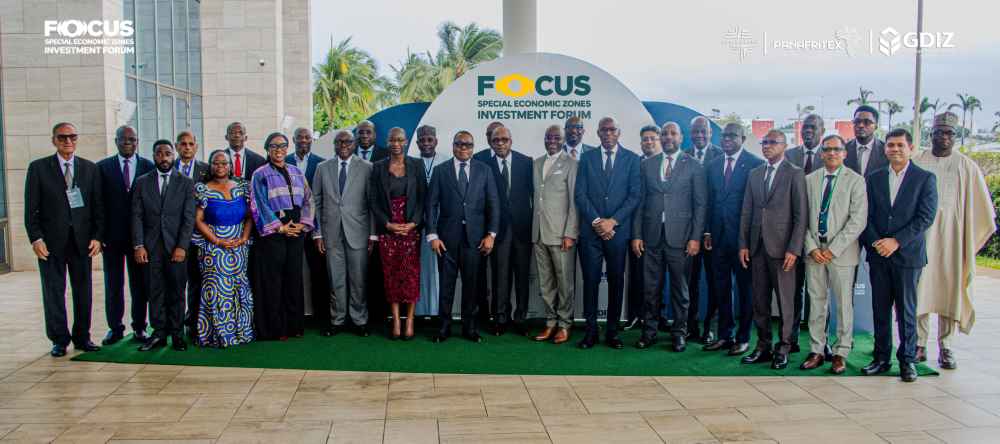
COTONOU, Benin, November 3, 2026/APO Group/ –African Export-Import Bank (Afreximbank) (www.Afreximbank.com), in partnership with the Société d’Investissement et de Promotion de l’Industrie (SIPI-BENIN S.A), the entity responsible for developing the Glo-Djigbé Industrial Zone (GDIZ), and Panafritex, hosted the Special Economic Zones Investment Forum (FocusSEZ 2026) on 21 and 22 October 2026 at the Sofitel Cotonou Marina Hotel and the GDIZ.


Held under the theme “Investing in Local Processing and Industrialisation”, the forum brought together international investors, industrialists, buyers and development finance institutions to explore the vast opportunities for local processing and strategic partnerships offered by the GDIZ.

Local processing at the heart of discussions

In his address, Mr Jean Arsene Yemina, Regional Director of Operations for Francophone West Africa at Afreximbank, speaking on behalf of Ms Kanayo Awani, Executive Vice President, Intra-African Trade and Export Development, Afreximbank, highlighted the role of financing and industrial partnerships in transforming Africa’s raw materials into finished products:

“Here in Benin, textiles have become the driving force behind this transformation. The Glo-Djigbé Industrial Zone was established through a partnership between the Government of Benin and ARISE IIP, with Afreximbank proud to have contributed to financing its development.

“Here in Benin, the textile industry has become the driving force behind this transformation. The Glo-Djigbé Industrial Zone was created through a partnership between the Government of Benin and ARISE IIP, and Afreximbank is proud to have helped finance its establishment. Today, the zone is home to West Africa’s first fully integrated cotton-to-garment manufacturing platform, operated by Benin Textile (BTEX). The entire value chain, from ginning and spinning to weaving and finished garments, is carried out on African soil by African hands. Before the creation of the GDIZ, less than 1% of Benin’s cotton was processed locally. In just three years, the zone has come to process approximately 40,000 metric tons of cotton—nearly 12% of national production—and to produce millions of “Made in Benin” garments for major international brands such as US Polo, Kiabi, and H&M.”

He also highlighted similar efforts underway at the GDIZ to develop local processing in the cashew, soybean and shea value chains.

Mr Létondji Beheton, Director General of SIPI-BENIN S.A., emphasised the need to strengthen value addition across the continent:

“Our ambition can no longer be limited to producing and exporting raw materials. We must go further by processing more of these resources on our continent, developing competitive industries, strengthening our value chains and retaining a greater share of the wealth generated from our natural resources.”

He added: “It is against this backdrop that the Glo-Djigbé Industrial Zone (GDIZ) was established, as the outcome of a public-private partnership between the Republic of Benin and ARISE Integrated Industrial Platforms (ARISE IIP). This integrated industrial platform embodies a shared commitment to making local processing a driver of economic growth, job creation and industrial development.

“By attracting manufacturing facilities and developing integrated value chains, the GDIZ is helping transform raw materials into higher-value-added products, strengthen Benin’s industrial capacity and enhance its competitiveness in regional and international markets. In doing so, it is contributing to the development of a more diversified economy that generates wealth and creates sustainable opportunities for the country.”

Africa has significant potential to strengthen its position in the global textile industry

Mr Arvind Mathur, CEO of PANAFRITEX, highlighted the role of ARISE IIP’s textile platform in developing an integrated textile industry in Africa, capable of transforming the continent’s cotton into finished, high-value-added products.

“Africa has significant potential to strengthen its position in the global textile industry. Realising this ambition will require the development of integrated industrial capacities that can transform cotton grown on the continent into higher-value-added finished products, while enhancing the competitiveness of the sector and expanding its access to international markets.

“At PANAFRITEX, we are contributing to this momentum by developing a model that brings together industrial processing, business development and the promotion of finished products. Our own brands, Obalé and SúSú, are part of this approach, connecting Africa’s manufacturing capabilities with consumer markets.

“The commissioning of our first industrial facilities at the GDIZ in Benin marks a major milestone in the rollout of this model. At the same time, the development of new facilities in Cameroon, Kenya, Nigeria, Ghana and Tanzania reflects our ambition to progressively expand our industrial footprint across the continent.

“Through this expansion, we aim to contribute to strengthening Africa’s textile value chains, creating skilled jobs and ensuring that a greater share of the value generated is retained locally.”

Financing, Market Access and Business Networking

Discussions focused on the development of a new generation of African industrial hubs, the cotton value chain, financing for the textile industry, as well as logistics and integrated supply chains. The programme also featured business-to-business (B2B) and business-to-government (B2G) meetings with targeted public-sector institutions, aimed at identifying investment opportunities, financing solutions and potential business partnerships.

Afreximbank presented the range of financial instruments and support facilities it offers investors and businesses to facilitate the establishment and expansion of their industrial operations. These include long-term financing and equipment financing, trade finance and working capital facilities, guarantees and risk-sharing mechanisms, as well as project preparation support and equity investment through the Fund for Export Development in Africa (FEDA).

The Bank also highlighted its Africa Buyers Programme, which connects African buyers with manufacturers operating in industrial zones across the continent. The initiative aims to complement access to finance with market opportunities for products manufactured in Africa.

A full day was dedicated to a visit to the GDIZ, during which participants toured its infrastructure and industrial facilities and took part in business matchmaking sessions bringing together investors, manufacturers and buyers. These activities were designed to facilitate the establishment of new manufacturing facilities and expand sourcing opportunities for “Made in Benin” products, particularly in agribusiness, textiles, plastics, packaging and industrial equipment.

Across sectors ranging from agro-processing and textiles to plastics, packaging and industrial equipment, the overarching objective is to accelerate the establishment of new production facilities and strengthen the supply of quality-certified “Made in Benin” products.

An Integrated Model for Advancing Industrial Sovereignty

Covering 1,640 hectares, the Glo-Djigbé Industrial Zone (GDIZ) is the result of a strategic partnership between the Republic of Benin and ARISE Integrated Industrial Platforms. Designed as a comprehensive, integrated ecosystem, it supports investors across the entire value chain, from securing supplies of locally sourced agricultural and mineral raw materials to industrial processing and the export of finished products, leveraging its direct connectivity to the country’s logistics infrastructure and the Port of Cotonou.

By hosting this international forum, Benin is once again demonstrating its ability to offer an attractive business environment, an enabling regulatory framework and world-class infrastructure to help build the future of African industry.

Distributed by APO Group on behalf of Afreximbank.


Business

South Sudan’s Finance Ministry, Stanbic Bank, Trade and Development Bank (TDB) and Capium Partners Headline Investment Dialogue at South Sudan Oil & Power (SSOP) 2026

Published

on

SSOP

Senior representatives from regional financial institutions and the government will examine project bankability, investment risks and financing opportunities across South Sudan’s energy sector

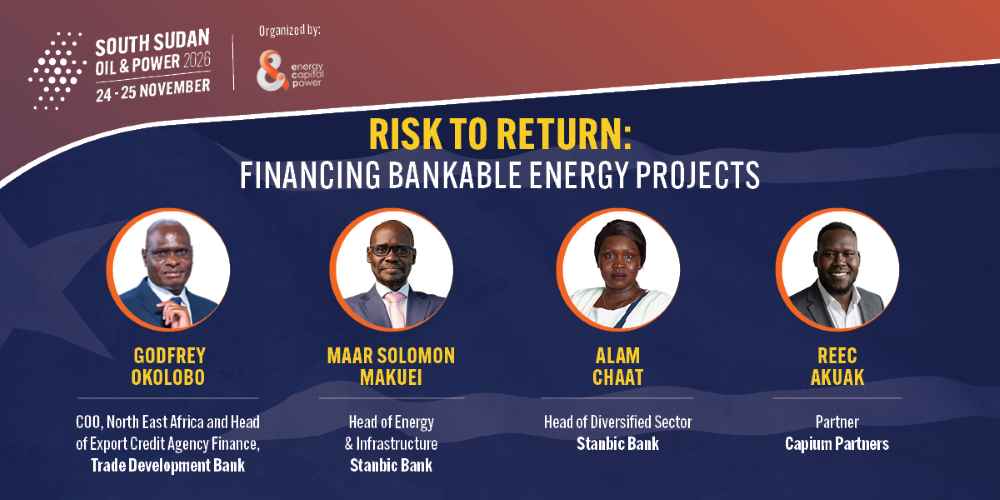
JUBA, South Sudan, November 21, 2026/APO Group/ –South Sudan’s Ministry of Finance and Planning will join representatives from Stanbic Bank, the Trade and Development Bank (TDB) and Capium Partners at South Sudan Oil & Power (SSOP) 2026 to examine financing solutions for the country’s oil and gas sector. Taking place November 24–25 in Juba, the conference will bring together government officials, commercial banks, development finance institutions and investors to explore opportunities across upstream development, petroleum infrastructure and local energy services.


Held under the theme Resource Renaissance – Energy-Fueled Growth for a New Generation, SSOP 2026 will feature dedicated discussions on project bankability, risk mitigation and financing structures to support South Sudan’s energy investment ambitions.

Speakers include Godfrey Okolobo, COO, North East Africa and Head of Export Credit Agency Finance at TDB; Maar Solomon Makuei, Head of Energy & Infrastructure at Stanbic Bank; and Reec Akuak, Partner at Capium Partners at the event. They are scheduled to participation in the Risk to Return: Financing Bankable Energy Projects panel.

Alam Chaat, Head of Diversified Sector at Stanbic Bank, also joins the event and will participate in the Juba Declaration: Building East Africa’s Next Energy & Industrial Frontier session, bringing financial-sector perspectives to discussions on commitments from financing institutions, legal stakeholders and public-sector partners to support South Sudan’s energy and petroleum expansion agenda.

Both discussions are expected to examine how blended financing instruments and partnerships between domestic, regional and international capital providers can accelerate investment across South Sudan’s energy value chain. Speakers are expected to explore financing structures that improve project bankability, mitigate investment risks and expand access to capital for local service providers.

SSOP 2026 comes as South Sudan seeks to maximize production from its existing brownfield assets while attracting investors to greenfield opportunities. With 14 exploration blocks available for investment, the country is targeting an increase in crude production from approximately 174,000 barrels per day (bpd) to 230,000 bpd. Its estimated 3.5 billion barrels of proven oil reserves offer substantial potential for additional upstream development, with much of the resource base yet to be developed.

These opportunities extend beyond exploration and production. As operators expand activities and new oilfield services companies enter the market, demand for working capital, equipment financing, guarantees and trade finance is expected to create additional opportunities for commercial banks and regional financing institutions. Midstream and downstream infrastructure also present investment prospects as South Sudan seeks partners to expand crude storage capacity, develop refining infrastructure and strengthen petroleum logistics.

SSOP 2026 provides a platform for connecting capital providers with government authorities, project developers and emerging investment opportunities. Through high-level discussions, project showcases and exclusive networking sessions, SSOP 2026 will support deal signings and partnership formation aimed at mobilizing investment and driving the next phase of growth in the country’s energy sector.

For more information, visit www.southsudanoilpower.com (www.SouthSudanOilPower.com).

Distributed by APO Group on behalf of Energy Capital & Power.


Continue Reading

Business

Beyond 2030: How Morocco Is Catalysing a New Wave of Hospitality and Real Estate Investment

Published

on

Morocco’s hospitality sector is expanding in line with national targets of over 30 million annual tourists and over 60 000 additional hotel beds by 2030

CASABLANCA, Morocco, November 20, 2026/APO Group/ —

  • Morocco is investing at unprecedented scale in transport infrastructure, hospitality assets and real estate megaprojects ahead of the 2030 FIFA World Cup.
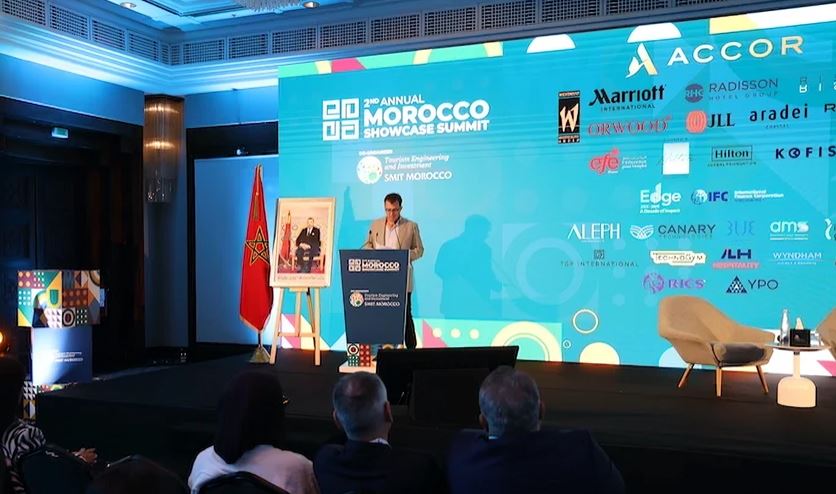
  • Over 300 local and global hospitality, tourism and real estate leaders gather in Casablanca on 26 November for Morocco Showcase Summit, to unpack the opportunities and sustain the momentum for decades to come.


Ahead of co-hosting the 2030 FIFA World Cup, Morocco is posting record public and foreign direct investment. The Finance Ministry set aside a record MAD380 billion ($38bn) for public investment in 2026, while FDI receipts of MAD56bn ($5.6bn) in 2025 were also an all-time high.

Infrastructure due for completion before 2030 include a MAD15bn ($1.5bn) upgrade to Casablanca’s Mohammed V airport terminal (lifting annual capacity from 14 million to 35 million passengers) and a MAD96bn ($9.6bn) rail programme. These come on top of stadium upgrades and the new 115 000-seat Hassan II Stadium in El Mansouria, which includes a three-way commuter railway line connecting to the airport.

The infrastructure being delivered today, from airports to high-speed rail, is permanently changing the economics of Moroccan real estate

“Supported by stable and positive outlooks from global ratings agencies, healthy capital markets, strong FDI inflows and record-breaking tourism numbers, the platforms have been laid for growth well past 2030. Morocco Showcase Summit convenes with this in mind, bringing together the top local and global investors and roleplayers in hospitality, tourism and real estate to jointly harness opportunities for the decades to come,” says API Events Managing Director Murray Anderson.

The summit takes place at the Marriott Casablanca Hotel under the theme “Momentum 2030: Catalysing Morocco’s Investment Journey”, in partnership with the Société Marocaine d’Ingénierie Touristique (SMIT) and the Confédération Nationale du Tourisme (CNT).

Driss Fassi Fihri, Co-founder and Managing Partner of independent real estate private equity firm ÆDGE Partners, stressed that the projects and investment inflows for 2030 were a catalyst, not a finish line.

“The infrastructure being delivered today, from airports to high-speed rail, is permanently changing the economics of Moroccan real estate and opens a unique window of opportunity for investors,” said Fassi Fihri.

Scale-up of local operators, international brands and capital markets

Morocco’s hospitality sector is expanding in line with national targets of over 30 million annual tourists and over 60 000 additional hotel beds by 2030, driving rapid scaling of local operators and global brands, both in the spotlight at the summit.

In January 2026, Casablanca-listed hotel operator and summit sponsor RISMA raised MAD450 million ($45 million) to fund a long-term expansion plan to reach 28 hotels by 2030. The raise was massively oversubscribed, reflecting strong institutional interest.

International brands partnering with the summit, including Marriott, Wyndham, Hilton, Accor and IHG, are all targeting Morocco as a key market in their Africa expansion plans, and will discuss opportunities in luxury, midscale and branded residences.

“Morocco continues to be an important growth market for Marriott International, supported by strong tourism momentum and significant investment in the country’s hospitality sector. We see exciting opportunities across a range of segments and look forward to joining owners, investors and industry partners at the Morocco Showcase Summit to discuss the next chapter of growth in the market.” said Shady Hassan, Marriot’s VP | Lodging Development, North Africa

Programme highlights

​Six themes run through the day, with a matchmaking room open in the afternoon to connect real estate and hospitality investors, developers, operators and owners. The programme covers:

  • Foreign capital and local equity. Why stability and delivered infrastructure are drawing international investors.
  • Listings and liquidity. What CSE depth means for developers, and how Gulf, European, diaspora and family office money is moving.
  • Deals and the capital stack. How banks, DFIs and international debt close transactions, equity against debt across asset classes, OPCIs and sale-and-leasebacks.
  • Hotel performance and brands. Occupancy, ADR and RevPAR against global cities, what mega-events do to demand, and luxury, midscale and branded residences.
  • Beyond hotels. Mixed-use viability, leisure and entertainment, boutique and eco-tourism, and design-led destinations.
  • Return on investment after the tournament. And the logistics and financing behind megaprojects.

A pre-cocktail function at Novotel Casablanca City Center on 25 November and a cocktail after the main programme bookend the event.

For more details and to register: https://apo-opa.co/4zRCn1k

Distributed by APO Group on behalf of API Events.


Continue Reading

Business

Trust, talent and accountability define final day of Africa Tech Festival 2026

Published

on

Africa Tech Festival 2026

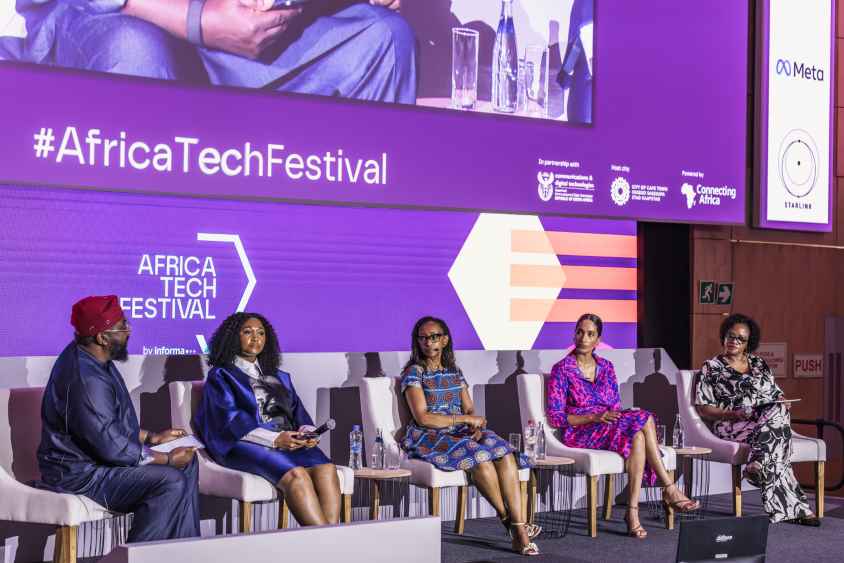
Africa Tech Festival, the continent’s longest-running and most influential technology gathering, concluded its 29th edition at the Cape Town International Convention Centre, welcoming more than 15,000 delegates over the three days

CAPE TOWN, South Africa, November 20, 2026/APO Group/ –AI is opening up opportunities for African businesses to improve performance, develop new revenue streams and equip young people for a changing workplace. This was a central theme as Africa Tech Festival (www.AfricaTechFestival.com) 2026 concluded in Cape Town yesterday, with industry leaders sharing how digitalisation is changing the way companies operate, create jobs and broaden access to digital services.


Providing an enterprise perspective, Frederik Zietsman, Group CEO of Takealot, opened the final day’s headline programme in conversation with Tomiwa Aladekomo, CEO of Big Cabal Media. Their discussion explored the realities of building a profitable e-commerce business in South Africa, including the importance of customer trust and investment in the infrastructure needed to reach consumers. “It starts and ends with trust. Because if you don’t have trust, then ultimately, you fail,” said Zietsman. He described how Takealot has invested in its own delivery infrastructure and developed a network of approximately 20,000 personal shoppers to help consumers in underserved communities access online retail.

Turning to Africa’s role in the AI economy, Hardy Pemhiwa, President and Group CEO of Cassava Technologies, discussed how to make innovation more accessible and help local ideas reach wider markets. “I really would love to see an Africa where innovation is not limited by traditional education,” he said, noting that AI could help overcome language barriers that have historically prevented promising ideas from being commercialised. Martin Manniche, CEO of AXON Networks, considered the role of automation and cloud-native technologies in modernising telecommunications infrastructure to support sophisticated digital services.

As technology changes how businesses operate, it is also changing the skills employers need and the opportunities available to young people. Charles Murito, Regional Director, Government Affairs and Public Policy, Sub-Saharan Africa at Google; Tiara Pathon, AI Skills Director at Microsoft; and Ziyad Cassim, Group CEO of UVU Africa, examined the implications for Africa’s workforce. Murito asked how young people can move from being job seekers to value creators, advocating entrepreneurship and new sources of employment. Pathon challenged conventional approaches to training, saying that “organisations like ours need to stop treating learners as beneficiaries of learning, and see them as participants and creators.” Cassim warned that “the biggest risk we’re seeing right now is young people losing that first opportunity to work,” calling on employers to give young talent opportunities to gain practical experience.

Africa Tech Festival provides a platform for these different perspectives to come together, forging connections and partnerships that will help drive the industry forward

However, the growing use of AI also raises questions about accountability when technology fails. Lawrence Matemba, Chief Policy Analyst and Deputy Director-General in the South African Presidency, and Geoff Okao, Chief Digital Officer and Deputy Director, Digital Impact at UNICEF, examined who should be held accountable when automated decisions cause harm. Matemba argued that organisations providing services must accept responsibility for failures, emphasising that citizens must remain central to the design and delivery of those services. Okao cautioned that “a risk register does not by default protect the person who’s harmed”, calling for safeguards that consider the people affected, not just the risks facing organisations.

Access to finance was another area of discussion, with SME funding among dozens of topics explored across the festival’s nine content stages. On the fintech stage, executives from Makko Brothers Credit Limited, Nomba, Edge Growth and Absa Corporate and Investment Bank examined alternative lending models, transaction-based credit assessments and ways to improve access to working capital.

Africa Tech Festival, the continent’s longest-running and most influential technology gathering, concluded its 29th edition at the Cape Town International Convention Centre, welcoming more than 15,000 delegates over the three days.

“This week we’ve heard from government leaders, technology companies, investors and entrepreneurs on issues ranging from digital sovereignty and infrastructure investment to AI governance, business growth and skills development. Africa Tech Festival provides a platform for these different perspectives to come together, forging connections and partnerships that will help drive the industry forward,” said David Monaghan, Vice President, Africa Tech Festival.

Africa Tech Festival returns to Cape Town from 16–18 November 2027 for its landmark 30th edition, celebrating three decades at the heart of Africa’s technology industry.

Pre-register for 2027: https://apo-opa.co/3XkVGBI

Distributed by APO Group on behalf of Africa Tech Festival.


Continue Reading

Trending