Connect with us
Anglostratits

Business

RS South Africa Supports Next-Generation Edge Artificial Intelligence (AI) With NVIDIA Jetson Orin Nano 2

Published

on

NVIDIA

New compact robotics computer opens new possibilities for intelligent machines, robotics and vision AI

JOHANNESBURG, South Africa, September 21, 2026/APO Group/ –RS (https://apo-opa.co/4doxsf6) is supporting the NVIDIA Jetson Orin Nano 2 robotics computer, a new entry-level edge AI platform designed to deliver next-generation AI performance in a compact, power-efficient format. The platform is expected to become available in the first half of 2027.

The NVIDIA Jetson Orin Nano 2 delivers twice the inference performance of the NVIDIA Jetson Orin Nano Super while maintaining the same compact form factor and 40 W power envelope. It also consumes 40% less power at equivalent performance, making it well suited to applications where computing capability, energy efficiency and physical footprint are important considerations.


These capabilities have the potential to support the development of smarter, more autonomous equipment and systems for South African industrial and engineering organisations, particularly where real-time processing and decision-making are required at the edge.


More performance for intelligent machines

The NVIDIA Jetson Orin Nano 2 features improved Tensor Cores and higher memory bandwidth, delivering 78 TOPS of AI compute, 8 GB of memory and an eight-core Arm CPU. This combination enables a new generation of applications including delivery and inspection drones, robots and vision AI systems, with enhanced AI and video-processing capabilities. The platform is powered by NVIDIA’s open AI software stack, Jetson agent skills and a broad AI ecosystem, helping developers build and deploy AI-enabled applications more quickly.


Supporting South Africa’s AI and automation ambitions

This exciting product launch is a testament to the strong and successful partnership RS and NVIDIA have built since the introduction of the first Orin Nano™ in 2023

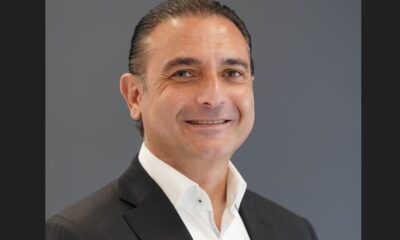
RS’s support for the NVIDIA Jetson Orin Nano 2 builds on its established relationship with NVIDIA and its role as a strategic global distribution partner. “As South African businesses increasingly explore how AI, robotics and automation can improve the way industrial systems operate, access to capable edge computing platforms will become increasingly important,” comments Erick Wessels, Sales Director, RS South Africa.


The NVIDIA Jetson Orin Nano 2 brings substantial AI performance into a compact and energy-efficient platform, giving local developers and engineering teams new opportunities to explore intelligent machines, robotics and vision-based applications. “We look forward to supporting customers in South Africa as they investigate the possibilities this technology can unlock,” adds Wessels.


“This exciting product launch is a testament to the strong and successful partnership RS and NVIDIA have built since the introduction of the first Orin Nano™ in 2023,” explains Richard Curtin, SVP, Global AIoT Suppliers and Design Solutions, RS.


“As a strategic global distribution partner, we are well positioned to help customers worldwide access and scale this latest AI innovation, and we encourage them to stay close to RS and RS DesignSpark for further announcements and early ordering opportunities,” says Curtin.


A platform for the next generation of edge AI

The NVIDIA Jetson Orin Nano 2 represents the next step in making high-performance AI computing accessible in a compact form factor. By combining increased inference performance with improved energy efficiency and an extensive AI software ecosystem, it is designed to help developers accelerate the transition from AI experimentation to practical deployment.


RS will support customers as they explore the opportunities presented by the platform, with further announcements and information on early ordering opportunities to follow ahead of its planned availability in the first half of 2027.

Distributed by APO Group on behalf of RS South Africa.


Business

5 Investment Opportunities Putting Congo Energy & Investment Forum (CEIF) 2027 on the Map for Central Africa

Published

on

CEIF 2027 connects investors with Congo’s energy projects and local partners, while providing entry points for commercial opportunities across Central Africa

BRAZZAVILLE, Republic of the Congo, November 2, 2026/APO Group/ –The Republic of Congo’s expanding oil and gas developments are creating new opportunities for investment, engineering contracts and commercial partnerships across the energy value chain. With offshore discoveries, mature-field redevelopment and three million tons per year of LNG capacity, the country is entering a new phase of energy development that requires capital, technology and international partnerships.


The Congo Energy & Investment Forum (CEIF) 2027, taking place June 1-3 in Brazzaville, will serve as the official platform connecting Central African energy decision-makers, operators, investors and service companies. Organized by Energy Capital & Power in collaboration with the Ministry of Hydrocarbons, the forum will bring together public- and private-sector stakeholders to advance investment discussions, facilitate partnerships and connect companies with emerging opportunities across the region.

Connect With Central Africa’s Energy Decision-Makers

CEIF 2027 will provide a platform to engage directly with Congolese authorities, regulators, national energy companies and policymakers shaping the region’s energy investment landscape. Taking place in partnership with the Ministry of Hydrocarbons, the event offers a bridge between the country’s policymakers and public- and private-sector companies. Conversations with decision-makers can help investors understand national development priorities, gain insight into the regulatory environment and identify opportunities for market entry or expansion.

Capitalize on Congo’s Upstream Investment and Production Ambitions

As Congo targets production growth toward 500,000 barrels per day, operators are pursuing new exploration and mature-field redevelopment to increase output. TotalEnergies’ 2026 Moho G discovery could unlock an estimated 100 million barrels of recoverable resources alongside the existing Moho F development, illustrating the potential to connect new discoveries to established offshore infrastructure. Meanwhile, Perenco and Trident Energy are pursuing development and redevelopment opportunities across mature assets, including well reactivation and infrastructure upgrades.

These activities could create opportunities for drilling contractors, engineering firms and production technology providers. CEIF 2027 offers a platform to explore project requirements and investment opportunities across Congo’s upstream sector.

Unlock Opportunities Across LNG, Gas and Power Infrastructure

With LNG exports established and liquefaction capacity reaching three million tons per year in 2026, Congo is looking towards its next phase of gas development. This will depend on sustaining feedgas supplies, connecting additional resources and expanding infrastructure.

Beyond LNG, Congo’s plans to expand electricity generation and improve transmission and distribution infrastructure present opportunities for power developers, equipment suppliers and investors. These priorities create potential opportunities for upstream operators, engineering companies, technology providers and investors interested in gas processing, power generation and distribution. CEIF provides a platform to advance these priorities.

Showcase Solutions and Build Commercial Partnerships at the Exhibition

The CEIF 2027 exhibition will provide a platform for companies to showcase their technologies, equipment and services directly to energy operators, policymakers, investors and potential clients across Central Africa.

Exhibitors will have opportunities to demonstrate solutions, engage with local service providers and identify potential partnerships across drilling, engineering, infrastructure and energy technology. For companies seeking to enter or expand in the region, the exhibition offers a direct route to building commercial relationships, exploring procurement opportunities and positioning their services for upcoming projects.

Access New Projects and Financing Opportunities

Turning project opportunities into investments requires clarity on development priorities, infrastructure requirements and financing structures. CEIF’s discussions will give participants an opportunity to assess the projects shaping Congo’s energy sector and engage with potential commercial and institutional counterparts.

Investors, lenders and project developers can use these exchanges to identify areas where financing, technical expertise or new investment structures may help advance projects across oil and gas, power generation and downstream industries.

Organized by Energy Capital & Power in collaboration with the Ministry of Hydrocarbons, CEIF 2027 will enable candid dialogue, facilitating new investments and deals in the country’s energy sector. For more information, visit www.congoenergyinvestment.com.

Distributed by APO Group on behalf of Energy Capital & Power.


Continue Reading

Business

Afreximbank supports Veenocks’ US$145 million project for industrial expansion and regional growth

Published

on

Afreximbank

PPF-funded studies enabled Veenocks to broaden its medium-term regional growth plans, while a US$81.9 million senior loan supports an expansion expected to triple annual production capacity

CAIRO, Egypt, November 2, 2026/APO Group/ –African Export-Import Bank (Afreximbank) (www.Afreximbank.com) has supported the development and expansion of Veenocks Limited’s porcelain tile manufacturing plant in Sagamu, Ogun State, Nigeria, through its Project Preparation Facility (PPF) and a US$81.9 million senior term loan. The project has a total estimated cost of US$145 million.


Afreximbank and Veenocks signed a US$2 million project preparation facility agreement in August 2024 to finance technical, commercial, financial, legal, environmental and social studies needed to establish the project’s bankability.

The studies financed through the PPF, complemented by Afreximbank’s pan-African experience, enabled Veenocks to broaden its growth ambitions beyond its primary focus on the Nigerian market. This support informed the company’s plans to pursue regional opportunities over the medium term, with target markets including Togo, Benin, Burkina Faso, Niger, Cameroon, Ghana, Mauritania and Senegal.

The Bank’s US$81.9 million senior term loan supports implementation of the plant’s expansion, providing financing for investment in additional manufacturing capacity. The expansion is expected to increase the plant’s total annual production capacity from 3.3 million to 9.9 million square metres, creating a stronger production base to meet domestic demand and pursue regional opportunities.

Veenocks demonstrates how project preparation, commercial expertise and senior debt financing can support African industrial investment

The existing plant employs more than 200 people directly. The expansion is expected to create an additional 300 direct jobs, alongside indirect employment across raw material supply, logistics and distribution.

The preparation financing has been fully repaid from senior debt, completing the PPF’s funding cycle for Veenocks and replenishing capital to support further projects.

Mrs. Kanayo Awani, Executive Vice President, Intra-African Trade and Export Development, Afreximbank, said:

“Veenocks demonstrates how project preparation, commercial expertise and senior debt financing can support African industrial investment. The studies financed through Afreximbank’s Project Preparation Facility have helped strengthen the project’s bankability and broaden the company’s regional growth ambitions. Our senior debt financing supports the plant expansion needed to convert those ambitions into increased productive capacity, and stronger foundations for intra-African trade.”

Mrs. Awani added: “Full repayment of the preparation financing ensures capital is available to support more indigenous African investors and projects. This is the PPF’s revolving model in practice: the funds that have been repaid are used to support initiatives that add value to local resources and expand manufacturing.”

Mr. Adebisi Abidemi Adebutu, Group President of R28 Holdings, the parent company of Veenocks Limited, said:

“This investment represents an important step towards our ambition of building a globally competitive manufacturing business in Nigeria, producing world-class tiles to European quality standards and reducing Nigeria’s dependence on imported tiles. The PPF was instrumental in broadening our growth plans and positioning us to penetrate regional markets over the medium term. With Afreximbank’s financing, we can now deliver the expansion phase of this project. The facility will allow us to add value to Nigeria’s raw materials, create quality jobs and increase the supply of our porcelain tiles, manufactured here in Nigeria, to customers at home and across the region. Our vision is to set the global benchmark for quality in tile manufacturing and to become Africa’s first choice for porcelain tiles.”

Distributed by APO Group on behalf of Afreximbank.


Continue Reading

Energy

Energy costs, storage value and industrial competitiveness led Day 2 of C&I Energy + Storage Summit

Published

on

Energy

Energy security, industrial competitiveness and infrastructure readiness emerged as closely connected priorities, with discussions highlighting what businesses need to turn investment plans into operational gains

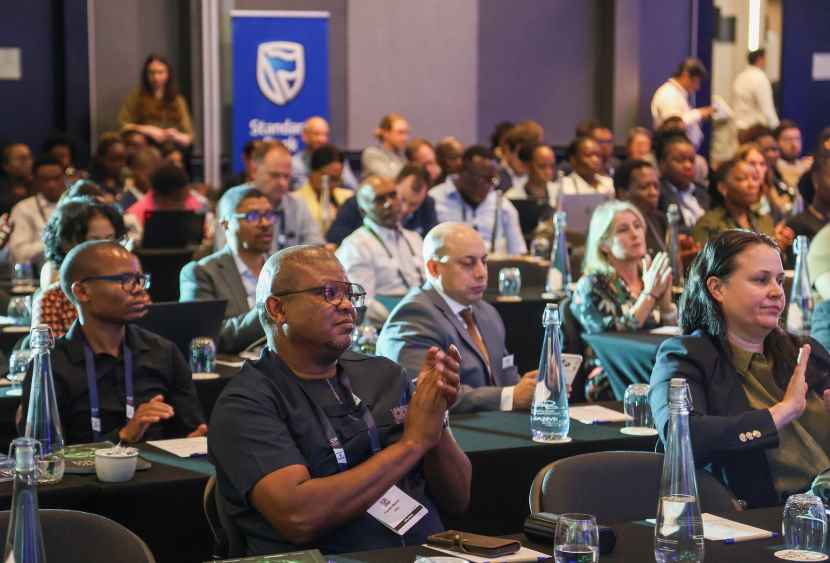
JOHANNESBURG, South Africa, November 2, 2026/APO Group/ –How can South African businesses turn energy investment into lower operating costs, stronger resilience and long-term competitiveness? This question drove the second day of VUKA Group’s (https://WeAreVUKA.com/) C&I Energy + Storage Summit in Johannesburg, with discussions examining the commercial value of storage, industrial energy strategies and the infrastructure needed to support Africa’s growing digital economy.


The programme brought together business leaders, energy specialists, financiers and public-sector representatives to address practical decisions facing commercial and industrial users, alongside the EIUG Conference, Water Security Africa and Data Centre Summit.

Energy security, industrial competitiveness and infrastructure readiness emerged as closely connected priorities, with discussions highlighting what businesses need to turn investment plans into operational gains.

Energy storage featured prominently, with panellists examining how tariff optimisation, peak shaving and renewable energy integration can strengthen its value beyond backup power. The investment case, however, needs to account for battery degradation, warranties and operational risk.

Addressing the attendees, Junaid Munshi, Group Executive: Distribution for Eskom told the audience: “For an industrial business, solar and storage can improve the energy cost position. But the opportunity extends beyond the customer’s electricity bill. Where network capacity is constrained, coordinated battery use may relieve pressure on the infrastructure serving that business and, where proven technically dependable, could defer or reduce grid investment. The asset behind your meter can therefore also become a resource beyond it.”

The asset behind your meter can therefore also become a resource beyond it

The EIUG session “Industrialisation under threat?” put changing electricity consumption under scrutiny, asking whether lower demand reflected efficiency gains or weakening industrial output. Tariffs, investment conditions and industrial growth remained central to the discussion, highlighting the need to assess energy trends against the health of the wider economy.

At the Data Centre Summit, Africa’s AI ambitions brought power availability and infrastructure readiness into focus. Discussions on grid access, wheeling and network investment highlighted the importance of planning digital growth alongside the electricity infrastructure needed to sustain it.

For businesses developing energy projects, public-private engagement sessions explored infrastructure co-investment, municipal coordination and workable wheeling agreements.

Water Security Africa reinforced the wider resource-security challenge through industrial resilience case studies, digital water technologies and lessons from case studies.

Across the discussions, the practical message was consistent: competitive businesses need more than access to technology and capital. They also need reliable infrastructure, workable commercial arrangements and coordinated delivery.

The afternoon programme translated these themes into business decisions. “The C&I energy playbook” drew together insights from across the summit, while the closing “decision clinic” addressed real project challenges, from choosing between onsite solar and wheeled power to sizing batteries and preparing projects for financing. Experts from DBSA, Standard Bank, SustainableDNA and the City of Tshwane contributed practical guidance.

Download the programme to review the full Day 2 agenda and participating speakers: https://apo-opa.co/4eEKq9a

Distributed by APO Group on behalf of VUKA Group.


Continue Reading

Trending