Connect with us
Anglostratits

Events

Global Mayors Dialogue in Wuhan focuses on urban innovation and cooperation

Published

on

The Global Mayors Dialogue

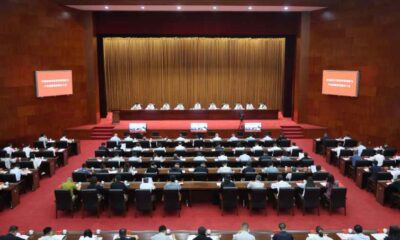
WUHAN, CHINA – Media OutReach Newswire – 23 September 2026 – The Global Mayors Dialogue · Wuhan and the 2026 Wuhan International Friendship Cities Cooperation Conference, held from Sept. 18 to 21, brought together 80 international guests from 24 cities across 22 countries, according to organizers.

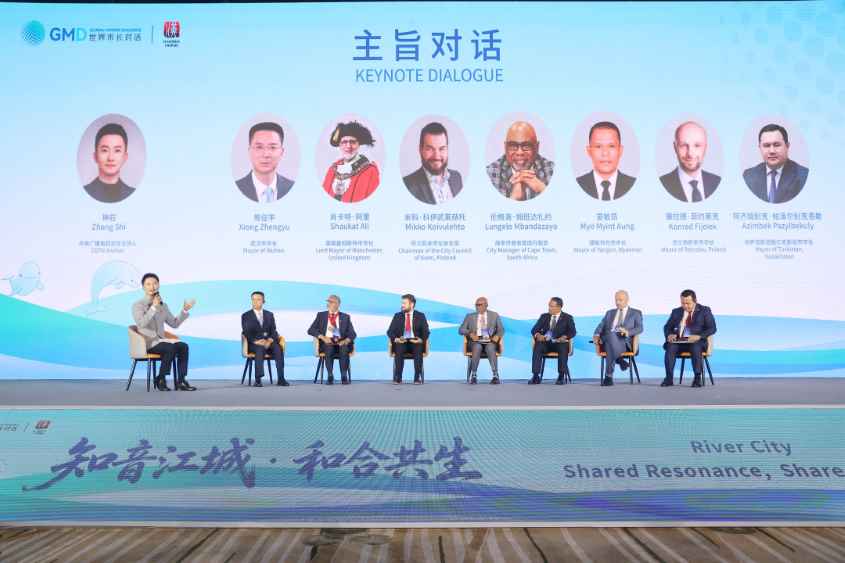
At the event, mayors and city representatives from six international sister cities of Wuhan called for closer cooperation in technology, industry, education and culture.

Representatives from Manchester in Britain, Kemi in Finland, Cape Town in South Africa, Yangon in Myanmar, Rzeszów in Poland and Turkistan in Kazakhstan took part in discussions on urban innovation, industrial cooperation and cultural exchange.


Manchester: a new start after 40 years of friendship

This year marks the 40th anniversary of the sister-city relationship between Wuhan and Manchester.

Shaukat Ali, lord mayor of Manchester, said the city was ready to deepen cooperation with Wuhan in education, culture, youth affairs, innovation and industry.

“Manchester is committed to promoting urban transformation through open cooperation, sharing opportunities, and fostering common development with international sister cities like Wuhan,” he said.

Ali said Manchester had developed from a post-industrial city into an innovation-oriented economy, with a focus on advanced manufacturing, artificial intelligence, life sciences and green technologies.

He said the two cities could share experience in urban transformation, innovation districts, university-industry cooperation and low-carbon development, while encouraging links among universities, businesses and research institutions.

He also highlighted existing educational and cultural links, including cooperation between Hubei University and Manchester Metropolitan University and exchanges between the Royal Northern College of Music and Wuhan Conservatory of Music.

Kemi: balancing growth with environmental protection

Mikko Koivulehto, chairman of the City Council of Kemi, said the Finnish city sought to balance economic growth with environmental protection.

“We believe that protecting nature and building a prosperous city can go hand in hand,” he said.

Kemi, a port city in Finnish Lapland, has developed industries based on renewable raw materials, clean energy and the bioeconomy. The city is also seeking to expand tourism and improve livability.

This year marks the 10th anniversary of the friendly exchange relationship between Wuhan and Kemi. The two cities have cooperated in areas including trade, the circular economy, tourism and youth exchanges.

Cape Town: technology and jobs key to urban transformation

Lungelo Mbandazayo, city manager of Cape Town, said technological innovation, talent development, infrastructure and green renewal were key to Wuhan’s transformation.

Cape Town, a UNESCO City of Design, is seeking to expand its technology and digital sectors while promoting green technology and an inclusive economy.

Mbandazayo said youth unemployment remained a major challenge for Cape Town and that technological development needed to create jobs.

After visiting Wuhan companies and technology facilities, he said Cape Town hoped to deepen exchanges with Wuhan in technology and talent.

Yangon: seeking practical cooperation with Wuhan

Yangon Mayor Myo Myint Aung said the city was looking to Wuhan for experience in smart-city development, digital governance, intelligent transport and urban resilience.

Wuhan and Yangon signed a letter of intent on friendly exchanges and cooperation during the event.

Yangon is developing a long-term plan to accommodate population growth and expand its urban, industrial and transport infrastructure.

During a visit to Wuhan on Sept. 19, Myo toured the Optics Valley “Photon” suspended monorail, HGTECH and a Xiaomi smart home appliance factory.

“We came to Wuhan not just to observe, but to learn and cooperate,” he said, adding that Yangon hoped to develop smart manufacturing and strengthen cooperation in information technology.

Rzeszów: opportunities in aerospace and technology

Rzeszów Mayor Konrad Fijołek said the Polish city hoped to cooperate with Wuhan in aerospace, sensor technology, biodiversity and climate action.

Rzeszów is home to the “Aviation Valley,” a major aerospace cluster in Central Europe.

“Exploring cooperation with Wuhan is the reason I came here,” Fijołek said.

After visiting HGTECH and a Xiaomi smart home appliance factory, he said Wuhan’s automated manufacturing and technologies in sensors and satellite systems had impressed him.

He said cities could help connect universities, businesses and research institutions and promote international cooperation.

Turkistan: five areas for cooperation

Turkestan Mayor Azimbek Pazylbekuly said his city hoped to expand cooperation with Wuhan in tourism and culture, education and science, investment and entrepreneurship, digitalization and innovation, and transport and logistics.

Wuhan and Turkistan signed a memorandum of intent on friendly exchanges and cooperation during the event.

Turkistan, an ancient Silk Road city and a UNESCO World Heritage site, has been developing industries including food processing, textiles, furniture and construction materials.

Pazylbekuly said cooperation between governments, businesses, universities and research institutions could help turn the two cities’ exchanges into concrete projects.

The conference also included friendship-city anniversary celebrations and a signing ceremony for 10 cooperation projects. A digital list of cooperation opportunities and an initiative on international friendship-city cooperation were released.

During their stay, the visiting mayors toured Wuhan’s technology, manufacturing and ecological facilities, including the Optics Valley suspended monorail, a Yangtze finless porpoise conservation center, Xiaomi, HGTECH and Dongfeng Motor facilities.



Business

ACG CEO Paulo J. Cruz to Speak at the Angola Access & Investment Conference 2026 in Luanda on How Sport and Entertainment Districts Can Drive Inclusive Economic Growth Across Africa

Published

on

ACG

Cruz joins heads of state, ministers, ambassadors, and CEOs from over 60 international markets at one of Angola’s flagship investment conferences, connecting sport infrastructure to job creation, accessibility, and sustainable development

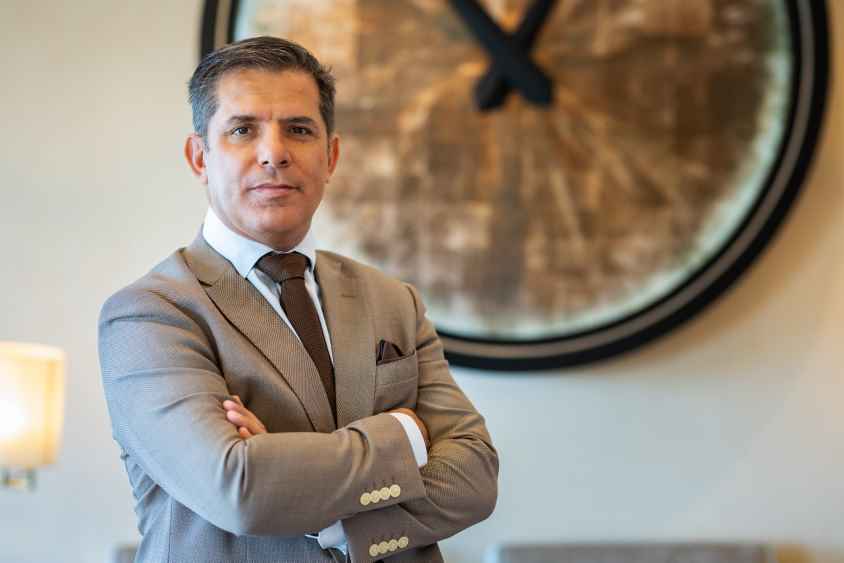
LUANDA, Angola, October 14, 2026/APO Group/ –African Collaborations Group (ACG) (www.ACGafrica.com), the leading strategic project origination and collaboration platform focused on the industrialisation of sport in Africa through the origination of bankable sport and entertainment district ecosystems, today announced that its CEO, Paulo J. Cruz, will speak at the Angola Access & Investment Conference 2026 (AAIC) (www.aaic.ao) in Luanda, Angola, from 14 to 17 October 2026.


The AAIC is organised by Expo Connect Angola in partnership with Skyliam Properties, the Cópia Group, and Angolan Business Beyond Borders, with the support of the Angola-Mozambique Chamber of Commerce and Industry (CCIAM) and the Angolan Ministry of Tourism and the Ministry of Telecommunications, Information Technologies, and Social Communication. The conference brings together heads of state, ministers, ambassadors, CEOs, investors, development banks, and business leaders from over 60 international markets.

Mr Cruz will address how ACG’s origination of integrated sport and entertainment districts contributes directly to inclusive economic growth. His intervention will focus on how sport infrastructure, when designed as a financially self-sustaining urban ecosystem, becomes a catalyst for large-scale job creation, skills development, accessible infrastructure, and long-term economic diversification.

Sport infrastructure has the power to be one of the most inclusive economic assets a country can build

The AAIC’s focus on accessibility and inclusion aligns directly with ACG’s approach to sport and entertainment district development. A Victory District™ is designed from inception to serve the widest possible community: creating permanent employment across dozens of professions, providing professional sport training facilities for young athletes, and generating economic activity that benefits surrounding neighbourhoods year-round.

“Sport infrastructure has the power to be one of the most inclusive economic assets a country can build,” said Paulo J. Cruz, CEO of ACG. “A Victory District™ does not just create stadiums. It creates thousands of permanent jobs, from hospitality to broadcast production, from sport coaching to facility management. It creates training pathways for young athletes. And it creates an urban ecosystem that generates economic activity 365 days a year. That is inclusive growth in practice, not in theory. I am honoured to share that vision at the AAIC alongside some of Africa’s most influential investors and decision-makers.”

The AAIC programme includes official MoU signing ceremonies, B2B investment rounds, VIP executive networking with senior government and business leaders across 10 dedicated Business Lounges, and the inauguration of Angola’s first assistive technology factory. The conference covers priority sectors including energy, mining, accessible tourism, agriculture, logistics, health, and infrastructure.

ACG’s Victory District™ framework is designed to originate integrated, mixed-use sport and entertainment districts that move beyond single-venue development models. Each district combines stadiums, indoor arenas, training academies, hotels, conference centres, retail, entertainment, residential, and commercial space within a single masterplanned development, financed by private and institutional capital without reliance on public subsidy.

Mr Cruz brings more than 28 years of experience across Africa, the Middle East, and Europe in originating, structuring, and delivering large-scale infrastructure, urbanisation, and real estate development initiatives. Prior to ACG, he served as Senior Vice President at DAMAC Group, the largest private real estate developer in the Middle East, and as Group CEO of LandAfrique, a pan-African development platform focused on industrial parks, infrastructure, housing, and power projects across Sub-Saharan Africa.

Distributed by APO Group on behalf of African Collaborations Group (ACG).


Continue Reading

Energy

African National Oil Companies (NOCs) Sign Declaration to Strengthen Cooperation and Regional Integration at African Energy Week (AEW) 2026

Published

on

African Energy Chamber

African NOCs have signed a declaration supporting direct trade, domestic refining, energy financing, digital cooperation and long-term continental energy security

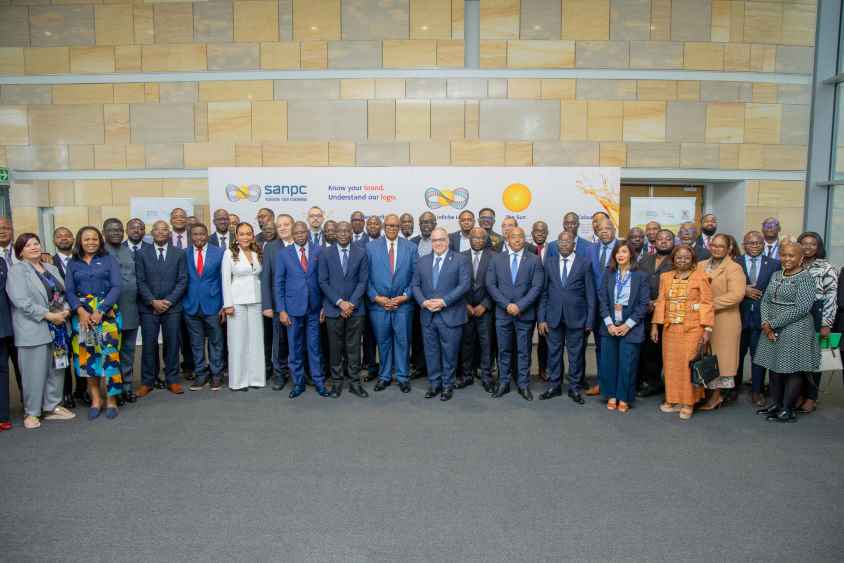
CAPE TOWN, South Africa, October 13, 2026/APO Group/ –African national oil companies (NOCs) have signed a declaration committing to stronger commercial cooperation, expanded refining capacity and coordinated energy development across the continent. The non-binding Cape Town Declaration establishes a framework for advancing energy security, regional integration, infrastructure investment and the sustainable development of Africa’s petroleum resources.


The declaration was signed on October 12 during the 8th Meeting of the APPO NOCs CEOs Forum at African Energy Week (AEW) 2026 in Cape Town. The signing was overseen by Godfrey Moagi, CEO of the South African National Petroleum Company (SANPC) and newly appointed Chairman of the APPO NOCs CEOs Forum.

“This non-binding agreement is very encouraging, showcasing the expedience of the pace of our resolve to improve socioeconomic development in all our respective countries,” Moagi said during the forum.

Signatories to the agreement committed to strengthening continental energy security within their respective legal mandates, including through direct commercial agreements between African NOCs for crude oil and refined products, subject to domestic legislation and competition rules.

This non-binding agreement is very encouraging, showcasing the expedience of the pace of our resolve to improve socioeconomic development in all our respective countries

The declaration also aligns participating companies with the APPO’s Long-Term Strategy 2050, which supports the sustainable development of Africa’s energy resources and greater energy independence. It advocates a just and pragmatic energy transition that reflects national economic and social circumstances, with responsible hydrocarbon development continuing alongside complementary emerging green energy solutions.

Signatories pledged to deepen domestic refining capacity to reduce dependence on imported petroleum products, while supporting the African Refining Industry Upgrading Strategy Program and developments surrounding the African Refining Model. The declaration also welcomed operational steps towards implementing the Africa Energy Bank as a funding instrument for major energy projects.

Digitalization, skills development and local content form another pillar of the declaration. Participating NOCs supported secure digital platforms to improve data visibility, monitor local content and facilitate joint research, alongside greater cross-border mobility for professionals between national oil companies and training institutions. They also endorsed an interactive African energy map and encouraged locally developed research and emissions-reduction approaches.

The agreement provides for further international cooperation across upstream exploration and production, downstream refining and marketing, commercial trade and workforce training. It also acknowledges an executive presentation delivered by a visiting delegation from Venezuela, opening the door to exploring potential partnerships with international counterparts across the petroleum value chain.

The declaration also confirmed that the 9th meeting of the APPO NOCs CEOs Forum will take place in 2027, with the venue and other arrangements to be finalized by member companies. The agreement establishes a shared framework for advancing African energy cooperation through commercial partnerships, infrastructure investment, technical collaboration and the development of domestic capabilities.

The declaration was signed by Bienvenido Nguema Envó, Director General of GEPetrol; Lorenzo Nicolás Mba Obama Nsang, Deputy General Manager of SONAGAS GE; Kwame Ntow Amoah, CEO of the Ghana National Petroleum Corporation; Godfrey Moagi, CEO of SANPC; Fayçal-Réda Laraba, Vice President for Planning and Economics at Sonatrach; Ricardo Van-Deste, CEO Exploration and Production at Sonangol E&P; Issifou Moussa Yari, Managing Director of SNH-BENIN; Nathalie Moudiki, Senior Advisor No. 2 to Executive Management at SNH; Augustin Nkuba Kasanza, Director General of SONAHYDROC SA; and Karim Coulibaly, Deputy General Manager of PETROCI Holding.

Distributed by APO Group on behalf of African Energy Chamber.


Continue Reading

Energy

African Petroleum Producers Organization (APPO) Chief Urges Joint National Oil Companies (NOCs) Projects at 8th Chief Executive Officers (CEOs) Forum During African Energy Week (AEW)

Published

on

African Energy Week

African Energy Week is currently hosting the 8th Annual APPO NOCs CEOs Forum at the CTICC in Cape Town

CAPE TOWN, South Africa, October 13, 2026/APO Group/ –H.E. Farid Ghezali, Secretary General of the African Petroleum Producers Organization (APPO) has issued a direct call to African National Oil Companies (NOCs) to move beyond high-level dialogue and focus on strategic cooperation for fast tracked delivery of upstream projects and local value creation.


Speaking at the 8th annual meeting of the CEOs of APPO NOCs at African Energy Week (AEW) on Monday, Ghezali emphasized that NOCs are no longer just oil companies, but vital platforms for national energy security and economic sovereignty.

Africa does not need an architecture of good intentions, but an architecture of delivery

“We have moved to how much value Africa can create from the energy it produces,” he stated, highlighting that NOCs must play a decisive role in reversing this imbalance. “To build a competitive sector, African NOCs must strengthen internal partnerships across critical areas, including refining technology, gas infrastructure, petrochemicals, and project financing.”

He urged African NOCs to combine domestic capacities, assets, and off-take agreements to de-risk projects and build a robust pipeline of bankable energy initiatives. The Secretary General highlighted the African Energy Bank as a crucial mechanism to ensure NOCs can finance strategic projects which they cooperate own to enhance regional energy sovereignty.

To ensure long-term impact, the Secretary General challenged delegates to focus on practical outcomes, asking: Which projects can our NOCs develop together? Where can we create integrated value chains? Which projects are we prepared to execute right now?

“Africa does not need an architecture of good intentions, but an architecture of delivery,” the Secretary General concluded, stressing that the true success of industry forums will be measured not by the conversations held, but by the tangible investments, implemented projects, and economic opportunities delivered to African citizens.

Distributed by APO Group on behalf of African Energy Chamber.


Continue Reading

Trending