Connect with us
Anglostratits

Tech

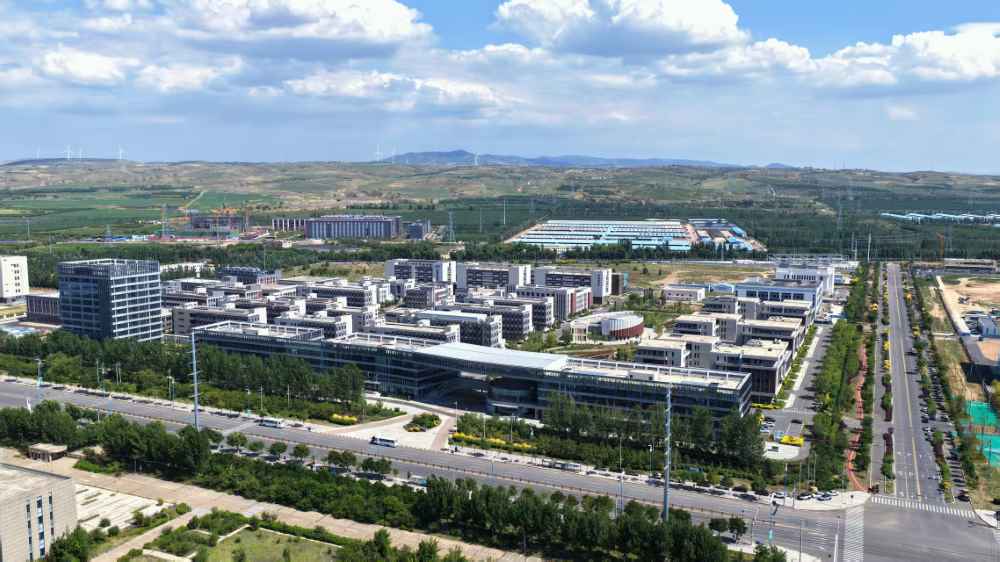
Hohhot, Inner Mongolia: Converting Prairie Winds into Computing Power

Published

on

Green Computing Power

HOHHOT, CHINA – Media OutReach Newswire – 24 August 2026 – On August 22, 2026, the fourth annual Green Computing Power (Artificial Intelligence) Conference was held on the picturesque Cilechuan Grassland in Hohhot, Inner Mongolia. Centered on the theme “Building Synergy between Computing and Electricity, Exploring New Horizons in Token Economy, and Creating the Future of Artificial Intelligence Together,” the conference presented the latest research achievements, including the Green Computing Power Development Research Report (2026), and showcased pilot initiatives such as “millisecond-level urban computing” applications. Prominent companies, including ByteDance and Cambricon, signed a series of significant agreements valued at tens of billions, focusing on green intelligent computing centers and token factories.

Why has the national computing power industry turned its attention here? Part of the answer lies in this vast grassland.

Wind turbine blades turn steadily, each rotation generating 12 kilowatt-hours of green electricity. Instead of feeding into the public grid, this clean energy is transmitted via a dedicated 41-kilometer line directly to data centers located tens of kilometers away.

Inside the machine rooms of these centers, rows of GPU arrays operate around the clock, powered mainly by wind and solar energy.

Training large-scale AI models utilizing tens of thousands of GPUs can consume over 100 million kilowatt-hours annually. For instance, the Hohhot Intelligent Computing Center, operated by China Mobile, incurred electricity costs of approximately 290 million yuan in 2025, accounting for more than 70% of its total operating expenses. In the competition for computing power, electricity costs proved to be a decisive factor. China’s strategic response includes the “East Data West Computing” project, which redirects the high computing demand from eastern regions to resource-rich western areas. The Horinger data center cluster in Hohhot is among the country’s top ten clusters.

The city is endowed with a combination of nearly optimal conditions for the selection of data center locations. With an average annual temperature of only 7°C and over 200 days per year suitable for direct outdoor air cooling, the center achieves more than 20% savings in cooling costs. At an electricity price of about 0.36 yuan per kilowatt-hour, a large-scale GPU cluster can save around 50 million yuan annually on power expenses. Currently, Hohhot’s total computing capacity reaches 150,000 P, with green electricity usage exceeding 80%.

However, the challenge lies in the “green” aspect itself.

Wind and solar power fluctuate with weather, while computing loads require an uninterrupted 24/7 power supply.

The local solution is an innovative “computing-electricity synergy” mechanism. China Huadian Corporation constructs a 360,000-kilowatt integrated wind-solar-storage power station, comprising 300,000 kilowatts of wind, 60,000 kilowatts of photovoltaic power, and energy storage capable of continuous four-hour regulation. A collaborative control platform collects data on wind output, solar irradiance, storage status, and computing load at millisecond intervals to dynamically allocate power: when green energy is abundant, storage systems charge and delay-tolerant computing tasks are prioritized; when green energy is limited, storage discharges, the public grid supplements power, and flexible tasks are deferred. This approach transforms power generation and consumption from a unidirectional supply model to a bidirectional interactive system.

On the consumption side, initiatives to minimize waste are also in progress. The Hohhot data center operated by China Mobile recovers waste heat from nearby power plants to provide cooling for machine rooms. The B02 machine hall has improved its Power Usage Effectiveness (PUE) from 1.315 to 1.209, resulting in annual electricity savings of 560,000 kilowatt-hours since commencing operations. Upon full operation of two machine halls, annual savings are projected to reach 10 million kilowatt-hours of electricity and 150,000 tons of water.

Today, 62 computing center projects have clustered here, including data centers of China’s three major telecom operators, 16 financial institutions, and computing nodes from Huawei, ByteDance, Kuaishou, and others. Upstream, 45 manufacturing enterprises produce servers, cabinets, and sensors locally. According to the recently published three-year action plan, by 2028, Hohhot aims to establish 10 token factories capable of producing 20 trillion tokens daily. At that time, customers will procure not only cabinets and bandwidth but also directly accessible intelligent services customized to their requirements.

The prairie winds remain constant, as does the city’s commitment to converting every kilowatt-hour of green electricity into stable and reliable computing power.
The issuer is solely responsible for the content of this announcement.

Events

Africa Tech Festival 2026 puts Africa’s digital sovereignty and AI leadership in focus

Published

on

Africa Tech Festival 2026

Africa Tech Festival, the continent’s longest-running and most influential technology gathering, opened its 29th edition at the Cape Town International Convention Centre, with more than 15,000 attendees expected across the three-day event

CAPE TOWN, South Africa, November 18, 2026/APO Group/ –Africa must move beyond consuming technologies developed elsewhere and build its own digital capabilities to secure a competitive position in the global AI economy. This was the call from H.E. Paul Mashatile, Deputy President of the Republic of South Africa, as he officially opened Africa Tech Festival (https://AfricaTechFestival.com/) 2026 yesterday.


Addressing delegates via live video, Mashatile called for greater urgency in translating Africa’s digital ambitions into tangible benefits. “We will compete by solving our own challenges, harnessing our own talent, building our own capabilities, and creating solutions that the world will want to use,” he said.

He outlined five priorities: future-ready digital infrastructure, digital skills, commercialising African innovation, cybersecurity and responsible AI governance, and regional integration. He also emphasised that affordable connectivity, inclusive development and stronger cooperation between governments and industry are essential to ensuring no communities are left behind.

Africa Tech Festival, the continent’s longest-running and most influential technology gathering, opened its 29th edition at the Cape Town International Convention Centre, with more than 15,000 attendees expected across the three-day event. The programme features increased participation from senior enterprise and telecommunications executives, providing a platform to engage with decision-makers, explore new business and forge partnerships.

We will compete by solving our own challenges, harnessing our own talent, building our own capabilities, and creating solutions that the world will want to use

Building on Mashatile’s call for inclusion, Ben Cheick Haidara, Deputy CEO and Chief Operating Officer of Orange Middle East and Africa, identified affordability, digital skills and trust as critical to widening participation in the AI economy. He drew parallels with the success of mobile money, emphasising the importance of developing AI applications that address everyday challenges, including solutions in African languages. “The opportunity relies on the fact that we are able in Africa to build local solutions, to solve real needs, to solve real problems,” he said.

The importance of developing Africa’s own AI capabilities was reinforced during the Building Africa’s AI Advantage panel, featuring Boyd Chislett, CEO of Africa Data Centres; Veemal Gungadin, CEO of Mauritius Telecom; and Ante Mihovilovic, Head of Networks EMEA at Ericsson. Discussions highlighted the need for investment in connectivity, computing capacity and skills, alongside cross-sector partnerships. Developing local AI applications and strengthening control over digital infrastructure and data were identified as important steps towards greater digital sovereignty.

Turning to enterprise transformation, Ravi Bhat, Commercial Solutions and AI Officer at Microsoft South Africa, emphasised that becoming an AI-first organisation is a business and leadership decision, not simply a technology investment. He highlighted the importance of redesigning processes, reskilling employees and strengthening data governance and trust to move AI initiatives beyond pilot projects and deliver measurable results.

Reflecting on the opening day, David Monaghan, Vice President, Africa Tech Festival, said: “Deputy President Mashatile’s opening address reinforced the importance of Africa taking a more active role in shaping its digital future. The conversations across our nine content stages demonstrate why progress depends on bringing together the entire technology ecosystem, from infrastructure providers and global technology companies to enterprise leaders, governments and investors. Africa Tech Festival creates the connections needed to turn these shared priorities into partnerships, investment and practical progress.”

The festival continues today with discussions featuring Ghana’s Minister of Communication, Digital Technology and Innovations, Hon. Samuel Nartey George, and Emmanuel Lubanzadio, Africa Lead at OpenAI, while Thursday’s programme includes Hardy Pemhiwa, President and Group CEO of Cassava Technologies, as the focus shifts towards implementation and long-term growth.

Day 1 photos (https://apo-opa.co/4C9U3XE)

Distributed by APO Group on behalf of Africa Tech Festival.


Continue Reading

Events

APEC promo answers era’s question: Why does China lead global tech?

Published

on

APEC summit

BEIJING, CHINA – Media OutReach Newswire – 18 November 2026 – China is hosting the APEC summit for the third time, having previously hosted it in Shanghai and Beijing.

Over the past decades, China has become a global hub for innovation—from advanced manufacturing and digital infrastructure to biotechnology, artificial intelligence and green technology. A new generation of innovators, startups and research institutions is driving this transformation, turning ideas into real-world solutions at unprecedented speed.


The 2026 APEC Economic Leaders’ Week is currently underway in the southern Chinese city of Shenzhen, with the 33rd APEC Economic Leaders’ Meeting scheduled for November 18–19 under the theme “Building an Asia-Pacific Community to Prosper Together.”

Ahead of the summit, People’s Daily released the APEC “China Year” promotional video Why China, answering a defining question of our era: why China is spearheading global technological development. The video’s core answer is “new quality productive forces.”

As Xue Lan, dean of Schwarzman College and dean of the Institute for AI International Governance at Tsinghua University, noted, “At this stage of development, China needs to pursue high-quality development, which in turn requires new quality productive forces,” adding that this also responds to the demands of global development.

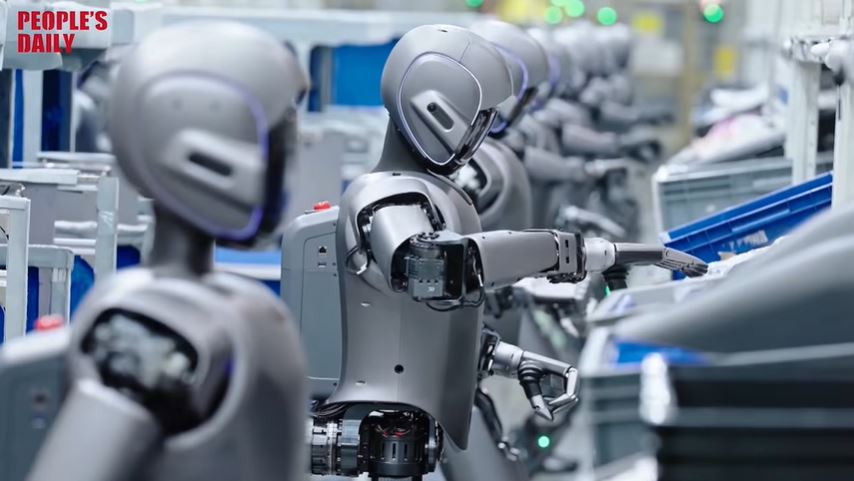
The video covers a wide spectrum of fields—including intelligent robotics, next-generation communication networks, homegrown large language models, semiconductors, quantum communication, new energy vehicles and satellite internet—presenting a comprehensive picture of China’s deep push into fundamental research and large-scale industrial applications.

Zhang Peng, CEO of Z.AI, said that at the algorithm level, the company did not simply rely on open-source models released by the West—even from the initial research stage—and instead built its algorithm entirely on its own from scratch, line by line of code and step by step.

Meanwhile, the video also highlights the inherently open nature of China’s sci-tech innovation. Large-model enterprises embrace the open-source ecosystem, while robotics firms open up their hardware and underlying motion-control technologies. Through examples such as a Chinese company helping an elderly patient in Thailand access remote medical care via satellite internet, the video showcases China’s commitment to open, inclusive technological breakthroughs that benefit countries and communities worldwide.


Continue Reading

Business

Cassava Technologies and Mauritius Telecom sign Memorandum of Understanding (MoU) on Artificial Intelligence (AI) services and education in Africa

Published

on

Africa

The partnership combines this computing scale, Cassava’s AI platforms and regional reach with MT’s own AI products, local language capabilities and operating experience

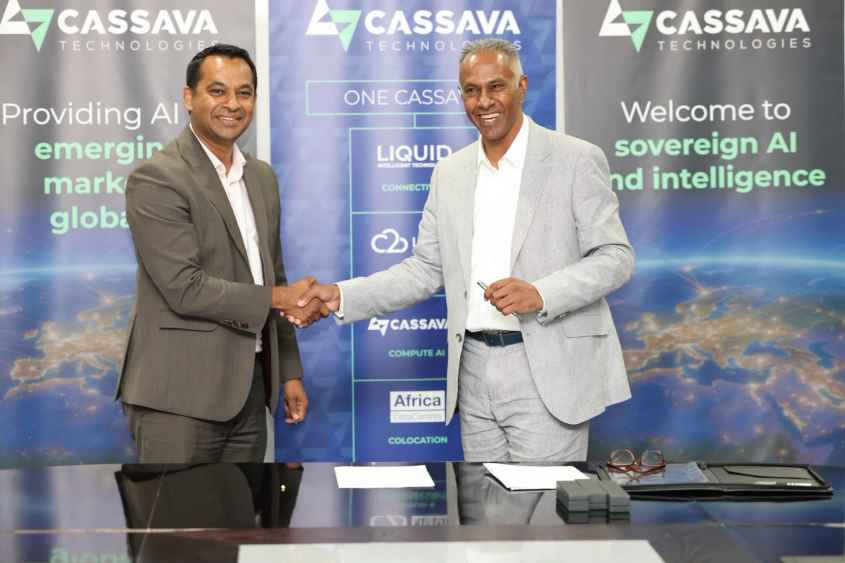
CAPE TOWN, South Africa, November 18, 2026/APO Group/ –Cassava Technologies (https://www.CassavaTechnologies.com/), a global technology company of African heritage, and Mauritius Telecom (MT) have signed a memorandum of understanding (MoU) at Africa Tech Festival to develop a strategic partnership focused on strengthening compute and model access for MT’s AI services and exploring opportunities for myt Learn, MT’s AI-powered education platform, in South Africa and other African markets.


Cassava’s NVIDIA-powered AI Factory in Cape Town is Africa’s most powerful supercomputer. The partnership combines this computing scale, Cassava’s AI platforms and regional reach with MT’s own AI products, local language capabilities and operating experience.

This partnership brings together products we have developed and Cassava’s infrastructure and reach to take that work further

“Realising AI’s promise in Africa requires more than potential; it takes infrastructure, technology, and proven expertise. By pairing Mauritius Telecom’s AI products and operating experience with Cassava’s AI infrastructure and reach, we aim to bring locally relevant AI services and education solutions to more African markets,” said Ziaad Suleman, SVP Cassava Technologies for South Africa and Botswana.

“We are building AI capability in Mauritius that can also serve other African markets. With myt Learn, we are already putting that capability to work in our schools, supporting both students and teachers. This partnership brings together products we have developed and Cassava’s infrastructure and reach to take that work further. Our ambition is to make trusted AI useful and accessible, while ensuring that those responsible for its use retain meaningful control,” said Veemal Gungadin, CEO of Mauritius Telecom.

The companies will explore access to Cassava’s AI Factory as an additional source of on-demand computing capacity for MT’s AI offerings, alongside access to AI models through CAIMEx, Cassava’s AI platform. Cassava capacity and model access would be used only for workloads where customers permit it. These options would complement MT’s existing myt AI Cloud platform and infrastructure in Mauritius, and could support its expansion into other African markets.

In education, the partners will jointly assess opportunities for myt Learn, starting with South Africa’s public and private education sectors, with potential expansion into other Cassava markets. Created by MT and rolling out in Mauritian schools for selected grades, myt Learn provides curriculum-aligned guided lessons, a multilingual AI tutor and personalised revision. Teachers have access to performance insights and AI tools for marking, test creation and lesson preparation. The platform can be adapted to local curricula and teaching needs.

Together, the companies aim to show how telecommunications operators can bring locally relevant AI services to customers and take African-developed products into new markets.

Distributed by APO Group on behalf of Cassava Technologies.


Continue Reading

Trending