Connect with us
Anglostratits

Business

Rising power costs put energy strategy at the centre of industrial competitiveness

Published

on

South Africa

C&I Energy + Storage Summit Johannesburg to focus on the procurement, cost and investment decisions facing South Africa’s large energy users

JOHANNESBURG, South Africa, September 22, 2026/APO Group/ –The cost of electricity is no longer only an energy issue for South African businesses. It is increasingly a question of competitiveness, investment and long-term operational resilience.

Recent figures show the pressure on large power users. Business Day reported on 7 September that South Africa’s mining and industrial majors paid Eskom R115 billion for electricity in the 2025/26 financial year. According to Eskom’s annual report, industrial electricity demand fell by more than 22% over the same period as high power costs weighed on energy-intensive operations.


At the same time, major businesses are moving to alternative supply. Reuters reported on 26 August that South African mining companies are accelerating investment in renewable energy to cut costs, diversify supply and meet decarbonisation targets.

For commercial and industrial energy users, the question is no longer simply how to secure power. It is how to buy it, what to invest in, and which energy strategy makes the strongest commercial sense.

Energy procurement is becoming more complex

Businesses are now weighing several procurement options at once. Should they sign a long-term PPA? Buy through an electricity trader? Wheel renewable power across the grid? Invest in behind-the-meter generation? Add battery storage? Each option carries different implications for cost, risk, contracting and long-term flexibility.

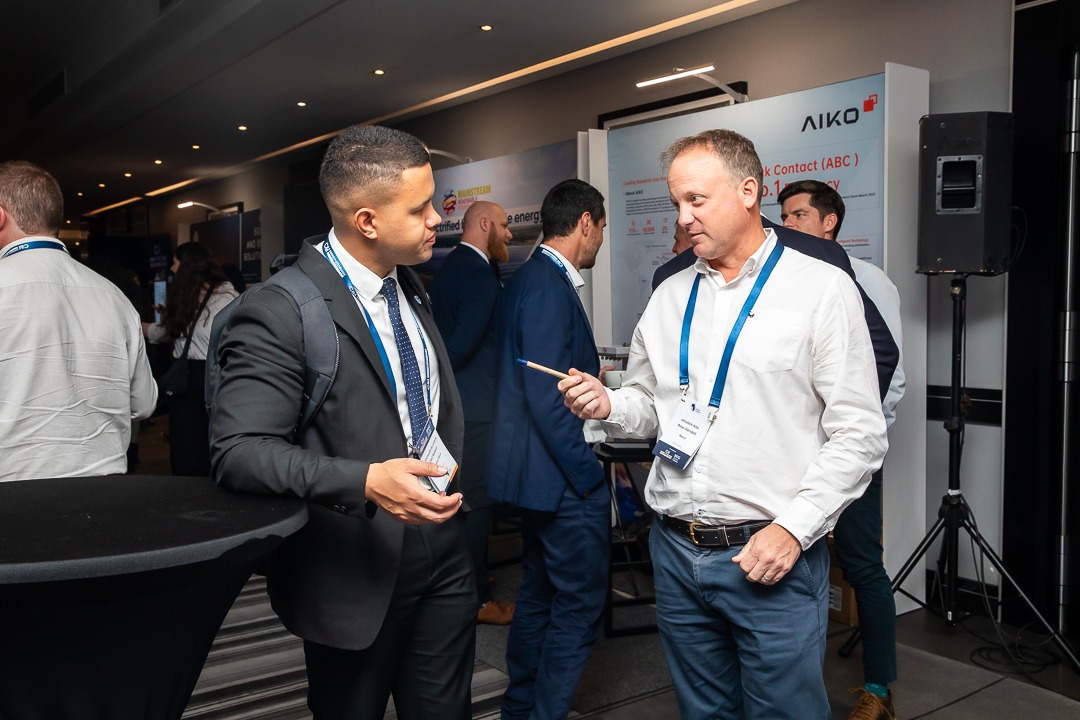
These decisions will take centre stage at the C&I Energy + Storage Summit Johannesburg, taking place on 28–29 October 2026 at The Maslow Hotel, Sandton. The programme is built around the practical challenges facing energy buyers today, with a focus on real projects, commercial models and implementation rather than technology in isolation.

A programme built around the buyer’s decisions

The summit closes with the C&I Decision Clinic: Ask the Experts, a masterclass where attendees submit real project challenges in advance and receive practical, anonymised responses from experts. Questions on the table include whether to build onsite PV or sign a wheeled PPA, how much battery storage makes commercial sense, what a bankable project preparation pack should contain, and what financiers require before term sheet stage.

It follows The C&I Energy Playbook: Five decisions business leaders need to make now, a closing panel in which the moderators of key summit sessions distil the programme into the priorities C&I businesses should act on.

Other sessions address the questions buyers are asking now:

  • Energy storage beyond backup power: unlocking commercial value examines peak shaving, demand charge management, energy arbitrage and hybrid PV-plus-storage business models, along with the operational realities of dispatch, degradation and warranties.
  • Making public-private engagement work for you unpacks how wheeling agreements are structured in practice, where interface risks arise, and how businesses can engage utilities and municipalities early.
  • Reducing energy costs without building new generation is a case-study-led workshop on energy efficiency, operational optimisation, demand response and digital energy management.
  • Projects Spotlight gives energy users the floor to share the strategies they have implemented, the lessons learned and the outcomes achieved.

The programme opens with the keynote panel Threats and opportunities in South Africa’s industrial future, bringing together policymakers, industrial leaders, financiers, and energy and water experts.

Bringing energy buyers into the conversation

The summit’s Hosted Buyer Programme is designed for qualified end-user energy buyers across sectors including mining, manufacturing, property, agriculture and other energy-intensive industries. Hosted buyers take part in the full programme and receive curated engagement with solution providers across energy procurement, storage deployment and project development.

Four events, one venue

The summit is co-located with the EIUG Conference, Water Security Africa and the Data Centre Summit, bringing the energy, water and digital infrastructure communities together in Sandton. It is brought to you by Enlit Africa, with ESI Africa as host media, and is accredited by the SAIEE.

Qualified commercial and industrial energy users can apply for the Hosted Buyer Programme at https://apo-opa.co/4yPnXOg, and bring their project questions to the Decision Clinic.

Full programme: https://apo-opa.co/4xK2ANv

 

Distributed by APO Group on behalf of VUKA Group.


Energy

African Petroleum Producers Organization (APPO) Chief Urges Joint National Oil Companies (NOCs) Projects at 8th Chief Executive Officers (CEOs) Forum During African Energy Week (AEW)

Published

on

African Energy Week

African Energy Week is currently hosting the 8th Annual APPO NOCs CEOs Forum at the CTICC in Cape Town

CAPE TOWN, South Africa, October 13, 2026/APO Group/ –H.E. Farid Ghezali, Secretary General of the African Petroleum Producers Organization (APPO) has issued a direct call to African National Oil Companies (NOCs) to move beyond high-level dialogue and focus on strategic cooperation for fast tracked delivery of upstream projects and local value creation.


Speaking at the 8th annual meeting of the CEOs of APPO NOCs at African Energy Week (AEW) on Monday, Ghezali emphasized that NOCs are no longer just oil companies, but vital platforms for national energy security and economic sovereignty.

Africa does not need an architecture of good intentions, but an architecture of delivery

“We have moved to how much value Africa can create from the energy it produces,” he stated, highlighting that NOCs must play a decisive role in reversing this imbalance. “To build a competitive sector, African NOCs must strengthen internal partnerships across critical areas, including refining technology, gas infrastructure, petrochemicals, and project financing.”

He urged African NOCs to combine domestic capacities, assets, and off-take agreements to de-risk projects and build a robust pipeline of bankable energy initiatives. The Secretary General highlighted the African Energy Bank as a crucial mechanism to ensure NOCs can finance strategic projects which they cooperate own to enhance regional energy sovereignty.

To ensure long-term impact, the Secretary General challenged delegates to focus on practical outcomes, asking: Which projects can our NOCs develop together? Where can we create integrated value chains? Which projects are we prepared to execute right now?

“Africa does not need an architecture of good intentions, but an architecture of delivery,” the Secretary General concluded, stressing that the true success of industry forums will be measured not by the conversations held, but by the tangible investments, implemented projects, and economic opportunities delivered to African citizens.

Distributed by APO Group on behalf of African Energy Chamber.


Continue Reading

Business

Kholo Capital provides R275 million (US$17 million) mezzanine debt funding to DCC Holdings to support refinancing and future growth

Published

on

The funding will refinance existing debt and support DCC’s long-term growth strategy

JOHANNESBURG, South Africa, October 13, 2026/APO Group/ –Kholo Capital Mezzanine Debt Fund I (“Kholo Capital”) (www.KholoCapital.com) today announced the provision of R275 million (US$17 million) in mezzanine debt funding to DCC Holdings Proprietary Limited (“DCC”), a leading South African information and communications technology (“ICT”) distributor with an established presence across Southern Africa. The funding will refinance existing debt and support DCC’s long-term growth strategy.


DCC is a leading South African distributor of ICT products and solutions, offering a comprehensive portfolio of products across personal computing, printing, enterprise infrastructure and software. The business distributes products from leading global technology manufacturers, including HP, Dell and Lenovo, to an extensive network of resellers, system integrators and retailers across Southern Africa.

Founded in 1988, DCC has grown into an established participant in the Southern African ICT distribution market, with a distribution network and logistics infrastructure serving customers across the region. The business plays an important role in the ICT supply chain, connecting international technology manufacturers with local resellers and retailers.

Mokgome Mogoba, Managing Partner and Founder of Kholo Capital, commented:  “We are delighted to support DCC’s highly experienced management team as the business enters its next phase of growth. The business is backed by Kleoss Capital, a highly competent private equity investor. This transaction demonstrates how structured mezzanine debt capital can be used to optimise a company’s capital structure, refinance existing debt and provide the financial flexibility required to support sustainable growth. DCC has established itself as one of South Africa’s leading ICT distributors, with a strong market position underpinned by longstanding relationships with leading global technology manufacturers, an extensive reseller network and well-established logistics and distribution capabilities.”

We are delighted to support DCC’s highly experienced management team as the business enters its next phase of growth

Zaheer Cassim, Managing Partner and Founder of Kholo Capital, added: “Over nearly four decades, DCC has built a formidable distribution platform, combining extensive market reach, strong logistics capabilities and a deep understanding of its channel partners’ needs. Beyond its commercial strengths, DCC’s investment in youth employment, support for learners with disabilities and SME reseller development reflects a commitment to inclusive growth. Its adoption of solar energy and water-saving measures further demonstrates a practical approach to responsible business. We believe DCC is well positioned to capitalise on opportunities across the Southern African ICT market, and we are pleased to partner with management in advancing growth that delivers both commercial value and meaningful social impact.”

Hale Matsipa, Managing Partner of Kleoss, said: “Kleoss Capital has valued the opportunity to work with Kholo Capital on this transaction, which positions DCC for its next phase of growth. It also reflects the positive momentum in South Africa’s private markets and marks another successful collaboration between Kleoss Capital and a fellow private markets investor. We look forward to continuing our partnership with the Kholo Capital team.”

Carlos Ferreira, CEO of DCC, added: “DCC’s shareholders, comprising senior management and Kleoss Capital, are pleased to introduce Kholo Capital into the capital structure of the DCC group. DCC has been growing steadily over the years with the addition of certain key brands and the expansion of our existing footprint within our established vendor relationships. Together with our capital partners, we look forward to the next chapter in the evolution of the business with continued optimism.”

Deneys acted as legal counsel to Kholo Capital.

Webber Wentzel acted as legal counsel to DCC.

Distributed by APO Group on behalf of Kholo Capital.


Continue Reading

Business

Verdant Capital Hybrid Fund (VCHF) publishes inaugural Annual Impact Report: investees estimated to have created over 316,000 jobs

Published

on

Verdant Capital

The findings provide an important baseline for tracking impact over time, combining investee-level data with insights from end customers on how access to finance is influencing their businesses and households

We are committed to using the data and insights from these studies to strengthen our approach and deepen our impact measurement

JOHANNESBURG, South Africa, October 12, 2026/APO Group/ –Verdant Capital (www.Verdant-Cap.com) believes that the true measure of investment goes beyond capital deployed and financial returns. It is also reflected in the businesses that grow, the jobs they create and the lives they help transform.

In 2025, the Fund took an important step towards strengthening its impact measurement approach by commissioning 60 Decibels (https://apo-opa.co/4dAqYdi) to build an industry-standard impact management framework and conduct independent impact measurement across its investment portfolio. Job creation is Verdant Capital Hybrid Fund’s primary impact objective, and the studies were designed to strengthen the Fund’s understanding of how its investments contribute to employment and broader economic opportunities.


As part of this process, VCHF developed an impact thesis for each investee, and commissioned baseline studies to understand who its investees reach, how their services influence the lives of their customers and, most importantly, their contribution to job creation.

The findings provide an important baseline for tracking impact over time, combining investee-level data with insights from end customers on how access to finance is influencing their businesses and households.

“Our conviction has always been that the right capital, combined with hands-on technical support, can help African financial service providers reach underserved businesses, create jobs and improve livelihoods.” said Edmund Higgenbottam, Chief Executive Officer of Verdant Capital. “Our first impact studies provide encouraging evidence of this, but this is only the beginning. We are committed to using the data and insights from these studies to strengthen our approach and deepen our impact measurement”.

Key Impact Highlights as of 31 December 2025

  •  USD 39.5 million deployed across six investments.
  • 179,000+ MSMEs reached.
  • 316,000+ jobs created across the portfolio, with an additional 1,066,000+ jobs supported.
  • 24 Technical Assistance projects delivered for investees, supported by KfW on behalf of the German Federal Ministry for Economic Cooperation and Development (BMZ).
  • Six investees operating across 12 African countries, mainly low income and lower-middle income countries.

VCHF has made six investments in inclusive financial institutions to date: WATU, Mogo, LOLC Africa, Zeepay, UsPlus and Bfree. Through these investments, the Fund helps expand access to financial solutions that enable individuals and small businesses to grow their enterprises, strengthen their incomes and contribute to employment generation. The highlights above are drawn from independent 60 Decibels studies with over 850 customers across four investees.

Looking ahead, VCHF has USD 51 million in AUM and plans to grow its portfolio through additional investments and expansion into new markets over the coming years. The Fund is also seeking to mobilise additional capital from investors who share its commitment to delivering commercial returns alongside measurable impact.

Beyond the numbers are the stories of individuals accessing financial services, entrepreneurs expanding their businesses, households strengthening their livelihoods and businesses contributing to more resilient value chains.

This report marks an important milestone in VCHF’s impact journey. It strengthens the Fund’s understanding of the outcomes associated with its investments and reinforces its commitment to measuring not only the scale of its reach, but also the changes experienced by the people and businesses behind the numbers.

Verdant Capital extends its sincere appreciation to its partner, KfW Development Bank, for its continued support, and to its investees for their commitment and collaboration throughout this process.

Verdant Capital also extends its appreciation to 60 Decibels for its valuable partnership as the impact measurement advisor, as well as to the entire Verdant Capital Hybrid Fund team for its dedication and contribution to this important milestone.

Together with its partners, VCHF continues to demonstrate that commercial returns and meaningful impact can go hand in hand.

Read the full report here: Click Here (https://apo-opa.co/4B26qV8)

Distributed by APO Group on behalf of Verdant Capital.


Continue Reading

Trending