Connect with us
Anglostratits

Business

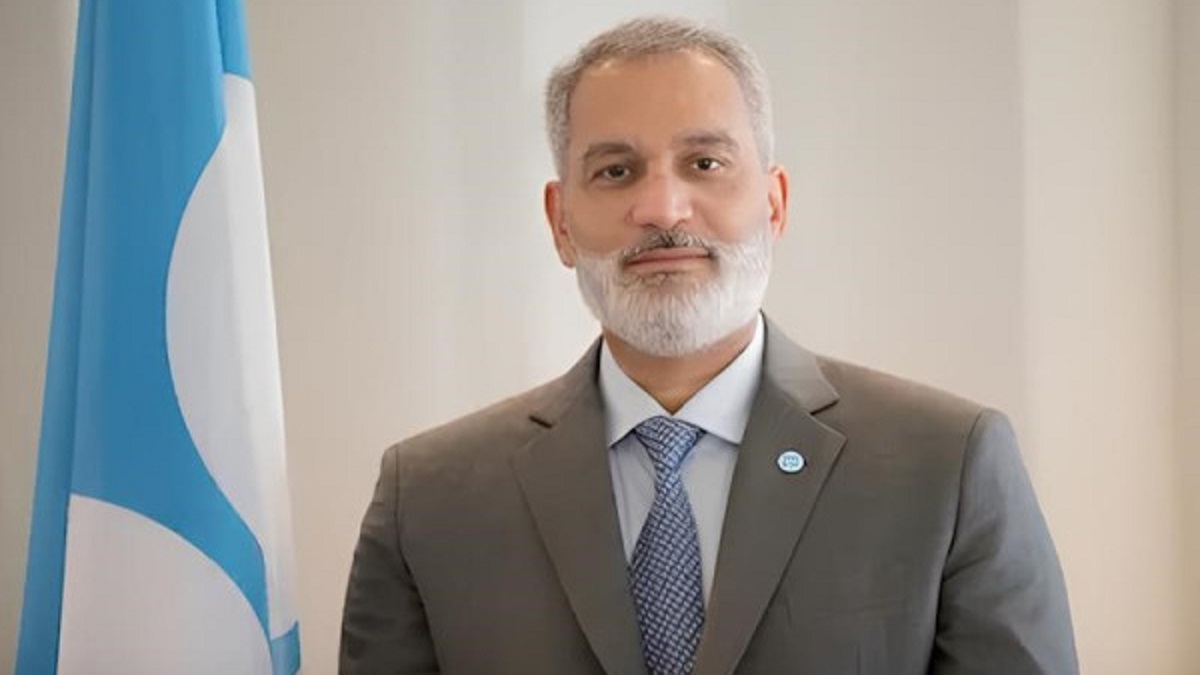
Organization of the Petroleum Exporting Countries’ (OPEC) pride in its African roots (By Haitham Al-Ghais)

Published

on

OPEC

Looking throughout our 63-year history, many significant meetings took place in African cities

PARIS, France, May 15, 2024/APO Group/ — 

By OPEC Secretary General Haitham Al-Ghais.

Since assuming the office of OPEC Secretary General almost two years ago, I have had the privilege of visiting every African OPEC Member Country, as well as several other African countries. Every visit has reaffirmed my firm conviction that the future is bright for Africa and that the oil industry can play a constructive role in that future. Our Organization stands ready to offer any support it can to help this great continent realize its awesome potential.

OPEC takes great pride in its strong and enduring African connections, heritage and identity. Half of our Member Countries are African and this includes the continent’s most populous country, Nigeria, and the geographically largest by area, Algeria. We are also privileged to count Congo, Equatorial Guinea, Gabon and Libya as Member Countries. Additionally, two African countries are part of the historic ‘Declaration of Cooperation,’ between OPEC and non-OPEC producing countries, namely Sudan and South Sudan.

Our Organization’s past is imbued with African character. Looking throughout our 63-year history, many significant meetings took place in African cities. From the Ninth Meeting of the OPEC Conference in Tripoli in 1965, critical meetings and conferences have been held in Algiers (including our first ever Summit), Oran, Lagos, Abuja, Luanda, and Libreville.

Indeed, the idea for our Organization was conceived in Africa, specifically Egypt. It was at the Cairo Yacht Club in 1959, that the Gentleman’s Agreement was forged that paved the way for the establishment of OPEC in Baghdad in September 1960.

Having played a pivotal role in shaping our past, we have no doubt Africa will be instrumental in the Organization’s future and the future of the oil industry. This is a dominant theme in OPEC’s World Oil Outlook 2045 (WOO).

Africa has a young and vibrant population. By 2045, the Middle East and Africa are forecast to be the leading regions by overall population, adding 723 million people in the period 2022-2045.

We anticipate a bright future for Africa’s oil industry with substantial opportunities for growth. The continent is home to five of the top 30 oil-producing countries and its proven oil reserves amounted to around 120 billion barrels at the end of 2022. This will be crucial to meet the growing global demand for oil, which is expected to rise to 116 million barrels per day (mb/d) by 2045.

Having played a pivotal role in shaping our past, we have no doubt Africa will be instrumental in the Organization’s future and the future of the oil industry

These resources will be crucial in enabling African countries deliver for their peoples. For many oil-producing developing nations, oil production is a way to generate revenue streams that help address pressing and legitimate needs, such as development, employment, education, reducing poverty and investing in public services.

One of the great challenges facing governments here and, indeed, in many other parts of the world is energy poverty. There are 675 million people worldwide who lack access to electricity, four out of five of whom live in sub-Saharan Africa. Furthermore, 2.3 billion people without clean fuels and technologies for cooking, which can lead to a host of related health and environmental problems.

Of course, OPEC supports efforts that lead to a reduction in greenhouse gas emissions, but we look for this to be achieved in a manner that strikes a fine balance between energy security and sustainable development; ensuring that nobody is left behind. We are also strong advocates for the principle of common but differentiated responsibilities and respective capabilities.

The continent of Africa is home to 17% of the world’s population, but is responsible for under 4% of global CO2 emissions, with many African countries contributing virtually nothing to global emissions.

When we consider historic cumulative CO2 emissions, the G7 has contributed over 43% of the total alone since 1850, while OPEC Member Countries account for only 4%.

These statistics reflect the fact that there is no ‘one size fits all’ solution to addressing climate change and national circumstances need to be taken into account. We need an all-peoples, all technologies and all-energies approach. Technological innovation is a key focus for our Organization.

It is why our Member Countries are investing heavily in hydrogen projects, Carbon Capture and Utilization and Direct Air Capture facilities, and the circular carbon economy.

Looking at recent developments across the energy scene in Africa, we see opportunities for the oil industry in places like Namibia, Senegal, Mozambique and Mauritania, to name but a few. OPEC is attentive to these developments and stands ready to support all countries on the African continent in the next chapter in developing their industries. In this regard, we look forward to enhanced cooperation with the African Energy Chamber in the years and decades to come.

The African Energy Chamber, as the voice of the African energy sector, commends OPEC’s commitment to the growth of the African oil and gas industry.

Distributed by APO Group on behalf of African Energy Chamber.

Business

CEM Africa 2026: Africa’s CX Leaders Meet in Cape Town

Published

on

Final programme brings together senior CX leaders, practical workshops, technology showcases and high-value industry conversations from 18–20 August 2026

CAPE TOWN, South Africa, August 14, 2026/APO Group/ –CEM Africa 2026 will return to the Century City Conference Centre in Cape Town from 18–20 August, bringing together senior customer experience, marketing, digital, customer service, technology and transformation leaders for the 14th edition of Africa’s leading customer experience summit.

With organisations across the continent under growing pressure to improve customer outcomes while navigating AI adoption, automation, rising expectations, fragmented journeys and commercial scrutiny, the 2026 programme has been built around a central question: how can businesses use technology to improve customer experience at scale without losing trust, relevance or the human connection?

Across three days, CEM Africa will combine strategic conference discussions, hands-on workshops, technology demonstrations, an exhibition, networking activations and peer-to-peer exchange, giving delegates the opportunity to move from big-picture industry questions to practical frameworks they can apply inside their organisations.

A speaker line-up rooted in real CX leadership

The 2026 speaker faculty brings together leaders working directly across customer experience, marketing, digital transformation, customer service, commerce, technology and organisational change.

Among those joining CEM Africa 2026 are:

  • Bruce Whitfield, business journalist and best-selling author
  • Khensani Nobanda, Group Chief Marketing Officer, Nedbank
  • Francois Retief, Head of Customer Experience, FNB
  • Martin Urrutia, global toy industry leader
  • Marnitz Van Heerden, Head of Customer Experience, Discovery Limited
  • Grace Brown, Head of Customer Experience and Client Services, JSE
  • Khwaṱhelani Tshikovhi, Head: Santam Experience and Client Care, Santam Insurance
  • Shaun Edmeston, Director of Customer Experience, Absa Bank Mauritius
  • Job Thomas, Chief Customer Officer, WooCommerce
  • Richie Sobayeni, Group Head of Customer Experience Design, Equity Group Holdings
  • Julia Ahlfeldt, Customer Experience Strategist and Business Advisor
  • Rashid Toefy, Deputy Director-General, Department of Economic Development and Tourism
  • Katie Stabler, Founder and Director, CULTIVATE Customer Experience by Design
  • Charlie Stewart, CEO, Rogerwilco
  • Omowunmi Akingbohungbe, Executive Director, WIMBIZ
  • Wavi Mungala, Board Director, Institute of CX – Kenya

The wider faculty spans financial services, retail, technology, insurance, e-commerce, public sector, consulting and customer operations, reflecting the increasingly cross-functional nature of customer experience.

From AI experimentation to measurable outcomes

Artificial intelligence will be one of the defining conversations at CEM Africa 2026, but the programme moves beyond broad speculation about AI to focus on where organisations are seeing – or still struggling to achieve – real operational and commercial value.

Day One will examine how African organisations can move from AI pilots to production, including governance, data readiness, agent co-pilots, voice AI, speech analytics, conversational AI and AI-driven personalisation.

The agenda also tackles the questions surrounding responsible adoption. Sessions will examine AI governance and ethics, privacy, POPIA, customer consent and the challenge of automating at scale without damaging trust.

A dedicated discussion, “Will AI Make Your Brand More Trustworthy?”, will explore whether increased automation strengthens customer confidence or risks undermining it, before the day closes its content programme with the audience-led town hall “Will Humans Still Matter in a World of AI-Driven Customer Experience?”

Data, insight and the business case for CX

For leaders under pressure to demonstrate the commercial return on customer experience investment, CEM Africa will put measurement firmly on the agenda.

Workshops will address customer data quality, real-time insight, first-party data strategy, predictive analytics and Voice of Customer, alongside practical sessions on building an end-to-end CX scorecard, customer lifetime value and mapping journey costs.

Delegates will also be able to explore how to prove CX ROI to executive teams, connecting customer experience activity to revenue uplift, churn reduction, operational efficiency and cost-to-serve.

The emphasis throughout is on turning customer insight into decisions and measurable business outcomes rather than collecting more data without action.

Designing customer journeys that work in African markets

The programme will also address the practical realities of customer engagement across diverse African markets.

Topics include omnichannel journey design, mobile-first experiences, WhatsApp as a service channel, self-service, proactive CX and reducing friction across high-volume journeys such as onboarding, billing, claims and fulfilment.

Sessions will examine how organisations can create accessible experiences for customers with different levels of digital literacy, connectivity and channel preference, while maintaining consistency between physical, digital and human-assisted interactions.

African market realities also feature in discussions on sentiment analysis, conversational AI, language, code-switching and customer behaviour.

The people behind customer experience

Technology is only one side of the CX equation.

CEM Africa 2026 will look closely at employee experience, organisational culture and the changing capabilities required of customer-facing teams.

Sessions will cover customer-centric culture, employee resilience, burnout, hybrid CX teams, human-centred service, AI upskilling, cross-functional collaboration and change management.

The programme will also explore the relationship between employee experience and customer outcomes, recognising that organisations cannot sustainably improve CX without equipping and engaging the people responsible for delivering it.

What the three days will look like

Tuesday, 18 August – Day Zero

CEM Africa begins with an afternoon dedicated to registration, community engagement and relationship-building ahead of the main conference programme.

Delegates can expect networking activities and activations, including tastings, community conversations, the CEM Networking Padel Tournament and sponsored welcome drinks.

The format is designed to give speakers, delegates, partners and industry leaders an opportunity to begin making connections before the formal summit gets underway.

Wednesday, 19 August – Day One

Day One opens with a strong focus on trust, relevance and measurable customer experience outcomes.

The main stage begins with Deshnie Govender’s opening keynote, “The Culture-Led Customer: The Emerging Markets Playbook for Building Trust, Relevance and Loyalty”, followed by sessions examining the future of AI-powered customer experience, journey-led CX orchestration and business journalist and best-selling author Bruce Whitfield’s keynote, “The Trust Advantage”, exploring how trust can reduce friction and unlock better business results.

From late morning, the programme moves into a series of parallel workshops and panels built around some of the most pressing issues facing CX leaders today.

The first sessions explore building trust in the AI era, with discussions on whether AI investments are delivering measurable business outcomes, the changing role of the CX leader, enterprise AI agents, frictionless customer journeys and lessons from CEM Africa Awards-winning teams.

The afternoon broadens the conversation into customer intelligence, Voice of Customer, Agentic AI, digital trust and human reassurance, alongside a dedicated discussion on how African contact centres and BPO operators are positioning themselves to compete globally.

Later sessions place the human experience firmly back at the centre of CX. Leaders will explore employee wellbeing, emotionally intelligent journey design, empathy in an AI-enabled environment, customer-centric culture and how to lead CX teams through continuous change.

The final workshop block tackles the commercial realities of CX, including moving from NPS to P&L, improving checkout conversion, connecting customer, employee and digital experience, driving loyalty through hyper-personalised research and the realities of stepping into senior CX leadership.

Day One closes with Matchmaking and Happy Hour, followed by the CEM Engage Party, creating further opportunities for delegates, speakers, partners and solution providers to continue conversations and build meaningful industry relationships.

Thursday, 20 August – Day Two

Day Two turns the focus towards human impact, business value and the future direction of customer experience in Africa.

The main stage opens with Zahirah Variawa’s motivational keynote, “The Moments People Remember: Why the Experiences We Create Matter More Than We Think”, followed by Rashid Toefy on designing better citizen experiences and building trust through public services.

A QuestionPro and Metropolitan fireside chat explores the use of AI within Voice of Customer programmes, while Katie Stabler and Debi Potgieter’s “What the Fluff?” challenges the industry to examine whether CX initiatives have genuine substance when put under pressure.

The morning also features the CEM 2026 Advisory Board Panel, bringing together leaders from across Africa to examine the future of CX through the lenses of trust, technology, business value and human connection, before Martin Urrutia, Head of Global Retail Experience at The LEGO Group, takes to the stage for the keynote “Experience Is the Brand.”

The afternoon workshop programme moves from strategy into execution.

Sessions will explore AI-powered WhatsApp journeys, voice AI in the South African market, the point at which brand promises break down, self-improving human and AI service models and how CX leaders can prove ROI in language that resonates in the boardroom.

The final workshop block looks further ahead. Delegates can explore CX designed for measurable ROI, the Future African Customer 2030, organisational trust, scalable experience design, the risks of poor AI, emerging CX research and Human First experience design.

The programme then closes with WiN CX Africa: Women Shaping Excellence in Every Experience, bringing together female leaders to explore how cultures of safety, trust and inclusion shape stronger customer and employee experiences.

Across both days, the programme reflects the central theme of CEM Africa 2026: Trust, Technology and the Human Future of CX in Africa, with a clear emphasis on moving beyond theory towards customer experience strategies that create stronger relationships, better operational outcomes and measurable business value.

More than a conference programme

Alongside the conference and workshops, attendees will have access to the CEM Africa exhibition, Expo Spotlight Stages, technology demonstrations, networking functions and opportunities to engage directly with CX solution providers and peers facing similar transformation challenges.

For senior leaders, the value lies not simply in hearing what is changing, but in comparing approaches with peers, interrogating technology choices, finding practical solutions and building relationships across Africa’s customer experience community.

CEM Africa’s broader 2026 positioning – “Excellence in Every Experience: Shaping the Future of Customer Engagement Across Africa” – reflects an industry that is increasingly being asked to connect customer experience directly to business growth, loyalty, trust and resilience.

With the event now days away, CEM Africa 2026 offers organisations a timely opportunity to understand where customer experience is heading next — and what leaders need to do now to stay relevant.

CEM Africa 2026 takes place from 18–20 August 2026 at the Century City Conference Centre in Cape Town, South Africa.

For the latest programme, speaker line-up and delegate availability, visit https://apo-opa.co/4zgt0bJ.

Distributed by APO Group on behalf of VUKA Group.

Continue Reading

Business

KoçSistem Leads Türkiye’s Information Technology (IT) System Integrator for the Eighth Consecutive Year as KoçDigital Wins Top Artificial Intelligence (AI) Award

Published

on

KoçSistem

KoçSistem ranked first in ICT 500’s main system integrator category for an eighth consecutive year, while KoçSistem and KoçDigital recorded 10 category wins as KoçSistem expands its MENA operations through Dubai and Riyadh

ISTANBUL, Türkiye, August 9, 2026/APO Group/ –KoçSistem (www.KocSistem.com.tr), a Türkiye-based technology company, ranked first in the main Information Technology Systems Integrator and Business Partner category of the 27th ICT 500, the country’s most comprehensive ICT (information and communication technology) sector research.


The company announced that the eighth consecutive category lead, as well as 10 combined category wins for KoçSistem and KoçDigital, support its MENA growth through offices in Dubai and Riyadh.

“Securing this leadership for an eighth consecutive year in ICT 500 is a strong reference for our leadership position in Türkiye,” said Mehmet Ali Akarca, General Manager of KoçSistem. “It also supports our objective of growing in international markets. We are pleased to take the technology expertise and operational capabilities we developed over many years in Türkiye to the MENA region.”

Ten category wins across two companies

KoçSistem’s eight first-place results covered the main system integrator category and areas including consulting, cloud, hosting management, cybersecurity, managed services and data backup and storage hardware.

With over 80 years of experience, we aim to create long-term value for the region’s digital ecosystem

KoçDigital added two first-place results in data warehousing and business intelligence software, and artificial intelligence under the “Contribution to Türkiye’s Economy” category.

ICT 500 ranks Türkiyes largest ICT companies

ICT 500 is BThaber’s annual ranking of Türkiye’s 500 largest ICT companies by revenue, with additional tables covering operating categories. The latest edition assessed 2025 data and marked the study’s 27th year.

The research reported that the combined 2025 revenue of the 500 ranked companies reached TRY 1.6 trillion, up 40 per cent from 2024.

MENA growth through Dubai and Riyadh

KoçSistem opened offices in Dubai and Riyadh in 2024 and continues to develop its MENA business in AI, cloud, cybersecurity, data analytics and managed services.

The offices extend a regional initiative outlined at GITEX Dubai 2024, when KoçSistem described Dubai as a base for developing customer and partner relationships across the Gulf and wider MENA markets.

“With over 80 years of experience, we aim to create long-term value for the region’s digital ecosystem,” Akarca concluded.

Distributed by APO Group on behalf of KoçSistem.


Continue Reading

Energy

Venezuela Global Investment Forum to Showcase Major Investment Opportunities at African Energy Week (AEW) 2026

Published

on

African Energy Chamber

The forum will strengthen investment ties between Venezuela and Africa while advancing South-South energy cooperation

CAPE TOWN, South Africa, August 7, 2026/APO Group/ –The Venezuela Global Investment Forum will take place during African Energy Week (AEW) 2026 in Cape Town from October 12 -16, bringing together senior Venezuelan government officials, national oil company leadership, international energy executives, financiers and commodity traders to showcase one of the world’s most significant energy market reopening while creating a direct pathway for global investment into Venezuela’s rapidly evolving hydrocarbons sector.


Organized as a flagship feature of AEW 2026, the Venezuela Global Investment Forum underscores the growing momentum behind the country’s energy sector reforms and its renewed engagement with international investors. More than a traditional conference session, the Forum will connect investors directly with bankable upstream, natural gas, infrastructure and power opportunities by showcasing Venezuelan projects alongside some of Africa’s largest energy developments in the AEW Deal Room.

Following sweeping reforms to the country’s Organic Hydrocarbons Law earlier this year, Venezuela has introduced one of its most comprehensive investment overhauls in decades. The reforms expand opportunities for private operators, establish new production participation contracts, introduce more competitive fiscal terms and strengthen international arbitration mechanisms aimed at reducing investment risk and restoring confidence among international capital providers.

Venezuela is opening a new chapter for its energy industry

“Venezuela is opening a new chapter for its energy industry. The reforms underway are creating a more competitive and attractive investment environment and the Venezuela Global Investment Forum at AEW 2026 provides the ideal platform for international investors to engage directly with decision-makers and explore the opportunities emerging across the country’s oil, gas, infrastructure and power sectors,” says NJ Ayuk, Executive Chairman, African Energy Chamber.

These reforms are already reshaping the investment landscape. The government is targeting crude production of 1.4 million barrels per day (bpd) by the end of 2026 after output recovered to approximately 1.2 million bpd during the first half of the year. Beyond oil production, Venezuela is advancing a broader strategy centered on natural gas monetization, offshore development, infrastructure rehabilitation and power sector modernization, creating opportunities across the entire energy value chain.

Throughout the Forum, delegates will hear directly from ministers, senior government officials, national oil company executives, international operators, development finance institutions, commodity traders and technical leaders responsible for implementing Venezuela’s new investment framework. Discussions will focus on expanding upstream investment, accelerating natural gas development, modernizing infrastructure and creating long-term partnerships that support Venezuela’s renewed role in global energy markets.

The forum also reinforces the strategic relationship between AEW 2026 and Venezuela Energy Week, which will take place in Caracas from February 22-25, 2027. Together, the two events form a coordinated international investment campaign that begins by introducing global investors to Venezuela’s reformed investment environment in Cape Town before continuing in Caracas, where commercial negotiations, technical engagement and project execution will move toward final investment decisions.

As global energy markets continue to prioritize supply security, infrastructure investment and new sources of production growth, Venezuela is positioning itself to re-establish its role as a major international energy supplier. Through the Venezuela Global Investment Forum at AEW 2026, investors will gain an unparalleled opportunity to engage with the country’s new investment framework, evaluate commercially attractive projects and build partnerships that support Venezuela’s return to global energy markets while strengthening cooperation between Africa and Latin America.

Distributed by APO Group on behalf of African Energy Chamber.

Continue Reading

Trending