Connect with us
Anglostratits

Business

Who Pressed Pause? How Stalled Negotiations Can Keep Equatorial Guinea from Being a Gas Mega Hub (By NJ Ayuk)

Published

on

Gas Mega Hub

For Equatorial Guinea, the problem is this: If the country hopes to realize its gas potential, it needs more feedstock for its Gas Mega Hub (GMH) at Punta Europa on Bioko Island

Egalement disponible en Français

JOHANNESBURG, South Africa, March 5, 2024/APO Group/ — 

By NJ Ayuk, Executive Chairman, African Energy Chamber (https://EnergyChamber.org).

Will Equatorial Guinea fulfill its promise as a gas “mega hub,” or will stalled negotiations turn what should be a national economic boon into a missed opportunity?

The answer depends largely on how quickly the country can nail down gas supply agreements from Nigeria and Cameroon.

Right now, things don’t seem to be moving nearly fast enough.

As the African Energy Chamber’s (AEC) report, “The State of African Energy 2024” suggests, oil and gas project delays are nothing new on the continent, and they have the unfortunate ripple effect of slowing resource monetization and economic growth. Let me be clear, we at the AEC believe in Free markets, limited government, individual liberty, Gas Baby Gas and good old fashion hard work.

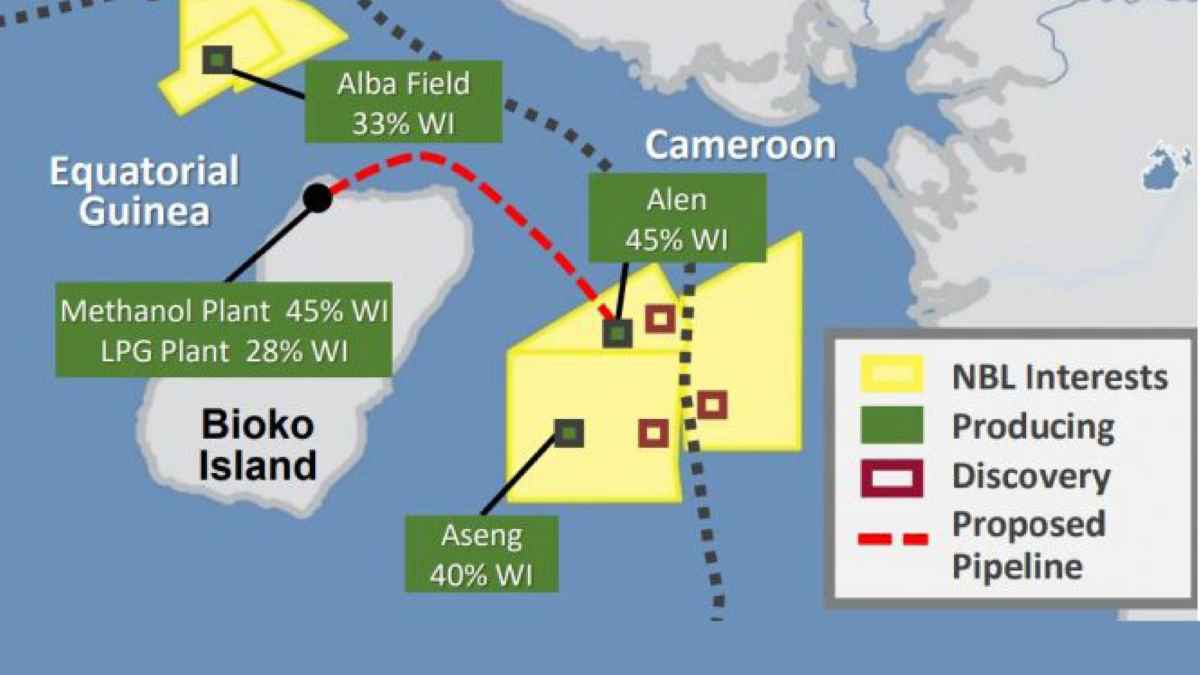
For Equatorial Guinea, the problem is this: If the country hopes to realize its gas potential (the country has more than 1.5 trillion cubic feet, or tcf, of proven natural gas reserves), it needs more feedstock for its Gas Mega Hub (GMH) at Punta Europa on Bioko Island. For more than a decade after the liquefied natural gas (LNG) plant there was commissioned in 2007, the facility depended solely on supplies from the Alba field. Product was acquired under a purchase and sales contract now nearing the end of its 17-year term.

With the Alba in decline, though, operations were in jeopardy.  That was until American energy producer Marathon Oil Corp. — the facility’s majority stakeholder — began an expansion project that diversified supply. The first step was to tie in the Gulf of Guinea’s Alen field, which delivered first gas in 2021. The good news continued in 2023, when Marathon announced through its affiliate, Marathon EG Holding Ltd., that it had signed a heads of agreement (HOA) with Equatorial Guinea and Chevron’s Nobel Energy EG Ltd. to continue developing the GMH. (An HOA is a non-binding letter of intent between parties in a potential partnership.) The plan is to continue processing gas from Alba while also bringing gas onshore from the Aseng field.

During the announcement, Marathon executives said the HOA would increase the company’s exposure to global LNG pricing, which would improve both its earnings and cash flow in Equatorial Guinea. For the country, Marathon said, it would further position Punta Europa as a “world-class hub for the monetization of local and regional gas.”

Around the same time, Equatorial Guinea and Cameroon committed to jointly develop and monetize oil and gas projects on the border between the two countries, a historic moment in bilateral cooperation. The agreement was ratified by Equatorial Guinea upper and lower chambers recently.

If it feels like it should all be smooth sailing from here, you’re right: It should be. That’s not the reality, though. While the reinvestment in GMH is a bright spot, the fact is, those LNG plant expansions are years off, and there’s been no other progress in domestic production since 2021. New gas projects need to come in and it might make sense for the government to be pragmatic enough to incentivize new investment so the IOC’s can inject the capital needed. As for the deal between Equatorial Guinea and Cameroon, it looks great on paper, but there needs to be more movement on both Equatorial Guinea and Cameroon. One issue: Cameroon has been focusing on domestic priorities, as has Nigeria, which could supply gas to Equatorial Guinea if it didn’t need most of its production itself. Even the gas Nigeria is willing to move to the GMH has been sidetracked by delayed contract negotiations.

The Minister of Mines and Hydrocarbons, Antonio Oburu Ondo has kept the pace going and shown a lot of pragmatism and drive to get a lot moving on gas. I want to urge the oil and gas companies operating in the country to meet him halfway and close these deals that stand to benefit the people of the country. Equatorial Guinea has been good to the oil and gas industry and the energy sector has an opportunity to bring back the old blues again. Work needs to be done by both sides.

Our recent agreement with Cameroon will see the two countries jointly develop oil and gas projects along our maritime borders

In a recent interview with the African Energy Week, when asked about cross border and in country developments, the Minister stated “In addition to drilling works being undertaken to improve and maintain production levels at existing fields, the Ministry is making great strides towards accelerating exploration across the country’s offshore acreage. Our recent agreement with Cameroon will see the two countries jointly develop oil and gas projects along our maritime borders, including the Yoyo and Yolanda fields, the Etinde gas field and the Camen and Diega fields.

The country’s enabling environment for investment and strong record of successful offshore finds have also seen new E&P players join the market. Earlier this year we also signed three production sharing contracts with Panoro Energy and Africa Oil Corporation. These contracts are expected to further open up the upstream market. Additionally, we have several global energy majors and independents progressing with exploration and are optimistic about these campaigns. The only way to address production declines is to explore, drilling more wells and unlocking the potential of offshore basins.” Well said, we just have to push forward and make it a success.

The Etinde gas field offshore Cameroon best hope for monetisation was with Perenco. However the delays in approvals from Cameroon led them to change strategy with their investments. This could have been a massive opportunity to supply feedstock gas to the EG LNG plant. The regulatory regimes need to address cross border gas deals especially where the geology is complex.

For a while, it seemed like the proposed Golar floating LNG (FLNG) facility would solve many of the GMH’s supply problems, as well as overcoming the difficulties (and enormous expense) associated with pipeline transportation of offshore gas to onshore processing plants. A FLNG facility floats above an offshore gas field and is used to produce, liquefy, and store LNG before it is transferred by ship to onshore processing facilities.

Golar has a successful track record of operating innovative FLNG technology in Africa. In 2018, it completed Africa’s first FLNG, the Golar Hilli, offshore Cameroon. The facility, which produces about 1.4 million tons per year, was also the world’s first FLNG plant created from a converted LNG carrier.

With that background, it was hard to be anything but hopeful when Golar signed a memorandum of understanding (MOU) with Equatorial Guinea to develop a block estimated to hold 2.6 tcf of natural gas. Yet despite the enormous opportunity for the company and the country — especially considering Europe’s continuing quest to replace Russian gas since the conflict in Ukraine began more than a year ago — negotiations are at a standstill. We at the Chamber hope these negotiations can be revitalized or another party is brought into the country to carry on this project.

In this case, being unable to participate in an eager market is just part of the story. This is an economic issue to be sure, but it’s one that can be veiled by the politics of climate change. Here’s what I mean. When asset development is put off, it comes with a very real risk of the underlying gas being considered “stranded.” Climate activists will say the project will never go forward and will push for it to be abandoned. Gas that could be monetized will be lost to the energy transition.

No Shortcuts and Avoid Resource Nationalism

As I alluded to earlier — and as “The State of African Energy 2024 Report” suggests — there’s never been a shortcut to getting African hydrocarbon projects off the ground. I’m not saying that these enormous projects won’t by necessity take time. But national governments have been — and continue to be — a source of unwarranted delays, whether it’s by dragging their feet toward the negotiating table, changing the rules after awarding a project — which makes negotiations go on longer than they should — or making energy companies wait two years or more before sanctioning the exploration projects they propose. When your state revenues rely on oil and gas, why would you actively prevent things from advancing?

Yes, I’ve heard the arguments for resource nationalism. Yes, I know that this is “our” oil and gas. But thinking about this as an us versus them scenario isn’t helping anyone. Having resources isn’t enough; you need the financial ability to do something with those resources. This has been “our” oil and gas for centuries, but we couldn’t marshal the technologies and the financing to go out there and drill a $100 million deepwater well. Yes, of course we should benefit from full-on local content, full-on empowering our people and communities, full-on having the right kinds of profit-sharing, and royalties, and taxes, full-on empowering community, full-on having the right kind of share and full-on having the right kind of taxes. But until we have the ability (and financial wherewithal) to extract our oil and gas like Marathon, Chevron, Golar, and others do, why are we adding roadblocks instead of incentivizing production? Sometimes, I think our governments simply ignore the fact that investors are spending a lot of money to make these projects work and that their successes will be, eventually, our own.

Instead of delays, then, we need to give investors the confidence that we stand with them, and that we’re determined to make projects work. In all my work across Africa, I have always told Presidents and Ministers I have been privileged to earn their trust, that Africa needs pragmatic free market policies to attract capital into Gas markets. One of the reasons Equatorial Guinea was for so long the darling of energy investments was that the government was willing to find solutions. Now, in a more competitive environment, where Equatorial Guinea is jockeying for dollars with Gabon, Cameroon, Namibia, Suriname, and Guyana, the government should be doing everything it can to finalize negotiations and fast-track projects, not sitting back on its heels and waiting for — what? Social spending, among other things, depends on us moving energy projects forward.

Right now, there’s no way of knowing how long it will be before Equatorial Guinea’s GMH fulfills its destiny. But we do know this: Every day without progress means lost revenues.

Distributed by APO Group on behalf of African Energy Chamber.

Business

Sierra Leone Set to Showcase Offshore Ambitions with Petroleum Directorate of Sierra Leone (PDSL) Joining African Energy Week (AEW) 2026 as Strategic Partner

Published

on

African Energy Chamber

Sierra Leone is advancing offshore exploration, preparing a new licensing round and finalizing the formation of a new national oil company ahead of its Strategic Partnership with AEW 2026

CAPE TOWN, South Africa, March 26, 2026/APO Group/ –The Petroleum Directorate of Sierra Leone (PDSL) has joined African Energy Week (AEW) 2026 – scheduled to take place in Cape Town from October 12–16 – as a Strategic Partner. The Directorate will be positioned to leverage the event to highlight its open acreage, competitive fiscal framework and upstream integration plans to international investors, signaling Sierra Leone’s emergence as a frontier exploration hotspot in the MSGBC basin and across the wider Gulf of Guinea.


Italian energy major Eni and other international players have engaged in detailed geological studies across Sierra Leone’s offshore basin, underscoring rising confidence in the country’s hydrocarbon potential. Backed by enhanced 3D seismic reprocessing and basin-wide prospectivity studies, the PDSL is accelerating data-led de-risking efforts to unlock prospects such as Vega and attract fresh upstream capital.


A central focus for investors is the anticipated resumption of offshore drilling in 2026 – the country’s first campaign in nearly a decade. Following the conclusion of its fifth licensing round, which offered 56 offshore blocks, Sierra Leone is preparing to drill new wells targeting an estimated multi-billion-barrel resource base, supported by improved subsurface imaging and strengthened regulatory oversight.


PDSL’s participation at AEW 2026 reflects Sierra Leone’s serious commitment to unlocking its offshore potential through transparency, strong fiscal terms and data-driven de-risking

Sierra Leone is also in the final stages of establishing its first state-owned national oil company, which will hold a mandatory 10% carried interest in all exploration licenses. The government is targeting an overall 25–30% participation in projects, balancing national value capture with competitive terms for international operators.


Downstream integration is also gathering pace, with the 105–126 MW Nant gas-to-power plant in Freetown, developed by Anergi Group and TCQ Power, expected to nearly double national generation capacity when it comes online in 2027. In parallel, PDSL is spearheading plans for Sierra Leone’s first refinery to reduce reliance on roughly 15,000 barrels per day of imported refined products.


“PDSL’s participation at AEW 2026 reflects Sierra Leone’s serious commitment to unlocking its offshore potential through transparency, strong fiscal terms and data-driven de-risking,” said NJ Ayuk, Executive Chairman, African Energy Chamber, adding, “Their strategic vision aligns with Africa’s broader push for energy security, industrialization and investor partnership.”


With drilling set to resume, a national oil company nearing launch and integrated gas-to-power and refining projects advancing, Sierra Leone is entering a defining phase. At AEW 2026, PDSL is expected to present a clear message: the basin is open, the data is ready, and the opportunity is real.

Distributed by APO Group on behalf of African Energy Chamber.

Continue Reading

Business

Critical Mineral Projects to Watch Ahead of Invest in African Energy (IAE) 2026

Published

on

Energy Capital

The Uganda Chamber of Energy and Minerals, with both its CEO and governing council chairperson confirmed for Paris, will serve as the primary interface for investors seeking access to Uganda’s licensing framework and project pipeline

CAPE TOWN, South Africa, March 26, 2026/APO Group/ –Governments from West, Central and Southern Africa, with delegations confirmed for the Invest in African Energy (IAE) Forum in Paris next month, are each advancing critical mineral projects that span processing deals, development-stage assets and frontier exploration plays, giving investors a range of entry points across the minerals value chain.

Nigeria – Alumina Refinery & Lithium Processing

Nigeria struck a $1.3 billion deal with the Africa Finance Corporation in early March covering three components: construction of a one-million-ton-per-year alumina refinery, a national geoscience mapping program, and a joint investment vehicle to accelerate exploration and production across priority leases. Projected at 95% utilization over 20 years, the refinery is expected to add $1.2 billion to GDP annually and generate approximately $8 billion in foreign exchange earnings over its lifespan.

Separately, a $600 million lithium processing plant in Nasarawa State is at the commissioning stage, backed by ongoing mapping of lithium-bearing pegmatite belts across Kwara, Ekiti and Kaduna states. New mining licenses now require a local processing commitment covering at least 30% of output before export, a condition that directly shapes the investment structures available to foreign partners. Nigeria’s energy minister is among the confirmed delegations at IAE in Paris.

Zambia – Copperbelt Expansion & Cobalt Refinery


Copper output in Zambia is on course to clear one million tons in 2026, supported by First Quantum Minerals’ completed $1.25 billion S3 plant expansion at Kansanshi and Barrick Gold’s $2 billion program to double output at Lumwana by 2028. Several additional projects, including Sinomine’s Kitumba Mine and KoBold Metals’ Mingomba deposit, are also coming online this year, making Zambia one of the few places globally adding significant incremental copper supply in the near term.

Africa’s first cobalt sulfate refinery is targeting commissioning in Zambia in 2026, adding downstream processing capacity alongside the copper ramp-up. The Lobito Corridor, backed by a $553 million US Development Finance Corporation loan for Angola’s Benguela rail link, reduces export costs across the Copperbelt and improves project bankability for both mines and processing facilities seeking long-term offtake commitments.

Senegal – Falémé Integrated Iron Project

Senegal’s Falémé iron district in the Kédougou region holds over 600 million tons of probable reserves, including oxide ore at around 59% iron content and primary magnetite at roughly 45% Fe. The government launched the Falémé Integrated Iron Project as a phased program targeting 15 to 25 million tons per year at peak output, with national iron ore company MIFERSO conducting ongoing reserve verification.

The mineral export port at Bargny is operational and rail rehabilitation linking Kédougou to the coast is progressing under the Emerging Senegal Plan. The project is actively seeking a technical development partner. With port and rail infrastructure advancing independent of any single mining operator, Falémé carries lower logistics risk than comparable iron ore projects requiring greenfield corridor construction, which affects how financiers assess project bankability and timelines to first revenue.

Equatorial Guinea – Rio Muni Mineral Exploration

Equatorial Guinea’s Rio Muni mainland offers early-stage exposure to gold, bauxite, base metals, coltan and iron ore across largely underexplored onshore territory. The Ministry of Mines and Hydrocarbons has been opening the sector since its first public tender in 2019, with exploration contracts now in place and state geological mapping advancing in partnership with Rosgeo. Minister Antonio Oburu Ondo will address investors at IAE, with the minerals program expected to feature in bilateral meetings.

Uganda – Rare Earths & Minerals Sector Opening

Uganda holds rare earth deposits in ionic adsorption clay formations — a deposit type the IEA has flagged for low capital intensity relative to hard rock alternatives — alongside gold mineralization across greenstone belts in the West Nile, Karamoja and Mubende regions. The Uganda Chamber of Energy and Minerals, with both its CEO and governing council chairperson confirmed for Paris, will serve as the primary interface for investors seeking access to Uganda’s licensing framework and project pipeline, at the same time as the country’s Tilenga and Kingfisher oil developments move toward first oil.

Distributed by APO Group on behalf of Energy Capital & Power.

Continue Reading

Business

APO Group Takes Gold at 2026 SABRE Awards – Second Consecutive Win Across Different Clients and Sectors

Published

on

Recognition spans technology, global sport, and culture, reflecting APO Group’s cross-sector communications performance across Africa

JOHANNESBURG, South Africa, March 26, 2026/APO Group/ –APO Group (www.APO-opa.com), the pan-African communications consultancy integrating advisory, execution, and proprietary news distribution, has won gold in the Northern Africa category at the 2026 Africa SABRE Awards for its campaign, GITEX Africa Morocco 2025: A Media-Fuelled Journey for Tech Excellence.


Delivered for GITEX Africa, the campaign generated more than 3,600 media clippings across African and global outlets, positioning the event as the continent’s leading technology and startup platform, while reinforcing Morocco’s emerging status as a regional technology hub.

Being honoured at the SABRE Awards is particularly meaningful because it reflects the impact of communication designed specifically for how African markets work

APO Group was a finalist in two additional categories for campaigns delivered for international organisations operating across Africa:

  • The Africa Flag 2025 Tournament: Raising the Game in Cairo – National Football League (Media Relations category)
  • Broadcasting Greatness: Elevating African Hoops and Culture at BAL 2025 – Basketball Africa League (BAL) (Media, Arts & Entertainment category)

The SABRE Awards recognise excellence in branding, reputation management, and engagement across the global communications industry. This latest accolade adds to APO Group’s growing record at these prestigious awards, following its win in 2025 for a campaign delivered for Canon Central and North Africa, as well as multiple finalist placements for campaigns supporting leading institutions such as GITEX Africa, Africa’s Business Heroes, and the Global Africa Business Initiative.


“Being honoured at the SABRE Awards is particularly meaningful because it reflects the impact of communication designed specifically for how African markets work,” said Bas Wijne, Chief Executive Officer at APO Group. “Successful pan-African campaigns combine strategic planning and strong local execution, together with a clear understanding of how different markets, media environments, and audiences connect with a story. It’s about designing communications that deliver measurable outcomes and help organisations engage effectively and confidently across Africa’s diverse media landscape.”

In addition to its SABRE Awards success, APO Group has received multiple major industry honours over the past year, including Gold and Bronze at the Davos Communications Awards for excellence in strategic communications and campaign execution. The company was also named Africa’s Leading PR Agency – 2025 by Brands Review Magazine and Best Public Relations & Media Consultancy Agency of the Year – 2025 by World Business Outlook.Operating across 54 African countries, APO Group provides communications advisory services, public relations, and media distribution through its proprietary newswire, Africa Newsroom, which places content on more than 250 Africa-focused news platforms worldwide.

Distributed by APO Group on behalf of APO Group.

Continue Reading

Trending