Connect with us
Anglostratits

Business

Nigeria’s Upstream Reform Program Captures 40% of Africa’s Final Investment Decision (FID) Activity After a Decade on the Margins

Published

on

African Energy Chamber

A government three-year review documents how executive action under President Tinubu reversed a decade of upstream decline

JOHANNESBURG, South Africa, May 8, 2026/APO Group/ –Nigeria has gone from capturing 4% of Africa’s upstream final investment decisions (FIDs) to commanding 40% in two years, according to Nigeria’s Energy Sector Reforms 2023-2026: A Three-Year Review, published by the Office of the Special Adviser to the President on Energy and spearheaded by Special Adviser Olu Verheijen. The $50 billion project pipeline now in development beyond 2026 points to sustained capital commitment at a scale not seen in the Nigerian upstream for at least a decade.


Between 2014 and 2023, Nigeria was among the continent’s weakest performers for upstream FIDs despite holding 37.5 billion barrels of proven oil reserves, the second-largest endowment in Africa. Algeria captured 44% of African upstream FIDs during that period, Angola held 26%, while Nigeria trailed Mozambique, Ghana, Senegal and Namibia. In the third quarter of 2022, crude production briefly dropped below one million barrels per day, as years of underinvestment, pipeline vandalism and regulatory ambiguity compounded each other. However, reforms instituted by Nigeria’s President Bola Tinubu have dramatically turned this trend around. Through deliberate and coordinated steps, the government has reset the trajectory.

Addressing Fiscal Terms, Regulatory Scope and Contracting Speed

President Bola Tinubu’s administration moved simultaneously on fiscal terms and regulatory architecture. Policy directives in 2023 clarified the boundary of jurisdiction between the Nigerian Upstream Petroleum Regulatory Commission (NUPRC) and the Nigerian Midstream and Downstream Petroleum Regulatory Authority (NMDPRA), resolving an ambiguity that had complicated project sanctioning. Presidential Directive 40 introduced targeted tax incentives, and a separate Notice of Tax Incentives for Deep Offshore Production in 2024 was designed to draw international oil companies (IOCs) back into capital-intensive, long-cycle deepwater projects. The VAT Modification Order 2024 and Upstream Cost Efficiency Order 2025 addressed the cost structures that had rendered marginal projects uneconomic. NNPCL contracting timelines were compressed from 36 months to a maximum of six months.

Four Divestments Transferred Onshore Control to Indigenous Operators

In parallel, the administration deployed targeted security directives and accelerated ministerial consents for four IOC asset transfers. Renaissance acquired Shell’s onshore portfolio. Seplat Energy completed its acquisition of ExxonMobil’s Nigerian upstream interests. Oando took over from Agip, and Chappal acquired Equinor’s local assets. The four transactions totaled approximately $4 billion. The transfer of onshore and shallow-water blocks to indigenous operators contributed directly to production recovery. Output rose by approximately 400,000 barrels per day between 2023 and 2025 to reach 1.6 million barrels per day, the highest onshore production level in 20 years.

When a government rebuilds fiscal competitiveness and regulatory predictability at the same time, capital responds

Signed Projects Total $10 Billion, With a $50 Billion Pipeline Beyond

The reforms produced a concrete FID response from Shell and TotalEnergies. Shell Nigeria Exploration and Production Company (SNEPCo) sanctioned the $5 billion Bonga North deepwater development in December 2024 and committed a further $2 billion to the HI Non-Associated Gas (NAG) project. TotalEnergies and NNPCL took a joint FID on the $550 million Ubeta gas field development in June 2024.

Together those three commitments account for more than $10 billion in signed investment after a decade of near-zero sanctioning activity. The pipeline beyond 2026 spans a further $50 billion across 11 projects including Bonga South West, Owowo, Usan and Erha. Nigeria approved 28 field development plans valued at $18.2 billion in 2025 alone, targeting an estimated 1.4 billion barrels of reserves.

“When a government rebuilds fiscal competitiveness and regulatory predictability at the same time, capital responds,” said NJ Ayuk, Executive Chairman of the African Energy Chamber. “Nigeria has done both, and the FID numbers are concrete proof.”

The Counterfactual Illustrates How Much Was at Stake

The presentation includes a no-reform projection that puts the gains in context. Without intervention, total crude and condensate production was on track to fall from 1.371 million barrels of oil equivalent per day in 2022 to 579,000 by 2030. Under the reform trajectory, output reached 1.77 million barrels of oil equivalent per day in 2026, with a stated government target of 3 million barrels per day. Export gas utilization rose 39% over the same period, while domestic utilization grew by 7%.

The durability of these gains will be tested by two factors: whether the institutional architecture put in place under the Tinubu administration holds over the long term, and whether the deepwater commitments signed in 2024 and 2025 advance to execution on schedule. The project pipeline is large enough that partial delivery would still represent a generational shift in Nigeria’s upstream output profile.

 

Distributed by APO Group on behalf of African Energy Chamber.

Business

SLB commissions new fluids systems plant in Pemba to support Mozambique’s offshore energy development

Published

on

Mozambique

New facility expands in-country drilling and completion fluids capability, advancing the next phase of SLB’s growth in Mozambique

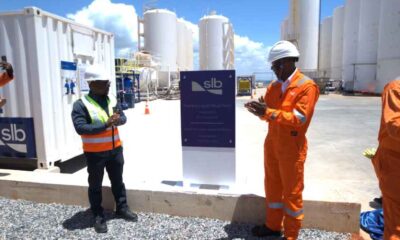
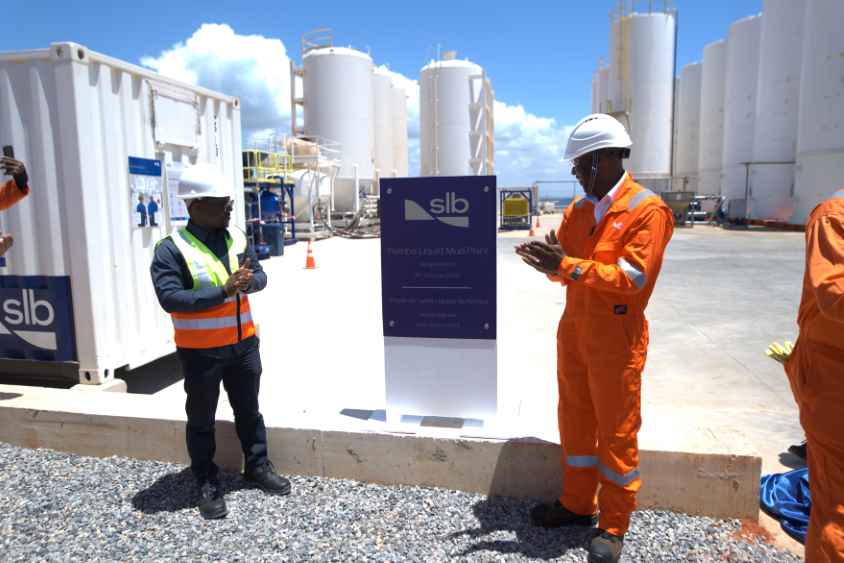
PEMBA, Mozambique, October 9, 2026/APO Group/ –SLB (NYSE: SLB) (www.SLB.com) announced the opening of a new fluids systems plant in Pemba, Mozambique. The new facility strengthens in-country capacity to prepare, store and deliver drilling and completion fluids for offshore operations, reinforcing the infrastructure needed as Mozambique’s offshore activity grows and its role as a strategic energy hub for East Africa continues to expand.

The commissioning of the plant, also known as a liquid mud plant, coincides with SLB marking 70 years of operations in Mozambique. It reflects the company’s long-term commitment to investing in people, infrastructure and capability that support the country’s long-term offshore energy development plans.


With an initial storage capacity of 21,000 barrels, the liquid mud plant provides a scalable platform for future growth, supporting multiple customers and rising offshore activity while improving logistics and enhancing operational flexibility.

As SLB marks 70 years in Mozambique, this investment reflects our confidence in the country’s future and our commitment to supporting its energy ambitions

“As SLB marks 70 years in Mozambique, this investment reflects our confidence in the country’s future and our commitment to supporting its energy ambitions,” said Miguel Baptista, Central, East and Southern Africa, Managing Director, SLB. The new liquid mud plant strengthens local energy infrastructure, expands opportunities for local content development, and enhances our ability to support customers as they deliver some of Africa’s most significant offshore energy resources.”

The liquid mud plant project was delivered with strong local participation and that momentum is expected to continue into operations. During project delivery, more than 100 jobs were created in Pemba with nationals representing 80% of the workforce, reflecting a focus on building local capability.

The project was delivered with a strong focus on safety, operational integrity, and quality, achieving more than 67,000 hours worked without a recordable safety incident.

This key infrastructure strengthens SLB’s ability to support consistent service quality and enhance supply chain readiness for increasing offshore activity across Mozambique, supporting customers execute safely and efficiently while developing local skills and expertise.

Key Points:

  • SLB has commissioned a new fluids system plant in Pemba, expanding in-country drilling and completion fluids capability for offshore operations.
  • With an initial storage capacity of 21,000 barrels, the facility provides a scalable platform to support growing offshore activity in Mozambique.
  • The investment marks the next phase of SLB’s growth in Mozambique, strengthening local capability and supporting long-term offshore energy development.

Distributed by APO Group on behalf of SLB.


Continue Reading

Business

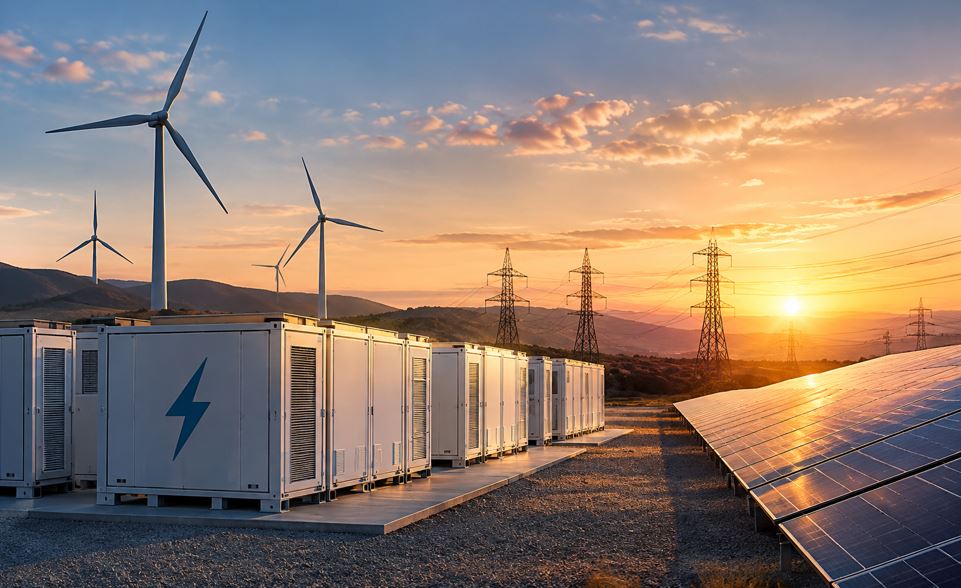
South African Energy Storage Association (SAESA) welcomes 4,600 MW battery storage prioritisation and calls for integrated energy planning

Published

on

Battery energy storage systems (BESS) are becoming critical system infrastructure, supporting flexibility, reducing avoidable curtailment, shifting energy into periods of demand and strengthening security of supply

JOHANNESBURG, South Africa, October 9, 2026/APO Group/ –The South African Energy Storage Association (SAESA) (www.SAESA.org.za) welcomes the prioritisation of 4,600 MW of battery energy storage under the first Integrated Resource Plan (IRP) 2025 Section 34 determination.


The timing is significant. Recent Integrated Energy Plan (IEP) modelling and assumptions discussions highlighted a fundamental shift that South Africa’s energy planning now needs to capture: we cannot plan the future power system by counting megawatts of generation alone.

We must plan for when energy is available, where it is available, how it moves through a constrained grid and how it is stored and dispatched when the system needs it most.

The announcement reinforces that shift. Battery energy storage systems (BESS) are becoming critical system infrastructure, supporting flexibility, reducing avoidable curtailment, shifting energy into periods of demand and strengthening security of supply.

For SAESA, the message for the IEP is clear: storage, flexibility and system services must be modelled as integral components of South Africa’s future electricity architecture, with their contribution considered from the outset of generation planning.

“The IEP must plan the power system we are becoming, not simply model the power system we have inherited,” says SAESA.

The IEP must plan the power system we are becoming, not simply model the power system we have inherited

Partnership with C&I Energy + Storage Summit

SAESA is an association partner of the C&I Energy + Storage Summit, created by VUKA Group, taking place on 28–29 October 2026 at The Maslow Hotel, Sandton, Johannesburg.

The summit brings together commercial and industrial energy users, project developers, financiers, regulators and solution providers to explore practical approaches to energy security, procurement and storage deployment.

For businesses assessing how storage can support their operations, the event offers an opportunity to meet SAESA and engage with the wider energy community on the decisions shaping South Africa’s evolving electricity system.

Commercial and industrial energy decision-makers are invited to apply to attend as hosted buyers. Qualifying buyers receive complimentary summit access and curated opportunities to engage with industry partners.


Meet SAESA at C&I Energy + Storage Summit: Join the Hosted Buyer Programme

The Hosted Buyer Programme connects commercial and industrial energy decision-makers with solution providers shaping South Africa’s evolving private energy market.

Qualified energy buyers receive complimentary access to the summit and curated engagement with industry partners exploring energy procurement, storage deployment and project development.

Apply for the Hosted Buyer Programme (https://apo-opa.co/4ehLijJ)

Distributed by APO Group on behalf of VUKA Group.


Continue Reading

Business

Afreximbank welcomes launch of Africa Credit Rating Agency as an important step in strengthening Africa’s financial architecture

Published

on

Expanding credible rating coverage can improve the information available to investors and support the development of deeper domestic and regional capital markets

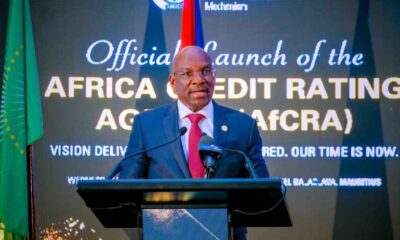
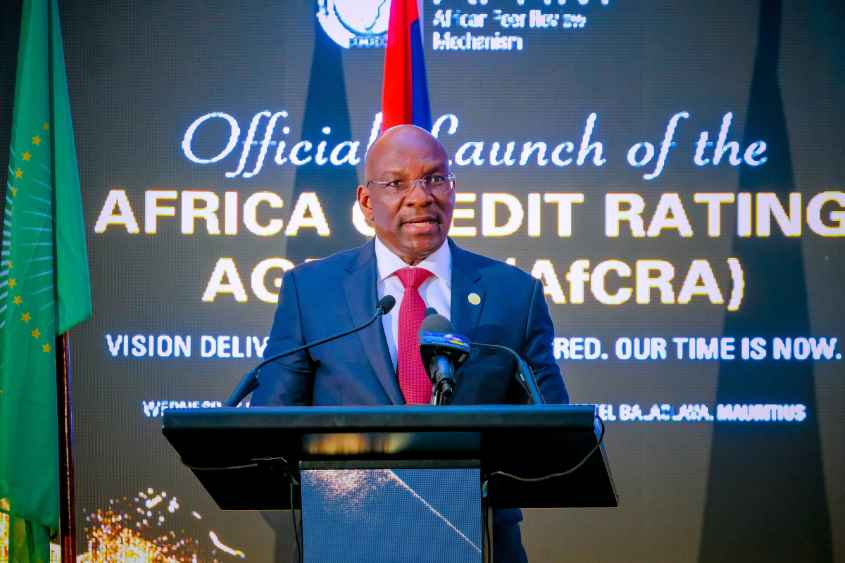
PORT LOUIS, Mauritius, October 8, 2026/APO Group/ –African Export-Import Bank (Afreximbank) (www.Afreximbank.com) welcomes today’s launch of the Africa Credit Rating Agency (AfCRA), an important milestone in strengthening Africa’s financial architecture and expanding the continent’s capacity to generate credible, independent analysis of African credit risk.


Credit ratings play an important role in determining access to capital, influencing investor perceptions and shaping the cost at which governments, institutions and businesses can finance development. It is therefore essential that assessments of African credit risk are independent, rigorous and evidence-based, while reflecting a complete understanding of the structures, institutions and economic realities being assessed.

The establishment of AfCRA adds an important African-led source of credit opinion to the market. Its value will not be measured by whether it produces more favourable ratings, but by the credibility of its analysis, the quality of its data and transparency of its methodology, and its ability to deepen understanding of African sovereigns, sub-sovereigns and corporate credit.

This is particularly important given that many African issuers remain unrated, while local-currency and sub-sovereign markets continue to have limited rating coverage. Expanding credible rating coverage can improve the information available to investors and support the development of deeper domestic and regional capital markets.

AfCRA must set a new benchmark for the continent, maintain its independence, and remain wholly owned and controlled by Africans

Alongside fellow members of the Alliance of African Multilateral Financial Institutions (AAMFI), Afreximbank has consistently maintained that African Multilateral Financial Institutions should be assessed on the basis of their fundamentals, performance, legal frameworks, mandates and operating models. Ensuring that these institutional characteristics are properly understood is essential to achieving informed, balanced and credible assessments of African risk.

Commenting on the uniqueness of the African market, and need for AfCRA’s rating methodology to reflect this, Mr Denys Denya, Senior Executive Vice President, Afreximbank, said: “The rating methodology AfCRA develops must recognise the uniqueness of our environment and its institutional structures. The Agency must set its own standards and not follow those set elsewhere — it must build a unique identity that conforms to an ‘African best practice.”

Highlighting the need for the autonomy of the Africa Credit Rating agency as it takes off, Mr Denya added: “Most importantly, AfCRA must set a new benchmark for the continent, maintain its independence, and remain wholly owned and controlled by Africans. We must all use it, and in return expect a complete assessment of where we (Africa) stand: the strengths the market has ignored, and the weaknesses we still need to fix.”

AfCRA should therefore be seen as complementary to existing international and regional rating agencies, broadening the range of credible analysis available to investors and issuers while strengthening competition, transparency and analytical capacity within Africa’s credit markets.

As Africa seeks to mobilise the scale of capital required for industrialisation, trade, infrastructure and economic transformation, credible African institutions that improve information, strengthen market confidence and deepen the continent’s financial markets will become increasingly important.

Afreximbank congratulates the African Union, the African Peer Review Mechanism (APRM) and all those involved in bringing AfCRA from concept to launch, and looks forward to the contribution the Agency will make to deeper, more transparent and more efficient African capital markets.

Distributed by APO Group on behalf of Afreximbank.


Continue Reading

Trending