Connect with us
Anglostratits

Tech

Trusted voices, peer validation, and relatable customer situations drive commercial and brand success in B2B campaigns

Published

on

WARC LinkedIn
  • Buyability gives marketers a seven-signal framework to turn creative attention into buyer confidence and business growth
  • The 3Rs that make B2B brands more buyable: Recommendations, Relationships and Relatability
  • Buyability is underused: Most B2B campaigns are deploying fewer than two Buyability principles today
  • High Buyability campaigns are 63% more likely to report increased ROI and 2.1x as likely to report increased incremental revenue

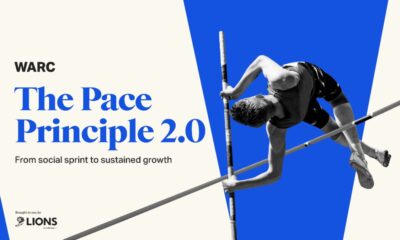
New WARC X LinkedIn X LIONS Advisory research: How to build more Buyable brands: How Recommendations, Relatability and Relationships drive campaign success

15 September 2026 – B2B buying has changed. Cycles now stretch 272 days with 22 stakeholders, and decisions are driven by social and emotional factors. Additionally, AI is changing how B2B buyers discover, research, and validate brands, with research finding that 94% of B2B buyers used LLMs during their buying journey in 2025.


New research from WARC, LinkedIn, and LIONS Advisory reveals that the most effective B2B creative does more than build awareness, it strategically builds decision defensibility. An analysis of more than 700 best-in-class B2B campaigns found that the strongest performers consistently helped buyers feel more confident choosing a brand.

The research leverages LinkedIn and Bain & Company’s existing body of work on Buyability, showing how creative influences purchase decisions. It identifies seven Buyability signals including trusted recommendations, peer validation and relatable customer situations or the 3Rs — Recommendations, Relatability, and Relationships. The findings provide marketers with a practical playbook for creating campaigns that drive both brand impact and business outcomes.

The 3Rs of Buyability: Recommendations, Relationships and Relatability

In B2B buying, first-hand experience and trusted recommendations drive vendor selection far more than performance or price, and ‘similar customer’ messaging outperforms ‘market leader’ claims.

The three main levers of Buyability (the 3Rs) that consistently increase buyer group confidence, drive commercial impact and should be a CMO’s top priority are:

Recommendations: The proof and validation from customers, peers, experts or trusted voices.
Relationships: Signals of wanting long-term partnership, existing familiarity.
Relatability: Real customer situations, use of cases and experiences that buyers can recognise.

Brands that can credibly demonstrate peer validation, customer relevance and risk reduction are more likely to appear in LLM shortlists and more likely to be deemed highly buyable by B2B purchasing organisations.

Imaad Ahmed, Thought Leadership Director, LIONS Advisory and WARC, says: “The Buyability model has gained strong support from across the B2B industry. This new work seeks to demonstrate the impact Buyability has in real case scenarios, and what proof points exist. The objective of our research was to measure how frequently Buyability signals appear in B2B campaigns, and whether more signals drive better results. As we discovered, the intentional use of Buyability signals is still an area of opportunity for B2B marketers. When well-stacked within a campaign, Buyability signals can make revenue, ROI and brand health uplifts far more likely.”

Mimi Turner, Head of Marketplace Innovation, LinkedIn, says: “Buyability gives us a seven signal framework that marketers can use to strategically enhance campaign outcomes because it is built on insights into what helps buying groups feel confident to buy. The campaigns that win are the ones that make buying decisions easy to defend by focusing on areas that customers can relate to and experiences and voices they can trust.”

Introducing the seven signal Buyability framework – a new roadmap for B2B marketers

The Buyability framework outlines seven signals for future campaigns that are mapped back to one of the 3Rs, and that make brands discoverable in AI models, are credible across diverse stakeholders, and defensible as the no-risk option. This all helps marketers build buyer confidence strategically.

It is no longer sufficient for B2B marketing to increase awareness and consideration. It needs to prove that it directly generates sales. Brands are recommended to strategically and intentionally build more Buyability signals into their communication programmes.

Messaging that leverages the 3Rs increases brand discoverability, grows brand credibility and helps buyers justify and feel confident in their decisions.

Key findings from the research are:

1. Buyability signals are underused: Buyability signals remain significantly under-leveraged in B2B campaigns, averaging just 1.6 overall. Nearly one-third (30%) of campaigns use only a single signal, while 22% use none at all. Less than a quarter of all campaigns deploy three or more signals. This gap presents a clear opportunity for B2B marketers to gain competitive advantage by adopting Buyability as a strategic framework.

2. Buyability signals drive brand performance: Campaigns with stronger Buyability signals are significantly more likely to improve meaningful brand metrics. High Buyability campaigns are 24% more likely to report improvements in brand awareness and 91% more likely to report improvements in mid-funnel brand metrics like consideration, preference and purchase intent.

3. Buyability signals drive commercial impact: Campaigns with more Buyability signals are more likely to generate ROI and incremental revenue. Compared to Low Buyability campaigns, High Buyability campaigns are 63% more likely to report increased ROI and 110% more likely to report increased incremental revenue to the business.

‘‘How to build more Buyable brands: How Recommendations, Relatability and Relationships drive campaign success’’ report is available to read in full here.

Methodology of the research

The research analysed 700 B2B campaigns from the WARC database from 2010 to 2025 – including entries and winners of the Cannes Lions B2B category, Effies and WARC Effectiveness awards – and across geographies and sectors. The dataset was independently ranked against the WARC, LIONS and B2B Institute B2B Effectiveness Ladder, and scored on Buyability signals. High Buyability campaigns (3-7 signals) were compared against Low Buyability (0-2 signals).


Events

Hyperscalers Convergence Africa 2026 sets action agenda for Africa’s Digital Infrastructure Buildout

Published

on

International Telecoms Week

Africa Hyperscalers extends the HCA conversation to International Telecoms Week Africa, advancing regional discussions on enabling regulation, connectivity and data-centre investment

Africa’s digital future depends on the infrastructure choices we make today

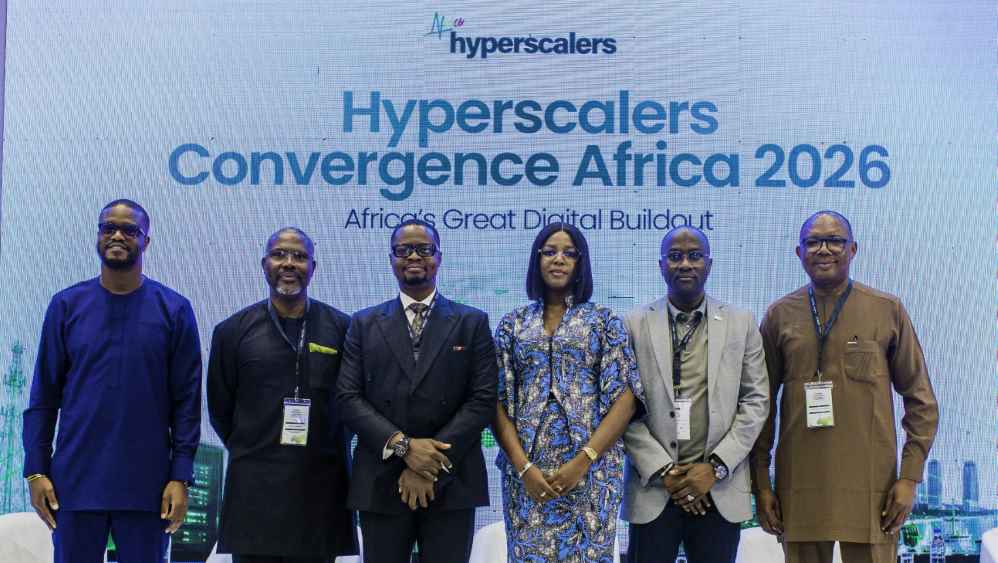
LAGOS, Nigeria, September 14, 2026/APO Group/ –African digital infrastructure convener, Hyperscalers Convergence Africa (HCA) (https://ConvergenceAfrica.Hyperscalers) 2026 concluded with a clear action agenda for accelerating Africa’s digital infrastructure development. The conference also honoured twelve pioneers whose work helped shape the continent’s digital economy and recognised 100 women leading innovation across telecommunications, cloud, data centres, policy, finance and technology.


Held under the theme “Africa’s Great Digital Buildout (https://apo-opa.co/4hqmkAL),” the third edition brought together policymakers, regulators, investors, development finance institutions, technology companies, infrastructure operators and enterprise leaders from across the continent.

Participants included Dr Talkmore Chidede of the African Continental Free Trade Area Secretariat, representing Secretary-General Wamkele Mene; Sulaiman Cisse of Africa Finance Corporation; Opuiyo Oforiokuma of the Africa50 Infrastructure Acceleration Fund; Amine Idriss Adoum of AUDA-NEPAD; Wole Abu of Equinix; Kanwulia Okafor of GSMA; Lars Johannisson of Rack Centre; Alma Nurshaikhova of the World Bank; Bill Kleyman of Data Center World and Apolo.us; Snehar Shah of IXAfrica Data Centres; Atinuke Runsewe of Bayobab/MTN; Dr Ayotunde Coker of Open Access Data Centres; and Nonye Ujam of Microsoft.

Across five panel sessions and two keynotes, speakers examined how data centres, cloud, fibre, power and artificial intelligence can support Africa’s digital transformation and economic growth.

From isolated projects to connected systems

A central conclusion was that Africa must move beyond isolated infrastructure projects towards coordinated, cross-border digital systems. While new data centres, subsea cables, cloud platforms and fibre networks are expanding capacity, their economic impact will remain limited without reliable power, harmonised regulation, affordable connectivity and stronger links to enterprise demand.

The conference identified seven priorities:

  • Create incentives for internet service providers to peer across borders, reducing the cost and complexity of routing African traffic.
  • Align regulatory processes, fiscal models, technical standards and tariffs across markets. Alignment does not require identical national laws, but it should make cross-border investment and operations more predictable.
  • Fund early-stage project preparation and coordination to help viable infrastructure projects become investment-ready.
  • Connect pension funds, insurers, sovereign wealth funds, development finance institutions and infrastructure developers to mobilise more African institutional capital.
  • Extend subsea capacity inland through terrestrial and metropolitan fibre, open interconnection and resilient cross-border routes.
  • Support local cloud and artificial intelligence workloads by investing in computing capacity, power, data centres, skills and responsible data governance.
  • Ensure infrastructure reaches micro, small and medium-sized enterprises through affordable broadband, cloud services, reliable power and accessible digital devices.

Participants also highlighted major projects that could support wider regional transformation, including Nigeria’s proposed 90,000-kilometre fibre backbone under the BRIDGE initiative, cross-border peering incentives and the development of an Oracle cloud region in Nigeria.

HCA will consolidate the conference findings into an Africa Digital Infrastructure Delivery Agenda 2026, covering regulation, capital, power, connectivity, data centres, cloud, artificial intelligence, cybersecurity and regional integration.

Recognising Africa’s digital pioneers

The inaugural HCA Digital Infrastructure Pioneers Awards (https://apo-opa.co/4xm7Neg) honoured twelve individuals whose work helped establish the foundations of Africa’s digital economy: Andile Ngcaba, Funke Opeke, Strive Masiyiwa, Alan Knott-Craig Sr, Chris Wood, Sam Darwish, Ernest Ndukwe, Michuki Mwangi, President Olusegun Obasanjo, the late Khaled Bichara Brian Herlihy and Mohamed Nasr.

The recognition celebrated contributions ranging from telecommunications reform and private-sector investment to fibre deployment, internet exchange development, undersea cable systems and the expansion of affordable connectivity.

Celebrating 100 women shaping Africa’s digital future

HCA 2026 also released an inclusion report and recognised 100 women making significant contributions across the continent’s digital ecosystem (https://apo-opa.co/4xrS39I). The initiative was created to address the persistent visibility gap surrounding women leading telecommunications companies, infrastructure projects, technology businesses, regulatory institutions and investment platforms.

Honourees from East Africa included Judy Nguru of Google, Rayana Choudhary of Wingu Africa, Frehiwot Tamiru of Ethio Telecom, Fawzia Ali-Kimanthi of Safaricom, Catherine Muraga of Microsoft Africa Development Centre, Rwanda’s Minister of ICT and Innovation Paula Ingabire, and Angela Wamola of GSMA.

North African honourees included Lobna Helal of Telecom Egypt, Doha Ammour of N+ONE Datacenters and Adeela Mahmood of Raxio Group. Pan-African and global leaders recognised included Vibhuti Jain of the U.S. International Development Finance Corporation, Nene Maiga of Orange Botswana, Beauty Apleni of Openserve, Yolanda Cuba of MTN South Africa and Nonkqubela Jordan-Dyani of South Africa’s Department of Communications and Digital Technologies.

West Africa accounted for 44 per cent of the list. Honourees included Nikki Popoola of WIOCC Group, Patricia Obo-Nai of Telecel Ghana, Dr Judith Yah Sunday of CAMTEL, Josephine Awatefe Sarouk of Bayobab Nigeria, Funke Opeke of MainOne, Adaora Ikenze of Meta, Thelma Quaye of Smart Africa, Jana Kunicová of the World Bank, Ayaan Adam of Africa Finance Corporation, Mavis A. Ampah of Ghana’s National Communications Authority, Togo’s Minister Cina Lawson, Rimini Haraya Makama of the Nigerian Communications Commission and Aisha Mumuni of MTN Nigeria.

In his opening keynote, Temitope Osunrinde, Executive Director of Africa Hyperscalers, said “Africa’s digital future depends on the infrastructure choices we make today. Delivering reliable power, resilient connectivity, secure data centres and affordable computing will require governments, investors and industry to work together. Bilateral agreements are valuable, but multilateral alignment on policy, regulation and investment is essential to build interconnected infrastructure at the scale Africa requires.”

Hyperscalers Convergence Africa 2026 was delivered with the support of IHS Towers, Open Access Data Centres, the National Information Technology Development Agency, Rehiko, Vertiv, Rack Centre, Equinix, Nokia, smartcomply, The Littlesteps Group, Internet Exchange Point of Nigeria, Xalam Analytics and Nina Jojer as knowledge partner.


Evening Cocktail reception for Development Partners

Africa Hyperscalers also hosted leaders from Africa’s business and enterprise community at an evening cocktail reception welcoming Brandon Hudspeth, the new U.S. Consul General in Lagos; Amine Idriss Adoum, Director of Infrastructure, Energy, Industrialisation, Trade and Regional Integration at the African Union Development Agency–New Partnership for Africa’s Development (AUDA-NEPAD); and Dr Talkmore Chidede, Senior Digital Trade Expert at the African Continental Free Trade Area (AfCFTA) Secretariat.

Extending the Hyperscalers Convergence Africa Conversation at International Telecoms Week Africa

Africa Hyperscalers extended the digital infrastructure conversation to International Telecoms Week Africa in Nairobi, where Temitope Osunrinde, Director, Africa Hyperscalers, chaired two sessions. The first, “Regulation That Builds: Aligning Policy and Digital Infrastructure Investment Priorities,” examined how regulatory frameworks can enable digital infrastructure investment across Africa. Speakers included Dr Vincent Olatunji, National Commissioner and Chief Executive Officer, Nigeria Data Protection Commission; Kashifu Inuwa Abdullahi, Director-General and Chief Executive Officer, National Information Technology Development Agency; Tony Emoekpere, President, Association of Telecommunications Companies of Nigeria; Mercy Ndegwa, Public Policy Director, East and the Horn of Africa, Meta; and Engr. Dennis Chepkwony, Director, Universal Service Fund, Communications Authority of Kenya.

The second session, “Nigeria’s Digital Infrastructure Opportunity,” showcased the connectivity and data-centre opportunities in one of Africa’s fastest-growing digital markets. Discussions covered Project BRIDGE and new regulatory guidelines designed to stimulate local demand for data centre, cloud and computing capacity. Speakers included chief host and lead presenter Kashifu Inuwa Abdullahi, Director-General and Chief Executive Officer, National Information Technology Development Agency; Jay Katatumba, Senior Investment Director, Africa50 Infrastructure Acceleration Fund; Lanre Kolade, Chief Executive Officer, Koltronics Nigeria, and Adviser, Project BRIDGE; Gbenga Adegbiji, Chief Executive Officer, Geniserve, and Technical Adviser, Project BRIDGE; Niraj Shah, General Manager, Data Centre Programme, Bayobab Africa; Ike Nnamani, Chief Executive Officer, Digital Realty Nigeria; Wole Abu, Managing Director, West Africa, Equinix; and Cherotich Kiereini, Senior Infrastructure Strategy Adviser, Oracle.

Distributed by APO Group on behalf of Africa Hyperscalers.


Continue Reading

Tech

IPEC Successfully Holds NPO Standards Industry Summit, Aiming to Build a Robust International Standards Ecosystem

Published

on

International Standards Ecosystem

Key Messages:
The NPO Standards Industry Summit brought together global standards and industry giants, who reached a consensus on international NPO standards, laying a solid foundation for the industry upgrade and large-scale commercial use of NPO.
Multiple vendors from countries like China, the US, and Japan held a joint exhibition of connectors, NPO modules, and switches, strengthening industry confidence in building an open and prosperous NPO ecosystem.


PARIS, FRANCE – Media OutReach Newswire – 10 September 2026 – On September 10, the NPO Standards Industry Summit, co-hosted by IPEC and OIF, was held at the Shenzhen World Exhibition & Convention Center. The event was attended by top players from across the global industry chain, including experts from OIF, CAICT, Tencent, Alibaba Cloud, Baidu, Huawei, Broadcom, SENKO, Amphenol, and Yamaichi. The summit focused on NPO evolution and international standards development, with in-depth discussions being held on topics like ecosystem upgrade and industry chain collaboration. Ultimately, a consensus on international NPO standards was reached at the summit, laying a solid foundation for the industry upgrade and large-scale commercial use of NPO.

Dr. Zhao Wenyu, Vice Chairman of IPEC and Deputy Director of the Technology and Standards Research Institute of China Academy of Information and Communications Technology (CAICT), emphasized: “As SuperPoDs continue to expand in scale, traditional optical modules are consuming huge amounts of energy, and co-packaged optics (CPO) faces constraints like a closed industry chain and complex operations and maintenance. In contrast, near-packaged optics (NPO) – with its excellent energy efficiency, a favorable trade-off in port density, and strong compatibility with existing pluggable ecosystems – is expected to become the preferred solution for SuperPoD interconnect in the near term, and coexist and evolve alongside CPO and other solutions in the long term. We call upon stakeholders across industry, academia, research institutions, and user groups, to join hands in developing NPO standards and driving the NPO ecosystem to evolve from ‘usable’ to ‘easy-to-use at scale'”.

Jiang Zhibin, the Optical Network Architect at Tencent, highlighted: “As SuperPoDs expand in scale and GPUs and switch chips increase their SerDes data rates, optical interconnect solutions will advance more rapidly towards 6.4T NPO.” Looking ahead, there is an urgent need to use opto-electronic collaborative design to overcome the challenges introduced by advanced packaging processes.

Dr. Man Jiangwei, Director of the Advanced Opto-Electronics Laboratory at Huawei, stated: “In exploring the optimal interconnect solution – NPO – for SuperPoDs, Huawei has launched the industry’s first high-bandwidth 7.2T NPO product and successfully conducted a demonstration of dynamic transmission at the IPEC exhibition booth. Furthermore, with the introduction of key technologies like built-in light sources and highly-integrated SiPh chips, this NPO product features ‘high bandwidth, high reliability, and high availability’ while achieving ‘low latency, low power consumption, and low cost’.”

Meanwhile, at the China International Optoelectronic Exposition (CIOE), the IPEC booth showcased the latest achievements of the global NPO industry chain, particularly those from the US, Japan, and China. The display showcased high-density connector solutions from leading vendors in the US and Japan, as well as the NPO modules of various capacities developed by multiple Chinese vendors, alongside several NPO switches, demonstrating a high level of commercial maturity.

The success of this summit and exposition marks a milestone for the development of the global NPO industry. At the summit, a consensus was reached on international NPO standards and the paths for collaboration between standards organizations and the industry chain were streamlined, laying a solid foundation for the large-scale commercial use of NPO. Furthermore, the joint exhibition of industry ecosystem products has strengthened industry confidence in building an open and prosperous NPO ecosystem.


Continue Reading

Tech

Closing Digital Literacy Gap Could Unlock Trillions of Dollars in Global GDP Growth

Published

on

GSMA

New report, authored by GSMA Intelligence in partnership with Huawei, released at UNESCO’s Digital Learning Week
Digital literacy – not coverage – is the main barrier keeping 3.1 billion people offline.
AI could potentially widen the digital literacy gap.
Bridging the usage gap could boost global GDP by $3.5 trillion from 2023 to 2030.
Citing Huawei’s Skills on Wheels initiative, the report urges policymakers, telcos, and tech vendors to treat AI literacy as critical infrastructure.
PARIS, FRANCE – Media OutReach Newswire – 10 September 2026 – More than one in three (38%) people remains offline despite being covered by mobile broadband – and a lack of digital literacy skills is often to blame, according to new research published today.


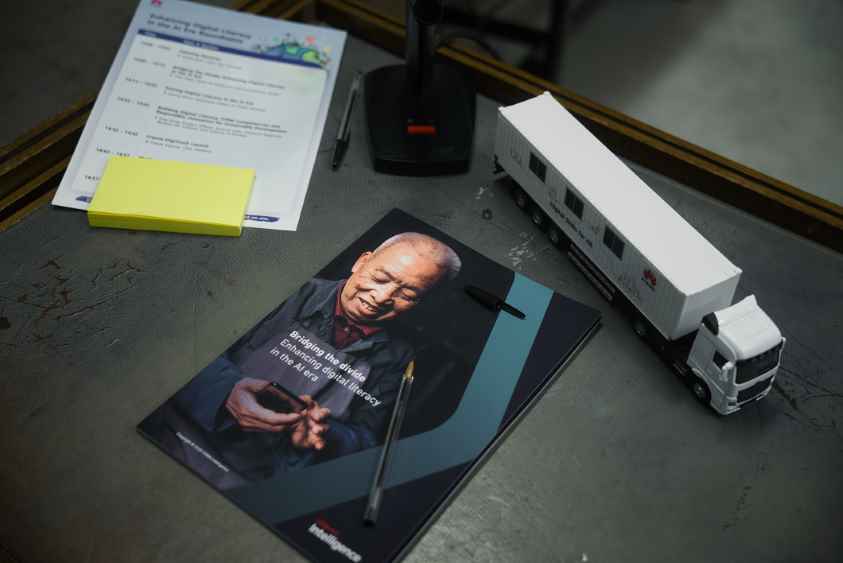
The new report, “Bridging the Divide: Enhancing Digital Literacy in the AI Era,” authored by GSMA Intelligence and produced in collaboration with Huawei, identifies a digital divide impacting 3.1 billion people caused by a shortage of digital skills, user trust and AI literacy.

AI raises both access and risk

Existing industry projections suggest closing the capability gap could add around $3.5 trillion to global GDP by 2030, with more than 90% of those gains flowing to low- and middle-income countries (LMICs). Physical mobile broadband coverage currently reaches 96% of people worldwide.

The report, unveiled at UNESCO’s Digital Learning Week, suggests artificial intelligence could act as both a bridge and a barrier for underserved communities. AI-powered voice assistants and applications that work with images, audio and video can all help low-literacy users bypass the need to input text. At the same time, they raise the security and critical-thinking standards required to participate safely. However, the study warns that users must now be able to understand data privacy and identify risks such as fraud and deepfakes.

The research cites World Bank statistics that GenAI literacy represents the highest-value skill category, with wage premiums up to 36%, far exceeding returns for both digital and traditional AI skills.

Without targeted interventions in basic digital training, the authors warn, rapid AI adoption risks entrenching existing inequalities even in areas with full network coverage.

Mobile classrooms build skills in remote areas

Digital inclusion initiatives typically target those most at risk of digital exclusion, including rural and remote communities, children and teachers in rural schools, older people, and women and girls.

The report emphasizes the need for community-based delivery models, citing Huawei’s Skills on Wheels initiative as a field-tested example — particularly its solar-powered DigiTruck mobile classrooms, which bring hardware, rural connectivity and hands-on training, including AI literacy, to off-grid regions.

Since 2019, training courses delivered by Skills on Wheels projects have reached more than 130,000 people across 21 countries, with more people benefiting indirectly. DigiTruck trainers encourage trainees to share their new skills, which is shown to occur in practice. A report on DigiTruck by Kenya’s Ministry of Information, Communications and Digital Economy shows that 79% of DigiTruck trainees surveyed had passed on their newly acquired digital skills to family members and peers.

Policymakers urged to treat AI literacy as core infrastructure

To bridge the usage gap, the report urges policymakers, telecom operators and technology vendors to work together and focus on four priorities:
Treating practical AI awareness, online safety and information verification as a baseline national qualification.
Adopting multilingual voice and conversational interfaces across public services to minimise user-side technical hurdles.
Scaling up mobile learning units through cross-sector partnerships that combine operator connectivity, vendor technology and local NGO networks.
Measuring performance by independent task completion and fraud resilience rather than trainee numbers.
“Digital literacy can no longer be defined by static thresholds,” said Tim Hatt, head of research and consultancy at GSMA Intelligence. “Connectivity alone is insufficient — capabilities, system design and trust must evolve together. To capture this multi-trillion-dollar opportunity, stakeholders must integrate layered AI literacy directly into daily livelihoods through trusted community channels.”

“Mobile classrooms have demonstrated immense value in helping underserved populations break through physical and psychological barriers to technology,” said Gavin Allen, Executive Editor-in-Chief at Huawei. “We will continue working alongside local governments and industry partners to drive digital literacy, ensuring that no one is left behind as we transition into the AI economy.”

A new DigiTruck program will launch in France this autumn, covering several cities in the Île-de-France region and targeting low-income and underserved communities with digital skills training.

The full report is available on the GSMA Intelligence research portal:
https://www.gsmaintelligence.com/research/bridging-the-divide-enhancing-digital-literacy-in-the-ai-era

FAQ

Q1: What is the main purpose of this report?
A: The report analyzes the critical importance of enhancing digital skills in the AI era, highlighting digital literacy as a layered and evolving capability. It calls on all stakeholders to collaborate in accelerating global digital inclusion and skill development.

Q2: What does it mean for policymakers to treat “AI literacy as core infrastructure”?
A: It means shifting policy focus from just building physical base stations to funding human capabilities. The report urges governments to integrate baseline AI awareness, online security, and media verification into national qualification frameworks, treating digital skills as an essential public utility alongside electricity and broadband.


Continue Reading

Trending