Connect with us
Anglostratits

Events

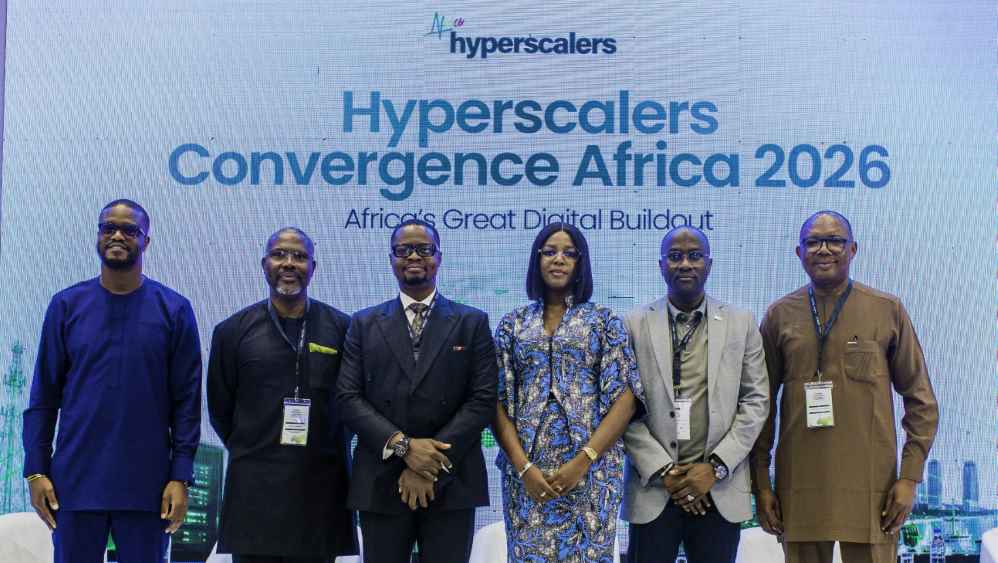
Hyperscalers Convergence Africa 2026 sets action agenda for Africa’s Digital Infrastructure Buildout

Published

on

International Telecoms Week

Africa Hyperscalers extends the HCA conversation to International Telecoms Week Africa, advancing regional discussions on enabling regulation, connectivity and data-centre investment

Africa’s digital future depends on the infrastructure choices we make today

LAGOS, Nigeria, September 14, 2026/APO Group/ –African digital infrastructure convener, Hyperscalers Convergence Africa (HCA) (https://ConvergenceAfrica.Hyperscalers) 2026 concluded with a clear action agenda for accelerating Africa’s digital infrastructure development. The conference also honoured twelve pioneers whose work helped shape the continent’s digital economy and recognised 100 women leading innovation across telecommunications, cloud, data centres, policy, finance and technology.


Held under the theme “Africa’s Great Digital Buildout (https://apo-opa.co/4hqmkAL),” the third edition brought together policymakers, regulators, investors, development finance institutions, technology companies, infrastructure operators and enterprise leaders from across the continent.

Participants included Dr Talkmore Chidede of the African Continental Free Trade Area Secretariat, representing Secretary-General Wamkele Mene; Sulaiman Cisse of Africa Finance Corporation; Opuiyo Oforiokuma of the Africa50 Infrastructure Acceleration Fund; Amine Idriss Adoum of AUDA-NEPAD; Wole Abu of Equinix; Kanwulia Okafor of GSMA; Lars Johannisson of Rack Centre; Alma Nurshaikhova of the World Bank; Bill Kleyman of Data Center World and Apolo.us; Snehar Shah of IXAfrica Data Centres; Atinuke Runsewe of Bayobab/MTN; Dr Ayotunde Coker of Open Access Data Centres; and Nonye Ujam of Microsoft.

Across five panel sessions and two keynotes, speakers examined how data centres, cloud, fibre, power and artificial intelligence can support Africa’s digital transformation and economic growth.

From isolated projects to connected systems

A central conclusion was that Africa must move beyond isolated infrastructure projects towards coordinated, cross-border digital systems. While new data centres, subsea cables, cloud platforms and fibre networks are expanding capacity, their economic impact will remain limited without reliable power, harmonised regulation, affordable connectivity and stronger links to enterprise demand.

The conference identified seven priorities:

  • Create incentives for internet service providers to peer across borders, reducing the cost and complexity of routing African traffic.
  • Align regulatory processes, fiscal models, technical standards and tariffs across markets. Alignment does not require identical national laws, but it should make cross-border investment and operations more predictable.
  • Fund early-stage project preparation and coordination to help viable infrastructure projects become investment-ready.
  • Connect pension funds, insurers, sovereign wealth funds, development finance institutions and infrastructure developers to mobilise more African institutional capital.
  • Extend subsea capacity inland through terrestrial and metropolitan fibre, open interconnection and resilient cross-border routes.
  • Support local cloud and artificial intelligence workloads by investing in computing capacity, power, data centres, skills and responsible data governance.
  • Ensure infrastructure reaches micro, small and medium-sized enterprises through affordable broadband, cloud services, reliable power and accessible digital devices.

Participants also highlighted major projects that could support wider regional transformation, including Nigeria’s proposed 90,000-kilometre fibre backbone under the BRIDGE initiative, cross-border peering incentives and the development of an Oracle cloud region in Nigeria.

HCA will consolidate the conference findings into an Africa Digital Infrastructure Delivery Agenda 2026, covering regulation, capital, power, connectivity, data centres, cloud, artificial intelligence, cybersecurity and regional integration.

Recognising Africa’s digital pioneers

The inaugural HCA Digital Infrastructure Pioneers Awards (https://apo-opa.co/4xm7Neg) honoured twelve individuals whose work helped establish the foundations of Africa’s digital economy: Andile Ngcaba, Funke Opeke, Strive Masiyiwa, Alan Knott-Craig Sr, Chris Wood, Sam Darwish, Ernest Ndukwe, Michuki Mwangi, President Olusegun Obasanjo, the late Khaled Bichara Brian Herlihy and Mohamed Nasr.

The recognition celebrated contributions ranging from telecommunications reform and private-sector investment to fibre deployment, internet exchange development, undersea cable systems and the expansion of affordable connectivity.

Celebrating 100 women shaping Africa’s digital future

HCA 2026 also released an inclusion report and recognised 100 women making significant contributions across the continent’s digital ecosystem (https://apo-opa.co/4xrS39I). The initiative was created to address the persistent visibility gap surrounding women leading telecommunications companies, infrastructure projects, technology businesses, regulatory institutions and investment platforms.

Honourees from East Africa included Judy Nguru of Google, Rayana Choudhary of Wingu Africa, Frehiwot Tamiru of Ethio Telecom, Fawzia Ali-Kimanthi of Safaricom, Catherine Muraga of Microsoft Africa Development Centre, Rwanda’s Minister of ICT and Innovation Paula Ingabire, and Angela Wamola of GSMA.

North African honourees included Lobna Helal of Telecom Egypt, Doha Ammour of N+ONE Datacenters and Adeela Mahmood of Raxio Group. Pan-African and global leaders recognised included Vibhuti Jain of the U.S. International Development Finance Corporation, Nene Maiga of Orange Botswana, Beauty Apleni of Openserve, Yolanda Cuba of MTN South Africa and Nonkqubela Jordan-Dyani of South Africa’s Department of Communications and Digital Technologies.

West Africa accounted for 44 per cent of the list. Honourees included Nikki Popoola of WIOCC Group, Patricia Obo-Nai of Telecel Ghana, Dr Judith Yah Sunday of CAMTEL, Josephine Awatefe Sarouk of Bayobab Nigeria, Funke Opeke of MainOne, Adaora Ikenze of Meta, Thelma Quaye of Smart Africa, Jana Kunicová of the World Bank, Ayaan Adam of Africa Finance Corporation, Mavis A. Ampah of Ghana’s National Communications Authority, Togo’s Minister Cina Lawson, Rimini Haraya Makama of the Nigerian Communications Commission and Aisha Mumuni of MTN Nigeria.

In his opening keynote, Temitope Osunrinde, Executive Director of Africa Hyperscalers, said “Africa’s digital future depends on the infrastructure choices we make today. Delivering reliable power, resilient connectivity, secure data centres and affordable computing will require governments, investors and industry to work together. Bilateral agreements are valuable, but multilateral alignment on policy, regulation and investment is essential to build interconnected infrastructure at the scale Africa requires.”

Hyperscalers Convergence Africa 2026 was delivered with the support of IHS Towers, Open Access Data Centres, the National Information Technology Development Agency, Rehiko, Vertiv, Rack Centre, Equinix, Nokia, smartcomply, The Littlesteps Group, Internet Exchange Point of Nigeria, Xalam Analytics and Nina Jojer as knowledge partner.


Evening Cocktail reception for Development Partners

Africa Hyperscalers also hosted leaders from Africa’s business and enterprise community at an evening cocktail reception welcoming Brandon Hudspeth, the new U.S. Consul General in Lagos; Amine Idriss Adoum, Director of Infrastructure, Energy, Industrialisation, Trade and Regional Integration at the African Union Development Agency–New Partnership for Africa’s Development (AUDA-NEPAD); and Dr Talkmore Chidede, Senior Digital Trade Expert at the African Continental Free Trade Area (AfCFTA) Secretariat.

Extending the Hyperscalers Convergence Africa Conversation at International Telecoms Week Africa

Africa Hyperscalers extended the digital infrastructure conversation to International Telecoms Week Africa in Nairobi, where Temitope Osunrinde, Director, Africa Hyperscalers, chaired two sessions. The first, “Regulation That Builds: Aligning Policy and Digital Infrastructure Investment Priorities,” examined how regulatory frameworks can enable digital infrastructure investment across Africa. Speakers included Dr Vincent Olatunji, National Commissioner and Chief Executive Officer, Nigeria Data Protection Commission; Kashifu Inuwa Abdullahi, Director-General and Chief Executive Officer, National Information Technology Development Agency; Tony Emoekpere, President, Association of Telecommunications Companies of Nigeria; Mercy Ndegwa, Public Policy Director, East and the Horn of Africa, Meta; and Engr. Dennis Chepkwony, Director, Universal Service Fund, Communications Authority of Kenya.

The second session, “Nigeria’s Digital Infrastructure Opportunity,” showcased the connectivity and data-centre opportunities in one of Africa’s fastest-growing digital markets. Discussions covered Project BRIDGE and new regulatory guidelines designed to stimulate local demand for data centre, cloud and computing capacity. Speakers included chief host and lead presenter Kashifu Inuwa Abdullahi, Director-General and Chief Executive Officer, National Information Technology Development Agency; Jay Katatumba, Senior Investment Director, Africa50 Infrastructure Acceleration Fund; Lanre Kolade, Chief Executive Officer, Koltronics Nigeria, and Adviser, Project BRIDGE; Gbenga Adegbiji, Chief Executive Officer, Geniserve, and Technical Adviser, Project BRIDGE; Niraj Shah, General Manager, Data Centre Programme, Bayobab Africa; Ike Nnamani, Chief Executive Officer, Digital Realty Nigeria; Wole Abu, Managing Director, West Africa, Equinix; and Cherotich Kiereini, Senior Infrastructure Strategy Adviser, Oracle.

Distributed by APO Group on behalf of Africa Hyperscalers.


Energy

Siemens Energy Government Affairs Lead Joins MSGBC 2026 as Gas-to-Power Investment Reshapes Basin

Published

on

MSGBC 2026

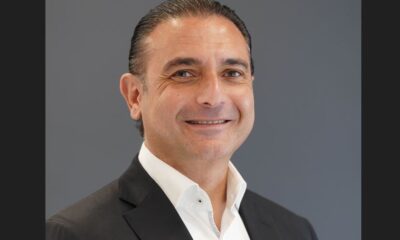
Nthato Minyuku, Head: Africa Government Affairs, Market Development & Growth at Siemens Energy, will bring the company’s gas and power expertise to MSGBC Oil, Gas & Power 2026

DAKAR, Senegal, September 14, 2026/APO Group/ –As the MSGBC region moves from major offshore gas discoveries toward large-scale power generation, Siemens Energy is bringing its gas and power expertise to MSGBC Oil, Gas & Power 2026, with Nthato Minyuku, Head: Africa Government Affairs, Market Development & Growth, joining the speaker lineup. The company is also participating as an Associate Sponsor, positioning it at the intersection of the region’s emerging gas-to-power and industrial growth opportunities.


The timing comes as demand for gas turbines is surging globally. Siemens Energy sold 194 gas turbines in fiscal year 2025, nearly double the 100 sold a year earlier, while its Gas Services business recorded a 42.9% increase in comparable order intake. The company has continued to report record demand in 2026, driven in part by rising electricity consumption and the rapid expansion of data centers.

That global demand has a clear parallel in West Africa, where governments are increasingly looking to domestic natural gas to address power shortages, strengthen grid reliability and support industrial development. Siemens Energy has also expanded its African offering through a partnership with Jubaili Bros to provide small gas turbines and distributed power solutions, initially targeting Nigeria and other markets where decentralized generation can support industrial and off-grid customers.

For the MSGBC countries, the opportunity is becoming increasingly tangible. Mauritania signed agreements in July for the development of the 230 MW N’Diago combined-cycle gas turbine project, the country’s first large-scale gas-fired independent power project. The plant is designed to use domestic natural gas resources to provide baseload electricity to the national grid, strengthening reliability while supporting rising power demand and industrial growth.

Senegal is pursuing a similar strategy as it works to convert existing thermal generation capacity to domestic gas, creating a pathway for the country to capture more value from its offshore resources. Together, these developments point to a broader shift across the basin: gas is increasingly being positioned not only as an export commodity, but as a feedstock for domestic electricity generation and industrialization.

That shift creates a significant market for the infrastructure required to turn gas molecules into reliable power. Gas turbines, grid infrastructure, engineering services and long-term operations and maintenance will all be critical as countries move from upstream development into integrated energy systems.

Minyuku brings more than two decades of experience spanning public policy, government affairs and energy-sector regulation. Before joining Siemens Energy, she served as Group Executive for Government Relations and Regulatory Affairs at South African power utility Eskom, giving her a perspective that spans both the policy environment and the operational realities of large-scale power systems.

Her participation at MSGBC 2026 will come as governments, operators, financiers and technology providers assess how the region can build the infrastructure needed to monetize its growing gas resources. With major offshore projects advancing in Mauritania and Senegal, the next challenge is increasingly clear: connecting upstream gas production with reliable domestic power and the industrial demand that can turn new energy resources into broader economic growth.

MSGBC Oil, Gas & Power 2026 takes place December 1–3 in Dakar, Senegal, with the pre-conference day on December 1 and the main conference and exhibition running December 2–3. Visit MSGBCOilgasandpower.com for more information.


Distributed by APO Group on behalf of Energy Capital & Power.


Continue Reading

Energy

One Month to Go: African Energy Week (AEW) 2026 Gears Up for Five Days of Deals, Dialogue and Energy Leadership

Published

on

With five conference stages, dedicated technical platforms, investor forums, country spotlights and more than 9,000 delegates expected, AEW 2026 will transform Cape Town into the center of African energy from October 12-16

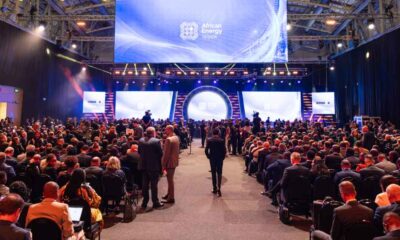
JOHANNESBURG, South Africa, September 14, 2026/APO Group/ –The African Energy Week (AEW) (https://AECWeek.com) 2026 Conference and Exhibition, Africa’s largest energy gathering taking place October 12-16, is preparing to bring the full spectrum of Africa’s energy industry to Cape Town. With just one month to go, the platform is gearing up to unlock a new wave of billion-dollar deals and energy partnerships, with over 400+ high-level speakers, 9,000+ delegates, five conference stages, targeted dealmaking and roundtable discussions positioning African energy at the forefront of international investment.


Five Stages, One African Energy Agenda

AEW 2026 covers the entire energy sector and its value chain, with panel discussions, technical workshops, presentations and fireside chats taking place across five strategic conference stages. Key platforms include the Upstream E&P Forum; Energy Finance Forum; Energy Additions Forum; AEW Townhall; and Downstream and Petrochemicals Forum, all of which offer unique insight into the projects reshaping Africa’s energy sector and the companies making it happen.

Country spotlights will put market opportunities directly before global capital, while dedicated roundtables will further examine local content, US-Africa energy investment, OPEC-Africa cooperation and NOC-IOC partnerships. The Drill Room will bring geology, exploration and subsurface intelligence into focus, while the Innovation Hub will examine the technologies reshaping the competitiveness of Africa’s energy industry.

Power, AI and the Industries of Tomorrow

Two dedicated conferences will expand the AEW conversation beyond conventional energy. Renegade Intel will explore the intersection of AI, natural gas, power generation, data centers, data sovereignty and infrastructure financing, connecting energy producers with technology companies, financiers and digital infrastructure developers.

Meanwhile, Power Africa Today will convene ministers, utilities, regulators, investors and developers for three days of discussions covering generation, grids, gas-to-power, renewables, nuclear energy, regional power trade, electrification and project finance. Under a mandate to make energy poverty history, Power Africa brings Africa’s biggest energy challenge – and opportunity – to a global audience.

Deals Take Center Stage

AEW 2026 is where Africa’s energy ambitions become transactions

AEW 2026 is designed not only to discuss investment, but to facilitate it. Sponsored by Premier Invest, the Deal Room will connect project sponsors, developers and promoters with investors and lenders, enabling active oil, gas, power and infrastructure opportunities to secure financing and strategic partners.

The African Farmout Forum – organized in partnership with Moyes & Co, Farmout Angel and Envoi Ltd – will provide another route to transactions. Featuring available blocks and acreage from across Africa, the forum will connect companies seeking partners with investors looking for upstream entry opportunities.

Beyond the Conference Floor: JET and Networking  

AEW 2026 is more than a conference; it is an energy movement centered on collaboration, connections and capital. The Just Energy Transition concert kickstarts the week by bringing delegates together to celebrate music, culture and arts, while a calendar of networking receptions, power lunches and side events will run throughout the week, creating additional opportunities to build partnerships.

Celebrate Excellence at the AEW Awards Ceremony  

On Tuesday, October 13, the AEW 2026 Gala Dinner & Awards will celebrate companies and individuals driving progress across the continent’s energy industry. Featuring 12 categories spanning the full energy value chain, the awards celebrate the achievements shaping the continent’s energy future.

Connect with Leading Brands at the AEW Exhibition

Complementing the conference is a major exhibition showcasing leading brands, technologies, services and projects from across the global energy industry. As one of AEW’s central business platforms, the exhibition gives companies direct access to thousands of decision-makers, investors, policymakers and potential partners, providing a high-visibility space to showcase capabilities, launch solutions, develop commercial relationships and pursue new business across African markets.

“AEW 2026 is where Africa’s energy ambitions become transactions. Over one week, we will unite governments with acreage, companies with projects, investors with capital and technology providers with solutions. Whether you are looking for a license, a farm-in partner, project finance, a power opportunity or your next market, Cape Town is where those conversations will happen,” states NJ Ayuk, Executive Chairman of the African Energy Chamber.

Visit https://AECWeek.com for more information.

Distributed by APO Group on behalf of African Energy Chamber.


Continue Reading

Energy

Naledi Mining Services Chief Executive Officer (CEO) Joins African Mining Week (AMW) 2026 Amid Technical, Operational Expansion

Published

on

Etu Energias

Bokang D. Thitoyamore is expected to highlight the company’s role in developing Botswana’s local mining talent amid a national drive to strengthen diversification

CAPE TOWN, South Africa, September 14, 2026/APO Group/ –Bokang D. Thitoyamore, CEO of Naledi Mining Services Company, has been confirmed as a speaker at the upcoming African Mining Week (AMW) 2026 conference, taking place from October 14-16 in Cape Town.

Thitoyamore will feature in the Strengthening Local Content in Africa’s Mining Supply Chain panel, exploring how mining companies can build strong partnerships with local businesses and integrate local content into operations. For Naledi Mining Services, AMW 2026 provides an ideal platform to highlight the company’s efforts to advance Botswana’s national agenda of expanding local participation, enhancing technical capacity and diversifying the economy beyond diamonds.


His participation comes as Botswana advances policy that aims to accelerate mining development and local content integration. Incoming Mines and Minerals Regulations are at the forefront of this effort, mandating robust local participation and in-country beneficiation. With exploration expanding across approximately 70% of the country’s unexplored territory, new mine developments will demand extensive engineering capacity, mine development expertise, equipment management and project delivery capabilities.

To meet this demand, Naledi Mining Services is scaling its training initiatives through the Naledi Mining Talent Bank, designed to equip Botswana’s next-generation of mining workers and entrepreneurs. The company is also positioning itself to export skilled labor regionally. In July 2026, Naledi signed a Memorandum of Understanding with Botswana’s Ministry of Labor and Home Affairs, facilitating skills transfer across the mining sector.

Beyond capacity building, Naledi is expanding its service capabilities as an EPC provider for large-scale mining operations across Southern Africa. A wholly owned subsidiary of Debswana Diamond Company, Naledi’s flagship asset is the Jwaneng Cut 9 Project – Botswana’s largest mining contract – spanning mine development, production, engineering, and equipment maintenance.

At AMW 2026, Thitoyamore is expected to share insights into how the company plans to expand both its operations and technical capabilities. Convening stakeholders from across the entire mining value chain, the event is held under the theme Mining the Future: Unearthing Africa’s Full Mineral Value.

Visit www.African-MiningWeek.com for more information.

Distributed by APO Group on behalf of Energy Capital & Power.


Continue Reading

Trending