Connect with us
Anglostratits

Business

Islamic Development Bank (IsDB) Group Day in Cameroon

Published

on

IsDB

The day concluded with a reaffirmation of the IsDB Group’s commitment to continued cooperation with the government of Cameroon and the country’s private sector to further build strategic partnerships

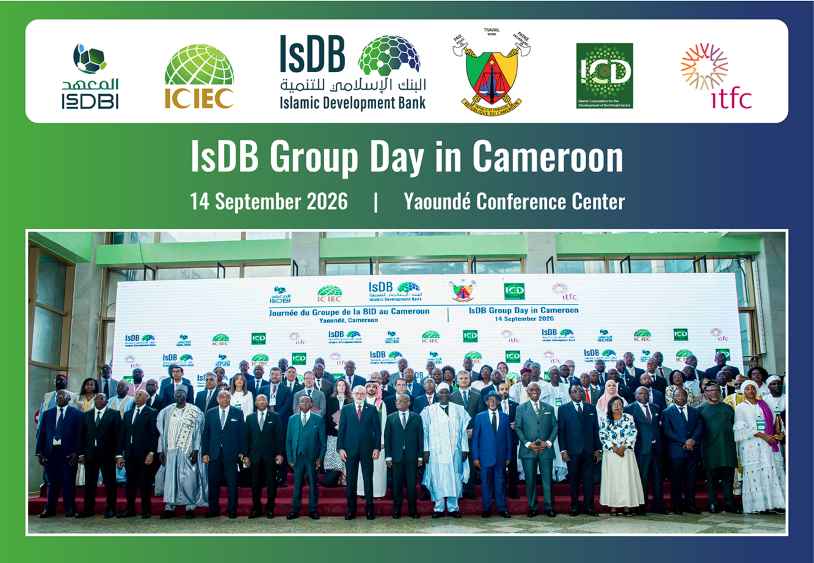
YAOUNDÉ, Cameroon, September 15, 2026/APO Group/ –The Islamic Development Bank (IsDB) (www.IsDB.org) Group successfully concluded the IsDB Group Day in Cameroon, bringing together senior government officials, private sector leaders, financial institutions, chambers of commerce, development partners, and international stakeholders to strengthen collaboration, promote investment, and enhance private sector-led growth in Cameroon.

The high-level event underscored Cameroon’s strategic importance as one of Africa’s promising economies and highlighted the critical role of private sector engagement in addressing key development challenges, including infrastructure gaps, youth and women unemployment, limited access to finance for small and medium-sized enterprises (SMEs), and the transition toward a more diversified and sustainable economy.


The IsDB Group Day in Cameroon served as a strategic platform to present the Group’s comprehensive range of services and solutions in investment, trade finance, insurance, Islamic finance, and capacity building, while facilitating dialogue among investors, entrepreneurs, and development partners, fostering meaningful engagement and the exploration of practical business and investment opportunities.

This event marks an important milestone in the longstanding and valuable partnership between the Republic of Cameroon and the Islamic Development Bank Group. Since Cameroon joined the Bank in 1977, a total amount of US$ 4.2 billion has been approved by the Bank Group for the benefit of the people in Cameroon.  Looking ahead, the IsDB Group is preparing to deliver more holistic and programmatic support to Cameroon through the Country Engagement Framework (CEF) for Cameroon 2027-2029, that will be developed at the crossroads between Cameroon’s National Development Strategy 2020-2030 (SND30) and IsDB Group newly launched 10-year Strategic Framework.

A panel discussion examined Cameroon’s development priorities and the role of IsDB Group in exploring avenues for cooperation and forging strategic partnerships to advance Cameroon’s path towards sustainable and inclusive development.

The discussions were closely aligned with Cameroon’s development vision of building a diversified, inclusive, and resilient economy driven by private sector-led growth. Key priorities included strengthening public-private partnerships, advancing renewable energy and green infrastructure, and investing in human capital to unlock opportunities for youth and women. Another panel explored how the private sector can contribute to achieving the goals of NDS30, while a dedicated session examined line of finance mechanisms from investment and trade perspectives, highlighting their role in improving SME access to finance and enhancing trade integration.

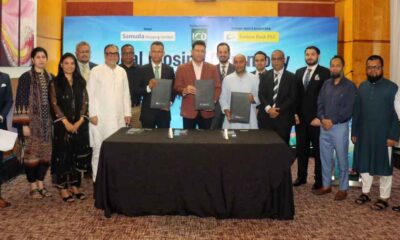
The signing ceremony witnessed the exchange of several financing agreements between IsDB and the Government of Cameroon as well as letters of intent between ICD and financial partners in Cameroon aimed at strengthening cooperation between the IsDB Group and Cameroon’s public and private sectors. The total value of the agreements reached EUR 137 million.

A series of bilateral (B2B and B2G) meetings were held among representatives of the IsDB Group, business leaders, investors, and financial institutions to explore opportunities for cooperation and partnerships. Success stories implemented in Cameroon in partnership with local entrepreneurs as well as local and international institutions were also presented. The IsDB Group Day in Cameroon attracted a strong and diverse turnout, bringing together more than 500 participants representing government institutions, private sector organizations, financial institutions, chambers of commerce, development partners, and other key stakeholders.

The event also highlighted the activities, services, and initiatives of IsDB Group institutions, including the Islamic Corporation for the Insurance of Investment and Export Credit (ICIEC), the Islamic Corporation for the Development of the Private Sector (ICD), the International Islamic Trade Finance Corporation (ITFC), the Islamic Development Bank Institute (IsDBi), the Islamic Development Bank Group Business Forum (THIQAH), and the Lives and Livelihoods Fund (LLF).

The day concluded with a reaffirmation of the IsDB Group’s commitment to continued cooperation with the government of Cameroon and the country’s private sector to further build strategic partnerships, expand investment and trade opportunities, and enhance the business environment, contributing to sustainable development in Cameroon.

Distributed by APO Group on behalf of Islamic Development Bank Group (IsDB Group).


Business

APO Group Launches New Brand as Africa’s Only Strategic Communications Consultancy with Owned Distribution

Published

on

Communication, Built for Performance: The new brand reflects a model combining strategic advisory, local execution across Africa, and owned media distribution in one business

JOHANNESBURG, South Africa, September 15, 2026/APO Group/ –APO Group (https://APO-opa.com), the communications consultancy built for performance across Africa, today launches its new brand and website centred on the proposition Communication, Built for Performance.

Traditionally, organisations communicating across Africa have managed their PR and communications market by market, often working with multiple agencies and suppliers. This adds cost and makes consistent messaging and measurement across markets almost impossible. APO Group is the only pan-African communications consultancy that combines strategic advisory with ownership of the network that distributes it, so counsel, execution, and visibility can be managed and measured as one system.


For clients, this means having a single communications partner across markets, rather than multiple partners to coordinate. It also means APO Group can be held to the results delivered, not simply the activity undertaken.

Bas Wijne, CEO of APO Group, says, “A company operating across 10 African markets has historically had to manage 10 separate agency relationships. That fragmentation persisted because no single consultancy had the reach to take responsibility across the continent. APO Group can. We operate across all 54 African markets, and because we own the distribution, our role does not end with the recommendation. We can take a communications strategy through to publication and see how it performs in the markets that matter.”

APO Group was built for a communications environment that is changing rapidly, shaped by AI, rising geopolitical and reputational risks, greater scrutiny of communications investment, and the need to respond faster. Across Africa, these demands are amplified by rapid growth and evolving regulatory and business environments. This requires communications that are strategically focused, locally relevant, and able to demonstrate impact across markets.   

We operate across all 54 African markets, and because we own the distribution, our role does not end with the recommendation

Communication, Built for Performance reflects how APO Group meets these demands by combining strategic communications expertise with long-standing experience across Africa’s communications and media landscape.

Libby Allen, Vice President: Brand & Creative at APO Group, adds, “APO Group has been part of Africa’s media landscape since 2007, not a supplier looking in from outside. The consultancy was built on that foundation. It’s what gives us the local understanding to advise on reputation in markets that are too often assumed rather than understood.”

Built for performance across Africa

Through Africa Newsroom (https://apo-opa.co/4rbe6zV), APO Group’s owned newswire, the company guarantees placement on more than 250 Africa-focused news websites, and reaches more than 450,000 journalists, analysts, investors, and policymakers. Coverage placed through the network sits on indexed news platforms, staying retrievable long after a campaign ends. It is the source material search engines and AI systems increasingly draw on when answering questions about a company or a market. Visibility bought once keeps working.

PR execution is local. APO Group has staff on the ground in 13 African markets and partners across all 54, so a strategy is delivered to the same standard in Lagos as in Casablanca, without a client coordinating separate agencies market by market.

Founded in 2007, APO Group works with more than 300 clients across finance, technology, healthcare, logistics, and the public sector, including multinational companies, African institutions, governments, NGOs, and development organisations.

The new website is live at https://APO-opa.com/ with APO Group’s refreshed brand identity now rolling out across its social media channels and Africa Newsroom (https://apo-opa.co/4rbe6zV). Follow APO Group on LinkedIn (https://apo-opa.co/3UQ5p1P) to see the new brand.

Distributed by APO Group on behalf of APO Group.


Continue Reading

Energy

Brazil’s Eneva Brings Gas-to-Power Expertise to Venezuela Energy Week 2027

Published

on

Etu Energias

Silver Sponsor Eneva is bringing its experience in integrated gas-to-power and off-grid energy solutions to Venezuela Energy Week 2027, adding a Brazilian perspective to discussions on developing the country’s gas resources and power infrastructure

CARACAS, Venezuela, September 15, 2026/APO Group/ –Brazilian energy company Eneva has joined Venezuela Energy Week 2027 as a Silver Sponsor, bringing experience in integrated gas-to-power and off-grid energy solutions to discussions around Venezuela’s vast natural gas resources.

The company’s participation comes as Venezuela considers how to develop its substantial natural gas resources and address persistent power-generation and infrastructure needs. Eneva has been exploring potential opportunities in the country, with CEO Lino Cançado saying in June 2026 that the company sees opportunities in gas-fired power generation as Venezuela undergoes regulatory and administrative changes. He also said the company was assessing opportunities across exploration and production, power generation and other areas, but that no concrete projects or partnerships had yet been established.


Eneva’s relevance to Venezuela lies in its experience integrating gas production with electricity generation. The company has developed the Reservoir-to-Wire model in Brazil, connecting natural gas production directly to thermal power generation and, where applicable, the electricity grid. The model is designed to reduce intermediate transportation requirements, improve supply reliability and monetize gas resources in areas where conventional infrastructure may be limited.


The Parnaíba Complex in Maranhão is one of the largest examples of this model, with 1.9 GW of installed gas-fired generation capacity in operation. Eneva produces gas from fields near the complex and uses it to supply the power plants, integrating upstream production and electricity generation within the same development.


Eneva has also applied integrated gas and power solutions in more remote markets. In Amazonas, its Azulão–Jaguatirica system combines gas production and treatment with liquefaction, road transportation, storage and regasification before the gas is used for power generation at the Jaguatirica II plant. Eneva describes the project as a Reservoir-to-Wire application designed to serve a region without conventional pipeline access.


This experience is relevant to Venezuela because gas development does not have to be limited to exports. Gas can also provide fuel for power generation serving upstream operations, industrial facilities and communities, particularly where transmission or pipeline infrastructure is constrained.


Venezuela has substantial natural gas resources alongside its oil reserves, but developing those resources will require investment in production, processing, transportation and power infrastructure. Integrated projects that link gas supply directly with electricity generation could offer one route to monetizing resources while addressing local energy needs.


Eneva has also developed small-scale LNG capabilities to supply customers outside traditional pipeline networks. Its Parnaíba facility began supplying LNG to off-grid industrial customers in 2024, providing another example of how gas can be commercialized where pipeline infrastructure is unavailable or uneconomic.


Eneva’s participation in Venezuela Energy Week 2027 comes at a time when the country is assessing multiple pathways for rebuilding its energy sector. The company brings a specific area of expertise to those discussions: connecting domestic gas resources with reliable power generation and new commercial markets.


Venezuela Energy Week 2027 will bring together governments, national oil companies, international operators, investors and service providers in Caracas to advance investment across the country’s energy value chain. As a Silver Sponsor, Eneva will contribute a Brazilian perspective on gas monetization, integrated power generation and energy solutions for markets where infrastructure gaps remain a major investment consideration.


Supporting Venezuela’s Earthquake Recovery


Our thoughts are with the people and communities affected by the recent earthquakes in Venezuela. As the country begins the long process of recovery, we encourage members of the global energy community to support relief and reconstruction efforts through the CAF Recovery and Reconstruction Fund for Venezuela, which channels contributions from individuals, companies and organizations to emergency assistance, essential services and long-term rebuilding efforts.


To learn more or make a contribution, please visit the CAF Recovery and Reconstruction Fund for Venezuela (https://apo-opa.co/3SHOUnW).

Distributed by APO Group on behalf of Energy Capital & Power.


Continue Reading

Energy

Siemens Energy Government Affairs Lead Joins MSGBC 2026 as Gas-to-Power Investment Reshapes Basin

Published

on

MSGBC 2026

Nthato Minyuku, Head: Africa Government Affairs, Market Development & Growth at Siemens Energy, will bring the company’s gas and power expertise to MSGBC Oil, Gas & Power 2026

DAKAR, Senegal, September 14, 2026/APO Group/ –As the MSGBC region moves from major offshore gas discoveries toward large-scale power generation, Siemens Energy is bringing its gas and power expertise to MSGBC Oil, Gas & Power 2026, with Nthato Minyuku, Head: Africa Government Affairs, Market Development & Growth, joining the speaker lineup. The company is also participating as an Associate Sponsor, positioning it at the intersection of the region’s emerging gas-to-power and industrial growth opportunities.


The timing comes as demand for gas turbines is surging globally. Siemens Energy sold 194 gas turbines in fiscal year 2025, nearly double the 100 sold a year earlier, while its Gas Services business recorded a 42.9% increase in comparable order intake. The company has continued to report record demand in 2026, driven in part by rising electricity consumption and the rapid expansion of data centers.

That global demand has a clear parallel in West Africa, where governments are increasingly looking to domestic natural gas to address power shortages, strengthen grid reliability and support industrial development. Siemens Energy has also expanded its African offering through a partnership with Jubaili Bros to provide small gas turbines and distributed power solutions, initially targeting Nigeria and other markets where decentralized generation can support industrial and off-grid customers.

For the MSGBC countries, the opportunity is becoming increasingly tangible. Mauritania signed agreements in July for the development of the 230 MW N’Diago combined-cycle gas turbine project, the country’s first large-scale gas-fired independent power project. The plant is designed to use domestic natural gas resources to provide baseload electricity to the national grid, strengthening reliability while supporting rising power demand and industrial growth.

Senegal is pursuing a similar strategy as it works to convert existing thermal generation capacity to domestic gas, creating a pathway for the country to capture more value from its offshore resources. Together, these developments point to a broader shift across the basin: gas is increasingly being positioned not only as an export commodity, but as a feedstock for domestic electricity generation and industrialization.

That shift creates a significant market for the infrastructure required to turn gas molecules into reliable power. Gas turbines, grid infrastructure, engineering services and long-term operations and maintenance will all be critical as countries move from upstream development into integrated energy systems.

Minyuku brings more than two decades of experience spanning public policy, government affairs and energy-sector regulation. Before joining Siemens Energy, she served as Group Executive for Government Relations and Regulatory Affairs at South African power utility Eskom, giving her a perspective that spans both the policy environment and the operational realities of large-scale power systems.

Her participation at MSGBC 2026 will come as governments, operators, financiers and technology providers assess how the region can build the infrastructure needed to monetize its growing gas resources. With major offshore projects advancing in Mauritania and Senegal, the next challenge is increasingly clear: connecting upstream gas production with reliable domestic power and the industrial demand that can turn new energy resources into broader economic growth.

MSGBC Oil, Gas & Power 2026 takes place December 1–3 in Dakar, Senegal, with the pre-conference day on December 1 and the main conference and exhibition running December 2–3. Visit MSGBCOilgasandpower.com for more information.


Distributed by APO Group on behalf of Energy Capital & Power.


Continue Reading

Trending