Connect with us
Anglostratits

Business

Nigeria’s Population Boom is Changing the Data Center Investment Story

Published

on

African Energy Chamber

Investors backing Nigeria’s fast-growing data center sector are betting not just on today’s demand, but on the emergence of one of the world’s largest digital economies over the next three decades

CAPE TOWN, South Africa, June 3, 2026/APO Group/ –Nigeria’s data center expansion is increasingly being framed as a technology story. But at its core, it is a demographics story. Africa’s largest economy is already home to more than 240 million people, and U.N. projections indicate the country could surpass 400 million by 2050, making it the world’s third most populous nation after India and China.


What makes that trajectory especially significant for investors is not just population size, but the age and digital profile of that population. Nigeria remains one of the youngest countries globally, with a median age of around 18, while internet penetration has surpassed 50%, creating a rapidly expanding base of mobile-first consumers entering the digital economy each year.


This dynamic is fundamentally reshaping the long-term case for digital infrastructure investment. Investors are positioning for what Nigeria could become over the next two decades: one of the world’s largest digital populations, with rising demand for cloud computing, AI-enabled services, fintech platforms, streaming content, enterprise software and sovereign data storage.

This shift is already shaping how the industry is thinking about digital infrastructure across the continent. At African Energy Week 2026 – the continent’s premier energy event – the introduction of an AI and Data Center track – Renegade Intel – reflects growing recognition that data infrastructure is becoming as critical as energy infrastructure to Africa’s economic future. In markets like Nigeria, where population growth is rapidly translating into digital demand, that intersection is now central to long-term investment planning.

Nigeria’s data center market, valued at roughly $288 million in 2025, is projected to surpass $1 billion by 2031, with operators rapidly expanding colocation and cloud capacity in Lagos and other urban hubs. Major players including Equinix, MTN, Rack Center and Open Access Data Centers are scaling infrastructure to capture what they see as long-term structural growth rather than a short-term market cycle.

In 2025, MTN announced a more than $240 million investment into a new Lagos data facility designed to support AI and cloud demand, underscoring how operators are preparing for far larger digital workloads in the years ahead. Recent reports suggest nearly $1 billion in broader data center investments flowing into Nigeria as companies race to expand cloud and AI infrastructure capacity.


Data centers are becoming critical infrastructure for Africa’s economic future, but none of this growth happens without energy

Much of that optimism rests on the belief that Nigeria’s digital consumption curve is still in its early stages. Fintech adoption continues to accelerate across the country, streaming platforms are expanding local content distribution, and enterprise cloud migration remains relatively underpenetrated compared to more mature markets. At the same time, artificial intelligence is expected to dramatically increase computing and storage requirements globally, creating additional incentives to localize infrastructure closer to end users.


For Nigeria, data localization and sovereign storage are becoming increasingly strategic as governments and businesses seek greater control over where critical information is processed and stored. Building data centers locally is now seen as essential for data control, security and long-term economic growth.


Still, the opportunity comes with its challenges. Reliable electricity supply remains one of the biggest constraints on large-scale data center expansion in Nigeria, where operators often rely heavily on backup generation and hybrid power systems. Connectivity improvements, regulatory clarity and long-term energy availability will all play a critical role in determining how quickly infrastructure deployment can scale.


“Data centers are becoming critical infrastructure for Africa’s economic future, but none of this growth happens without energy,” says NJ Ayuk, Executive Chairman of the African Energy Chamber. “Countries like Nigeria are seeing rising demand because of demographics, connectivity and digital adoption, but investors also need confidence that long-term power supply can support that expansion.”


Nigeria’s population growth alone does not guarantee digital infrastructure success. But when combined with rising internet penetration, fintech adoption, cloud usage and AI-driven computing demand, it creates a scale opportunity few emerging markets can match. Investors are looking beyond today’s market to the scale Nigeria’s digital economy could reach.

Distributed by APO Group on behalf of African Energy Chamber.

Business

Cassava Technologies strengthens Africa’s cloud resilience with Microsoft Azure ExpressRoute Metro designation in Johannesburg

Published

on

Cassava Technologies

As the first ExpressRoute Metro location in Africa, Johannesburg joins a select group of global technology hubs offering organisations access to a new level of cloud resilience and security

JOHANNESBURG, South Africa, July 20, 2026/APO Group/ –Cassava Technologies (www.CassavaTechnologies.com), a global technology company, through its businesses – Africa Data Centres and Liquid C2, has expanded Africa’s cloud resilience capabilities after Africa Data Centres was designated a Microsoft Azure ExpressRoute Metro peering location in Johannesburg. This marks a significant milestone for Africa’s digital infrastructure and cloud ecosystem, reinforcing Cassava’s role as a key enabler of secure, resilient, and high-performance digital services across the continent.


By leveraging its status as the only provider with an on-net presence in both locations, Liquid C2, Cassava’s cloud and cyber security business, will deliver Secure CloudConnect. This fully managed service combines resilient private cloud connectivity with integrated cyber security solutions, providing organisations with a secure path to Microsoft Azure.

“Being designated a Microsoft Azure ExpressRoute Metro peering location is a defining moment for Africa Data Centres as well as for Africa’s digital infrastructure. It reflects growing confidence in the continent’s ability to support the next generation of cloud and AI-driven services while demonstrating the strength of our One Cassava model. By combining the infrastructure capabilities of Africa Data Centres with the cloud and cyber security expertise of Liquid C2, we are providing organisations with the resilient, secure, and trusted digital foundation they need to accelerate innovation and growth,” said Ziaad Suleman, Senior Vice President of Cassava Technologies South Africa and Botswana.

Being designated a Microsoft Azure ExpressRoute Metro peering location is a defining moment for Africa Data Centres as well as for Africa’s digital infrastructure

As the first ExpressRoute Metro location in Africa, Johannesburg joins a select group of global technology hubs offering organisations access to a new level of cloud resilience and security. Africa Data Centres’ JHB1 facility becomes the second peering location within the Johannesburg metro offering a local ExpressRoute Metro capability. ExpressRoute Metro routes a single connection through two peering locations in the same metro, adding built-in redundancy for mission-critical workloads.

This comes as regulators are placing greater emphasis on operational resilience, business continuity, risk management, and data protection.

Liquid C2’s Secure CloudConnect addresses these requirements by helping organisations reduce the risk of disruption, strengthen their security posture, and simplify the management of complex cloud environments, while meeting regulatory and governance expectations. Customers benefit from a single trusted provider while gaining access to infrastructure designed to support business-critical operations.

“South Africa isn’t waiting for the AI era – it’s helping to shape it, and that ambition rests on digital infrastructure the country can trust. With Microsoft Azure ExpressRoute Metro now available in Johannesburg, organisations across South Africa gain a more resilient and secure path to the cloud for their most critical workloads,” said Vukani Mngxati, CEO of Microsoft South Africa. “When businesses can build on trusted, resilient foundations, they can move faster, compete on the global stage, and turn South Africa’s digital ambition into real economic impact. We are proud to work with Cassava Technologies to help make that happen.”

This milestone marks a significant step forward for African enterprise digital transformation. By bridging hyper-scale infrastructure with managed cloud security, Cassava Technologies is actively future-proofing businesses across the continent, ensuring they have the speed, agility, and protection required to compete in the global digital economy.

Distributed by APO Group on behalf of Cassava Technologies.


Continue Reading

Business

Master Power Technologies Unveils R50m State-of-the-Art Customer Experience Centre at New Midrand Premises
Published

on

Master Power Technologies

This milestone marks a significant step in the company’s continued expansion and commitment to advancing Africa’s data centre infrastructure

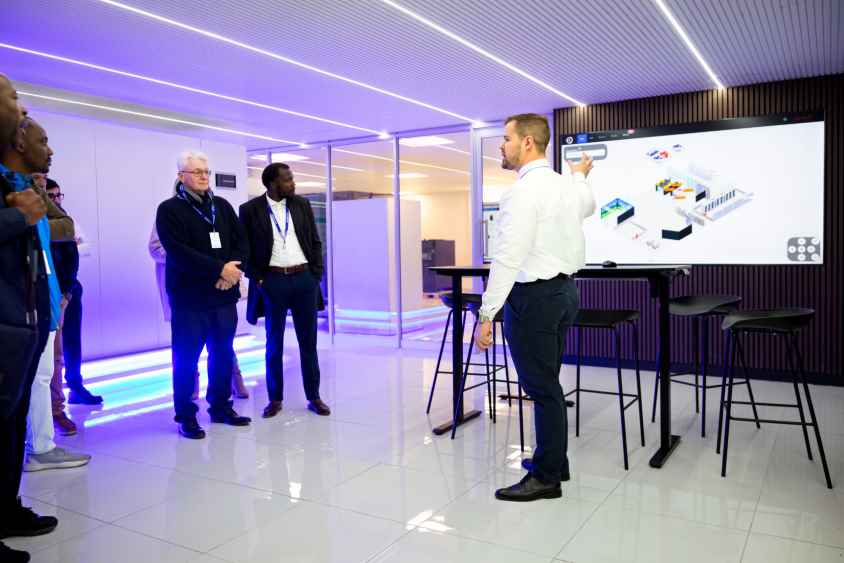
JOHANNESBURG, South Africa, July 20, 2026/APO Group/ –Master Power Technologies (MPT) (https://kva.co.za/), a leading pan-African provider of turnkey data centre and critical power solutions, has unveiled its hi-tech Customer Experience Centre, also home to its new regional headquarters in Midrand.

Master Power Technologies Unveils R50m State-of-the-Art Customer Experience Centre at New Midrand Premises

This milestone marks a significant step in the company’s continued expansion and commitment to advancing Africa’s data centre infrastructure.

Founded in 1999 by electrical engineer Menno Parsons, MPT has grown from its origins as a Uninterruptible Power Supply (UPS) provider into a diversified engineering firm that delivers end-to-end solutions for data centres across Africa and the Middle East. Today, MPT designs, manufactures, and assembles a wide range of products under its flagship brands, SURE and AIVA, tailored to withstand Africa’s demanding operational environments.

The new Midrand facility spans 6 000m2 and will serve as MPT’s African headquarters, housing approximately 200 employees. Strategically located between Johannesburg and Pretoria, the site is positioned close to major data centre hubs, ensuring accessibility for clients and partners.

Hands-on environment

At the heart of the launch is the Customer Experience Centre, a R50 million investment designed to showcase MPT’s engineering capabilities and provide a hands-on environment for customers, partners, and trainees. The centre features advanced test facilities, including a 2 MVA UPS test platform and a 400kW cooling systems test centre, which is the most comprehensive of its kind on the continent.

These facilities enable performance testing to European certification standards, offering clients confidence in the reliability and efficiency of MPT’s solutions, with the company having become the first African business to be officially certified as an Endorser of the European Code of Conduct for Energy Efficiency in Data Centres in 2025.

The Experience Centre represents a new chapter for Master Power Technologies

“The Experience Centre represents a new chapter for Master Power Technologies. It’s about creating a space where customers can engage with our technology, see it in action, and understand the depth of our capabilities,” says MD and Founder of MPT Menno Parsons.

“This centre will be the most impressive UPS and cooling training facility in Africa, allowing our clients to touch, feel, and work with real systems in a way that has never been possible before.”

Commitment to local

The Experience Centre also highlights MPT’s commitment to local engineering and manufacturing. MPT assembles and engineers complete modular data centre and energy centre solutions within Africa. This approach reduces logistical risks, supports local industry, and ensures solutions are tailored to regional requirements.

Beyond technical demonstrations, the centre will serve as a hub for training and collaboration, equipping engineers and clients with practical knowledge to optimise data centre performance.

It also integrates MPT’s proprietary Advanced Infrastructure Visual Analytics (AIVA) monitoring platform, which manages and records metrics across more than 200 data centres in Africa, offering advanced analytics and operational insights.

“Our business has always been about more than just selling equipment. We engineer solutions for Africa, by Africa. This Experience Centre is a testament to that philosophy, which strengthens our ability to train, innovate and deliver world-class infrastructure while remaining rooted in local expertise,” says Parsons.

The launch of the Midrand offices and Experience Centre underscores MPT’s role as a trusted partner in Africa’s rapidly growing data centre sector. With demand for resilient, efficient, and scalable infrastructure on the rise, MPT’s investment positions the company to meet the evolving needs of clients across the continent and beyond.

Distributed by APO Group on behalf of Master Power Technologies.


Continue Reading

Events

Embracing an Intelligent Future: UnionPay Showcases AI Innovation at WAIC 2026

Published

on

WAIC

Release of Phased Achievements of the National Pilot Base for AI Application (Financial Sector) Held Alongside the Conference

SHANGHAI, CHINA – Media OutReach Newswire – 20 July 2026 – On 17 July, the 2026 World Artificial Intelligence Conference (WAIC) officially opened in Shanghai. UnionPay unveiled three proprietary AI technologies developed for the financial sector at the Shanghai exhibition area: financial transaction time-series foundation model, the Agentic Payment Open Protocol (APOP) framework, and a privacy-preserving large language model inference solution. As the AI era unfolds, the showcase highlights UnionPay’s continued commitment to accelerating the adoption of digital and intelligent technologies.

On 18 July, UnionPay hosted the Release of Phased Achievements of the National Pilot Base for AI Application (Financial Sector) at the UnionPay Center alongside WAIC 2026. The event brought together more than 100 representatives from commercial banks, Chinese and international partners, leading technology companies, academia, and research institutions. During the event, UnionPay released its “1+6+N” AI achievements framework, announced a series of industry partnerships, and launched a joint initiative calling for greater collaboration on the development and governance of the financial industry. These achievements demonstrate the progress of the National AI Application Pilot Base in building an open innovation platform that accelerates AI adoption across the industry.

Dong Junfeng, Chairman of China UnionPay and UnionPay International, attended the event and delivered a keynote speech. He noted that AI is rapidly reshaping the financial industry. Since the National AI Application Pilot Base was launched in 2025, it has delivered a number of meaningful outcomes through close collaboration across the industry. Mr. Dong elaborated on the vision for the development of the base from through three dimensions: sharing, collaborative governance, and mutual benefits. First, by pooling computing resources, data and models on a centralized public platform, the base helps address industry challenges such as the high cost of computing resources and data silos. This lowers barriers to AI adoption across the financial sector. Second, the base has strengthened AI security by building robust safeguards for large language models and applying AI to enhance transaction risk management and cybersecurity. Such efforts are made to support a safer and more resilient financial ecosystem. Third, the base is accelerating the AI adoption across real-world use cases. It has incubated a range of commercial AI solutions spanning agentic payments, credit risk management, consumption promotion and merchant digital transformation, turning technological innovation into tangible business value. Looking ahead, the future of AI + Finance holds enormous potential. UnionPay looks forward to working with partners across industries to build an open, shared, and well-governed financial AI ecosystem that supports the development of new productive forces through technological innovation.

A highlight of the event was the official launch of UnionPay’s “1+6+N” AI achievements framework.

The “1” represents a unified portal—the National AI Application Pilot Base. Built on a “One Portal, Six Centers” structure, it integrates six specialized centers covering models, datasets, applications, talent development, supply-demand matching, and financial services. Together, the platform currently hosts 11 models, 14 datasets, 59 demonstration applications, and 61 service offerings, bringing together 145 core resources in total.

The “6” refers to six independent and controllable capabilities, including computing resources scheduling through a trusted intelligent computing sharing platform, high-quality financial datasets, finance-specific foundation models, AI-powered financial security services, financial AI standards, and a pilot testing sandbox that supports model training and evaluation. Together, these six capabilities form the base’s shared technology foundation, providing ecosystem partners with the core technical infrastructure.

The “N” represents a portfolio of benchmark use cases, standardized AI solutions, and demonstration applications built on this technology foundation. These applications span five key areas—intelligent payments, inclusive finance, consumption growth, risk management and compliance, and operational excellence—building a multi-tier product portfolio serving consumers, merchants, local governments and financial institutions. This accelerates the application of AI capabilities across diverse use cases.

Together, the “1+6+N” framework of the base connects computing power, data, models, and use cases and forms an end-to-end value chain. By addressing common industry challenges—including limited computing resources, data silos and the high cost of AI deployment—it delivers standardized and widely accessible AI capabilities, providing the financial industry with reusable, highly secure and one-stop AI solutions for intelligent transformation. This also reflects UnionPay’s commitment not only to driving its own business growth, but also to enabling the industry through foundational capabilities and reinforcing financial infrastructure for the AI era.

These achievements have already been made available to industry partners and are beginning to create value. For banks, acquirers and other financial institutions, UnionPay’s shared infrastructure enables rapid access to mature financial AI capabilities without the need to build systems from scratch, significantly reducing both technical barriers and implementation costs. For merchants, UnionPay offers AI-powered marketing, digital analytics and intelligent risk management tools to support smarter operations, improve customer engagement and enhance operational efficiency, enabling even small and medium-sized businesses to benefit from AI innovation. For technology companies and other ecosystem partners, the base enables partners to rapidly adapt AI products for financial applications and complete compliance validation, accelerating the commercialization of technological innovations.

The event also featured six rounds of partnership signing ceremonies, covering areas including AI-themed card, cross-border agentic payment ecosystem development, AI-powered operational empowerment for merchants, joint commercialization of pilot base innovations, and broader ecosystem collaboration across the financial industry chain.

Following the signing ceremonies, UnionPay released the Initiative on the Collaborative Development and Governance of AI Applications in Financial Services, with representatives from participating organizations joining the stage to witness its launch. Building on the “1+6+N” framework, the initiative calls on industry stakeholders to collaborate in four areas: First, advancing trusted AI systems that serve the real economy by establishing governance mechanisms for traceable and explainable algorithms while safeguarding data privacy and security; Second, strengthening collaboration among industry, academia, research institutions and users, leveraging the base to jointly advance core technologies and develop independent and secure financial AI infrastructure; Third, promoting openness and inclusiveness by sharing mature AI models, testing services and implementation solutions to reduce the cost of intelligent transformation, particularly for SMEs; Fourth, improving lifecycle governance through tiered risk management, enhanced compliance standards and coordinated risk prevention. The initiative calls on all industry stakeholders to work together by jointly strengthening the foundation, unlocking greater value through shared capabilities, and reinforcing collaborative governance, with the goal of advancing the sound development of AI in the financial sector and driving digital finance through technological innovation.


Continue Reading

Trending