Connect with us

Business

Nigeria’s Population Boom is Changing the Data Center Investment Story

Published

on

African Energy Chamber

Investors backing Nigeria’s fast-growing data center sector are betting not just on today’s demand, but on the emergence of one of the world’s largest digital economies over the next three decades

CAPE TOWN, South Africa, June 3, 2026/APO Group/ –Nigeria’s data center expansion is increasingly being framed as a technology story. But at its core, it is a demographics story. Africa’s largest economy is already home to more than 240 million people, and U.N. projections indicate the country could surpass 400 million by 2050, making it the world’s third most populous nation after India and China.


What makes that trajectory especially significant for investors is not just population size, but the age and digital profile of that population. Nigeria remains one of the youngest countries globally, with a median age of around 18, while internet penetration has surpassed 50%, creating a rapidly expanding base of mobile-first consumers entering the digital economy each year.


This dynamic is fundamentally reshaping the long-term case for digital infrastructure investment. Investors are positioning for what Nigeria could become over the next two decades: one of the world’s largest digital populations, with rising demand for cloud computing, AI-enabled services, fintech platforms, streaming content, enterprise software and sovereign data storage.

This shift is already shaping how the industry is thinking about digital infrastructure across the continent. At African Energy Week 2026 – the continent’s premier energy event – the introduction of an AI and Data Center track – Renegade Intel – reflects growing recognition that data infrastructure is becoming as critical as energy infrastructure to Africa’s economic future. In markets like Nigeria, where population growth is rapidly translating into digital demand, that intersection is now central to long-term investment planning.

Nigeria’s data center market, valued at roughly $288 million in 2025, is projected to surpass $1 billion by 2031, with operators rapidly expanding colocation and cloud capacity in Lagos and other urban hubs. Major players including Equinix, MTN, Rack Center and Open Access Data Centers are scaling infrastructure to capture what they see as long-term structural growth rather than a short-term market cycle.

In 2025, MTN announced a more than $240 million investment into a new Lagos data facility designed to support AI and cloud demand, underscoring how operators are preparing for far larger digital workloads in the years ahead. Recent reports suggest nearly $1 billion in broader data center investments flowing into Nigeria as companies race to expand cloud and AI infrastructure capacity.


Data centers are becoming critical infrastructure for Africa’s economic future, but none of this growth happens without energy

Much of that optimism rests on the belief that Nigeria’s digital consumption curve is still in its early stages. Fintech adoption continues to accelerate across the country, streaming platforms are expanding local content distribution, and enterprise cloud migration remains relatively underpenetrated compared to more mature markets. At the same time, artificial intelligence is expected to dramatically increase computing and storage requirements globally, creating additional incentives to localize infrastructure closer to end users.


For Nigeria, data localization and sovereign storage are becoming increasingly strategic as governments and businesses seek greater control over where critical information is processed and stored. Building data centers locally is now seen as essential for data control, security and long-term economic growth.


Still, the opportunity comes with its challenges. Reliable electricity supply remains one of the biggest constraints on large-scale data center expansion in Nigeria, where operators often rely heavily on backup generation and hybrid power systems. Connectivity improvements, regulatory clarity and long-term energy availability will all play a critical role in determining how quickly infrastructure deployment can scale.


“Data centers are becoming critical infrastructure for Africa’s economic future, but none of this growth happens without energy,” says NJ Ayuk, Executive Chairman of the African Energy Chamber. “Countries like Nigeria are seeing rising demand because of demographics, connectivity and digital adoption, but investors also need confidence that long-term power supply can support that expansion.”


Nigeria’s population growth alone does not guarantee digital infrastructure success. But when combined with rising internet penetration, fintech adoption, cloud usage and AI-driven computing demand, it creates a scale opportunity few emerging markets can match. Investors are looking beyond today’s market to the scale Nigeria’s digital economy could reach.

Distributed by APO Group on behalf of African Energy Chamber.

Business

Unstoppable Africa 2026 to bring African and global Chief Executive Officers (CEOs) and leaders to New York to drive investment, ownership and growth across the continent

Published

on

The program will focus on how Africa can capture more value from its critical minerals, strengthen infrastructure and trade, mobilise capital at scale and build more integrated and competitive markets

NEW YORK, United States of America, September 2, 2026/APO Group/ –More than 2,000 African and global business leaders plus heads of state will gather in New York on September 20–21 for Unstoppable Africa, flagship event of the Global Africa Business Initiative (GABI) (https://www.GABI.biz/).


Convened by UN Secretary-General António Guterres and H.E. Mahmoud Ali Youssouf, Chairperson of the African Union Commission, and organized and coordinated by the UN Global Compact, the fifth edition of Unstoppable Africa will convene under the theme “Powering Business, Scaling Economies, Shaping the Future”.

Held on the sidelines of the opening of the 81st session of the United Nations General Assembly, Unstoppable Africa will feature leading  investors, policymakers, creatives, sports executives and decision-makers working to accelerate Africa’s business, trade and investment and amplify its role in shaping global markets.

Sanda Ojiambo, Assistant Secretary-General and CEO of the United Nations Global Compact, said: “This year, we are sharpening the focus on mobilising capital, forging partnerships, building businesses and turning Africa’s assets and opportunities into investable, scalable outcomes. The ambition is not simply to shape how the world sees Africa, but to shape where global capital flows, where value is created and how Africa can capture it.”

The ambition is not simply to shape how the world sees Africa, but to shape where global capital flows, where value is created and how Africa can capture it

The high-level convening comes at a time of global supply chains being redrawn by geopolitical tension, energy insecurity and shifting trade rules. For the African continent, these pressures  create an opportunity to leverage its critical minerals, renewable energy potential, expanding consumer markets and young workforce to attract long-term capital and capture more value from global shifts.

Unstoppable Africa 2026 will look at how the continent can turn these shifts into lasting economic opportunity.  The program will focus on how Africa can capture more value from its critical minerals, strengthen infrastructure and trade, mobilise capital at scale and build more integrated and competitive markets. Discussions will also explore Africa’s energy transition, the development and ownership of AI and digital infrastructure, the financing and global distribution of African creative industries, and how sport can become a stronger engine for investment, talent development and economic growth.

Other confirmed speakers include:

  • H.E. Julius Maada Bio, President, Republic of Sierra Leone
  • H.E. Duma Gideon Boko, President, Republic of Botswana
  • H.E. Paula Ingabire, Minister of ICT and Innovation, Rwanda
  • Samaila Zubairu, President and CEO, African Finance Corporation
  • Nolitha Fakude, Chairperson, Anglo American South Africa
  • Tidjane Thiam, General Partner, Allied Critical Minerals Fund
  • Phuthi Mahanyele-Dabengwa, CEO and Executive Director, Naspers
  • Olugbenga Agboola, CEO, Flutterwave
  • Cameron Bailey, CEO, Toronto International Film Festival
  • Wanuri Kahiu, filmmaker
  • Akunna Cook, Founder and CEO, Next Narrative Africa Fund
  • Luol Deng, former NBA All-Star and President, South Sudan Basketball Federation
  • Clare Akamanzi, CEO, NBA Africa
  • Amina J. Mohammed, Deputy Secretary-General, United Nations
  • Massad Boulos, Senior Advisor to the President of the United States on Arab and African Affairs
  • Damilola Ogunbiyi, CEO and Special Representative of the UN Secretary-General for Sustainable Energy for All

The five themes of GABI and Unstoppable Africa, namely Energy, Digital Transformation, Trade, Creative Industries, and Sport, will be supported by high-level plenaries, CEO and investor roundtables, ministerial dialogues, startup showcases, and GABI Solutions Labs. The 2026 edition will create opportunities to spark transactions, develop investment vehicles, and form cross-border alliances and partnerships. Full implementation of the African Continental Free Trade Area could create a $3.4 trillion market, according to UNCTAD’s 2024 Economic Development in Africa Report, highlighting the scale of the opportunity as regional integration deepens.

Once again, the event will be hosted by Folly Bah Thibault, Senior News Anchor at Al Jazeera Media Network, and Larry Madowo, International Correspondent at CNN, and will spotlight more than 500 nominees in the Unstoppable Africans campaign.

Media partners to date include African Business/New African; African Renewal; Afrique Media; AllAfrica; Arise News; Business Digest Magazine; Citizen TV; EIB Network; Envoy Magazine; The Kenyan Wall Street; News Central TV; SDG News; The Africa Report; The Nation Media Group; TIME Africa.

Unstoppable Africa 2026 will take place at the New York Marriott Marquis, Times Square, 1535 Broadway, New York City. Accredited media and other eligible communication professionals can register at https://apo-opa.co/4xvM3xh.

Distributed by APO Group on behalf of Global Africa Business Initiative.


Continue Reading

Business

New DHL-Absa Partnership Opens Global Trade Opportunities for African Small and Medium-Sized Enterprises (SME)

Published

on

By combining DHL’s logistics expertise with Absa Group’s extensive banking, digital and financial capabilities, the partnership will equip SMEs with practical tools, training and access to services that support cross-border trade, e-commerce growth and sustainable business development

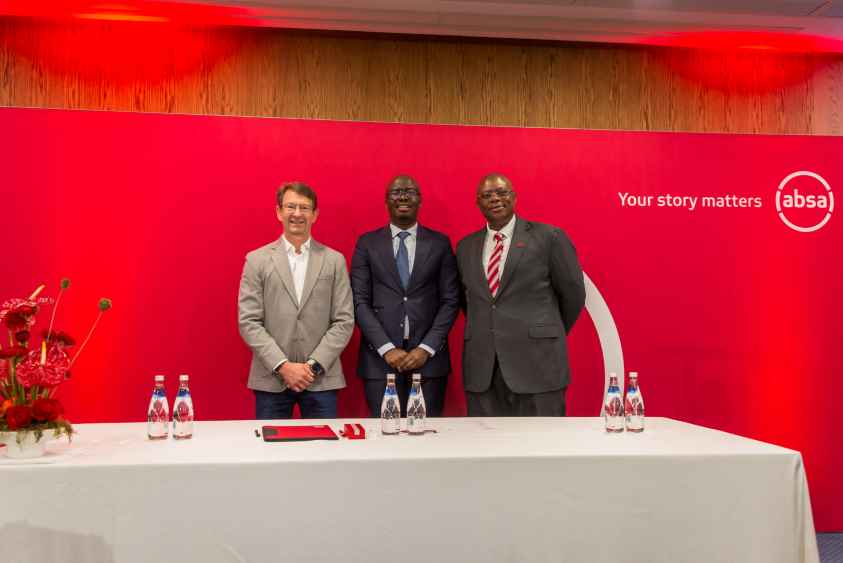
JOHANNESBURG, South Africa, September 2, 2026/APO Group/ –DHL and Absa Group have officially signed a Memorandum of Understanding (MOU) to expand DHL’s GoTrade programme across Sub-Saharan Africa (SSA), formalising a strategic partnership that paves the way for the rollout of the DHL GoTrade programme across key markets in SSA.


By combining DHL’s logistics expertise with Absa Group’s extensive banking, digital and financial capabilities, the partnership will equip SMEs with practical tools, training and access to services that support cross-border trade, e-commerce growth and sustainable business development.

Deputy Minister of Trade, Industry and Competition Zuko Godlimpi said the partnership will help SMMEs address the critical constraints to regional growth.

“This partnership brings together the finance, logistics, market knowledge and public support that SMMEs need to trade beyond our borders. By building the capacity of South African enterprises to enter African markets, we are not only growing individual businesses – we are strengthening intra-African trade, creating jobs and using the African market to power South Africa’s economic growth.”
the Deputy Minister said.

Every successful business starts with someone brave enough to dream bigger

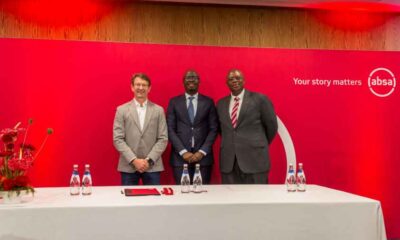
The agreement was signed by Hennie Heymans, CEO of DHL Express Sub-Saharan Africa, and Faisal Mkhize, Managing Executive for Business Development, Business Banking Pan-Africa at Absa Group.

“Every successful business starts with someone brave enough to dream bigger. Across Africa, there are thousands of entrepreneurs with incredible ideas, determination and ambition, but many still face stumbling blocks when it comes to trading globally.” said Hennie Heymans.

“By partnering with Absa Group, we are creating a powerful ecosystem that combines logistics excellence with financial expertise, ensuring that SMEs across the continent to grow sustainably. To be clear, this is really about helping African SMEs turn big ambitions into real opportunities. Whether it’s understanding how to export for the first time, finding the right financial support, reaching new customers online, or expanding into international markets,” he added.

Approximately 1,600 SMEs have been trained in Uganda, one of the earliest markets to implement the programme, with more entrepreneurs also benefitting from Kenya, Botswana and Zambia. Mozambique and Tanzania are next in line for rollout.

“SMEs are at the heart of Africa’s economic future. They create jobs and strengthen communities.  Our partnership with DHL Express is about giving business owners practical support, and access to trade solutions that can help them move beyond their local markets and realise their growth ambitions,” said Absa Group’s Mkhize.

As the SME sector across SSA continues to play a critical role in driving economic growth, innovation and job creation, the partnership between DHL and Absa Group is a commitment to helping entrepreneurs overcome barriers to trade and unlock new opportunities beyond their borders. Together, the two organisations aim to equip more businesses with the knowledge, networks and support they need to grow sustainably, compete globally and contribute to Africa’s economic growth.

Distributed by APO Group on behalf of DHL Express SSA.


Continue Reading

Business

TotalEnergies, ExxonMobil to Open Procurement Doors for Angolan Companies at Angola Oil & Gas (AOG) 2026

Published

on

Two of Angola’s largest operators will host dedicated procurement workshops on September 8, giving Angolan companies direct insight into supplier requirements and contracting opportunities across major upstream projects

LUANDA, Angola, September 2, 2026/APO Group/ –Energy majors TotalEnergies and ExxonMobil will host dedicated procurement workshops during the pre-conference program of Angola Oil & Gas (AOG) 2026 on September 8, connecting Angolan companies directly with two of the country’s biggest international operators.


Led by Patricia Campos, Head of Procurement and Contracts Division at TotalEnergies, and Adão Costa, Procurement Manager at ExxonMobil, the respective sessions will offer practical insight into how local companies can position themselves to secure contracts across Angola’s expanding upstream industry. Taking place ahead of the main conference – scheduled for September 9-10 -, the workshops strengthen AOG 2026’s role as a platform for translating investment into tangible opportunities for Angolan businesses.

TotalEnergies’ workshop comes as the operator advances a multi-billion-dollar offshore portfolio. The company is developing the Kaminho project in Block 20/11 alongside Sonangol and Petronas – the first large-scale deepwater development in the Kwanza Basin. Sanctioned in 2024, Kaminho will feature a zero-flaring FPSO with capacity of 70,000 barrels per day, with first oil targeted for 2028.

The company has also extended licenses for strategic producing assets, including Block 32, creating a framework for further development across six discoveries surrounding the Kaombo Norte and Kaombo Sul FPSOs. Through its role in the New Gas Consortium (NGC), TotalEnergies is at the forefront of Angola’s non-associated gas development. The NGC achieved first gas production from the Quiluma field in 2026, paving the way for a diversified energy mix in Angola. Campos’ workshop will provide a direct interface between those suppliers and the procurement processes governing TotalEnergies’ activities.

Meanwhile, ExxonMobil is pursuing a dual-track strategy combining redevelopment of mature producing assets with frontier exploration. In April 2026, the company awarded an EPCI contract to Subsea7 for its Likembe Redevelopment 2.0 Project, which will connect additional reservoirs to existing Block 15 facilities through subsea tiebacks. ExxonMobil and its partners have also moved to extend production from the Mondo and Saxi-Batuque fields following the extension of Block 15’s production license through 2037.

Beyond Block 15, ExxonMobil is expanding its exploration footprint. The company partnered with TotalEnergies and Angola’s National Agency for Petroleum, Gas and Biofuels to secure exploration rights across multiple blocks in the frontier Benguela and Namibe Basins, while subsurface evaluation continues across additional offshore acreage. Costa’s workshop will share insight into how Angolan companies can position themselves at the forefront of these developments.

By placing procurement managers directly in front of Angolan businesses, AOG 2026 will give domestic suppliers greater clarity on what major operators need, how procurement decisions are made and where opportunities are emerging. As billions of dollars move into Angola’s upstream sector, the September 8 sessions will help ensure more Angolan companies are equipped to move with them.

Distributed by APO Group on behalf of Energy Capital & Power.


Continue Reading

Trending

Exit mobile version