Connect with us
Anglostratits

Business

Africa Skills Hub (ASH) Transitions to ASH Africa as it Marks 10 Years of Impact
Published

on

Africa Skills Hub

Over the years, the organisation has extended its reach across all 16 regions of Ghana while implementing programmes and partnerships in multiple African countries

Our goal of reaching 500,000 youth, women, and SMEs annually by 2030 is rooted in a decade of learning about what it takes to shift systems

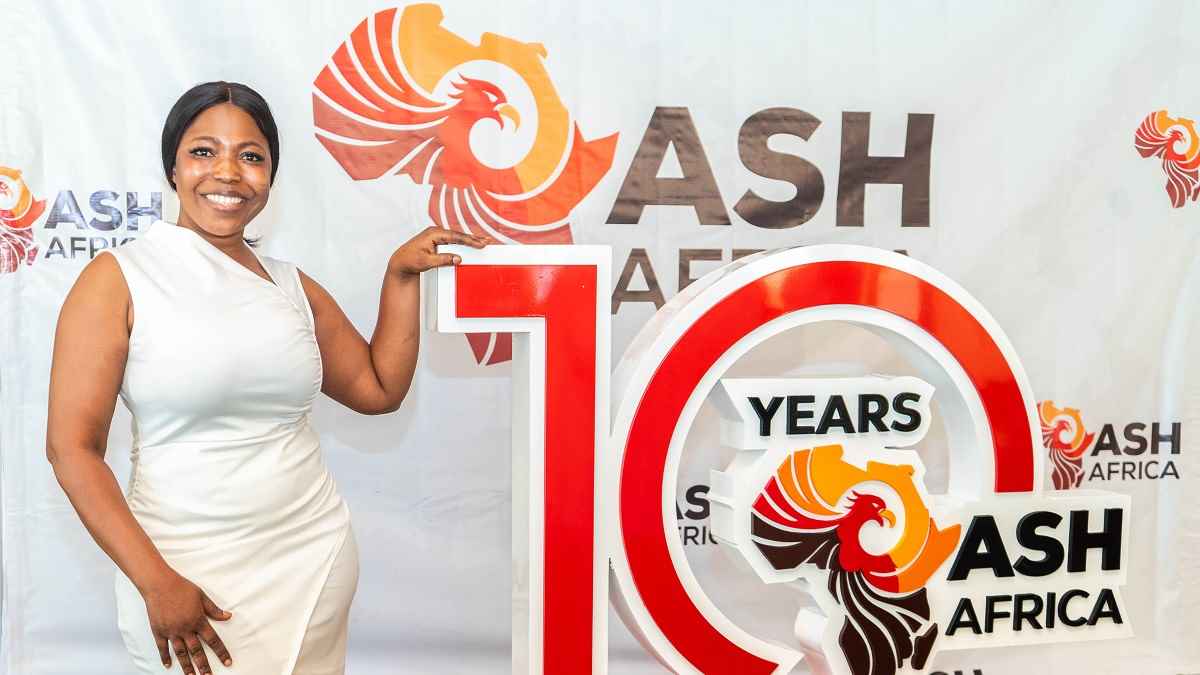
ACCRA, Ghana, June 4, 2026/APO Group/ –Africa Skills Hub (ASH), a Ghana-based enterprise support organisation focused on youth, women, and SME development, has officially transitioned to ASH Africa (www.ASH.Africa), marking a significant milestone in its 10-year journey of expanding opportunity pathways across the continent.


The rebrand reflects the organisation’s evolution from a skills development entity into a broader pan-African organisation driven by the mission: Transforming Lives. Building Communities. Building Africa.

Founded in 2016 as the Africa Internship Academy (AIA), the organisation initially focused on improving youth employability and access to internship opportunities in Ghana. In 2020, the organisation transitioned into Africa Skills Hub (ASH), expanding its work across enterprise development, financial inclusion, SME support, digital skills, and market systems strengthening.

Over the years, the organisation has extended its reach across all 16 regions of Ghana while implementing programmes and partnerships in multiple African countries.

The transition to ASH Africa reflects the organisation’s growing continental outlook and aligns with its newly launched 2026-2030 Strategic Plan, which outlines a vision to support more than 500,000 youth, women, and SMEs annually by 2030.

Speaking on the transition, Executive Director Daniel Amoako Antwi said:

“For ten years, we have focused on building the connective systems that link skills, capital, enterprise, and market opportunity across Africa. We have evolved from delivering standalone training programmes to building interconnected systems that link people to opportunity. The transition to ASH Africa reflects both the scale of the work we are already doing and the future we are committed to building.

Our goal of reaching 500,000 youth, women, and SMEs annually by 2030 is rooted in a decade of learning about what it takes to shift systems, not just programmes across Africa’s economies.”

According to the organisation, the rebrand does not represent a change in mission, but rather an expansion of scope, engagement, and strategic positioning.

ASH Africa will continue to focus on creating sustainable economic opportunities for youth, women, and SMEs by connecting them to skills development, enterprise support, finance, and market access.

Through its systems-driven model, the organisation aims to address what it describes as a systems challenge — the disconnect between skills acquisition, access to capital, enterprise growth, and market participation.

The new identity also reflects the organisation’s commitment to inclusive growth through partnerships, innovation, research-driven programming, and ecosystem development. Its strategic priorities include skills development, SME growth, market access, digital inclusion, and data-driven advocacy.

A Decade of Impact at a Glance (2016–2026)

Skills & Human Capital Development

  • 40,192 youth trained in employability, digital, and enterprise skills
  • 30,519 women supported through targeted training and enterprise development programmes

Economic Transition & Employment Outcomes

  • 15,753 youth transitioned into employment
  • 10,939 new jobs created across supported enterprises

Enterprise Growth & Financial Inclusion

  • 9,238 MSMEs supported to adopt sustainable business practices
  • GHS 10,789,800 in micro-loans disbursed to improve access to finance and business growth

Geographic Reach & Ecosystem Expansion

  • Programmes implemented across all 16 regions of Ghana and multiple African countries

As part of its anniversary and rebranding activities, ASH Africa will roll out a series of engagements highlighting its decade-long journey, institutional evolution, impact stories, and future vision for Africa.

Distributed by APO Group on behalf of ASH Africa, formerly Africa Skills Hub.


Energy

Congo Energy & Investment Forum 2027 to Position Brazzaville as a Hub for Global Energy Deal-Making

Published

on

Etu Energias

The Congo Energy & Investment Forum will convene international investors, policymakers and industry leaders to advance energy partnerships and project development from June 1–3, 2027

BRAZZAVILLE, Congo (Republic of the), June 4, 2026/APO Group/ –The Republic of Congo will host the second edition of the Congo Energy & Investment Forum (CEIF) from June 1–3, 2027 at the Kintélé International Conference Center, under the official endorsement of the Ministry of Hydrocarbons, led by newly appointed Minister Stev Simplice Onanga. Organized by Energy Capital & Power (www.EnergyCapitalPower.com), the forum will bring together global investors, project developers and policymakers to accelerate investment across the country’s energy sector.


The event is expected to attract participation from leading international and regional institutions, including OPEC and African Petroleum Producers Organization, alongside energy ministers from across Africa. Delegations from Europe, Asia, the Middle East and the Americas, as well as national and international oil companies, financiers and technology providers, will be represented, positioning CEIF as a key platform for cross-border energy cooperation and deal-making.

As one of sub-Saharan Africa’s established oil producers and an emerging gas exporter, the Republic of Congo continues to expand its upstream and gas monetization activities. Growth is being driven by developments such as TotalEnergies’ Moho Nord and Marine XX assets, as well as ongoing activity by Trident Energy and Perenco across mature assets. In parallel, the phased rollout of Eni’s Congo LNG project, which targets up to 3 million tons of LNG per year, is strengthening the country’s position in global gas markets.

Alongside international operators, national oil company Société Nationale des Pétroles du Congo (SNPC), under the leadership of Director General Maixent Raoul Ominga, is advancing work on deepwater permits such as Nzombo, increasingly positioning itself as both a commercial operator and strategic partner in key developments, including mature asset redevelopment and emerging LNG-linked opportunities.

A central focus of CEIF 2027 will be deepening local content and in-country value creation, a key priority of Minister Onanga. With support from the African Energy Chamber, the forum will highlight policies and initiatives aimed at increasing participation by Congolese companies, building local workforce capacity and supporting technology transfer. Discussions will explore how international operators and service providers can partner with local businesses, ensuring that investment translates into long-term economic benefits and sustainable industry growth.

The Republic of Congo continues to enhance its investment framework through regulatory reforms supported by the Ministry and SNPC, including the implementation of a Gas Master Plan, the establishment of a national gas company and a new gas code designed to commercialize undeveloped resources and reduce flaring. These efforts are complemented by downstream and infrastructure developments, including refinery upgrades, petrochemical projects and expanding gas-to-power capacity.

With participation expected from more than 40 countries, hundreds of companies and over 3,000 delegates, CEIF 2027 will feature strategic conference sessions, technical workshops and high-level networking opportunities. The forum is set to play a central role in facilitating partnerships, advancing investment and reinforcing the Republic of Congo’s position as a competitive energy destination.

For more information, visit: www.CongoEnergyInvestment.com

Distributed by APO Group on behalf of Energy Capital & Power.

Continue Reading

Energy

Prof. Benedict Oramah to Chair Finance Summit as African Energy Week (AEW) 2026 Prepares for Major Deal Flow

Published

on

African Energy Chamber

Prof. Benedict Oramah joins African Energy Week 2026 at a pivotal moment for African energy financing, industrial development and infrastructure investment

CAPE TOWN, South Africa, June 3, 2026/APO Group/ –Prof. Benedict Oramah, former President and Chairman of the African Export-Import Bank (Afreximbank) and current Chairman of Africa Trading Minerals (ATMIN), will chair the African Energy Week (AEW) 2026 Finance Summit, taking place from October 12–16 in Cape Town. Oramah’s participation places one of Africa’s most influential development finance leaders at the forefront of discussions on energy investment, infrastructure financing and industrial growth, reaffirming the event’s role as the continent’s premier deal-making platform.

Taking place within the main strategic conference program, the AEW 2026 Finance Summit will address one of the most pressing challenges facing Africa’s energy sector: a lack of investment. With an annual energy investment gap estimated between $31 billion and $50 billion, the Summit will explore tangible strategies to mobilize private capital, expand development financing and unlock new avenues for domestic funding across the energy value chain. Oramah’s participation ensures these discussions remain central to the event.

Having previously led Afreximbank, Oramah played a pivotal role in positioning the institution as one of the continent’s most active financiers of strategic infrastructure and energy projects. The bank has been instrumental in supporting African-led energy development, including backing refining infrastructure, advancing regional trade integration and facilitating capital access for major projects. In recent years, the bank increased its capital base by $25 billion, enhancing its capacity to finance large-scale energy and infrastructure initiatives. It has also played a leading role in the development of the Africa Energy Bank (AEB), which is expected to begin operations in 2026 and deploy billions in capital toward African energy projects.

Prof. Benedict Oramah represents the type of leadership Africa needs as the continent works to finance its own energy future

Recent developments underscore Afreximbank’s continued role in financing African projects and highlight the importance of development finance in accelerating infrastructure rollout. South Africa joined Afreximbank in 2026, unlocking an $8 billion country program focused on energy, manufacturing and trade, alongside a $3 billion Transformation Fund aimed at supporting black-owned businesses and SMEs. Meanwhile, a new trading house – ATMIN – was launched in 2025 by a group of former Shell traders, with financial backing from Afreximbank.

The bank has underwritten $2.5 billion of a $4 billion syndicated term loan for Nigeria’s Dangote Petroleum Refinery; launched the African Continental Free Trade Area Adjustment Fund; introduced its flagship Accelerator Program to boost intra-African trade; and committed financing packages to Ecobank Zimbabwe, Egypt’s SAMCO and Malawi’s NBS Bank.

Afreximbank has also expanded its developmental mandate through initiatives such as the African Medical Center of Excellence (AMCE), reflecting the growing recognition that energy, healthcare and industrialization are interconnected pillars of long-term economic growth. The $300 million tertiary medical facility was developed in partnership with King’s College Hospital London, offering world-class services across oncology, hematology, cardiology and general medicine. The center officially opened in 2025.

“Prof. Benedict Oramah represents the type of leadership Africa needs as the continent works to finance its own energy future. His participation at AEW 2026 comes at a defining moment, as Africa strengthens energy security, expands industrial capacity and builds financing institutions capable of supporting long-term growth,” states NJ Ayuk, Executive Chairman of the African Energy Chamber.

AEW 2026’s Finance Summit is expected to serve as a key platform for advancing new financing structures, facilitating investment partnerships and accelerating commercially driven dealmaking across Africa’s energy sector. The Summit will focus on project bankability, African-led financing mechanisms, infrastructure investment, risk mitigation strategies and the evolving role of development finance institutions in supporting the continent’s energy expansion.

Distributed by APO Group on behalf of African Energy Chamber.

Continue Reading

Business

Nigeria’s Population Boom is Changing the Data Center Investment Story

Published

on

African Energy Chamber

Investors backing Nigeria’s fast-growing data center sector are betting not just on today’s demand, but on the emergence of one of the world’s largest digital economies over the next three decades

CAPE TOWN, South Africa, June 3, 2026/APO Group/ –Nigeria’s data center expansion is increasingly being framed as a technology story. But at its core, it is a demographics story. Africa’s largest economy is already home to more than 240 million people, and U.N. projections indicate the country could surpass 400 million by 2050, making it the world’s third most populous nation after India and China.


What makes that trajectory especially significant for investors is not just population size, but the age and digital profile of that population. Nigeria remains one of the youngest countries globally, with a median age of around 18, while internet penetration has surpassed 50%, creating a rapidly expanding base of mobile-first consumers entering the digital economy each year.


This dynamic is fundamentally reshaping the long-term case for digital infrastructure investment. Investors are positioning for what Nigeria could become over the next two decades: one of the world’s largest digital populations, with rising demand for cloud computing, AI-enabled services, fintech platforms, streaming content, enterprise software and sovereign data storage.

This shift is already shaping how the industry is thinking about digital infrastructure across the continent. At African Energy Week 2026 – the continent’s premier energy event – the introduction of an AI and Data Center track – Renegade Intel – reflects growing recognition that data infrastructure is becoming as critical as energy infrastructure to Africa’s economic future. In markets like Nigeria, where population growth is rapidly translating into digital demand, that intersection is now central to long-term investment planning.

Nigeria’s data center market, valued at roughly $288 million in 2025, is projected to surpass $1 billion by 2031, with operators rapidly expanding colocation and cloud capacity in Lagos and other urban hubs. Major players including Equinix, MTN, Rack Center and Open Access Data Centers are scaling infrastructure to capture what they see as long-term structural growth rather than a short-term market cycle.

In 2025, MTN announced a more than $240 million investment into a new Lagos data facility designed to support AI and cloud demand, underscoring how operators are preparing for far larger digital workloads in the years ahead. Recent reports suggest nearly $1 billion in broader data center investments flowing into Nigeria as companies race to expand cloud and AI infrastructure capacity.


Data centers are becoming critical infrastructure for Africa’s economic future, but none of this growth happens without energy

Much of that optimism rests on the belief that Nigeria’s digital consumption curve is still in its early stages. Fintech adoption continues to accelerate across the country, streaming platforms are expanding local content distribution, and enterprise cloud migration remains relatively underpenetrated compared to more mature markets. At the same time, artificial intelligence is expected to dramatically increase computing and storage requirements globally, creating additional incentives to localize infrastructure closer to end users.


For Nigeria, data localization and sovereign storage are becoming increasingly strategic as governments and businesses seek greater control over where critical information is processed and stored. Building data centers locally is now seen as essential for data control, security and long-term economic growth.


Still, the opportunity comes with its challenges. Reliable electricity supply remains one of the biggest constraints on large-scale data center expansion in Nigeria, where operators often rely heavily on backup generation and hybrid power systems. Connectivity improvements, regulatory clarity and long-term energy availability will all play a critical role in determining how quickly infrastructure deployment can scale.


“Data centers are becoming critical infrastructure for Africa’s economic future, but none of this growth happens without energy,” says NJ Ayuk, Executive Chairman of the African Energy Chamber. “Countries like Nigeria are seeing rising demand because of demographics, connectivity and digital adoption, but investors also need confidence that long-term power supply can support that expansion.”


Nigeria’s population growth alone does not guarantee digital infrastructure success. But when combined with rising internet penetration, fintech adoption, cloud usage and AI-driven computing demand, it creates a scale opportunity few emerging markets can match. Investors are looking beyond today’s market to the scale Nigeria’s digital economy could reach.

Distributed by APO Group on behalf of African Energy Chamber.

Continue Reading

Trending