Connect with us
Anglostratits

Business

DHL Group launches DHL Academy of Humanitarian Logistics to strengthen global disaster preparedness

Published

on

DHL Group

New corporate citizenship program strengthens humanitarian logistics capabilities with official launch in Sub-Saharan Africa

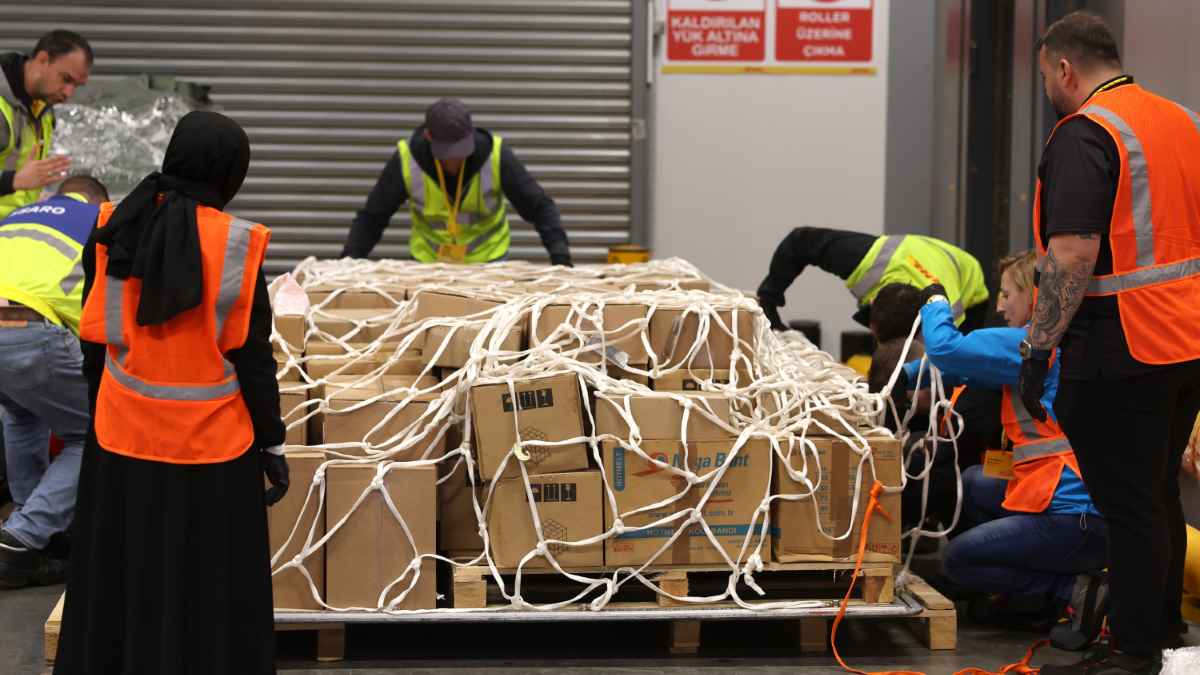
JOHANNESBURG, South Africa, June 3, 2026/APO Group/ –DHL Group (https://Group.DHL.com) has launched the DHL Academy of Humanitarian Logistics (DAHL), a global capacity-building program designed to scale practical, accessible and locally relevant logistics capability for humanitarian actors.


Delivered as part of DHL Group’s broader corporate citizenship initiative, GoHelp, the program is being introduced in Sub-Saharan Africa with a launch event in Johannesburg, bringing together humanitarian organizations for an in-person session focused on core logistics disciplines, including customs, dangerous goods handling, packaging and safety.


DAHL converts DHL’s logistics expertise into practical, pro bono training for nonprofit organizations, with a particular focus on local and regional responders. The program is designed to help humanitarian organizations strengthen operational readiness, reduce delays and improve the efficiency of aid delivery before emergencies occur.


“Humanitarian needs are becoming more complex and more frequent, driven by a combination of climate-related events, protracted crises and evolving risk environments,” said Christoph Selig, Vice President Sustainability Communications and Programs at DHL Group. “At the same time, the humanitarian system is shifting toward more anticipatory approaches and stronger local ownership. In this context, logistics plays a central role in enabling aid to move efficiently and reach those who need it most. With the DHL Academy of Humanitarian Logistics, we are building on our experience in disaster response and preparedness to strengthen practical capabilities across the sector and support more effective, locally driven operations.”


DAHL is the third pillar of DHL Group’s GoHelp program, which has supported disaster response and preparedness efforts worldwide for more than 20 years. These include Disaster Response Teams, which deploy trained DHL experts to support logistics operations in the immediate aftermath of disasters, and the Get Airports Ready for Disaster initiative, which strengthens airport preparedness in high-risk regions. DAHL builds on this foundation by enabling humanitarian organizations to manage logistics more independently and efficiently.

Humanitarian needs are becoming more complex and more frequent, driven by a combination of climate-related events, protracted crises and evolving risk environments


The program has already been piloted globally, with more than 650 participants from over 80 NGOs trained across multiple sessions. Feedback shows that 96% of participants rated the training as valuable, underlining the demand for practical, real-world logistics expertise within the humanitarian sector.


In Sub-Saharan Africa, the rollout of DAHL will include a series of training sessions across multiple countries in 2026, including South Africa, Kenya, Zambia, Malawi, Ghana, and Nigeria. The program is designed to address the region’s growing need for logistics capacity in the face of increasing humanitarian challenges.


“Sub-Saharan Africa presents both significant logistical challenges and some of the most resourceful and adaptive response environments,” said George Wood, Director Customer Operations Sub-Saharan Africa at DHL Express and active DHL GoHelp volunteer. “We consistently see how local humanitarian organisations innovate and respond under pressure, often with limited resources. By further equipping these organizations with practical, hands-on logistics knowledge, we can help strengthen preparedness and improve the efficiency of response operations on the ground.”


DAHL offers a flexible learning model that includes in-person workshops, virtual sessions, warehouse assessments, and e-learning modules. All training is delivered by experienced DHL logisticians and provided free of charge, ensuring accessibility for humanitarian organizations regardless of size or resources.


The launch of the academy in Johannesburg marks an important step in scaling the program globally and reinforces DHL Group’s commitment to connecting people and improving lives through its logistics expertise.

Distributed by APO Group on behalf of DHL Group.


Business

Afreximbank extends US$10-million facility to Azania Bank to support Small and Medium-sized Enterprises (SMEs) in Tanzania

Published

on

Afreximbank

Delivered under Afreximbank’s Export SME Development Programme (ESDP), the facility will enable Azania Bank to provide eligible SMEs with both working capital and medium-term financing to support business expansion, asset acquisition and pre- and post-export operations

DAR ES SALAAM, Tanzania, September 17, 2026/APO Group/ –African Export-Import Bank (Afreximbank) (www.Afreximbank.com) has extended a US$10-million finance facility to Azania Bank of Tanzania (Azania Bank) to improve access to finance for Small and Medium-sized Enterprises (SMEs) across Tanzania’s export value chains and to strengthen their participation in regional and international trade


Delivered under Afreximbank’s Export SME Development Programme (ESDP), the facility will enable Azania Bank to provide eligible SMEs with both working capital and medium-term financing to support business expansion, asset acquisition and pre- and post-export operations. This is expected to boost productivity and enhance participation in regional and global value chains, while addressing persistent financing gaps that constrain SME growth and export development.

Azania Bank will on-lend the funds to eligible SMEs engaged in export-oriented activities across key sectors, including agriculture, manufacturing, trade, technology, logistics and value-added exports. The facility will enhance the bank’s ability to support the growing financing needs of SMEs and emerging businesses that play a vital role in Tanzania’s industrialisation and trade agenda.

The initiative is expected to support business growth, create employment opportunities, improve export readiness and strengthen Tanzania’s participation in regional value chains. It will also help SMEs leverage opportunities arising from the African Continental Free Trade Area (AfCFTA) by enhancing their capacity to participate effectively in cross-border trade and regional supply networks.

SMEs are the backbone of Africa’s productive economy and are critical to driving industrialisation

In addition to financing, Afreximbank will provide participating SMEs with structured business development support, including export readiness training, financial management advisory services, market linkage opportunities, digitalisation support and access to SME-focused knowledge and networking platforms. These interventions are designed to strengthen enterprise resilience, improve competitiveness and enable SMEs to scale sustainably.

Mrs. Oluranti Doherty, Managing Director, Export Development, Afreximbank commented: “SMEs are the backbone of Africa’s productive economy and are critical to driving industrialisation, value addition and trade-led growth. However, many businesses continue to face significant barriers to accessing the financing, market opportunities and technical support needed to scale and compete effectively”.


“Through the Export SME Development Programme, Afreximbank is partnering with financial institutions such as Azania Bank to provide not only financing, but also the capacity building and market access solutions required for SMEs to grow, export and integrate into regional and global value chains. We believe this partnership will contribute meaningfully to Tanzania’s export development objectives and help unlock new opportunities for local enterprises under the AfCFTA.”

Mr. Yahaya Mbanka, Director, Business Development, Azania Bank Plc, said: “This facility will strengthen our ability to provide Tanzanian SMEs with the financing they need to grow their businesses, invest in productive capacity and pursue export opportunities. Our partnership with Afreximbank will also enable us to offer support that responds more closely to the needs of businesses operating across Tanzania’s key value chains.”

The facility which supports Afreximbank’s mandate to promote trade, industrialisation and export development across Africa, also aligns with Tanzania’s priorities around domestic production, value addition, export diversification and regional trade integration.

Afreximbank’s 2025 Afreximbank Annual Trade Development Effectiveness Report (https://apo-opa.co/4hgL25z) (ATDER) shows that the Bank extended over US$960 million to more than 58,000 SMEs across Africa. The initiative which prioritized women- and youth-led enterprises among others, delivered trade finance facilities that empowered businesses to obtain the capital necessary to scale, engage in cross-border trade, and expand into new markets.

Distributed by APO Group on behalf of Afreximbank.


Continue Reading

Business

Hong Kong’s 2026 Policy Address: A Strategic Vision for a Bright New Era

Published

on

Hong Kong

HONG KONG SAR – Media OutReach Newswire – 16 September 2026 – Hong Kong’s Chief Executive, John Lee, today (September 16) announced his fifth Policy Address, putting forward a series of measures to create development opportunities and enhance the well-being of the people.

“This year marks the opening year of the National 15th Five-Year Plan. In the thick of accelerating global changes not seen in a century, the vibrant momentum driven by our country’s robust strength, enormous market and high-quality development presents Hong Kong with boundless opportunities. We will better develop our economy and boost social well-being, starting a bright new chapter for Hong Kong,” Mr Lee said.


Entitled “A Strategic Vision for a Bright New Era, Driving Reform and Boosting Development, Unleashing Opportunities and Enhancing Livelihood”, the Policy Address takes the First Five-Year Plan for Economic and Social Development of the Hong Kong Special Administrative Region (2026-2030) (Hong Kong’s First Five-Year Plan) as its blueprint, and proposes numerous key measures focusing on five major development opportunities to advance high-quality development.

To attract and retain high-calibre talent, the Hong Kong Special Administrative Region (HKSAR) Government will expedite the development of the Northern Metropolis University Town to strengthen the city’s position as an international education hub. The HKSAR Government will also increase the research postgraduate places by around 30 per cent and the quota for government scholarships by 200, and establish five new major academies for training international talent: the International Clinical Trial Academy, Maritime Academy, Hong Kong International Legal Talents Training Academy, Hong Kong Intellectual Property Academy and Hong Kong International Academy of Policing.

To promote industry development, the Policy Address proposes to accelerate development of an international gold trading market and to explore a proposal to provide tax concessions for qualifying activities within the gold and commodity trading ecosystem. The HKSAR Government will also announce details of the new Renminbi-denominated and physically settled gold futures contracts; explore the possibility of increasing the Exchange Fund’s gold holdings, and gradually transfer its physical gold holdings to designated vaults appointed by the Hong Kong Precious Metals Central Clearing Company Limited.

A number of policies are proposed to promote industry development, including introducing specialty insurance (e.g. commodity, commercial aerospace, etc.); injecting funding into the Artificial Intelligence Subsidy Scheme to support the development of the intelligent computing industry; accelerating the adoption of medical innovation and industry chain development to enable the public to benefit from better and newer drugs; and fostering a new economic landscape for the low-altitude and emerging industries, such as commercial aerospace.

The Government is developing six special industry parks, including the Loop Hong Kong Park, San Tin Technopole, Hung Shui Kiu Industry Park, Sandy Ridge Data Facility Cluster and Hung Shui Kiu/Ha Tsuen modern logistics cluster. Land is also earmarked for building an advanced construction industry park to increase investment opportunities for enterprises.

To attract enterprises to establish a foothold in Hong Kong, tax concessions will be granted on the basis of the value brought by enterprises, instead of solely considering the industry sector. The Government will introduce an amendment bill this year, providing preferential tax rates of 5 per cent, or half-rate, for selected enterprises operating in key sectors such as finance, advanced manufacturing, innovation and technology, as well as research and development, headquarters activities and logistics and supply chain management.

The HKSAR Government will fully support the work of the International Organization for Mediation headquartered in Hong Kong, and build a global capital of mediation. It will also drive the establishment of the International Institute for the Unification of Private Law in Hong Kong, support the Judiciary to advance the development of the International Commercial Court, and establish the “Strategy Committee on Intellectual Property Trading Development” to assist the Government in formulating strategies and support measures for the promotion of intellectual property trading.

Regarding international co-operation, two United Nations (UN) organisations, the centre of excellence on global advanced manufacturing and the Office on Drugs and Crime’s GlobE Network Asia Pacific Regional Bureau, will establish their presence in Hong Kong respectively. Elsewhere, the new WestK Performing Arts Centre, scheduled to open next year, will feature four performance venues built to the highest international theatre standards, while Asian and international sports associations will be encouraged to establish a presence in Hong Kong.

“Today, Hong Kong is at a critical juncture in advancing from stability to prosperity. We are fully aware that formulating a comprehensive, strategic roadmap is integral to our long-term development. The Government has been persistent in mapping our way by driving development through reform. The primary goal of our policies is to enable economic development that can benefit the people of Hong Kong, and meet their aspirations for a better life,” Mr Lee said.


Continue Reading

Business

Hong Kong’s First Five-Year Plan sets out long-term vision for development

Published

on

Hong Kong

HONG KONG SAR – Media OutReach Newswire – 16 September 2026 – Hong Kong’s Chief Executive, John Lee, today (September 16) announced the First Five-Year Plan for Economic and Social Development of the Hong Kong Special Administrative Region (2026-2030). This inaugural Five-Year Plan for Hong Kong is of monumental significance, which aims to enhance the city’s all-round strategic development in the medium- to long-term. Priority initiatives include upholding and enhancing the executive-led system, improving the efficacy of governance and proactively aligning Hong Kong with national development strategies in order to fully grasp the opportunities for growth and prosperity.


“Not only is it an action agenda for Hong Kong to better capitalise on the aggregate advantages arising from national and international opportunities, but also a pathway for continuously enhancing social well-being. By formulating the Five-Year Plan, it shall shed light on Hong Kong’s directions of development, optimise resource allocation, enhance social expectation certainty, and better protect social well-being as well as the interests of investors across the world. Hong Kong will become a more attractive, vibrant and opportunity-rich world city,” Mr Lee said.

Hong Kong will continue to boost economic growth led by “four centres and one hub”, namely its status as an international financial centre, international trade centre, international maritime centre and international aviation hub, while expediting the city’s development into an international innovation and technology (I&T) centre. Hong Kong will also become an international hub for high-calibre talent, attracting global capital, talent, and financial enterprises.

Hong Kong will continue to leverage its advantages as an international city. With the unique edge as a common law jurisdiction under the principle of “one country, two systems”, Hong Kong will deepen its development into a centre for international legal and dispute resolution services, including a global capital of mediation and hub for high-calibre legal talent. Hong Kong will develop a regional intellectual property trading centre, an East-meets-West centre for international cultural exchange, a centre for major international sports events and a core demonstration zone for multi-destination tourism.

A pleasant, vibrant and innovative Northern Metropolis will be developed through an approach that is planning-oriented, infrastructure-led, industry-driven, and people-oriented. Development objectives revolve around the Northern Metropolis University Town, I&T, industry, and providing an environment suitable for living, work, and travel.

Hong Kong will continue to participate in the development of the Guangdong-Hong Kong-Macao Greater Bay Area (GBA) in terms of both “hard” and “soft” connectivity. This includes taking forward infrastructure plans, such as cross-boundary railway projects, while also enhancing alignment rules and mechanisms within the GBA. To achieve “connectivity of hearts” among the residents of Guangdong, Hong Kong and Macao, Hong Kong will advance collaboration in areas such as health care, elderly care, environmental protection, sports, culture and tourism, establishing the GBA as an international first-class bay area with global influence. At the same time, Hong Kong actively participates in the work of international organisations, and fully participates in the high-quality co-operation under the Belt and Road Initiative, so as to create an international collaboration network.

The Five-Year Plan sets out clearly the strategic direction in livelihood-related areas such as education, youth and women’s development, a harmonious and inclusive society, health care, housing, strengthened support for the disadvantaged groups, labour protection, elderly care, green transformation. This will strengthen the sense of fulfilment, happiness, and security in the community, enabling people to benefit from the high-quality development of the country and the city.

“The Government will stay committed to the ‘people-oriented’ ethos, strive relentlessly to enhance social well-being, and sustain economic development, so as to build a Hong Kong that is more open, more inclusive, more liberal, more prosperous and safer,” Mr Lee concluded.

For the full document of Hong Kong’s First Five-Year Plan and related information, please visit the dedicated website (www.hk5yplan.gov.hk).


Continue Reading

Trending