Connect with us
Anglostratits

Business

New Whitepaper Outlines Growth for Ghana, Ivory Coast Auto Aftermarkets

Published

on

Auto Aftermarkets

The paper outlined that while Ghana and Ivory Coast are both smaller markets than the likes of African heavyweights Egypt, Nigeria, and South Africa, they hold enormous potential

DUBAI, United Arab Emirates, August 15, 2022/APO Group/ — 

‘Enormous potential’ for aftermarket suppliers of two African countries’ as importation of vehicles, spare parts ‘skyrocket’; Report by German consultancy Africon indicates high demand from USA, Europe, or UAE – host of Automechanika Dubai  (www.AutomechanikaDubai.com) 2022

Download document:  https://bit.ly/3AmaO3M

A new whitepaper authored by Africon, the German consultancy firm that supports companies worldwide with business expansion in Africa, has outlined key insights into the automotive markets of Ghana and Ivory Coast.

Among the data are details on the rise of imported vehicles as well as a growing spare parts market in the two countries, making the pair increasingly important in the African automotive aftermarket going forwards.

The paper outlined that while Ghana and Ivory Coast are both smaller markets than the likes of African heavyweights Egypt, Nigeria, and South Africa, they hold enormous potential.

Total vehicle imports into both countries skyrocketed in the past six years, with the value of light vehicles in Ivory Coast more than doubling and heavy vehicles almost doubling since 2016.

While the Ghanaian parts market is around twice as large as that of its francophone neighbour, Ivory Coast has been catching up quickly with annual growth in imported parts

In Ghana, growth has been slightly slower, yet figures remain impressive at an average of 11 percent and 10 percent annually for light and heavy vehicles respectively. For both countries, most of the total supply came from the USA, UAE, and Europe.

Similarly, in Ivory Coast, despite the economic impact of the COVID-19 pandemic, the country’s new light vehicle market growth in recent years has been relatively strong, with volume increasing from 7,500 in 2012 to relatively consistently more than 10,000 units over the past few years. In total, there are around 800,000 vehicles on the road in the country (excluding trailers, and two- and three-wheelers), while Ghana is home to approximately 1.2 million.

“Spare parts markets are equally growing for both countries,” the whitepaper reads. “While the Ghanaian parts market is around twice as large as that of its francophone neighbour, Ivory Coast has been catching up quickly with annual growth in imported parts increasing by almost 20 percent between 2015 and 2021. In Ghana, growth stands at ‘only’ 10 percent per annum over the same period.”

Africon believes that with growing market sizes, the two countries are likely to be the focus of parts manufacturers, while the localisation of distribution infrastructure is likely to increase. As it stands, both Ghana and Ivory Coast have a very similar distribution structure, with global parts manufacturers supplying through international trading firms based often in the UAE or EU.

E-commerce so far plays a rather limited role in both countries, the paper asserts. Foreign online platforms are sometimes used to import parts, especially due to a higher trust in foreign sources. For the resale within the countries, a vast majority of buyers prefer to “see and touch” the products before ordering. Additionally, logistical challenges to enable reliable e-commerce systems are yet to be solved. Nevertheless, many stakeholders believe in future solutions to these challenges and are increasingly keen to explore opportunities in the digital space in Africa.

“While so far only very few global parts manufacturers have their own staff and structures in the region, they should and will move closer to their customers in this regard,” the paper continues. “The importance of e-commerce parts sales and other digital automotive services (repair and service, insurance, ride-hailing, etc) may well rise to significantly increase convenience to local drivers and vehicle owners. To ensure a foothold in these promising future markets, local and global firms should make use of early mover advantages.”

Africon, with representations in Ivory Coast, Ethiopia, Ghana, Kenya, Nigeria, South Africa, and Tanzania, will be attending this year’s annual Automechanika Dubai trade show from November 22-24 at Dubai World Trade Centre in the UAE.

Despite the challenges of COVID-19, last year’s event brought together 20,574 visitors from 129 countries, 578 exhibitors from 47 countries, and 12 official country pavilions to reconnect and engage in serious business conversations, sign new deals, explore new partnerships, and stay updated on the latest market trends. 

The show’s organiser, Messe Frankfurt Middle East, expects more than 750 exhibitors this year, a healthy 30 percent year-on-year increase, with similar visitor growth anticipated as international travel restrictions continue to ease.

Distributed by APO Group on behalf of Automechanika Dubai.

Energy

ExxonMobil’s Artificial Intelligence (AI) Breakthrough Signals New Era of Digital Exploration in Guyana Ahead of Caribbean Energy Week (CEW) 2027

Published

on

Etu Energias

As artificial intelligence transforms upstream decision-making, Guyana’s energy sector continues to attract investment and innovation ahead of the Caribbean Energy Week 2027 In-Country Launch in Georgetown on 1 September 2026

CAPE TOWN, South Africa, August 12, 2026/APO Group/ –ExxonMobil’s announcement that artificial intelligence has identified four new exploration opportunities within Guyana’s prolific Stabroek Block marks a significant milestone in the country’s digital transformation. By applying AI to historical discoveries, drilling results and subsurface data, the company is demonstrating how advanced analytics, machine learning, high-performance computing and next-generation seismic imaging can accelerate exploration, reduce costs and improve discovery success rates.


The breakthrough comes as Guyana targets crude oil production of 1.3 million barrels per day by 2027 and 1.7 million barrels per day by 2030, underscoring the growing role of digital technologies in maximizing resource development alongside continued investment in drilling and infrastructure.

Against this backdrop, the Caribbean Energy Week (CEW) 2027 Guyana In-Country Launch, taking place on 1 September 2026 at the Guyana Marriott Hotel in Georgetown, will bring together operators, technology providers, geoscience companies, investors and regulators to examine the latest developments shaping Guyana’s energy sector and build momentum ahead of CEW 2027 next July. Returning for its second edition, CEW provides a premier platform for advancing investment, showcasing new projects and highlighting the technologies driving the country’s next phase of upstream growth.

Momentum behind AI adoption continues to build. In May 2026, ExxonMobil Vice President of Exploration John Ardill confirmed the company was expanding its use of deep learning, machine learning and high-performance computing to analyze seismic data and identify hydrocarbon-bearing prospects that were previously more difficult to evaluate.

The company is simultaneously advancing an ambitious offshore drilling program. This month, ExxonMobil commenced new drilling activities in Guyana’s Exclusive Economic Zone, including the Whiptail development well and Rockhead-1 exploration well. Earlier this year, the company also sought environmental authorization for the Haimara gas-condensate development and has proposed a 35-well drilling campaign between 2028 and 2033, reinforcing confidence in Guyana’s long-term exploration potential.

These developments are creating growing opportunities for AI developers, digital technology providers, seismic specialists, engineering firms and oilfield service companies that can support increasingly data-driven exploration and field development activities.

As the first official milestone on the road to Caribbean Energy Week 2027, the Georgetown launch will provide a platform for industry leaders to examine the technologies, partnerships and investment strategies driving Guyana’s next phase of growth while strengthening collaboration across the Caribbean energy sector.

Distributed by APO Group on behalf of Energy Capital & Power.

Continue Reading

Business

SOKOYO Advances Global Solar Street Lighting Capabilities

Published

on

SOKOYO

BEIJING, CHINA – Media OutReach Newswire – 12 August 2026 – SOKOYO, a top manufacturer of solar street lights, has installed 252 sets of lighting units in QatarEnergy’s solar power project in Ras Laffan and Masaieed in Qatar.

Installation of SOKOYO’s split solar street lights for the project being built by Samsung C&T Corp. was completed in July. The arrangement of solar panels was customized at the customer’s request for ease of maintenance.

“SOKOYO provided us with a specially customized solution for our power station,” said Ms. Kathy, senior procurement manager for Samsung. “The entire solar street lighting system consistently met our expectations for brightness, battery life and overall reliability.”

SOKOYO, founded in 2008, has manufactured more than 1 million lighting units installed in a wide range of settings across SoutheastAsia, Africa, the Middle East and Central Asia.

The company manufactures its own LED modules, solar panels, batteries, light housings and light poles. They have third-party certification for European Union and other safety and reliability standards, which qualifies them for export to global markets.

SOKOYO is regularly appointed to bodies that establish national and industry standards.

SOKOYO’s product line includes all-in-one solar street lights, all-in-two solar street lights and split-type solar street lights. They can be controlled remotely with IoT technology to improve safety and efficiency. Using solar power makes them immune to disruptions in supplies of oil and gas.

As the industry evolves to focus on “system-level R&D,” SOKOYO is reducing customer costs by enhancing reliability and resistance to heat and cold. To improve efficiency, it is developing smart lighting and IoT applications. It is promoting modular production, intelligent manufacturing and standardized process management.

The research team has seven engineers, some with more than two decades of industry experience. They develop technology for a wide range of environments and customer needs.

SOKOYO has experience in markets including Thailand, thePhilippines, Pakistan, Saudi Arabia and Nigeria. It has developed technology to cope with heat, humidity, sandstorms and low light during extended rains, a challenge in central Africa and other areas.

In Uganda, SOKOYO supplied 1,000 light sets to help improve safety on a busy expressway between the capital, Kampala, and the eastern industrial center of Jinja. They provide the first nighttime lighting on a 22-kilometer section of road crowded with trucks, buses and motorcycles.

In Yemen and the United Arab Emirates, SOKOYO lights use LED modules developed to cope with heat, sun and sand.

The company supplied more than 2,000 light units to Saudi Arabia’s planned high-tech city of NEOM as part of the Saudi 2030 Vision plan.

Customers can use SOKOYO’s test facilities to try out different light configurations. Lights can be tested on roads of up to four lanes in an1,100-square-meter darkroom. Designers and urban planners can ensure light is distributed effectively, eliminating dark areas on the road and improving safety.

Batteries are tested to confirm they resist crushing, heat and cold, vibration, overcharging or being dropped. LED modules are drenched in salt spray for up to 72 hours to make sure they resist corrosion.

SOKOYO has been chosen for bodies that formulated eight national and industry standards including the “General Technical Specification for Solar Photovoltaic Lighting Devices” in 2025 with definitions and standards for split-type and integrated solar devices.

SOKOYO products have third-party certification that they meet standards of the International Electrotechnical Commission (IEC) and other bodies.Its batteries meet the requirements of the CB scheme under the IEC, recognized in more than 50 countries. Tests confirm they withstand overcharging, high temperature, vibration, impact and short circuit.

The company’s solar panels received IEC certification that they meet standards for electric shock protection, temperature changes, damp, heat, humidity, hail impact and other factors.

SOKOYO participates in efforts to improve the industry’s reputation by promoting “zero false labeling” and reliable products that refuse to cut corners.

SOKOYO pays attention to the environment. Its products are designed to minimize light pollution and limit disruption for wildlife, stargazers and the public.
The issuer is solely responsible for the content of this announcement.


Continue Reading

Business

South Africa’s Multi-Billion-Dollar Energy Transition Pipeline Takes Shape Ahead of African Energy Week (AEW) 2026

Published

on

African Energy Chamber

From LNG terminals and renewable energy corridors to hydrogen hubs and storage solutions, African Energy Week’s “Invest in South Africa” session will highlight the opportunities driving the country’s transition toward a more diversified and resilient energy future

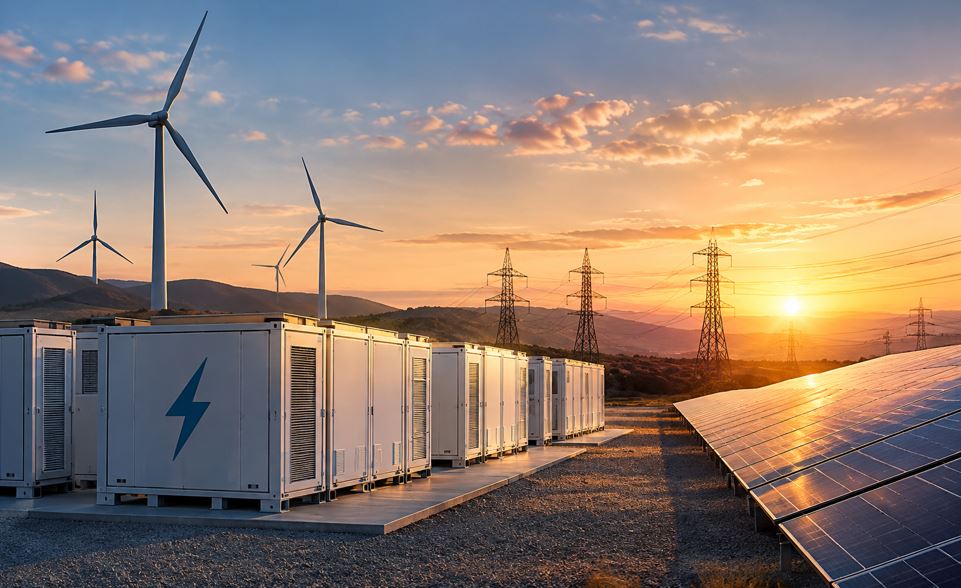
CAPE TOWN, South Africa, August 11, 2026/APO Group/ –South Africa is undergoing one of the most significant transformations in its energy sector, as the country works to diversify its power mix, reduce reliance on coal and develop a more integrated energy system capable of supporting long-term economic growth. Combining electricity, natural gas, liquid fuels, hydrogen and energy storage, this evolving model is creating new opportunities for infrastructure development, industrial investment and public-private partnerships.

These developments will be explored during the “Invest in South Africa: Developing Integrated Energy Systems for an Inclusive and Resilient Energy Future” session at African Energy Week (AEW) 2026, where policymakers, investors and industry leaders will assess the commercial strategies, policy frameworks and financing models required to build a more flexible and diversified energy system.

The discussion comes as South Africa continues implementing its Just Energy Transition Partnership, a landmark initiative launched in 2021 that has mobilized an initial $8.5 billion commitment from international partners to support the country’s transition through investments in renewable energy, grid infrastructure, electric vehicles and green hydrogen. The program has since expanded discussions around blended finance mechanisms and private sector participation to accelerate project deployment.

South Africa’s energy transition represents one of the continent’s most significant investment opportunities

While renewable energy remains central to South Africa’s future power mix, gas infrastructure is expected to play an important role in providing flexibility as the country integrates increasing volumes of intermittent wind and solar power. The government’s Gas Master Plan and emerging gas policy framework aim to support the development of a domestic gas market while enabling new infrastructure investments.

Several major gas infrastructure projects are advancing as part of this strategy. At Richards Bay, the proposed Zululand Energy Terminal is being developed as South Africa’s first LNG import terminal and is expected to support Eskom’s planned 3,000 MW gas-to-power program, strengthening energy security and grid flexibility. Meanwhile, the Ngqura LNG terminal development at the Coega Special Economic Zone is progressing as a strategic gas import and regasification hub designed to support industrial users, independent power producers and future gas-to-power capacity. Together, these projects could establish critical infrastructure for South Africa’s emerging gas market while supporting industrial growth and the transition toward a more diversified energy system.

At the same time, the country is positioning itself as a potential global player in green hydrogen. Projects such as Sasol’s Boegoebaai green hydrogen development in the Northern Cape and the proposed Boegoebaai Special Economic Zone are targeting large-scale renewable-powered hydrogen production, with ambitions to develop export opportunities and create new industrial value chains.

The “Invest in South Africa” session will examine how the country can integrate gas, renewables, hydrogen and storage into a resilient energy system while managing the transition away from coal. Discussions will focus on investment pathways, infrastructure priorities and the partnerships required to deliver reliable power and inclusive economic growth.

“South Africa’s energy transition represents one of the continent’s most significant investment opportunities, but success will depend on building an energy system that delivers reliability, affordability and growth,” says NJ Ayuk, Executive Chairman of the African Energy Chamber. “By bringing together investors, policymakers and industry leaders, AEW 2026 will help advance the partnerships needed to transform South Africa’s energy ambitions into practical projects that benefit the economy.”

As South Africa reshapes its energy landscape, AEW 2026 will provide a platform for stakeholders to identify opportunities across gas, power, renewables, hydrogen and infrastructure – helping define the next chapter of the country’s energy future.

Distributed by APO Group on behalf of African Energy Chamber.

Continue Reading

Trending