
Business
Mauritius tourism and hospitality industry to showcase growth and investment opportunities at the API Mauritius & Indian Ocean Property Investment Forum
Published
1 year agoon
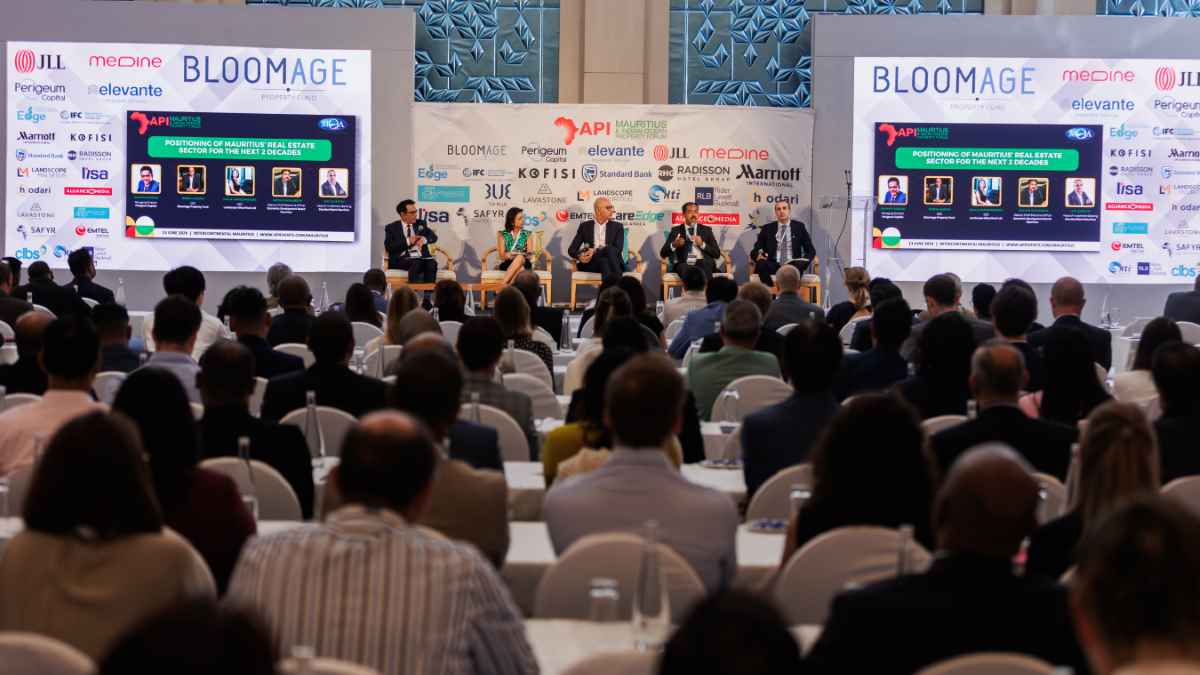
Mauritius is increasingly recognised as a leader in sustainable tourism, driven by government initiatives, industry commitment to eco-friendly practices, and real estate developments
The forum will serve as a key platform to discuss growth prospects, investment challenges, and innovative partnerships shaping the future of hospitality in Mauritius and beyond.
Mauritius is increasingly recognised as a leader in sustainable tourism, driven by government initiatives, industry commitment to eco-friendly practices, and real estate developments.
The government aims to make Mauritius a “Green Destination” by 2030, focusing on reducing the negative effects of tourism like pollution and resource overuse, while increasing positive benefits such as protecting nature, supporting local communities, and preserving culture.
At the same time, real estate developments also follow green building principles, using energy-efficient designs and renewable energy to reduce carbon footprints. This combined effort from government, industry, and real estate creates a tourism sector that attracts visitors, cares for the environment, and benefits local people.
Neil George, Partner and Executive Director of Aleph Hospitality, notes that the region faces a significant opportunity to expand eco-certified hotels and circular economic practices in tourism that target waste reduction and promote local sourcing.
“Over the next five years, I believe that we will see substantial growth in eco-certified hotels as sustainability becomes a key differentiator. I expect that foreign investment in green hospitality projects will increase as Mauritius strengthens its sustainability credentials,” says George of Aleph Hospitality, which is the largest independent hotel management company in the Middle East and Africa.
However, he acknowledges that overcoming the perception of “Africa risk” and the somewhat illiquid nature of markets across the African continent remains a barrier to attracting institutional funding.
In other words, Africa is still widely viewed as lacking transparency, and it can be difficult to quickly buy or sell assets without impacting their prices. As a result, large investors such as banks and financial institutions find it challenging to commit funding. They prefer markets where information is readily available and where they can quickly recover their investments if necessary.
Investment challenges and innovative solutions
Institutional funding — traditional debt and equity funding — for hospitality developments in the Indian Ocean is often hindered by perceived market risks and limited liquidity.
Both Neil George and Govind Mundra, the Head of Development for Middle East & Africa at Wyndham Hotels & Resorts, emphasize these challenges remain perverse but also highlight innovative models to mitigate them.
Mundra points to branded residences and rental pool resorts as effective strategies that allow developers to pre-sell units and reduce upfront capital burdens while benefiting from global brand management and distribution networks. Wyndham assists developers and investors on this front.
“Branded residences and rental pools allow developers to pre-sell units—whether villas or condo-style apartments—while retaining them under a hotel management structure, easing both equity requirements and long-term debt burden.
There’s a clear opportunity to lead with eco-certified hotels, community-integrated experiences, and smart resort design – and we’re eager to be part but also to lead that journey
“It also gives investors the chance to monetize their assets while benefiting from a global brand, unified reservation system, and professional management. For interested investors, we’re always happy to explore these models further after the session. They’ve proven to be a powerful tool, especially when paired with our operational scale and strong visibility in key source markets,” says Mundra.
Wyndham’s “Wyndham Green” programme also provides a practical roadmap for hotels to achieve sustainability goals, graded across five levels covering energy use, waste reduction, sourcing, and community engagement. This approach aligns with the growing traveller demand for eco-conscious stays, particularly among younger generations, and supports Mauritius’s ambition to become a global benchmark in sustainable hospitality.
Predictions and growth outlook for the next five years
Industry leaders foresee a transformative shift in Mauritius’s hospitality sector over the next five years. Sustainable practices will evolve from optional enhancements to mandatory standards for new developments. Eco-certification, digital enablement, and environmental resilience will become prerequisites for new resorts, with guests expecting authentic cultural connections alongside eco-efficiency.
Aleph Hospitality’s expertise in tailored management solutions offers local entrepreneurs and investors opportunities to optimize operations, improve service quality, and attract international brands and investors through strategic partnerships. This collaborative approach can enhance return on investment from project inception through to exit phases.
Marriott International, one of the world’s largest hotel companies, has also reaffirmed its commitment to Mauritius, highlighting the island’s rich natural landscapes, cultural heritage, and world-class hospitality.
Says Jugal Khushalani, the Senior Director of Development for Sub-Saharan Africa at Marriott International: “The destination offers a resilient, high-value tourism offering that has evolved in terms of experience, accessibility, and infrastructure. It also caters to the rising demand for experiential travel with enhanced luxury offerings, wellness experiences and environmentally conscious initiatives.”
Marriott International sees strong potential to expand its hotel portfolio in support of Mauritius’s resilient, high-value tourism economy.
Equally bullish about Mauritius is Radisson Hotel Group, which has reaffirmed its commitment to expanding in the Indian Ocean, building on its strong presence in Mauritius.
“Mauritius is setting the tone for sustainable hospitality in the region,” says Ramsay Rankoussi, Vice President of Development, Radisson Hotel Group, a major international hospitality company.
“There’s a clear opportunity to lead with eco-certified hotels, community-integrated experiences, and smart resort design – and we’re eager to be part but also to lead that journey. There’s growing demand from conscious travellers for resorts that integrate environmental stewardship with authentic local experiences which we have made our priority in all the hotels we operate on the island and globally,” says Rankoussi.
The Radisson Hotel Group is committed to net-zero operations by 2050. The group is also seeking to consolidate its existing presence across Mauritius, Madagascar, Reunion and Maldives but also to eventually enter Seychelles – aiming to bring its diverse portfolio of lifestyle, upper upscale, and eco-conscious brands to more of the region.
Government and industry collaboration for sustainable tourism
Mauritius’s government programme for 2025-2029 places eco-tourism at its core, reinforcing the island’s strategic focus on sustainable development. The Tourism Authority’s ongoing initiatives include banning single-use plastics, promoting renewable energy, encouraging local sourcing, and supporting eco-label certifications for hotels, such as Green Globe, held by prominent resorts. These efforts not only reduce the environmental footprint but also enhance the island’s appeal as a responsible travel destination.

You may like
-

African Entrepreneurs Win $400,000 in Catalytic Funding to Scale High-Impact Startups
-

Water constraints become a defining economic and infrastructure risk
-

Global Youth Powerhouse Summit 2026 Concludes Successfully
-


Africa’s Biggest Energy Movement Returns to Cape Town Next Week
-
African Energy Week (AEW 2026) Turns Cape Town into Africa’s Energy Marketplace
-

Afreximbank and East African Business Council (EABC) Expand Digital Trade Access for East African Businesses through Africa Trade Gateway
Business
African Entrepreneurs Win $400,000 in Catalytic Funding to Scale High-Impact Startups
Published
15 hours agoon
October 7, 2026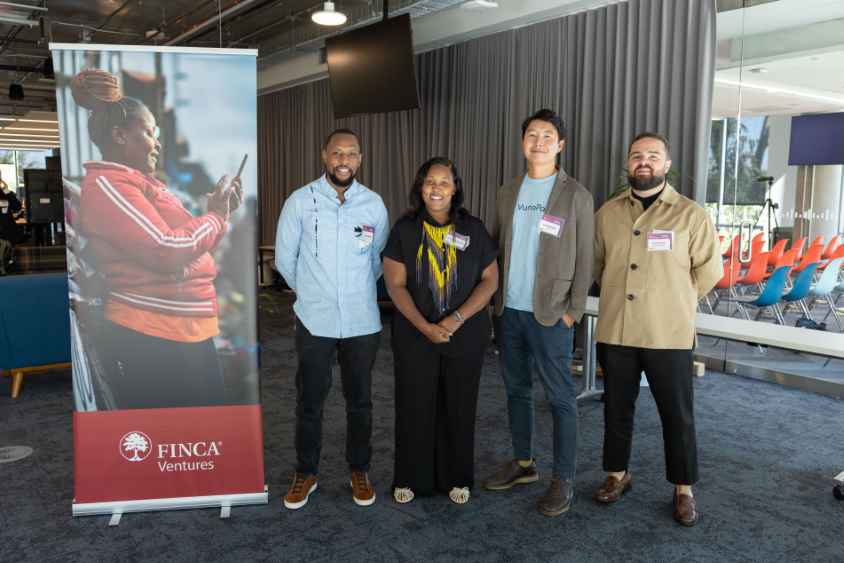
2026 FINCA Ventures Prize Competition awards grant funding to six innovative founders creating life-enhancing solutions for underserved communities across Africa
“Africa’s future will be shaped by entrepreneurs who see opportunity where others see market failure,” said FINCA Global CEO Andrée Simon. “One of the most important ways we can support these founders is by backing them early and helping them build the credibility and traction to attract additional investment and achieve meaningful scale.”
Now in its third year, the FINCA Ventures Prize Competition drew more than 700 applications in two categories: fintech for financial inclusion and sustainable agriculture & food systems. First-place winners in each category — VunaPay, co-founded by Gatwiri Njogu-Mokaya and Koya Matsuno, and Kumbatia Seafood, co-founded by Bernard Iha Thoya, Will Gertler, and Nelson Ondego Mumata — received a $100,000 grant, while second- and third-place winners received $60,000 and $40,000, respectively.
A Case for Early Investment
The companies recognized through the FINCA Ventures Prize Competition illustrate the vast opportunity emerging across Africa’s entrepreneurial ecosystem. Too often, promising founders struggle to tap into traditional investment networks, despite strong potential, proven track records, and innovative business models.
“Entrepreneurship remains one of the most powerful drivers of economic progress across the continent, but early-stage businesses can’t do it alone,” said FINCA Ventures Managing Director Winnie Mwangi. “Catalytic capital is what allows founders to reach the scale where both financial returns and social impact compound. Investors and partners willing to act early play an essential role in supporting startups through critical growth stages and drawing attention to opportunities that might otherwise be overlooked.”
Advancing Africa’s Startup Ecosystem
The six finalist companies of the 2026 competition, three of which are led or co-led by women, pitched their ventures to a panel of distinguished judges on October 6 in San Francisco at an event hosted by Cisco, and the winners were announced later that evening at an award celebration. The judging panel comprised leaders from across impact investing, venture capital, fintech, and sustainable development.
The award will help first-place winner VunaPay scale its model designed to expand access to timely payments and financing for smallholder farmers through agricultural cooperatives. As co-founder Koya Matsuno explained: “There are about 54,000 cooperatives across Africa, and each of them has between 500 and 10,000 farmers. This equates to millions of smallholder households that we can serve.”
Kumbatia Seafood’s co-founder Will Gertler shared that the team will use the funding to expand the company’s operations to increase impact for small-scale fishers on the Swahili Coast: “The FINCA Ventures Prize will go towards working capital and expansion financing to build out our first sales department and scale our intervention to a dozen more communities by 2030.”
Second-place winners are nesti, co-founded by Christabel Ojuok and David Kimani, in fintech for financial inclusion, and eAgro, co-founded by Tafadzwa Chikwereti and Golden Nhunhama, in sustainable agriculture & food systems. Third-place winners are ChatCash, co-founded by John Josiah Sakala, Leon Kanamugire, Edgar Erick, and Jude Egbokwu, in fintech for financial inclusion, and Pollen Patrollers, co-founded by Margaret Wanjiku, Julieta Wanjohi, and Charity Maina, in sustainable agriculture & food systems.
“The FINCA Ventures Prize is an opportunity to spotlight emerging African entrepreneurs who are creating jobs and building financial and social resilience across the continent,” said FINCA International Board Chair David Weisman. “Their ingenuity and determination are remarkable, and their impact deserves far greater visibility.”
Winners of the 2026 FINCA Ventures Prize Competition
Category: Fintech for Financial Inclusion
FIRST PLACE – $100,000
VunaPay
Website: www.VunaPay.com
Location: Kenya
Founders: Gatwiri Njogu-Mokaya (https://apo-opa.co/4i7JDzD) and Koya Matsuno (https://apo-opa.co/4zboAC6)
In Kenya, VunaPay (www.VunaPay.com) builds last-mile payment and credit infrastructure for agricultural value chains across Africa, enabling instant payments to smallholder farmers through cooperatives. COO Koya Matsuno explained how the company’s digital finance platform is improving transparency, efficiency, and access to formal financial services.
SECOND PLACE – $60,000
nesti
Website: https://nesti.Africa/
Location: Kenya
Africa’s future will be shaped by entrepreneurs who see opportunity where others see market failure
Founders: Christabel Ojuok (https://apo-opa.co/4ekj2Ns) and David Kimani (https://apo-opa.co/3VUtFjH)
In Kenya, nesti (https://nesti.Africa/) is turning rent into a credit-building tool by converting regular, on-time payments into a trusted financial identity that unlocks fair credit and home ownership. CEO David Kimani explained that the company’s mission is to help African renters build generational wealth and achieve financial freedom.
THIRD PLACE – $40,000
ChatCash
Website: https://ChatCash.africa/
Location: Rwanda, Zimbabwe
Founders: John Josiah Sakala, (https://apo-opa.co/3U7xfqe) Leon Kanamugire (https://apo-opa.co/4AX9FgE), Edgar Erick, and Jude Egbokwu (https://apo-opa.co/3VQRetJ)
In Rwanda and Zimbabwe, ChatCash (https://ChatCash.africa/) is an AI conversational operating system that turns WhatsApp into automated digital storefronts with native, interactive payment buttons for African micromerchants. CEO John Josiah Sakala explained that the platform helps merchants double their conversion rates while building transaction trails that can unlock access to financial services.
Category: Sustainable Agriculture & Food Systems
FIRST PLACE – $100,000
Kumbatia Seafood
Website: www.KumbatiaSeafood.com
Location: Kenya
Founders: Bernard Iha Thoya (https://apo-opa.co/4ARW5e9), Will Gertler (https://apo-opa.co/4zp9k4J), and Nelson Ondego Mumata (https://apo-opa.co/3VUDiyS)
Kumbatia Seafood (www.KumbatiaSeafood.com) sources, finances, and distributes sustainably caught, artisanal fish from small-scale fishing communities along Kenya’s Swahili Coast. CEO Will Gertler explained how the company combines financing, cold chain logistics, export-grade processing, and full digital traceability to connect coastal fishers to premium markets while protecting the marine ecosystems they depend on.
SECOND PLACE – $60,000
eAgro
Website: https://eAgro.co.zw/
Location: Zimbabwe
Founders: Tafadzwa Chikwereti (https://apo-opa.co/4zgFuPD) and Golden Nhunhama (https://apo-opa.co/3VReyHO)
In Zimbabwe, eAgro builds AI infrastructure that works without internet, enabling farmers in rural communities to access real-time agricultural guidance through basic mobile phones. CEO Tafadzwa Chikwereti explained how the company’s digital tools combine AI, satellite analytics, soil science, and local advisory systems to improve yields, reduce losses, and strengthen climate resilience across Africa.
THIRD PLACE – $40,000
Pollen Patrollers
Website: www.PollenPatrollers.com
Location: Kenya
Founders: Margaret Wanjiku (https://apo-opa.co/4zjwAB5), Julieta Wanjohi (https://apo-opa.co/4i54LXg), and Charity Maina
In Kenya, Pollen Patrollers uses solar-powered IoT technology and AI-driven pollination services to help smallholder farmers and beekeepers increase crop yields and reduce bee colony collapse. CEO Margaret Wanjiku explained how the company is building more resilient food systems across East Africa and creating green jobs for women and youth.
Distributed by APO Group on behalf of FINCA.
Events
Global Youth Powerhouse Summit 2026 Concludes Successfully
Published
19 hours agoon
October 7, 2026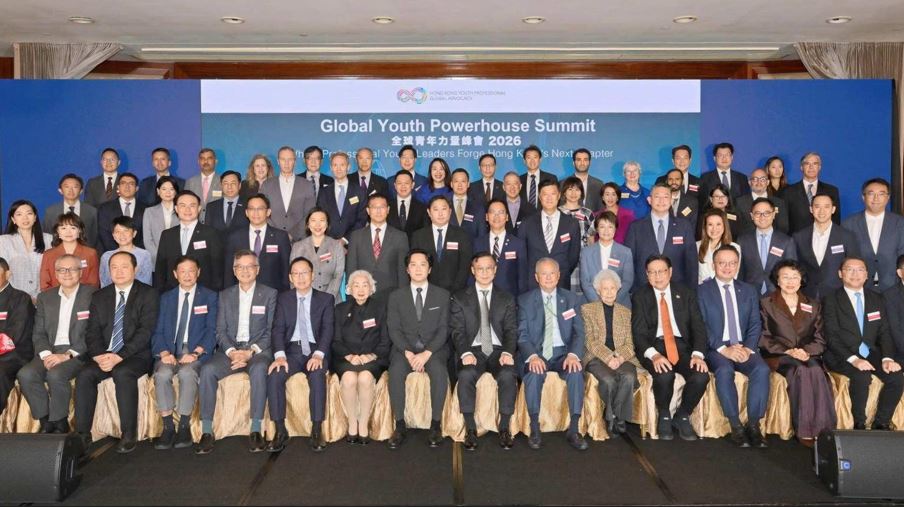
|
US$10 Billion in Venture Capital Convenes to Meet Hong Kong Start-ups; Government, Business and Young Professionals Explore Opportunities in the New Economy |
||||||||||||||||||||||||||||||||||||||||||||||||||||||||||||||||||||||||||||||||||||||||||||||||||||||||||||||||||||||||||||||||||||||||||||||||||||||||||||||||||||||||||||||||||||||||||||||||||||||||||||||||||
| HONG KONG SAR – Media OutReach Newswire – 7 October 2026 – The Global Youth Powerhouse Summit 2026, organised by Hong Kong Youth Professional Global Advocacy, was held on 5 October at the Conrad Hong Kong. Now in its third edition, the Summit coincides with the release of the Hong Kong Special Administrative Region’s First Five-Year Plan for Economic and Social Development (2026–2030) and the latest Policy Address, which together set a clear blueprint for the city’s future. Anchored on these core themes and conducted entirely in English, the full-day programme focused on artificial intelligence, geopolitics, Hong Kong as an education hub, capital markets, life and health technology, and start-up financing. Government and business leaders, corporate representatives and young professionals were invited to examine Hong Kong’s strategic opportunities in the new economic landscape.
The Summit aims to connect young professionals with international resources, enabling participants to engage directly with industry leaders, grasp developments at the frontier of industry, and look ahead to the opportunities and challenges arising from artificial intelligence and Greater Bay Area integration. Previous editions have drawn a strong response. Across three editions, the Summit has attracted more than thousands of in-person participants and about 17,000 online participants from over 30 countries and regions, with social media reach exceeding 50 million. This year’s Summit was the largest yet, bringing together more than 600 young professionals, government and business leaders and corporate representatives. Participants from over 60 countries and regions joined online. More than 30 distinguished speakers and moderators were invited, including officials of the Hong Kong Special Administrative Region Government and representatives of leading local and international organisations such as Huawei, the Alibaba Hong Kong Entrepreneurs Fund, Hong Kong Exchanges and Clearing Limited, Bullish and Endowus. In addition, consular representatives from up to 20 countries attended the Summit. The Chief Executive of the Hong Kong Special Administrative Region, Mr John Lee, GBM, SBS, PDSM, PMSM, delivered a pre-recorded video speech, encouraging young professionals to seize the opportunities of the times and inject fresh momentum into Hong Kong’s high-quality development. He said: “For our young people, I firmly believe that your opportunities ahead outweigh the difficulties. The HKSAR Government will join hands with all sectors to build platforms for you to thrive in Hong Kong, in our country, and in the global arena.” The Deputy Secretary for Justice of the Hong Kong Special Administrative Region, Dr Cheung Kwok-kwan, SBS, JP, delivered an opening keynote entitled “Opportunities for the Professional Development of Young People”, and stressed: “As the saying goes, ‘Change is the only constant’—or as our Cantopop classic famously put it, ‘變幻原是永恆’. Today, we no longer measure change in years or decades, but in months and days. For our young professionals, this fast-paced era unlocks unprecedented career horizons. By accelerating Greater Bay Area integration through our new GBA Task Force and empowering you to act as the ultimate ‘super-connectors’ and ‘super value-adders’ helping Mainland enterprises go global, we are turning rapid change into your greatest professional advantage.” Dr Kevin Lau, MH, Founding Convenor of Hong Kong Youth Professional Global Advocacy, said: “This is more than a high-level forum. It marks a milestone in the maturing of our network of young professionals. This afternoon, venture funds managing an estimated US$10 billion in assets gathered in the room — and what they are looking at is Hong Kong’s next generation. In life and health technology, our core belief is clear: artificial intelligence can assist imaging and diagnosis, but a physician’s care, and the warmth of a human hand, can never be replaced by technology.” Other distinguished guests included Mr Kevin Choi, JP, Permanent Secretary for Innovation, Technology and Industry; Professor Frederick Ma, GBS, JP, Chairman of the Hong Kong Trade Development Council; Ms Bonnie Y Chan, JP, Chief Executive Officer of Hong Kong Exchanges and Clearing Limited; and Mr James Chau, President of the China-United States Exchange Foundation and World Health Organization Goodwill Ambassador for Sustainable Development Goals. Mr Bryan Che, Chief Strategy Officer of Huawei, and Ms Cindy Chow, Executive Director and Chief Executive Officer of the Alibaba Hong Kong Entrepreneurs Fund, also attended in person to exchange views with young professionals. Panel discussions
Artificial intelligence: from first-time users to advanced users Mr Kevin Choi, JP mentioned: “Every major technology shift brings uncertainty. Our theme today from entry-level shock to AI-powered users building the next talent leader.” Ms Stephaine Chan said: “Every AI conversation ends in the same place, right? More investment, better people, better models and stronger policy.” Ms Ilaria Chan said: “These days, Al is so powerful that they can scan the Internet and social media and find vulnerable young people or old people. They can find it instantly and have a very sophisticated way to trick them and fraud them from scamming.” Mr Bryan Che: “One of the opportunities of Al is because the interface is much more natural for most people to interact with. On one sense, it’s a lot easier for everyone to get started.” Ms Cindy Chow said: “So I guess some of the most damaging thing is not allowing people to use or not, you know, really have the attitude to embrace all this new technology, what this new technology has to bring to you.” Geopolitics: the super-connector Mr James Chau said: “Against this backdrop, we often hear Hong Kong described as a super connector, typically framed in terms of trade volumes, capital markets and logistics but I think that these connections that we’re speaking of really only become very valuable and we understand and recognize the human bonds that pin these together.” Professor Frederick Ma , GBS, JP said: “We are part of China. And yet we are under one country 2 systems connected to the rest of the world. That is the power of Hong Kong.” Ms Ellana Lee said: “We made a very strategic decision when the times were tough to stay and remain in Hong Kong. I think that has and you know, we make these decisions not just out of a whim, but we are very calculative on why we need to stay. I have 8 cities across Asia Pacific. Hong Kong happens to be the hub for Asia Pacific. And there’s it boils down to four major reasons.” Ms IIaria Chan: “Simple of how tech is helping people, there is an organization, WHO care for children that was founded 20 years ago that helps orphans in developing China back then Vietnam, Thailand now in Africa, Middle East to find loving permanent homes. But their bottleneck is how they train social workers and governments on how to take care of orphan welfare. Now this year we’ve actually been launching an online product that is able to scale these bottlenecks, especially in areas that are underfunded. This is a great example of Al tech.” Education: Hong Kong as Asia’s education hub Mrs Jennifer Yu Cheng, JP said: “An education hub is more than a place with excellent institutions. It is a place that students and families choose, where young people flourish, and connects education with research, innovation, careers and a wider community.” Professor Charles Ng said: “With our national policy. And I think we should do better to support this great initiatives and thinking back actually 2023 and home government already in in the government policy in October, if I remember correctly to start to increase the local student quota from 20% to 40%.” Ms Jennifer Ma said: “As a consultant we need demand to meet supply and we are definitely seeing the demand for Hong Kong education at K12 level…….The advocacy for Hong Kong to be the gateway for China Resources and talents to leave China and go into international arenas. But at the same time, we also see a lot of international people interested in what’s happening in mainland, and therefore Hong Kong is a great gateway. So, with that global education, global education philosophy, that means they really appreciate Hong Kong trilingual education by cultural mindset.” Mr Dion CHEN, MH mentioned: “In 2026, a lot of DSS schools will work very hard to try to welcome and also promote welcome to Hong Kong and also promote Hong Kong’s education to the students in different countries.” Ms Maggie Chau said: “Maggie: I can see that all the universities are actually implementing AI in their curriculum. Talking about teacher education, the programs we offer, I mean, not just The Education University of Hong Kong, the programs we offer in all universities implement Al in the curriculum in a way that we draw attention to the use of Al is it has to be ethical.” Capital markets: AI listings, asset tokenisation and the new economy Ms Clara CHAN Ka Chai said: “We always say that from zero to 1 is the most challenging part. So, the patients in terms of having staying power is the core, but it has to go in hand with other qualities like being proactive, being professional.” Mr Michael Lau said: “I think it’s an interesting proposition to consider that these types of companies that are so capital. I would start looking beyond the current horizon of where we are to see where it could go next. And so I do think that there is a demand looking to that future where this idea of a tokenized capital market could be quite interesting.” Mr Samuel RHEE mentioned: “First of all, maybe we just take a step back and just try to understand all of the capital markets, not just equities.” Ms Bonnie Y Chan, JP said: “I want to point out one thing. I mean, we are operating a stock exchange and I think capital markets at the end of the day, the basic function is to match capital with opportunity. So what I’m very focused on is that I’m not just focused on technology or AI.” Ms Emily CHAN Tan said: “We are not just witnessing a cyclical recovery, but also some would call this the threshold of a capital markets renaissance.” Life and health technology: building a health-industry hub Professor Lo Yuk-lam, BBS said: “Building HK’s holistic wellness hub, this year marks a defining moment for HK. With the release of our first ever five year plan and their chief executive policy address just a few weeks ago, our city’s road map for healthcare and biotechnology knowledge has never been clearer or more ambitious.” Professor Anthony Wu Ting-yuk, GBS, JP said: “Every country every city is trying to recruit more talent and I think Hong Kong is an ideal position to attract talents.” Professor LI King-Chuen said: “Our education system will be individualized. And we will do the factual knowledge transfer through mostly self-directed learning. So we guide them, we build an AI system with prescribed information.” Dr Sarah SALVILLA said: “Prevention for sure in terms of how do we educate people to be much more proactive in their everyday lives, yes you know, kind of the lifestyle things.” Start-up pitching: connecting with capital Ms Elaine Yu said: “We have 15 startups and I think a group of students as well, very precocious students WHO are already thinking of ideas, real businesses with commercial viability at the cutting edge of science, research, healthcare and so forth. So, this should be a fun dynamic session.” Mr LU Chin Yung pointed out: “Hong Kong is great in a lot of rankings in the world and this is not given, this is hard earned by your parents, by some of you sitting here. But as a young founder in Hong Kong, if you come to Hong Kong, you get to enjoy all this very safe environment. You have efficiency and then you also have a very clean government. This one I can say for sure. Yeah. And and all this, it helps the the founders to focus on your business, focus on grow, growing instead of you have to deal with many, many things.” The Summit closed amid lively exchange. Hong Kong Youth Professional Global Advocacy said it will continue to build the Summit into a platform for dialogue between young professionals and leading figures in government and business, helping Hong Kong’s young talent seize the opportunities of the new economy. Photos and video: Selected materials can be downloaded here: https://drive.google.com/drive/folders/1XowvT4PLTkLo-Vx6k8UJ_YyuM0O0wSlQ?usp=sharing . Annex 1: Participating venture funds (in no particular order)
Hong Kong Youth Professional Global Advocacy |
Events
HKCEC Hosted 25 New Exhibitions and Conferences, Successfully Hosts Multiple Hong Kong and Asian Debuts Set to Return Next Year
Published
21 hours agoon
October 7, 2026
Totals 786 Events in FY 2025–2026; Reinforcing Hong Kong’s Position as the “International Convention and Exhibition Hub”
HONG KONG SAR – Media OutReach Newswire – 6 October 2026 – The Hong Kong Convention and Exhibition Centre (“HKCEC”) has reaffirmed its standing as the venue of choice for leading global and Chinese Mainland organisers. Throughout the financial year 2025–2026 (July 2025 to June 2026), the HKCEC hosted 786 events, including 128 exhibitions, 81 international and local conferences, and hundreds of corporate meetings, banquets and entertainment events. This year was highlighted by 25 new conferences and exhibitions, including several Hong Kong and Asian debuts, drawing an impressive total attendance of over 7.7 million.
Ms Monica Lee-Müller, Managing Director of Hong Kong Convention and Exhibition Centre (Management) Limited (“HML”), commented, “Leveraging Hong Kong’s unique advantage as a gateway between Chinese Mainland and the rest of the world, HML has exemplified Hong Kong’s role as a ‘Super Connector’ and ‘Super Value-Adder’ by strategically aligning our business development focus on four key sectors—Medical, Innovation and Technology, Finance, and Education, and secured some landmark debuts. We are thrilled that these inaugural events were met with resounding success and have already confirmed their return to the HKCEC next year. Looking forward, we will continue to provide a world-class platform that empowers Mainland enterprises to go global while attracting international investment, creating a powerful engine for Hong Kong’s long-term economic growth.”
Several landmark events made their debuts at the HKCEC during the year. Notably, the inaugural Hong Kong Comic Con 2026 demonstrated the immense appeal of launching major international IPs in the city, achieving unprecedented success, generating substantial economic value and business opportunities. Following this resounding debut, the organisers have confirmed that the event will return to the HKCEC in 2027.
Highlighting Hong Kong’s position as an international health and medical innovation hub, multiple international medical conferences were held in the city and at the HKCEC for the first time this year. Among them, the 9th World Congress of Pediatric Cardiology & Cardiac Surgery brought together leading experts and more than 3,000 global participants, underscoring Hong Kong’s professional standing in medical. Additionally, the HKCEC welcomed the 15th China Chest Pain Centers Congress, marking the first time ever this national medical association convention has been held in Hong Kong. The HKCEC serves as a two-way platform to showcase national healthcare standards and support Mainland enterprises in their global expansion.
These milestones further demonstrate Hong Kong’s vital role as a regional hub connecting Chinese Mainland and the world, while continuing to reinforce city’s leading position in the medical sector.
In addition, Asia’s flagship events have reaffirmed Hong Kong as their long-term host city, confirming their return to the HKCEC in 2027. Art Basel Hong Kong, which has been held annually at the HKCEC since 2013, has reached an agreement with the Culture, Sports and Tourism Bureau to designate Hong Kong as the sole Asian venue over the next four years. Meanwhile, Vinexpo Asia—one of the region’s premier wine and spirits trade events since 1998—is ending its rotation with Singapore. Organiser Vinexposium announced that Vinexpo Asia will officially make Hong Kong its home starting in 2027.
Looking ahead, HML will continue to actively secure prestigious exhibitions and conferences, generating high-value business and international exchange opportunities for Hong Kong. Recent additions include the inaugural LEAP East—the Asian edition of the Middle East’s flagship tech fair in July, the inaugural Global Unicorn Summit in August, and the World Cancer Congress 2026 in September. Later this year, the HKCEC will also host the city’s premier art toy exhibition—Amazing Toy Show Hong Kong 2026 for the first time in December.
By continuously introducing high-profile global events, HML will enrich Hong Kong’s vibrant events landscape and further cement its status as a leading convention and exhibition hub.
About the Hong Kong Convention and Exhibition Centre
This award–winning 306,000–sqm building, first opened in 1988, offers 91,500 sqm of rentable space. An iconic Hong Kong landmark, the Hong Kong Convention and Exhibition Centre (‘HKCEC’) is located on a prime waterfront site in the central business district of Hong Kong. It is owned by the Hong Kong SAR Government and the Hong Kong Trade Development Council.
About Hong Kong Convention and Exhibition Centre (Management) Limited
Hong Kong Convention and Exhibition Centre (Management) Limited (‘HML’) is a professional private management and operating company responsible for providing day–to–day management for the HKCEC, where it oversees administration, marketing, booking, scheduling, event co–ordination, maintenance and security. It also manages food and beverage operations at the HKCEC, including restaurants and catering services. HML provides world–class services for users, visitors and guests of the HKCEC, a venue which has been consistently awarded the title of ‘Best Convention and Exhibition Centre in Asia’ by leading industry professionals. Events at the HKCEC, including exhibitions, conferences, corporate meetings, entertainment events, seminars and banquets, contribute significant economic benefits to the city and help raise the international image of Hong Kong.
HML is a member of CTF Services Limited. Listed on The Stock Exchange of Hong Kong Limited, CTF Services Limited (Hong Kong Stock Code: 659) is a conglomerate with a diversified portfolio of market-leading businesses, predominantly in Hong Kong and Chinese Mainland. The Group’s businesses include financial services, toll roads, logistics, construction, and facilities management. Through the Group’s sustainable business model, it is committed to creating more value for all stakeholders and the community.
Trending
-
 Business3 days ago
Huawei and Qualcomm Announce Broad Patent License Agreement
-

 Business3 days ago
Liberia Petroleum Regulatory Authority (LPRA) to Showcase Liberia’s 2026 Offshore Licensing Round in Cape Town
-
Energy3 days ago
Malawi, Kenya, Eswatini Bring State Ambitions to African Mining Week (AMW) 2026’s National Mining Companies Forum
-
Business3 days ago
African Energy Chamber (AEC), Ground State Market Solutions Sign Memorandum of Understanding (MoU) to Advance Canadian LNG, LPG Supply to Africa
-

 Business2 days ago
Cautious optimism returns to agency-side strategy as influence with clients grows
-

 Events3 days ago
“Future Resonance — ShanghaiEye Night” Brings Shanghai to Washington, Fosters People-to-People Exchange Across the Pacific
-

 Business3 days ago
Islamic Corporation for the Development of the Private Sector (ICD) and Eastern Bank PLC (EBL) Close USD 10 Million Shariah-Compliant Term Finance Facility for Samuda Shipping Limited in Bangladesh
-
 Business3 days ago
Thailand’s LTR Visa Hits 12,000 Approvals in Four Years, Adding USD 1.28 Billion to the Economy