Connect with us
Anglostratits

Business

Qrent says delaying Information Technology (IT) refresh cycles may be increasing operational risk for businesses in Africa

Published

on

Africa

As rising hardware costs and supply chain instability continue to pressure IT budgets, organisations are increasingly turning to refurbished technology to maintain continuity and financial flexibility

JOHANNESBURG, South Africa, May 27, 2026/APO Group/ –Qrent (www.Qrent.co.za), a provider of  IT asset management and sustainable refurbished technology solutions, says organisations that continue delaying technology refresh cycles in an effort to protect budgets may be exposing themselves to greater operational and continuity risk.


The warning comes as global hardware costs continue to rise amid ongoing supply chain disruption and increased demand for AI infrastructure..

According to Gartner, memory pricing is expected to increase significantly, with DRAM forecast to rise by 125% and NAND by 234%, contributing to widespread increases in IT hardware costs globally.

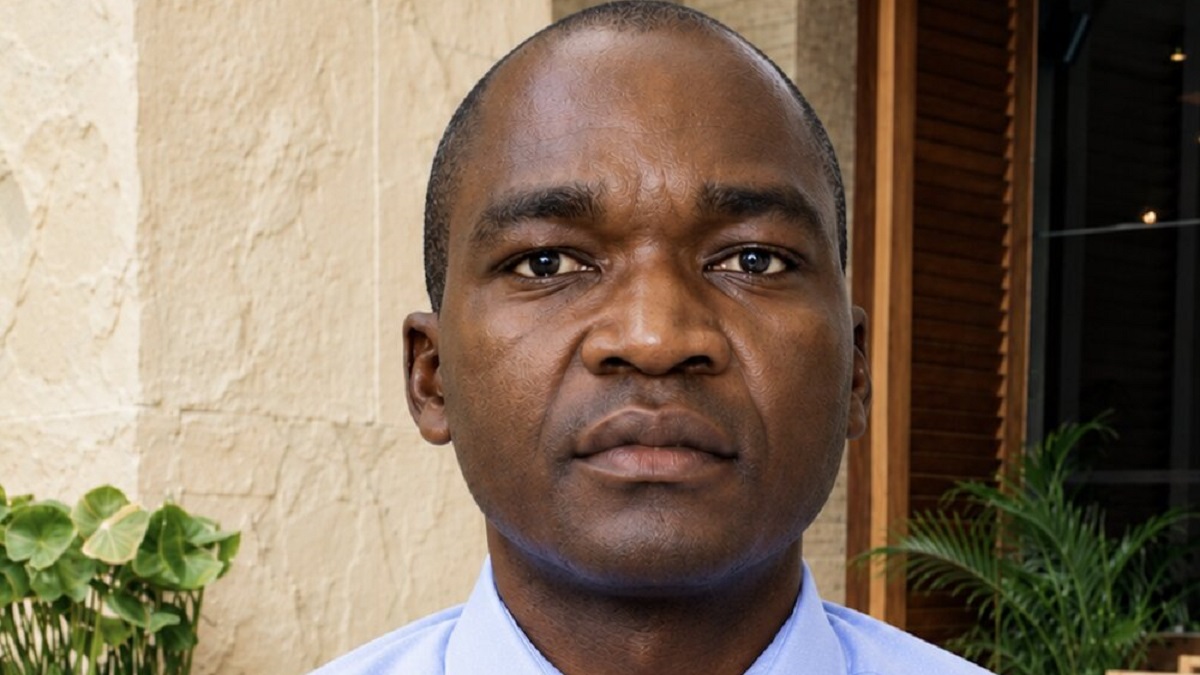
Kwirirai Rukowo, Managing Executive (MEA) at Qrent, says many organisations are being forced into difficult procurement decisions as financial pressure intensifies across the market.

“Businesses are facing a growing imbalance between operational demand and available budget. Projects are being delayed, refresh cycles are being extended and procurement decisions are increasingly being driven by cost pressure rather than operational requirements. The role of IT is not to wait for perfect market conditions, it is to keep the organisation running regardless of them.” says Rukowo.

“While these decisions may appear financially responsible in the short term, they often create greater long-term risk by reducing agility, delaying deployment and placing strain on ageing infrastructure.”

The role of IT is not to wait for perfect market conditions, it is to keep the organisation running regardless of them

Qrent says refurbished technology is increasingly being adopted as a practical solution that allows organisations to maintain continuity while managing rising procurement costs and hardware shortages.

Unlike new hardware procurement, refurbished technology is less exposed to manufacturing delays, semiconductor allocation challenges and international shipping constraints, allowing businesses to deploy infrastructure more quickly and predictably.

The company says refurbished enterprise-grade devices also offer organisations greater financial flexibility by lowering upfront costs while maintaining the performance required for most business environments and workloads.

“Most organisations do not require the latest hardware specifications to maintain productivity. What matters most is having reliable technology available when the business needs it,” says Rukowo.

In addition to long-term procurement strategies, refurbished devices are increasingly being used as short-term rental and bridging solutions where new hardware lead times become impractical.

Qrent says this approach enables organisations to continue operating and scaling without placing additional pressure on already constrained capital budgets.

The company believes the broader market shift toward lifecycle extension, refurbishment and circular technology models will continue accelerating as organisations prioritise cost optimisation, sustainability and operational resilience.

“Waiting for pricing or supply chains to stabilise is no longer a strategy. Businesses that adopt more flexible sourcing and lifecycle management approaches will be significantly better positioned to maintain continuity and respond to changing market conditions,” says Rukowo.

“Refurbished technology is no longer simply an alternative option. In the current market, it has become an important mechanism for enabling business continuity and smarter technology investment.”

Distributed by APO Group on behalf of Qrent.


Business

All Roads Lead to Namibia: The 7th Canada-Africa Business Conference Returns to Windhoek, 2–4 February 2027

Published

on

Ateau Zola

The Conference is anticipated to be the largest event the Chamber has convened on the African continent in its 33-year history

TORONTO, Canada, October 7, 2026/APO Group/ –The Canada-Africa Chamber of Business (www.CanadaAfrica.ca) is pleased to announce that the 7th Canada-Africa Business Conference will take place in Windhoek, Namibia, from 2–4 February 2027, under the headline sponsorship of B2Gold. The program opens with a site visit to B2Gold’s Otjikoto operations on 2–3 February, followed by a full conference day on Thursday, 4 February — in the days immediately preceding the Investing in African Mining Indaba in Cape Town. The Conference is anticipated to be the largest event the Chamber has convened on the African continent in its 33-year history.


During Africa Accelerating 2026, held in Toronto, a point was made that echoed throughout the program: all roads lead to Namibia for the next Canada-Africa Business Conference. “We are so delighted to be returning to Windhoek, and to be doing so with partners who continue to demonstrate what Canada-Africa collaboration can achieve,” said Garreth Bloor, President of The Canada-Africa Chamber of Business.

“Last year we welcomed over 50 Canadian company representatives among the hundreds of delegates – we’ve now doubled capacity for the next event, based on demand,” explained Bloor during the Africa Accelerating conference underway in Toronto this year.

Otjikoto has shown what is possible when a Canadian company and a Namibian community build together over the long term, in a country that is a gateway to the African continent

In remarks to the previous Canada-Africa Business Conference in Windhoek, the Prime Minister of Canada, the Right Honourable Mark Carney, recognized the Chamber “for convening leaders from across Canada and Africa” — commending its role in advancing investment, trade and partnership, and in connecting businesses and institutions to drive practical collaboration and shared growth.

“B2Gold is proud to support the Chamber’s largest event on African soil in its 33-year history, and proud that it is taking place in Namibia,” said John Roos, Managing Director of B2Gold Namibia. “Otjikoto has shown what is possible when a Canadian company and a Namibian community build together over the long term, in a country that is a gateway to the African continent. Welcoming business leaders to the mining operations, and to the investments in other sectors that have grown up around them, alongside the launch of the B2Gold Foundation in Windhoek, is our way of inviting others to see that partnership for themselves — and to consider what they might build here.”

Africa Accelerating, the Chamber’s flagship conference taking place in Canada this week, also featured a keynote address by Neil Reeder, Vice President, Government Relations at B2Gold, underscoring how vital B2Gold’s work is as a model for Canada-Africa trade and investment — and for deeper engagement between Canada and African markets.

Individuals who wish to find out more may visit the conference page here (https://apo-opa.co/4zjUsEH).

Registrants who wish to indicate their interest in joining the event may do so here (https://apo-opa.co/4hwRBlL).

Distributed by APO Group on behalf of The Canada-Africa Chamber of Business.


Continue Reading

Business

The Coca-Cola System and Water Sector Leaders Announce the South Africa Non-Revenue Water Mechanism to Support National Water Security Priorities

Published

on

Coca-Cola

Between 2026 and 2031, the initiative aims to mobilize R250 million in investment, matched by Public Sector partners, resulting in a combined R500 million toward Gauteng municipal water infrastructure and NRW reduction initiatives

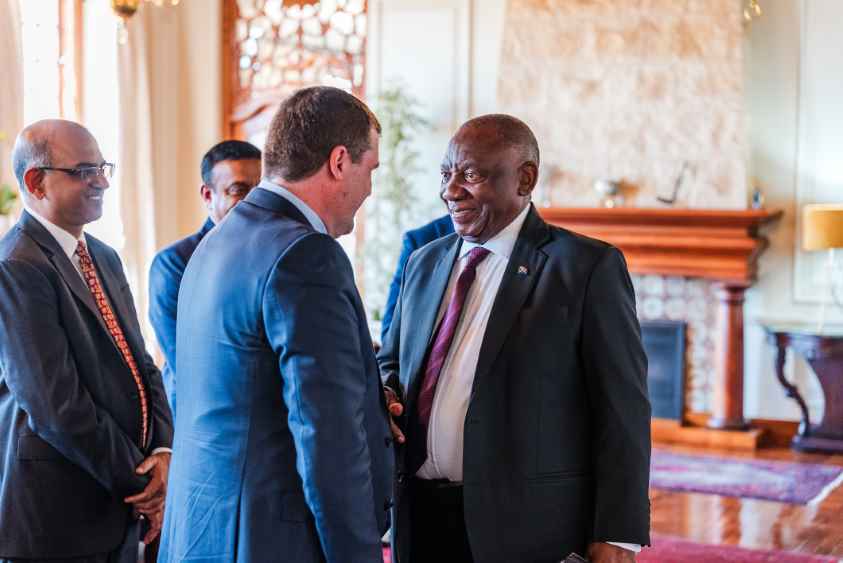
JOHANNESBURG, South Africa, October 7, 2026/APO Group/ –Following a meeting with H.E. President Cyril Ramaphosa, the Coca-Cola system (www.Coca-ColaCompany.com) today announced a R500 million public-private partnership aimed at helping address South Africa’s growing water infrastructure challenges and strengthening long-term water security.


This non-revenue water (NRW) initiative was developed in collaboration with Coca-Cola Beverages Africa, the World Bank Group’s 2030 Water Resources Group (2030 WRG) – which received funding from The Coca-Cola Foundation – the Platform for a Water Secure Gauteng, the Department of Water and Sanitation (DWS), Rand Water Services, Global Water Challenge (GWC), and the City of Tshwane. It forms part of the Coca-Cola system’s Africa Water Stewardship Initiative (https://apo-opa.co/4y69uwA) and aims to reduce municipal water and revenue losses due to leaks, while unlocking scalable private sector investment in public water systems.

South Africa currently loses an estimated *47% of treated water through leaks, aging infrastructure, and other non-revenue water losses. The initiative directly complements efforts under the National Water Action Plan to improve municipal water delivery, strengthen operational efficiency, and accelerate investment into critical infrastructure.


“Water security is fundamental to South Africa’s economic growth, community resilience, and long-term sustainability,” said Luis Felipe Avellar, President of The Coca-Cola Company’s Africa operating unit. “Beyond its direct impact, the initiative demonstrates how collaborative action can help attract private investment and address critical water sector challenges. It supports the objectives of the National Water Action Plan and provides a scalable, catalytic model that could be replicated across South Africa.”


“This creates an important model for how public and private sector can work together to address infrastructure challenges at scale,” said Sunil Gupta, Chief Executive Officer, Coca-Cola Beverages Africa. “We are committed to being part of the solution through partnerships that strengthen infrastructure resilience and water stewardship.”


The initiative, which follows the recent announcement of a planned R17.6 billion investment in South Africa through 2030 by the Coca-Cola system, will initially focus on targeted operational and infrastructure interventions in Gauteng, with phase one commencing in the City of Tshwane municipal system. Early implementation efforts will focus on leak reduction through pressure management and the installation of infrastructure to improve industrial effluent monitoring and accountability.


This creates an important model for how public and private sector can work together to address infrastructure challenges at scale

“Government welcomes partnerships that support our national commitment to improving water security and municipal service delivery,” said Hon Pemmy Majodina, Minister of Water and Sanitation. “Addressing non-revenue water losses is essential to ensuring sustainable access to water for communities, industry, and future economic growth. Through the work of the National Water Crisis Committee, we continue to drive collaborative solutions that strengthen municipal capacity and accelerate progress in addressing critical water challenges. This initiative demonstrates the value of partnership across government, business, and development partners in advancing a shared national priority.”


The programme also forms part of the Coca-Cola system’s longer-term water replenishment and sustainability goals. Between 2026 and 2031, the initiative aims to mobilize R250 million in investment, matched by Public Sector partners, resulting in a combined R500 million toward Gauteng municipal water infrastructure and NRW reduction initiatives.


The innovative mechanism addresses a significant structural gap in South Africa’s water sector by creating a platform for private sector participation in municipal water infrastructure investment.


“The World Bank Group, as part of our Water Strategy Implementation Plan Water Resources Group (WRG 2030), fully supports collaborative mechanisms that can mobilize investment, technical expertise, and operational capability toward critical development priorities,” said Lubabalo Luyaba, Senior Water Specialist at the World Bank Group. “The NRW programme is a practical demonstration of the municipal trading services reforms agenda, showing how alternative service delivery mechanisms can be used to improve infrastructure performance, reduce water losses, and strengthen the financial sustainability of municipalities.”


Coca-Cola HBC, which has agreed to acquire a majority stake in Coca-Cola Beverages Africa, also supports the effort. Zoran Bogdanovic, CEO of Coca-Cola HBC, said: “This is a very important initiative, and it’s inspiring to see government, business and development partners come together to make a real difference for communities. We look forward to continuing to help build water security across Africa.”


The collaboration is expected to expand into additional municipalities over time, creating a broader framework for infrastructure recovery.


* https://apo-opa.co/4jaoeqx

Distributed by APO Group on behalf of Coca-Cola.


Continue Reading

Business

Sub-Saharan Africa records strong trade growth as globalization reaches record level

Published

on

globalization

These findings form part of the latest edition of the DHL Globalization Tracker, released today by DHL and New York University’s Stern School of Business

JOHANNESBURG, South Africa, October 7, 2026/APO Group/ —

  • The AI boom has become a powerful driver of global trade, outweighing tariffs and geopolitical shocks
  • The trade outlook has improved, with growth through 2029 now forecast to outpace the previous decade
  • Sub-Saharan Africa recorded strong trade value growth of 11% in the first five months of 2026
  • U.S.-China ties declined significantly, but U.S. allies are not following the same path
  • Globalization reached a record level of 25.8%


Sub-Saharan Africa recorded strong trade value growth in 2026 despite higher tariffs, geopolitical tensions and disruption to major trade routes. The value of the region’s trade rose 11% in the first five months of 2026 compared with the same period in 2025, placing it behind only East Asia and the Pacific, at 24%, and Europe, at 12%. This follows a year in which the region achieved the world’s fastest trade value growth during the first six months of 2025

These findings form part of the latest edition of the DHL Globalization Tracker, released today by DHL and New York University’s Stern School of Business. Based on more than 30 million data points, the report analyses international flows of trade, capital, information, and people. It offers the most comprehensive view of globalization available. This edition marks the report’s first publication under its new name. It was previously known as the “DHL Global Connectedness Tracker”.

AI buildout boosts global trade

The report shows that global goods trade grew faster in the first half of 2026 than in any half-year in the past 15 years, apart from the exceptional Covid rebound. A major driver was strong demand for goods used to build AI infrastructure, such as semiconductors and data-transmission equipment. Trade in AI-enabling goods drove 42% of goods trade growth in 2025, and this share rose to 76% during the first quarter of 2026, according to WTO and OECD analysis.

“The biggest story in global trade right now is AI, not tariffs,” said John Pearson, CEO of DHL Express. “Every AI query ultimately depends on logistics. Chips, networking equipment and the many other goods behind this technology must be in the right place at the right time. DHL connects the businesses and markets behind these complex supply chains. Whenever innovation creates new trade flows, our global network helps keep them moving.”

Global effects of Iran war and tariffs remain limited

At the same time, the Iran war and the closure of the Strait of Hormuz disrupted important trade routes. But the effects remained concentrated. Economies dependent on the Strait were hit particularly hard. For example, the value of trade fell 37% in Saudi Arabia and 7% in the United Arab Emirates in the first five months of 2026 compared with the same period in 2025.

Trade policy created a separate headwind. U.S. tariffs reached their highest levels in decades, but their global impact was limited. One reason is that the U.S. accounted for only 13% of world imports in recent years, with roughly half of those imports exempt from the tariff increases as of August 2026. Another is that most countries refrained from broad retaliation. Many instead increased efforts to secure access to alternative markets through new trade agreements.

Trade outlook upgraded despite recent shocks

Looking ahead, global goods trade is projected to expand by an average of 3.4% per year through 2029. That would be substantially faster than the 2.7% rate recorded over the previous decade.

The next step is making sure more SMEs can access those opportunities and grow beyond their home markets

“The surprise is not only that global trade kept growing through new tariffs and the Iran war,” said Prof. Steven A. Altman, Director of the DHL Initiative on Globalization at NYU Stern’s Center for the Future of Management. “The outlook is now stronger than it was before either shock. This reminds us to look beyond the most visible disruptions and recognize the deeper reasons why trade remains so resilient. The AI trade boom highlights the demand for goods and services that can only be provided efficiently when specialized producers work together across countries. It also shows how companies continually adapt to keep trade moving through disruptions and policy shifts.”

Sub-Saharan Africa records strong trade growth

Among all regions, East Asia and the Pacific recorded the strongest trade growth. The value of its trade rose 24% in the first five months of 2026 compared with the same period in 2025. Europe followed with 12% and Sub-Saharan Africa with 11%.

“The narrative around Africa often focuses on challenges. What this data shows is that trade across the region continues to grow, even amid geopolitical uncertainty and market disruption. That’s a strong signal of the resilience of African businesses and the growing connections between African markets and the rest of the world. The next step is making sure more SMEs can access those opportunities and grow beyond their home markets,” said Hennie Heymans, CEO of DHL Express Sub-Saharan Africa.

East Asia and the Pacific not only recorded the strongest growth, but also saw a larger share of its trade stay within the region. This share increased from 57% in 2025 to 60% in the first five months of 2026. Strong Asian supply chains serving the AI boom contributed to this increase.

Sharp U.S.–China decoupling, but no global split

One of the most significant changes in international flows is the weakening of U.S.–China ties. Yet the global impact remains surprisingly small. For example, trade between the U.S. and China accounted for 3.5% of world trade at its peak in 2015, before falling to only 1.6% during the first five months of 2026. The U.S.–China share of international business investment is even smaller – less than 1%. Meanwhile, close U.S. allies have largely maintained their relationships with China. These findings challenge the idea that U.S.–China decoupling is dividing the world economy into rival blocs.

A closer look also shows that direct trade figures understate U.S. reliance on China. Goods imported into the U.S. from other countries contain growing amounts of Chinese materials and components. When these indirect imports are also taken into account, U.S. reliance on China has declined only slightly through 2024, the latest year for which data are available.

Globalization reaches a new record

Beyond trade and investment patterns, the report tracks the broader development of globalization based on international flows of trade, capital, information and people. It uses a scale from 0% (no cross-border flows) to 100% (borders and distance have no impact). In 2025, globalization reached a record level of 25.8%, supported in part by AI-related trade and investment.

All four flow categories contributed to the new record, reaching higher levels of internationalization. Information flows remain the most globalized, followed by capital and trade flows. People flows remain the least globalized.

The DHL Globalization Tracker

The DHL Globalization Tracker is a concise report and interactive website that provides regular updates on globalization and global trade. It complements the renowned DHL Globalization Report, published regularly since 2011. Drawn from over 25 public, private, and academic sources, the Tracker analyzes more than 30 million data points on international flows of trade, capital, information, and people.
It includes interactive online charts that make it easy for users to explore trends by region, geopolitical alignment, and for individual countries. It also supports easy data and chart downloads for offline use.

The DHL Globalization Tracker is commissioned by DHL and authored by Prof. Steven A. Altman and Caroline R. Bastian of New York University Stern School of Business. It is available, together with further resources, at https://apo-opa.co/4jIMVdN.

Note: The DHL Globalization Tracker and DHL Globalization Report were formerly known as the “DHL Global Connectedness Tracker” and “DHL Global Connectedness Report”. Their new names more directly reflect the focus of the research. The scope and underlying approach remain unchanged, ensuring continuity with previous editions.

Distributed by APO Group on behalf of DHL Group.


Continue Reading

Trending